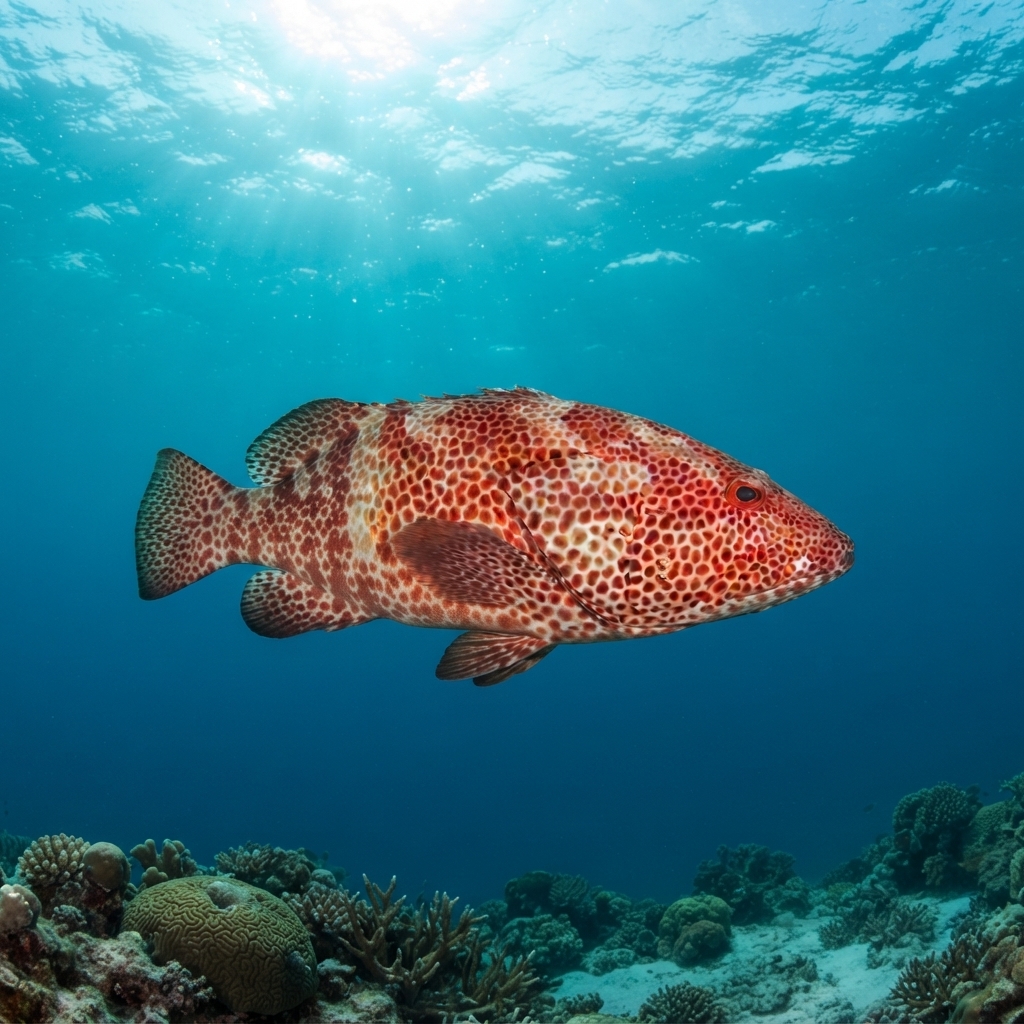
Epinephelus posteli
An uncommon grouper found on KwaZulu-Natal reefs in water around 24C, logged year-round rather than on a fixed season.
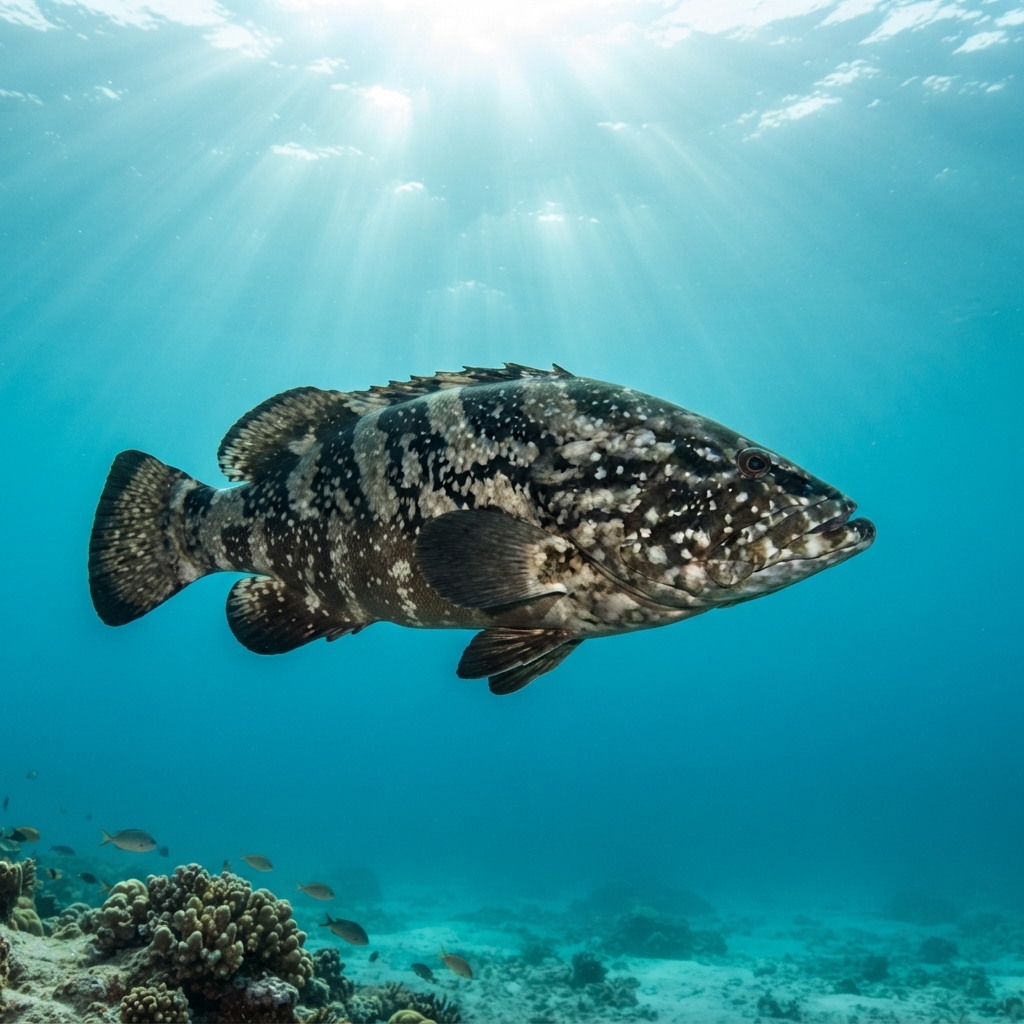
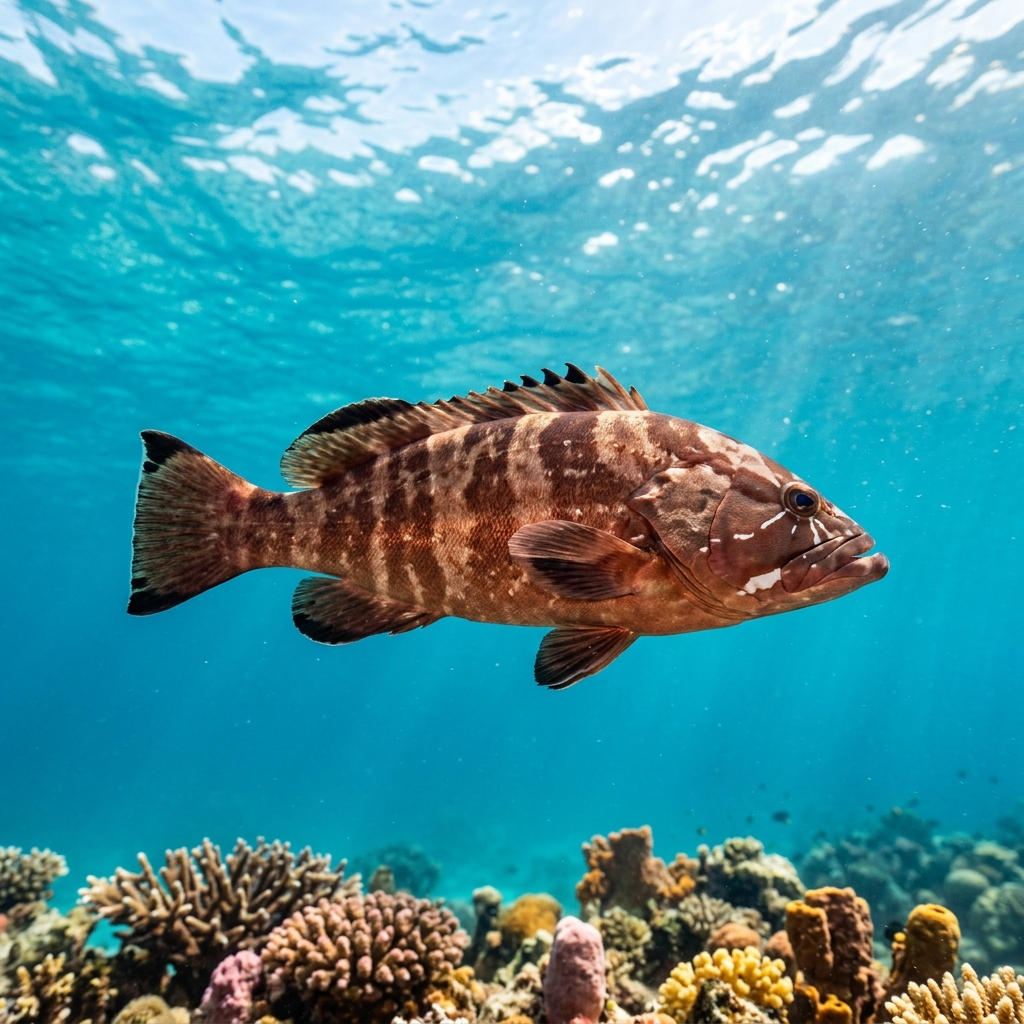
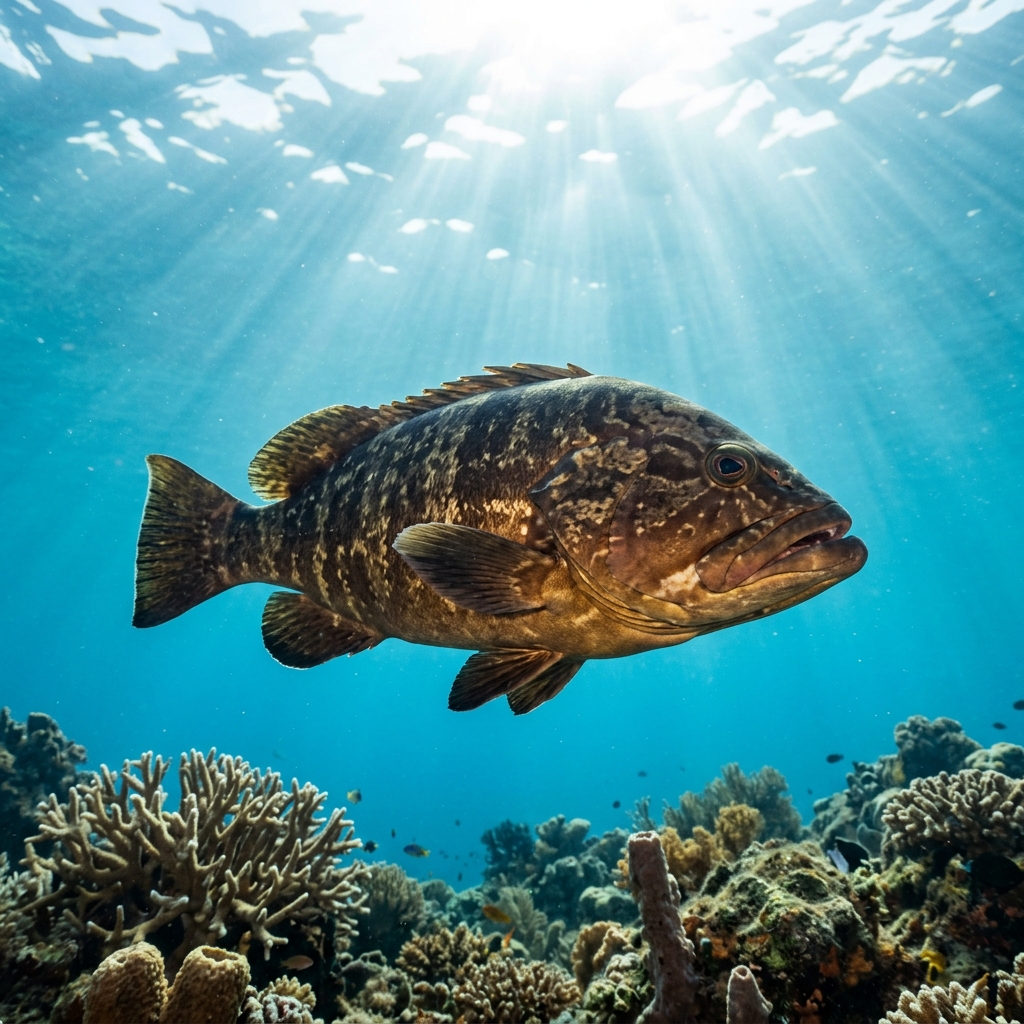
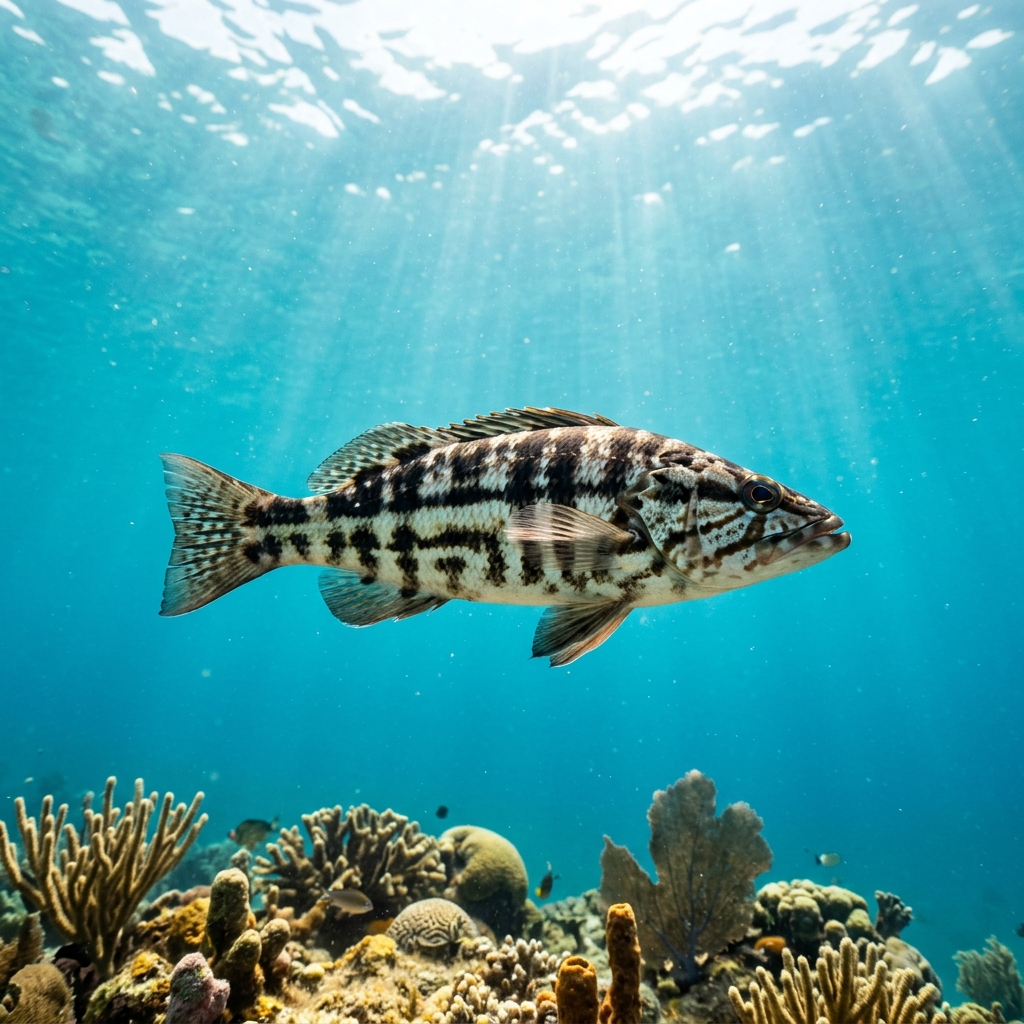
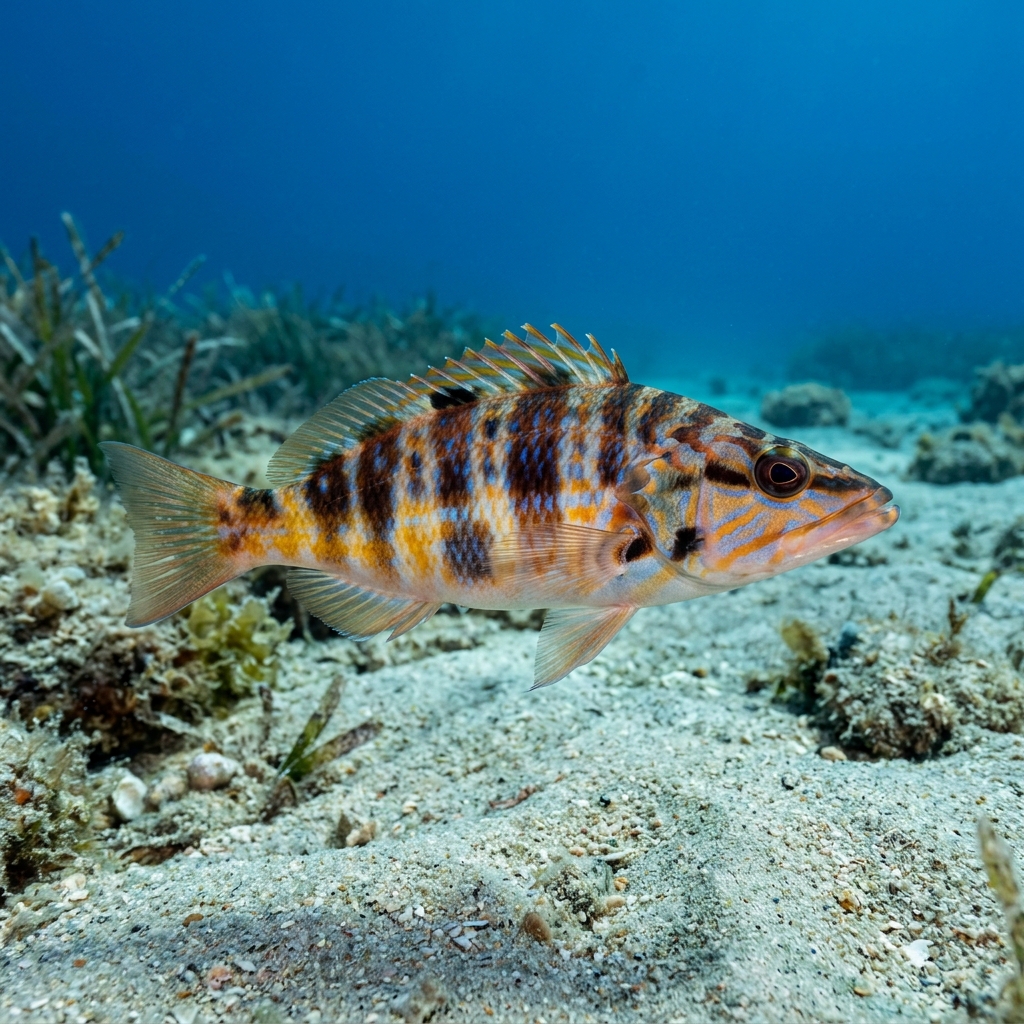
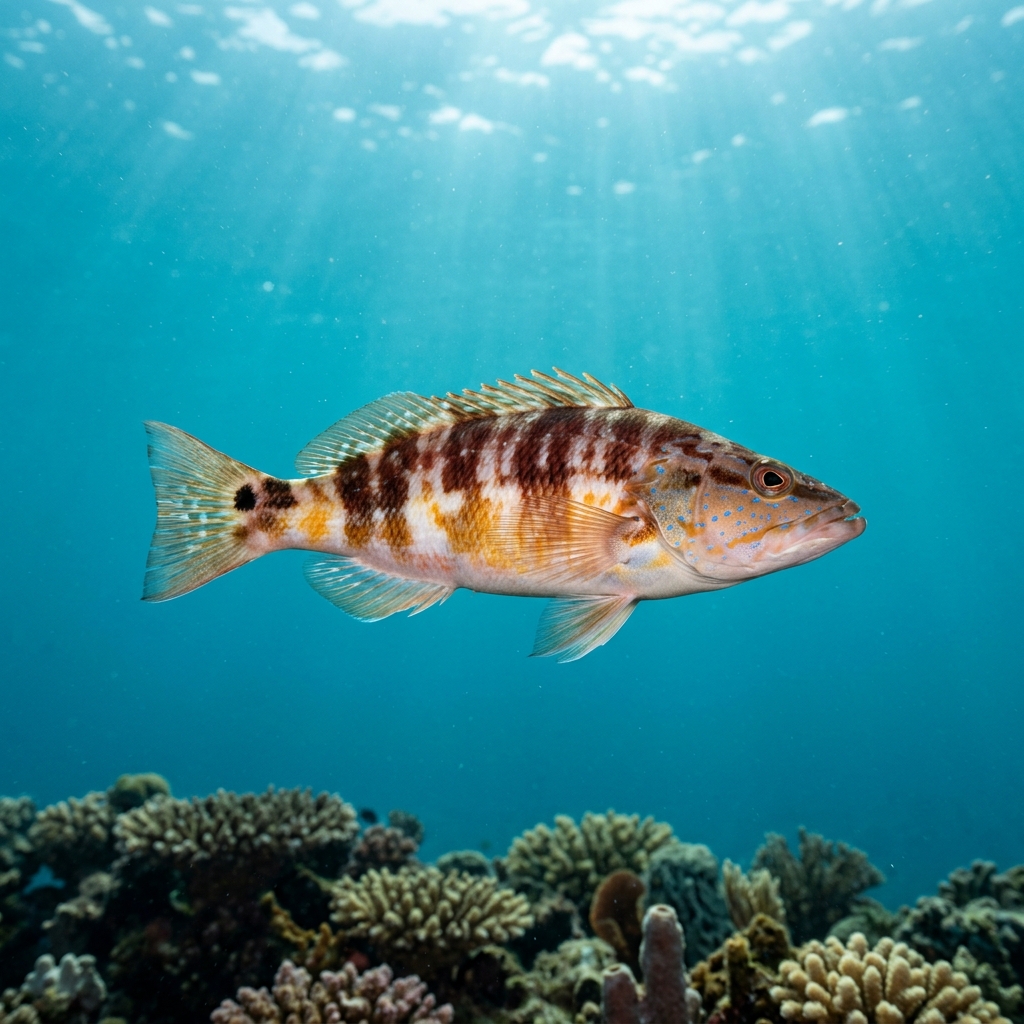
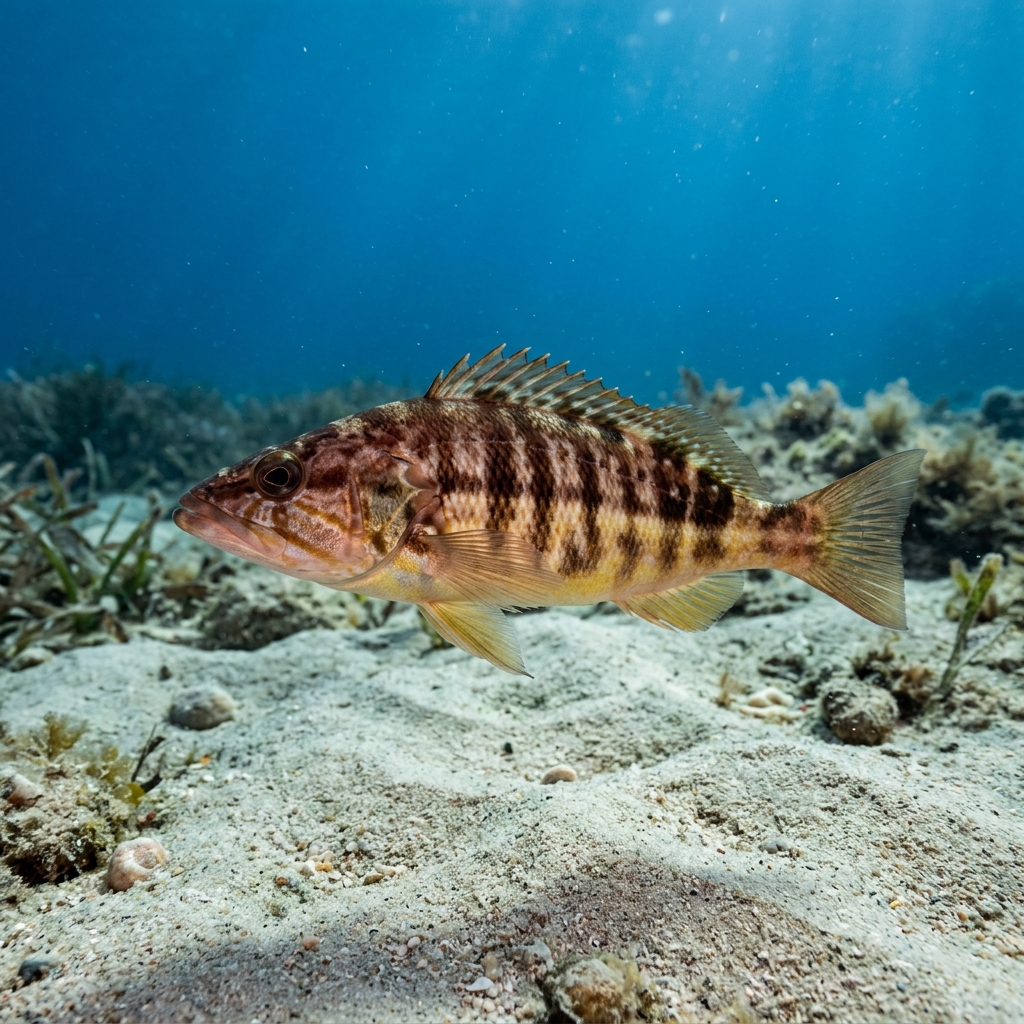
Reaches around 70 cm, with a heavy-bodied grouper shape and a rounded tail. Look for pale stripes running along a mottled brown-to-grey body, most visible along the flanks and fins, which gives this fish its common name. It tends to sit low against rock or reef structure rather than hang in open water, so the striping pattern is often your best cue at a glance.
Divers typically find it holding close to reef or rocky structure, staying low and still rather than swimming in the open. It's not a fish that reacts dramatically to divers, more likely to hold its position on a ledge and let you pass than to bolt or approach, which fits its overall pattern of being logged as uncommon even where it occurs.
Like many epinephelid groupers, it's a structure-loving ambush predator, relying on camouflage and cover rather than speed, which is exactly why patient, slow-moving divers spot it more often than fast swimmers do.
There isn't enough monthly data to point to a season, and sightings sit within a narrow 23.7 to 24.7 C band, consistent with year-round presence on KwaZulu-Natal reefs rather than a seasonal pulse.
Reef neighbours a diver could mistake it for. Use the identification notes above to tell them apart.
Every logged sighting so far comes from South Africa, concentrated in KwaZulu-Natal, making this the region to target if you want a real shot at one. It's recorded as uncommon even at the sites where it turns up, so treat any KwaZulu-Natal reef dive as a possible encounter rather than a guaranteed one.
Mapping where Striped-fin Grouper is logged…
All current sightings come from South Africa, specifically KwaZulu-Natal, where it's logged as an uncommon find across the region's reefs. There's no confirmed data yet from outside this area.
Sightings don't show a clear seasonal pattern, and water temperatures where it's found stay in a tight 23.7 to 24.7 C range, so it's best treated as a year-round possibility on KwaZulu-Natal reefs rather than a seasonal target.
Check for a heavy-bodied grouper around 70 cm with mottled brown-grey colouring and pale stripes along the body and fins. It usually sits close to rock or reef structure rather than swimming in open water, which helps narrow it down from similar groupers.
They typically reach about 70 cm in length, putting them in the mid-size range for reef groupers, noticeably smaller than giants like the Atlantic Goliath Grouper or Queensland Grouper.
No, they're not considered dangerous to divers. They tend to hold still against reef structure and are far more likely to ignore a passing diver than to react defensively.
Site and sighting data is aggregated from diver logs, iNaturalist and GBIF. For taxonomy and conservation status:
Blacktip Grouper
2,726 sites