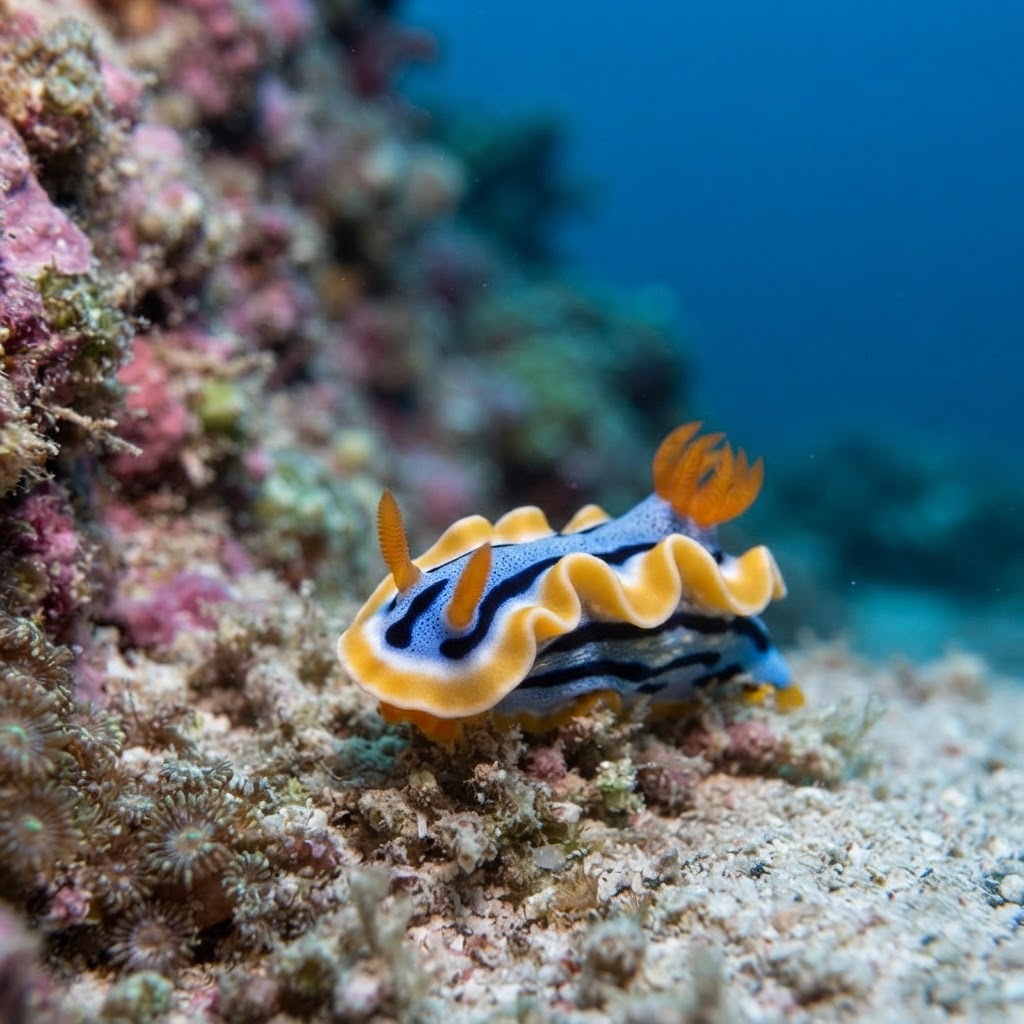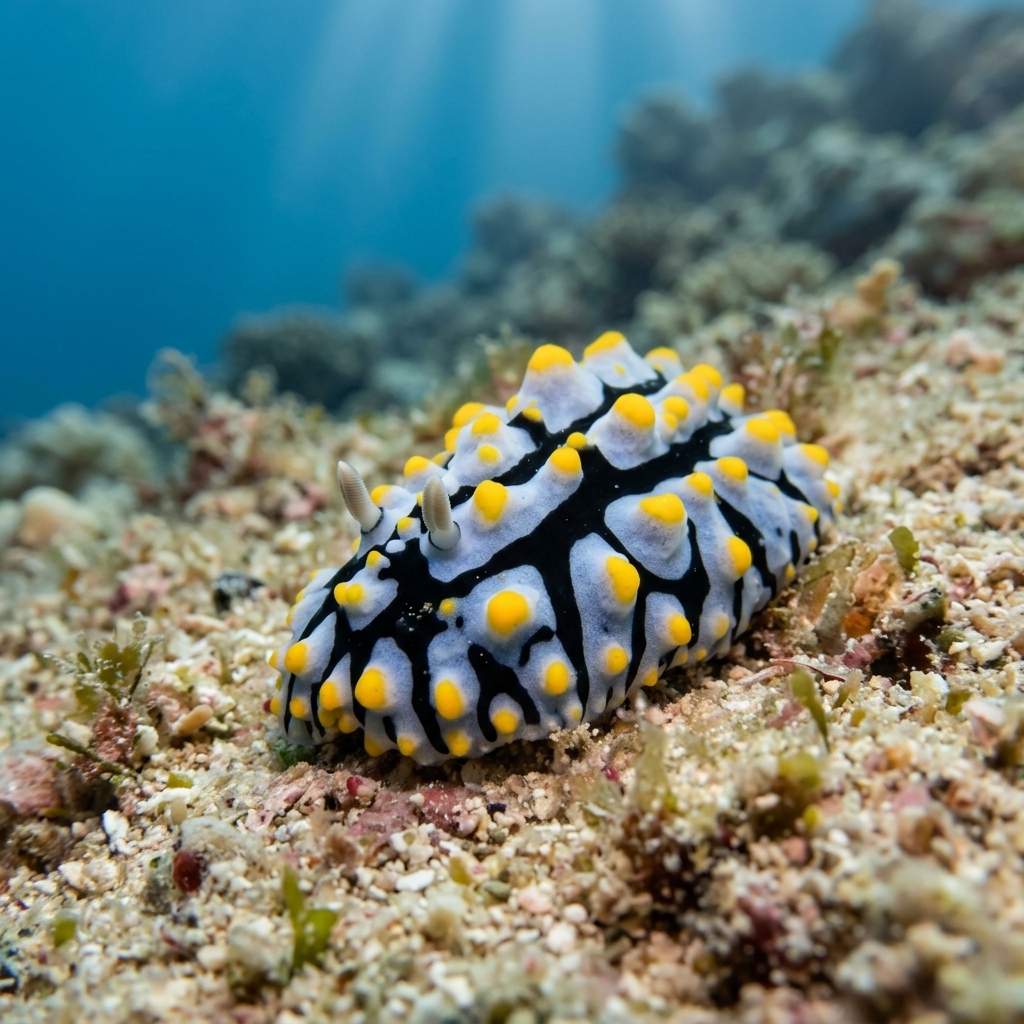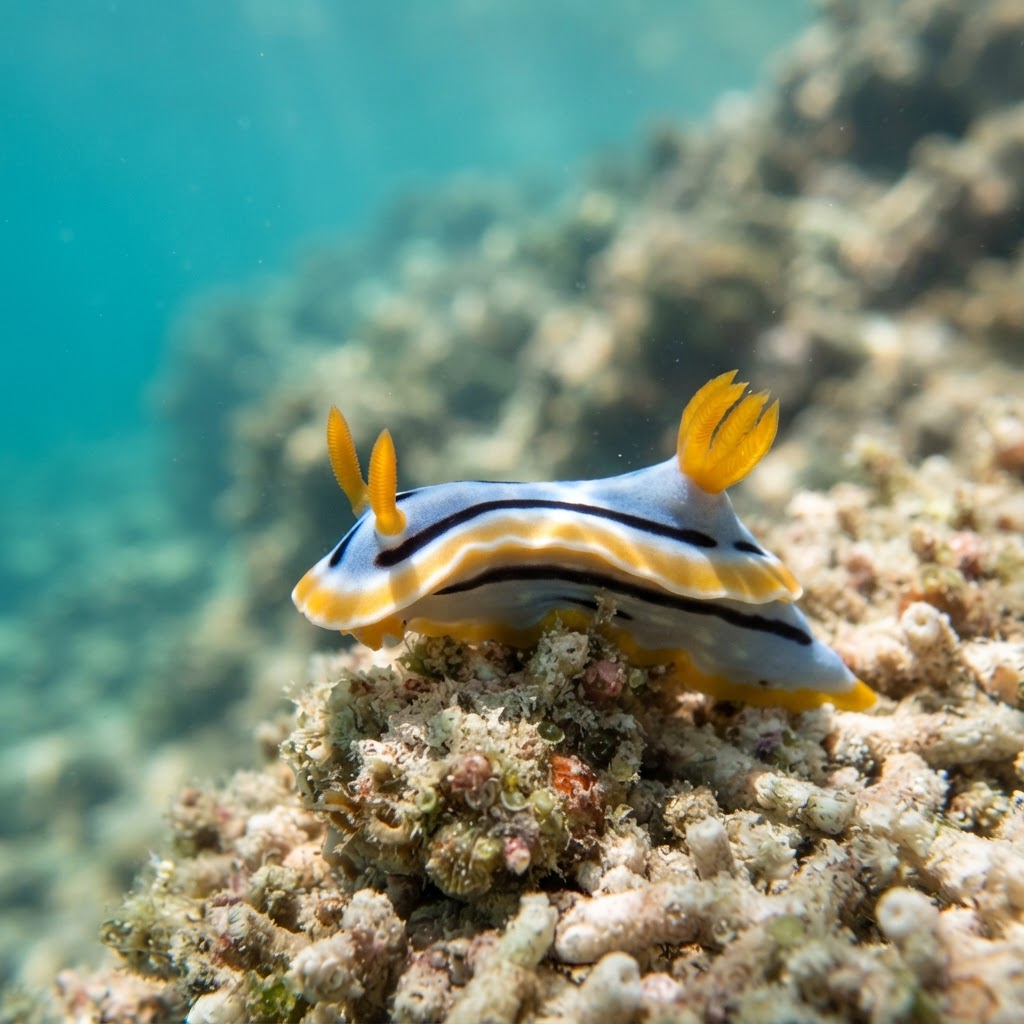
Chromodoris strigata
A small reef nudibranch turning up on muck and coral sites across Luzon and Sabah year-round in warm 24-30C water.
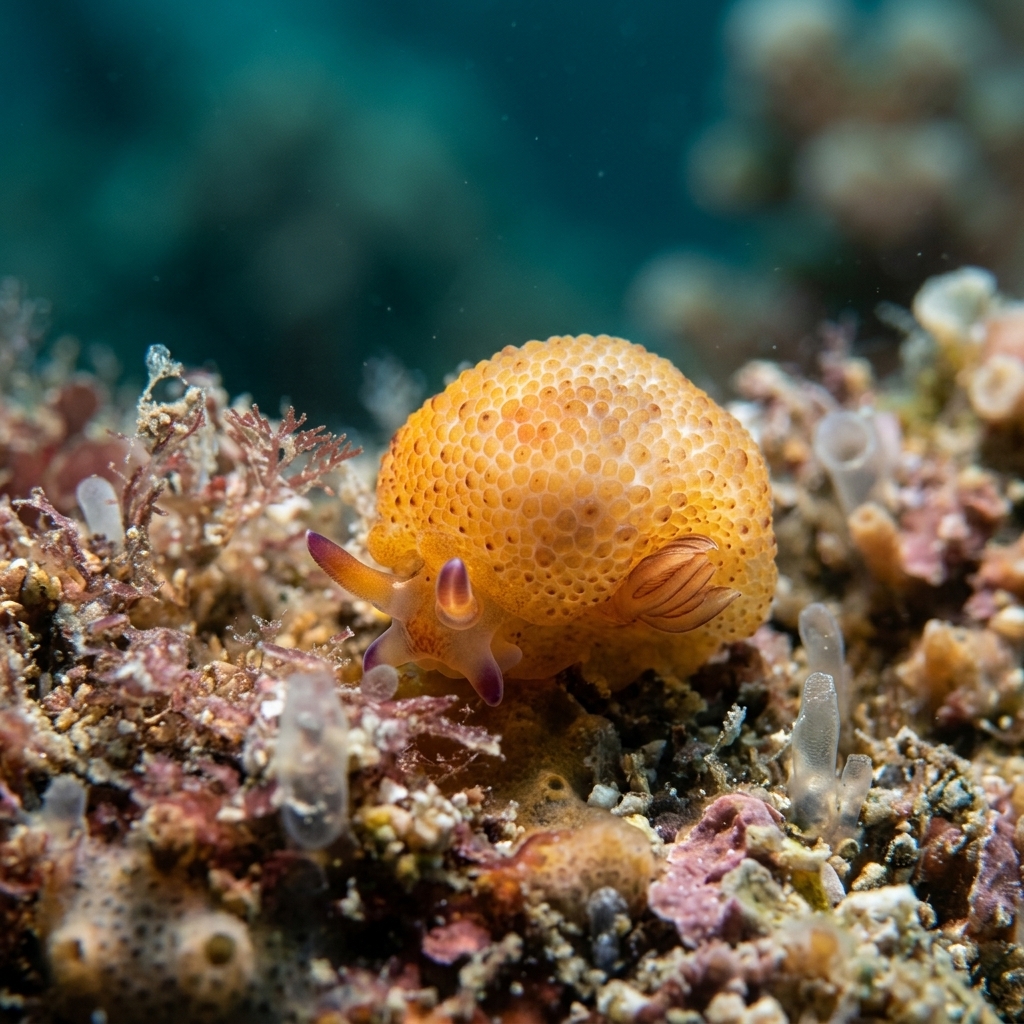
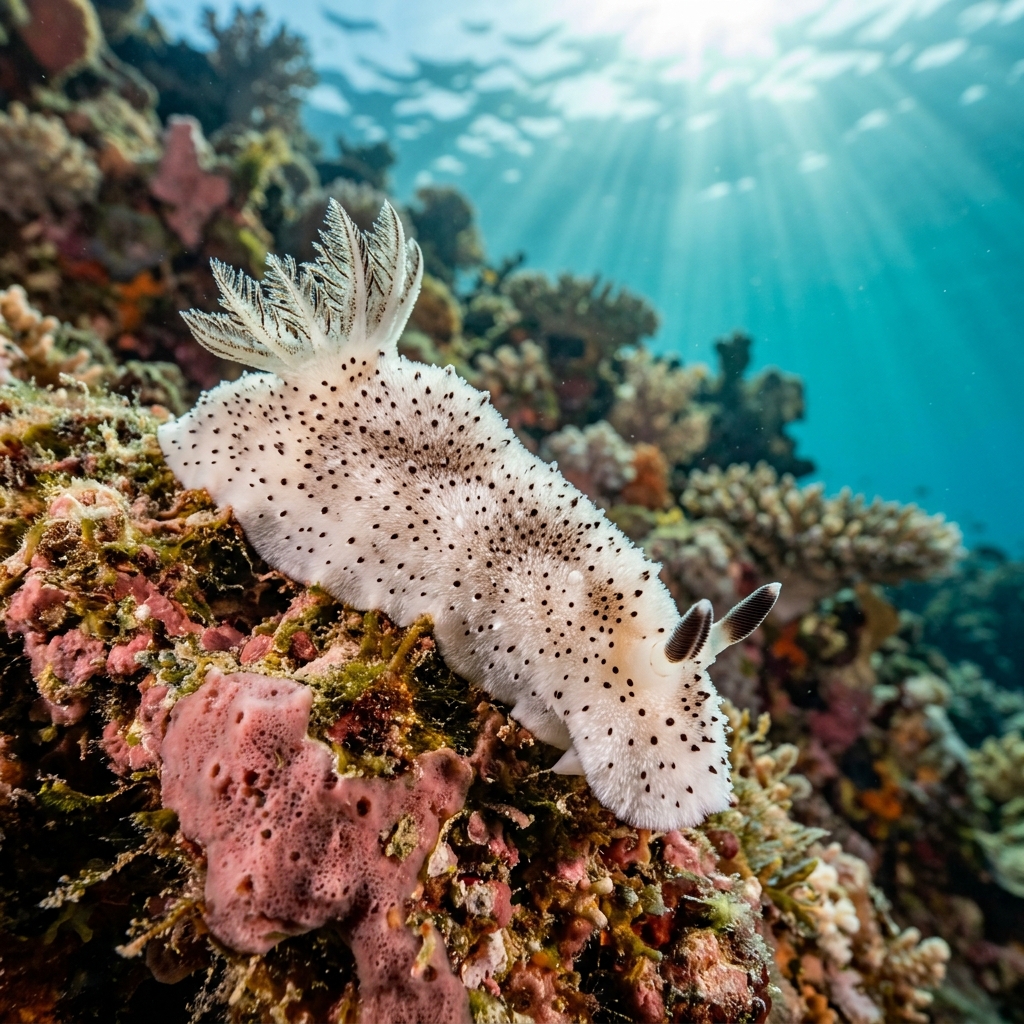
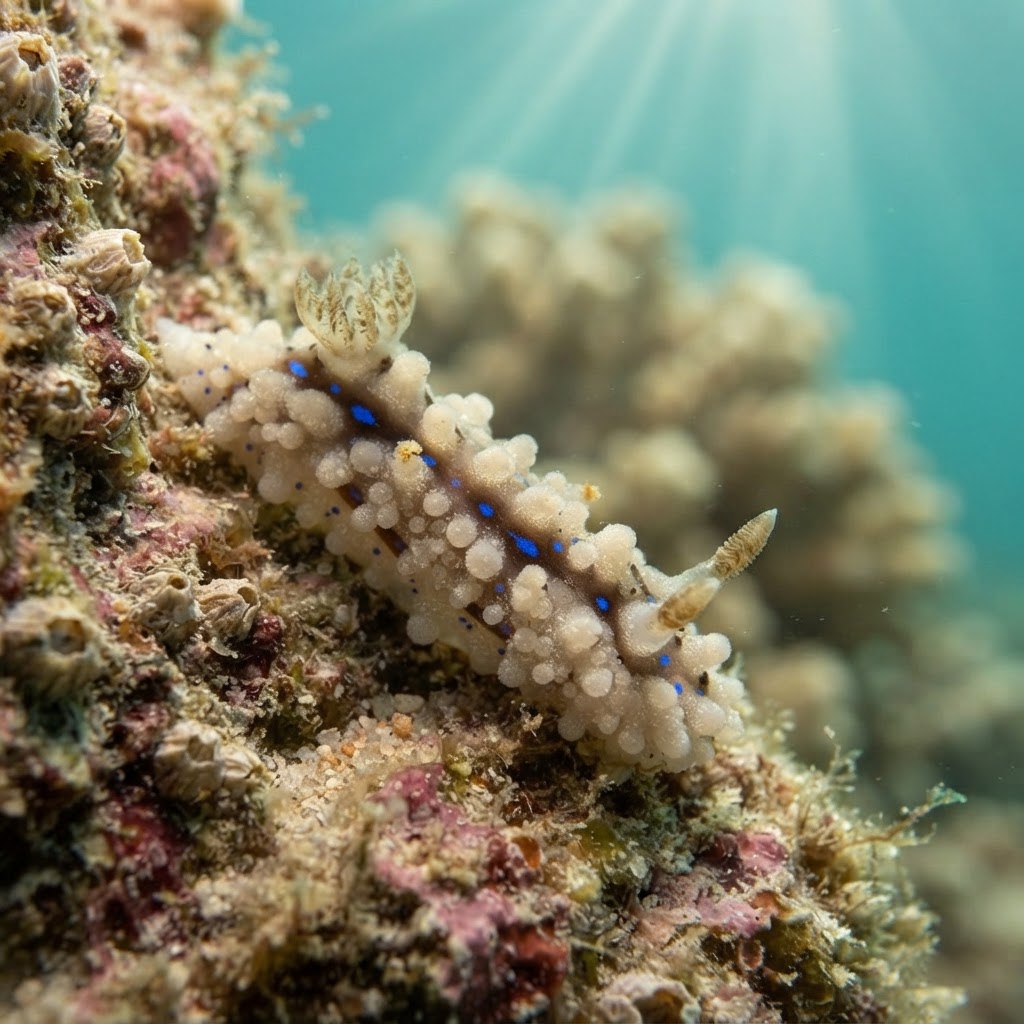
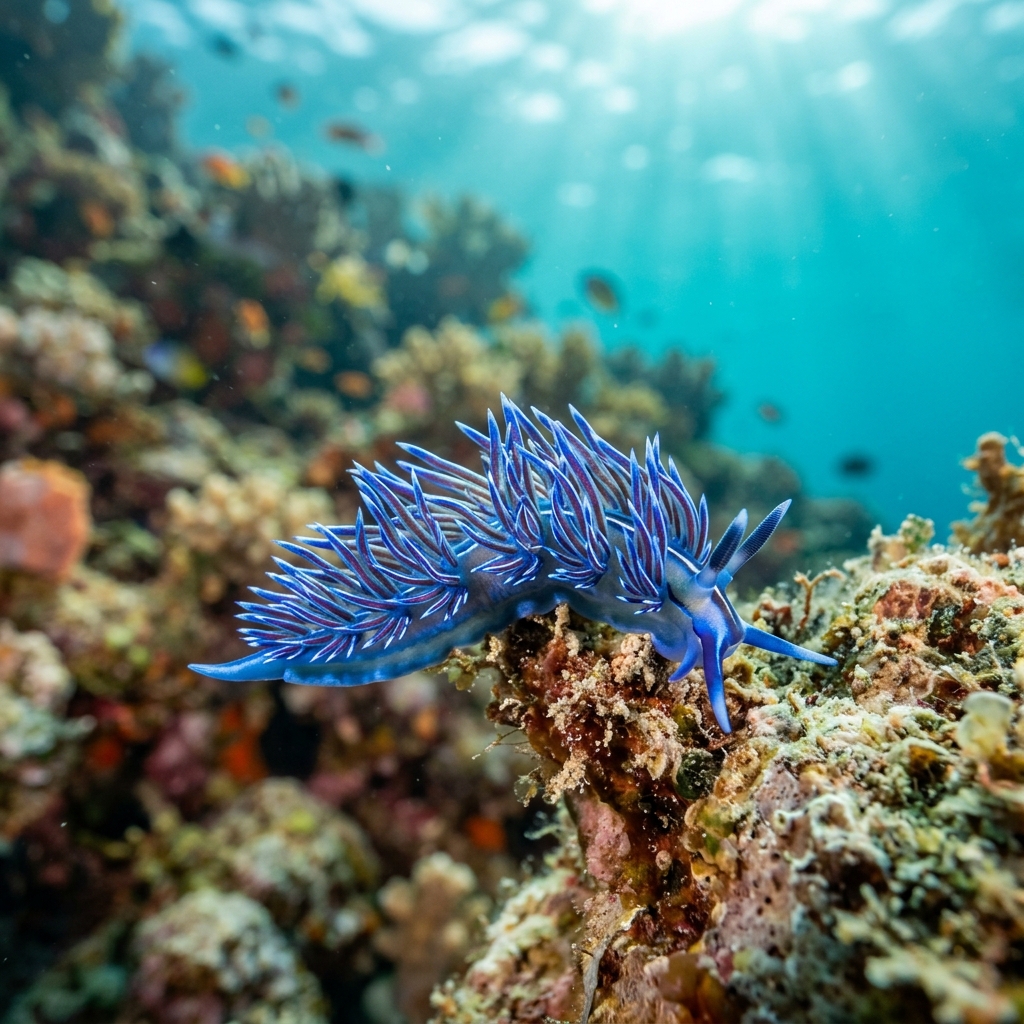
A small, elongated nudibranch with a pale to translucent body marked by fine, streaky longitudinal lines running down its back, which is where the common name comes from. Look for the low, ruffled mantle edge and the contrasting gills and rhinophores (the paired sensory tentacles on the head) at the rear, both usually tipped in a darker shade. It moves slowly across the substrate, so size is easy to judge against a fingertip once you spot one.
Divers find it grazing slowly over reef substrate and rubble, usually spotted by a sharp-eyed guide during a slow-paced macro or muck dive rather than on a reef swim-through. It shows no reaction to divers beyond continuing its unhurried crawl, and it's logged most often as an uncommon find rather than something you'll trip over on every dive. Look low, close to the bottom, on sand, rubble and encrusted rock rather than up in the water column.
Like other Chromodoris nudibranchs, it feeds on sponges and stores the sponge's chemical compounds in its own tissue as a defence, which is part of why its slow, exposed crawl across open substrate doesn't seem to trouble it.
No clear seasonal pattern shows up in the sightings, and with a comfortable range of roughly 24 to 30C it's present on tropical reefs across its range all year. Plan around good visibility and calm muck-diving conditions rather than a particular month.
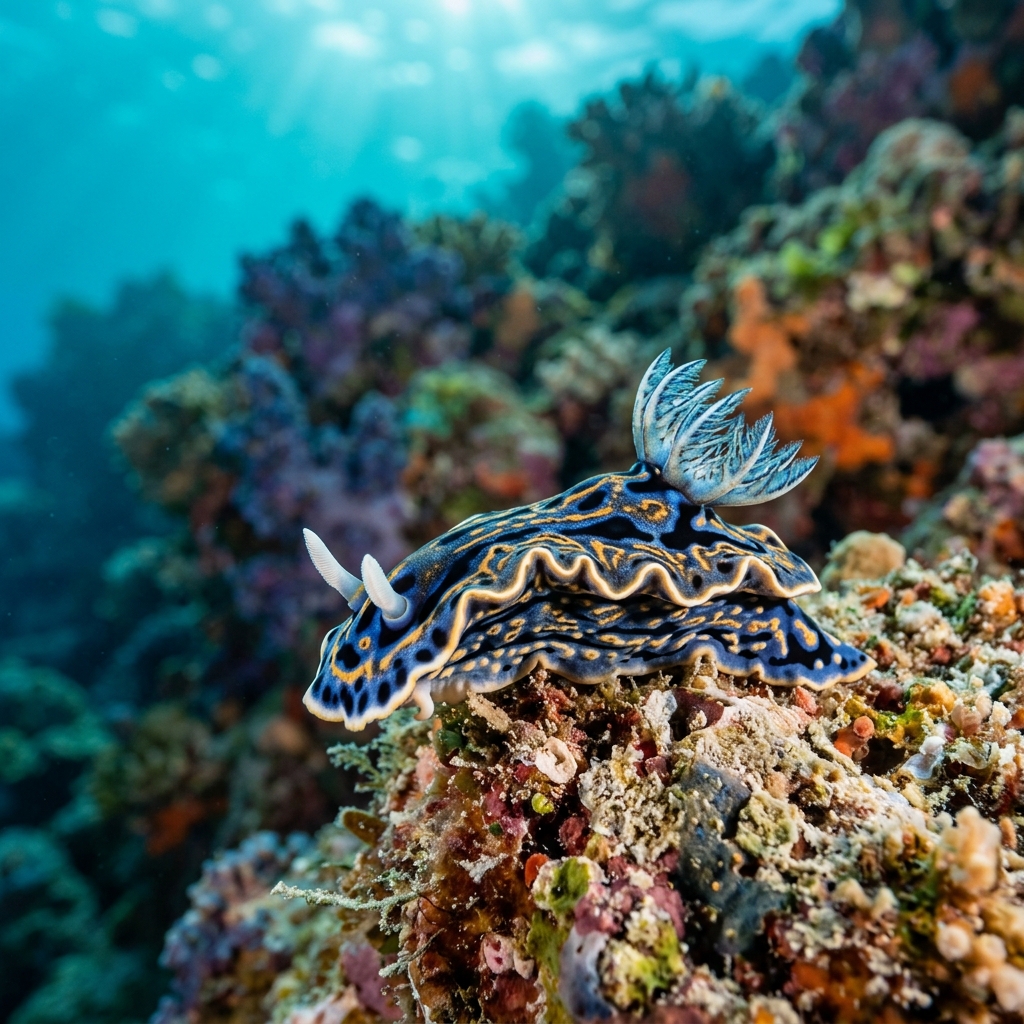
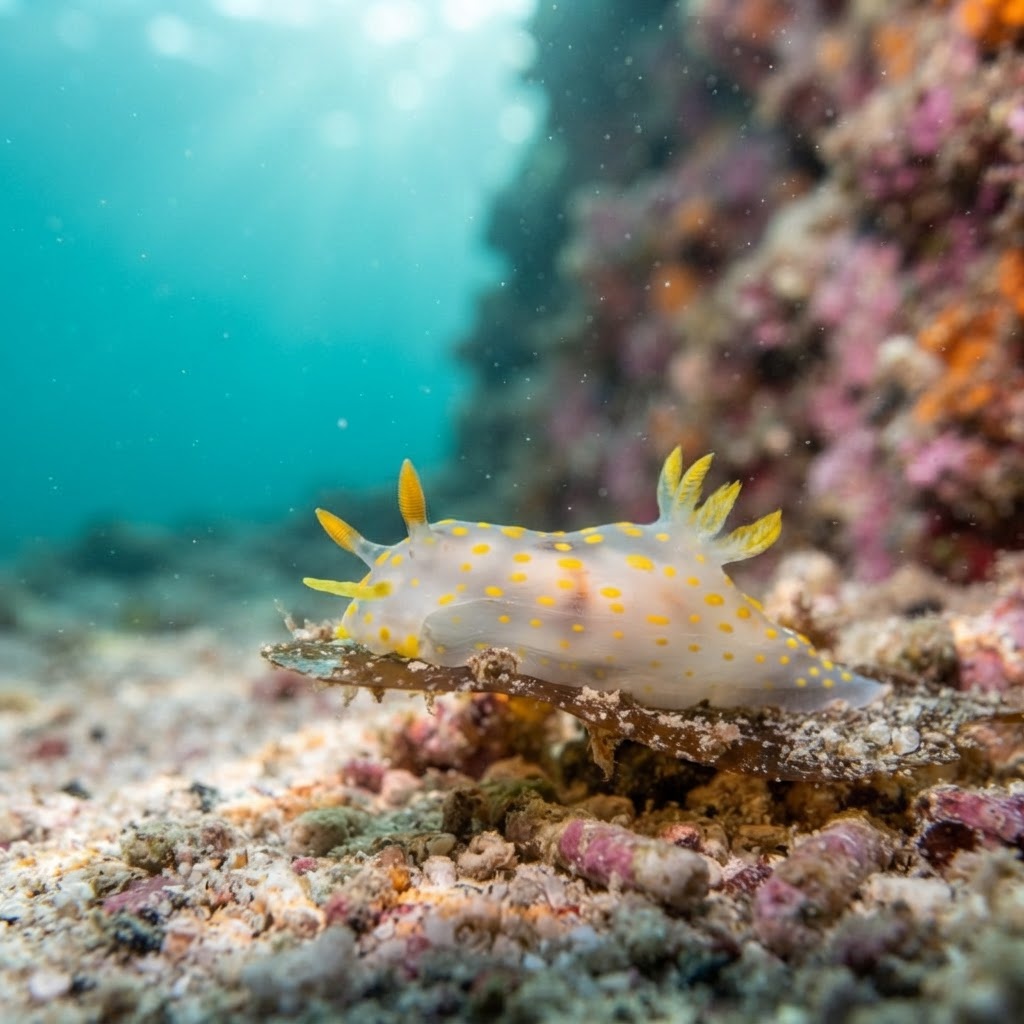
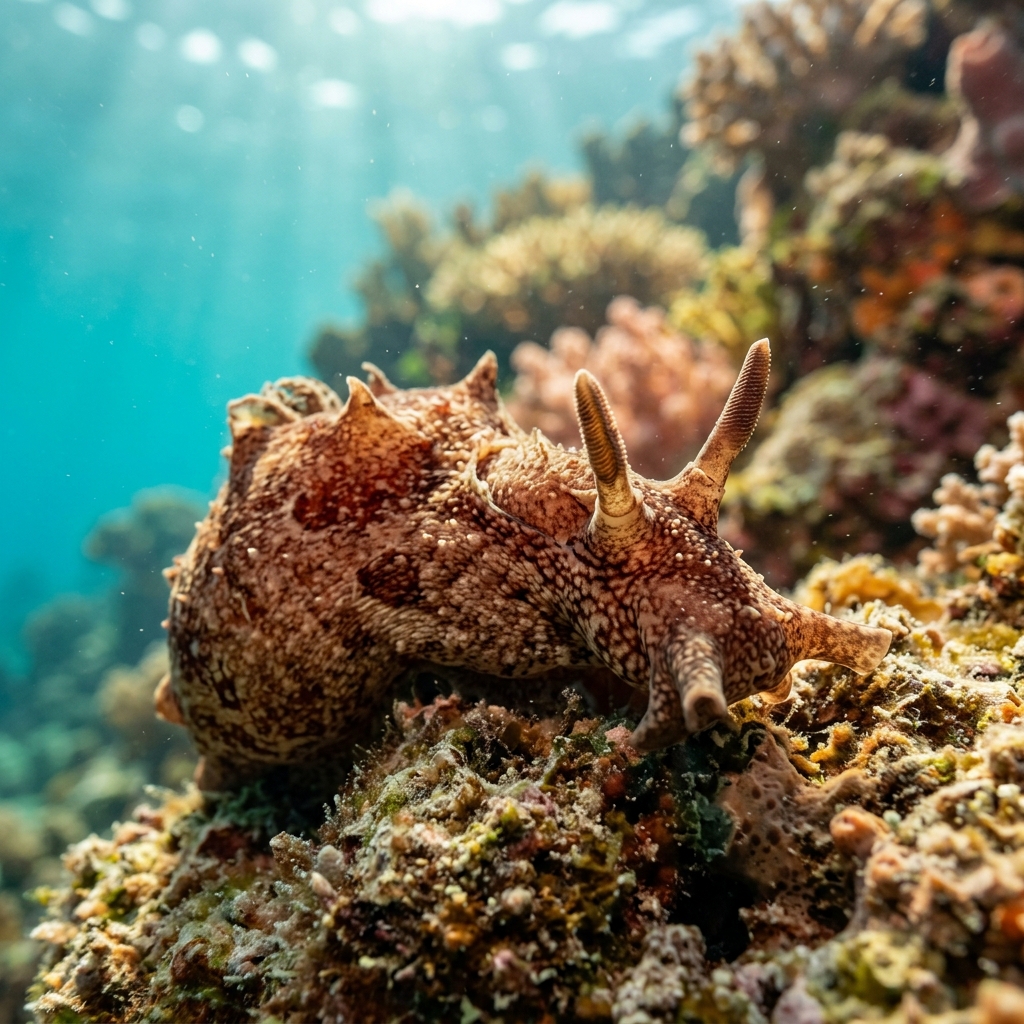
Reef neighbours a diver could mistake it for. Use the identification notes above to tell them apart.
Most reliably logged in the Philippines, especially around Luzon, and in Malaysia's Sabah region, which together account for the bulk of recorded sightings. Smaller but consistent numbers turn up around Xiaoliuqiu in Taiwan, in the Visayas, and on reefs in Queensland, Timor-Leste, Sulawesi and Bali.
Mapping where Streaked Chromodoris is logged…
The strongest sightings come from the Philippines, particularly Luzon, and from Sabah in Malaysia. It also appears on dives around Xiaoliuqiu in Taiwan, Queensland in Australia, and sites in Timor-Leste, Sulawesi and Bali.
There's no strong seasonal signal in the sightings, and its warm-water range of about 24 to 30C means it's around on tropical reefs year-round. Any month with good macro-diving conditions is fair game.
Watch for a small, pale, elongated nudibranch with fine streaky dark lines running along its back and darker-tipped gills and rhinophores at the rear. It moves slowly over sand and rubble rather than swimming, which makes it easy to approach and photograph.
Exact size figures aren't well documented for this species, but like most Chromodoris nudibranchs it's a small animal, easily overlooked unless you're looking closely at the substrate.
No. It has no sting or bite that affects divers and simply crawls slowly across the reef, posing zero risk if you look but don't touch.
It feeds on sponges and absorbs the sponge's own chemical defences into its body, which is thought to make it unpalatable to predators despite its slow, unhidden way of moving across open reef.
Site and sighting data is aggregated from diver logs, iNaturalist and GBIF. For taxonomy and conservation status:
Light-spotted Aegires
3,168 sites