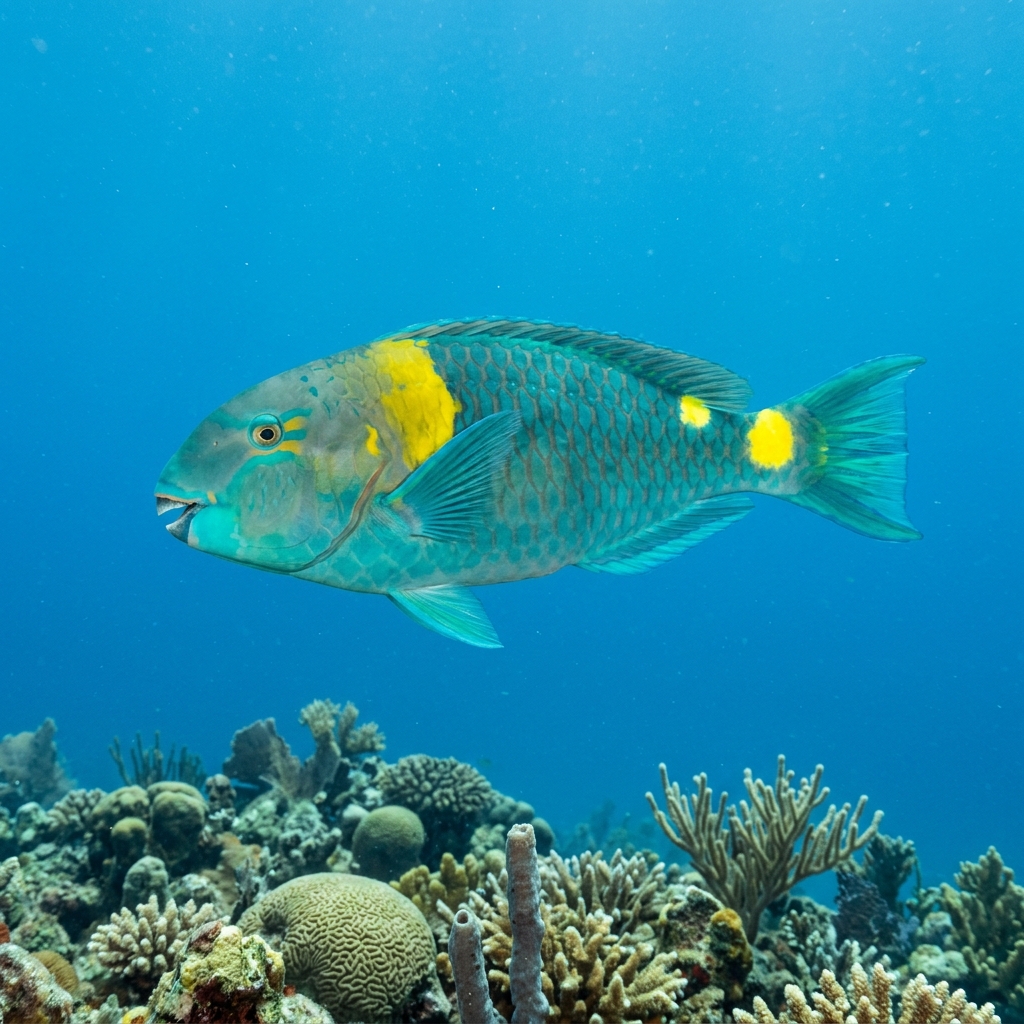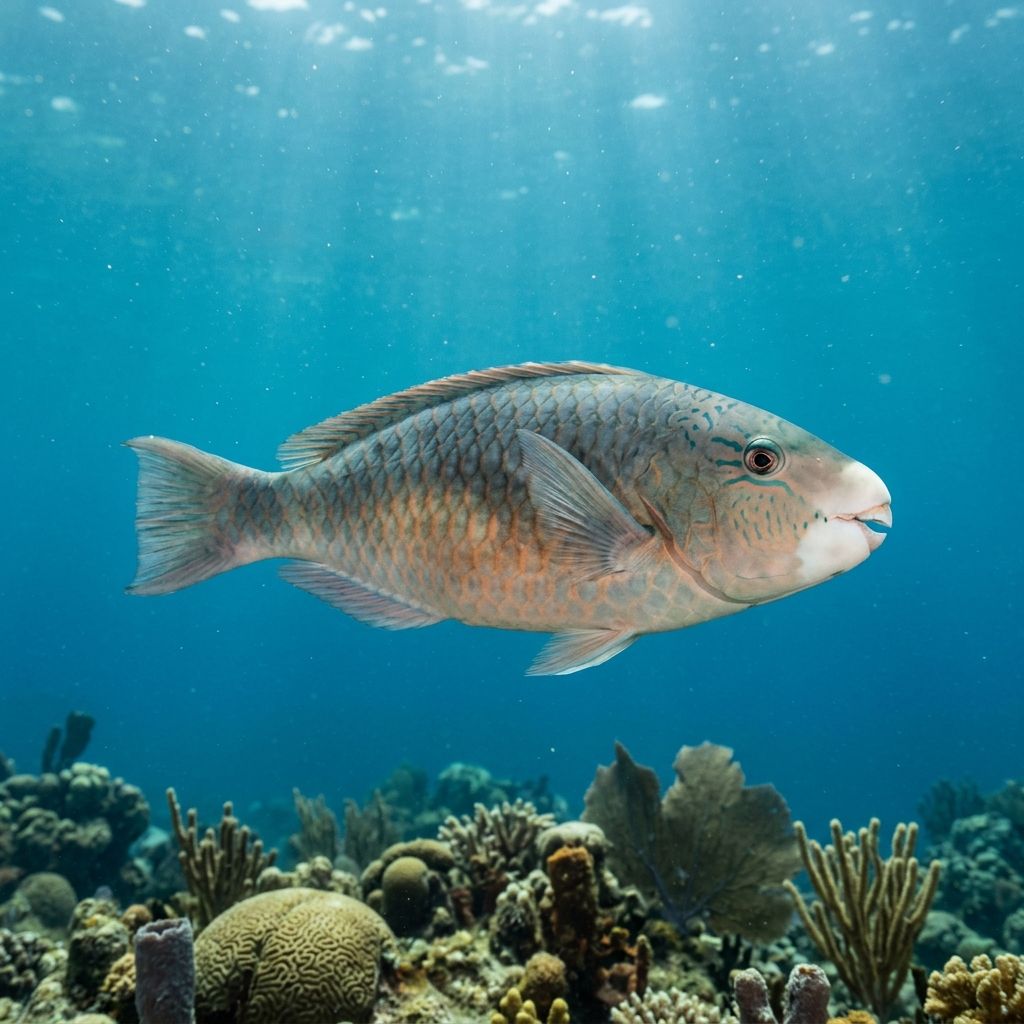
Scarus psittacus
Spot Palenose Parrotfish grazing on reefs across Hawaii, the Philippines, and the Maldives. Warm waters 24-29 °C, most active by day.
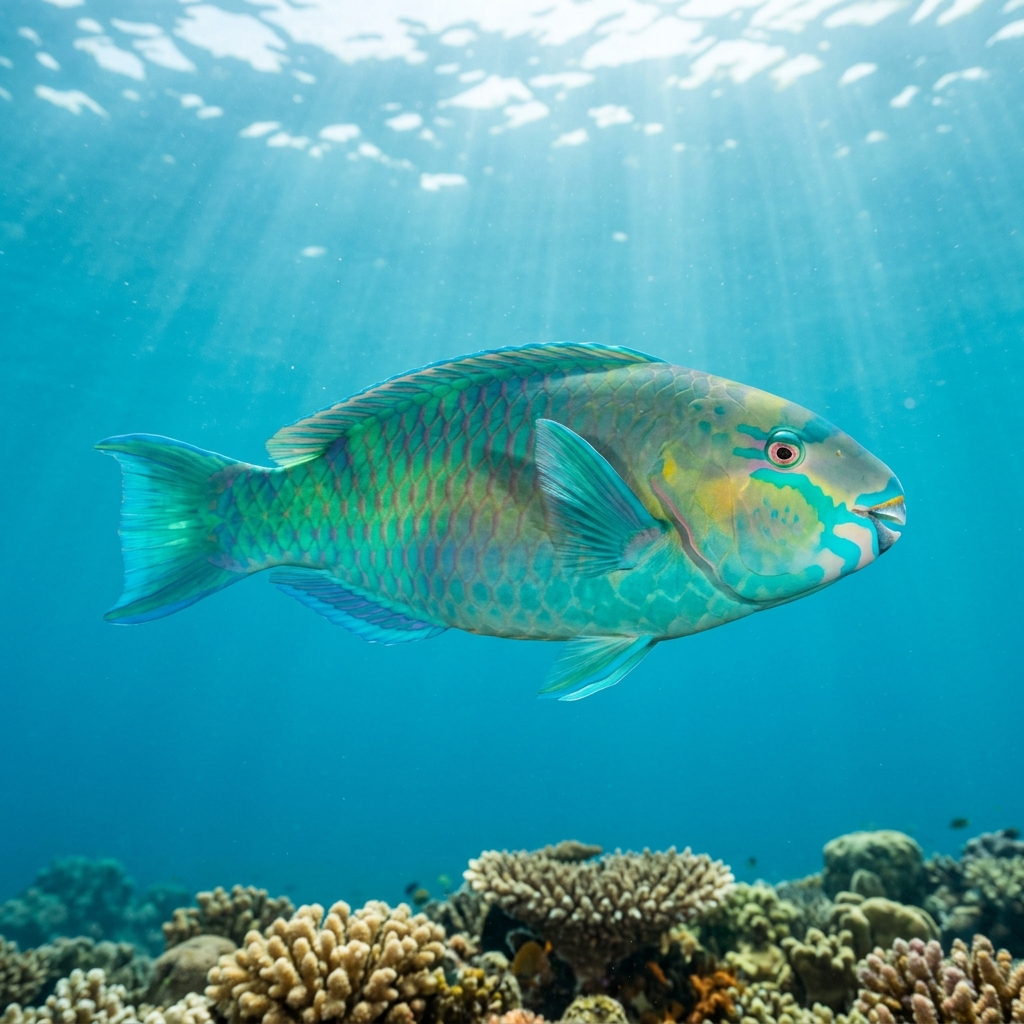
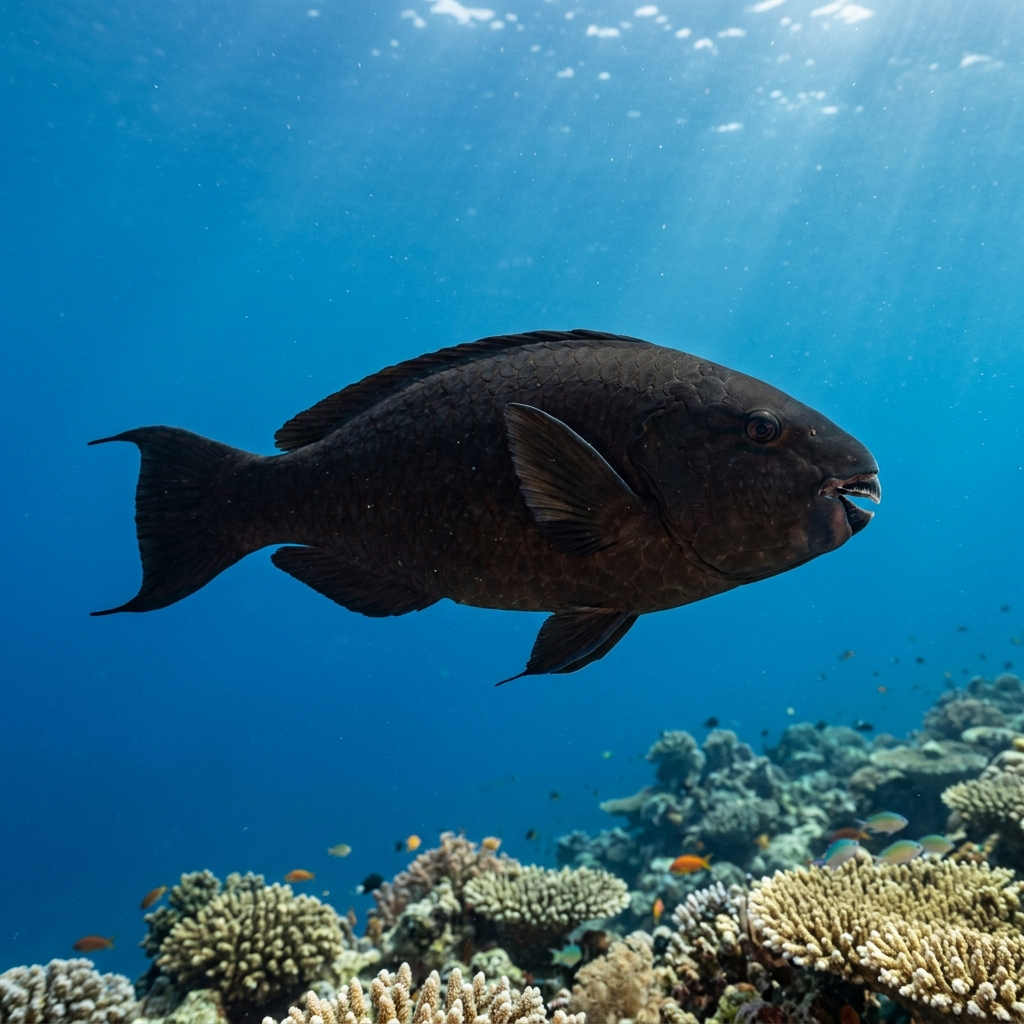
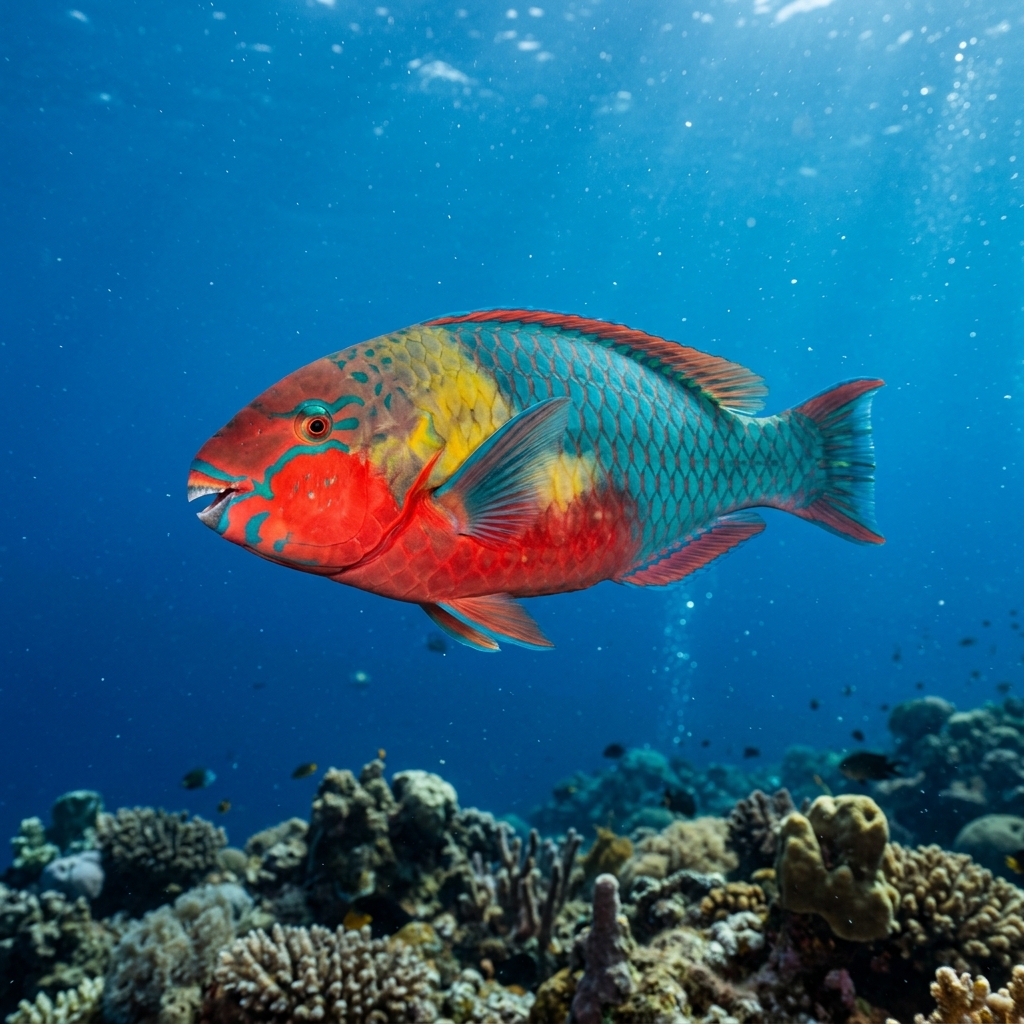
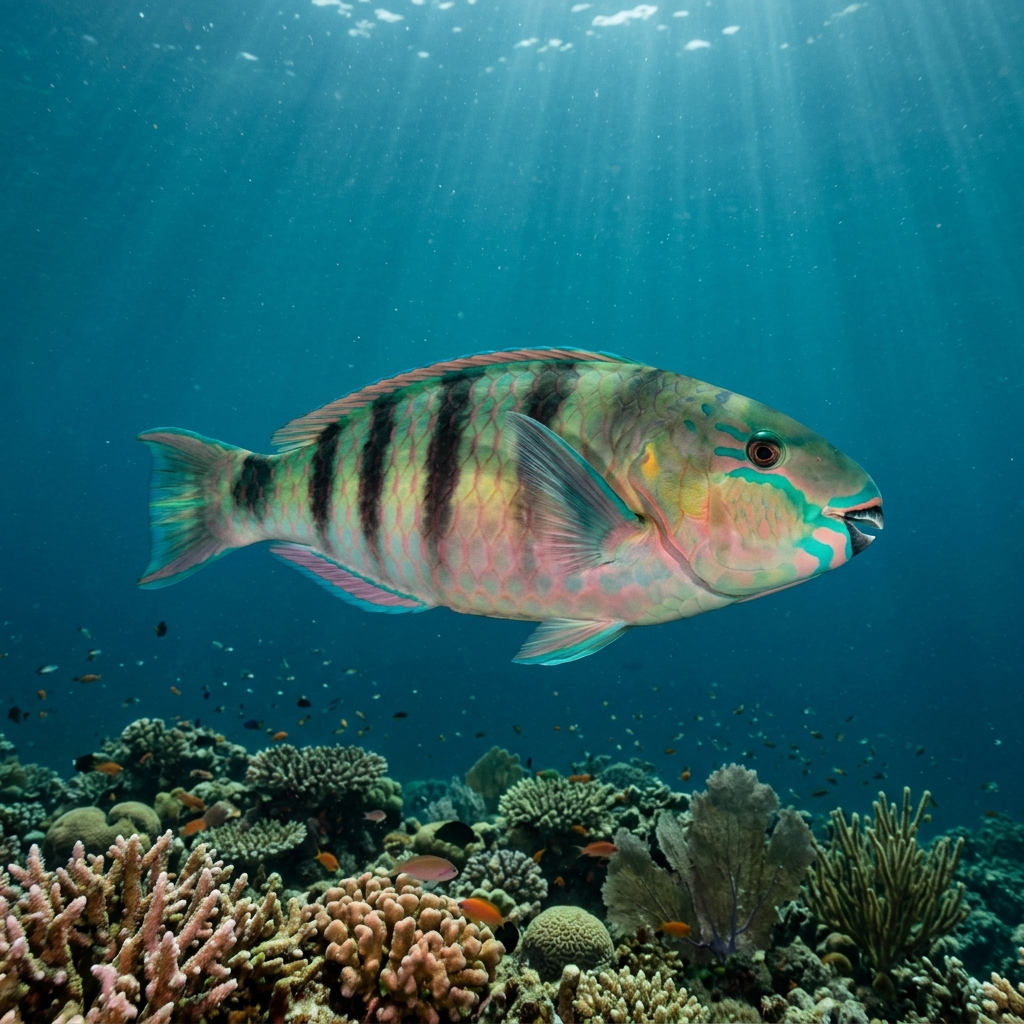
At around 30 cm, this is a mid-sized parrotfish most easily spotted by its fused, beak-like teeth (used for scraping algae) and constant, head-down grazing posture. Males wear bright blue-green with distinct pale markings on the face, while females are a duller brownish or reddish-brown that can blend into the reef if not moving. Look for the pale or whitish snout area that gives the species its name. You'll most often pick them out by their methodical scraping motion rather than any dramatic colour.
Palenose parrotfish are largely indifferent to divers, carrying on their algae-scraping routine unless you swim directly at them or startle them. You'll usually find them working the shallower sections of the reef in daylight hours, often in loose groups of a few individuals grazing together. Approach slowly and they'll generally hold their ground, giving you a close look at those beak-like jaws in action.
Like other parrotfish, this species excretes the indigestible calcium carbonate it bites off coral and rock as fine white sand, making parrotfish a meaningful contributor to the sandy sediment found around tropical reefs.
In the Northern Hemisphere, sightings concentrate from July through April, making winter and early spring a productive window. In the Southern Hemisphere, expect the best encounters between September and January.
Reef neighbours a diver could mistake it for. Use the identification notes above to tell them apart.
Most commonly logged across the Indo-Pacific, with strong sighting records in the Philippines (particularly the Central Visayas), the Maldives, and Indonesia. Hawaii, Queensland in Australia, and Okinawa in Japan are also reliable regions, and French Polynesia rounds out the Pacific spread.
Mapping where Palenose Parrotfish is logged…
They are most reliably encountered across the Indo-Pacific. The Philippines (especially the Central Visayas), the Maldives, and Indonesia have the strongest sighting records, with Hawaii, Queensland in Australia, Okinawa in Japan, and French Polynesia also being productive destinations.
In Northern Hemisphere destinations like Hawaii, Japan, and the Philippines, sightings concentrate from July through April. For Southern Hemisphere locations such as Queensland, the September to January window tends to produce the most encounters.
Key on the pale or whitish snout and the constant head-down scraping behaviour. Males are blue-green with pale facial markings; females are brownish and easier to overlook. At roughly 30 cm they are mid-sized for a parrotfish, and the beak-like fused teeth are visible when feeding.
They typically reach around 30 cm in length, making them a medium-sized parrotfish. You'll encounter them anywhere from very shallow water down to about 25 metres.
No. They are not aggressive and pose no threat to divers. They will simply swim away if you get too close, so slow, relaxed movement is all that's needed for a good look.
They scrape algae from coral and rock using their fused, beak-like teeth. The coral and rock material they ingest is digested and expelled as fine white sand, a process that contributes measurably to the sandy sediment around tropical reefs over time.
Site and sighting data is aggregated from diver logs, iNaturalist and GBIF. For taxonomy and conservation status:
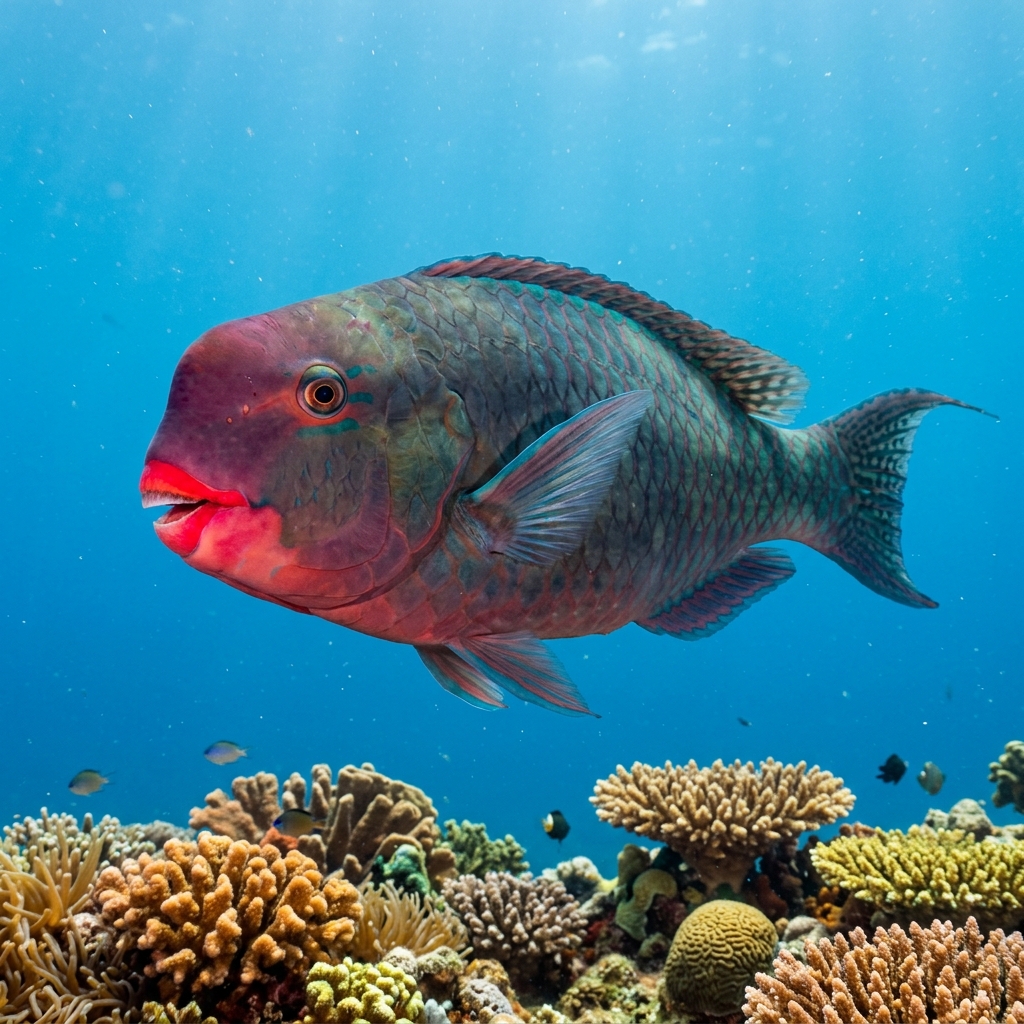
Redlip Parrotfish
2,789 sites