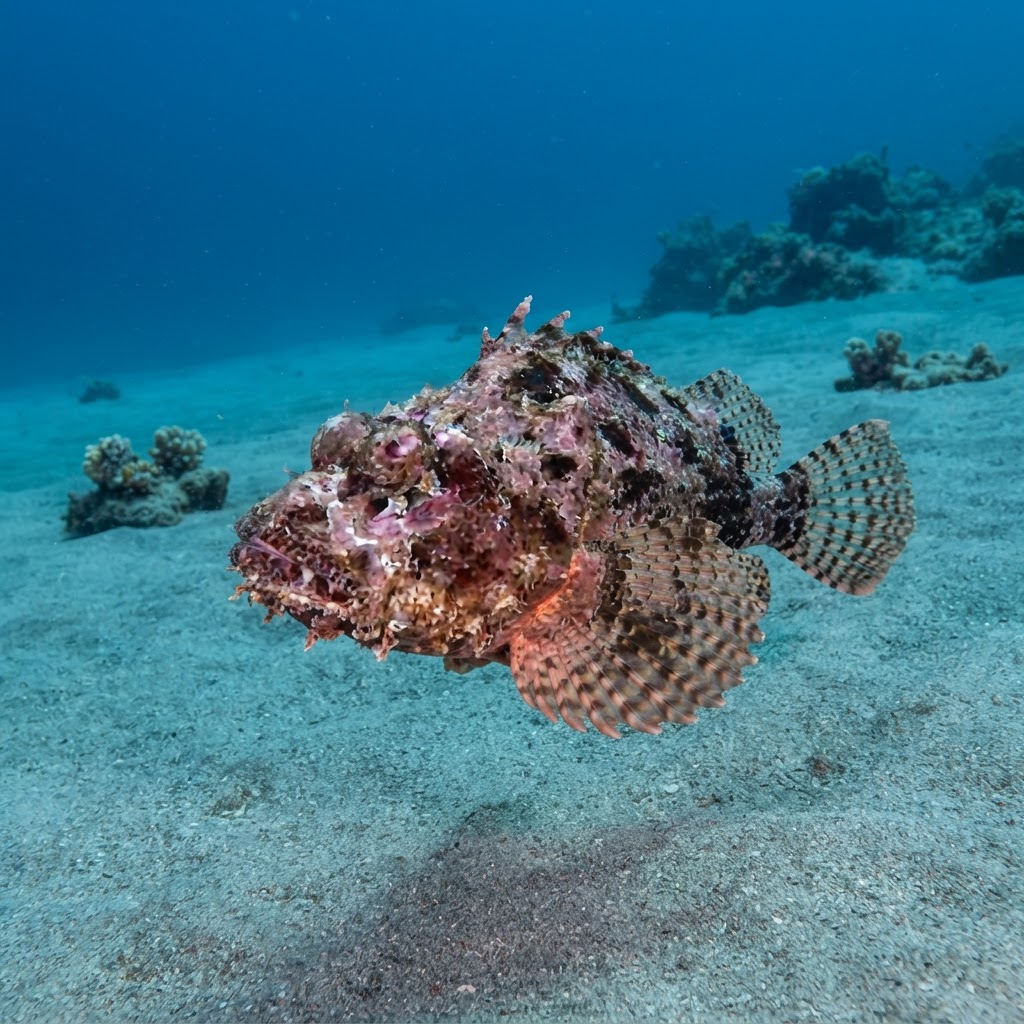
Scorpaena mystes
Camouflaged on rubble in Baja California, Guanacaste and the Galápagos, comfortable in 20 to 29C waters year-round.
Safety warning
Carries venomous spines along its dorsal fin capable of a painful sting if touched or stepped on, and its camouflage makes accidental contact the real risk rather than any aggression. Keep hands off the substrate near rock and rubble, watch buoyancy and fin placement, and never attempt to move or handle one.
If you're stung
Venomous spinesGeneral first-aid guidance, not a substitute for professional medical care. In an emergency, call your local emergency number.
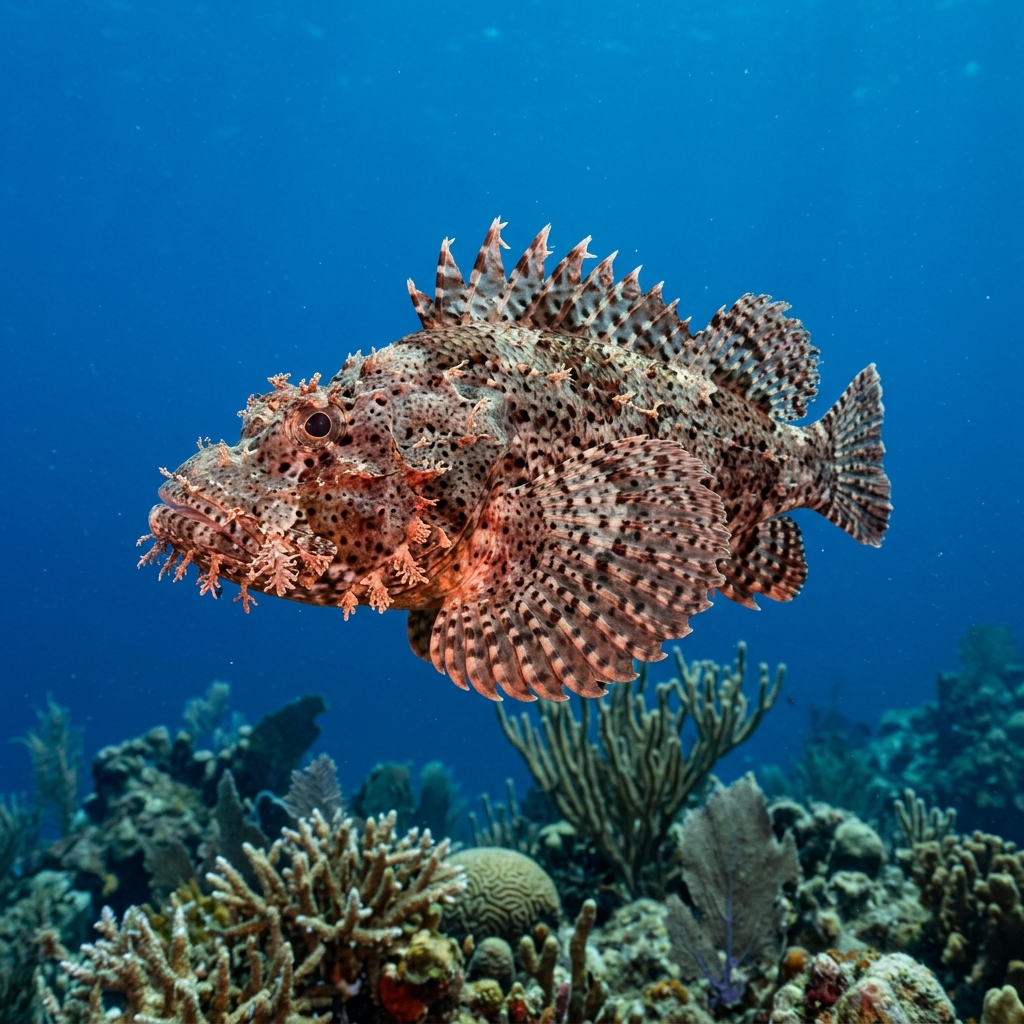
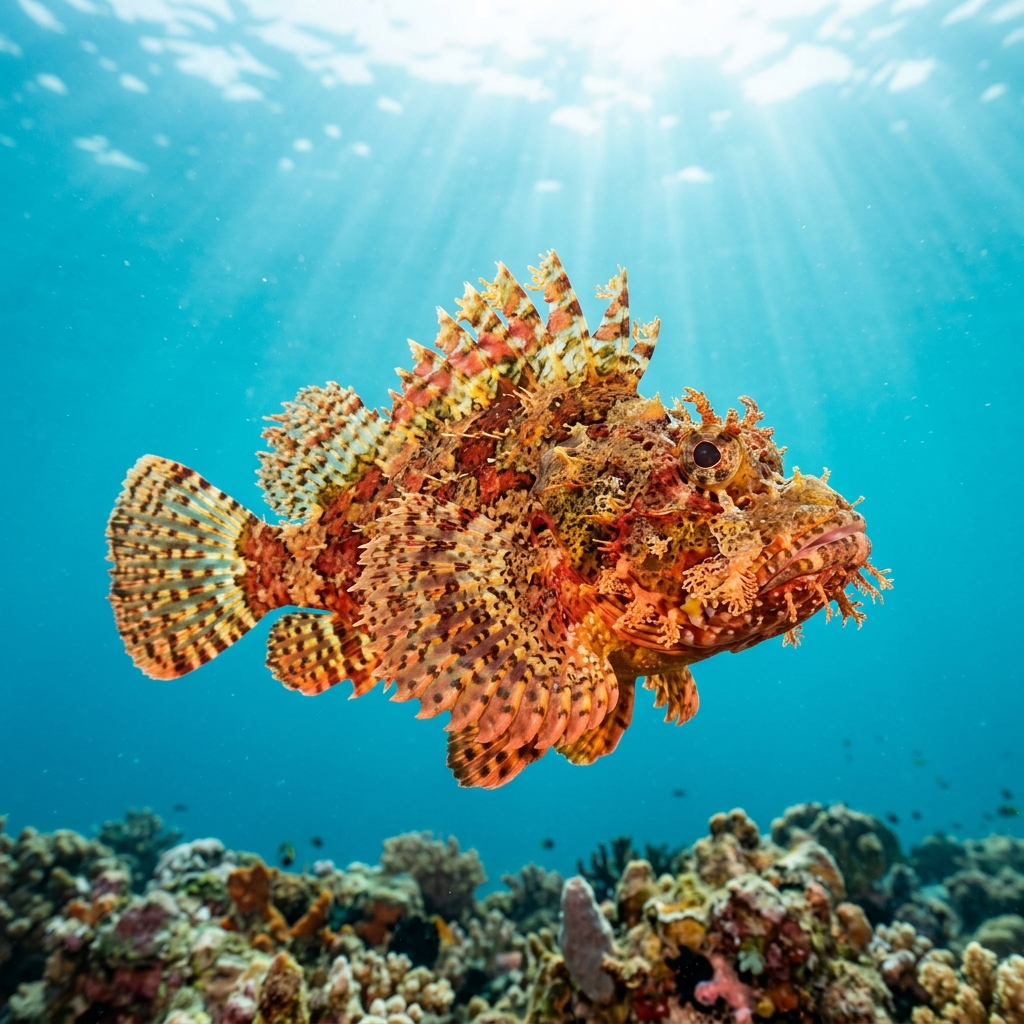
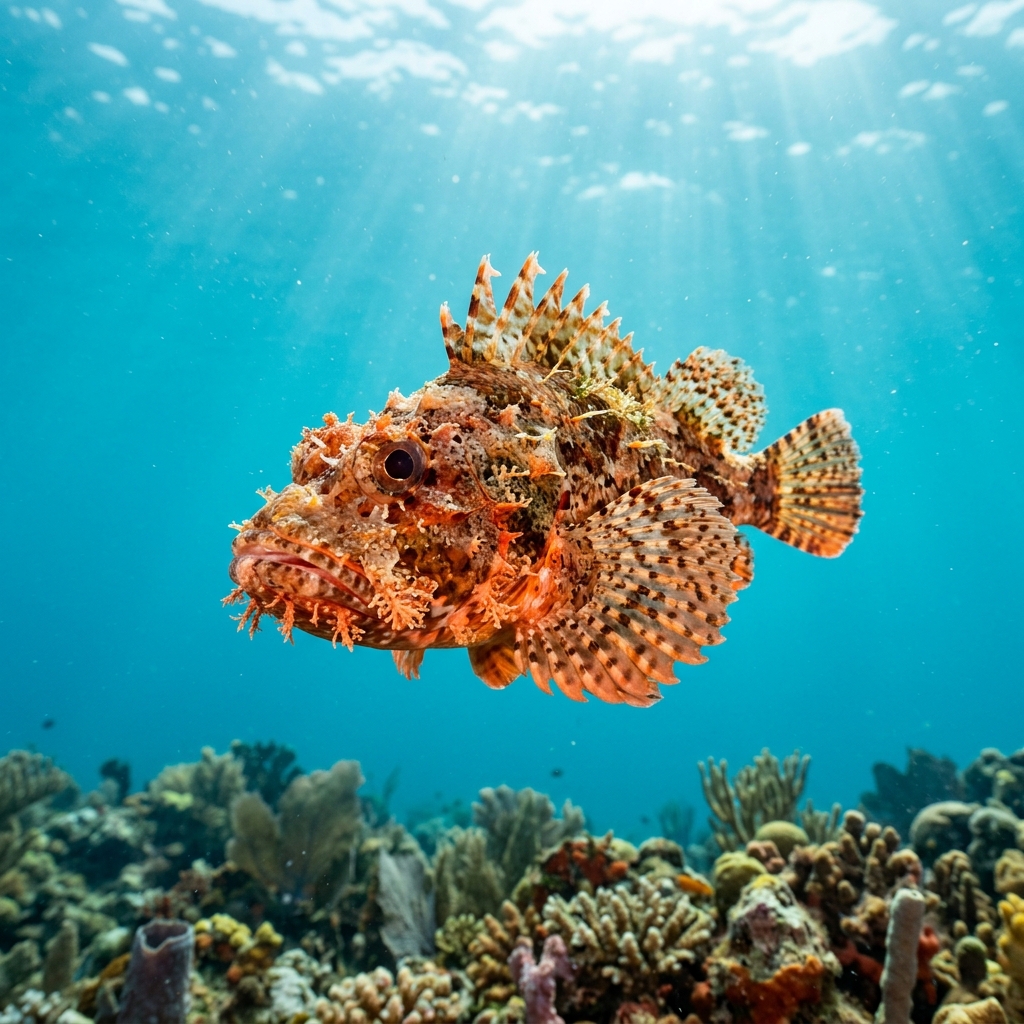
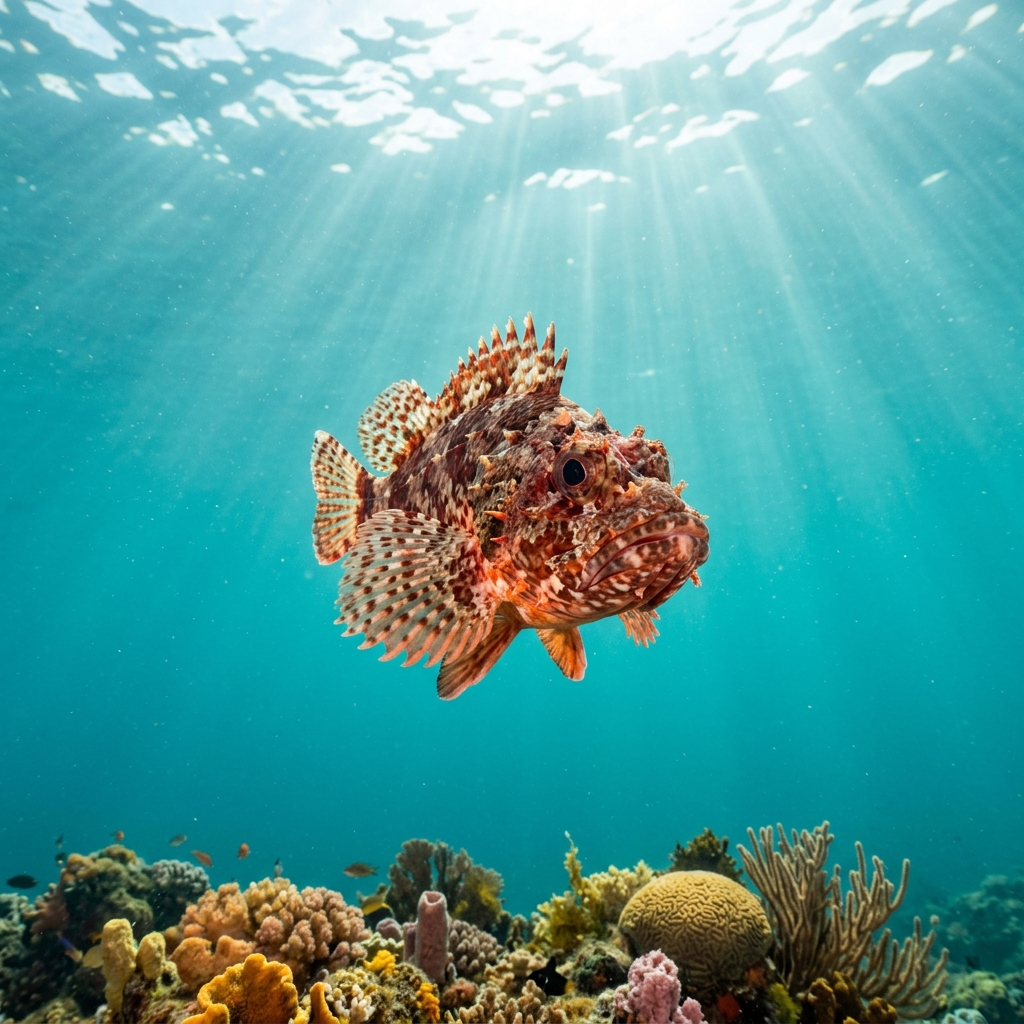
Grows to around 31 cm and looks like a lump of encrusted rock until it blinks or flares a pectoral fin. Skin is mottled brown, grey and rust with a heavily textured, warty surface that breaks up its outline against rubble and rock. Look for a broad, spiny head, a large downturned mouth and eyes set high on the skull, watching the water column above it while the rest of the body stays flush with the bottom.
Spends most of a dive sitting dead still on rock, rubble or sand, relying on its camouflage rather than movement to avoid attention. Divers typically find it wedged against a boulder or ledge during the day, ambushing small fish and crustaceans that wander too close. It tolerates a close look from a diver's torch or lens as long as nothing touches it, but will dart a short distance if crowded.
That rough, encrusted skin is not just camouflage dressing, it is a textured surface that algae and small invertebrates can settle on, making an already still fish even harder to pick out from the reef around it.
No clear seasonal pattern shows up in the sightings, and with a comfortable range of roughly 20.6 to 29.1C it turns up on rocky and reef terrain across the year in all three countries. Plan around the destination's usual dive season rather than the fish itself.
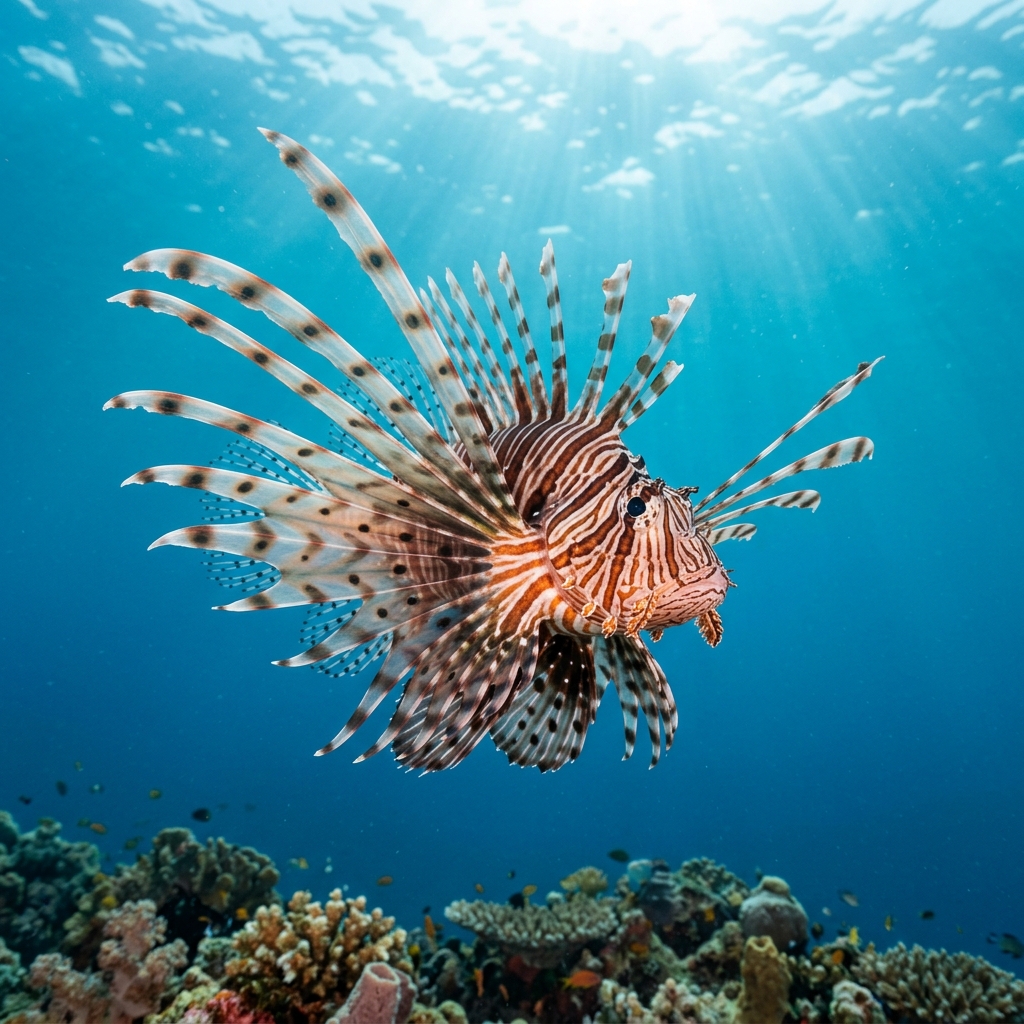
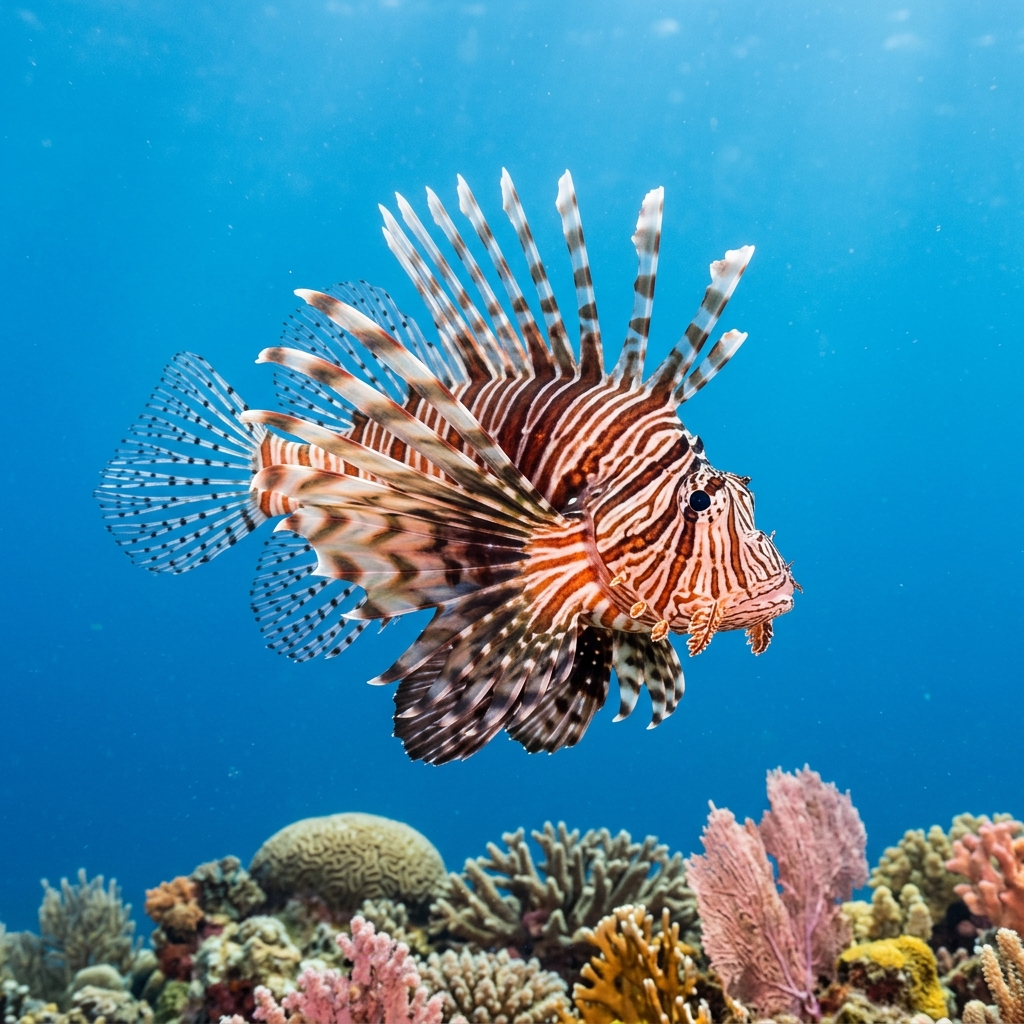
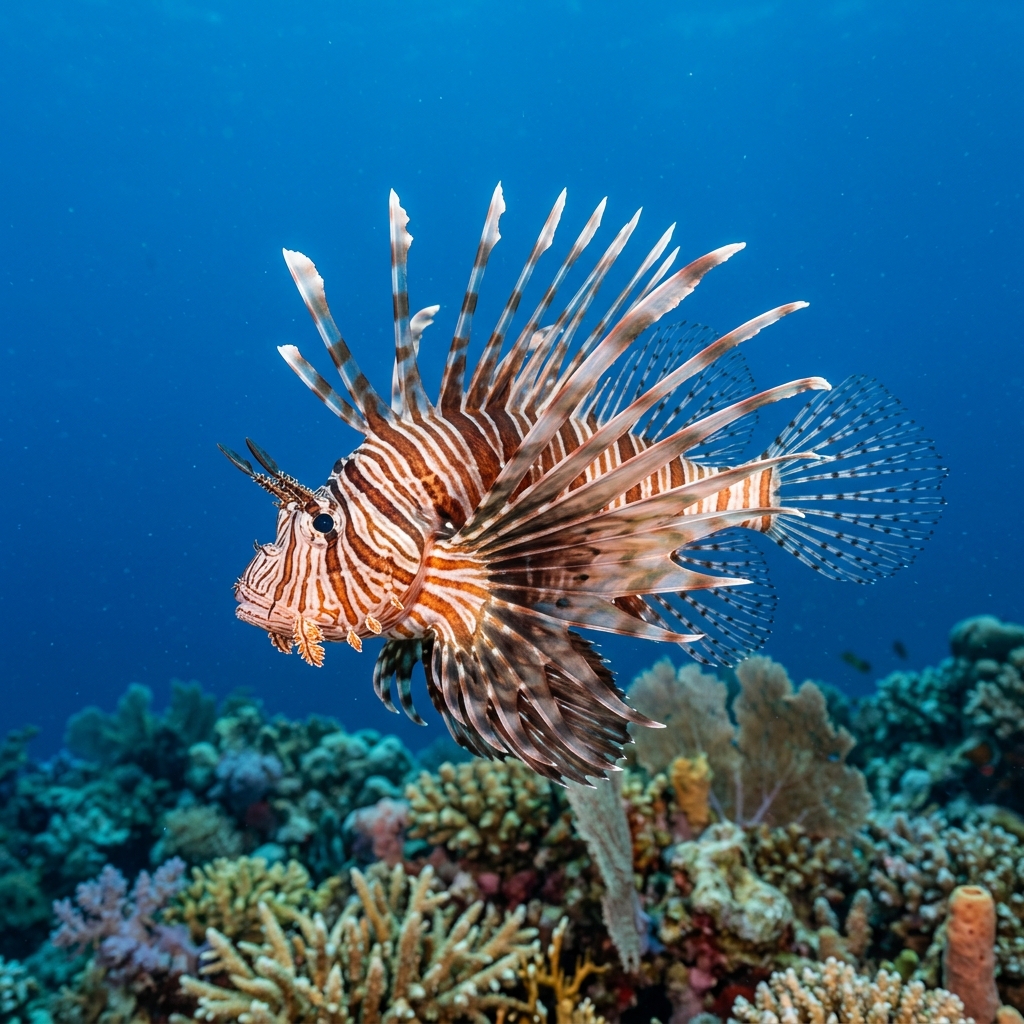
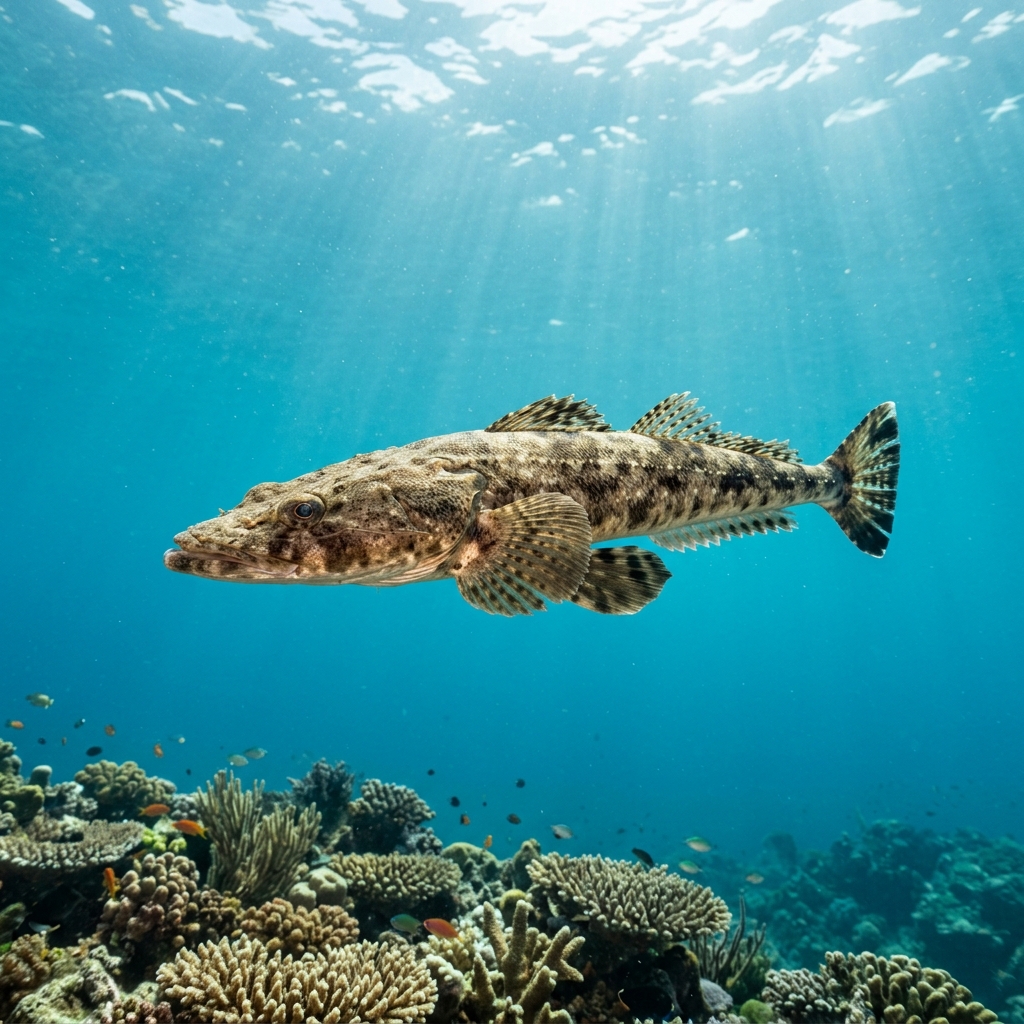
Reef neighbours a diver could mistake it for. Use the identification notes above to tell them apart.
Most reliably logged along the Pacific coast of Mexico, especially Baja California, with strong numbers also coming out of Guanacaste in Costa Rica and the Galápagos Islands in Ecuador. Smaller but consistent counts turn up along Mexico's Pacific Coast generally and in Costa Rica's South and Central Pacific regions.
Mapping where Stone Scorpionfish is logged…
Baja California in Mexico is the strongest area, with Guanacaste in Costa Rica and the Galápagos Islands in Ecuador also producing regular sightings. It also shows up along Mexico's broader Pacific Coast and Costa Rica's South and Central Pacific regions.
There's no detected seasonal pattern, and its wide temperature tolerance of about 20.6 to 29.1C means it's present on rocky reefs across the year. Time your trip around general diving conditions at the destination rather than a Stone Scorpionfish season.
Yes, it has venomous dorsal spines that deliver a painful sting if touched, though it won't chase or attack. The real danger is accidental contact since it blends in so well with rock and rubble, so watch where you place hands and fins.
Look for a rock-textured, mottled brown and grey fish lying motionless on rubble or rock, with a broad spiny head and high-set eyes. It rarely moves, so spotting the slightly-too-symmetrical lump on the seabed is usually the giveaway.
They typically reach around 31 cm in length, making them a solid handful of fish despite how easily they disappear against the reef.
Site and sighting data is aggregated from diver logs, iNaturalist and GBIF. For taxonomy and conservation status:
Madeira Rockfish
2,773 sites