Trachinotus stilbe
A silvery jack of Galápagos reefs, uncommon but reliable around the islands in water from 21 to 29C year-round.
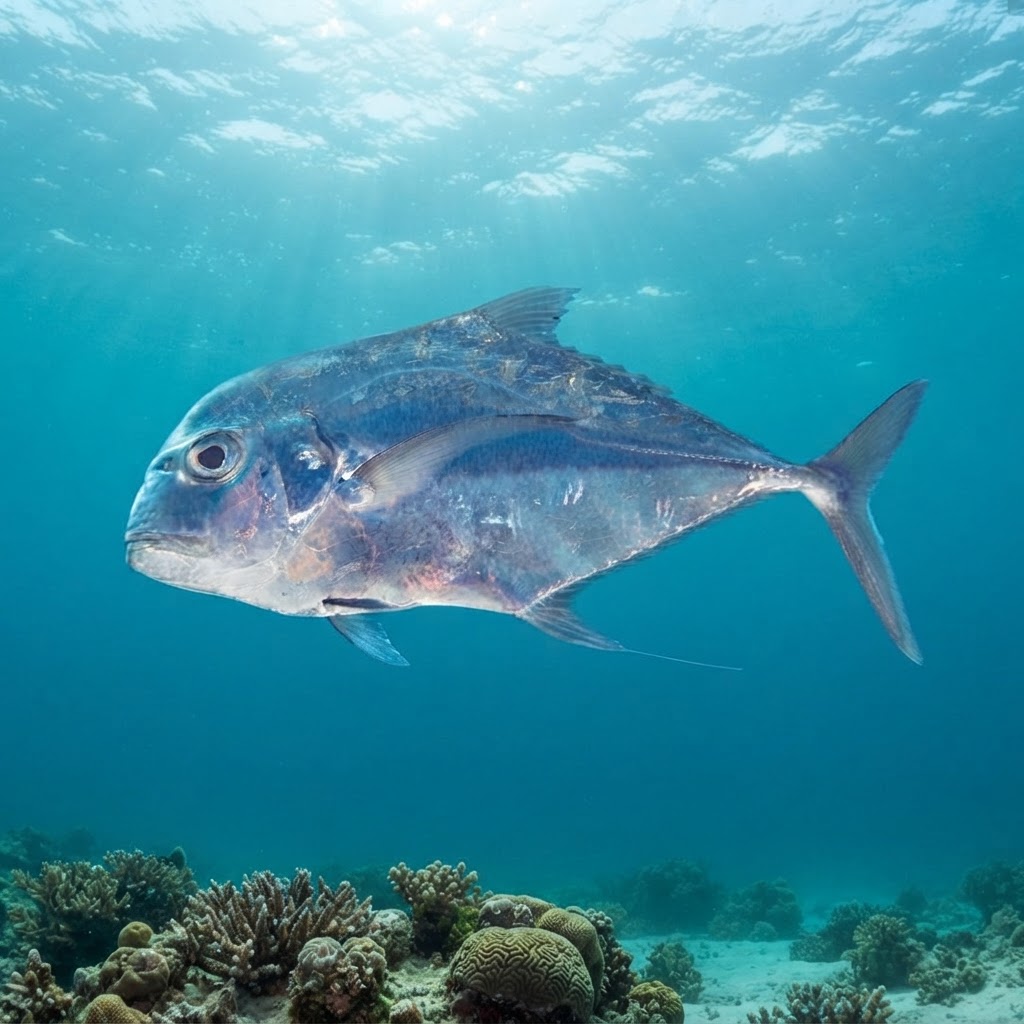
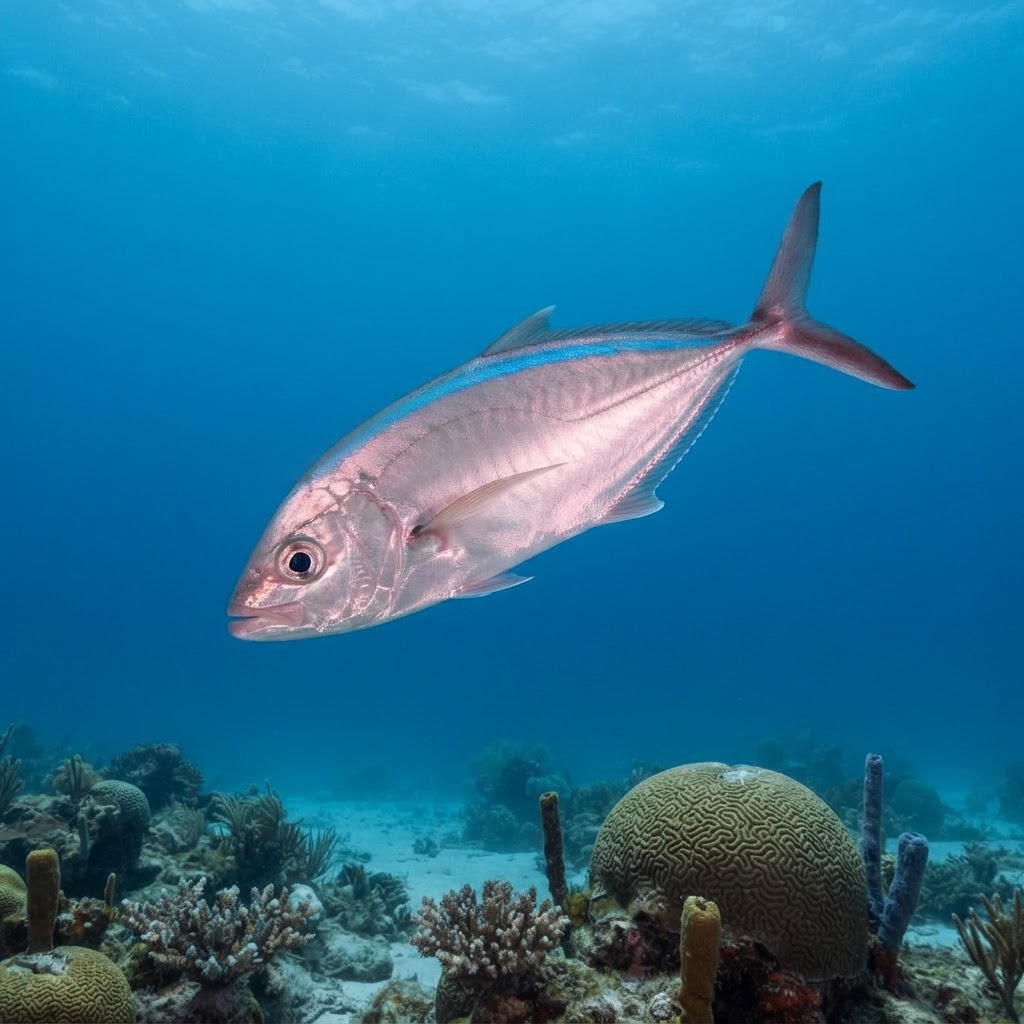
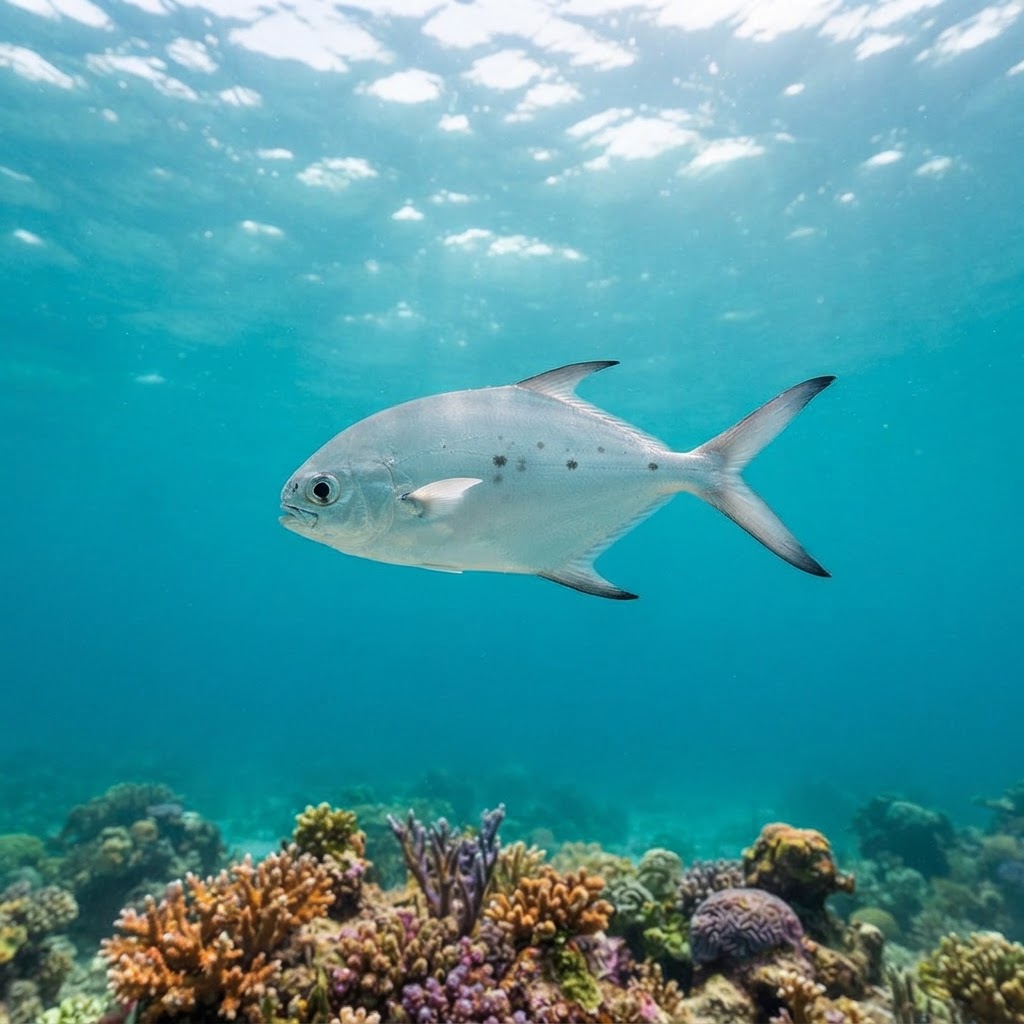
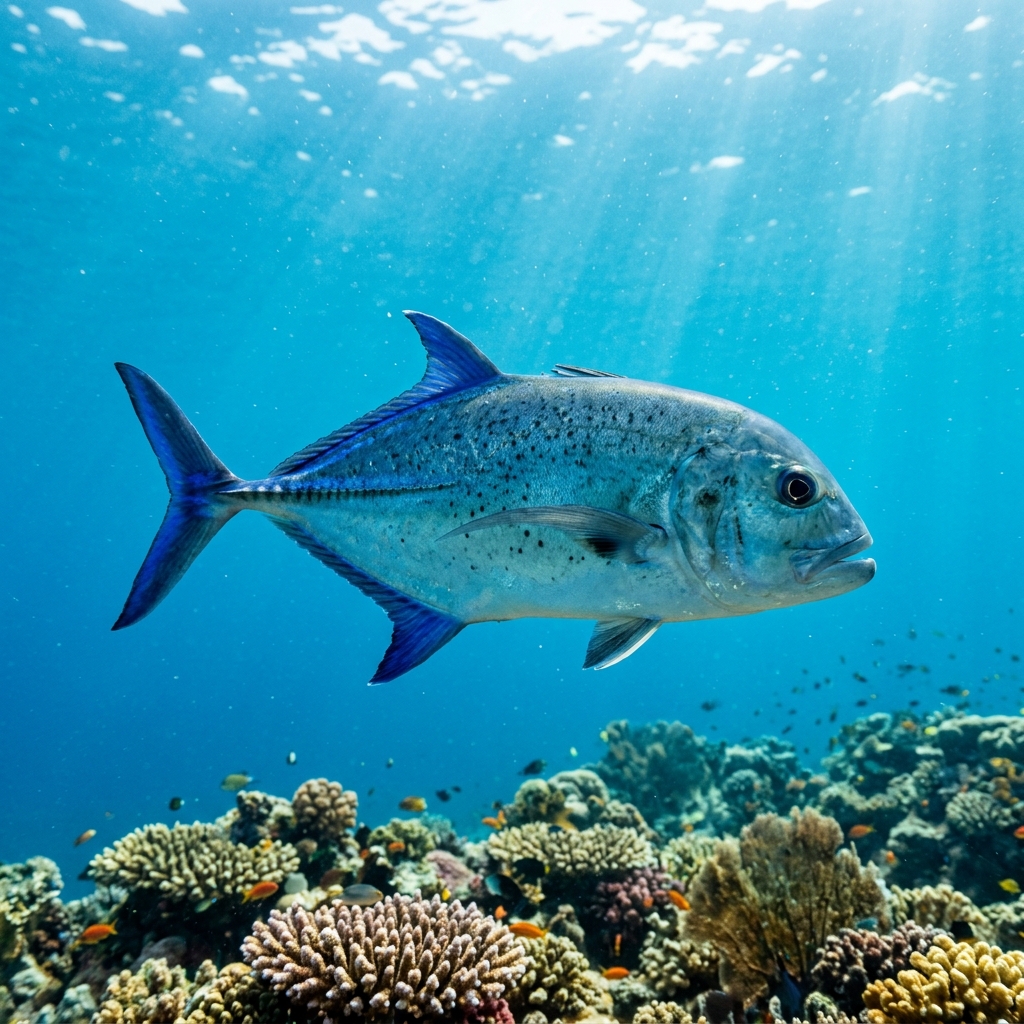
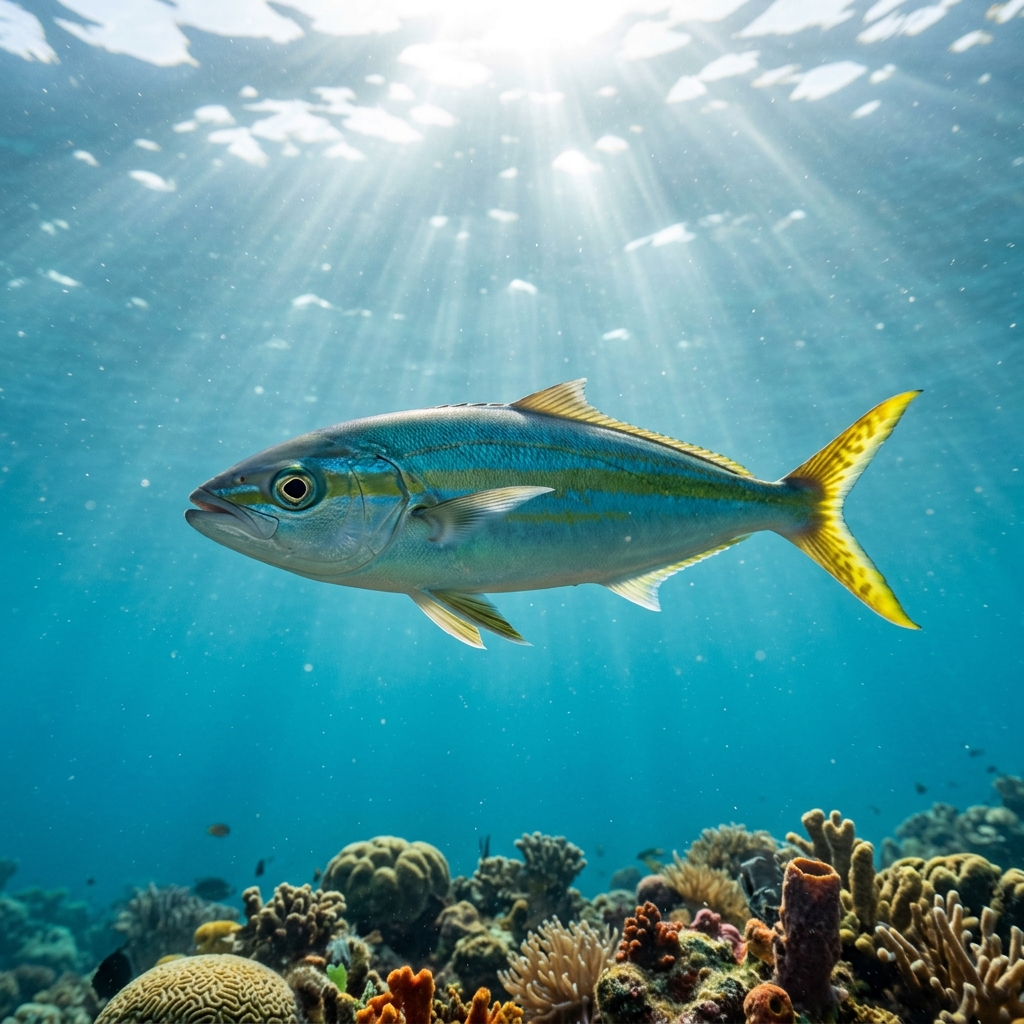
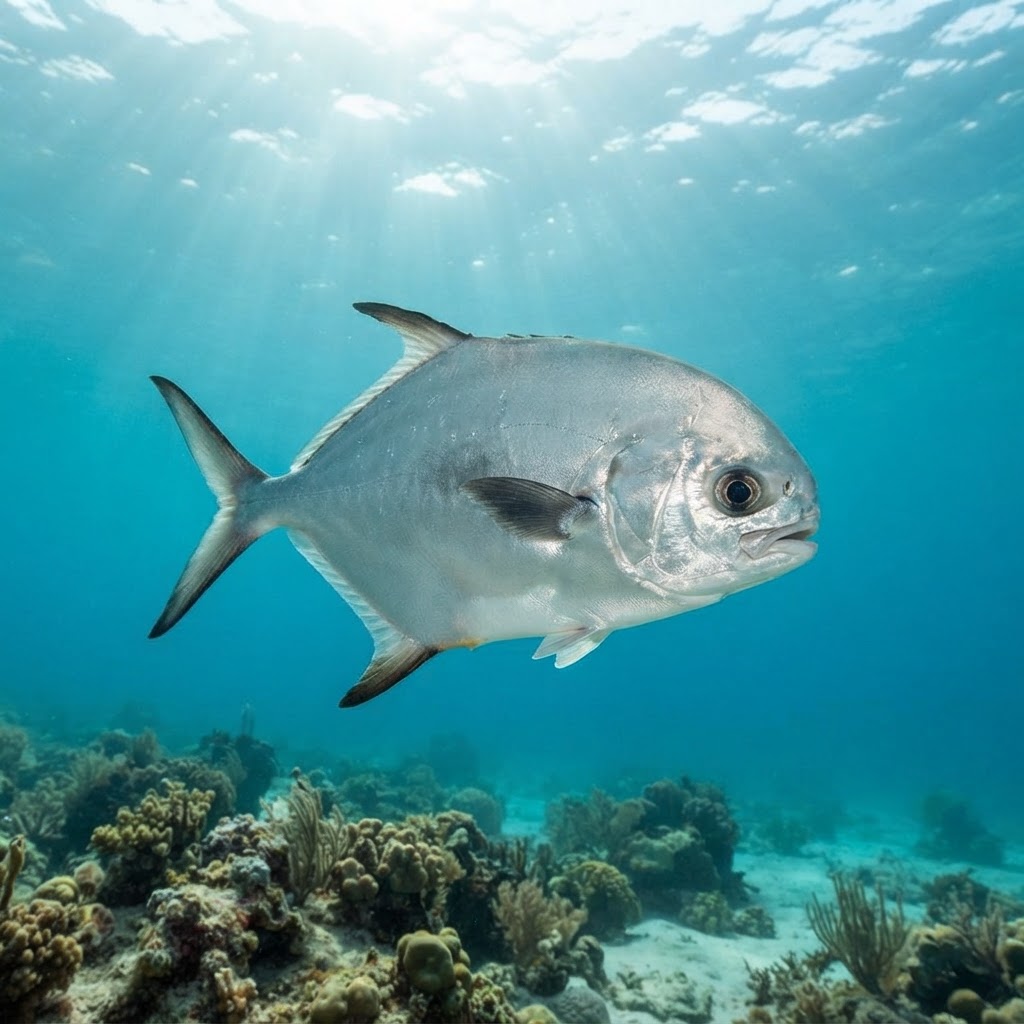
Look for a flat, deep-bodied silvery fish around 24 cm with a steel-grey to silver sheen and a sharply forked tail. The body has that classic pompano diamond profile, narrower at the snout and tail than through the middle, and the fins often carry a faint yellow or dusky tint. It usually shows alone or in small loose groups rather than tight schools, which helps separate it from busier jack species on the same reef.
Divers most often log this fish cruising over reef and rocky bottom, moving steadily rather than holding station, in the way jacks patrol open water looking for food. It tends to keep some distance from divers and does not linger for a close look, which fits its uncommon-to-rare sighting rate across sites. Expect brief encounters rather than a fish that sticks around for photos.
Its patchy, low-frequency sightings across nearly every Galápagos site logged suggest it ranges widely along the reef rather than holding a fixed territory, so persistence and open eyes on mid-water pay off more than staking out one spot.
Sightings show no detectable season, and the water temperature range logged (20.6 to 29.1C) spans both the Galápagos warm and cool upwelling periods, so it is a year-round possibility rather than a seasonal target.
Reef neighbours a diver could mistake it for. Use the identification notes above to tell them apart.
Every logged sighting of this fish comes from the Galápagos Islands, Ecuador, making it effectively an Ecuador specialty for divers. Within the islands it turns up across a broad spread of sites rather than one hotspot, so it is worth keeping an eye out on most Galápagos dives rather than planning around a single location.
Mapping where Steel Pompano is logged…
Almost all logged sightings are from the Galápagos Islands, Ecuador, spread across many sites rather than concentrated in one location. It has not been reliably reported diving elsewhere.
There is no clear season in the sighting data, and it has been logged across a wide temperature range from 20.6 to 29.1C. Treat it as a year-round possibility on Galápagos dives.
Look for a silvery, flat-bodied fish about 24 cm long with a steel-grey sheen, a deep diamond-shaped profile, and a forked tail. It usually swims alone or in small loose groups rather than tight schools.
They typically reach around 24 cm, making them a mid-sized member of the jack and trevally family rather than one of the larger open-water species.
No, they pose no known danger to divers and are not aggressive; they tend to keep their distance and swim on rather than approach.
Site and sighting data is aggregated from diver logs, iNaturalist and GBIF. For taxonomy and conservation status:
Bigeye Trevally
2,591 sites