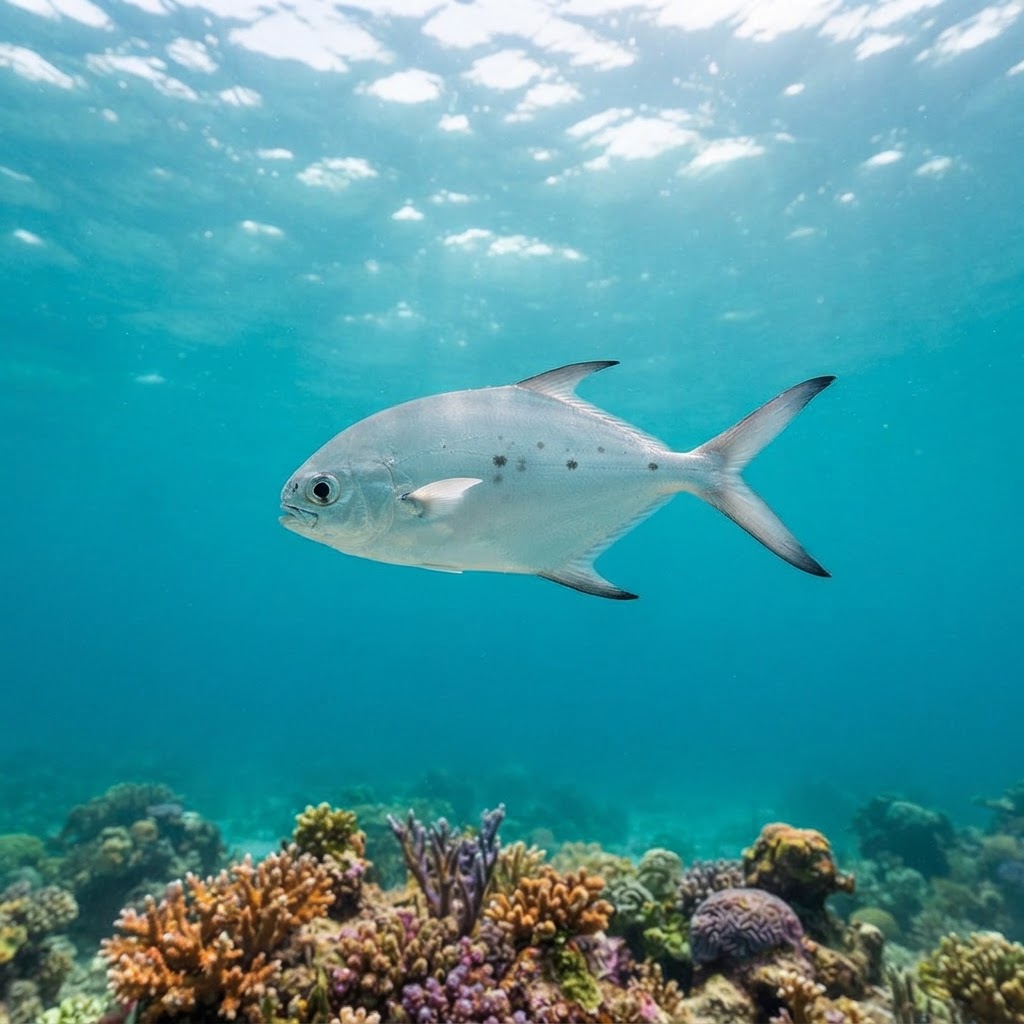
Trachinotus baillonii
Silvery dart flashing over shallow reef flats in the Maldives and Seychelles, comfortable year-round in warm 25-29C water.
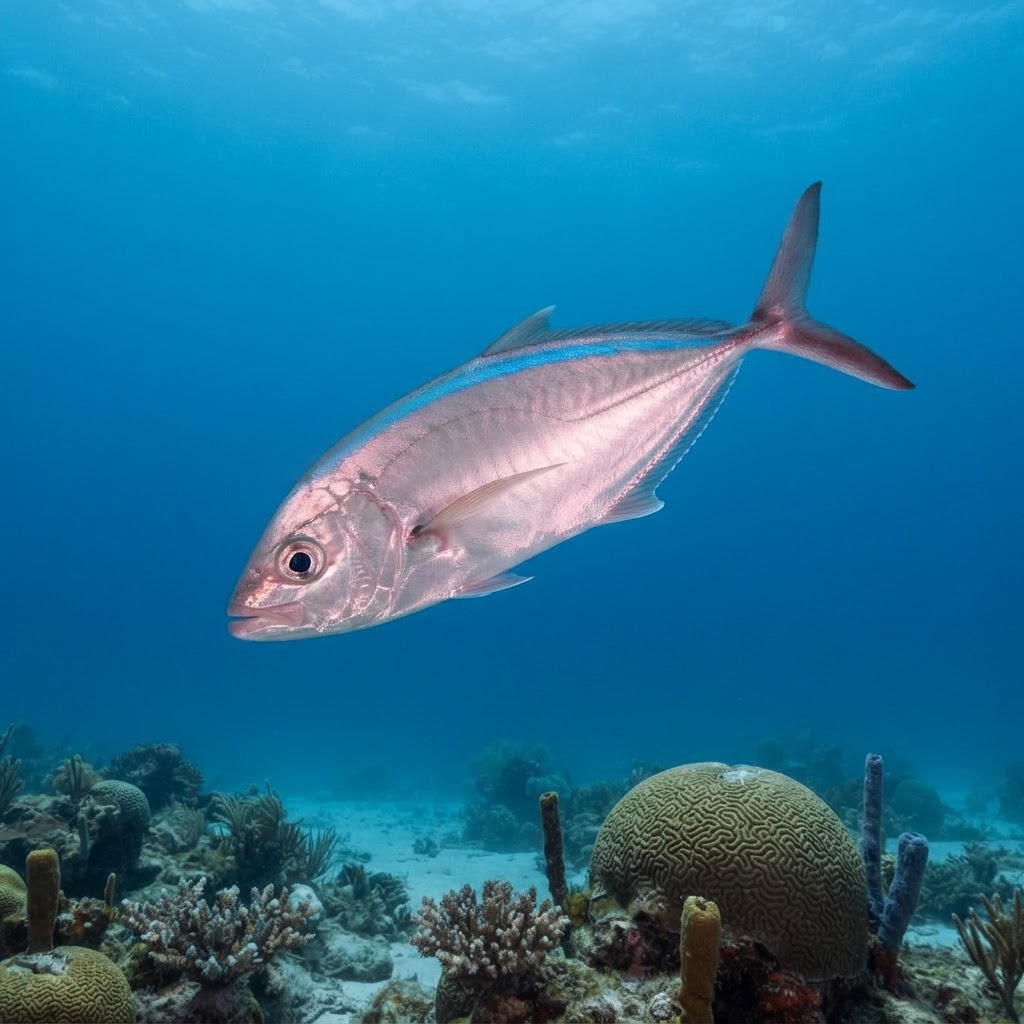
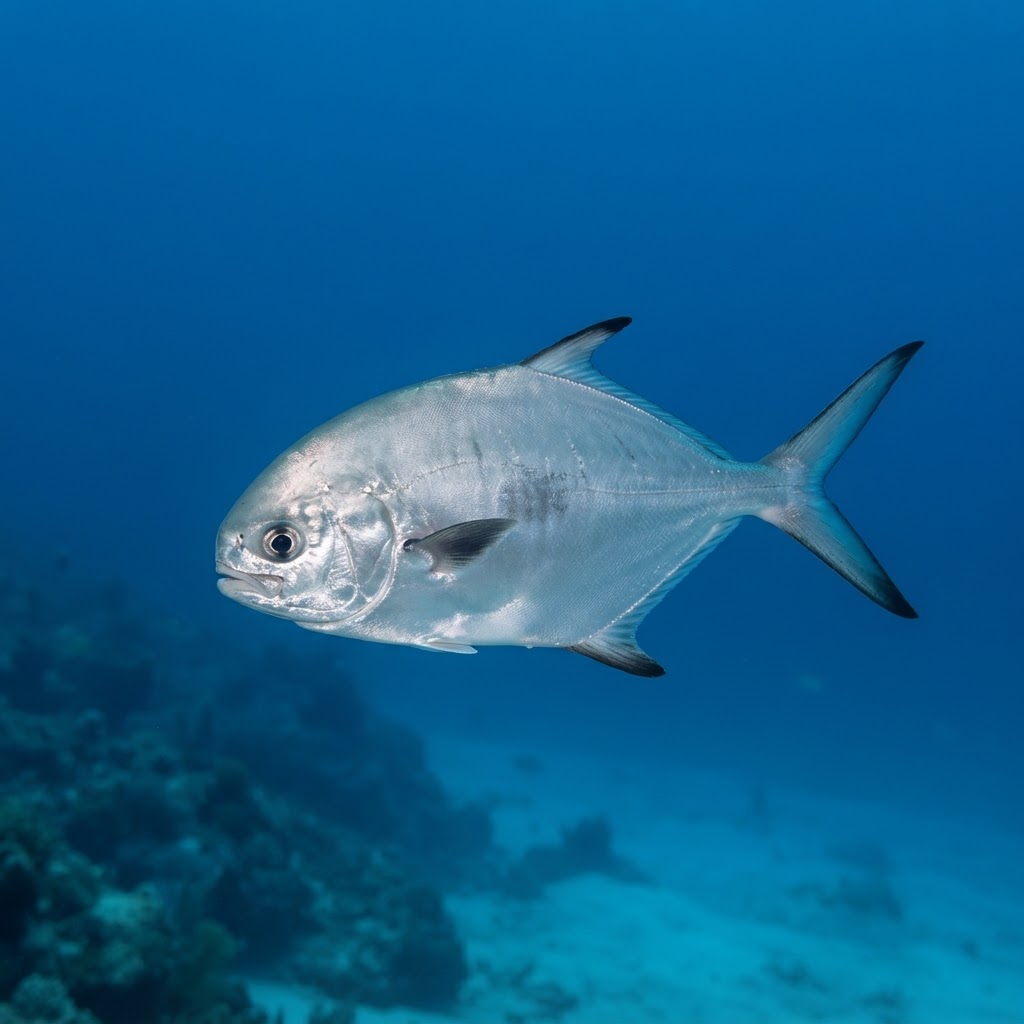
A slim, deep-bodied fish with a strongly forked tail and a silvery, almost mirror-like flank that catches light as it turns. Look for the faint row of small dark spots along the lateral line, which is what separates it from plainer silver jacks at a glance. It tops out around 42 cm, usually seen singly or in small loose groups cruising just above the sand or reef edge in very shallow water.
Divers most often spot it working the shallows, cruising just above sand patches or reef flats in less than 3 metres of water, sometimes tilting and flashing its silvery sides as it hunts small invertebrates. It tends to keep a loose distance from divers rather than bolting, and is usually logged as an uncommon extra sighting rather than the main event of a dive. Because it stays so shallow, it is often picked up by snorkellers as much as divers.
That shallow, sand-hugging habit means it is often overlooked by divers focused on deeper reef structure, making it more of a snorkel-zone and safety-stop regular than a dedicated dive target.
No clear seasonal pattern shows up in the data, and with a comfortable range of 24.7 to 29.3C it stays on shallow tropical reefs year-round, so any month works for a sighting.
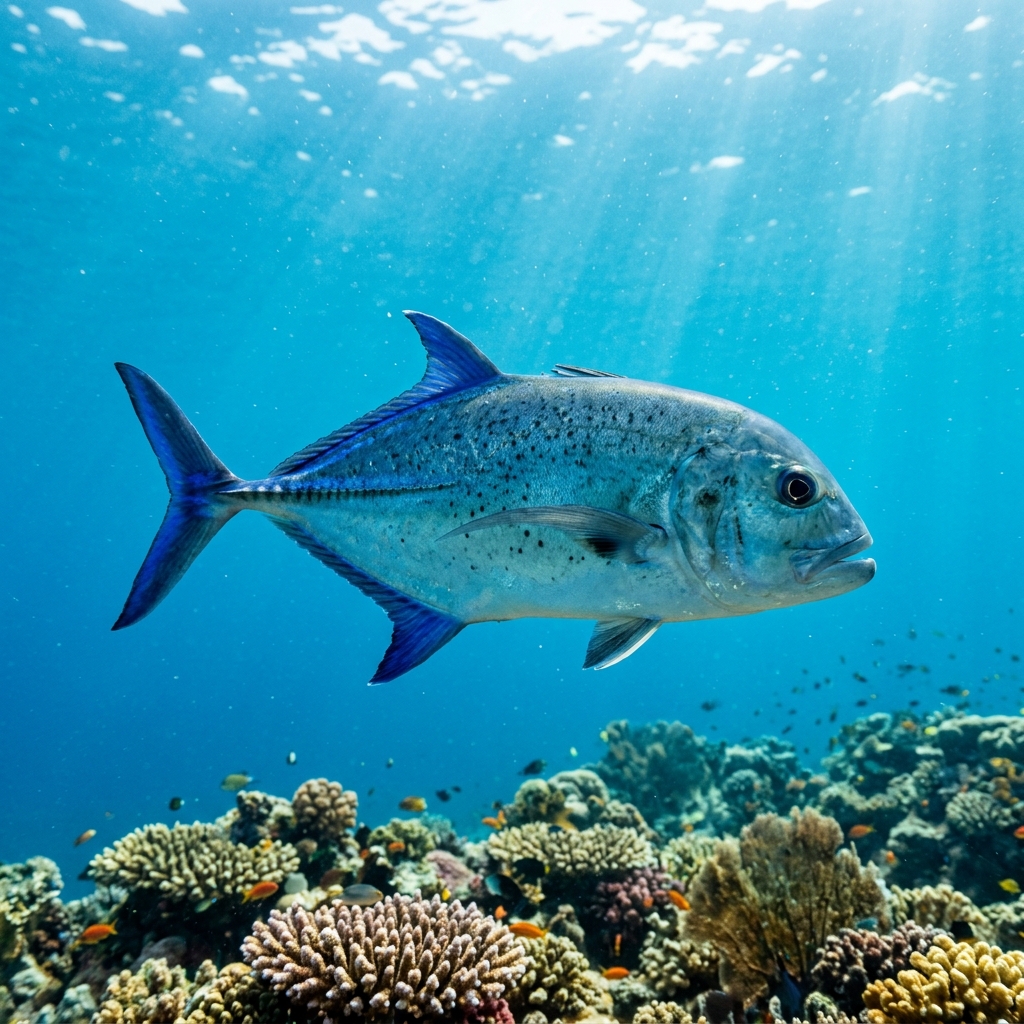
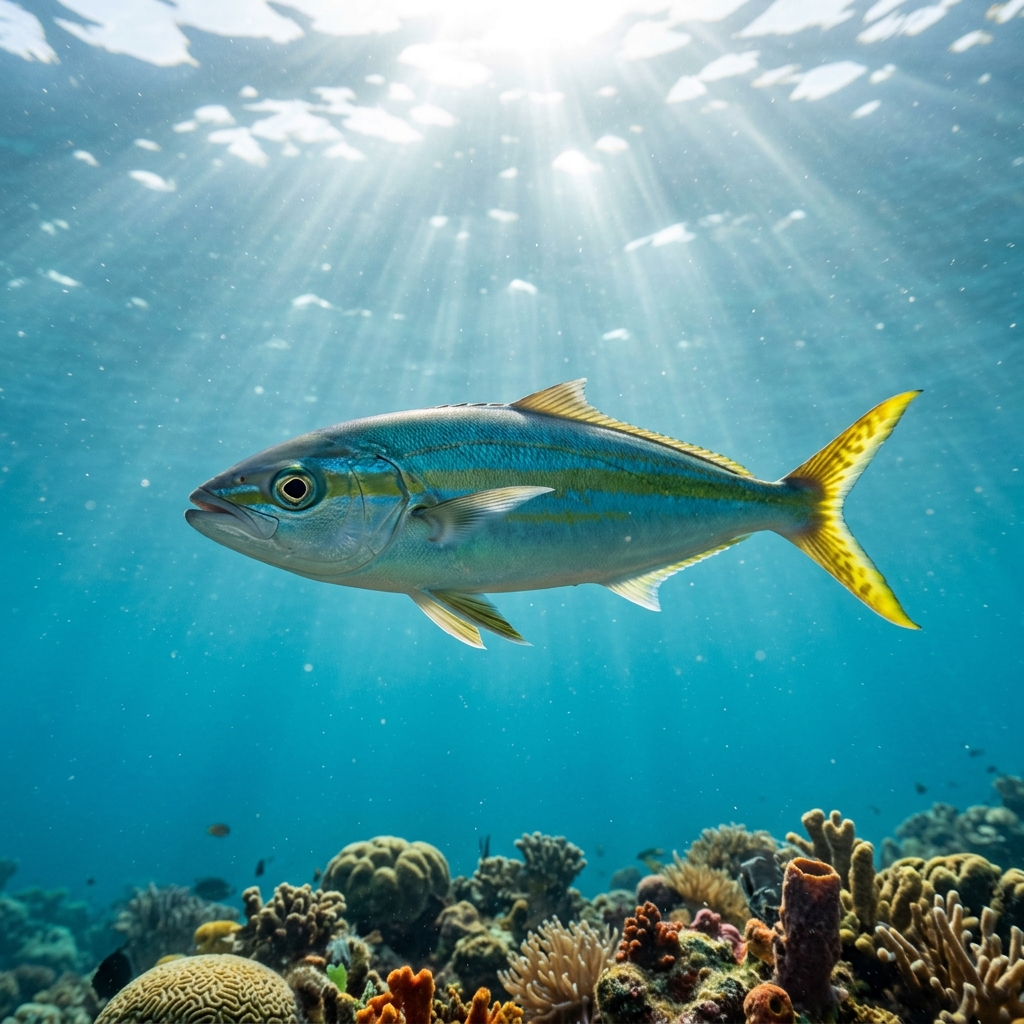
Reef neighbours a diver could mistake it for. Use the identification notes above to tell them apart.
Most commonly logged in the Maldives, particularly the Central and Northern Atolls, and a reliable sighting across the Inner Islands of Seychelles. Also turns up consistently in Okinawa and the Ryukyu Islands of Japan, the Visayas in the Philippines, and along Thailand's Andaman coast around Krabi, Phuket and Koh Lanta.
Mapping where Smallspotted Dart is logged…
The Maldives and Seychelles offer the strongest populations, especially the Central Atolls and the Inner Islands, with good numbers also logged in Okinawa, Japan and the Visayas region of the Philippines.
There is no strong season in the sighting data. Warm water between roughly 25 and 29C year-round means it can turn up on shallow reef flats in any month.
Look for a silvery, deep-bodied fish with a forked tail cruising in very shallow water, with a subtle line of small dark spots along its side. It rarely grows past 42 cm and is usually alone or in a small loose group.
They reach around 42 cm in length, making them a mid-sized member of the jack and trevally family rather than a giant.
No, they pose no threat to divers and simply cruise the shallows feeding on small invertebrates.
Site and sighting data is aggregated from diver logs, iNaturalist and GBIF. For taxonomy and conservation status:
Bigeye Trevally
2,591 sites