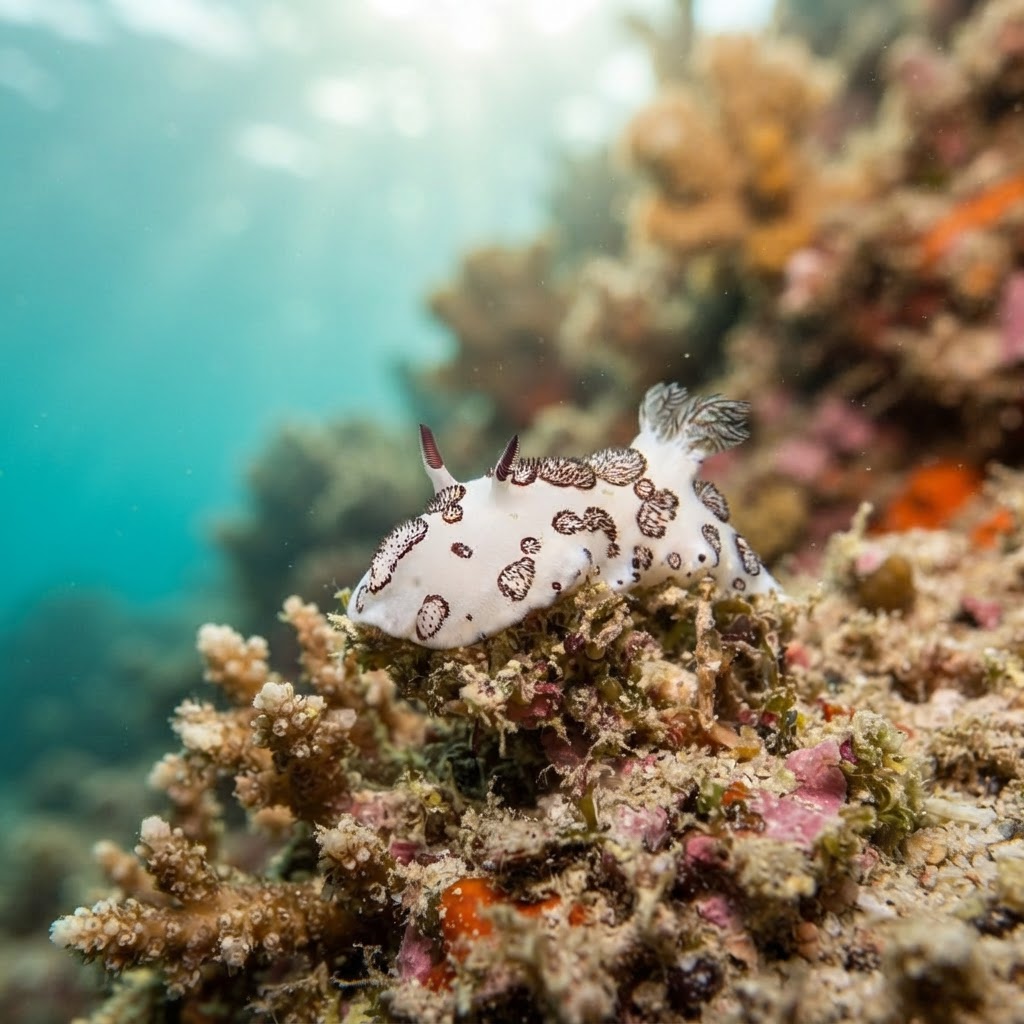
Jorunna funebris
White nudibranch with black rings, common on reefs in the Visayas and Peninsular Malaysia in 24-30C water, year-round.
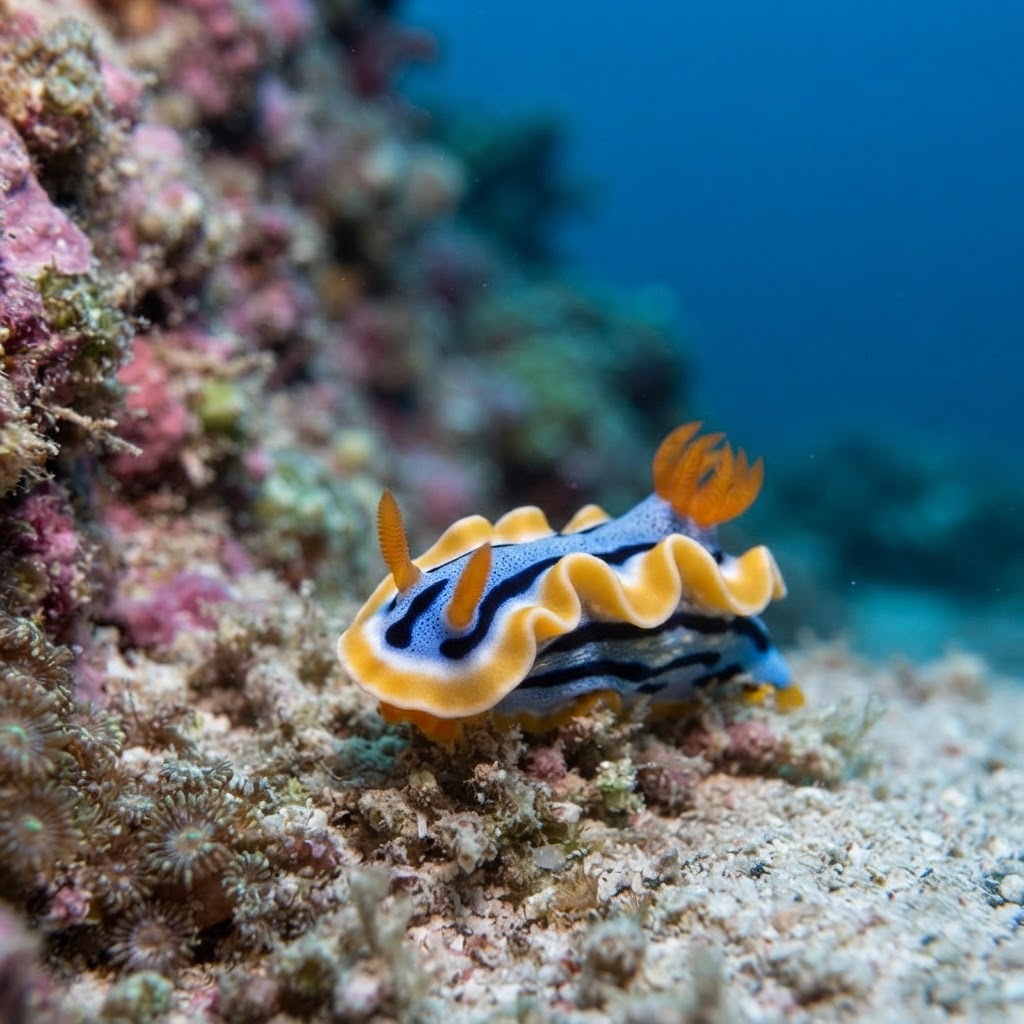
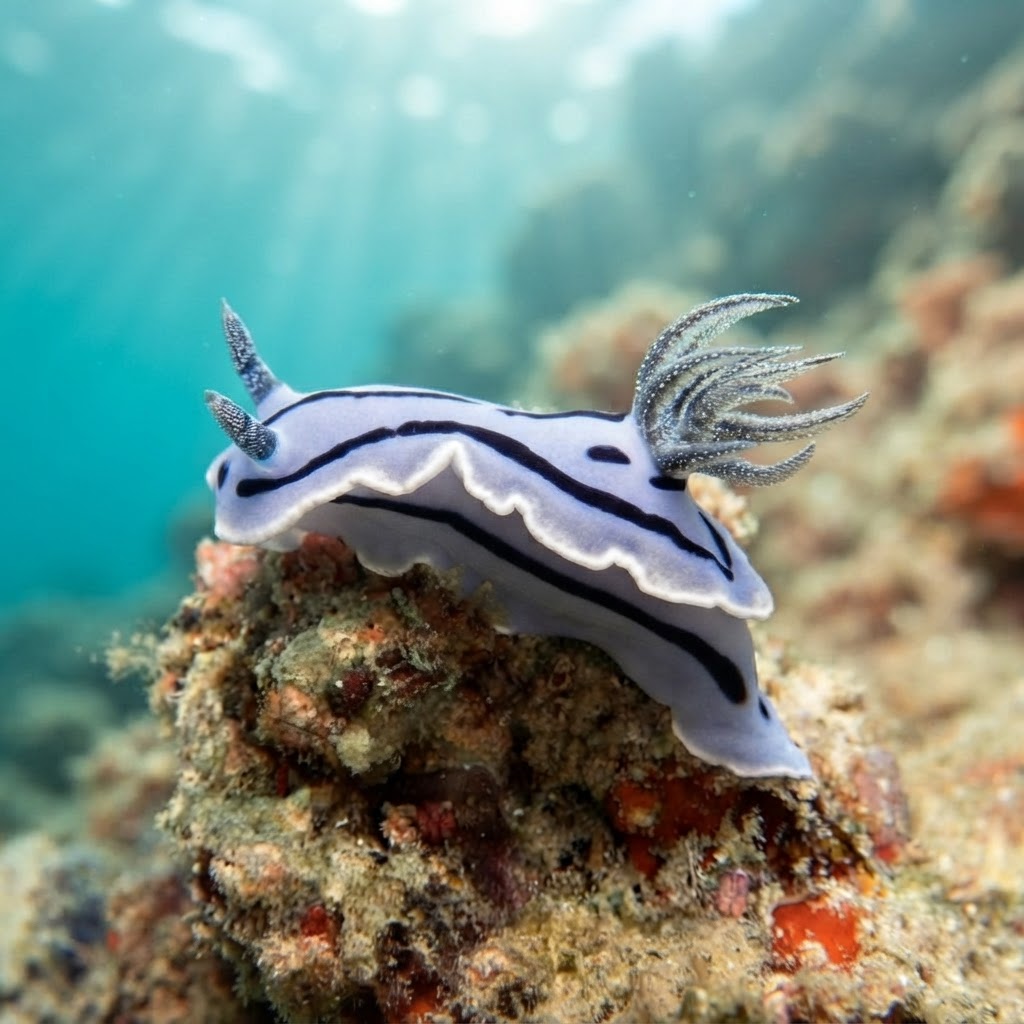
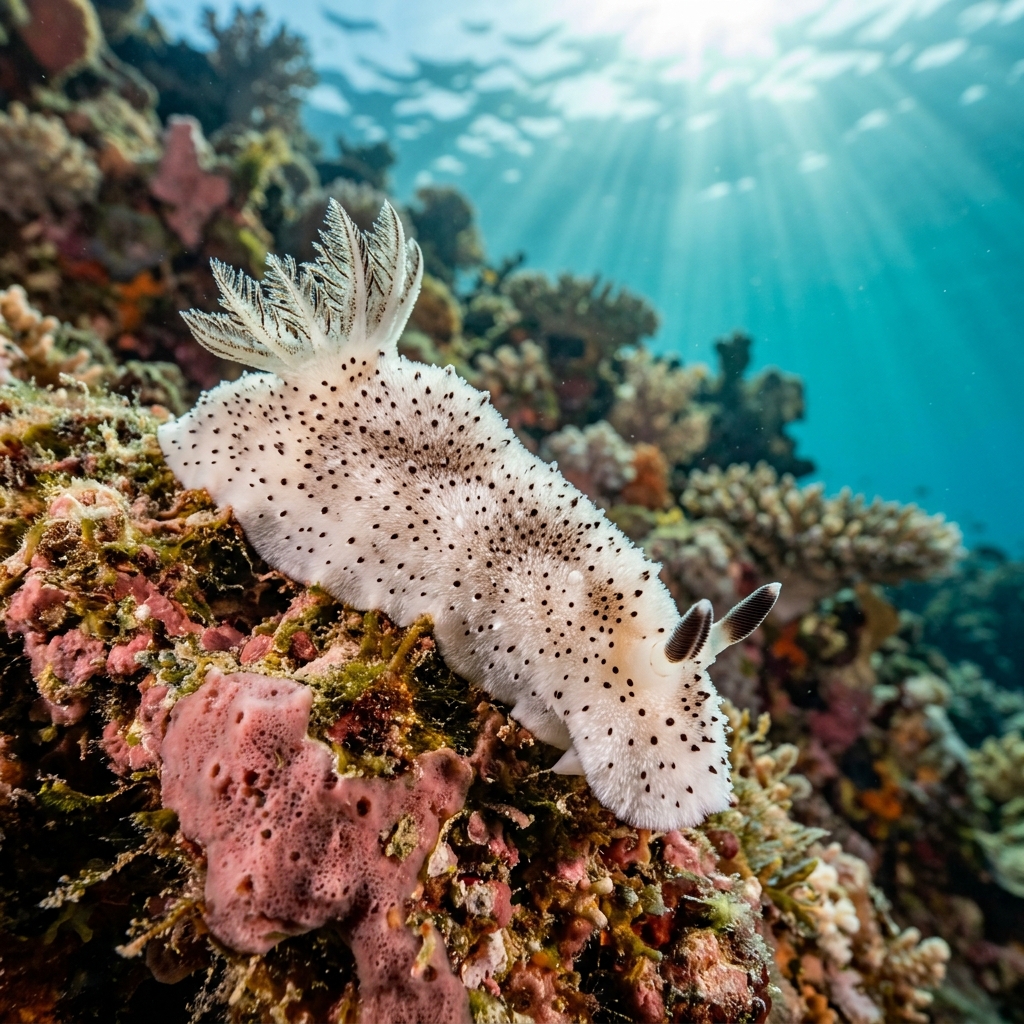
A small, velvety-white nudibranch (soft-bodied marine mollusc) about 3cm long, patterned with irregular black or dark-green rings and blotches scattered across its back. Its two rhinophores (sensory tentacles) and feathery gill cluster at the rear are white, tipped with black to match the body pattern. The soft, slightly bumpy texture and ring pattern rather than solid spots or lines are the key giveaway against other white-based nudibranchs.
Found crawling slowly over reef rubble, sponge patches and rocky substrate where it grazes, usually low on the reef and easy to approach since it has no means of fast escape. Divers most often spot it during the day sitting still or inching across a sponge, and it takes no notice of a camera hovering close for a macro shot.
It feeds almost exclusively on blue sponges of the genus Neopetrosia, and researchers have found it accumulates the sponge's chemical compounds in its own tissue, likely as a borrowed defence against predators.
No clear seasonal pattern shows up in the data, and with a comfortable range of roughly 24 to 30C across its tropical reef habitats, it turns up year-round rather than in a particular window.
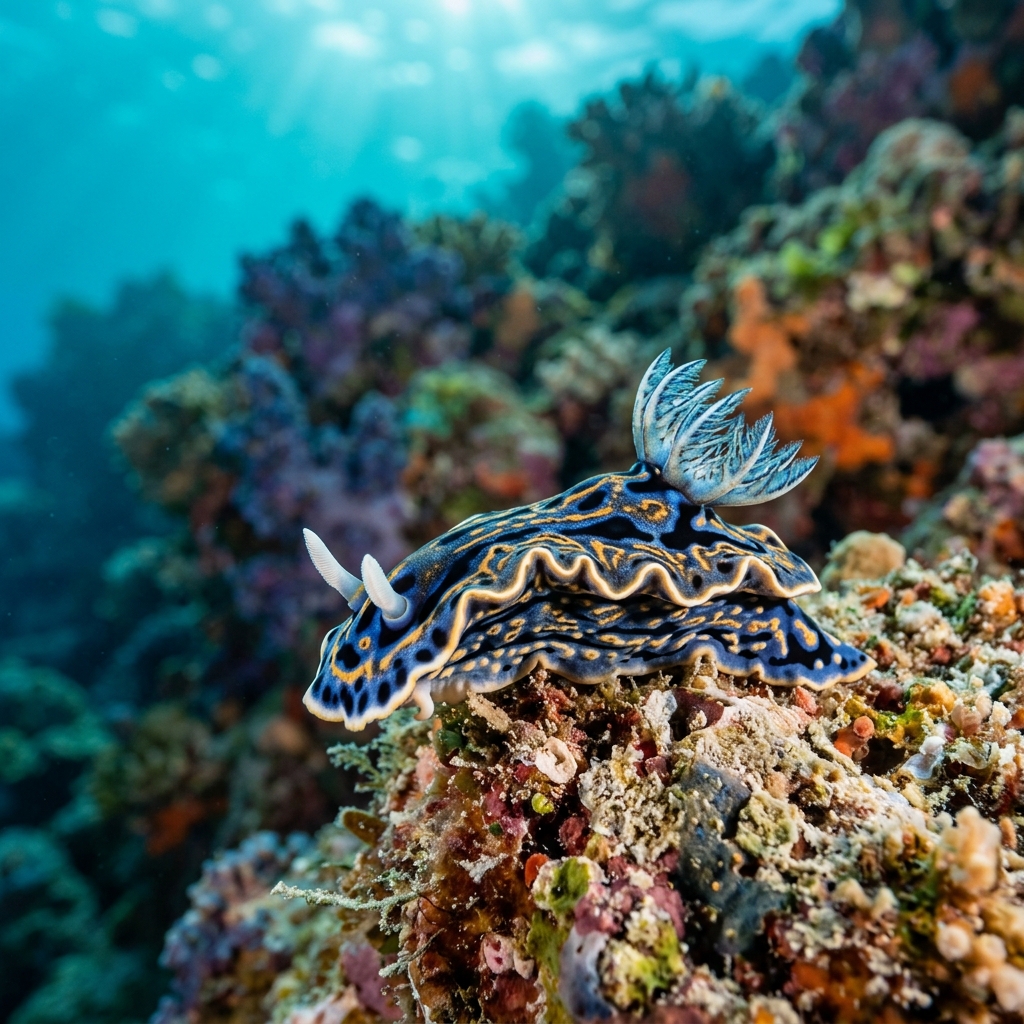
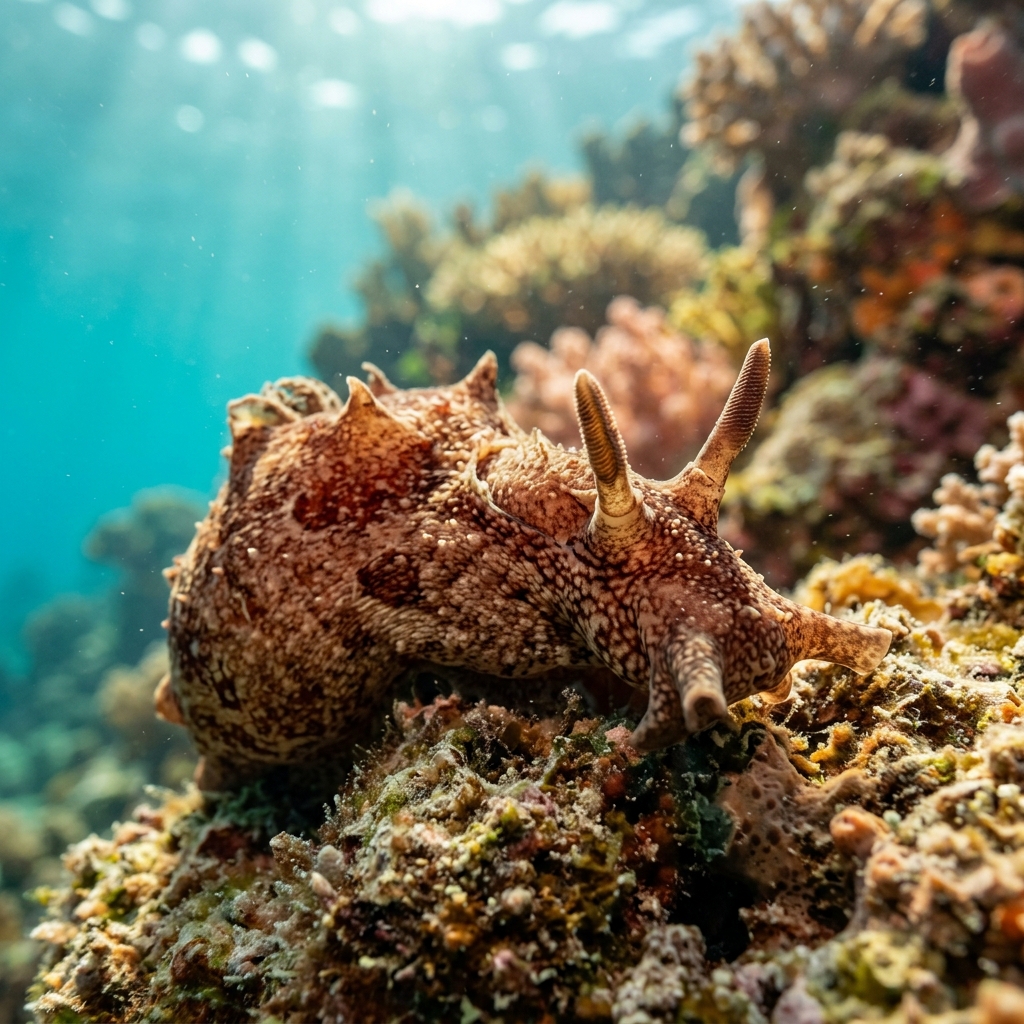
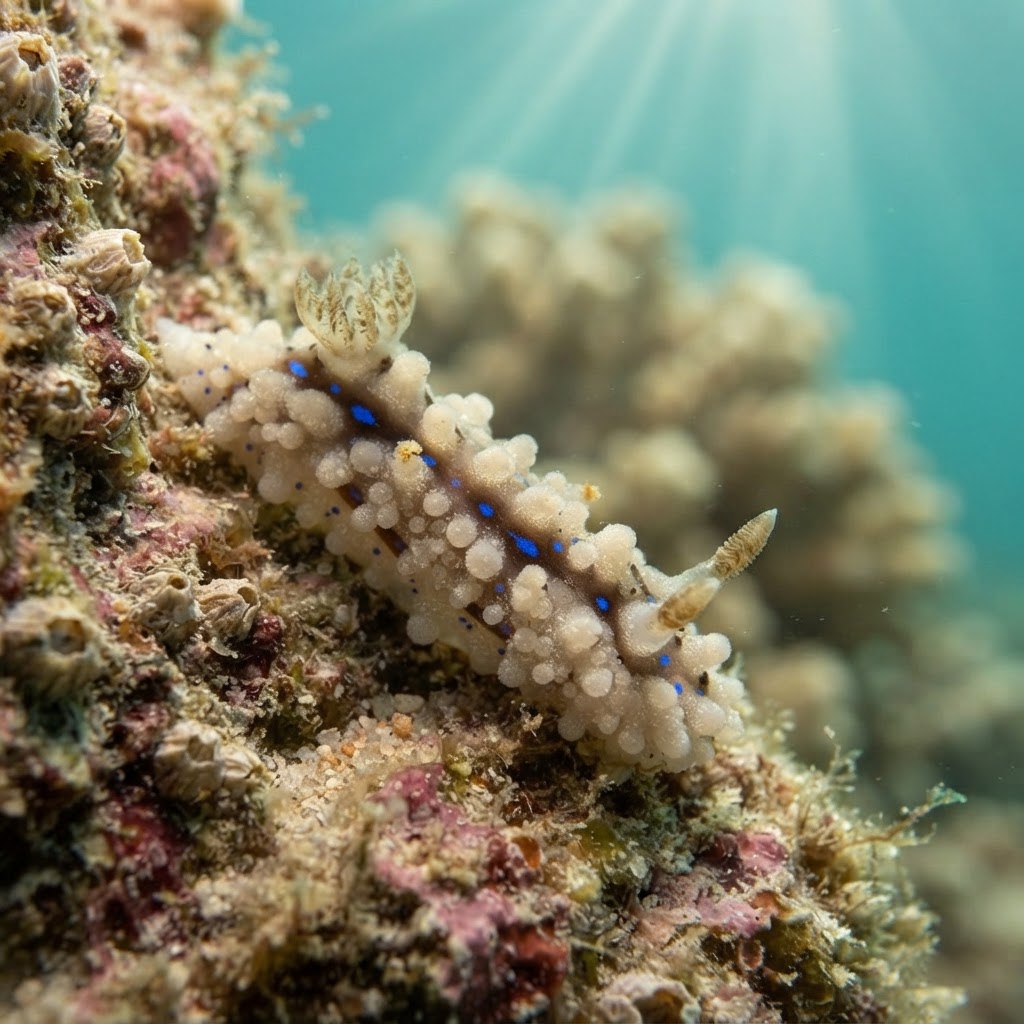
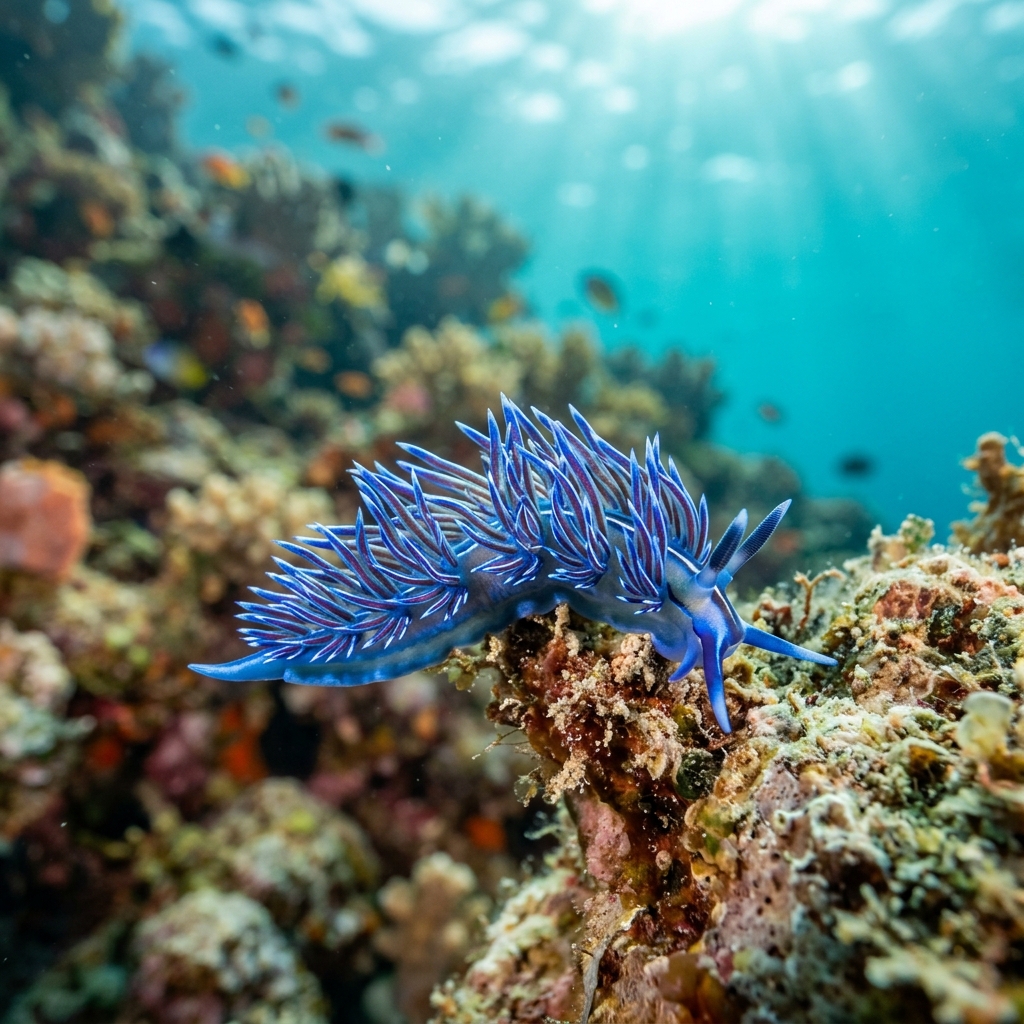
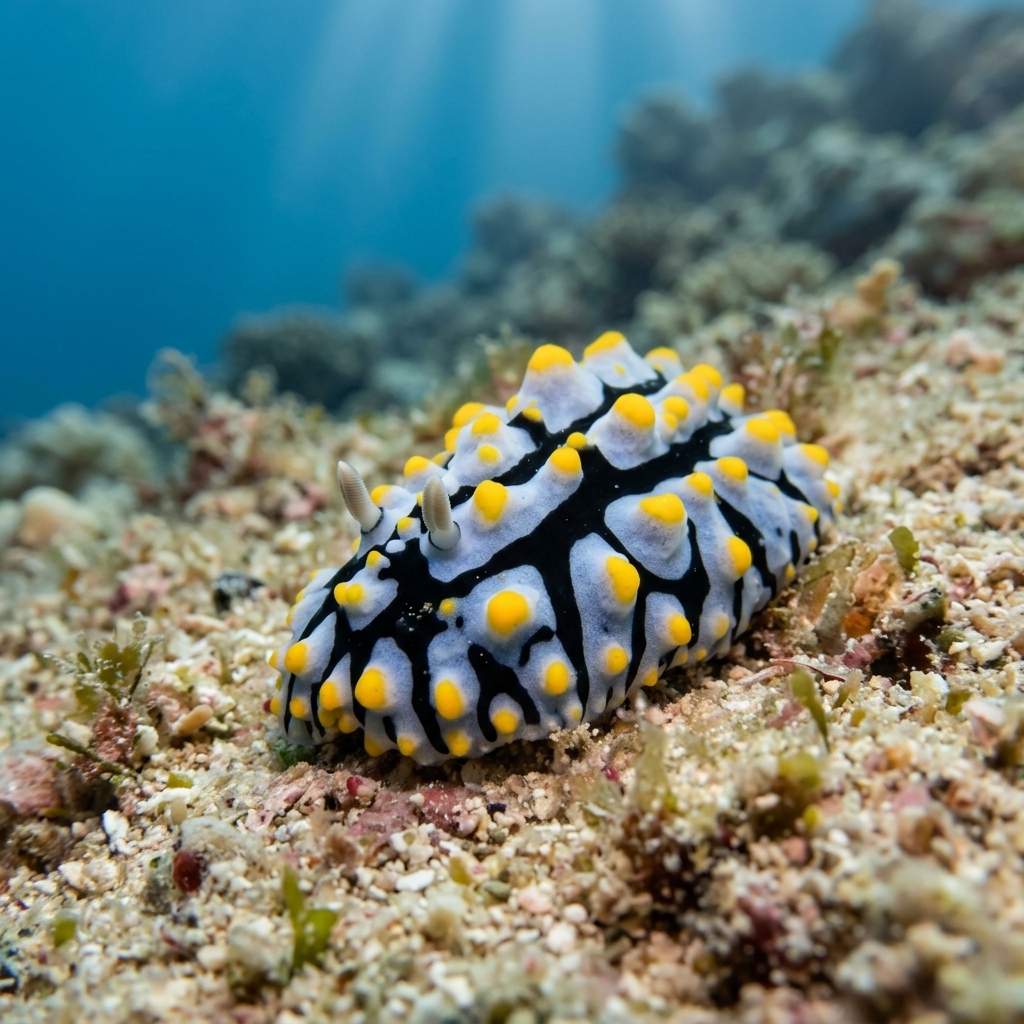
Reef neighbours a diver could mistake it for. Use the identification notes above to tell them apart.
Most reliably logged in the Philippines, especially the Visayas and Luzon, and across Peninsular Malaysia's east coast, with strong numbers also out of Sihanoukville in Cambodia and around Koror & Malakal in Palau. Divers also find it consistently in Indonesia's Bali region, Palawan in the Philippines, Taiwan, the Northern Mariana Islands, and Hawaii.
Mapping where Ringed Velvet Dorid is logged…
It is a reliable find across the Philippines (particularly the Visayas and Luzon) and Peninsular Malaysia's east coast, with good numbers also in Cambodia's Sihanoukville area, Palau, Bali, Taiwan and Hawaii.
There is no strong seasonal signal in sighting data, and it tolerates a wide tropical range of about 24 to 30C, so it is seen on reefs throughout the year rather than during a specific season.
Look for a small white nudibranch, around 3cm, covered in irregular black or dark rings rather than solid spots or stripes, with matching black-tipped rhinophores and gill tuft.
They stay small, typically around 3cm long, so most divers spot them while looking closely at sponge-covered rubble or rock rather than from a distance.
It feeds almost entirely on blue Neopetrosia sponges and stores the sponge's chemical compounds in its own body, turning its diet into a chemical defence against predators.
No, it poses no risk to divers. It has no venom or bite of concern and simply crawls slowly over the reef, safe to photograph up close without disturbing it.
Site and sighting data is aggregated from diver logs, iNaturalist and GBIF. For taxonomy and conservation status:
Light-spotted Aegires
3,168 sites