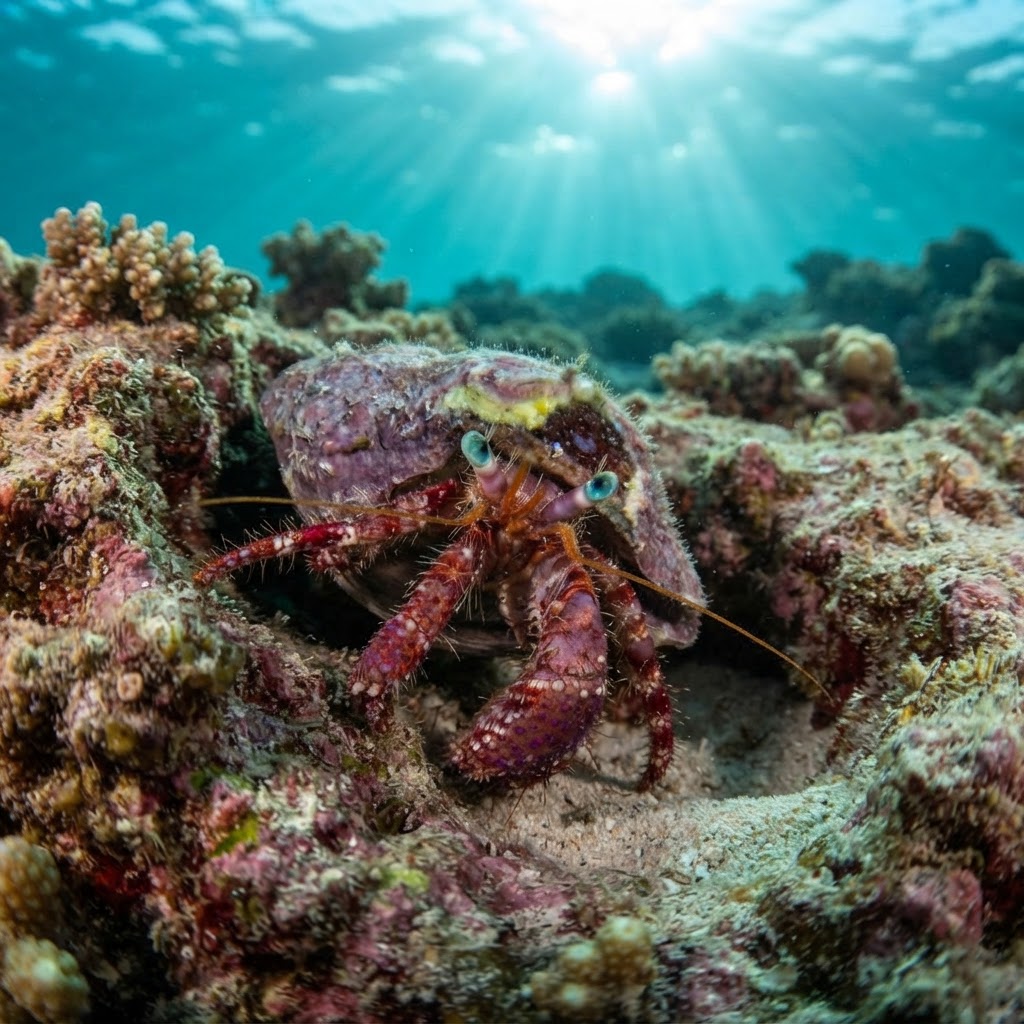
Dardanus venosus
Uncommon but reliable find on Guadeloupe and Bonaire reefs, comfortable year-round in warm 25-31C water.
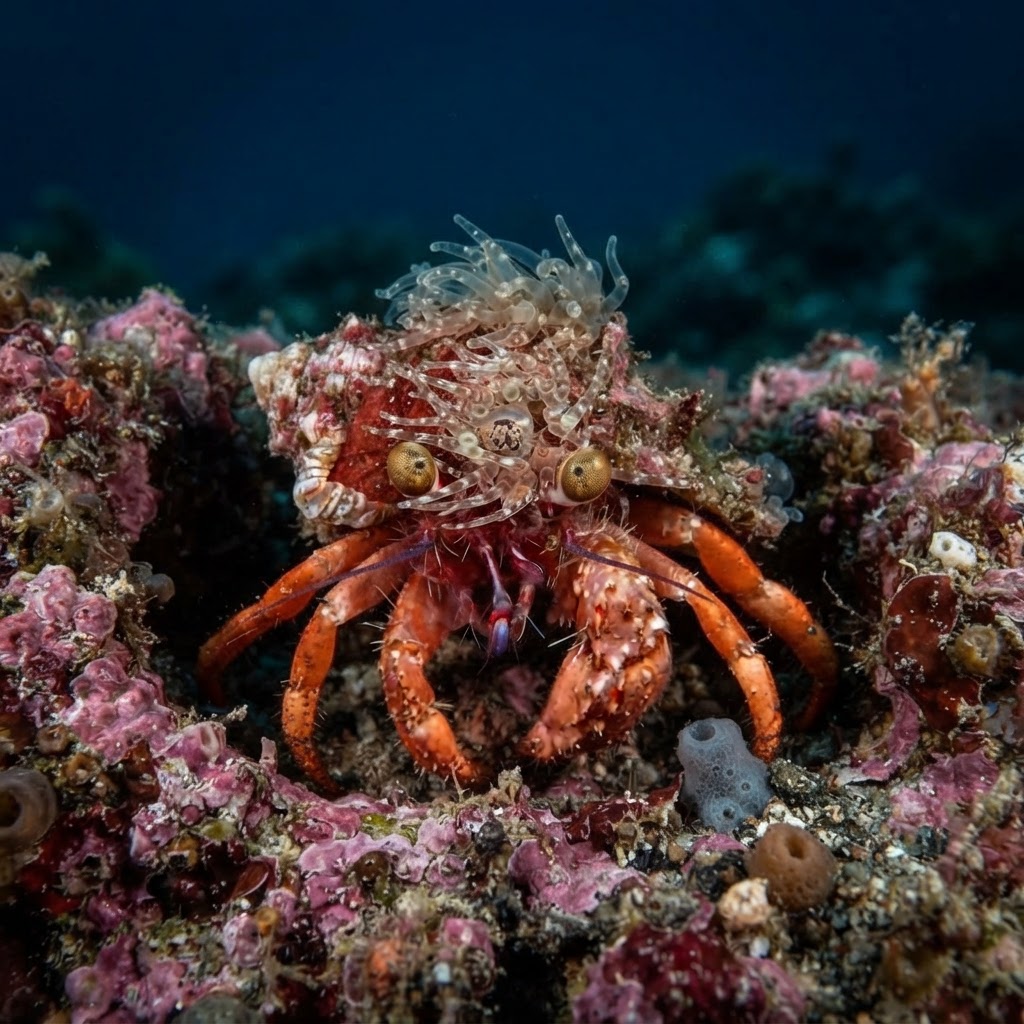
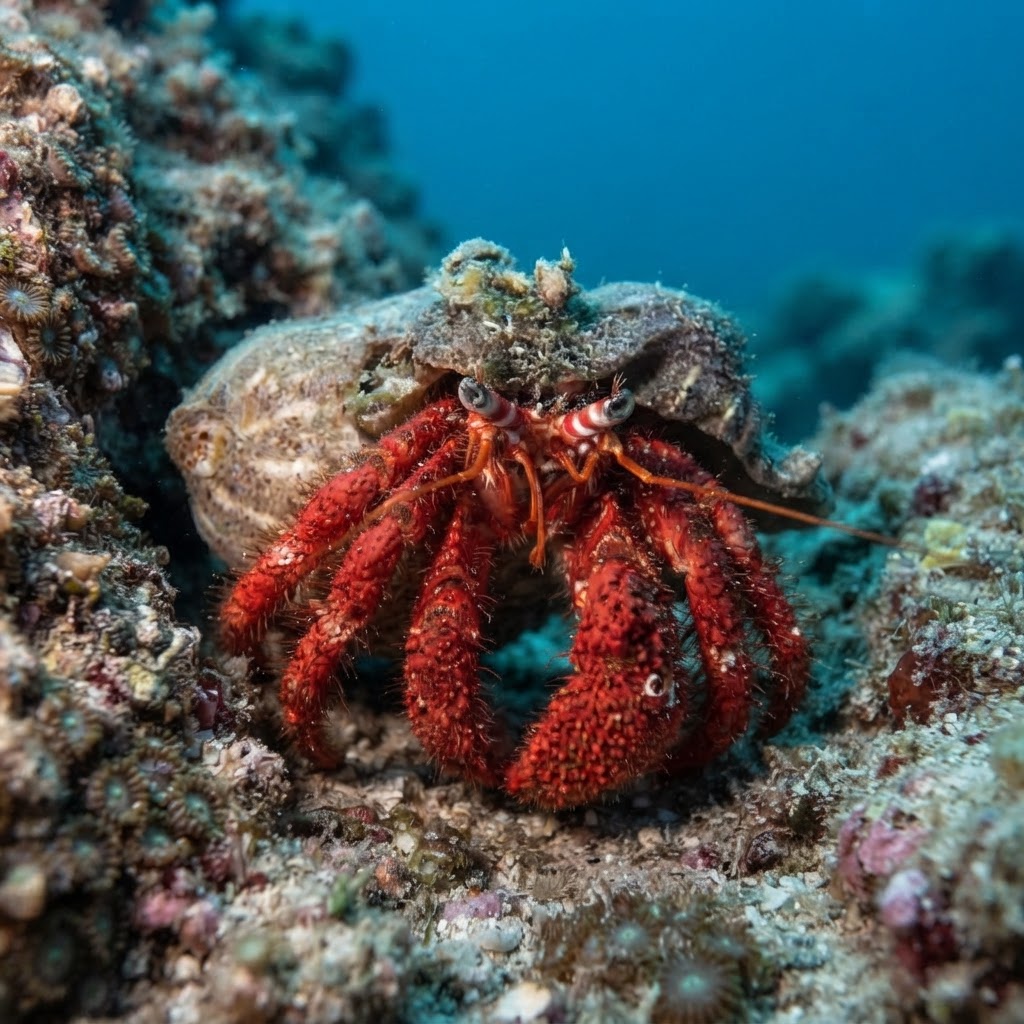
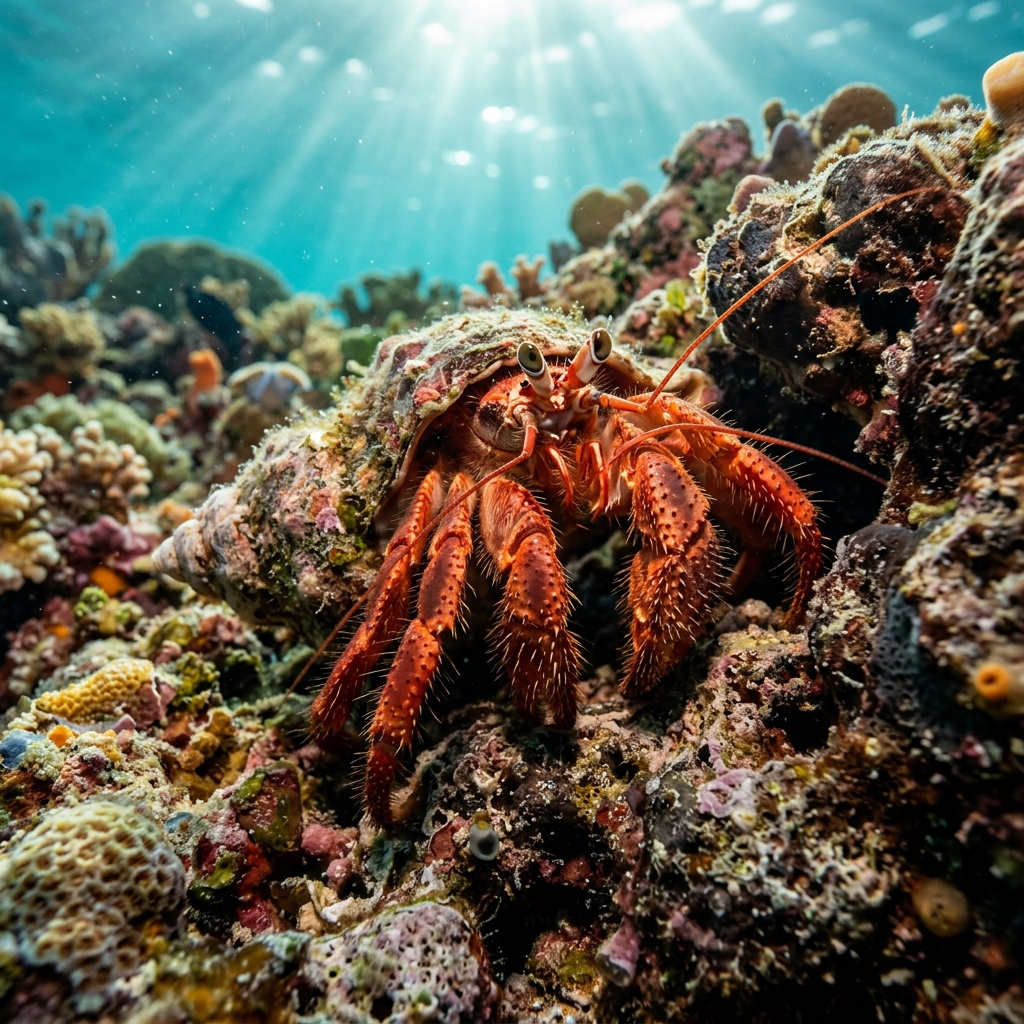
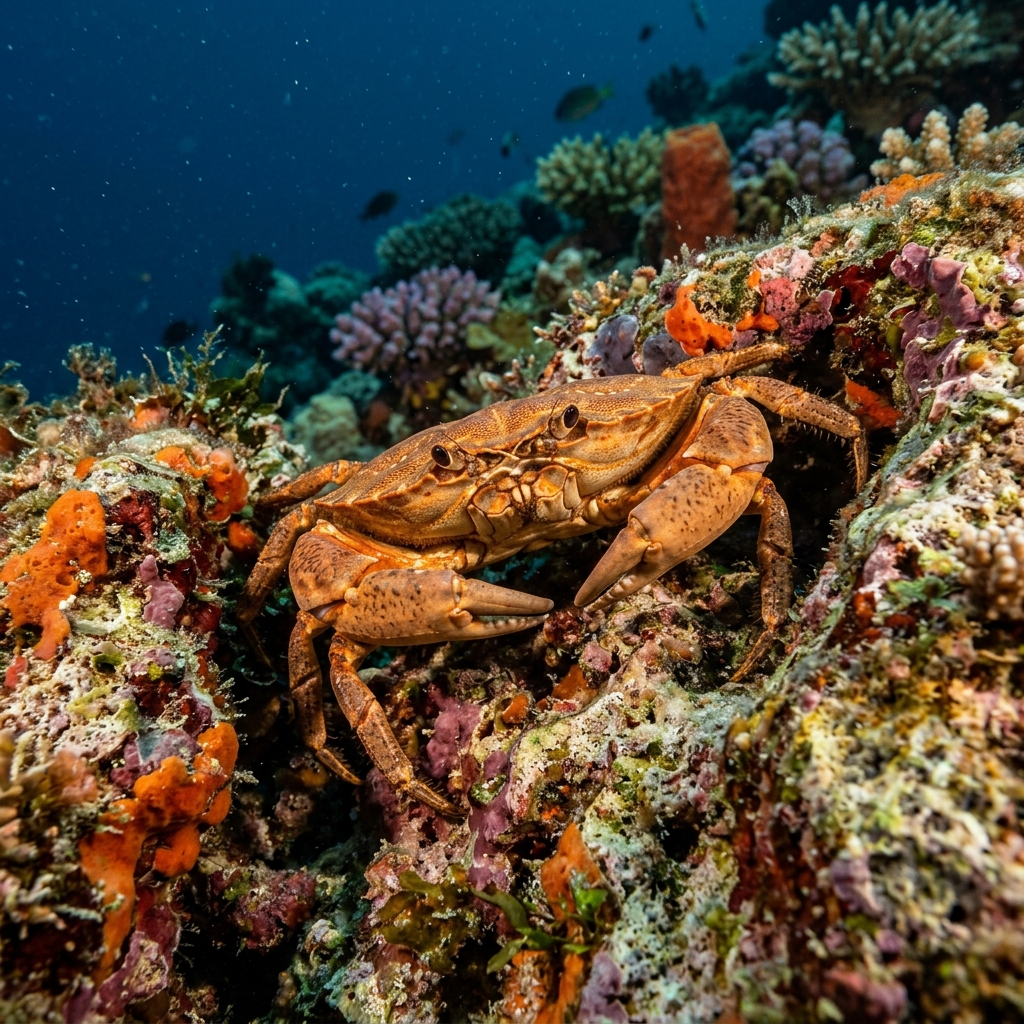
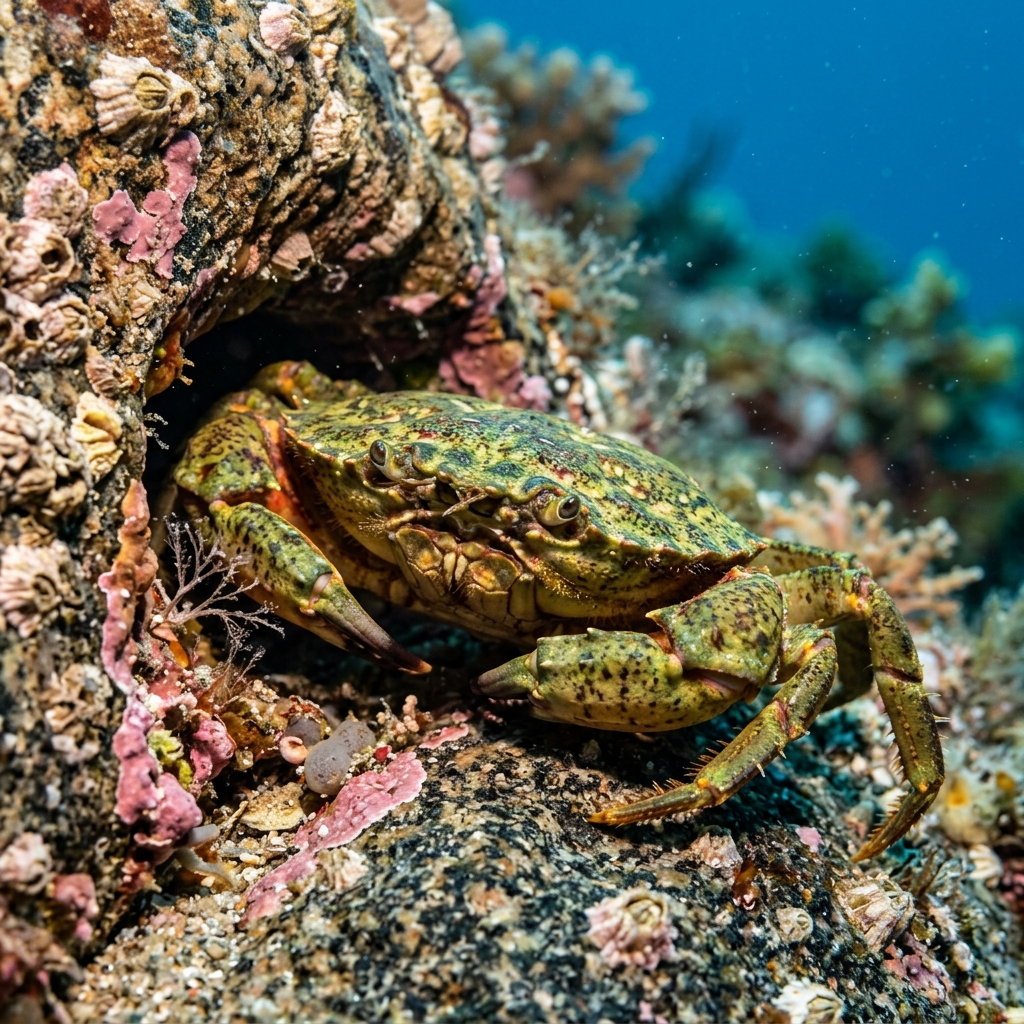
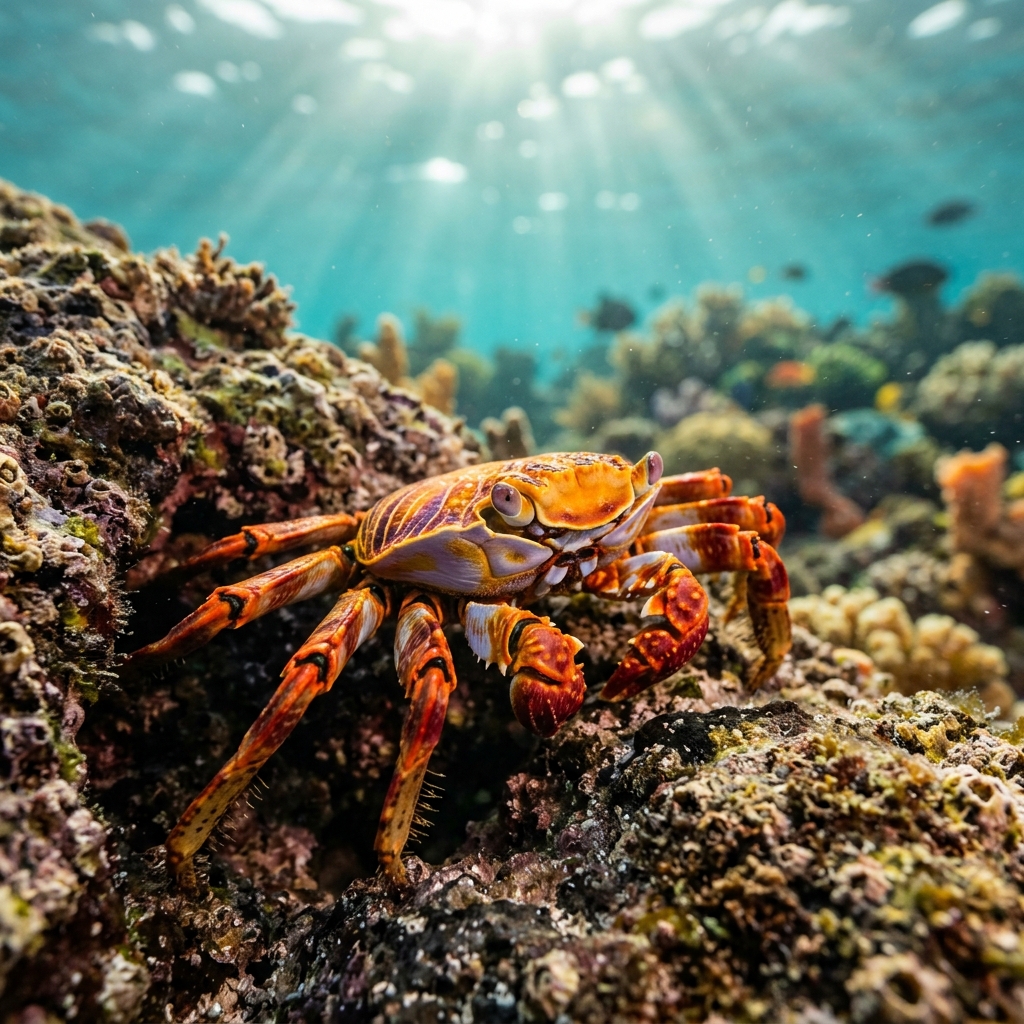
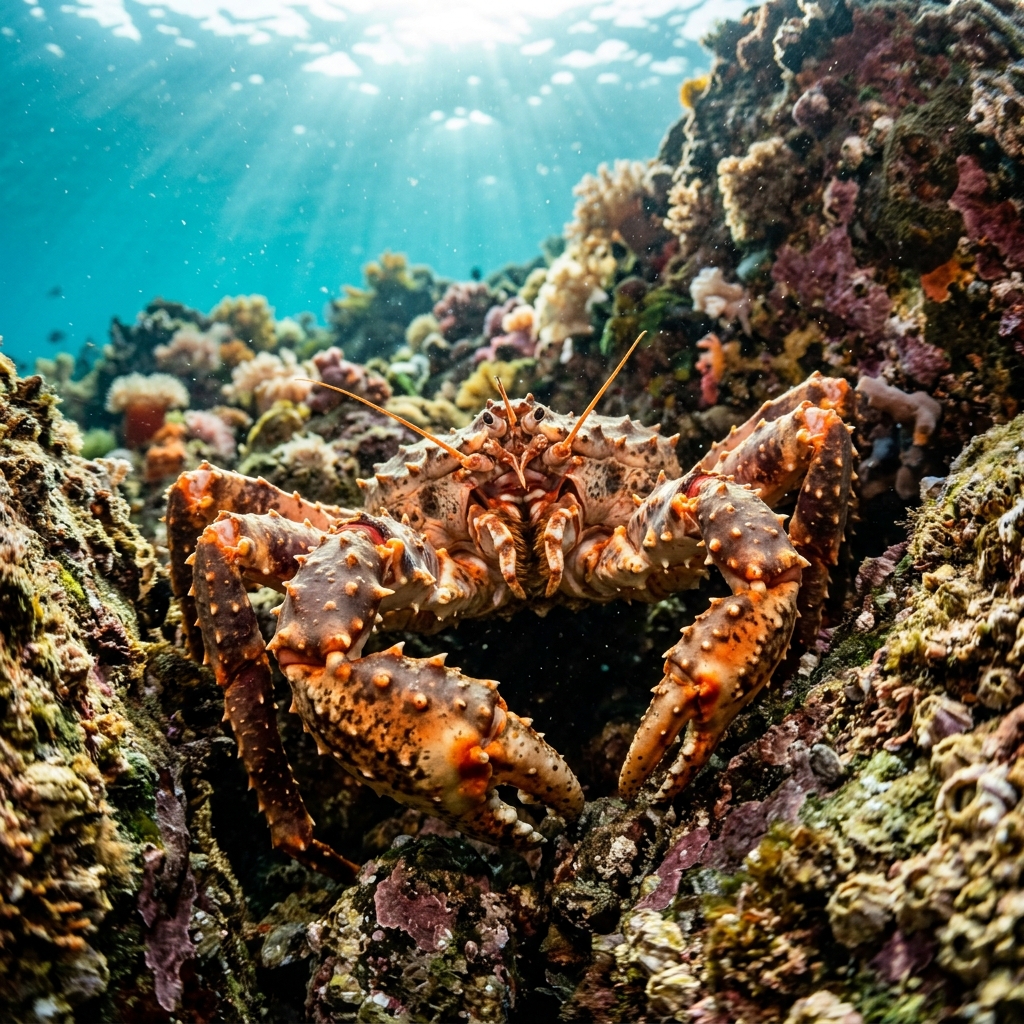
Look for a mid-sized hermit crab with legs banded in red and cream stripes, tucked into a borrowed gastropod shell that it drags across the reef floor. The eyestalks carry a distinctive radiating pattern, which is where the common name comes from and the easiest feature to key on with a torch or macro lens. Claws are uneven in size, with the larger one often held forward like a door it can seal the shell with when threatened.
Divers typically find it walking slowly over rubble and reef substrate, or wedged into a crevice with just the eyestalks and claw showing. It reacts to a close approach by withdrawing fully into its shell rather than fleeing, so a patient diver often gets a longer look once it re-emerges. Most sightings are during the day on reef sections with enough loose shell and rubble for it to have a home to carry.
Like other hermit crabs, it has to trade up shells as it grows, and divers occasionally spot one testing an empty shell with its claws before committing to the move.
No clear seasonal pattern shows up in the sightings, and with a comfort range of roughly 25 to 31 C it has no reason to disappear in any month on these tropical reefs. Plan around site access rather than season.
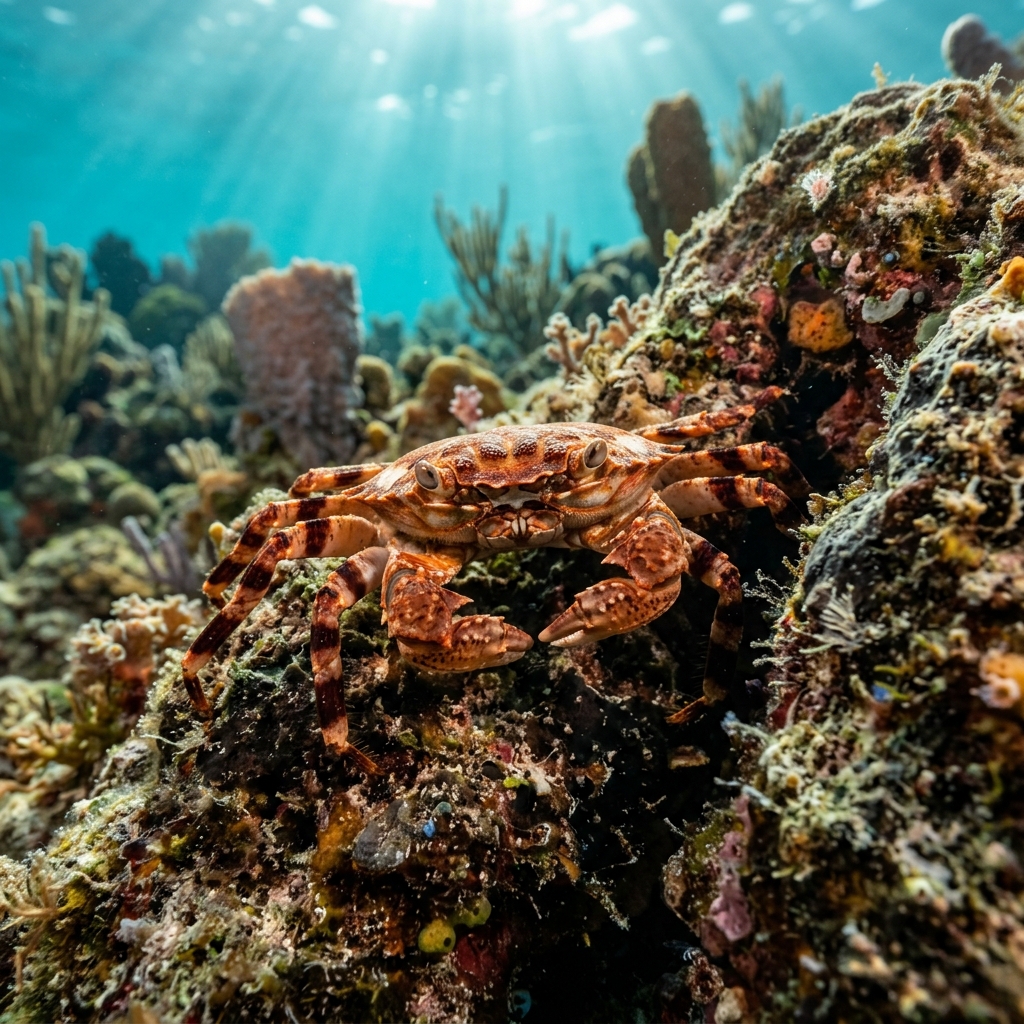
Reef neighbours a diver could mistake it for. Use the identification notes above to tell them apart.
Most consistently logged in Guadeloupe, spread across Basse-Terre and Grande-Terre, with a smaller but steady presence on Bonaire's Leeward Coast. Within the Caribbean, treat Guadeloupe as the stronger bet for a dedicated search.
Mapping where Stareye Hermit Crab is logged…
Guadeloupe is the strongest area, with sightings across Basse-Terre and Grande-Terre, and it also turns up on Bonaire's Leeward Coast. It's logged as uncommon at every site so far, so treat it as a bonus find rather than a guaranteed sighting.
There's no detected season, it's a year-round sighting on Caribbean reefs that sit comfortably in the 25 to 31 C range it's been recorded in.
Check the eyestalks first, they carry a star-like radiating pattern that gives the species its name. Combine that with red and cream banded legs, uneven claw size, and a borrowed shell it's dragging around.
No, they pose no threat to divers and will simply retreat into their shell if you get too close.
It doesn't grow its own armour, it has to find and move into progressively larger empty shells throughout its life, sometimes pausing to test a new one with its claws before switching.
Site and sighting data is aggregated from diver logs, iNaturalist and GBIF. For taxonomy and conservation status:
European Green Crab
2,469 sites