Ophichthus ophis
Sandy-bottomed reefs in Santo Antão and Sosúa hide this pale, dark-spotted eel in 19 to 27.5 C water, year-round.
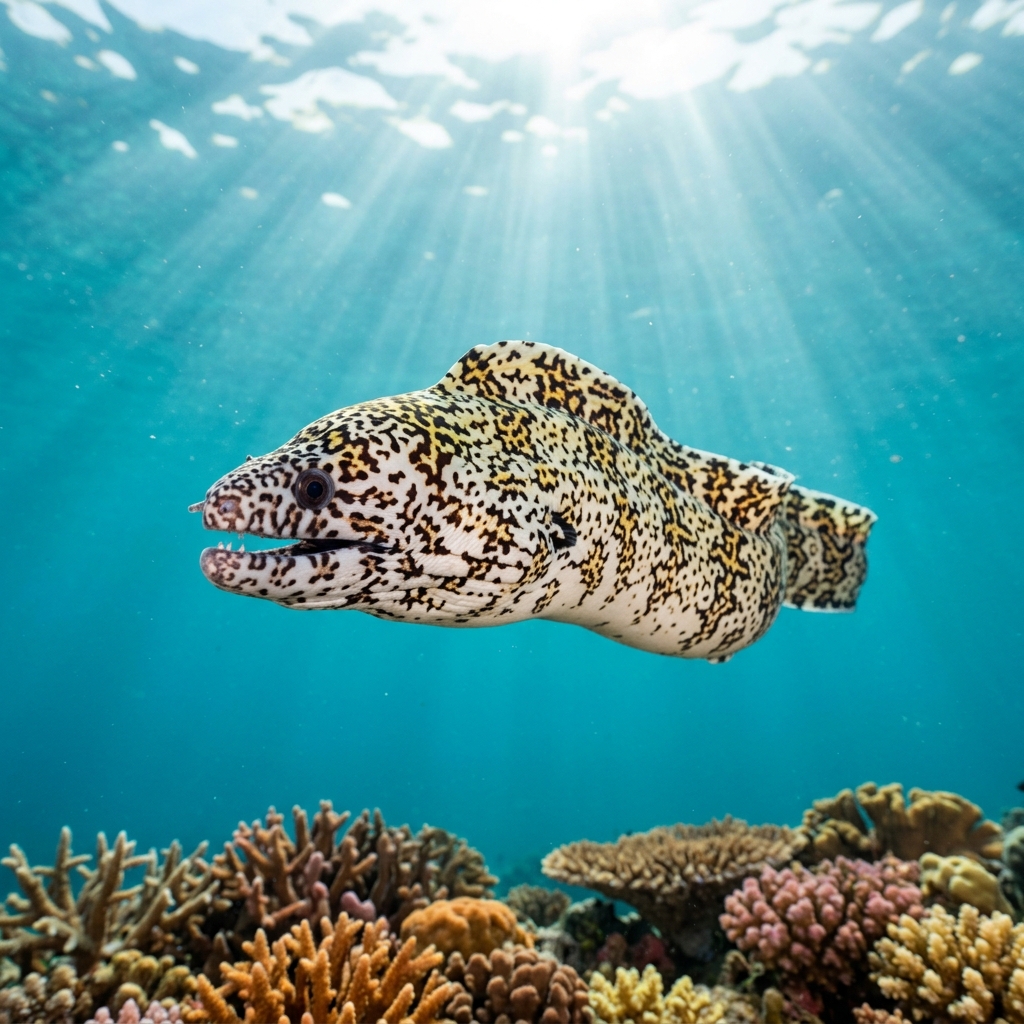
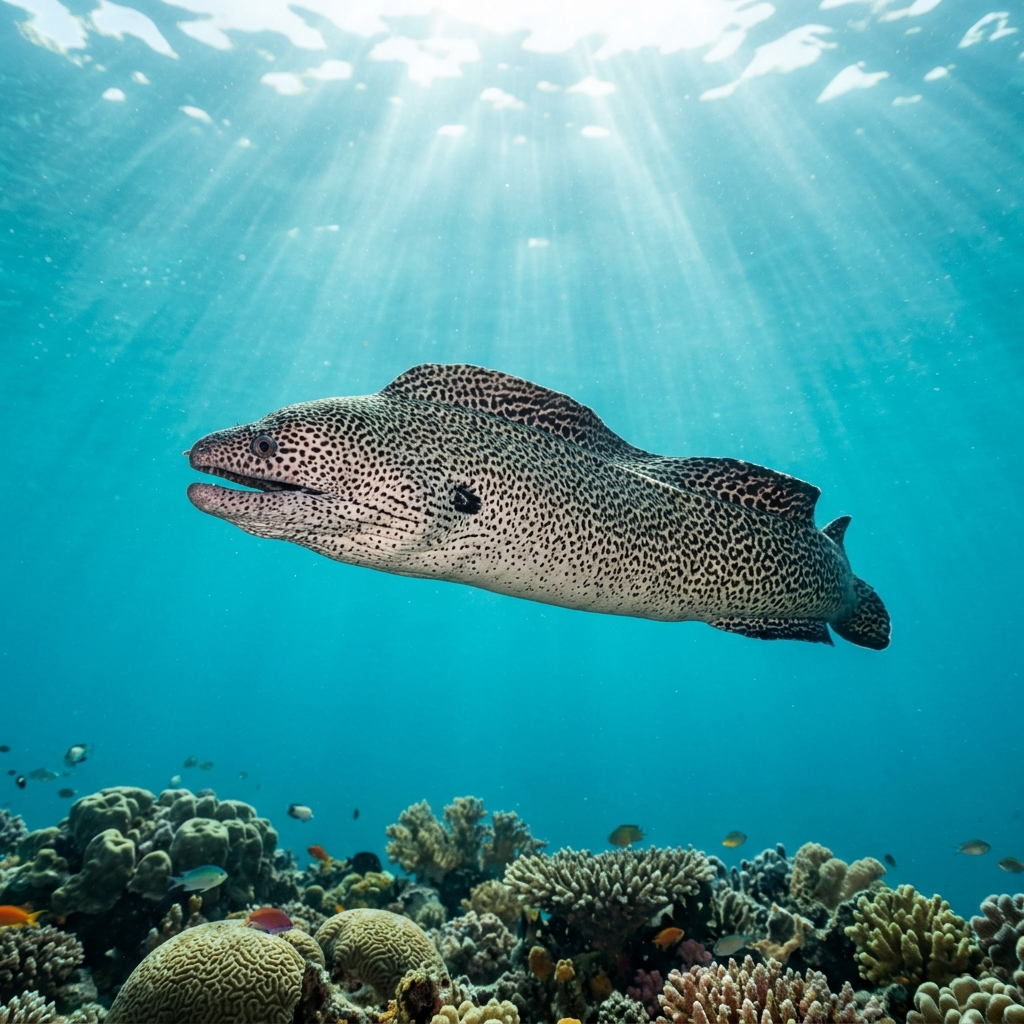
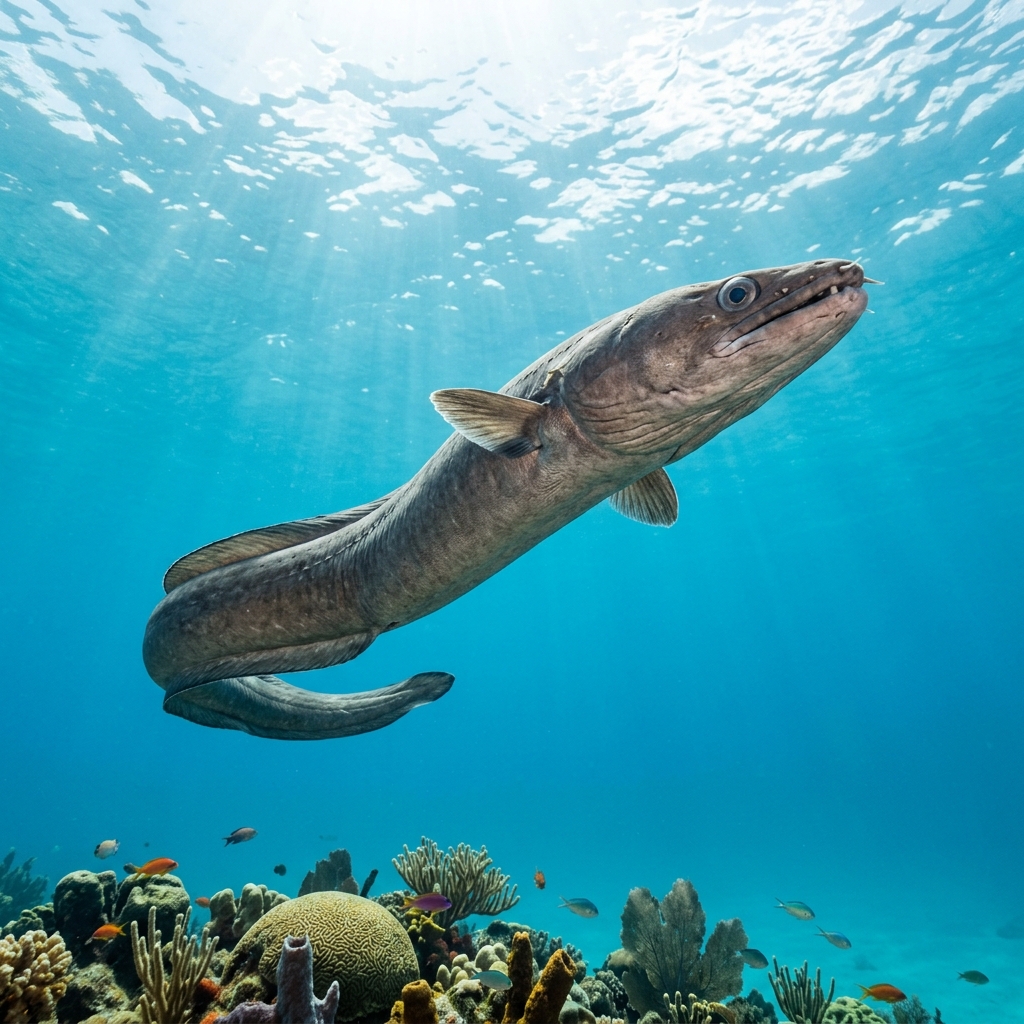
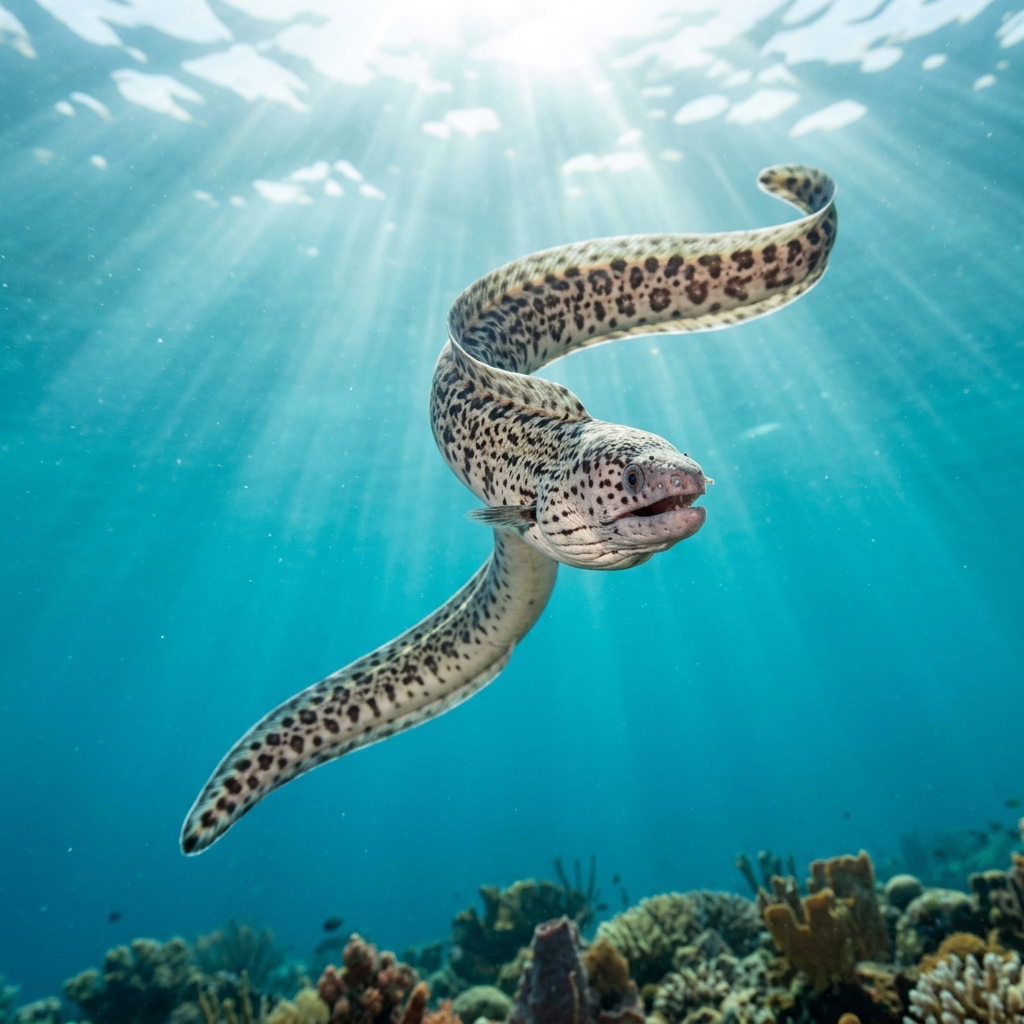
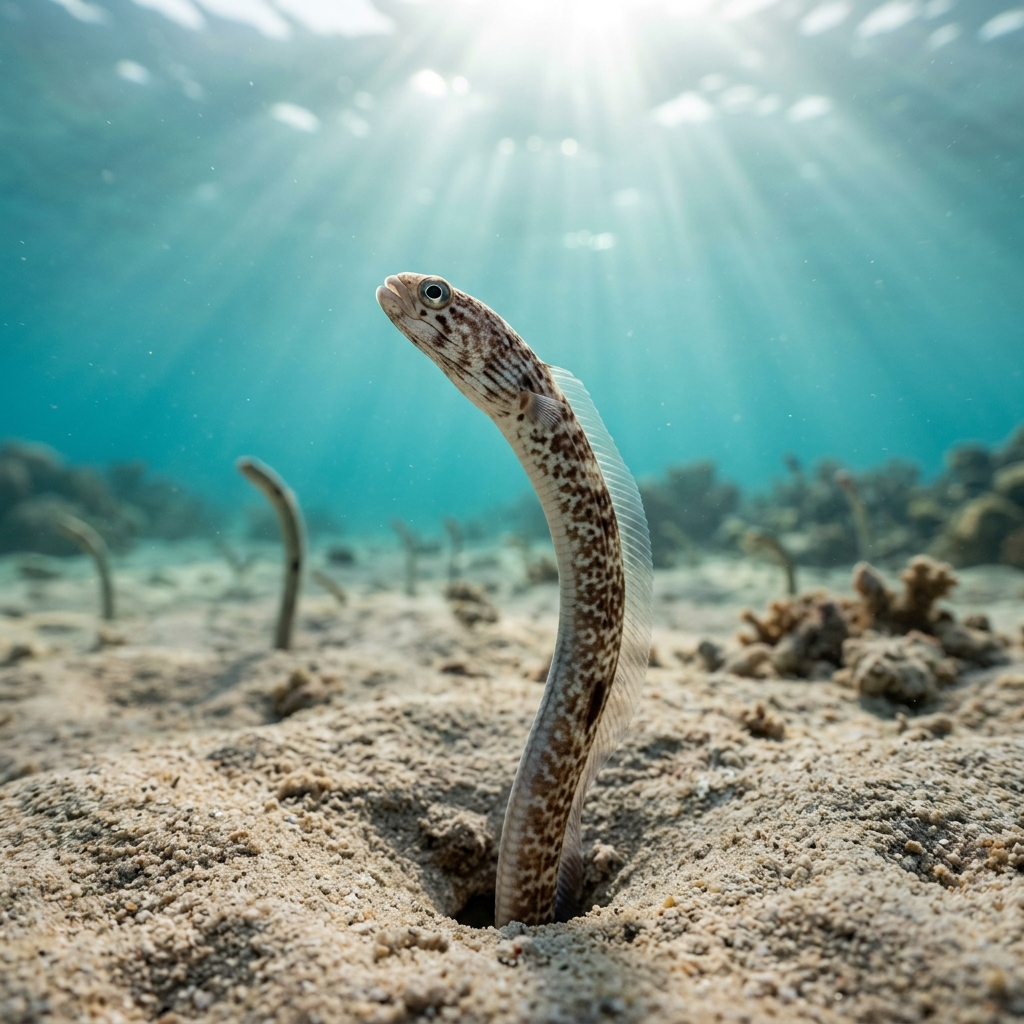
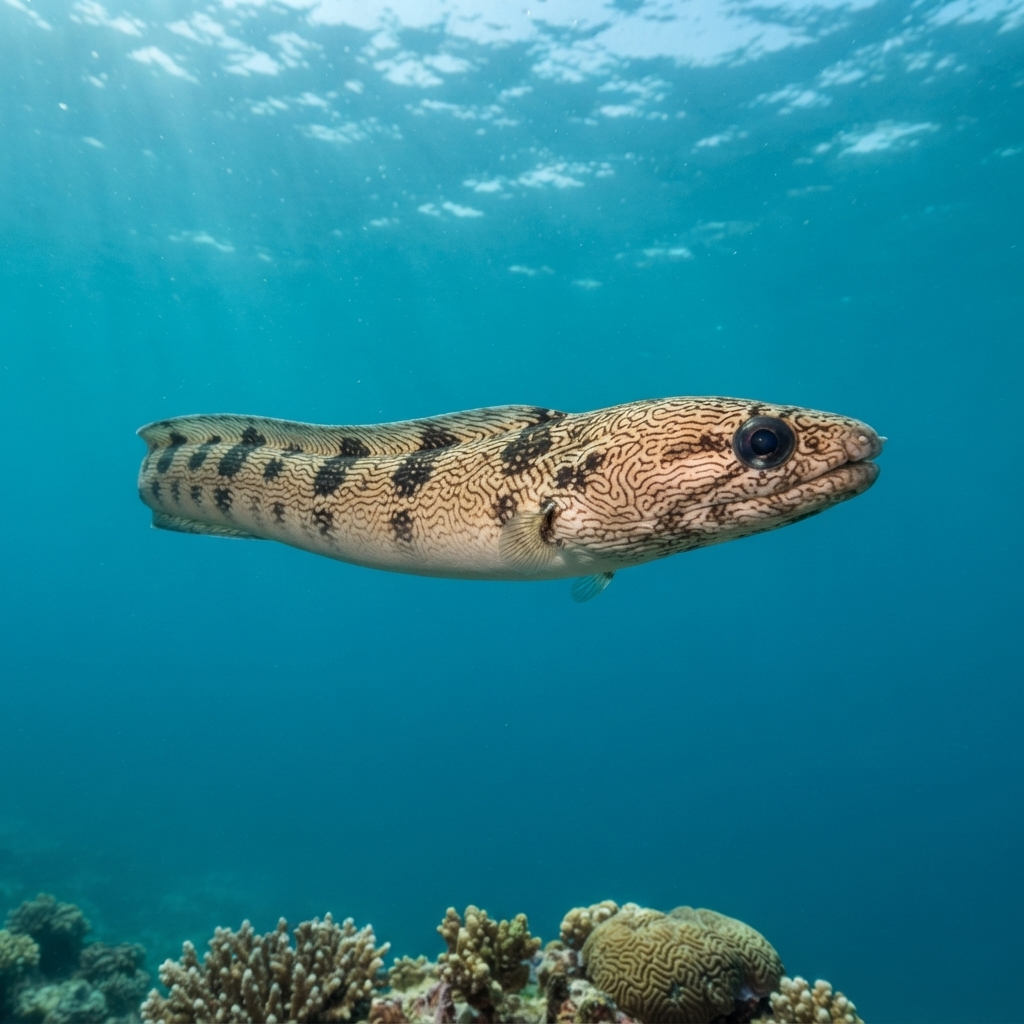
Grows to around 147 cm but usually shows only a stretch of body or a head poking from sand, with a pale cream to tan background covered in dark brown or black blotches that read almost giraffe-like underwater. The body is long, slender and cylindrical with a pointed snout, quite different from the flattened, ribbon-like profile of a moray. Most of it stays buried, so look for the head and a short length of trunk protruding near sandy patches at the reef edge.
Spends most of daylight hours buried tail-first in sand or rubble next to reef structure, with just the head visible watching for prey. Divers usually spot it lying still near a reef base or sandy channel rather than swimming in the open, and it tends to hold its ground or retreat slowly into the substrate rather than bolt. Most sightings across the logged sites are described as uncommon, so finding one usually takes a slow look along sand-reef transitions.
Like other snake eels it can back its whole body into sand tail-first using a hardened, pointed tail tip, letting it disappear in seconds without needing to turn around.
No clear seasonal pattern shows up in the data, and it sits comfortably in water from 19.2 to 27.5 C, so it is a year-round find wherever it occurs.
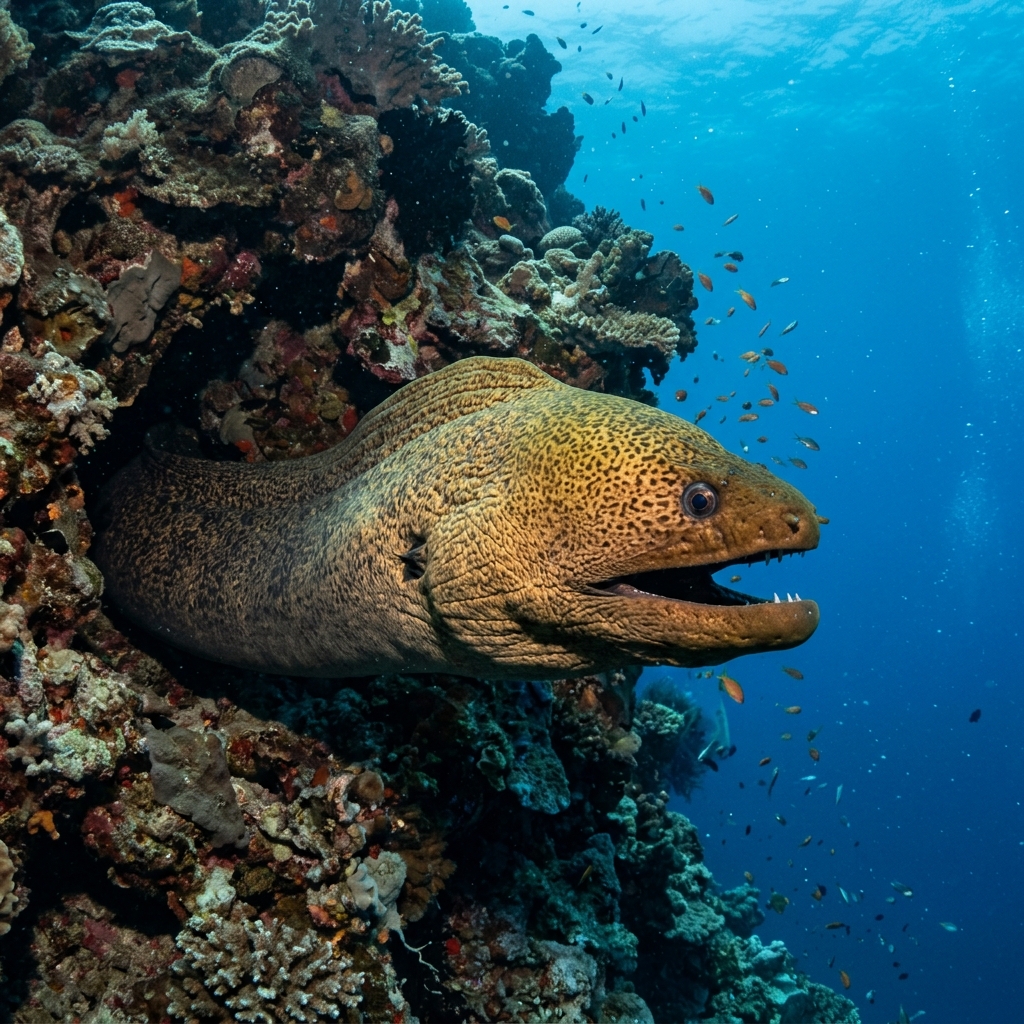
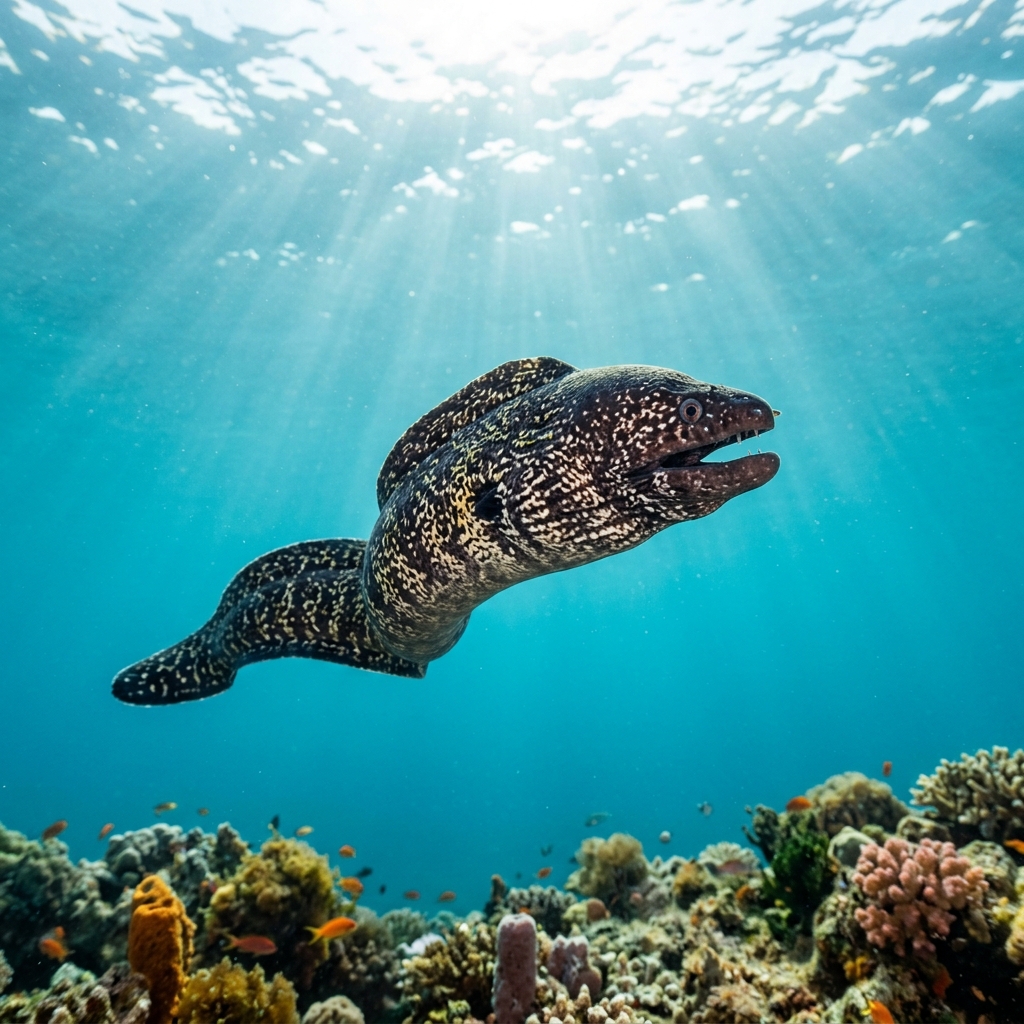
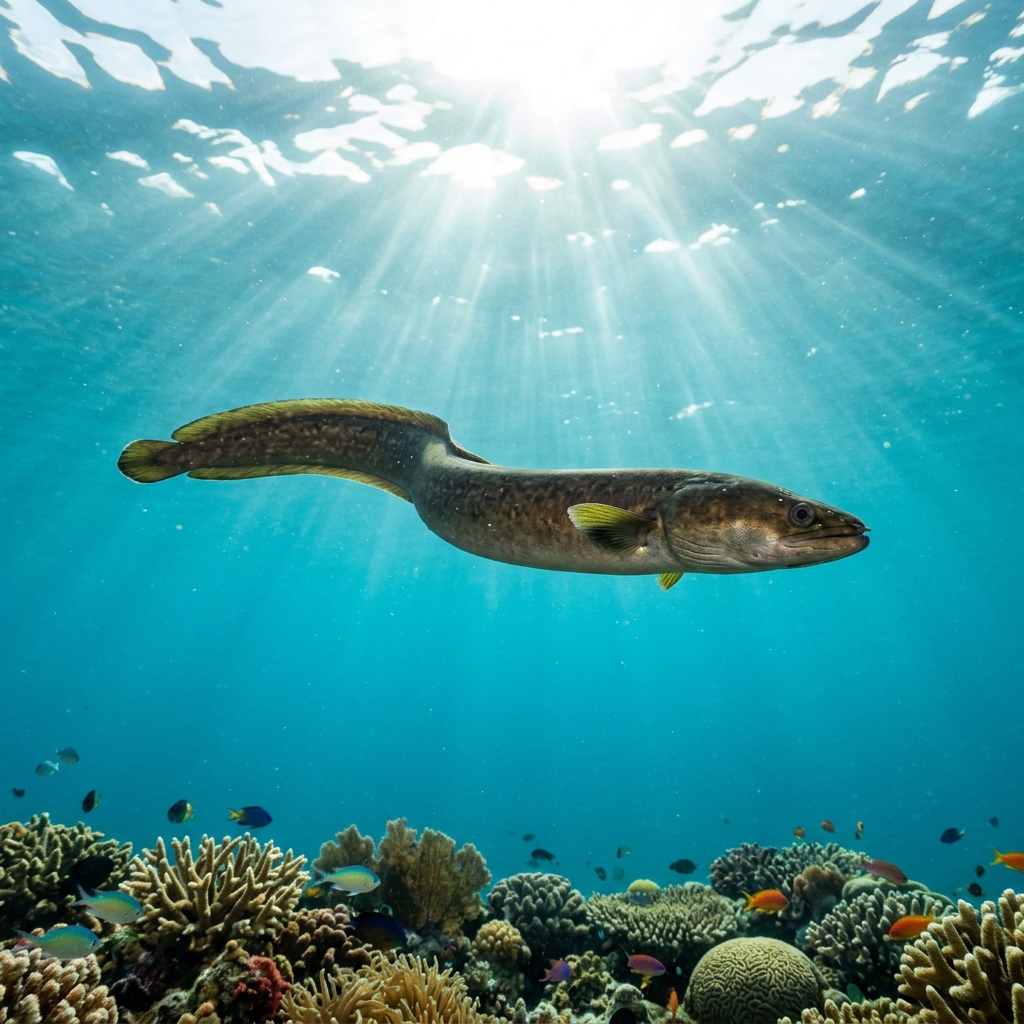
Reef neighbours a diver could mistake it for. Use the identification notes above to tell them apart.
Most reliably logged in Cape Verde, especially around Santo Antão and Santiago, and a strong presence in the Dominican Republic around Sosúa. It also turns up on reefs in Bahia, Brazil, and in smaller numbers around Tobago in Trinidad and Tobago.
Mapping where Spotted Snake Eel is logged…
Cape Verde is the strongest region, particularly Santo Antão and Santiago, with another reliable population around Sosúa in the Dominican Republic. It also appears on reefs in Bahia, Brazil, and occasionally around Tobago.
There is no strong seasonal pattern in sightings. It tolerates a wide temperature range from about 19 to 27.5 C, so it is present on these reefs throughout the year.
Look for a pale tan to cream body covered in dark brown blotches, with only the head and a short length of trunk showing above sand near a reef edge. The body shape is slender and rounded, not flattened like a moray.
They can reach around 147 cm in length, though divers rarely see the full body since most of it stays buried in sand or rubble.
It has a hardened, pointed tail tip that lets it burrow backwards into sand almost instantly, disappearing tail-first without ever needing to turn around.
Site and sighting data is aggregated from diver logs, iNaturalist and GBIF. For taxonomy and conservation status:
Garden Eel
2,448 sites