Pterois radiata
Spot the Clearfin Lionfish on warm Indo-Pacific reefs from the Maldives to the Red Sea. Here's how to identify it and where divers see it most.
Safety warning
The spines carry venom and snap off easily in the skin. Do not touch it, and never rest a hand or knee on the reef near one; the spines drive in on the lightest contact.
If you're stung
Venomous spinesGeneral first-aid guidance, not a substitute for professional medical care. In an emergency, call your local emergency number.
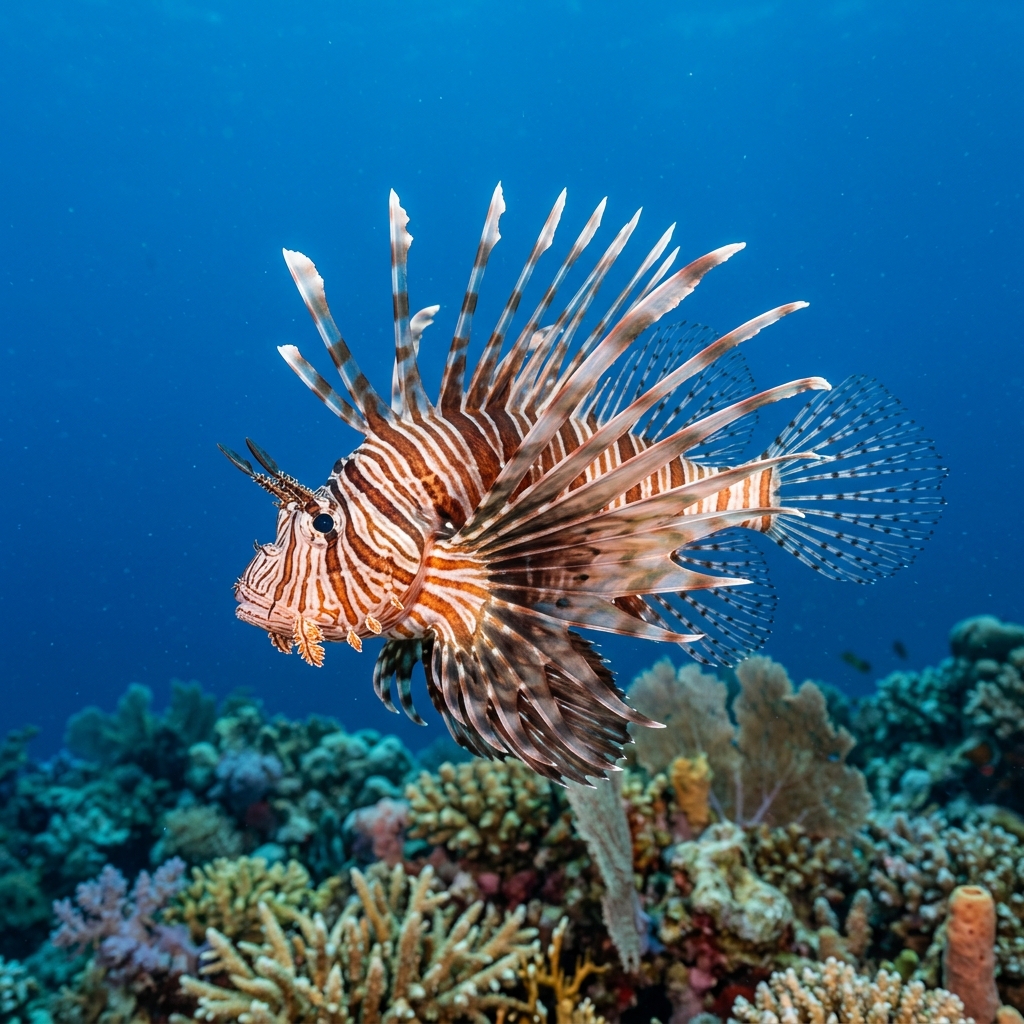
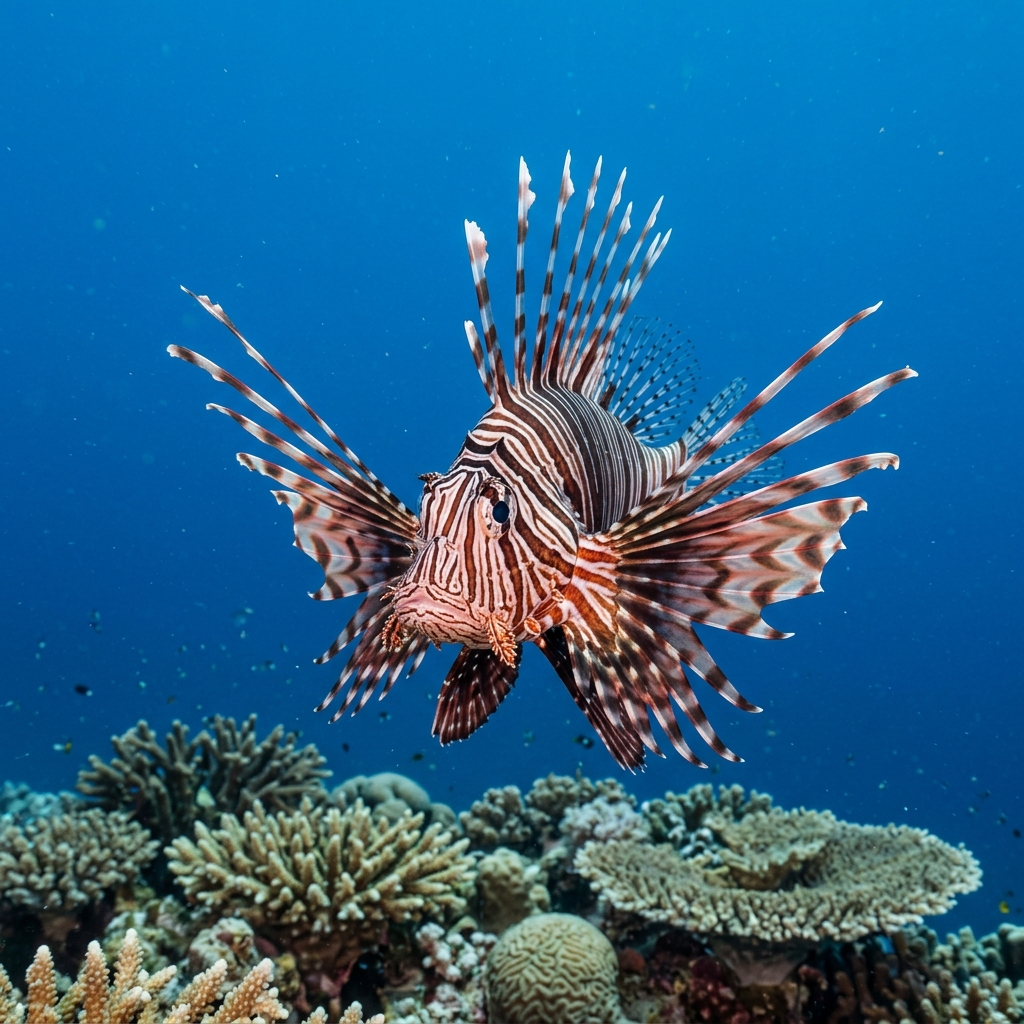
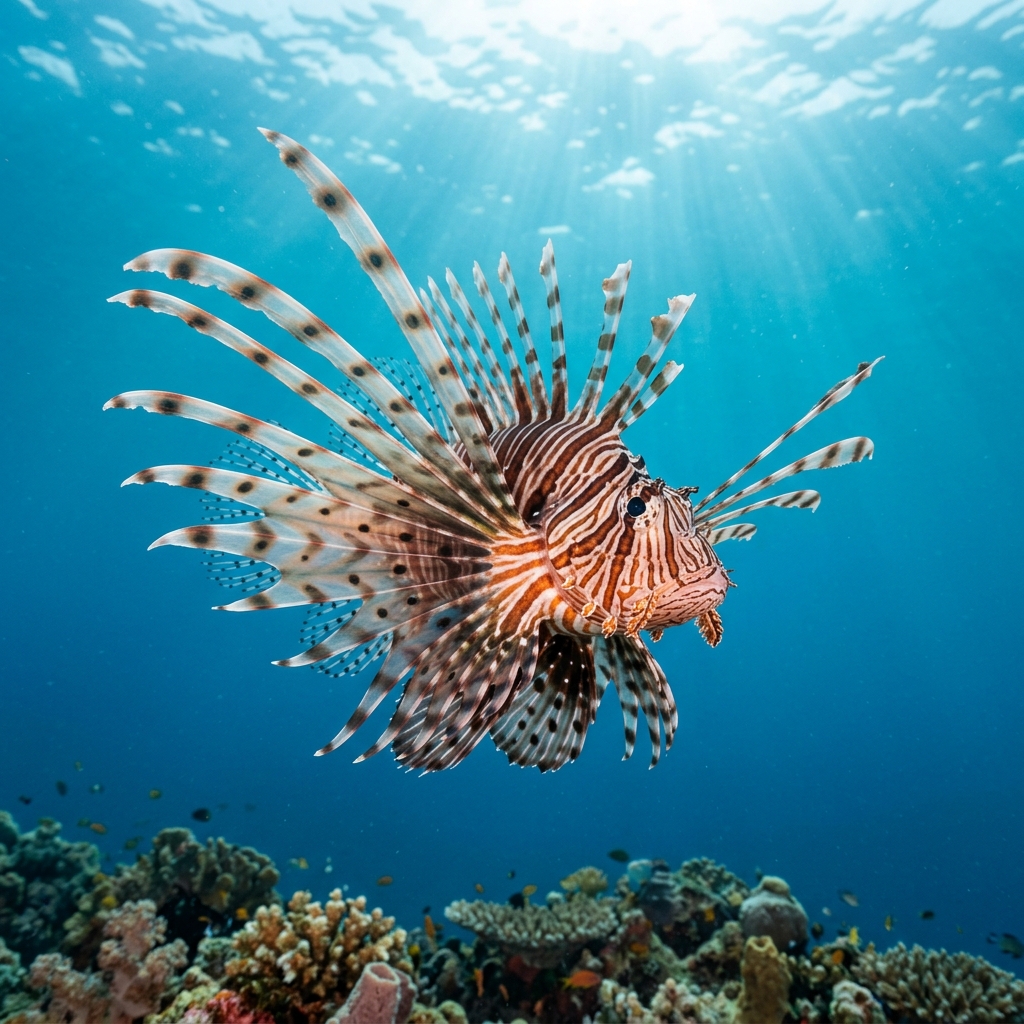
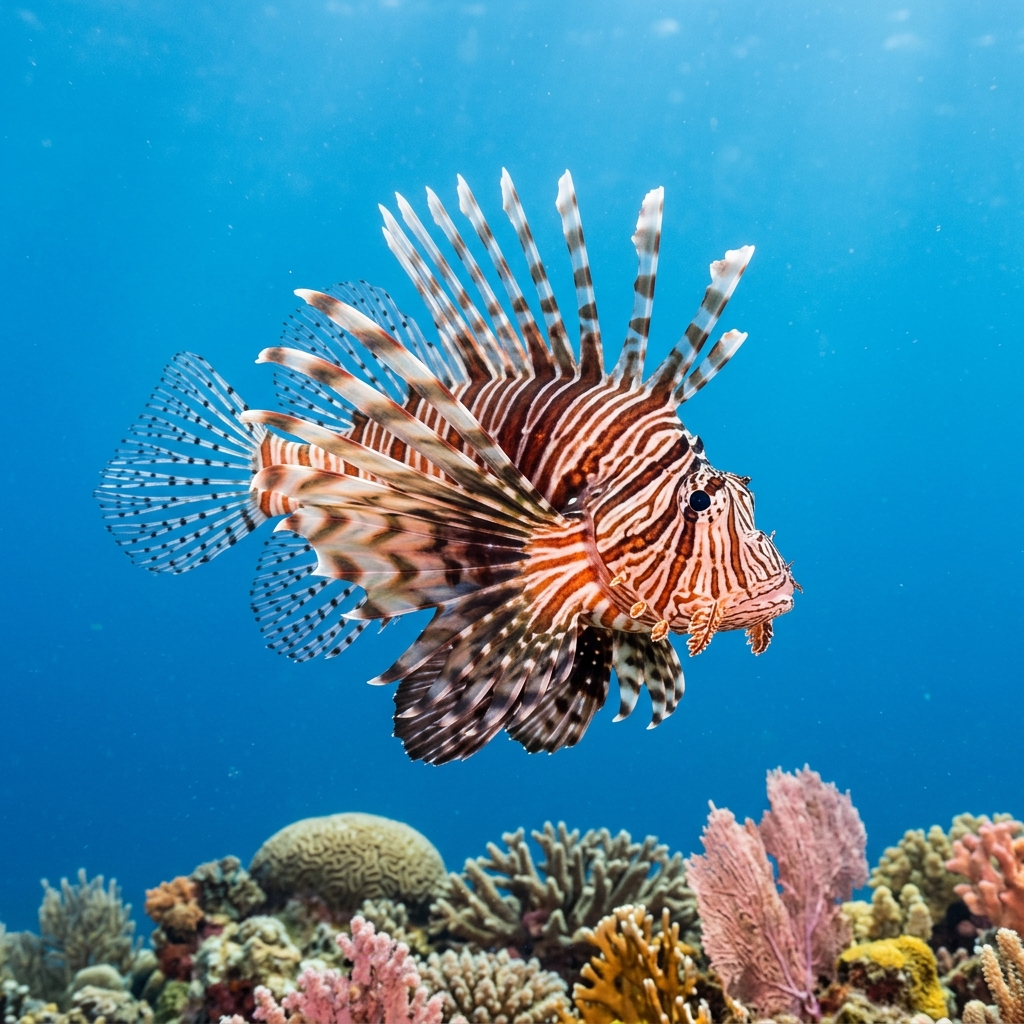
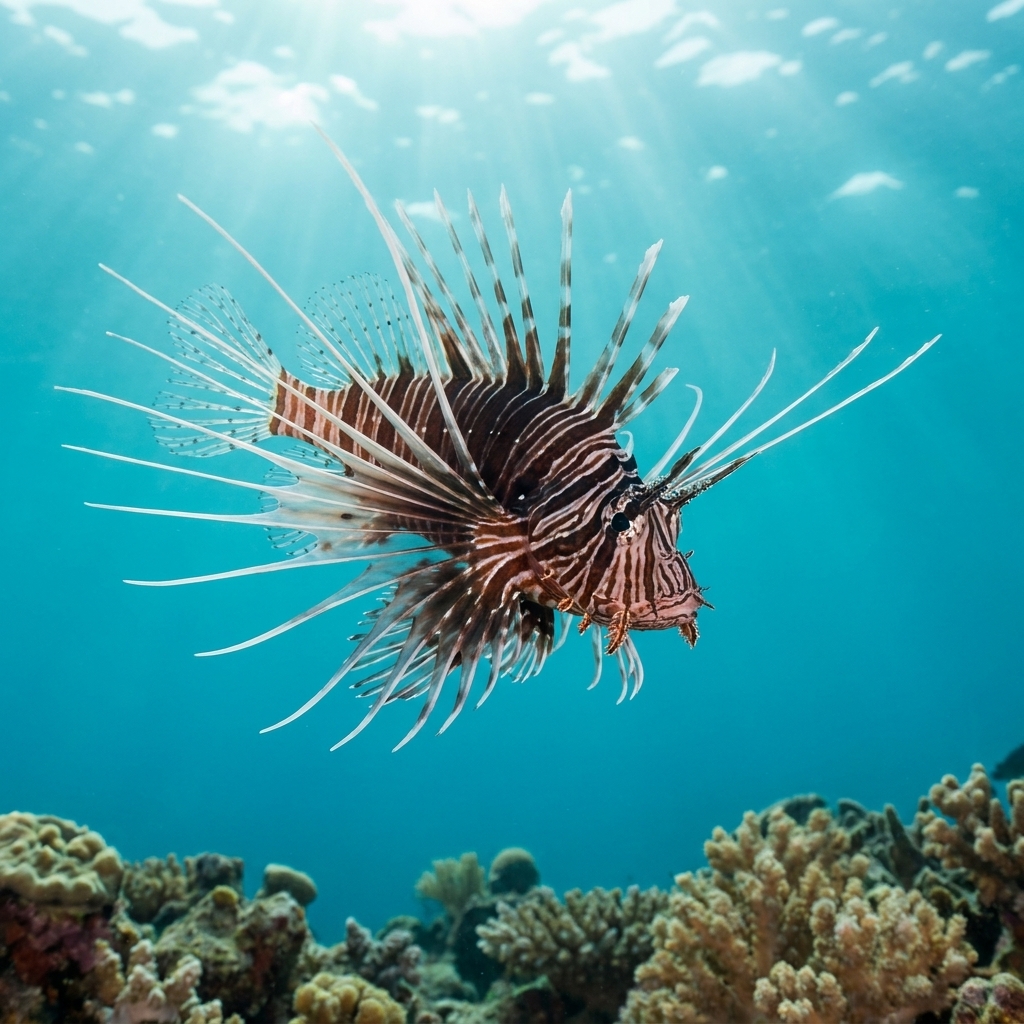
Two horizontal white stripes running along the tail (caudal peduncle) are the single clearest field mark, no other lionfish in its range shares this feature. The body carries the typical lionfish pattern of alternating brown and white vertical bands, but the pectoral fins are notably long, fan-like, and largely translucent rather than spotted or banded. Spines along the dorsal fin are slender and elongated, giving the fish a ragged, spiky silhouette when seen from the side. Adults typically rest motionless against rock or coral, relying on camouflage, so look closely at ledge undersides and crevice edges.
Clearfin lionfish are largely nocturnal hunters, so the best encounters are often at dusk or on night dives when they move slowly across the reef in search of small fish and crustaceans. During the day they wedge themselves under ledges or into coral crevices, head-down or horizontal, and stay very still. They are not shy of divers but rarely move away; approach slowly and watch from a distance to avoid disturbing them.
Those elongated, translucent pectoral fins are not just for display, lionfish use them as 'wings' to herd small prey fish into corners before striking with a rapid lunge.
Available year-round on tropical reefs; observed water temperatures sit between roughly 25 and 29 °C, matching the stable warmth of Indo-Pacific reef systems throughout the year.
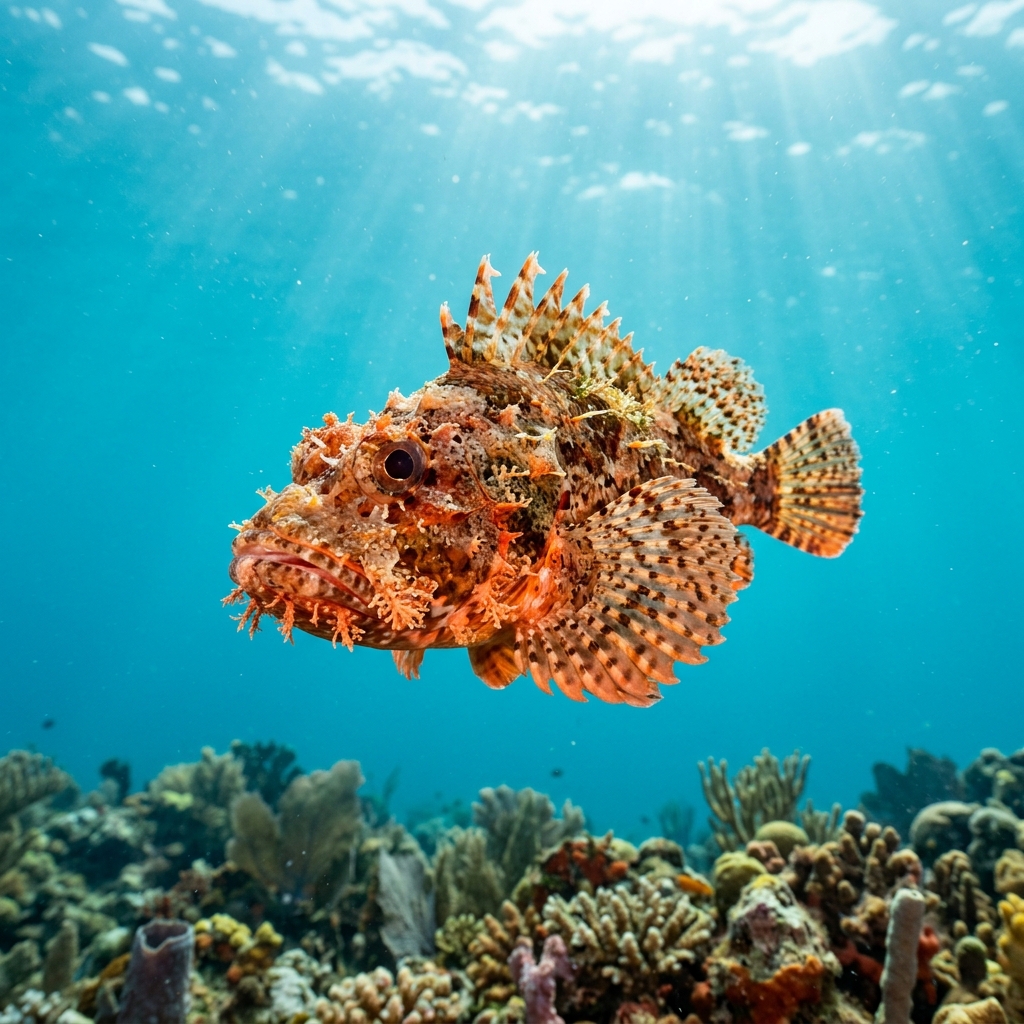
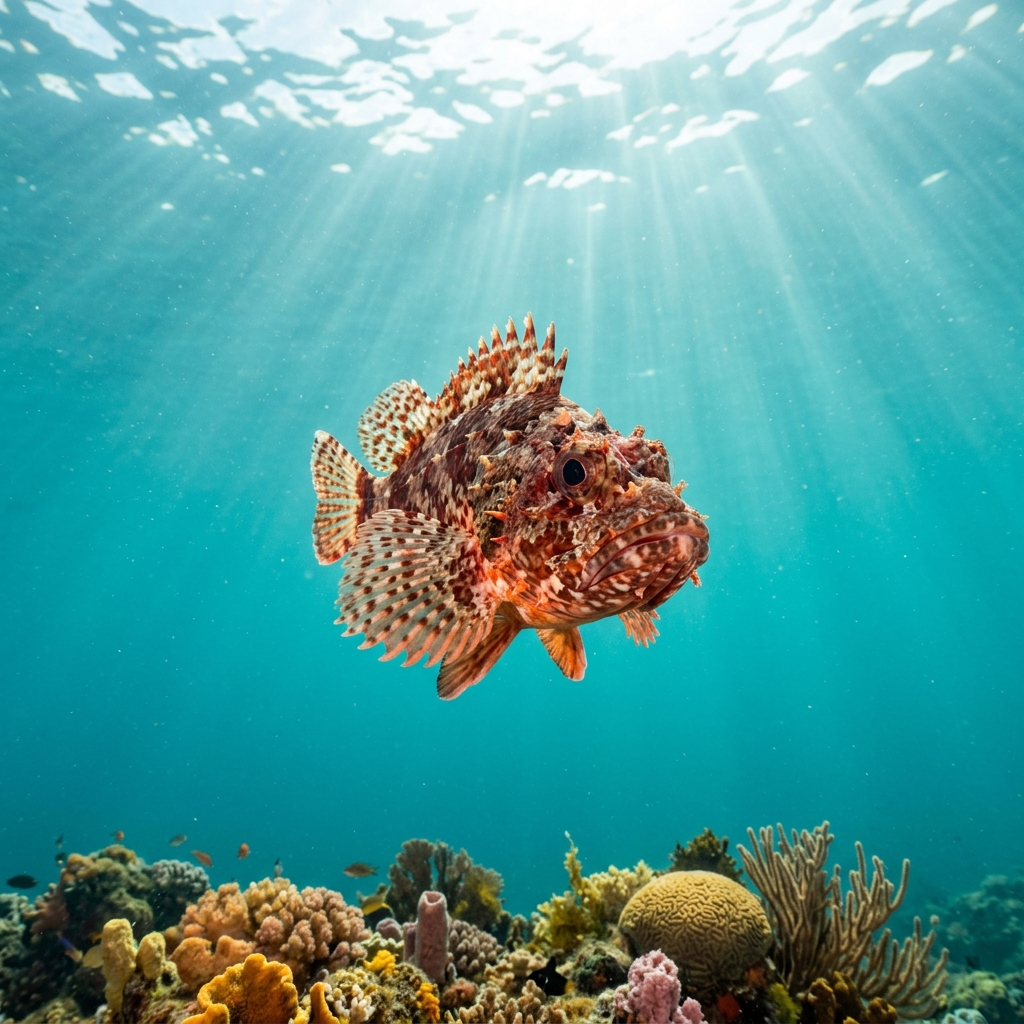
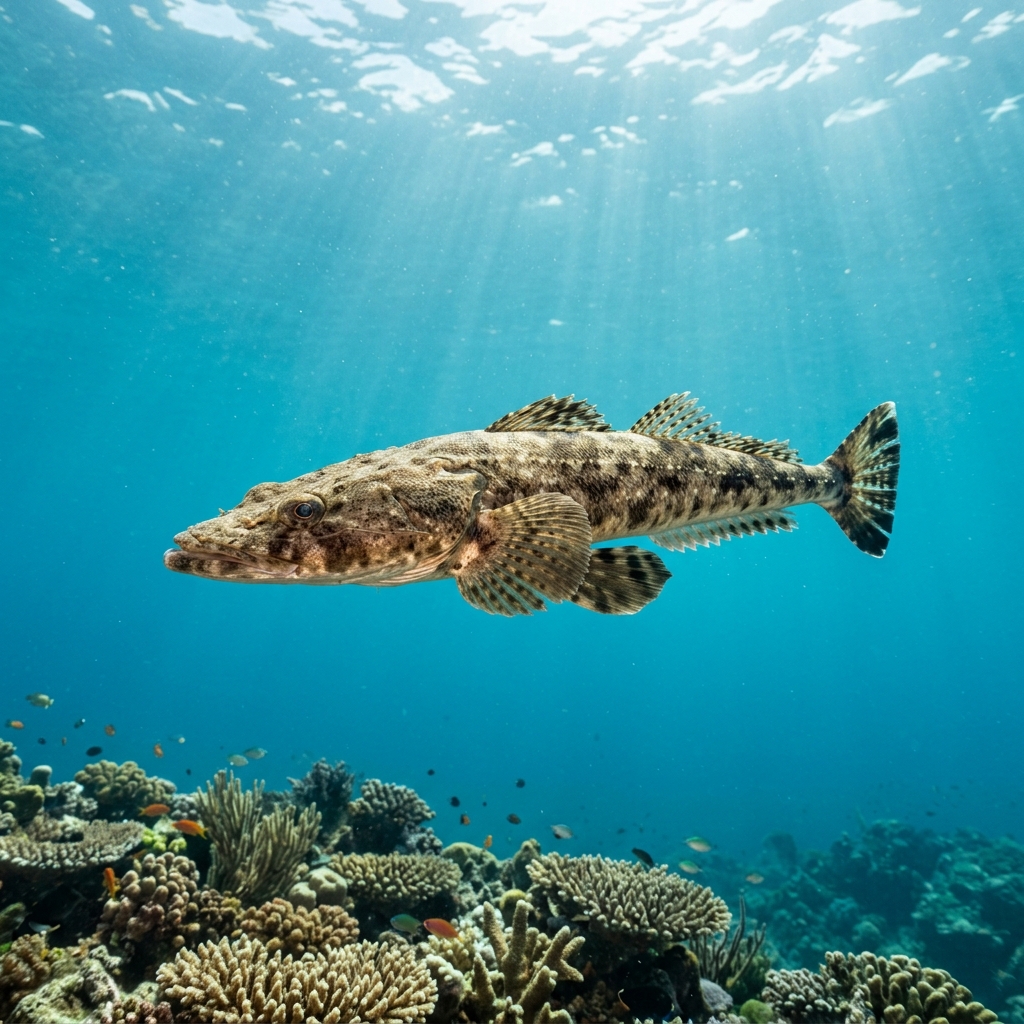
Reef neighbours a diver could mistake it for. Use the identification notes above to tell them apart.
Most commonly logged in the Maldives, where records spread across the North and Central Atolls, Felidhoo and Mulaku, and Huvadhoo and Laamu. Strong populations are also reported across the Gulf of Thailand, Sudan's Port Sudan area, and Jeddah in Saudi Arabia, making the Indian Ocean and Red Sea the core of its range. Indonesia and Malaysia round out the sightings in the Coral Triangle.
Mapping where Clearfin Lionfish is logged…
The Maldives holds the greatest concentration of sites, particularly across the North and Central Atolls and Felidhoo and Mulaku. The Red Sea around Port Sudan and Jeddah, the Gulf of Thailand, and the Indonesian archipelago are also reliable areas. Overall, the species spans the warm Indo-Pacific from East Africa through Southeast Asia.
No seasonal peak has been detected from dive-log data, and the species is comfortable in the consistently warm water (around 25 to 29 °C) found on tropical Indo-Pacific reefs year-round. Plan night or dusk dives for the best chance of seeing one actively hunting rather than hiding in a crevice.
Look for two white horizontal stripes on the tail base, this is diagnostic and absent in closely related species. The pectoral fins are long and translucent rather than spotted, and the dorsal spines are very slender. Combined with the standard lionfish brown-and-white banding, these features make a confident ID possible at close range.
Like all lionfish, the dorsal, pelvic, and anal spines carry venom and a sting is painful, but the Clearfin Lionfish poses no significant threat to attentive divers. It does not charge or behave aggressively; simply avoid touching or cornering it and keep fins well clear when hovering near reef ledges.
Clearfin Lionfish are one of the smaller lionfish species, typically reaching around 20 to 24 cm in length as adults. Underwater they can appear slightly larger because of their outstretched pectoral fins, which add considerable width to the silhouette.
Site and sighting data is aggregated from diver logs, iNaturalist and GBIF. For taxonomy and conservation status:
Madeira Rockfish
2,773 sites