Panulirus interruptus
Spot California Spiny Lobster along the US Pacific Coast and Mexico from June to January. Night dives in 13-18 °C water give your best chance.
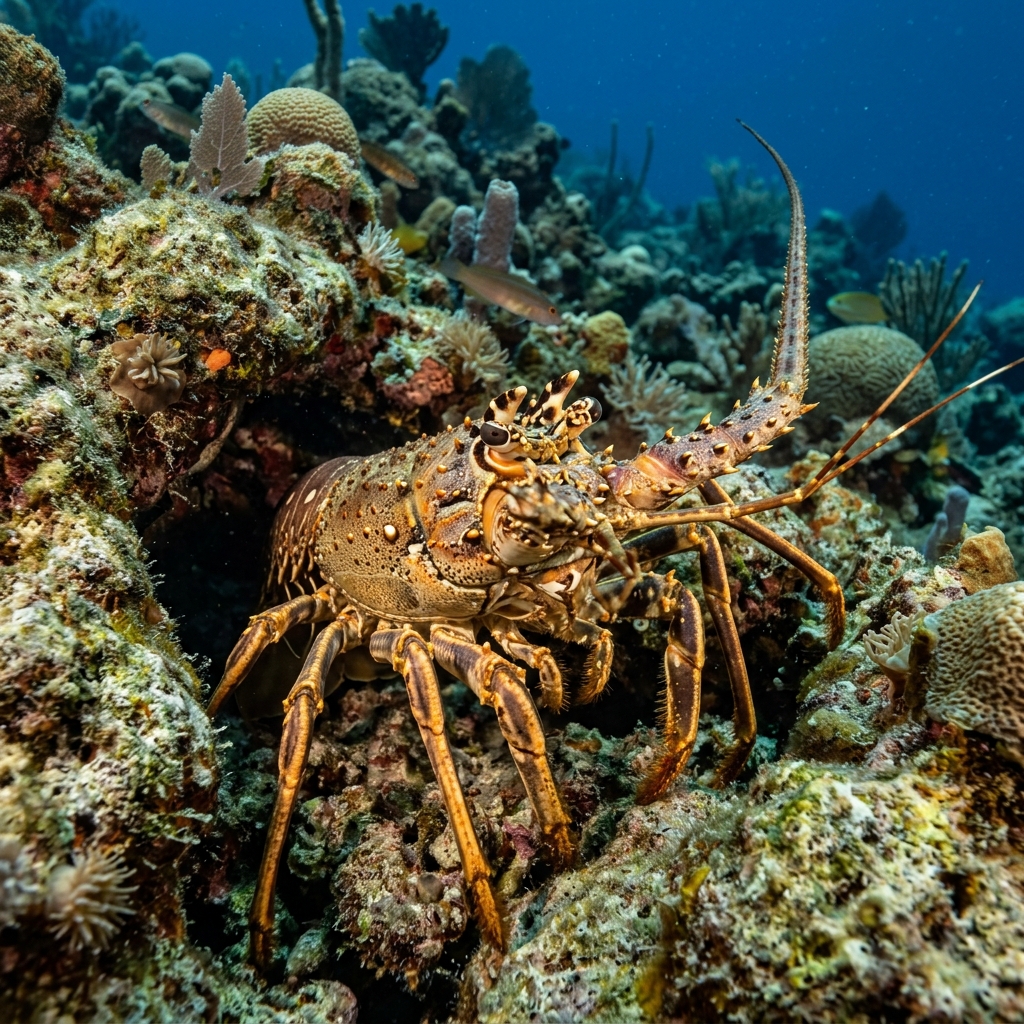
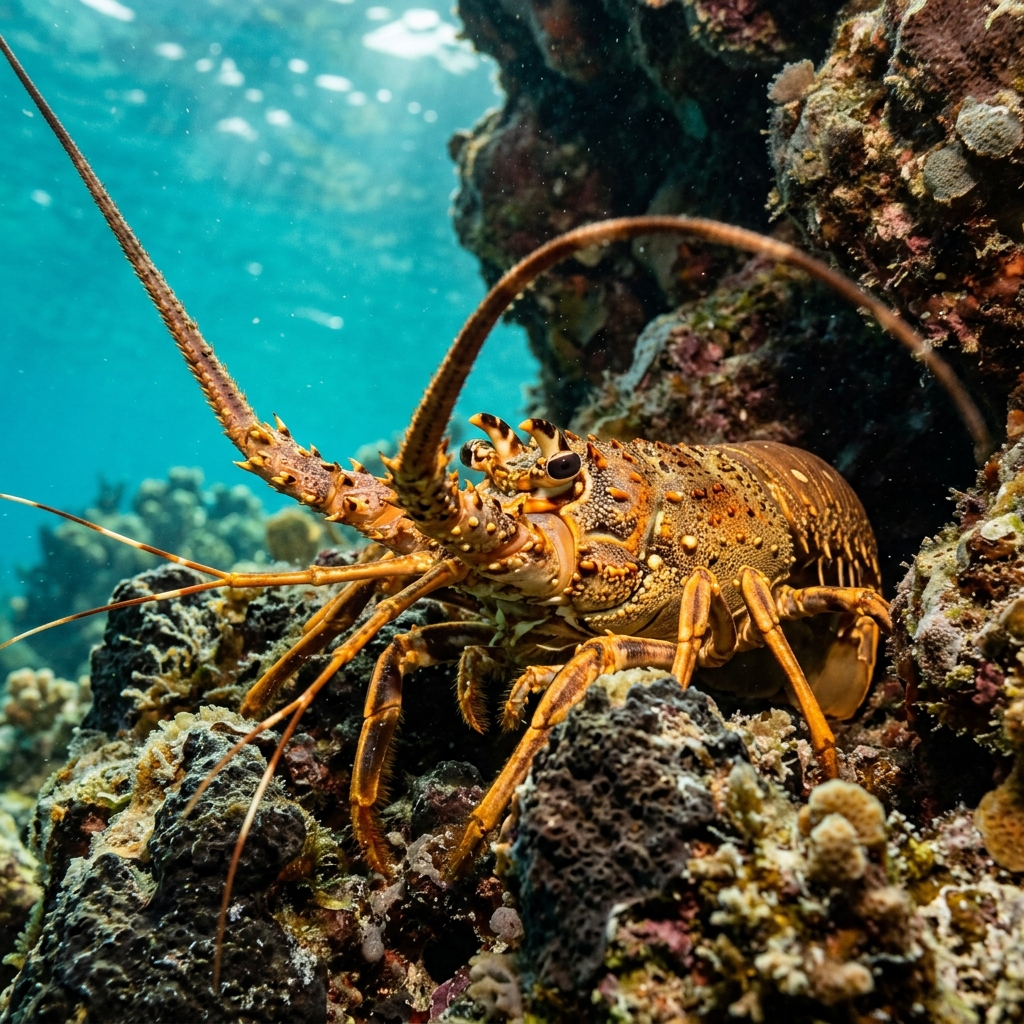
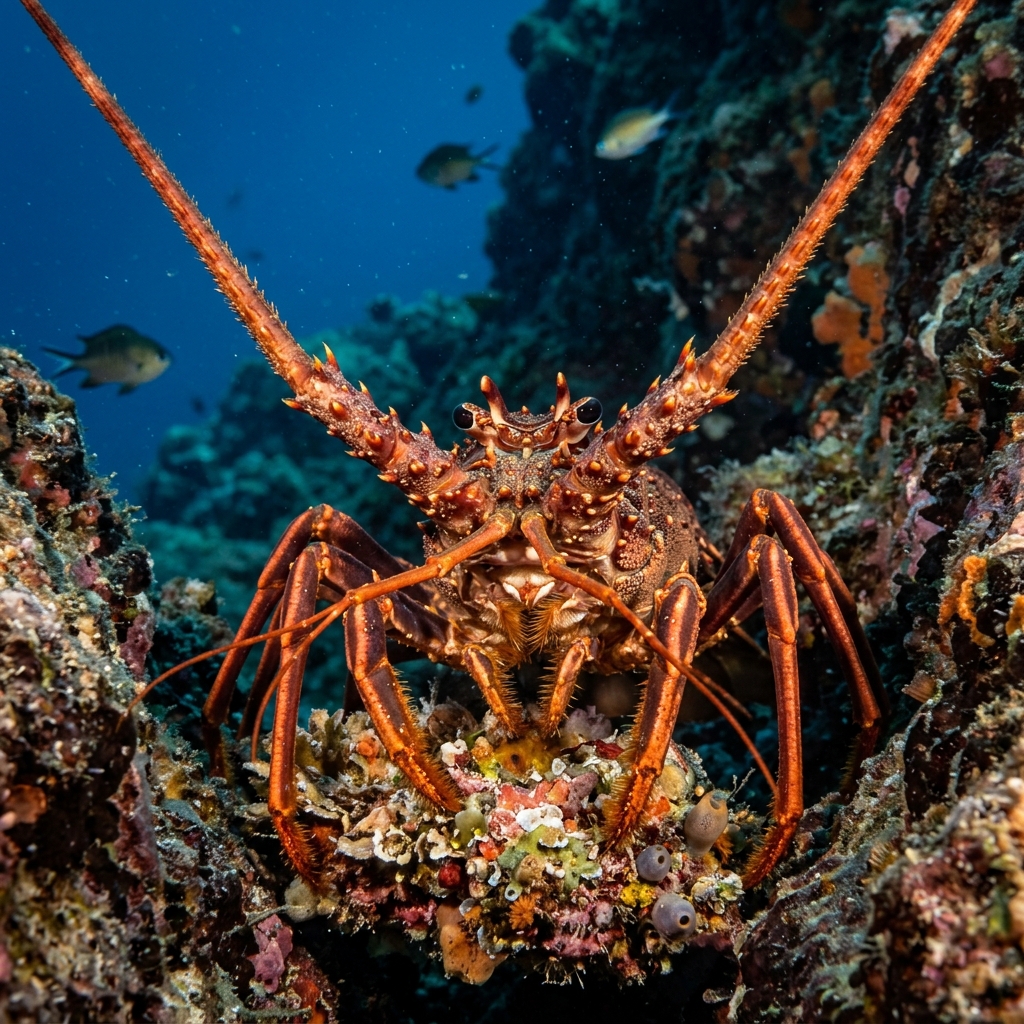
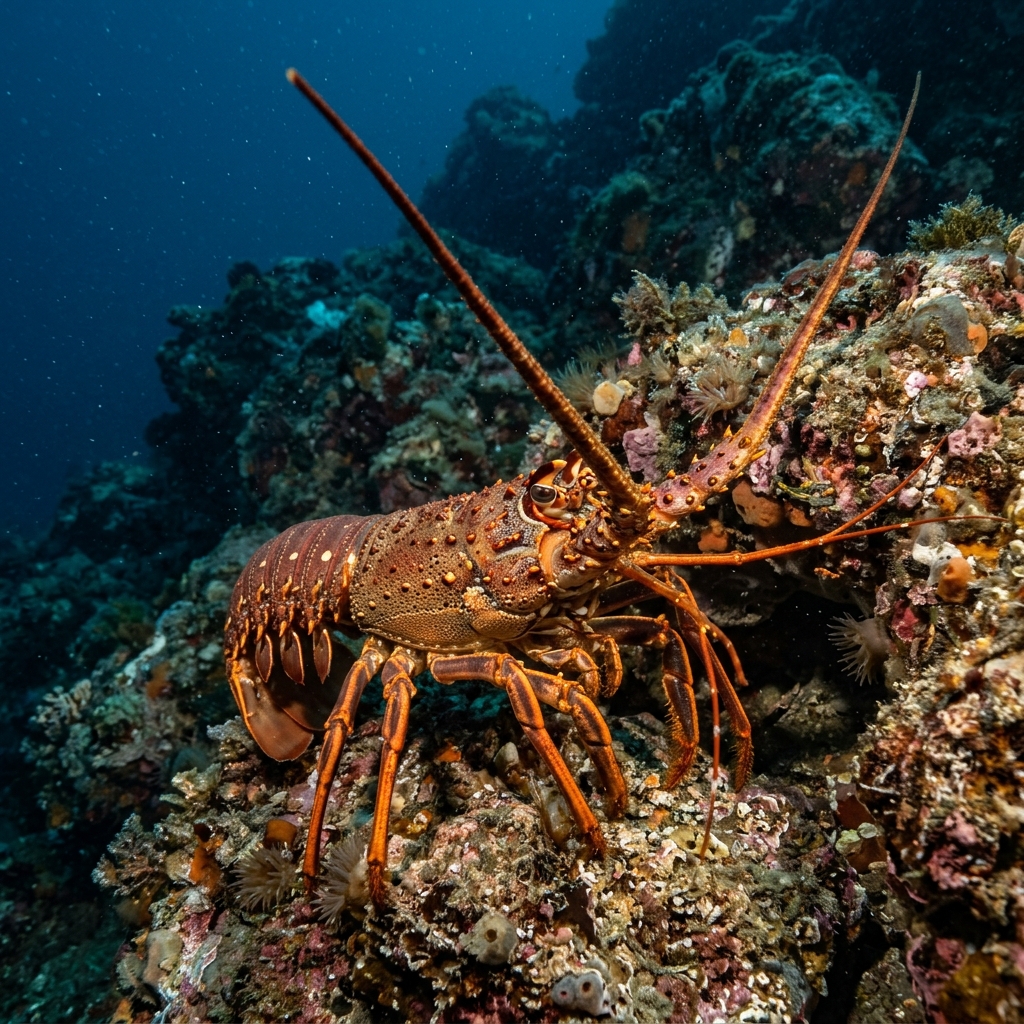
A large, spiny-shelled crustacean reaching around 42 cm, recognisable underwater by its reddish-brown to brick-red mottled body, long pairs of spiny antennae that often protrude from rock crevices before the animal itself is visible, and the absence of large claws (unlike true clawed lobsters). The body is roughly cylindrical with a textured, spiny carapace and bold white spots along the tail segments. Females can be identified by a broader, wider tail fan and small appendages (pleopods) on the underside of the tail used to carry eggs.
Shy by day, California spiny lobsters spend daylight hours tucked into rocky crevices and reef gaps, with only their long antennae visible from outside. Night dives are where you earn the sighting: after dark they move openly across the seafloor, sweeping those antennae across rock and sand as they forage. If approached, they back quickly into cover rather than stand their ground, so slow, patient movement pays off more than pursuit.
Those long, spiny antennae are not just for show. When threatened, a California spiny lobster stridulates (produces a rasping sound) by rubbing the antennae against a ridge on the carapace, a warning signal that can actually be heard by a nearby diver in the water.
Sightings concentrate from June through January in Northern Hemisphere waters, making the second half of the year and early winter the most productive window. Outside this period, encounters drop off noticeably.
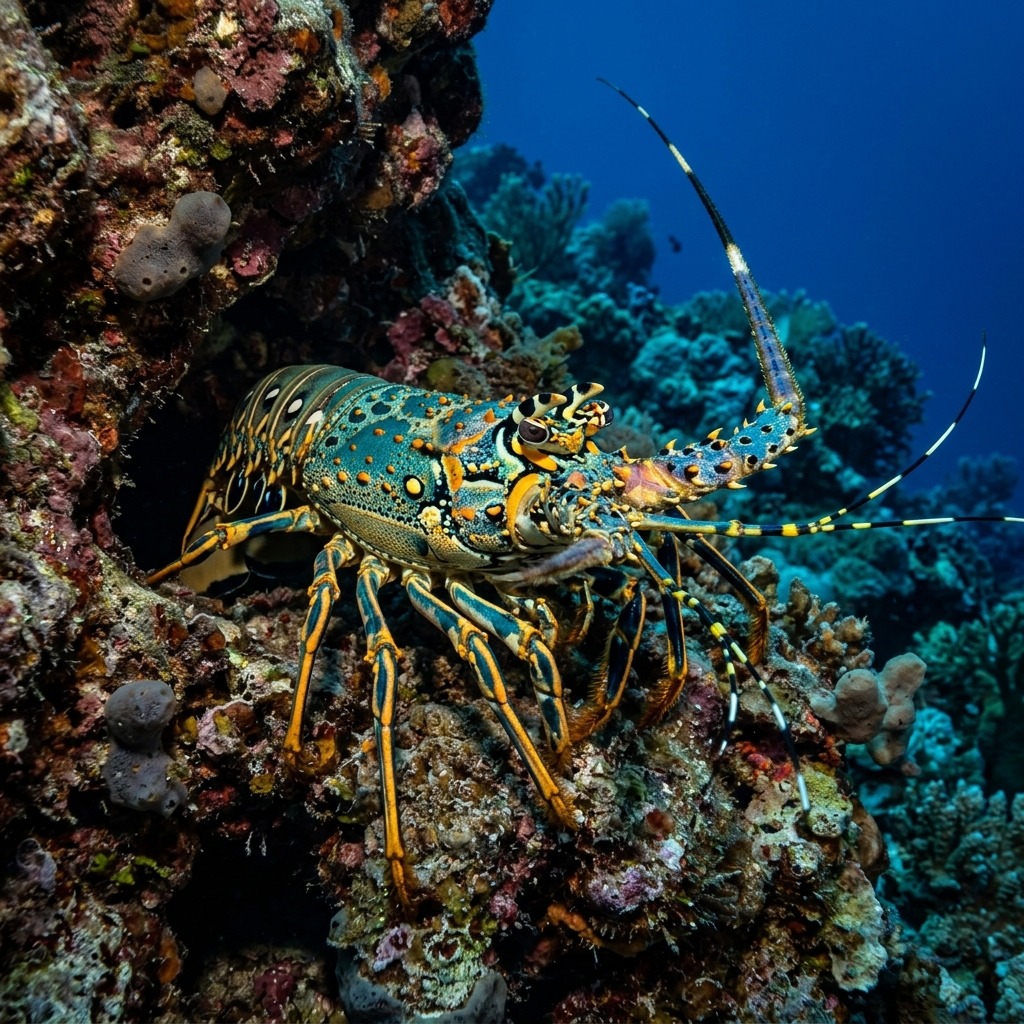
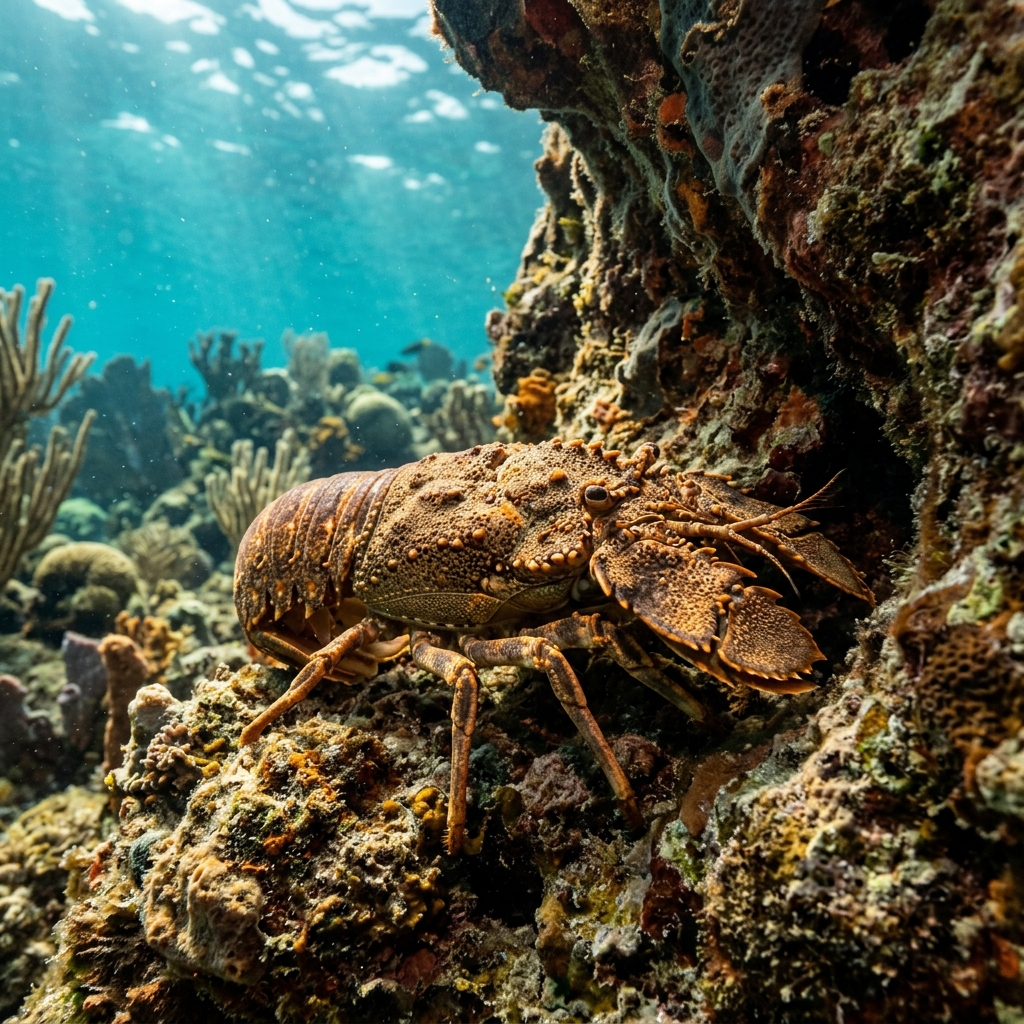
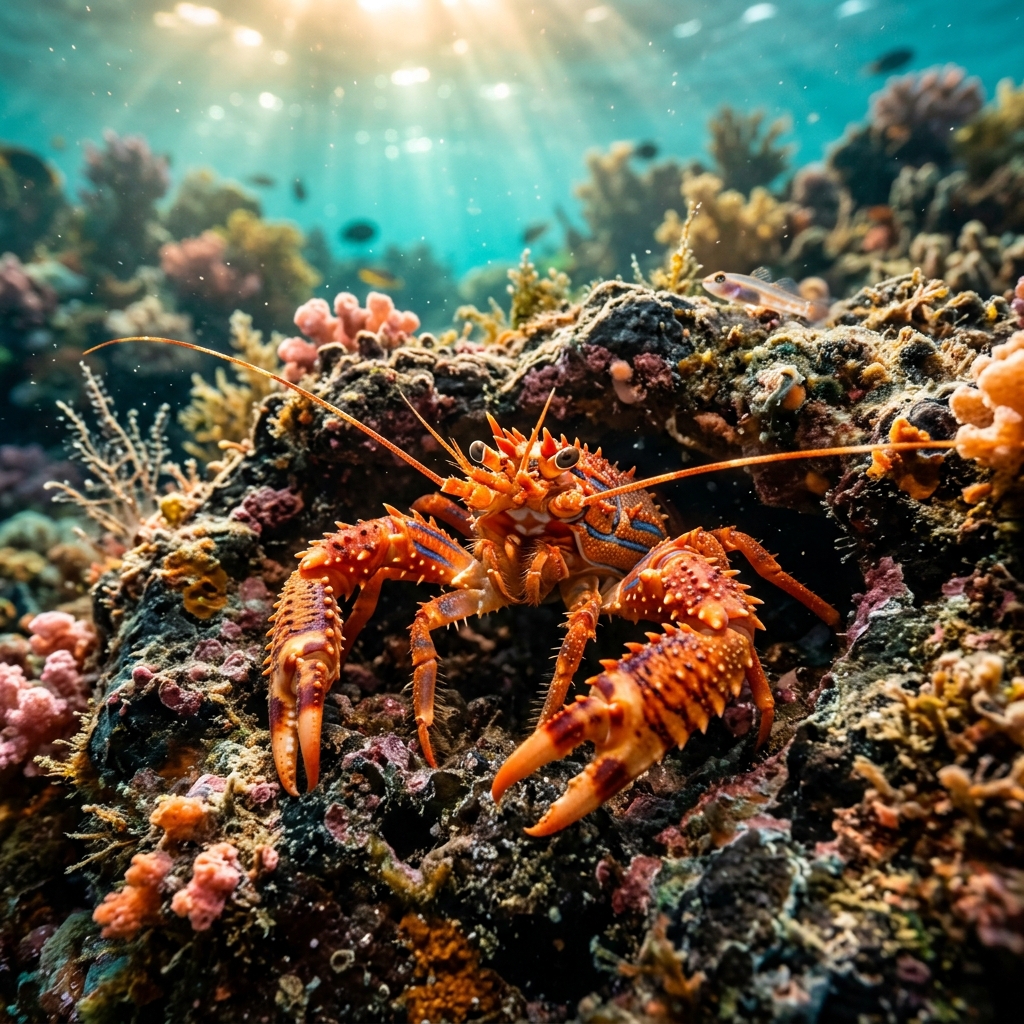
Reef neighbours a diver could mistake it for. Use the identification notes above to tell them apart.
The vast majority of sightings come from the US Pacific Coast, which accounts for most logged dive sites by a wide margin. Mexican Pacific waters, particularly in the Northern Pacific region, represent a secondary but consistent area. A handful of records also exist from further inland Pacific sites in the US.
Mapping where California Spiny Lobster is logged…
Your best bet is the US Pacific Coast, where the species is logged across a large number of rocky reef dive sites from southern California northward. The Northern Pacific coast of Mexico is a reliable secondary location. Sightings are split between uncommon and common across sites, so picking well-known rocky reef spots improves your odds.
Sightings concentrate from June through to January, peaking in the second half of the year. Night dives within that window give the best results, as these lobsters are nocturnal and spend daylight hidden in crevices.
Look for a large reddish-brown crustacean with long, spiny antennae and no large front claws. White spots mark the tail segments, and the spiny carapace has a rough, textured surface. The antennae protruding from a reef crack are often the first thing you notice before the body is visible.
They typically reach around 42 cm in total body length, making them one of the larger lobster species on the Pacific Coast of North America. Large individuals can weigh several kilograms, and their long antennae can more than double the apparent length of the animal.
No, they pose no serious danger. They will not approach or attack divers. The main thing to avoid is reaching bare-handed into crevices where one is sheltering, as the spiny antennae can scratch defensively. Treat them with the same respect you would any reef animal and keep a respectful distance.
Site and sighting data is aggregated from diver logs, iNaturalist and GBIF. For taxonomy and conservation status:
Caribbean Spiny Lobster
2,209 sites