Goniobranchus annulatus
Spot this ringed nudibranch year-round on reefs in Antalya, Turkey and the UAE's East Coast in 23-29C water.
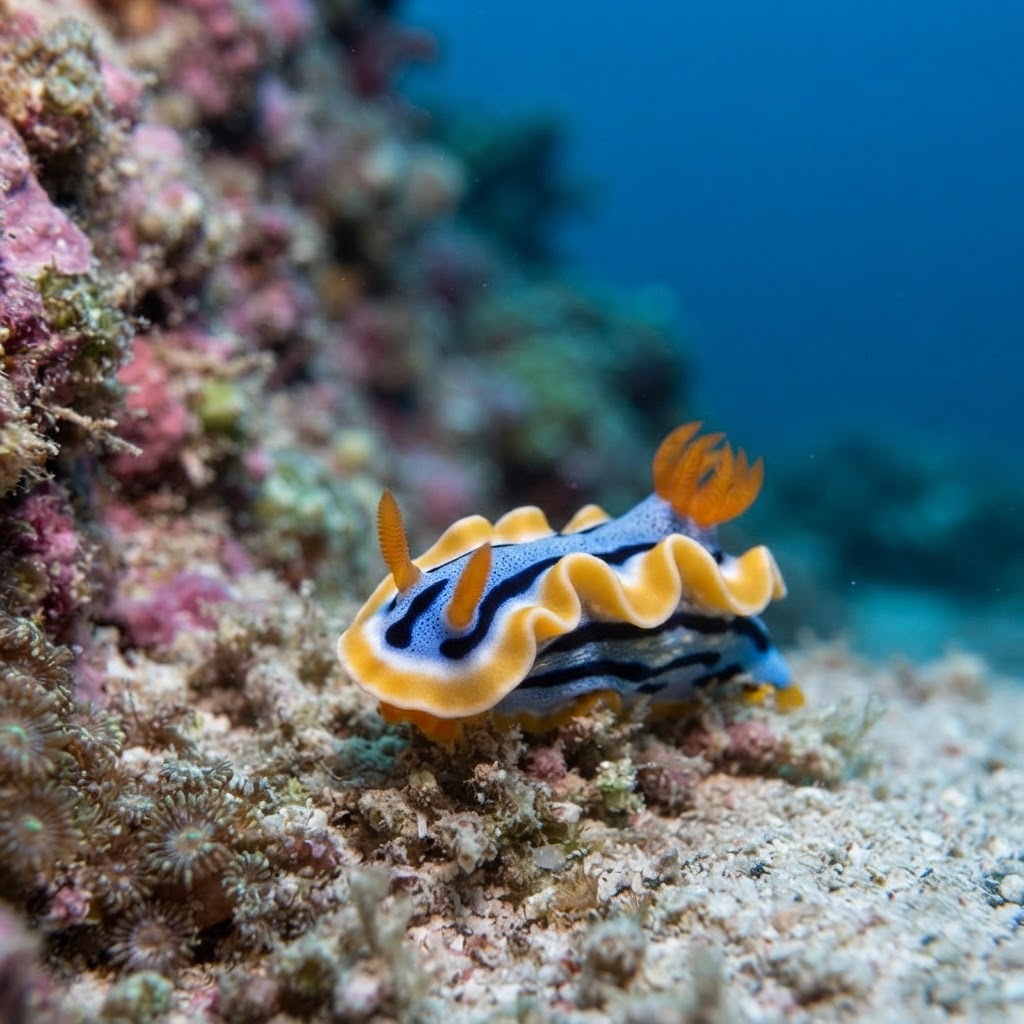
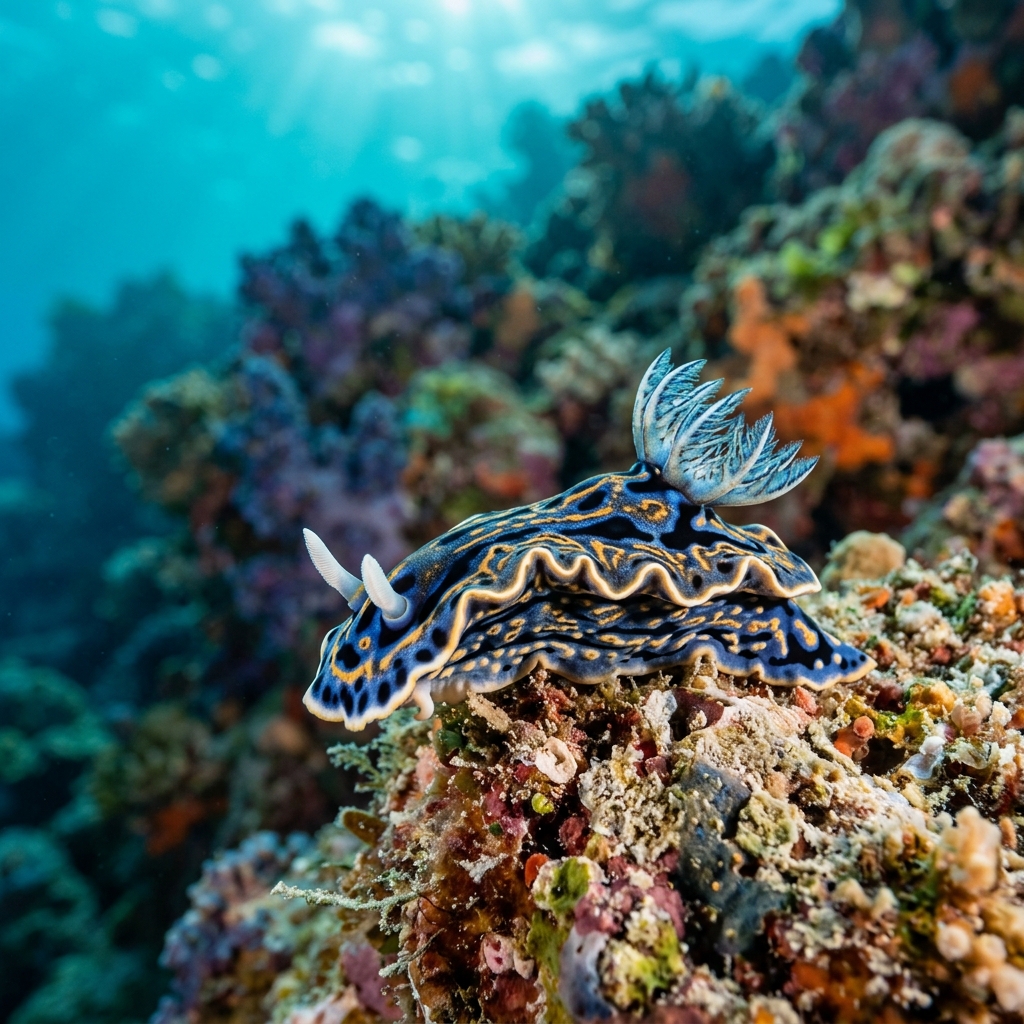
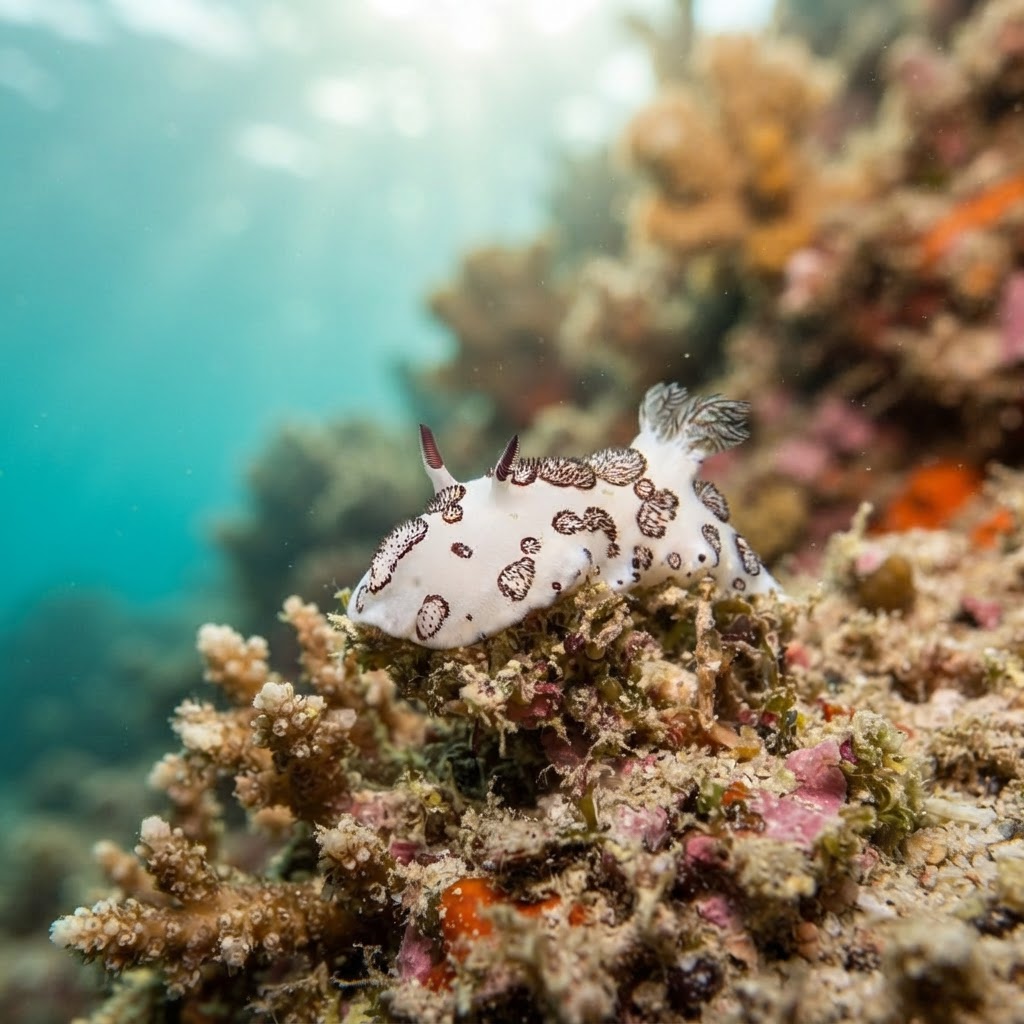
A small, oval-bodied nudibranch (sea slug) with a pale mantle patterned by dark-edged rings or spots, giving it the annulated look its scientific name refers to. Look for the frilly gill cluster (rhinophores and gill tuft) sitting up near the rear of the body, often in a contrasting colour to the mantle. It moves slowly across rock and rubble, rarely more than a few centimetres long, so a close, careful look is needed to pick out the ring pattern from similar dorids nearby.
Found grazing slowly over rock, rubble, and reef substrate, usually tucked into cracks or moving across low-relief ground rather than open sand. It shows no reaction to divers beyond its usual unhurried pace, making it an easy subject once spotted, though its small size and cryptic pattern mean it's more often found by divers scanning closely than by chance. Most logs come from the same uncommon-to-common range at muck and rubble patches rather than big coral walls.
Like other dorid nudibranchs, it likely feeds on sponges and absorbs their chemical compounds into its own tissue, which is thought to be part of how these slow, defenceless-looking animals avoid predation on the reef.
Sightings are logged year-round with no clear seasonal spike, which fits its comfortable range of roughly 23 to 29C found on reefs across the Mediterranean, Gulf, and Indian Ocean sites where it's recorded. Plan around good visibility and calm conditions at your chosen site rather than a particular month.
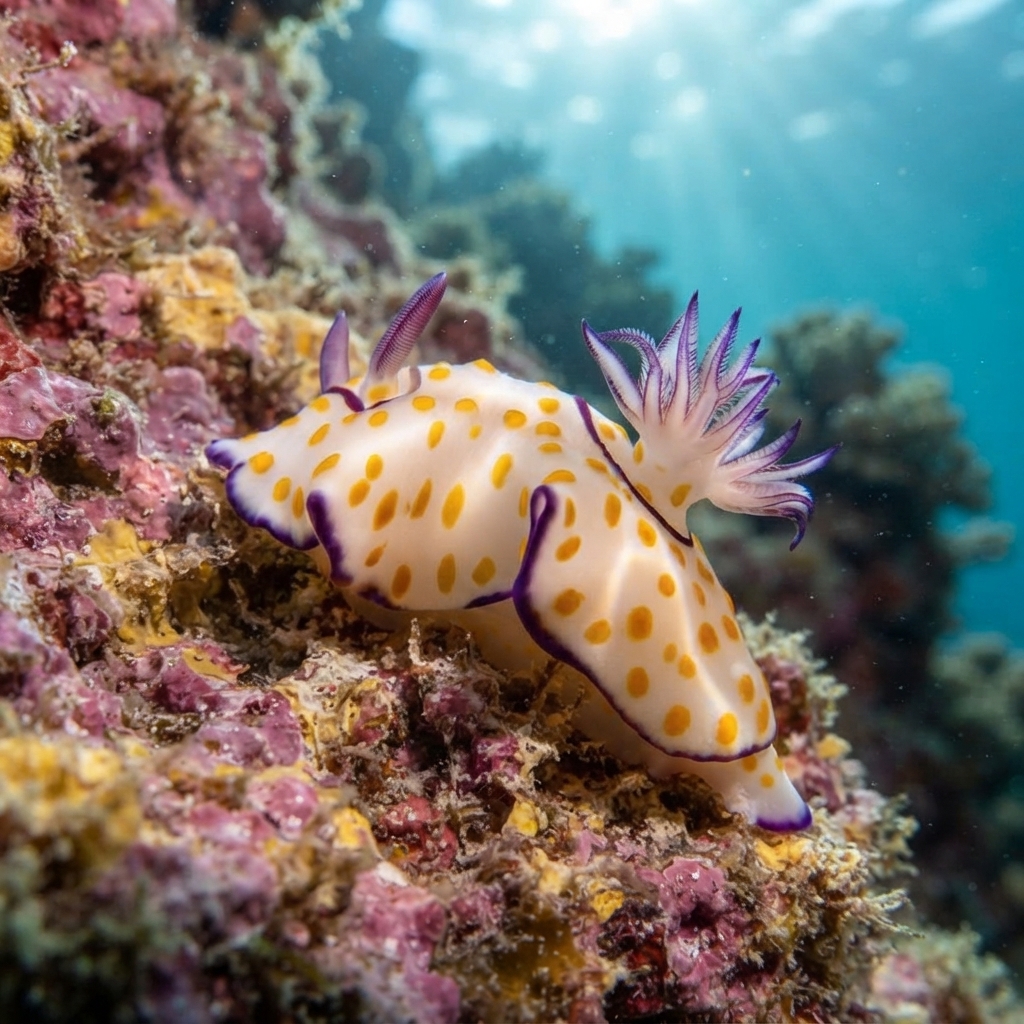
Reef neighbours a diver could mistake it for. Use the identification notes above to tell them apart.
Most reliably logged in Turkey, especially around Antalya and the Turquoise Coast, and a strong presence on the UAE's East Coast. Oman's Daymaniyat Islands and Musandam, along with Israel's Mediterranean Coast and Eilat, also produce regular sightings, with smaller but real populations noted in India's Goa region, Tanzania, Greece, and South Africa.
Mapping where Spectacled Rainbow Dorid is logged…
Turkey is the strongest region, particularly Antalya and the Turquoise Coast, alongside the UAE's East Coast and Oman's Daymaniyat Islands and Musandam. Israel's Mediterranean Coast and Eilat, plus Goa in India, also see regular sightings.
There's no strong seasonal pattern in the sightings data, so it's considered a year-round find. It's recorded across a wide temperature range from 23 to 29C, which spans most dive seasons at its known sites.
Look for a small oval nudibranch with a pale mantle covered in dark-edged rings or spots, and a contrasting gill tuft near the rear. It moves slowly over rubble and rock, so a close look is usually needed to confirm the ring pattern.
Exact size data isn't available for this species, but like most Goniobranchus dorids it stays small, likely just a few centimetres in length, so it's easy to overlook without a close scan of the substrate.
No, it poses no danger to divers. It's a slow-moving, defenceless nudibranch best appreciated with a careful look rather than handling.
Site and sighting data is aggregated from diver logs, iNaturalist and GBIF. For taxonomy and conservation status:
Light-spotted Aegires
3,168 sites