Arctides regalis
Spanish Lobster turns up as an uncommon night find on Hawaii's reefs, in water sitting between 22 and 28C year-round.
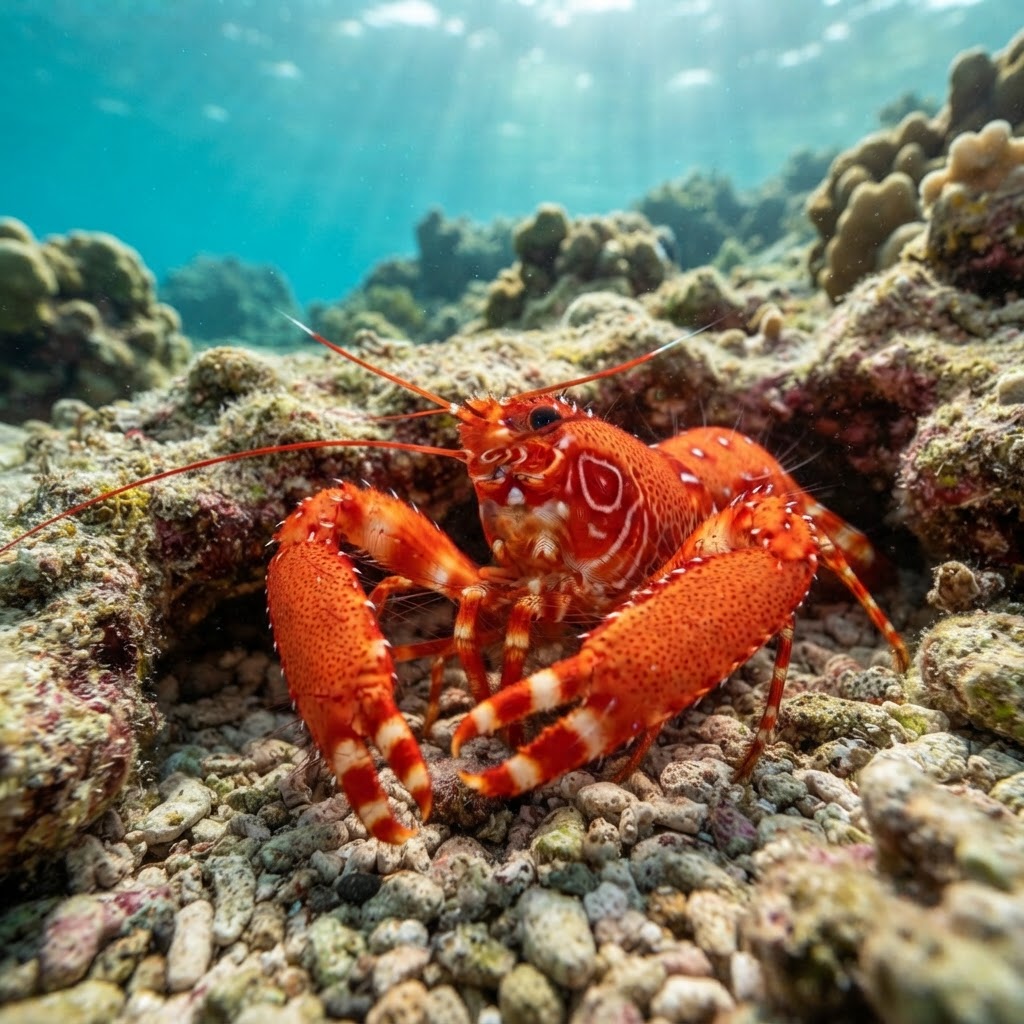
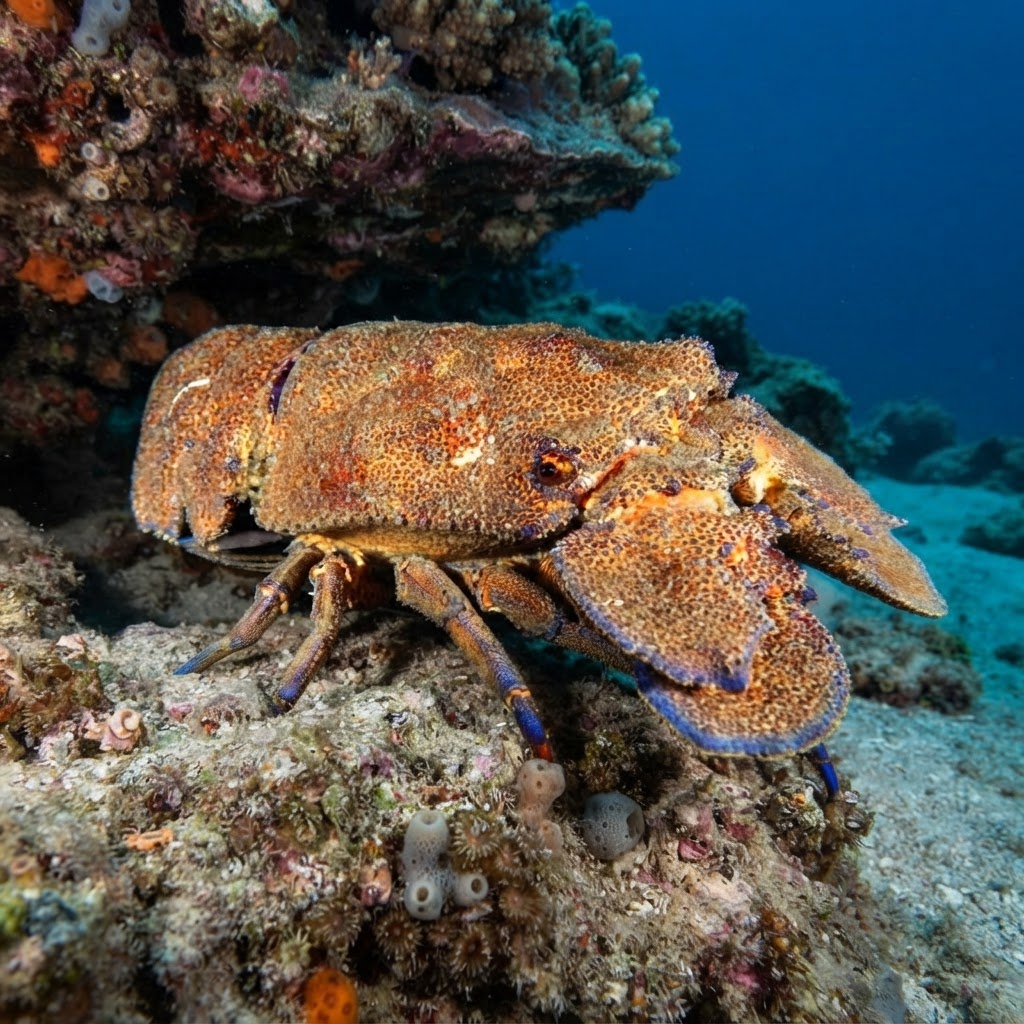
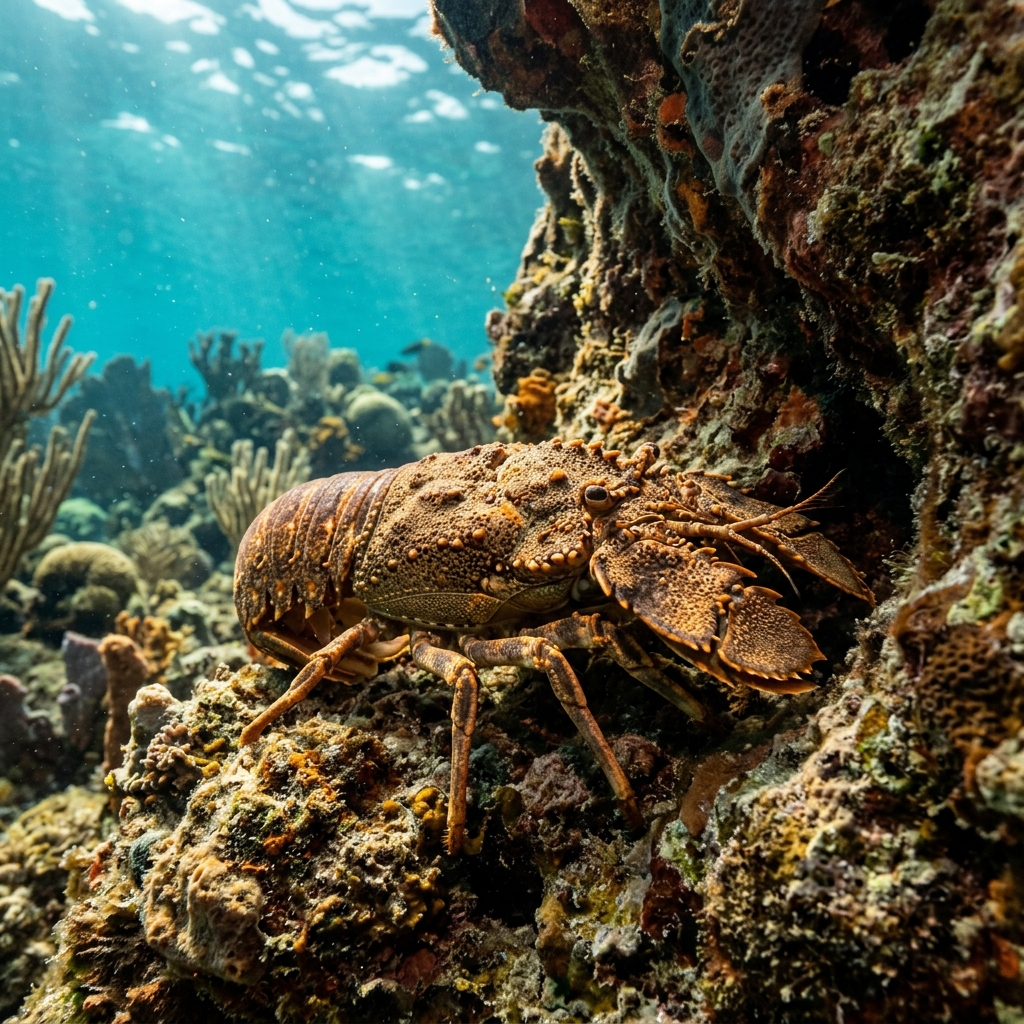
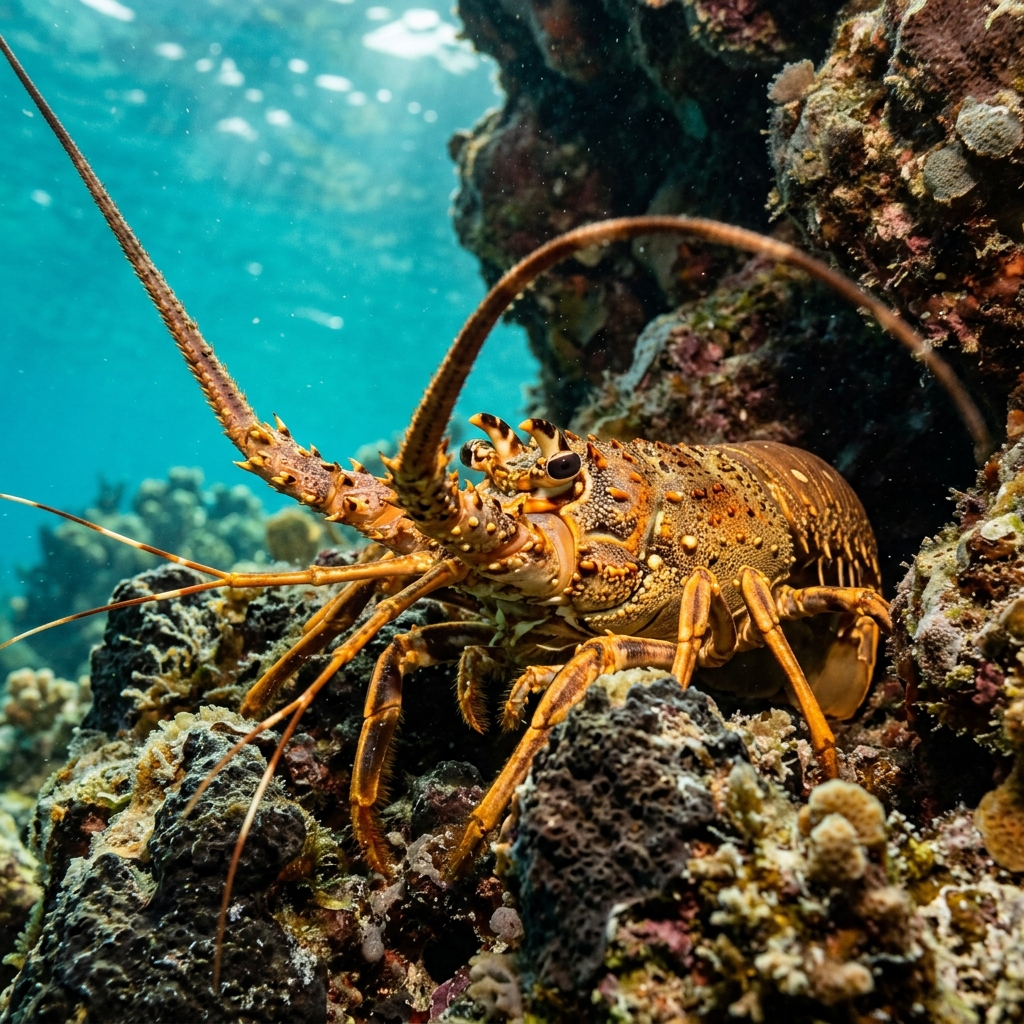
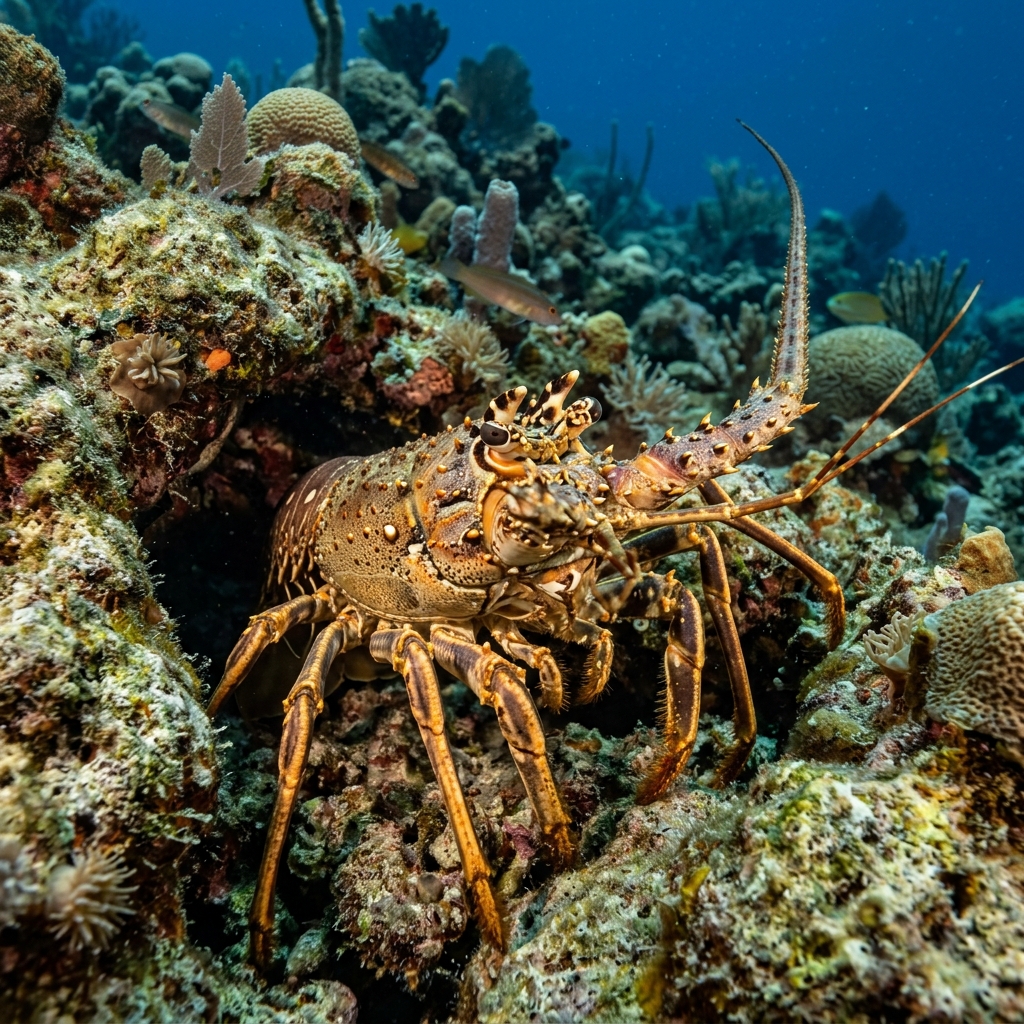
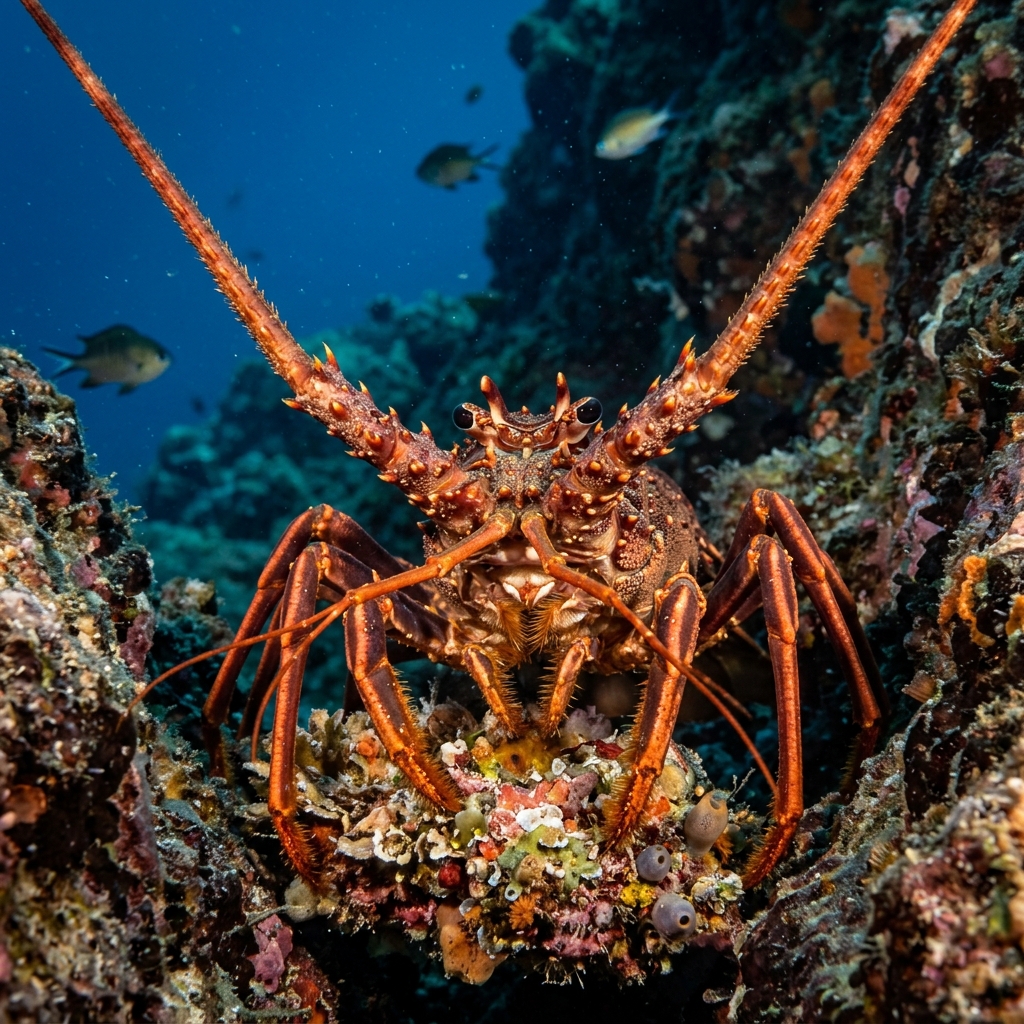
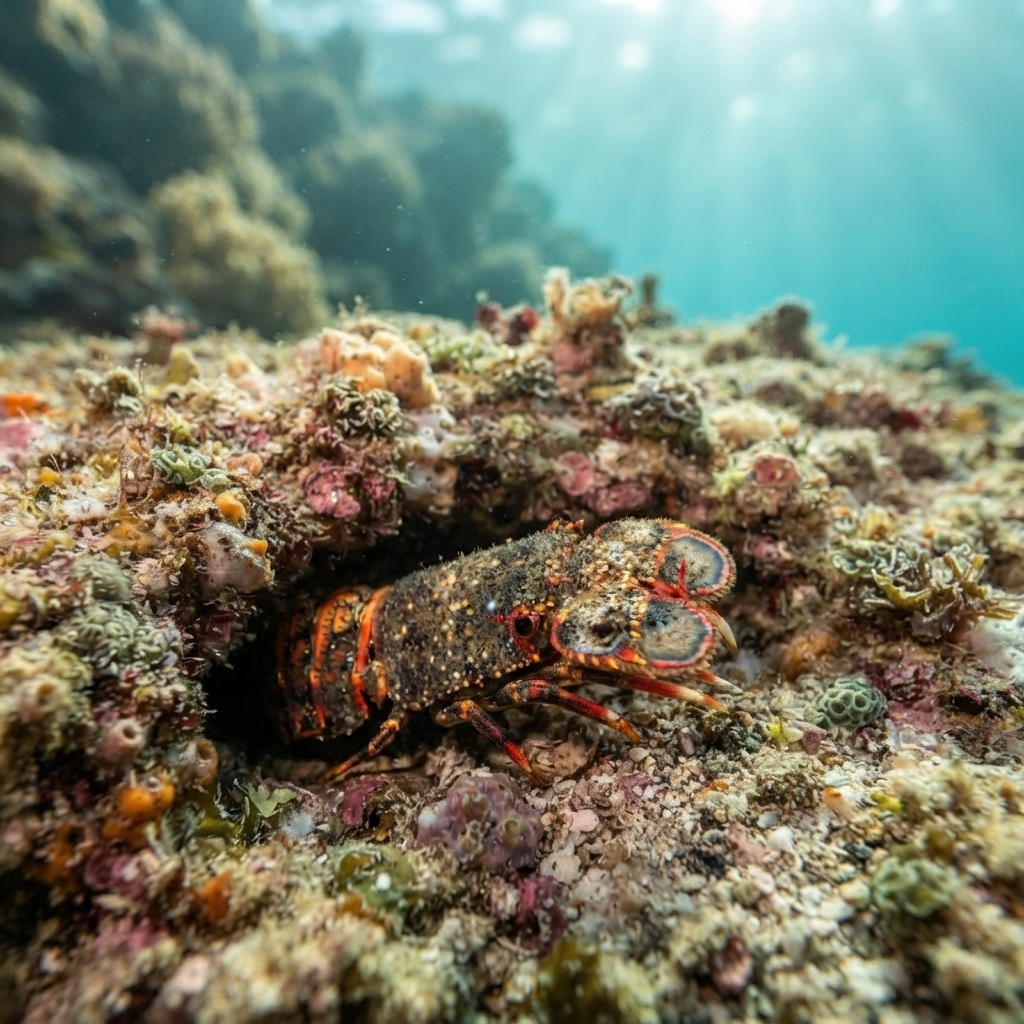
A small, flattened crustacean at around 4cm, easy to miss against reef rubble unless your torch catches the mottled reddish-brown shell. Like other slipper lobsters it has no long antennae, just short broad plates on the head where a spiny lobster would have whip-like feelers. The body is squat and shield-shaped rather than tubular, sitting low and tight against rock or coral.
Expect it wedged into a crevice or under a ledge by day, since slipper lobsters like this one are classic nocturnal foragers that hole up during daylight hours. Divers logging it describe an uncommon find, so it takes a deliberate search with a torch under overhangs rather than something you'll spot cruising open reef. It doesn't react much to divers beyond staying put in its hiding spot.
The flattened, antenna-less head shield that gives slipper lobsters their name works like a shovel, letting them wedge backward into narrow reef crevices where spiny lobsters with long antennae can't easily follow.
Recorded water temperatures run 22.4 to 28.4C, comfortable year-round on Hawaiian reefs, and there isn't enough seasonal data to point to a particular month. Treat it as a possible sighting on any dive rather than something tied to a season.
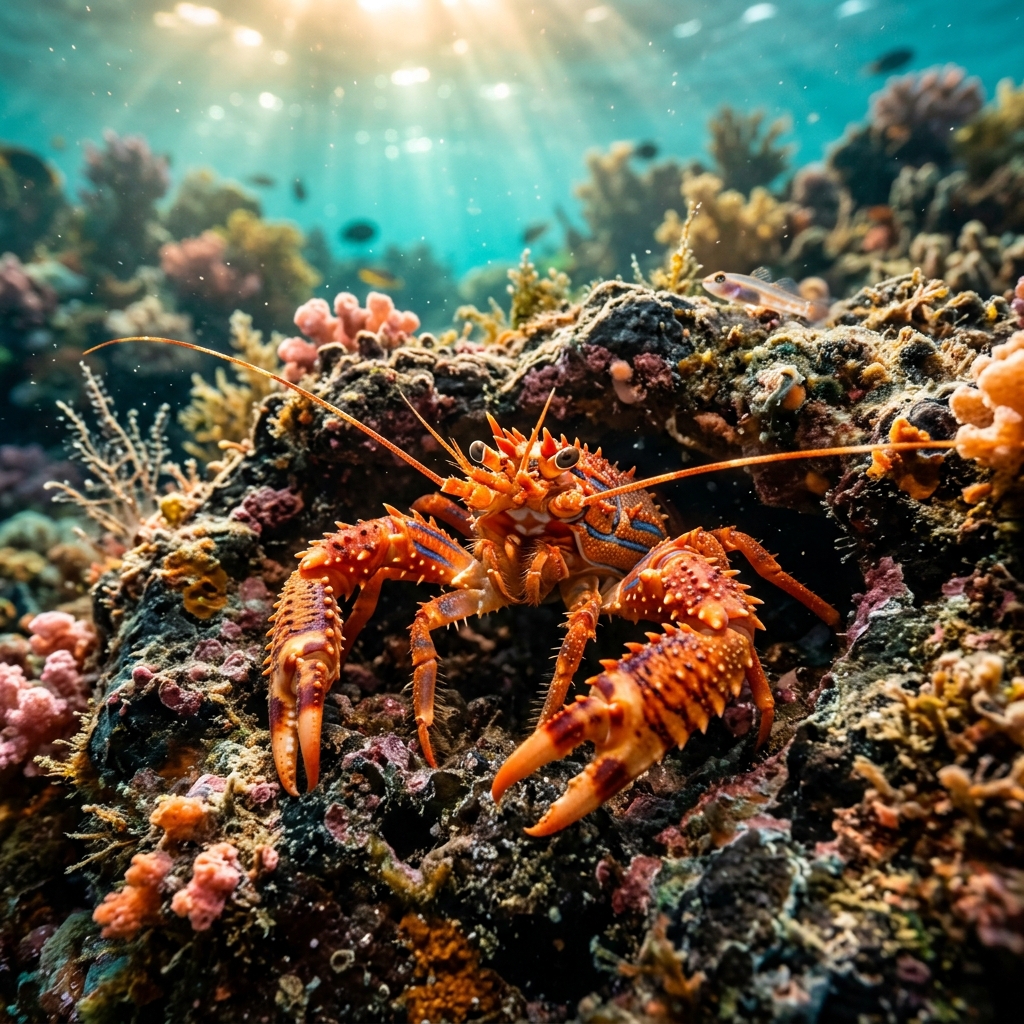
Reef neighbours a diver could mistake it for. Use the identification notes above to tell them apart.
Every logged sighting in the data comes from Hawaii, making it the place to look if you want a real shot at this one. Within Hawaii it's not tied to a single named site but shows up as a scattered, uncommon find across the island chain's reef and rubble habitat.
Mapping where Regal Slipper Lobster is logged…
All confirmed sightings come from Hawaii, where it turns up on reef and rubble habitat across the islands. It hasn't been logged elsewhere in diver records.
There's no clear season in the data, and water temperatures in its Hawaiian range stay between roughly 22 and 28C all year, so sightings can happen on any dive.
Look for a small, flattened lobster around 4cm long with a mottled reddish-brown shell and no long antennae, just short plates on the head. It sits low against the reef, usually tucked into a crevice.
They're small, typically reaching only about 4cm, so they're easy to swim past without a close look.
No. They're harmless, sheltering crustaceans with no sting or bite risk to divers.
Site and sighting data is aggregated from diver logs, iNaturalist and GBIF. For taxonomy and conservation status:
Caribbean Spiny Lobster
2,209 sites