Hoplometopus antillensis
Spot this reddish reef lobster tucked in crevices across Carriacou, Tenerife and Madeira, in waters around 18-24C.
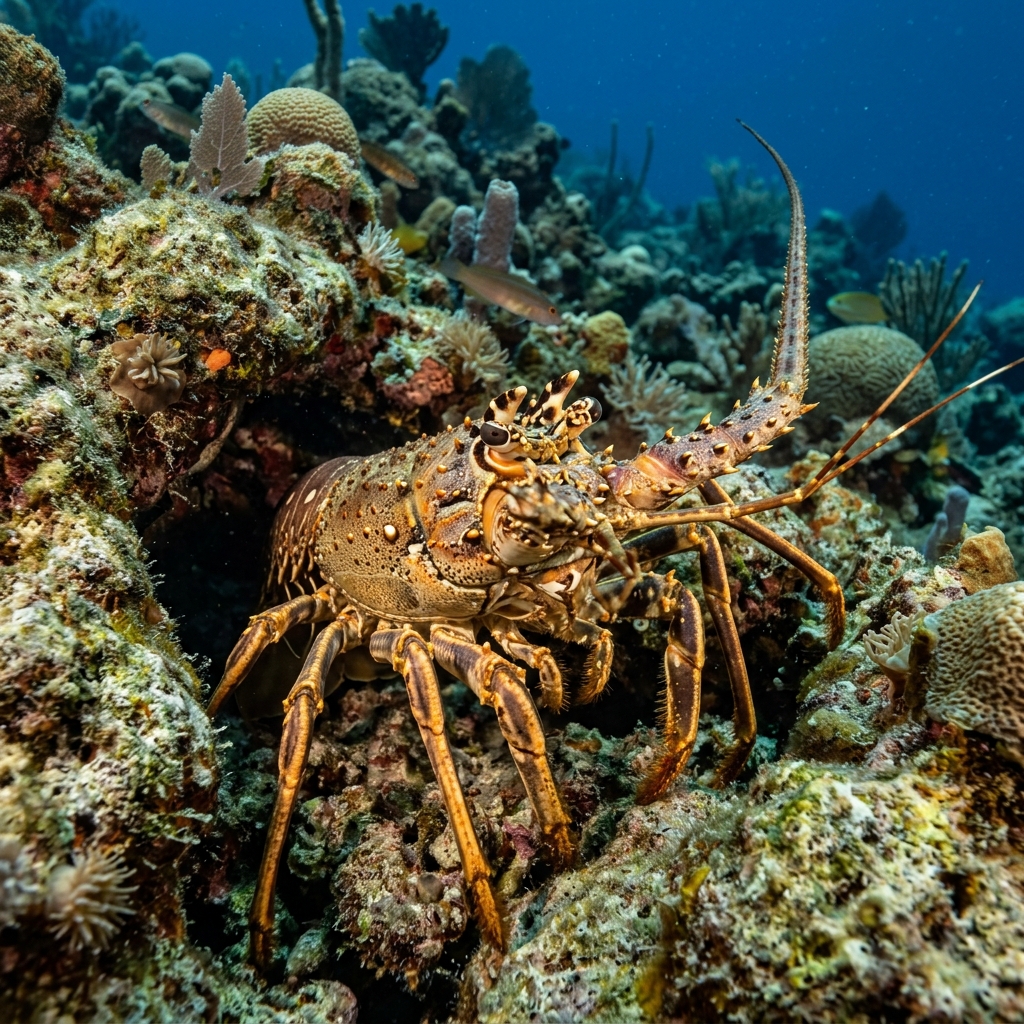
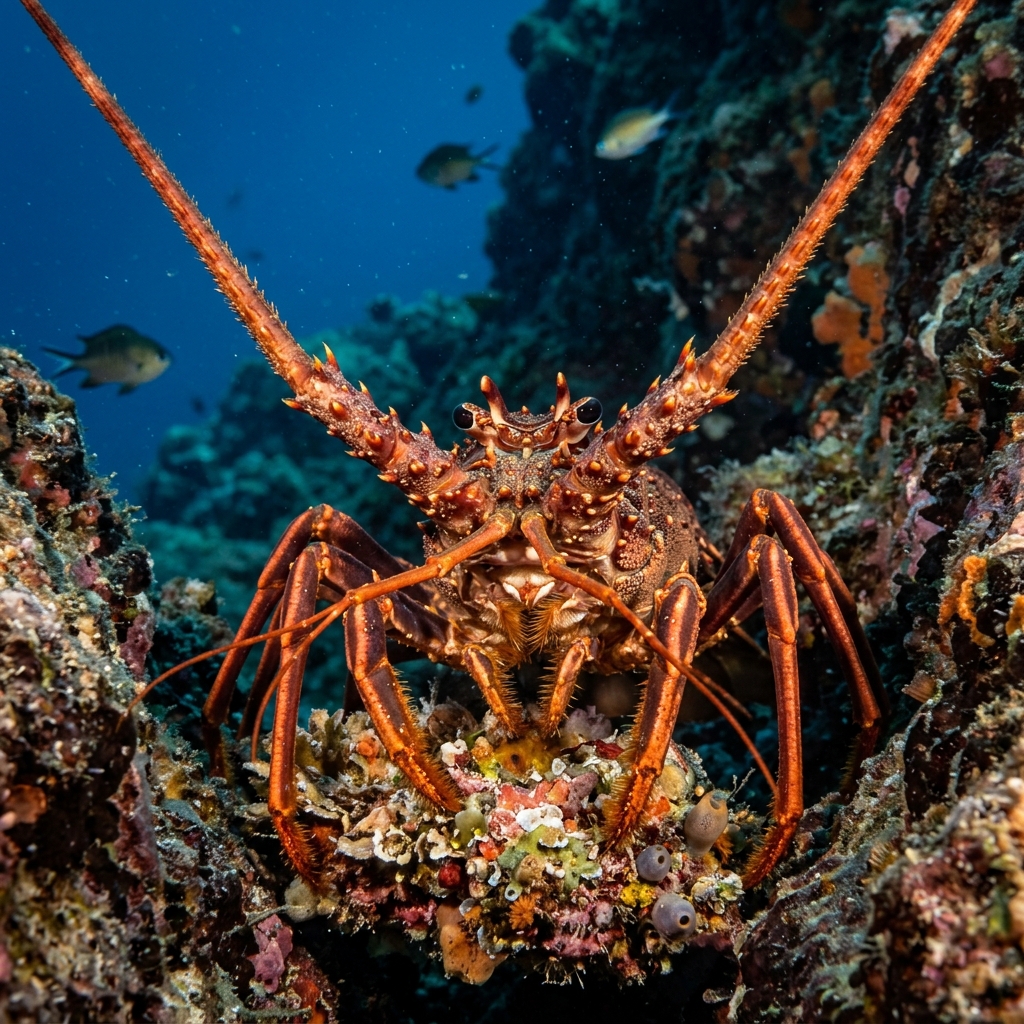
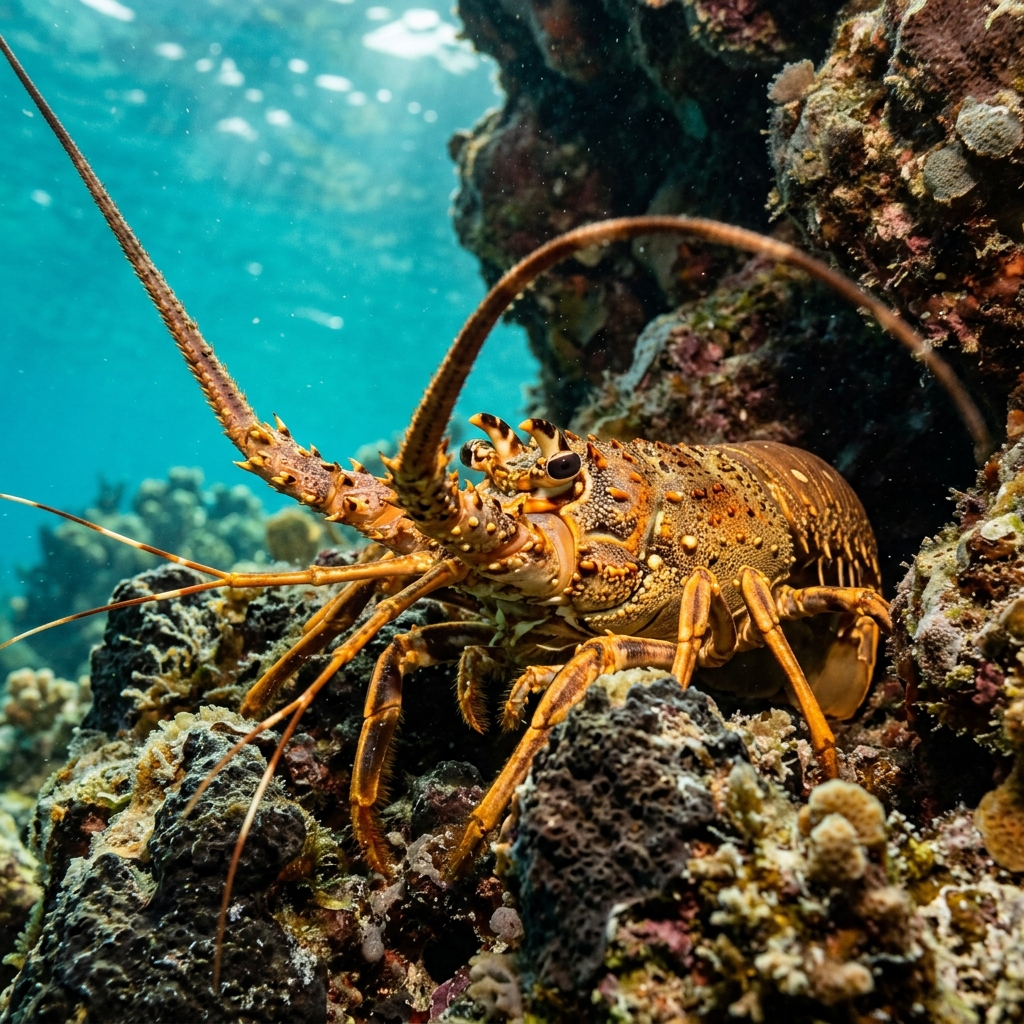
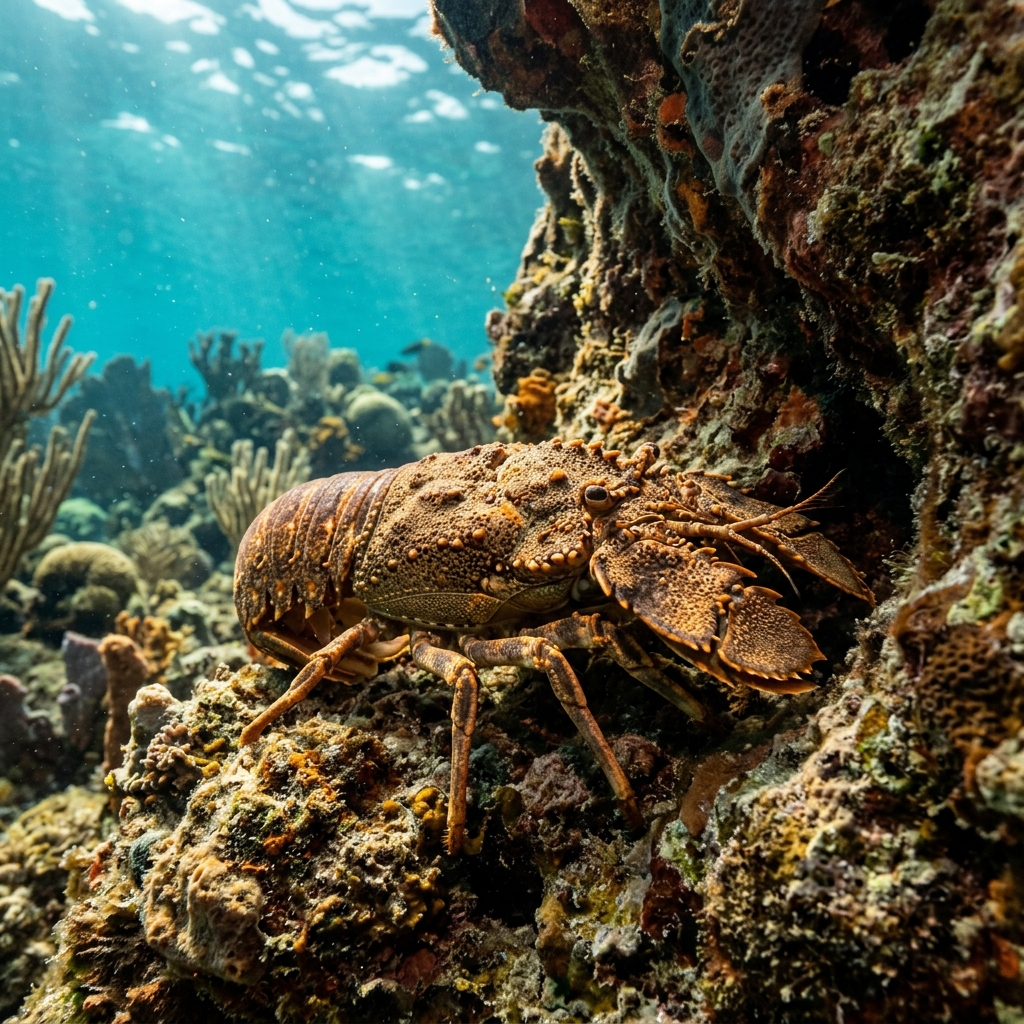
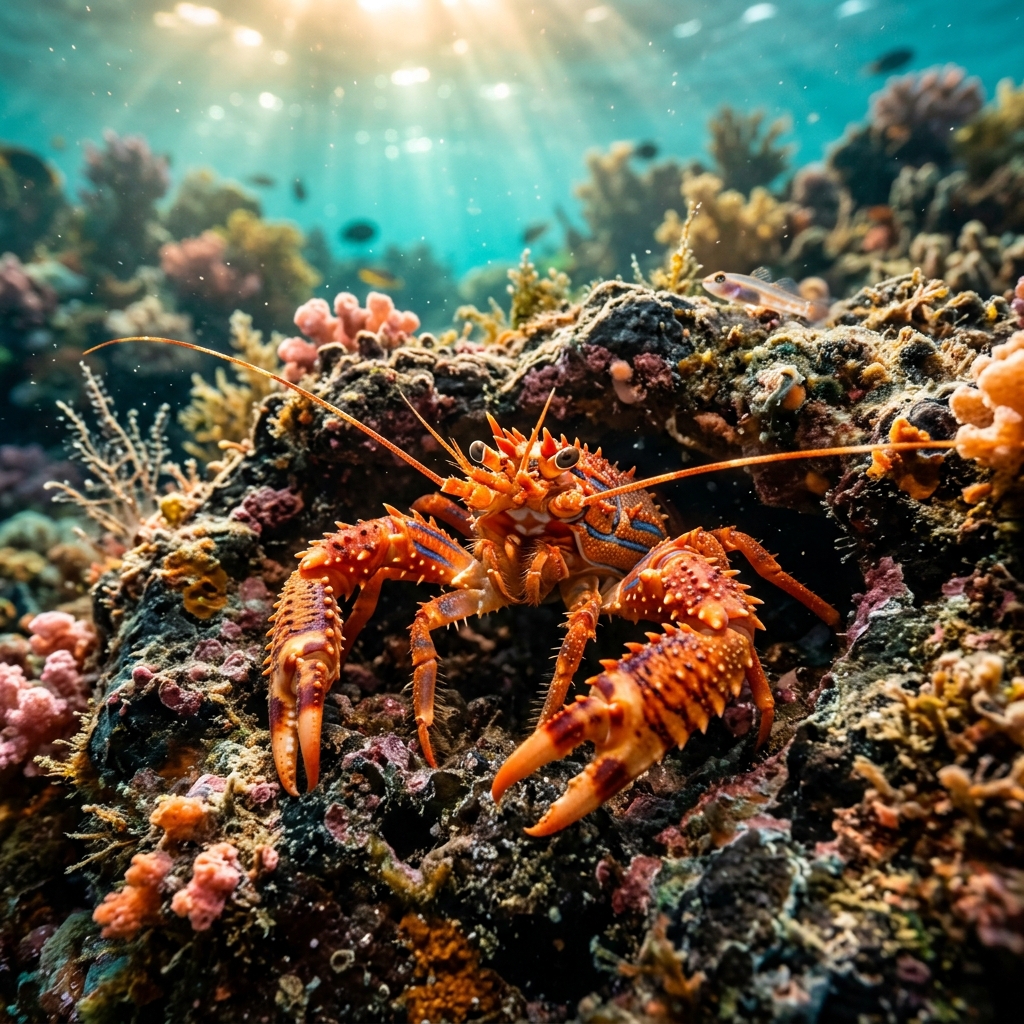
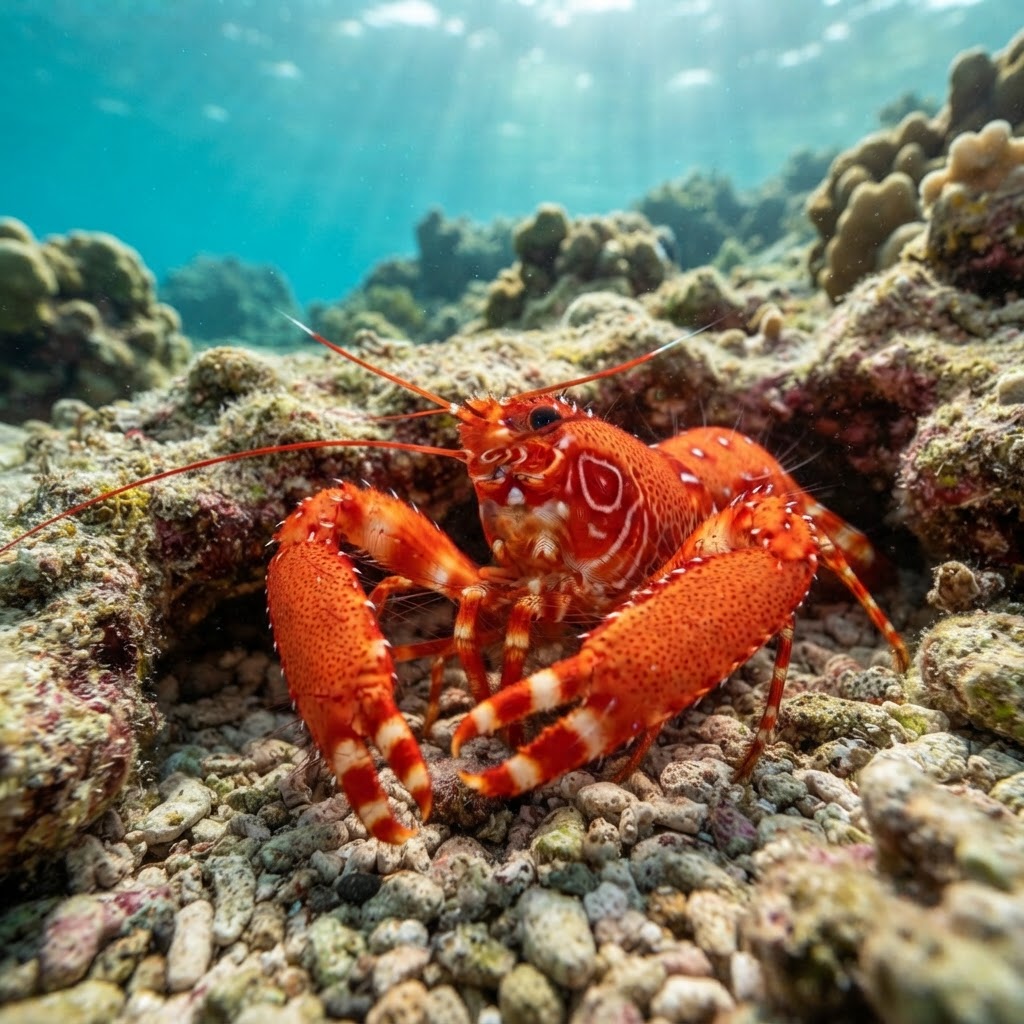
Look for a lobster with a reddish-orange body and lighter banding along the tail, usually with long, thin antennae poking out from a crevice before the rest of it comes into view. It sits smaller and slimmer than the spiny lobsters divers are used to, with a smoother-looking, less spine-heavy carapace (shell). Most of what you see underwater is the front half and antennae, since it tends to stay tucked well back into a hole or ledge.
Expect to find it wedged into a crevice, overhang or small hole on rocky or reef terrain, antennae the first giveaway before you spot the body. It doesn't bolt from divers the way some crustaceans do, but it also doesn't wander out into the open, so a slow look into likely-looking cracks with a torch is the way to actually find one rather than swim past it. Reported as uncommon at most sites it turns up at, so it's a species you look for rather than expect on every dive.
It belongs to a small, easily overlooked family of reef lobsters (Enoplometopidae) that are far less studied than the spiny lobsters divers typically photograph, so a clear sighting is a useful record for local dive guides.
No clear seasonal pattern shows up in the sightings, so treat it as a year-round find. Its comfort range of roughly 18 to 24C covers the water temperature at these sites most of the year, so timing your trip around the season isn't really necessary.
Reef neighbours a diver could mistake it for. Use the identification notes above to tell them apart.
Most reliably logged around Carriacou in Grenada, and across Tenerife, La Palma and El Hierro in the Canary Islands, with a solid presence on Madeira Island too. These rocky, crevice-riddled reefs and volcanic terrain in both the Caribbean and the eastern Atlantic islands suit its hiding, hole-dwelling habits.
Mapping where Flaming Reef Lobster is logged…
Best chances are around Carriacou in Grenada, plus Tenerife, La Palma and El Hierro in the Canary Islands, with Madeira Island also a solid option.
There's no strong season in the sightings data, so it's considered a year-round find at these sites, where water temperature usually sits comfortably in its 18 to 24C range.
Look for a reddish-orange lobster with long antennae trailing out of a crevice, a smoother shell than a spiny lobster, and a habit of staying mostly hidden with just the front end visible.
No, they pose no danger to divers and simply retreat further into their crevice if approached too closely.
It's logged as uncommon at almost every site where it's been recorded, so it's a species worth actively searching crevices for rather than one you'll see on a casual reef swim.
Site and sighting data is aggregated from diver logs, iNaturalist and GBIF. For taxonomy and conservation status:
Caribbean Spiny Lobster
2,209 sites