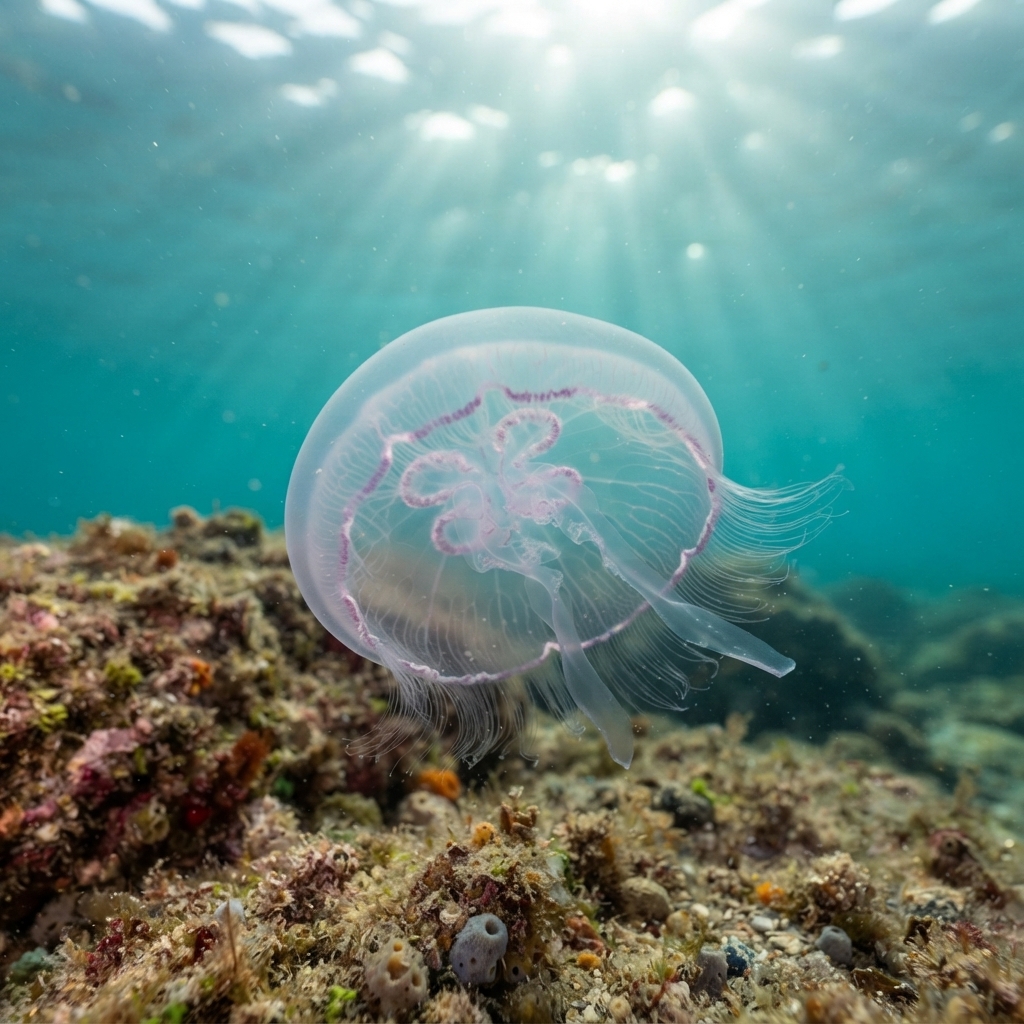
Aurelia marginalis
Translucent moon jelly logged year-round on Florida reefs and BVI dive sites, comfortable in warm 23 to 29 C water.
Safety warning
This species can sting on contact with its tentacles, which may trail well beyond the body and can still sting after the animal is dead or washed up. Look but do not touch, and give it a wide berth.
If you're stung
Stinging tentaclesGeneral first-aid guidance, not a substitute for professional medical care. In an emergency, call your local emergency number.
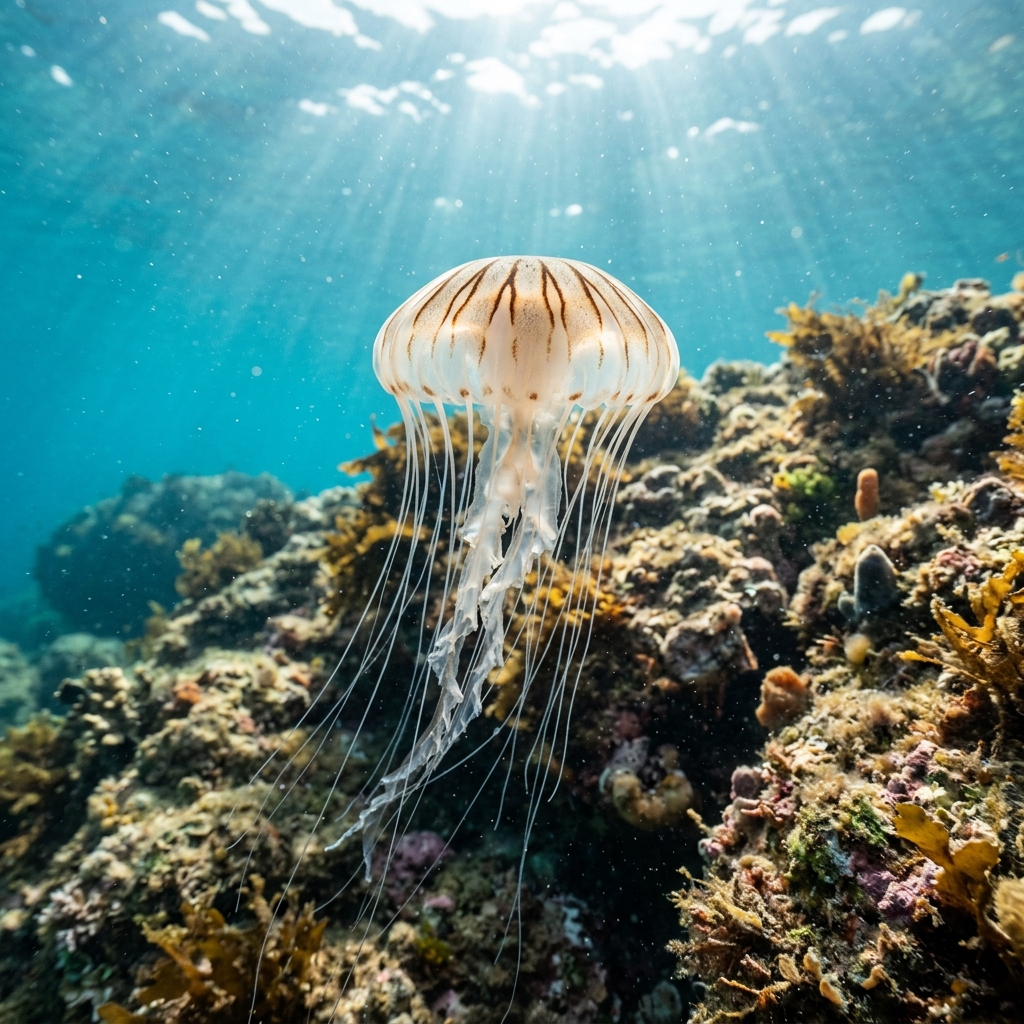
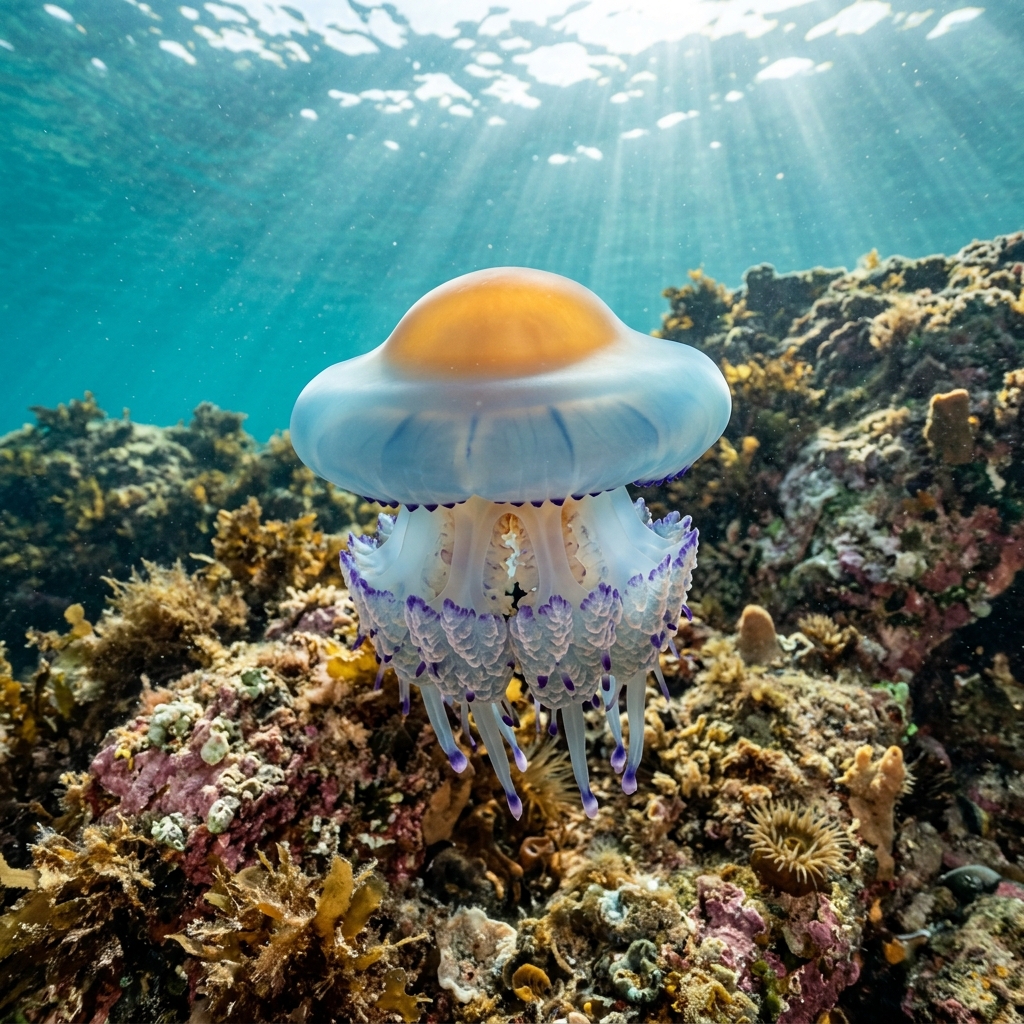
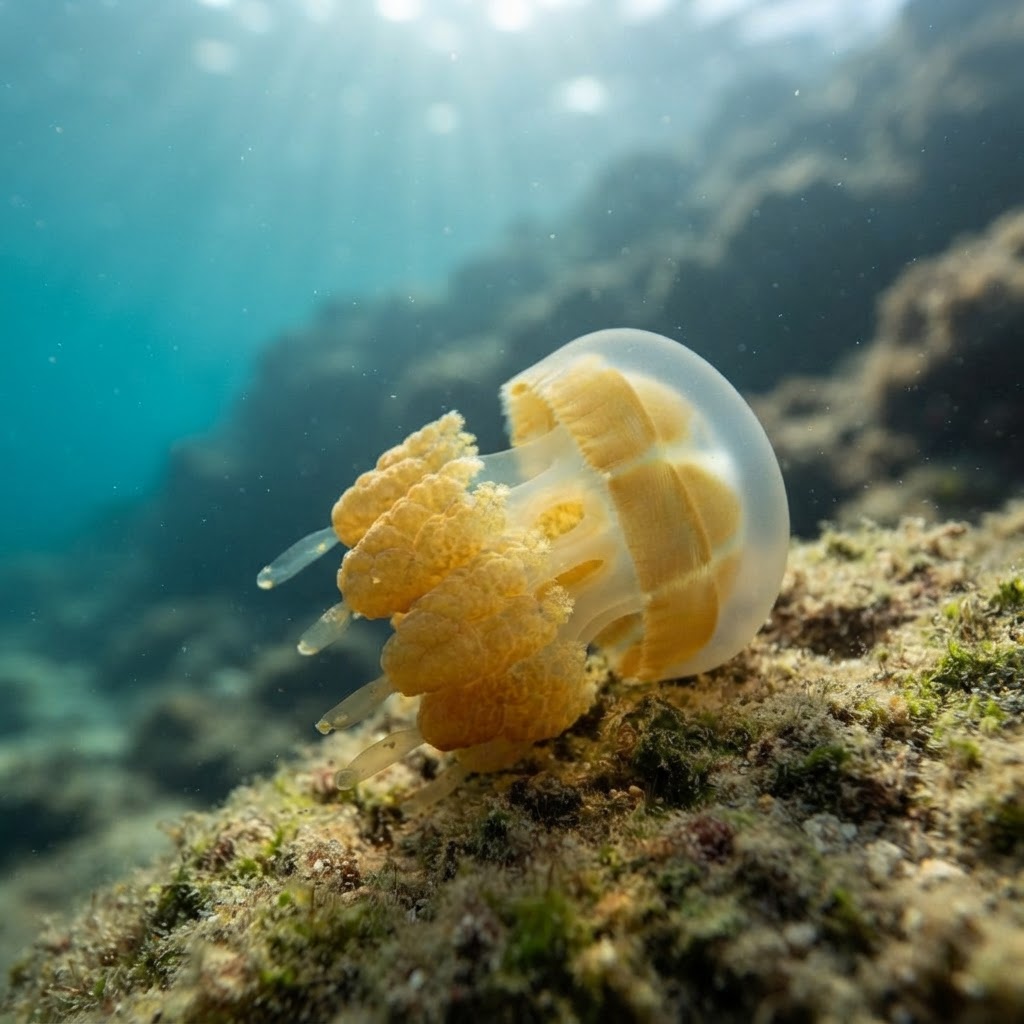
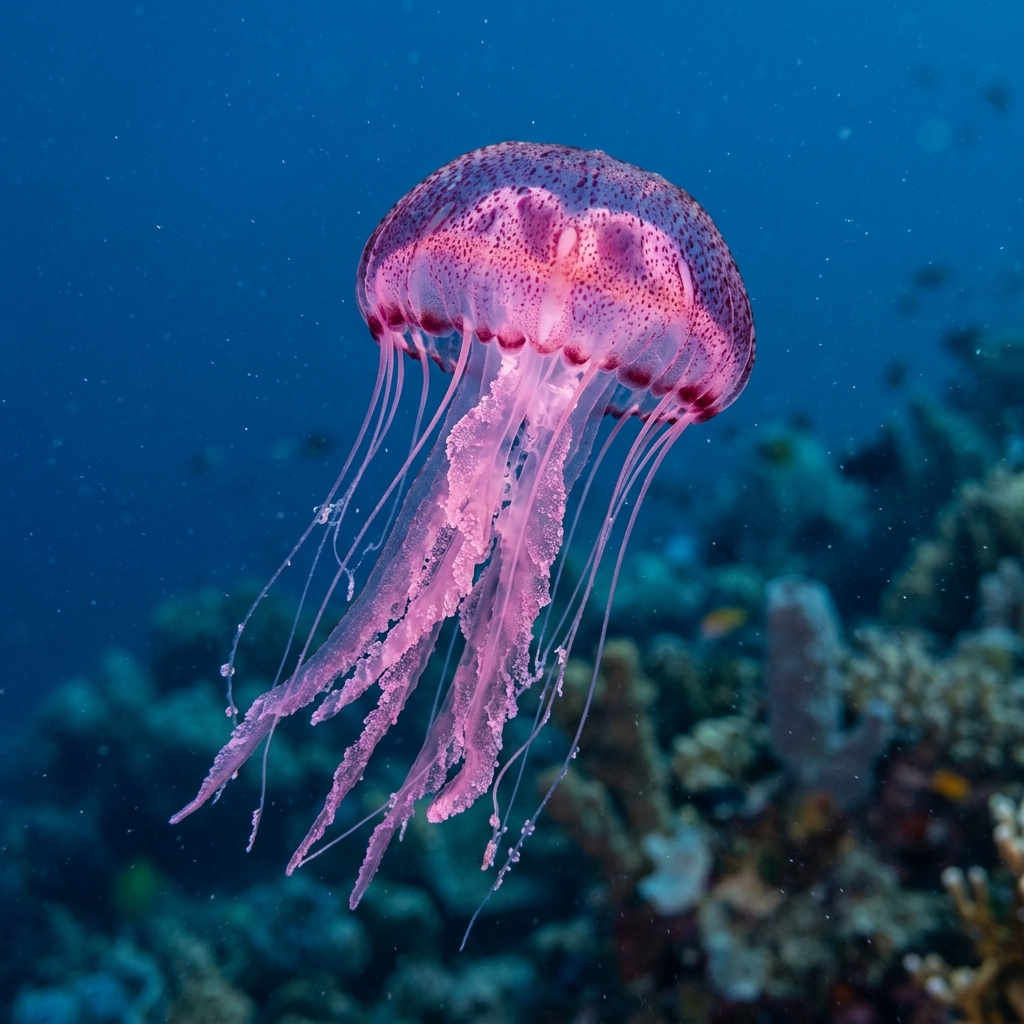
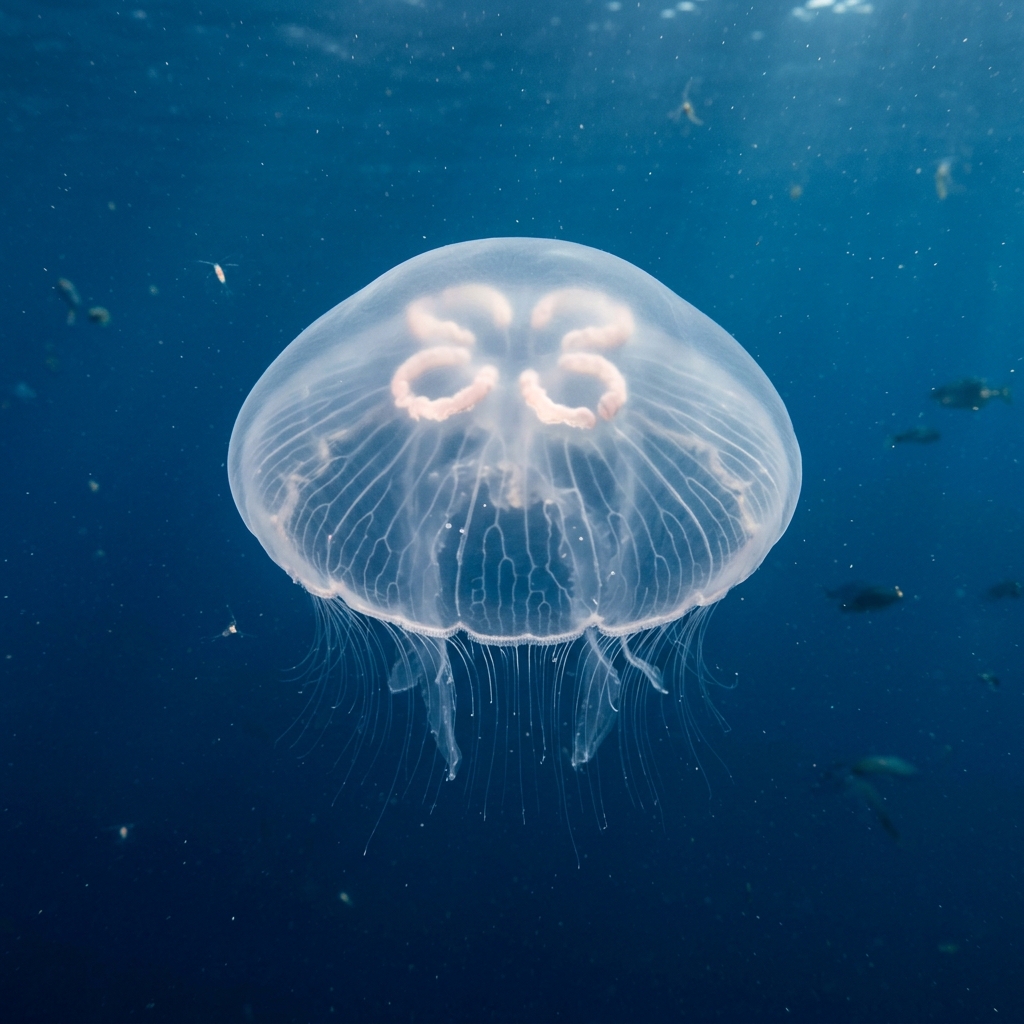
Look for a translucent, almost colourless bell, saucer-shaped and usually no more than a hand-span across, with four horseshoe-shaped marks (its reproductive organs) visible through the top of the bell like a faint four-leaf clover. Short, fine tentacles fringe the bell margin rather than long trailing arms, and it pulses along with a slow, steady rhythm rather than swimming with purpose. There is no dramatic colour to it underwater, which is itself a clue: if a jelly looks almost see-through and unmarked apart from the four-part pattern, this is likely it.
Divers mostly find it drifting in open water over reef or sand rather than attached to structure, pulsing gently with the current rather than actively swimming against it. It shows no real reaction to divers, it neither flees nor approaches, just keeps drifting through the water column at whatever depth the current has put it. Sightings tend to be brief, solitary passes rather than aggregations.
The four horseshoe marks visible through the bell are its gonads, so a diver looking at one is essentially looking straight through its reproductive system to the water beyond.
No clear seasonal pattern shows up in the sightings, and it sits comfortably in water from about 23 to 29 C, so divers log it across the warm Caribbean and Florida diving calendar year-round.
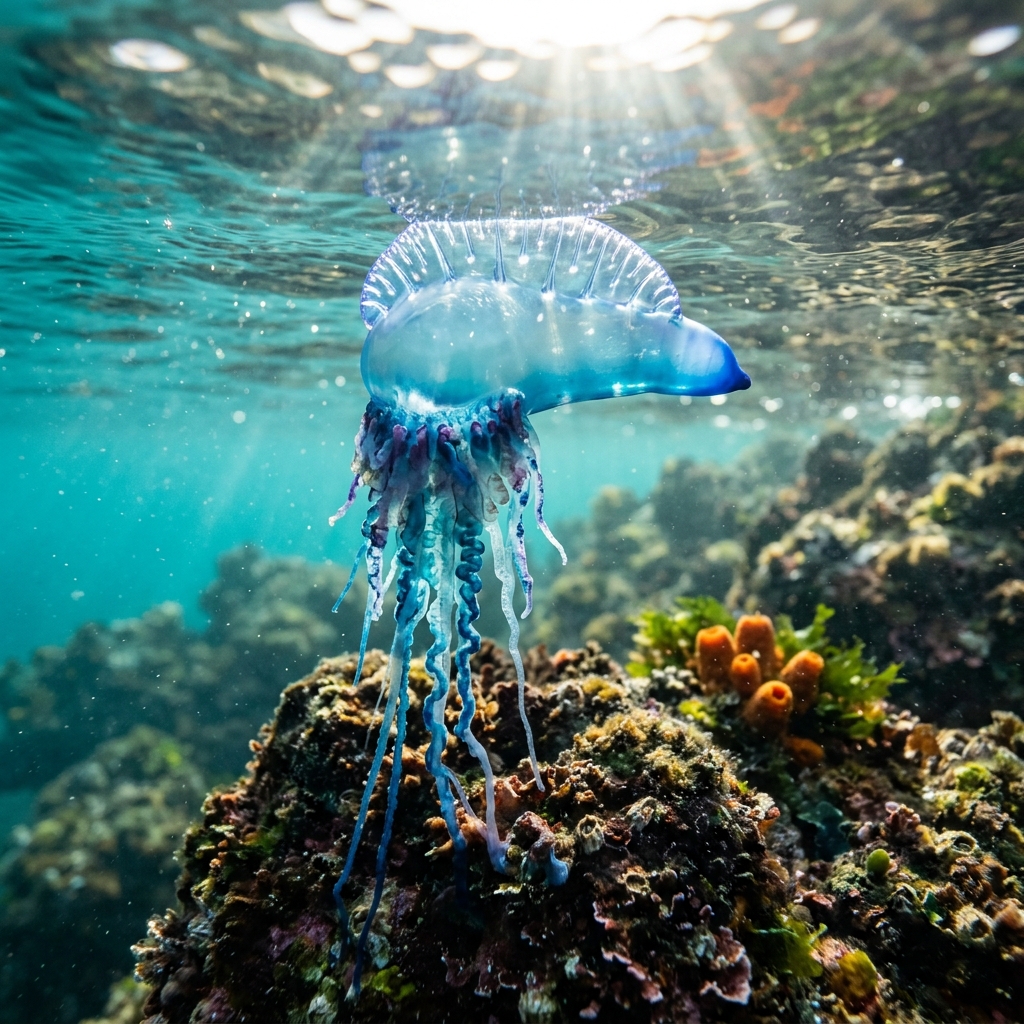
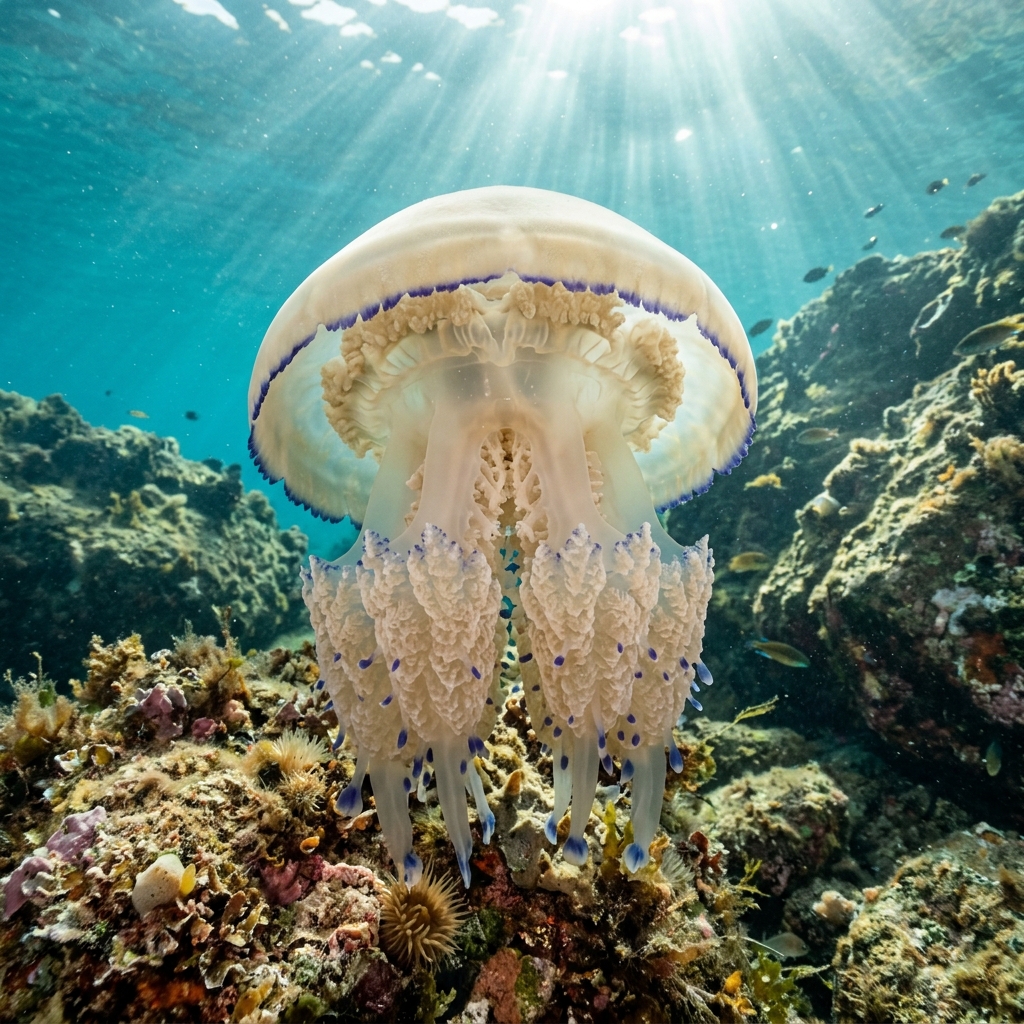
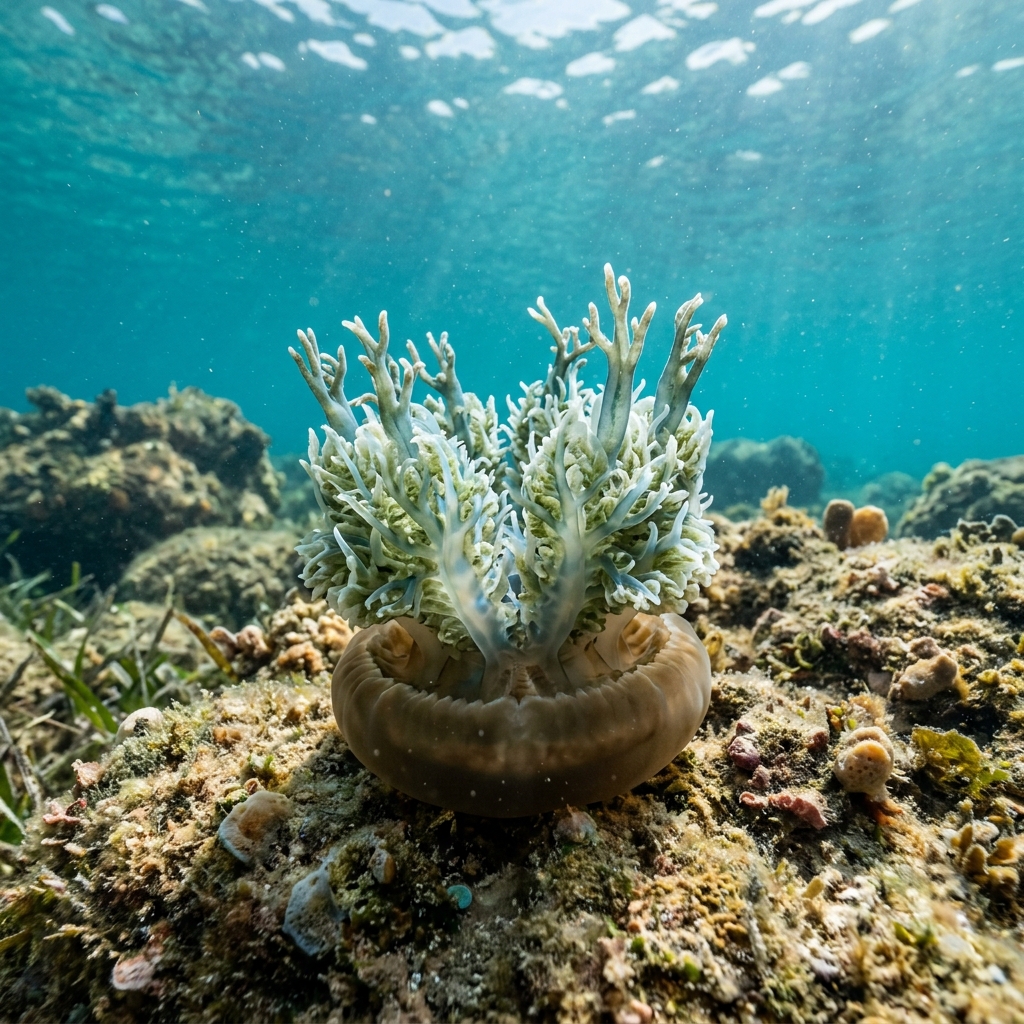
Reef neighbours a diver could mistake it for. Use the identification notes above to tell them apart.
Most commonly logged on Florida sites in the United States, with a strong secondary presence around Tortola and the Southern Islands in the British Virgin Islands and around Culebra in Puerto Rico. Also turns up on dive sites in Western Cuba, Texas, the Dominican Republic's Bayahibe coast, the Bahamas and the Cayman Islands, though usually as an uncommon or rare sighting rather than a guaranteed one.
Mapping where Southern Moon Jelly is logged…
Florida sites in the United States account for most sightings, with reliable but less frequent reports from Tortola and the Southern Islands in the British Virgin Islands and Culebra in Puerto Rico. Cuba, the Dominican Republic, the Bahamas and Cayman Islands also produce occasional sightings.
There is no detected season in the sightings, so it is best treated as a year-round possibility. It tolerates a wide warm-water range of roughly 23 to 29 C, which covers most of the diving calendar in its range.
Check for a translucent, colourless saucer-shaped bell with short fringing tentacles rather than long trailing ones, and look for four horseshoe-shaped marks visible through the top of the bell. It pulses slowly and drifts rather than swimming with any direction.
No, this species is not considered dangerous to divers. Its sting, if felt at all, is generally mild, so a chance encounter drifting past is nothing to alter a dive plan for.
Exact size data is not confirmed for this species, but moon jellies of this genus are typically saucer-sized, usually well under 30 cm across the bell, and easy to mistake for an empty patch of water at a glance.
Those four horseshoe-shaped marks visible through the bell are the animal's gonads, not a decorative pattern. Their shape and visibility through the translucent bell is one of the easiest ways to confirm you are looking at a moon jelly rather than a look-alike species.
Site and sighting data is aggregated from diver logs, iNaturalist and GBIF. For taxonomy and conservation status:
Moon Jellyfish
1,766 sites