Cassiopeidae spp.
Find upside down jellyfish resting bell-down on sandy shallows across the Philippines, Australia and the Caribbean. Warm-water species, year-round sightings.
Safety warning
This species can sting on contact with its tentacles, which may trail well beyond the body and can still sting after the animal is dead or washed up. Look but do not touch, and give it a wide berth.
If you're stung
Stinging tentaclesGeneral first-aid guidance, not a substitute for professional medical care. In an emergency, call your local emergency number.
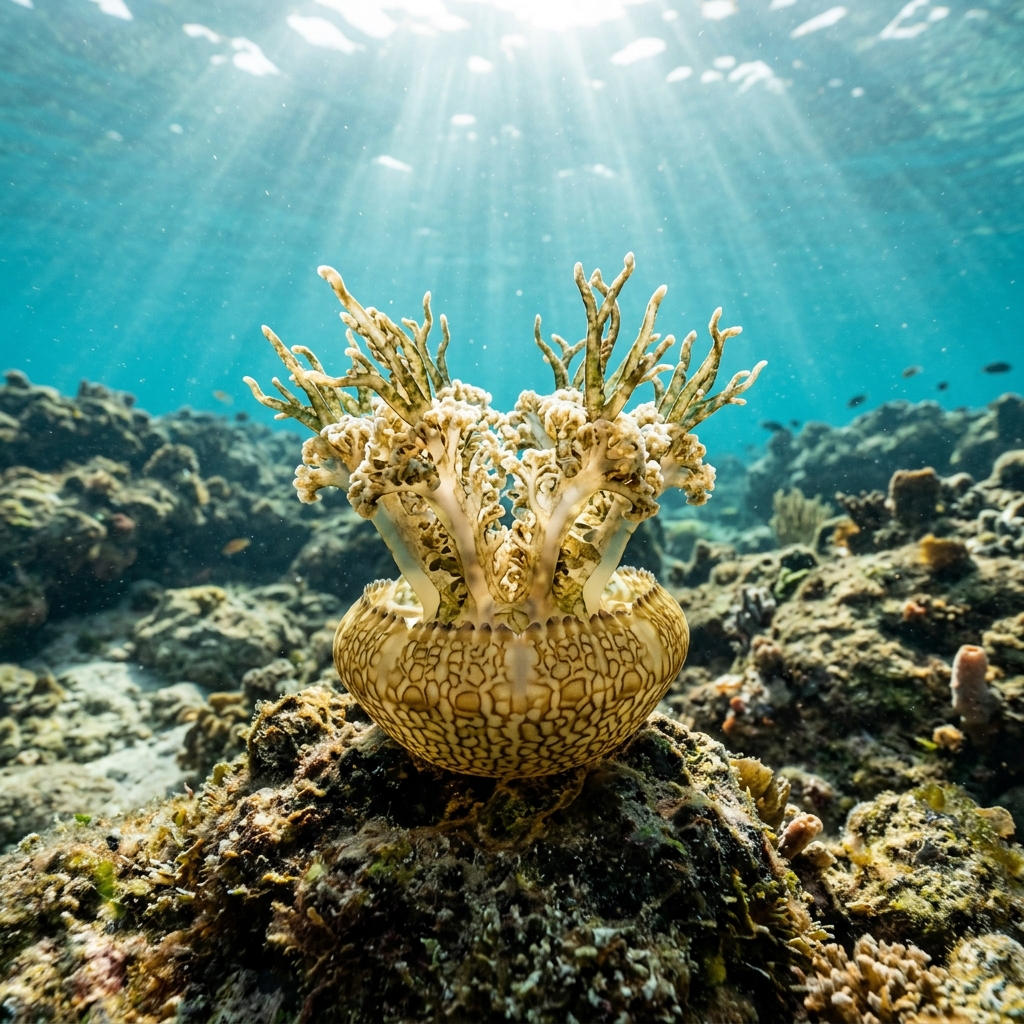
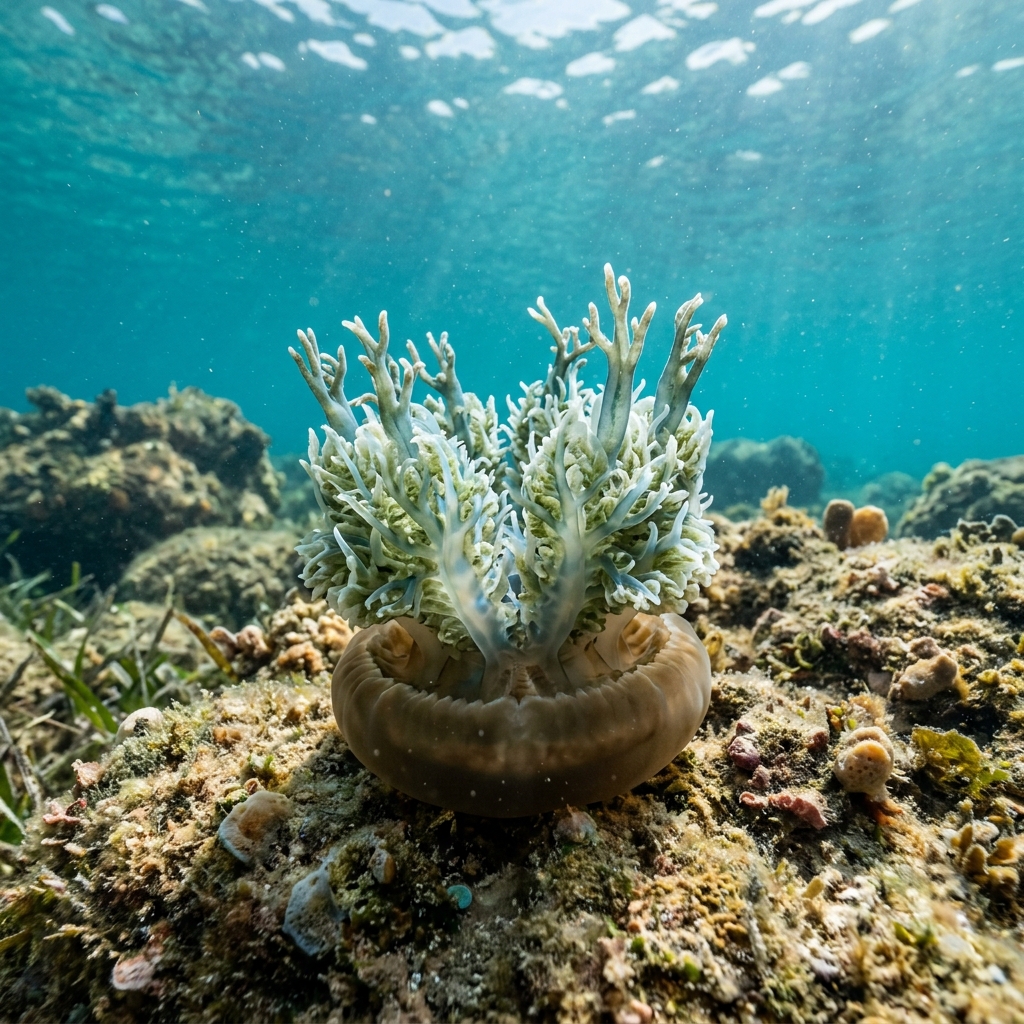
Unlike any other jellyfish you will encounter underwater, these animals rest bell-down on the seabed, with their branching oral arms (the frilly feeding structures) pointing upward toward the light. The bell is typically flattened and brownish-green to blue-grey, blotched with white, and rarely exceeds about 30 cm across. Spotted most often in shallow, sheltered bays and lagoons rather than open water, their stationary habit and inside-out orientation make them almost impossible to confuse with a free-swimming medusa.
You will almost always find them motionless on the bottom, bell pressed flat against sand or soft mud in water that is often less than two metres deep. The upward-pointing oral arms pulse gently to circulate water, bringing sunlight to the symbiotic algae (zooxanthellae) living inside their tissues. They pay no attention to divers hovering above them, but are easily disturbed by surge or careless fin kicks, so a slow approach from the side is the polite option.
Upside down jellyfish are essentially living solar panels. Their oral arms are packed with zooxanthellae, the same photosynthetic algae found in corals, and they position themselves bell-down specifically so those arms can catch maximum sunlight. A fair portion of their nutrition comes directly from that relationship rather than from capturing prey.
No clear seasonal peak emerges from the available data, so treat them as year-round residents on suitable shallow tropical reefs. Observed water temperatures run from roughly 21 to 29 °C, which aligns with the warm, sheltered bays they prefer across all seasons.
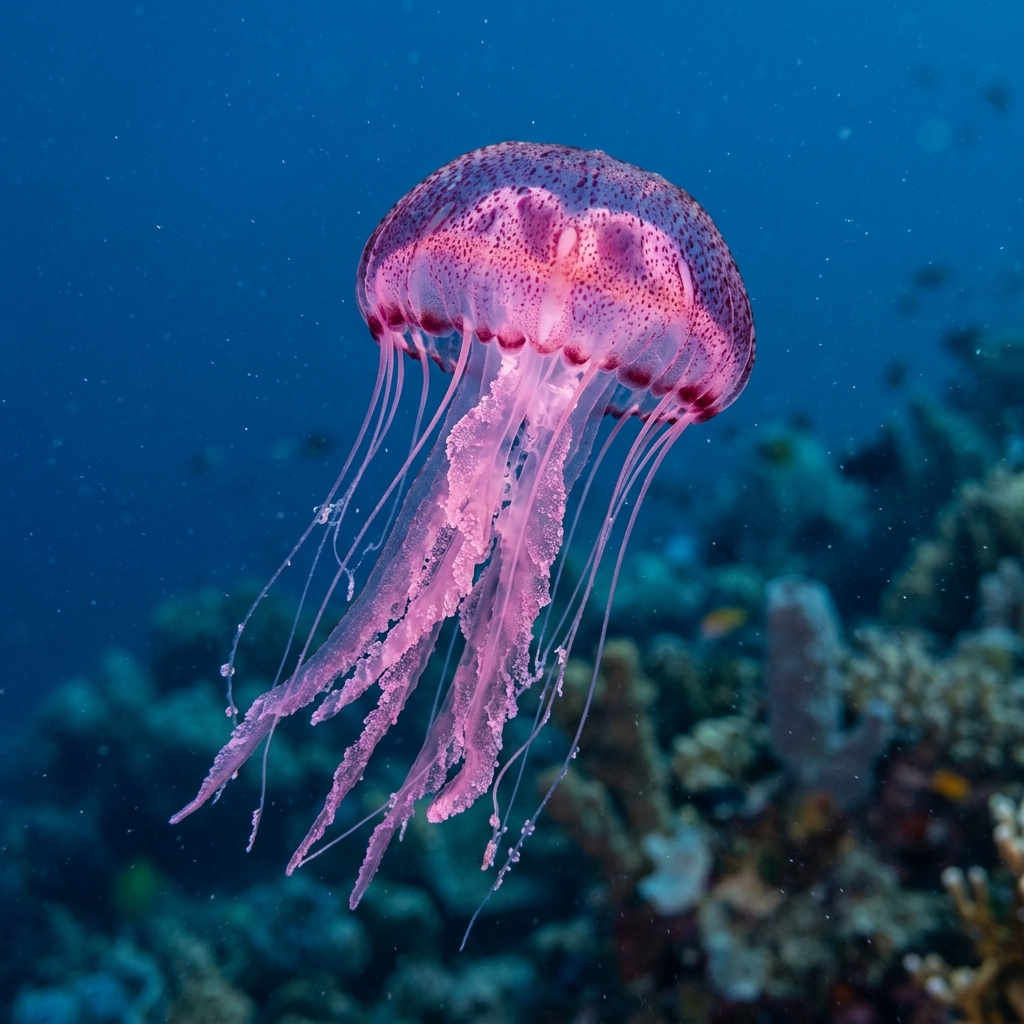
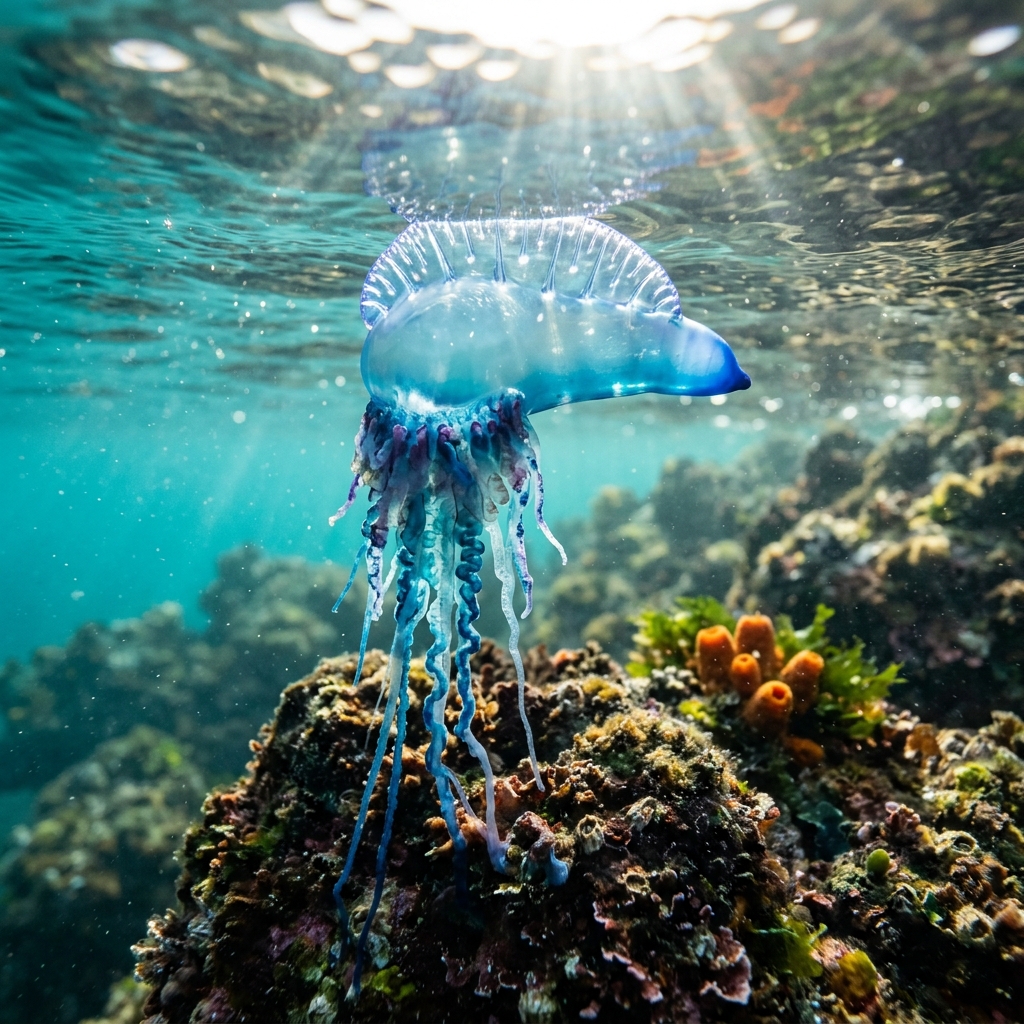
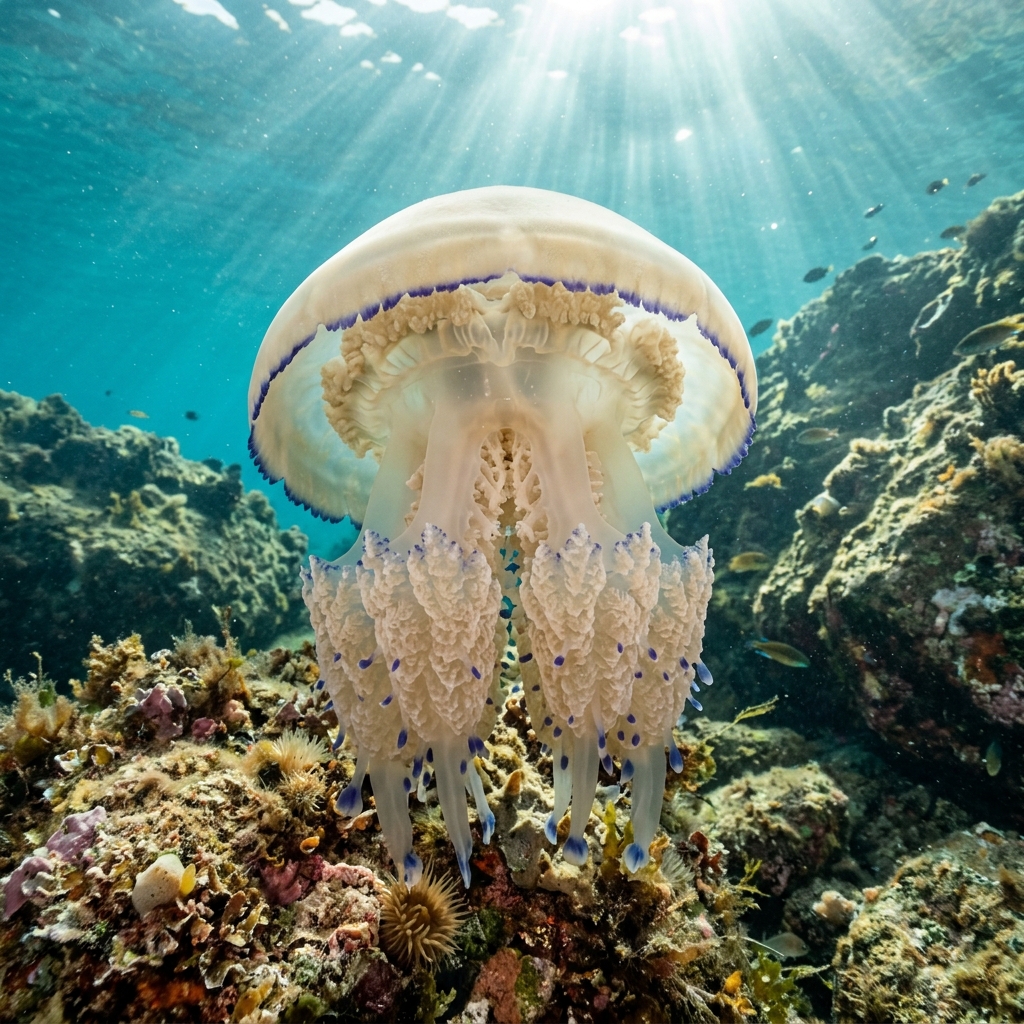
Reef neighbours a diver could mistake it for. Use the identification notes above to tell them apart.
Most commonly logged in the Philippines, Indonesia, and Australia, with particularly strong records across Queensland, the Visayas, Palawan, and Sulawesi. The Caribbean is another reliable area, with notable sightings spread across Cuba, Colombia's Caribbean Coast, Venezuela, and the Bahamas. Turkey also contributes a meaningful cluster of sites, suggesting the group extends into the eastern Mediterranean and Red Sea fringe.
Mapping where Upside Down Jellyfish is logged…
The strongest concentrations are in the Philippines, Indonesia, and Australia, particularly in Queensland, the Visayas, Palawan, and Sulawesi. The Caribbean is another good bet, with sightings across Cuba, Colombia, Venezuela, and the Bahamas. Look for them in sheltered, shallow lagoons and sandy bays rather than on exposed reef walls.
There is no identified seasonal peak in the data, and they are observed across a temperature range of roughly 21 to 29 °C. On most tropical sites they can be encountered year-round, with timing more dependent on finding the right shallow, calm habitat than on the time of year.
The posture alone is the giveaway: the bell faces down against the seabed while the branching oral arms point upward. The bell is flattened and usually brownish-green to blue-grey with pale blotches. No other common jellyfish rests stationary on the bottom in this inside-out position.
They are not considered dangerous. Some species can release tiny stinging cells into the surrounding water, so it is worth avoiding putting your hands directly into the water column immediately above a dense aggregation. For most divers, observing from a short distance with controlled buoyancy is all that is needed.
Their oral arms host symbiotic algae called zooxanthellae, which photosynthesise in sunlight. By resting bell-down and holding their arms toward the surface, they maximise light exposure and harvest energy directly from the sun, much like a coral does. This makes them one of very few jellyfish that rely heavily on photosynthesis for nutrition.
The typical size is not precisely recorded in diver observation data, but members of the Cassiopeidae family generally have bells ranging from a few centimetres up to around 30 cm across. In the water they appear flat and disc-like, often smaller than you might expect from the density of oral arms above them.
Site and sighting data is aggregated from diver logs, iNaturalist and GBIF. For taxonomy and conservation status:
Moon Jellyfish
1,766 sites