Mastigias papua
Palm-sized, brownish jellies pulsing through Palau's marine lakes and Indonesia's Kalimantan coast, common year-round in warm water.
Safety warning
This species can sting on contact with its tentacles, which may trail well beyond the body and can still sting after the animal is dead or washed up. Look but do not touch, and give it a wide berth.
If you're stung
Stinging tentaclesGeneral first-aid guidance, not a substitute for professional medical care. In an emergency, call your local emergency number.
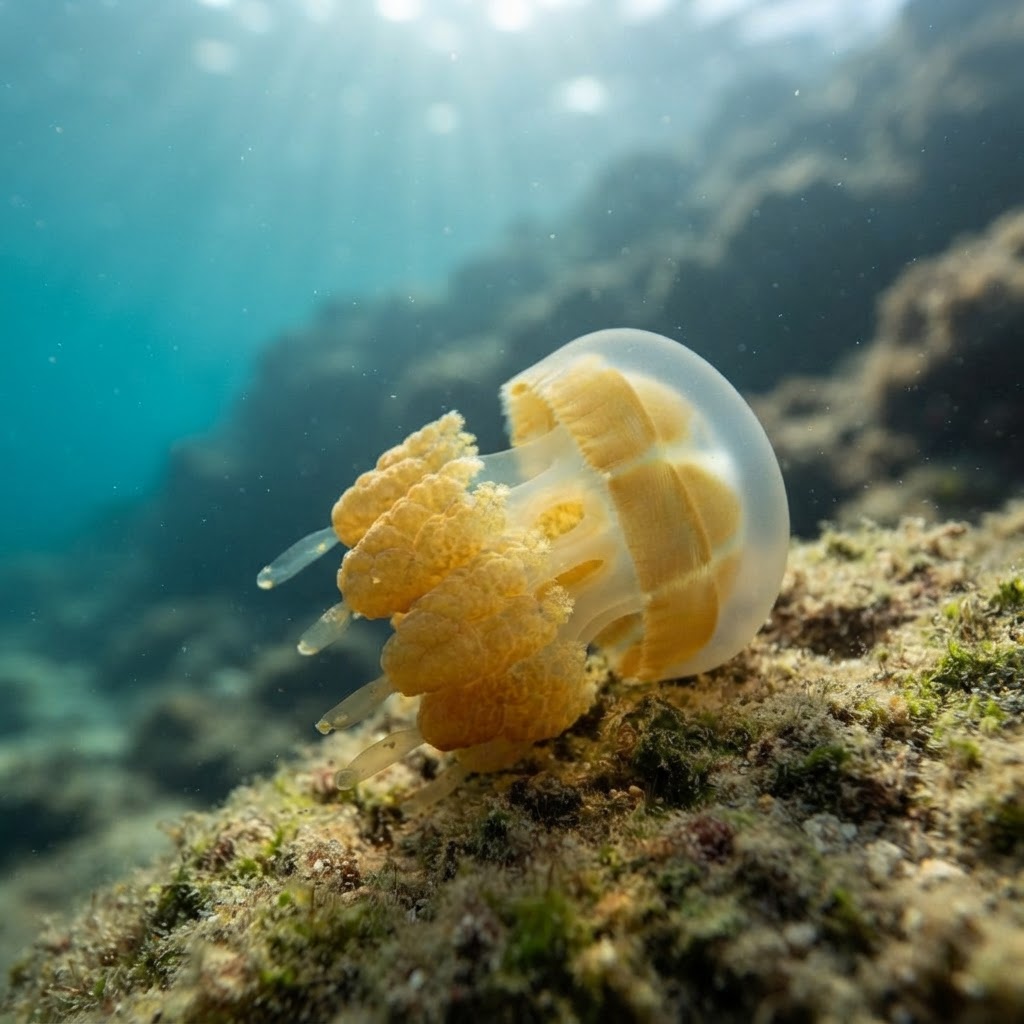
Look for a rounded, translucent bell around 6cm across with a mottled brownish or golden tint and faint white speckling near the rim. There are no long trailing tentacles to spot, instead short frilly arms hang beneath the bell, giving it a stubby, cauliflower-like silhouette compared to typical jellyfish. They usually appear in loose groups pulsing slowly rather than drifting singly.
Divers and snorkellers typically find them pulsing steadily near the surface or mid-water in sheltered lagoons and marine lakes, often in loose swarms rather than alone. They move slowly and predictably, making no effort to avoid swimmers, and are commonly seen through the middle of the day when light penetrates the water for their symbiotic algae to work.
Spotted jellyfish host photosynthetic algae inside their tissue, so they orient and swim to track sunlight through the day, much like a slow-motion sunflower.
Comfortable across a wide 24.8 to 30.8C range, so they're logged year-round with no clear seasonal gap. Any month works for a Palau or Kalimantan trip.
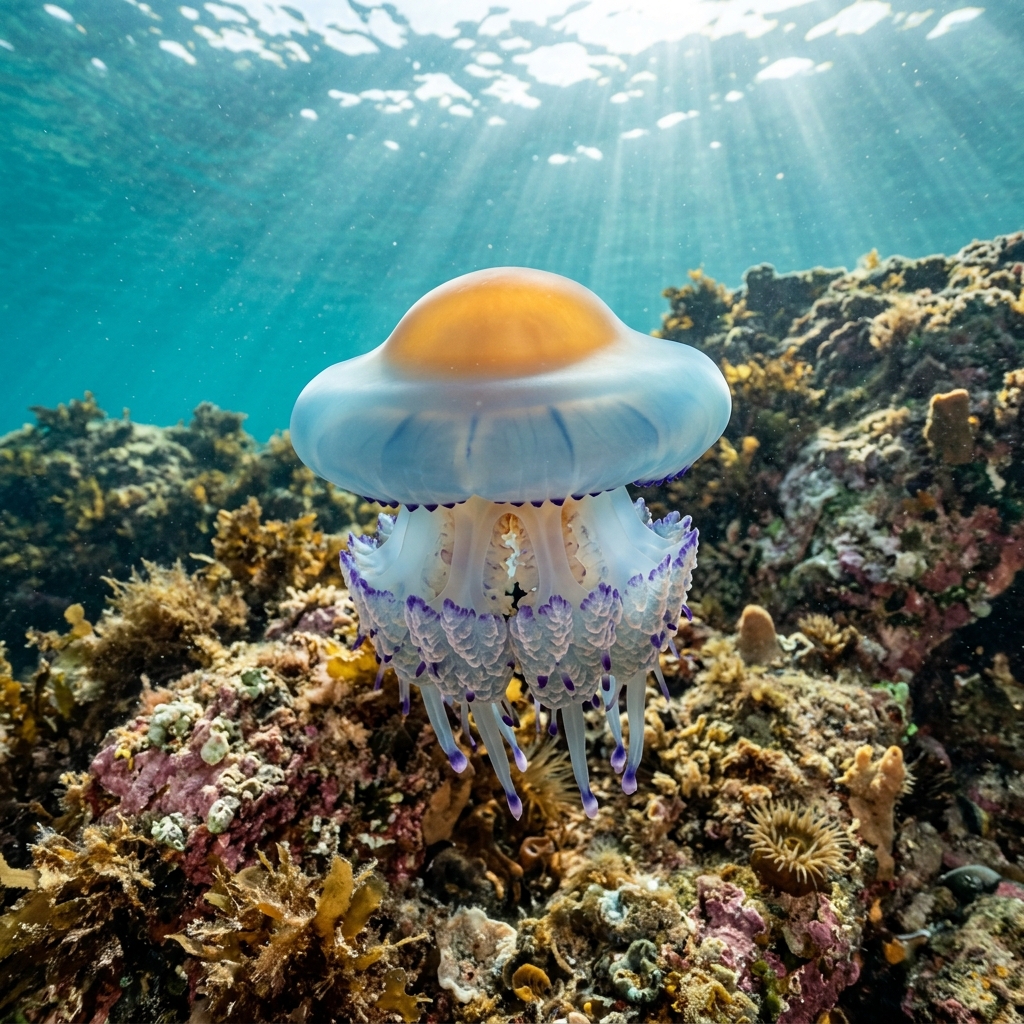
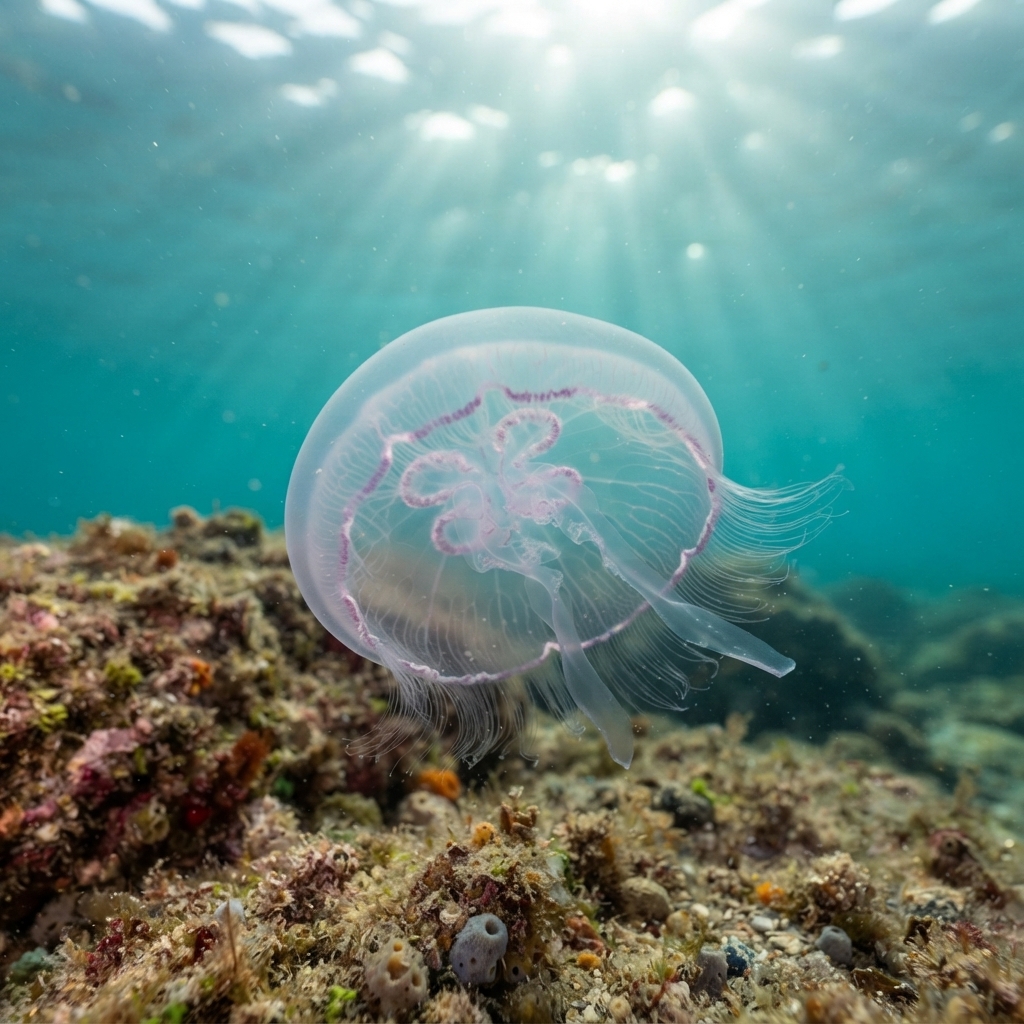
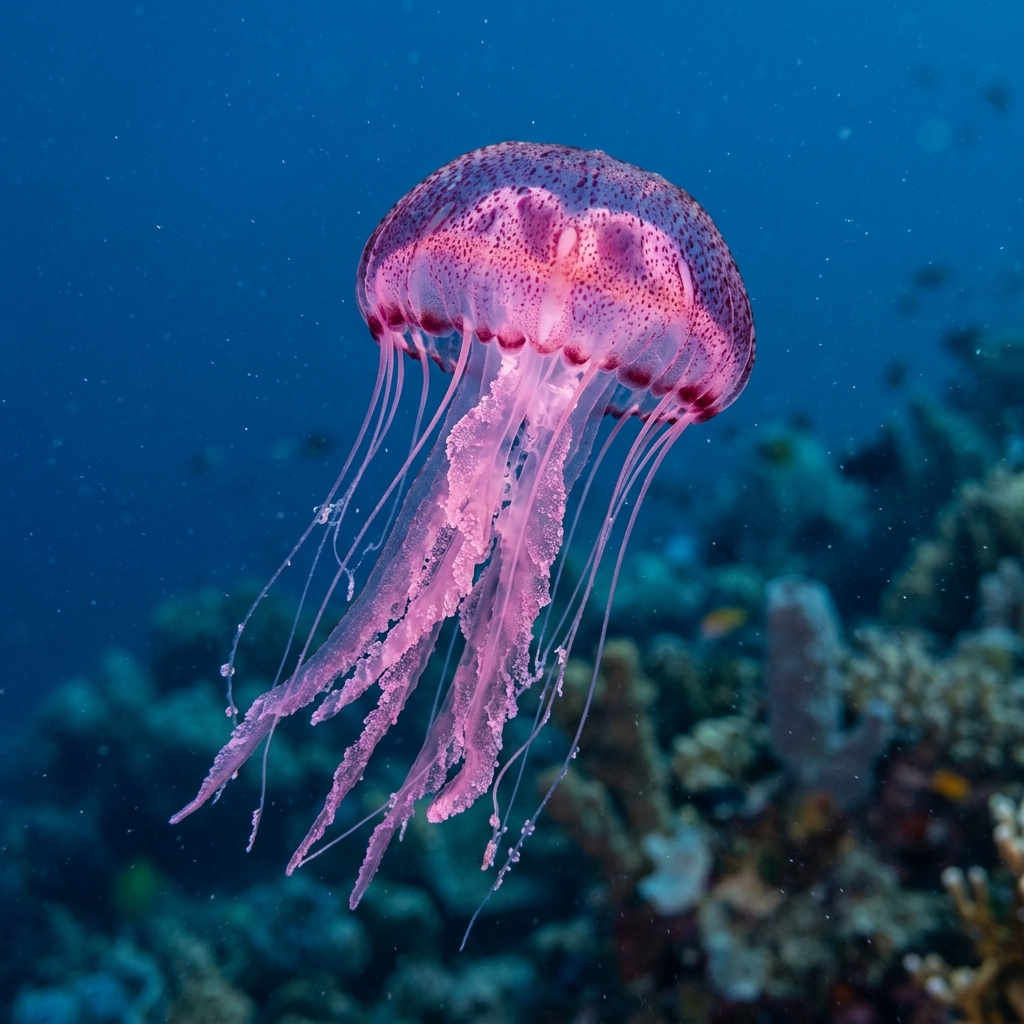
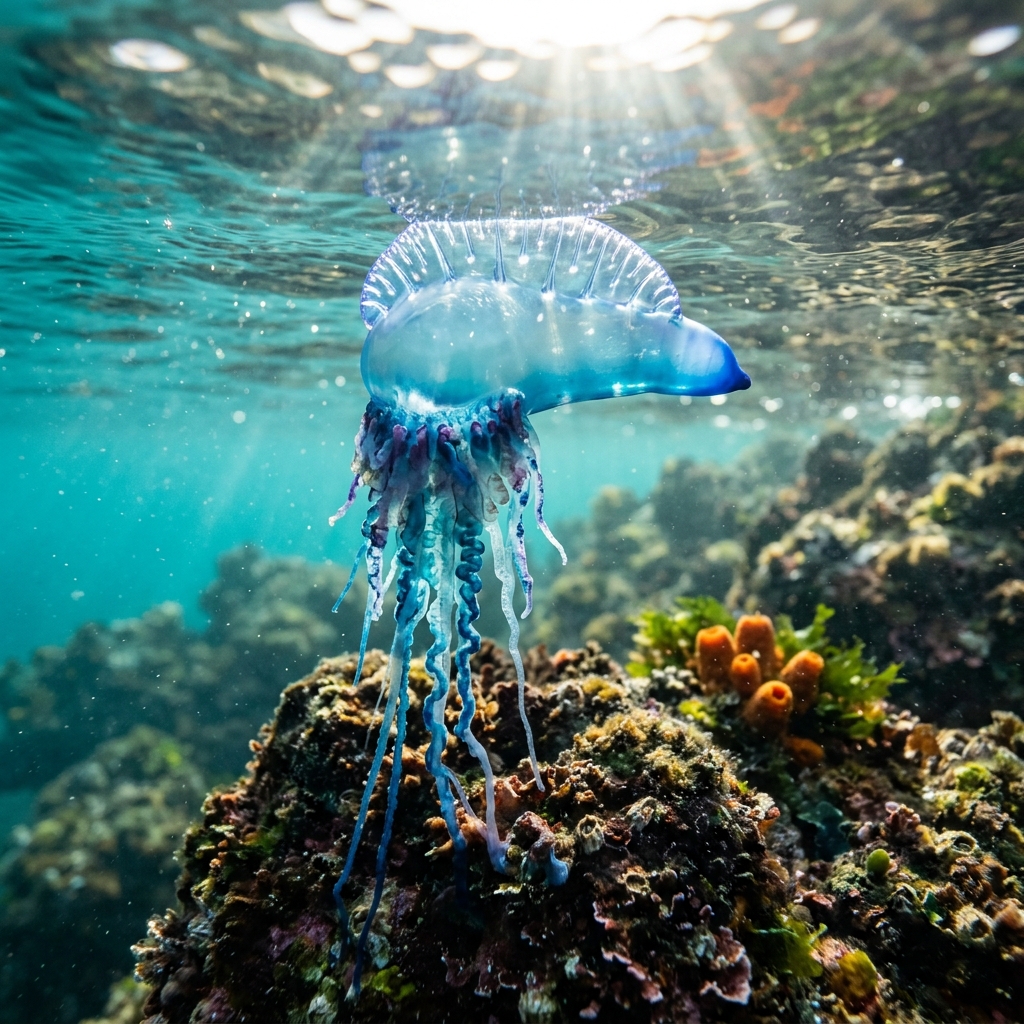
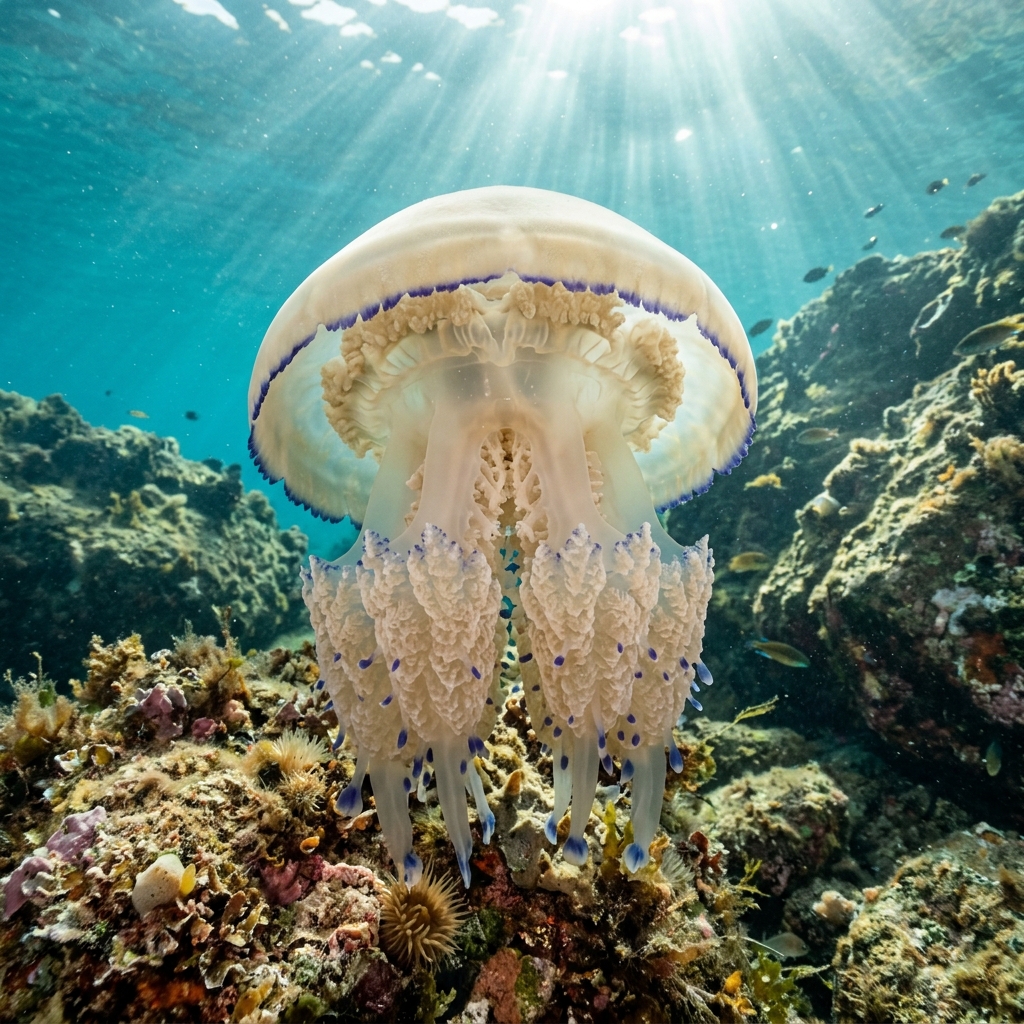
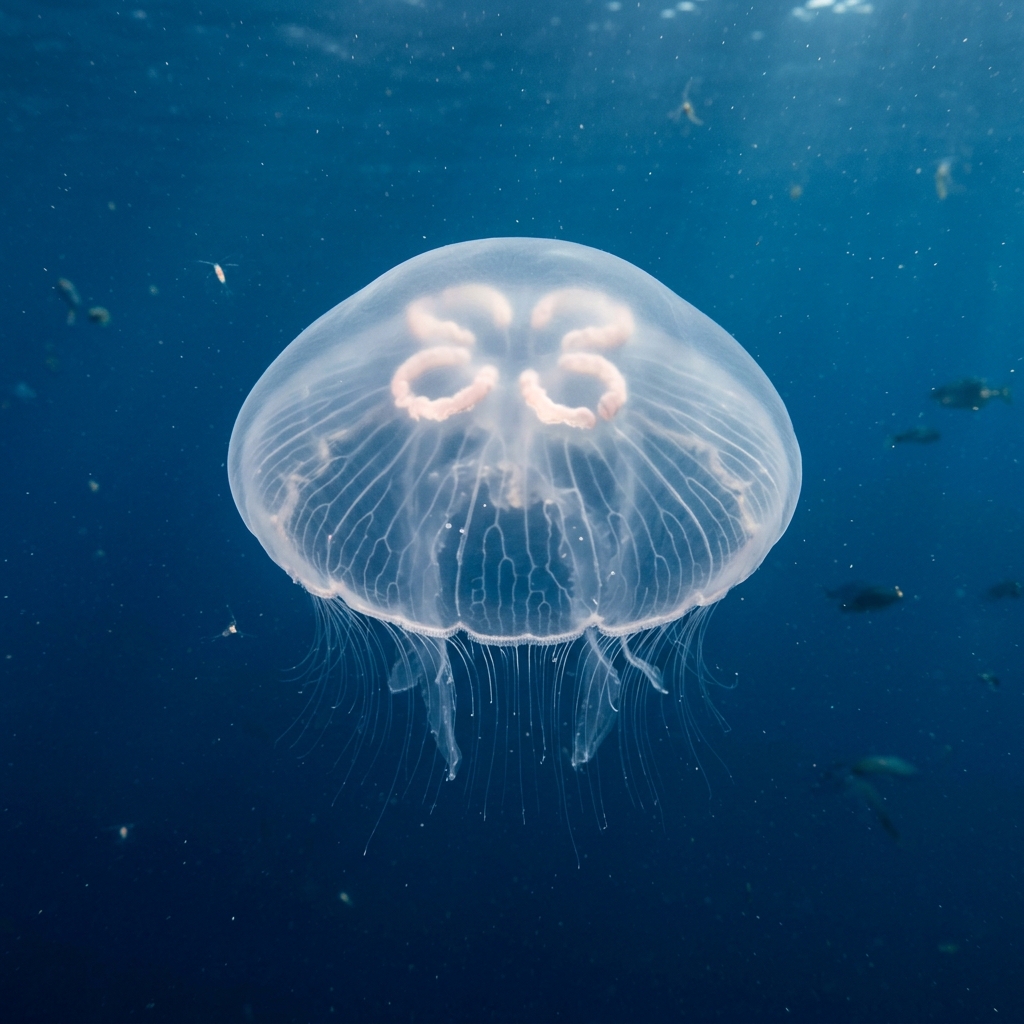
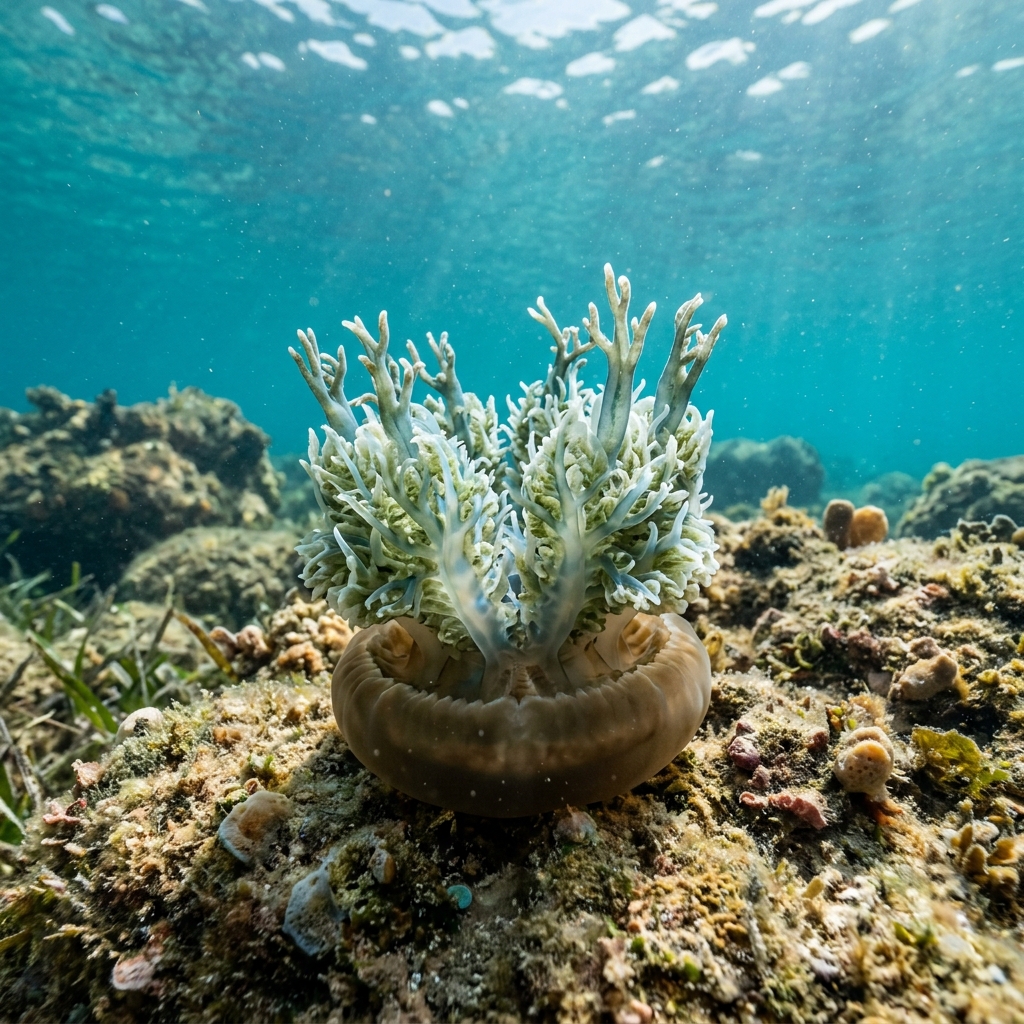
Reef neighbours a diver could mistake it for. Use the identification notes above to tell them apart.
Palau is by far the strongest place to find them, especially around Koror & Malakal and the Rock Islands, where marine lakes hold dense populations. Kalimantan in Indonesia is the other reliable spot, offering a mainland alternative to Palau's island lakes.
Mapping where Spotted Jellyfish is logged…
Palau is the standout location, particularly around Koror & Malakal and the Rock Islands, where marine lakes hold thick populations. Kalimantan in Indonesia is the other well-documented spot for sightings.
They're seen year-round with no strong seasonal pattern, comfortable in water from roughly 25 to 31C. Any month suits a trip to Palau or Kalimantan.
No, they're considered harmless to divers and are a popular snorkel and dive subject in Palau's marine lakes. Their sting is mild to non-existent for humans.
Look for a small, roughly 6cm translucent bell with a brownish or golden tint and faint white speckling, plus short frilly arms instead of long tentacles. Groups often pulse together near the surface of sheltered lagoons.
They stay small, typically around 6cm across the bell, making them easy to spot in clusters but easy to miss individually.
They carry photosynthetic algae inside their bodies and actively swim to track sunlight through the day to keep their algae fed, a behaviour that also drives their daytime visibility to divers.
Site and sighting data is aggregated from diver logs, iNaturalist and GBIF. For taxonomy and conservation status:
Moon Jellyfish
1,766 sites