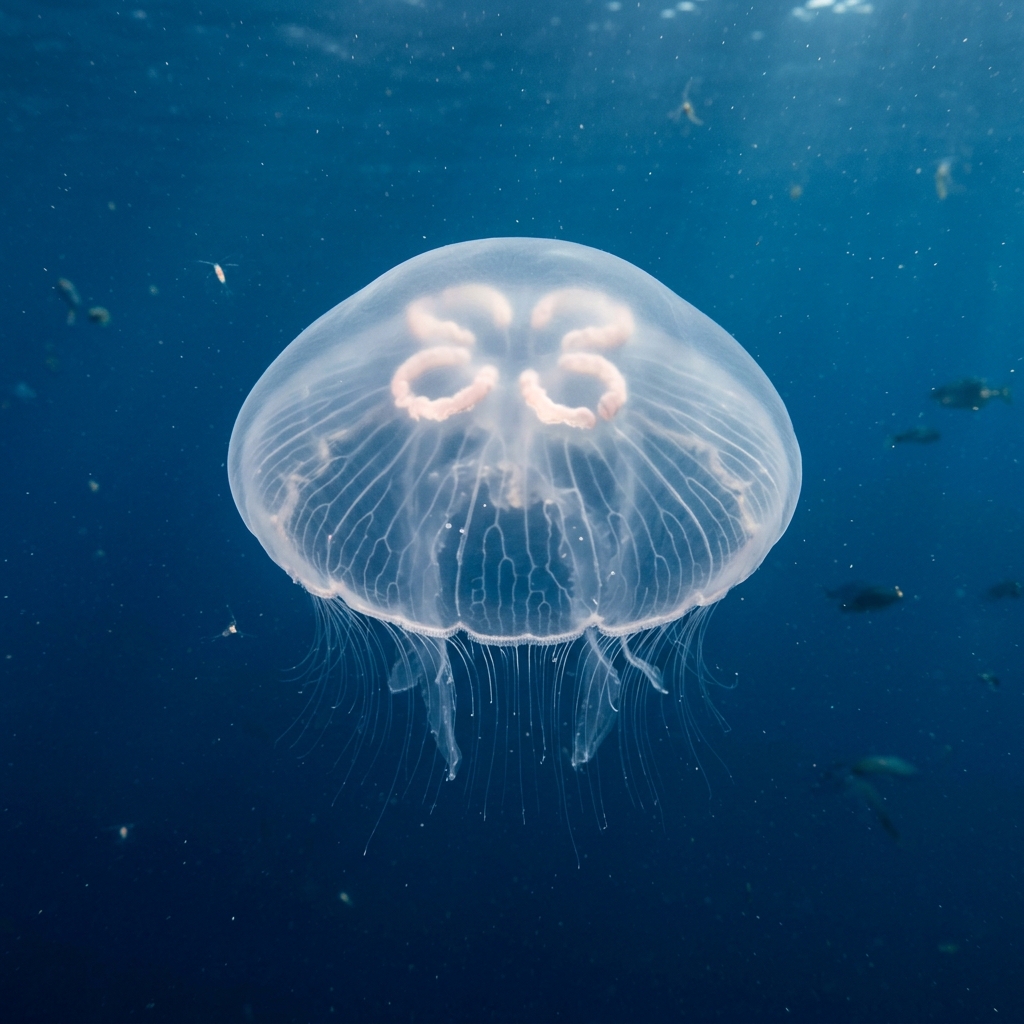
Aurelia spp.
Translucent bells pulsing through Zeeland's shallows and British Columbia's kelp, most often logged May to August.
Safety warning
Sting cells are mild by jellyfish standards but can still cause a stinging rash on bare skin, particularly around the wrists or neck where a wetsuit gap leaves you exposed. Avoid handling them and rinse any contact area with vinegar or hot water rather than fresh water, which can trigger more stinging cells to fire.
If you're stung
Stinging tentaclesGeneral first-aid guidance, not a substitute for professional medical care. In an emergency, call your local emergency number.
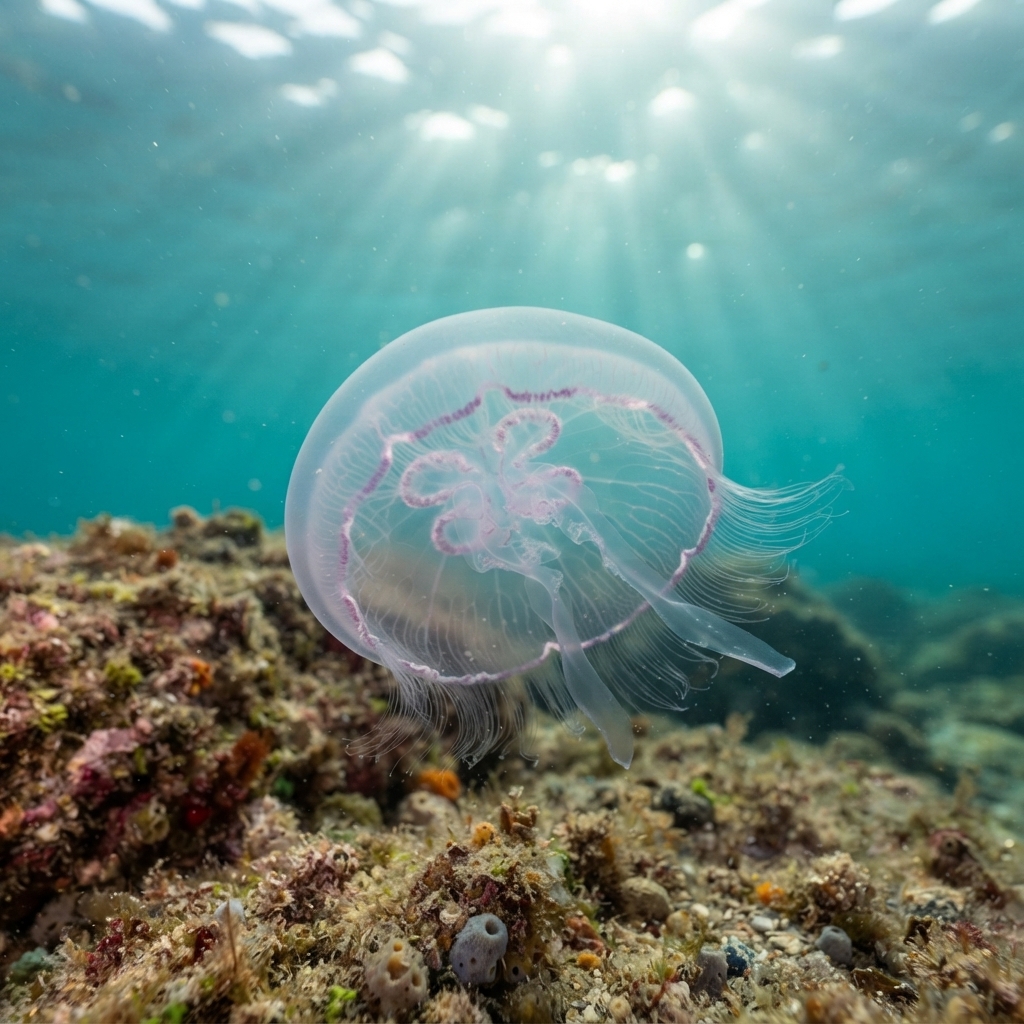
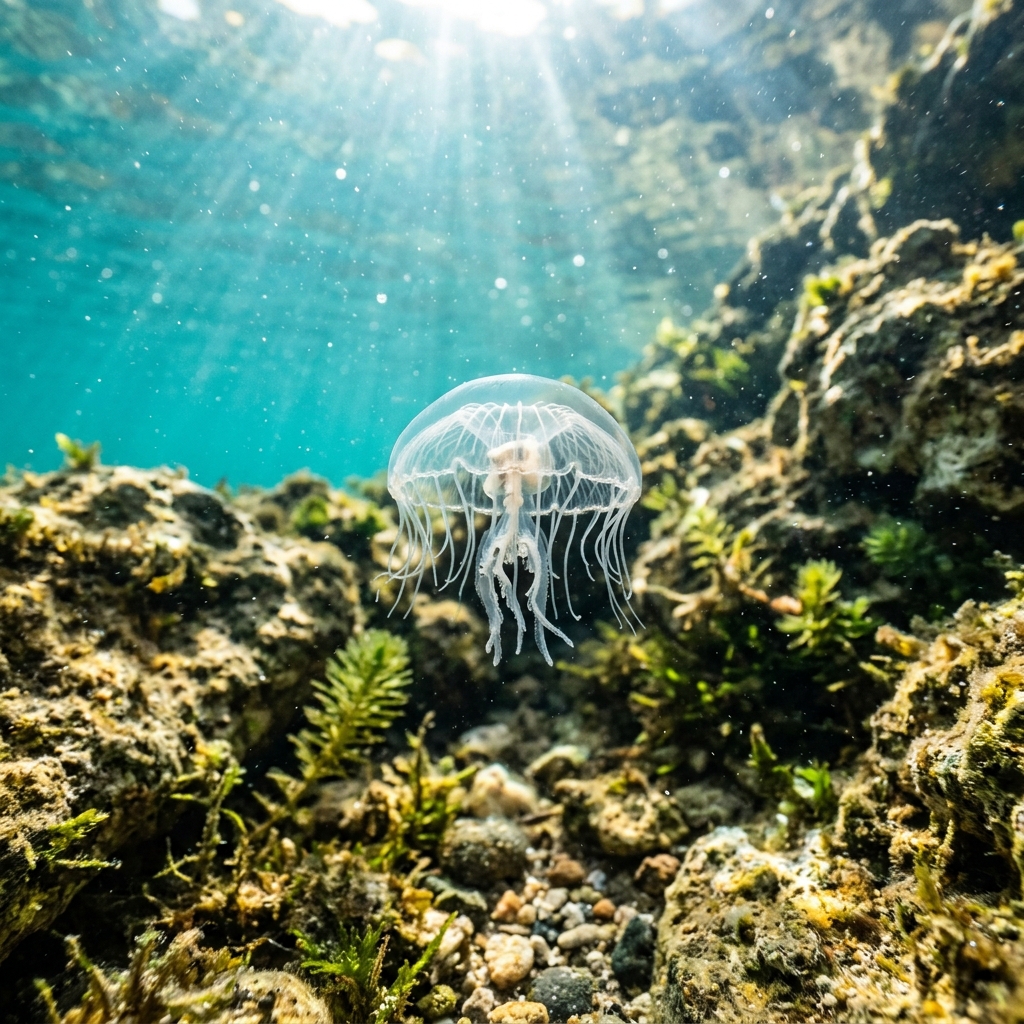
Look for a translucent, almost ghostly bell around 35 cm across with four distinct horseshoe-shaped marks visible right through the tissue. There's no long trailing tentacle curtain like a lion's mane, just short fringing oral arms and a slow, rhythmic pulse as it drifts rather than swims. Those four horseshoe gonads are the giveaway feature, and they even hint at sex: pink to purple in females, whitish or cream in males.
Expect an unhurried pass rather than any purposeful swim, since they drift with whatever current is running and simply float by. Watch the bell surface closely and you'll catch a fine layer of mucus trapping plankton, swept towards the mouth by the short oral arms in a slow, constant rhythm. They pay divers no attention at all, so you can hover close and study the gonad patterns without changing their behaviour one bit.
Those four horseshoe shapes you see through the bell are the gonads, and their colour, pink to purple versus whitish cream, is one of the few practical ways to sex a jellyfish underwater.
Sightings concentrate from May to August in the Northern Hemisphere, lining up with warmer surface water when plankton blooms give them plenty to feed on. Outside that window they're still around at depth or in cooler months, just logged far less often.
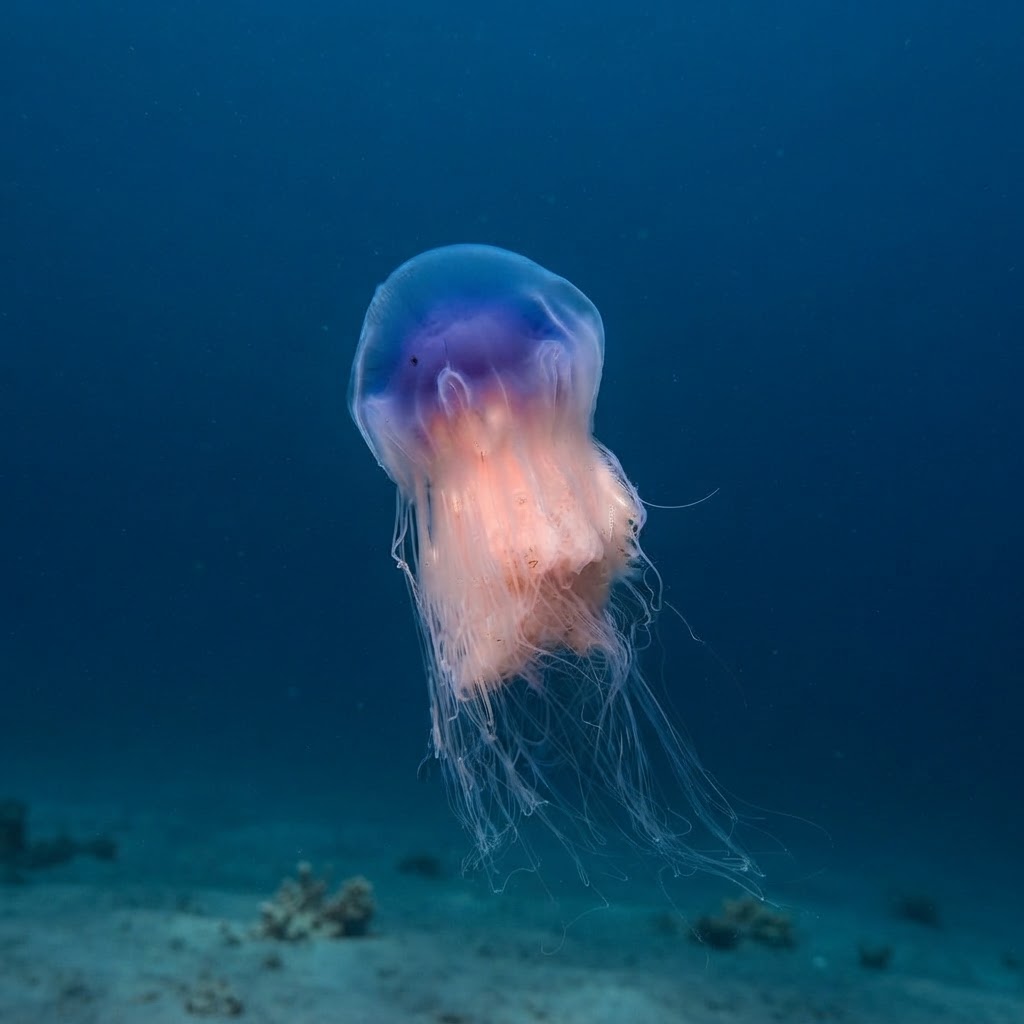
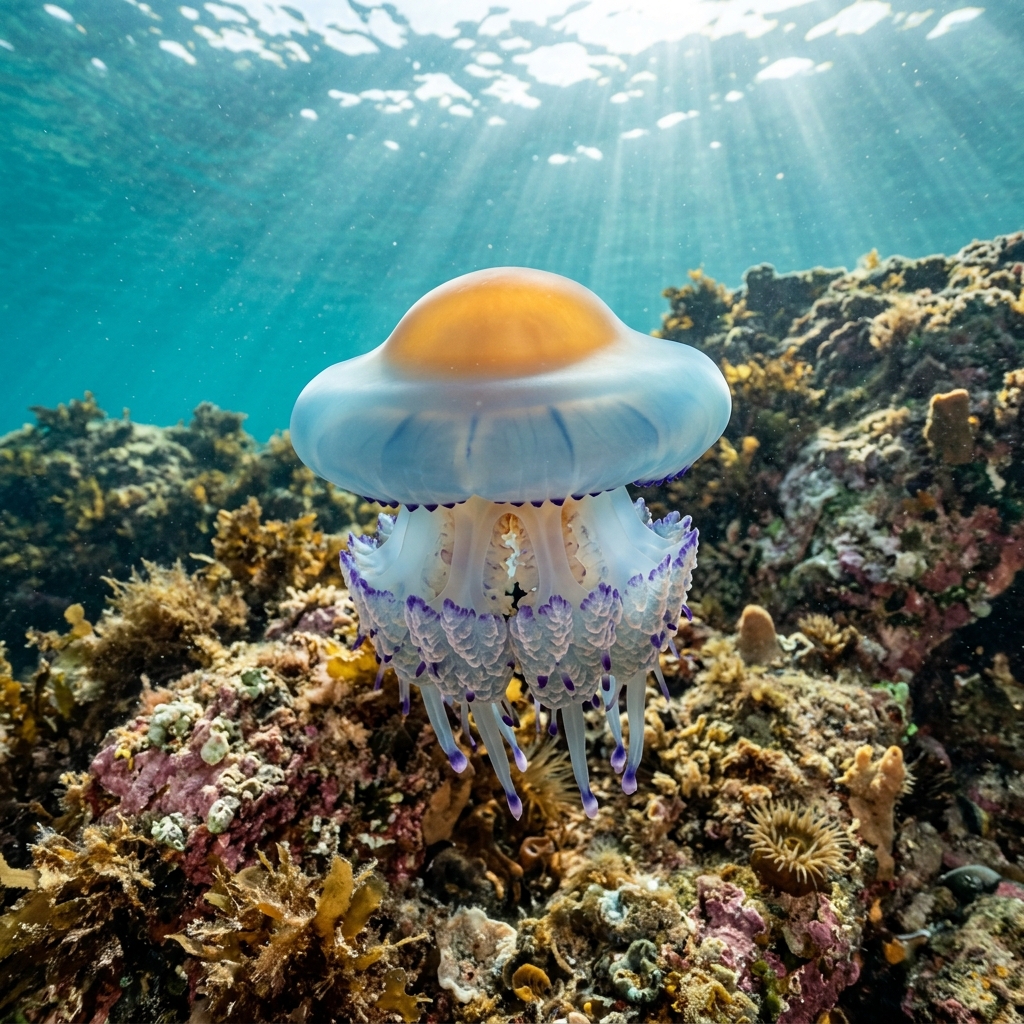
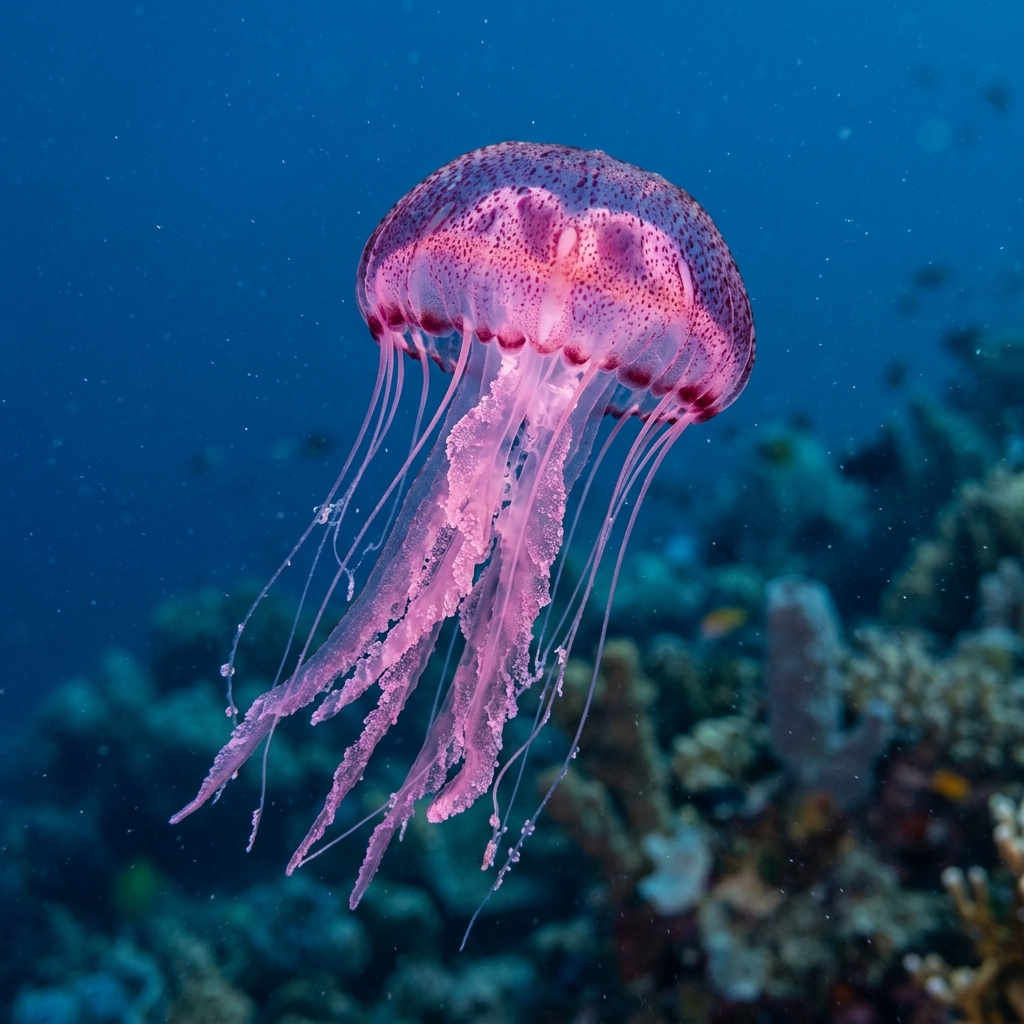
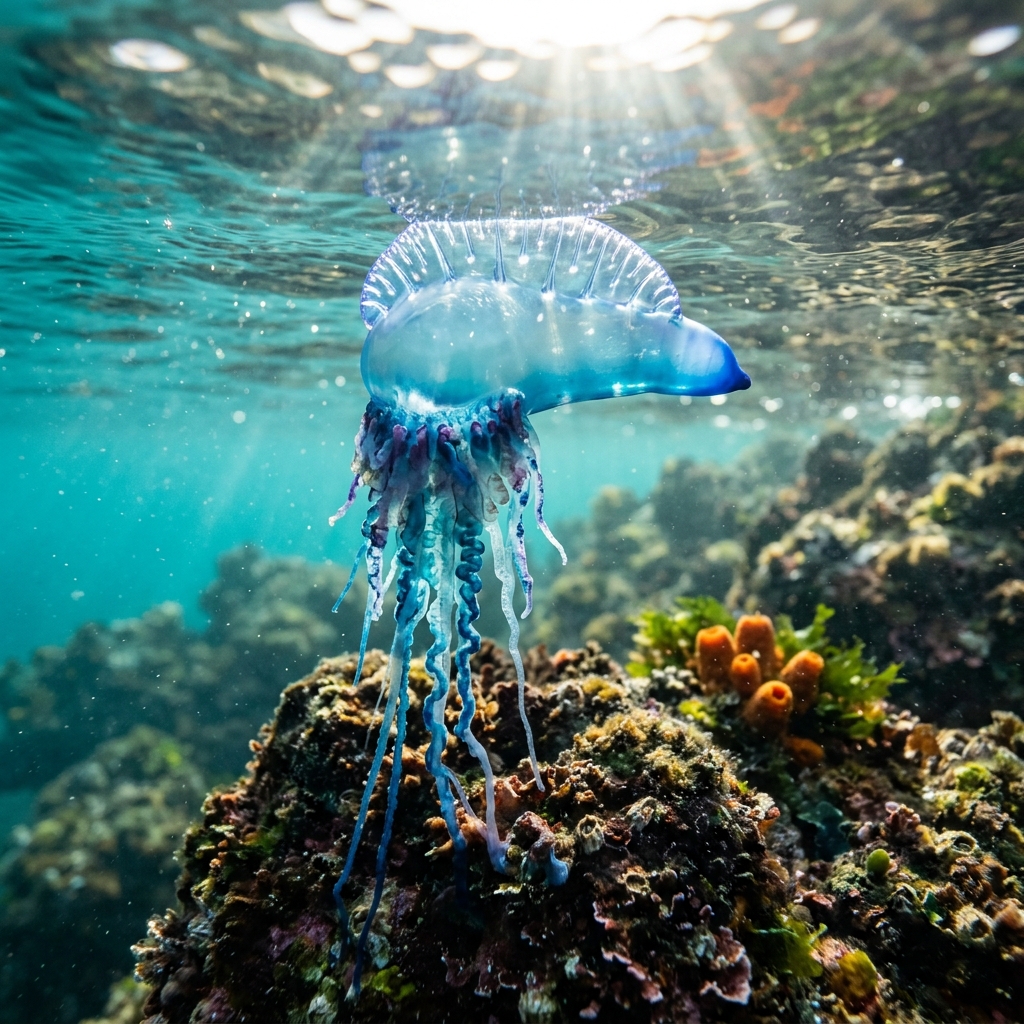
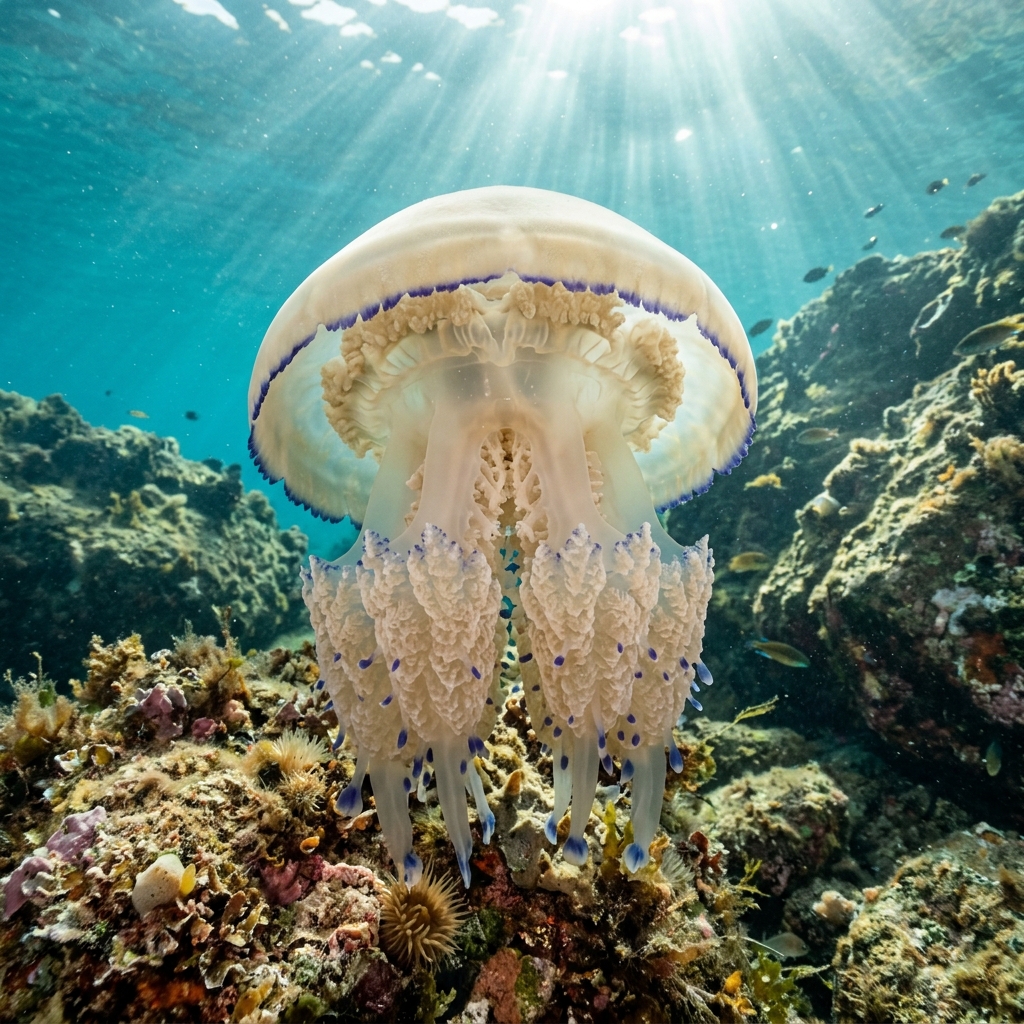
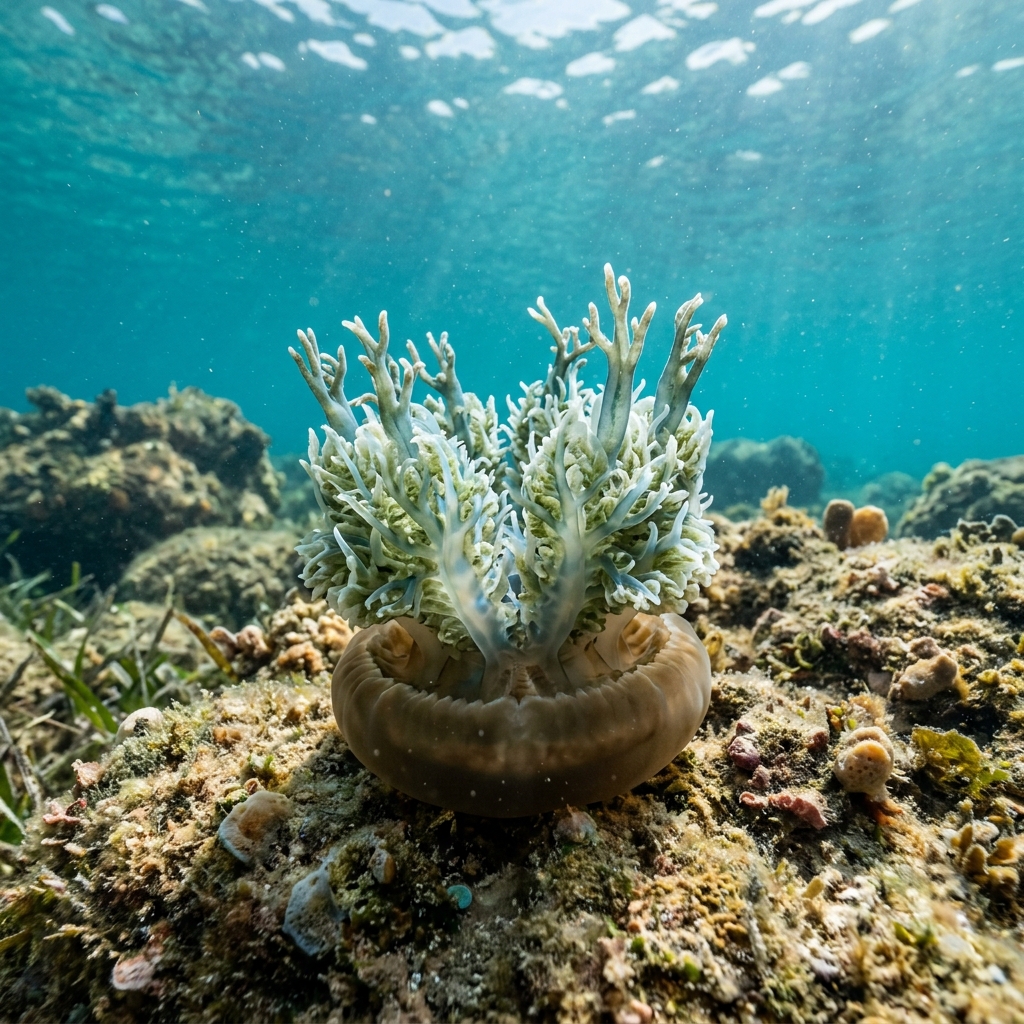
Reef neighbours a diver could mistake it for. Use the identification notes above to tell them apart.
Most commonly logged in the United Kingdom and the Netherlands, especially around Zeeland, with strong numbers also from England and Scotland. Beyond Europe, British Columbia in Canada turns up frequently, alongside sites in Greece, the United States, Italy, Croatia and France.
Mapping where Moon Jellyfish is logged…
They're most reliably logged in the UK and Netherlands, particularly Zeeland, England and Scotland, plus British Columbia in Canada. Greece, Italy, Croatia and France also produce regular sightings.
May through August is when sightings concentrate in the Northern Hemisphere, tied to warmer water and richer plankton blooms.
They can sting, but it's generally mild compared to other jellyfish. Keep hands off and cover exposed skin if you're diving where they're common.
Look for a translucent bell about 35 cm wide with four horseshoe-shaped marks visible through the tissue and short, fringing oral arms rather than long tentacles.
Around 35 cm across the bell on average, though size varies with water conditions and food availability.
Their four horseshoe-shaped gonads change colour by sex, pink to purple in females and whitish cream in males, letting divers tell them apart just by looking through the bell.
Site and sighting data is aggregated from diver logs, iNaturalist and GBIF. For taxonomy and conservation status:
Upside Down Jellyfish
1,622 sites