Cotylorhiza tuberculata
Spot the Fried Egg Jellyfish in Spain, Italy and Malta from July to October. Its yolk-like dome makes it one of the Med's most recognisable jellies.
Safety warning
This species can sting on contact with its tentacles, which may trail well beyond the body and can still sting after the animal is dead or washed up. Look but do not touch, and give it a wide berth.
If you're stung
Stinging tentaclesGeneral first-aid guidance, not a substitute for professional medical care. In an emergency, call your local emergency number.
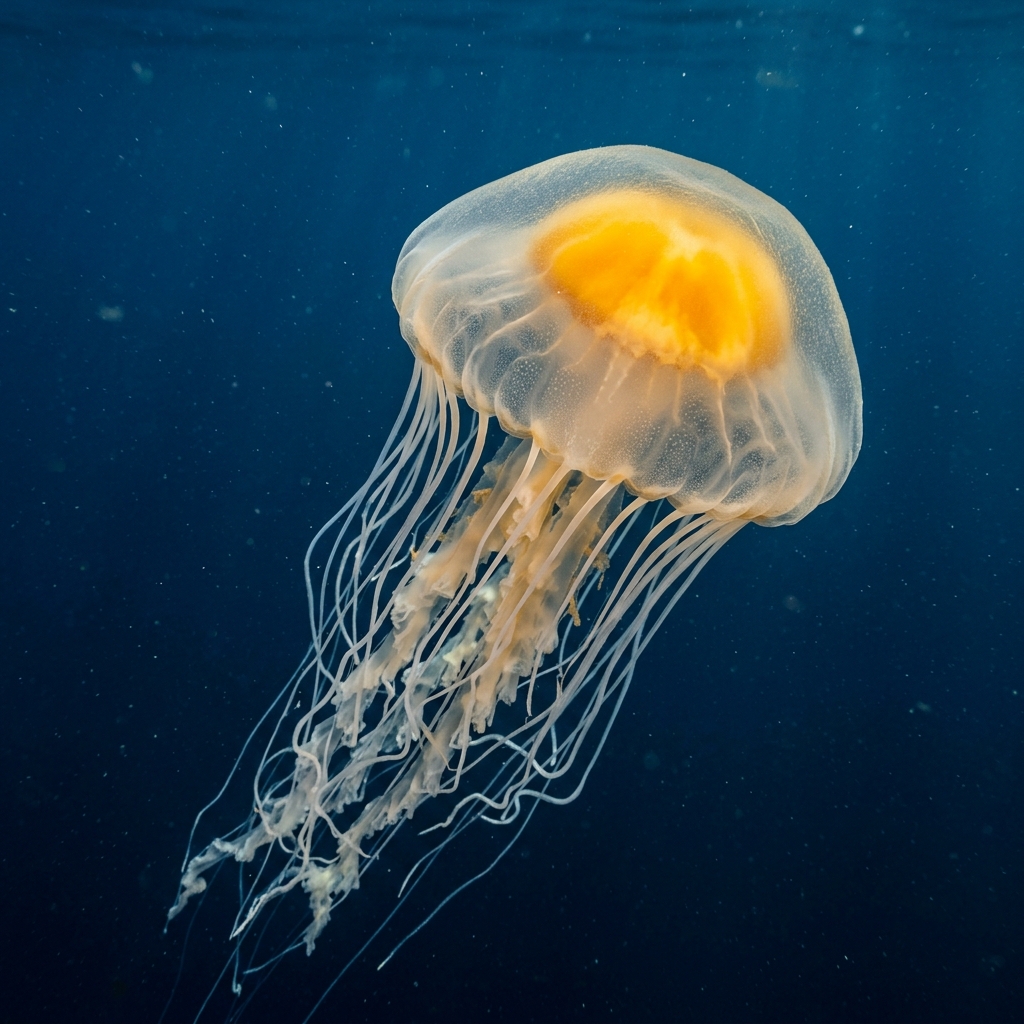
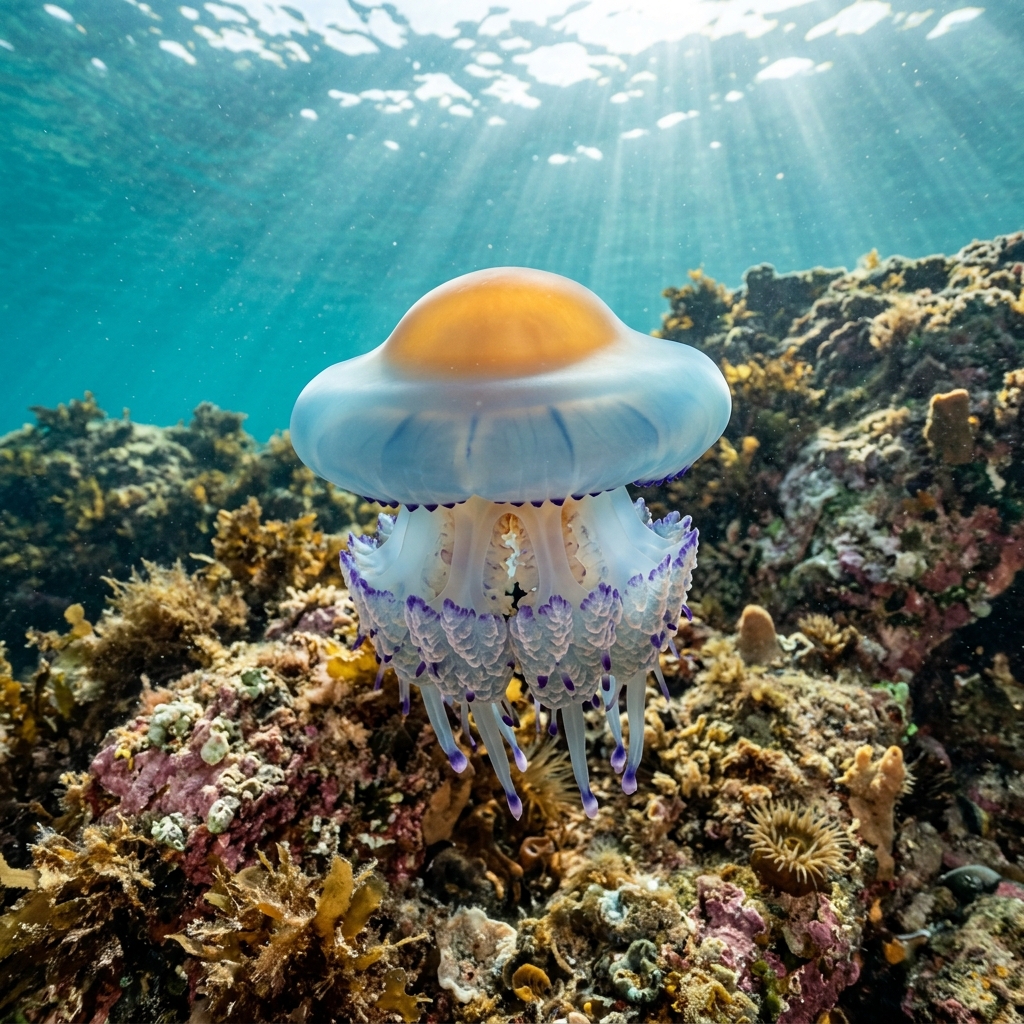
That raised, yellow-orange central dome sitting on a flat white bell is the giveaway, it really does look like a fried egg drifting through the water. The bell can reach roughly 35 cm across, making it a substantial presence when it drifts past. Short, frilly oral arms (the feeding appendages beneath the bell) cluster around the centre rather than trailing as long tentacles, giving it a compact, tidy silhouette.
You'll most often encounter one drifting slowly through open water or near the surface in calm, sheltered bays, it moves by gentle pulsing rather than directed swimming, so currents largely dictate where it ends up. It shows no particular reaction to divers and is easy to pace alongside. Small fish and juvenile bream sometimes shelter among its short oral arms, using the bell as a mobile refuge.
The frilly oral arms beneath the bell are studded with tiny suction-cup-like structures that trap small plankton, unlike jellies with stinging tentacles, this species feeds primarily through these sticky pads, which is part of why it poses no real sting risk to divers.
In the northern hemisphere, sightings concentrate strongly from July through October, peaking during the warmest months of the Mediterranean summer when water temperatures sit in the upper part of its observed range.
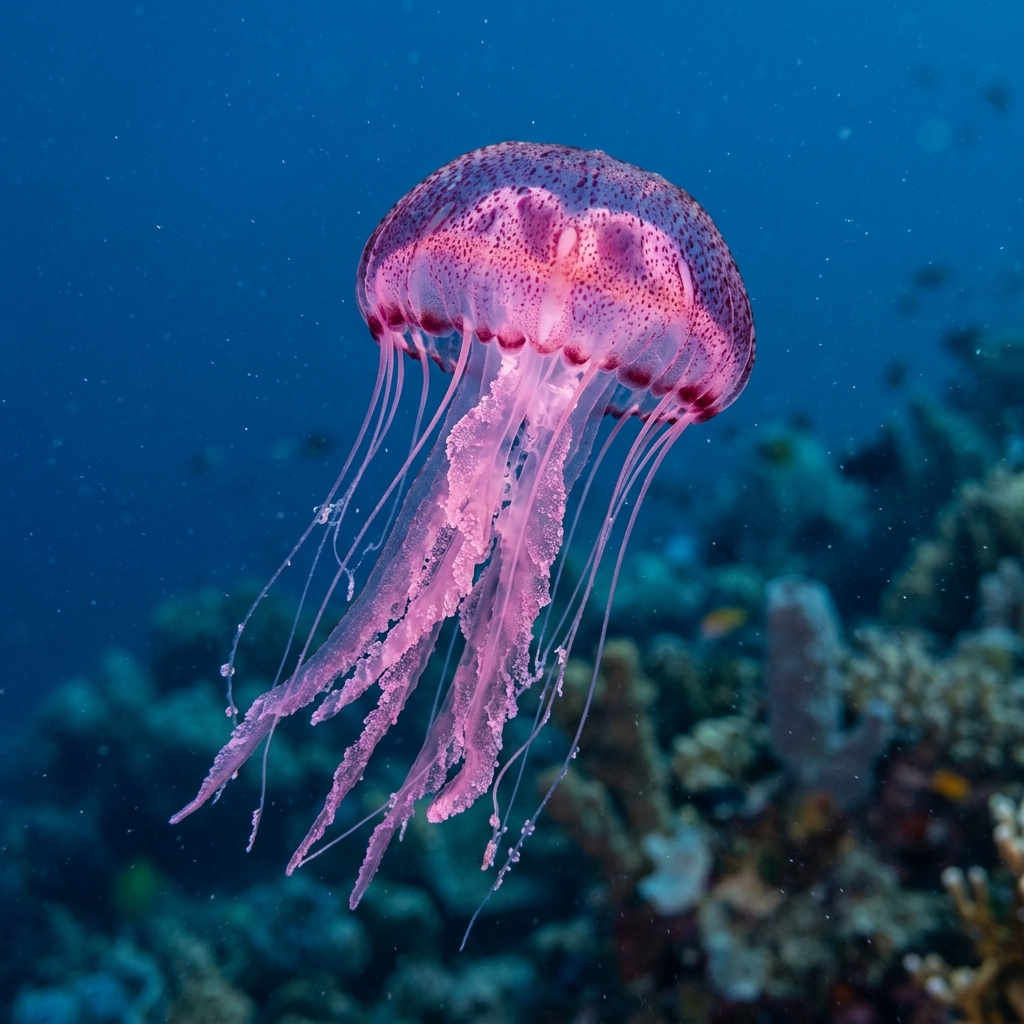
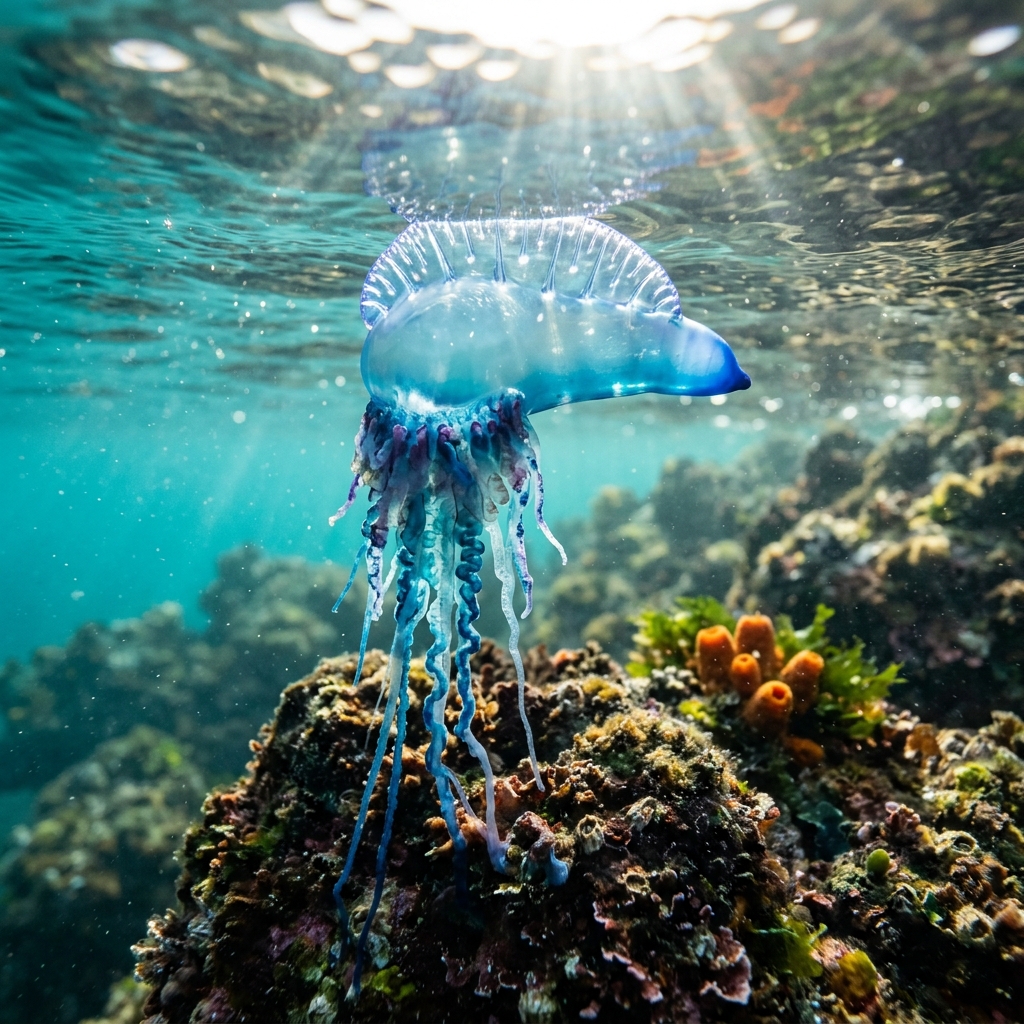
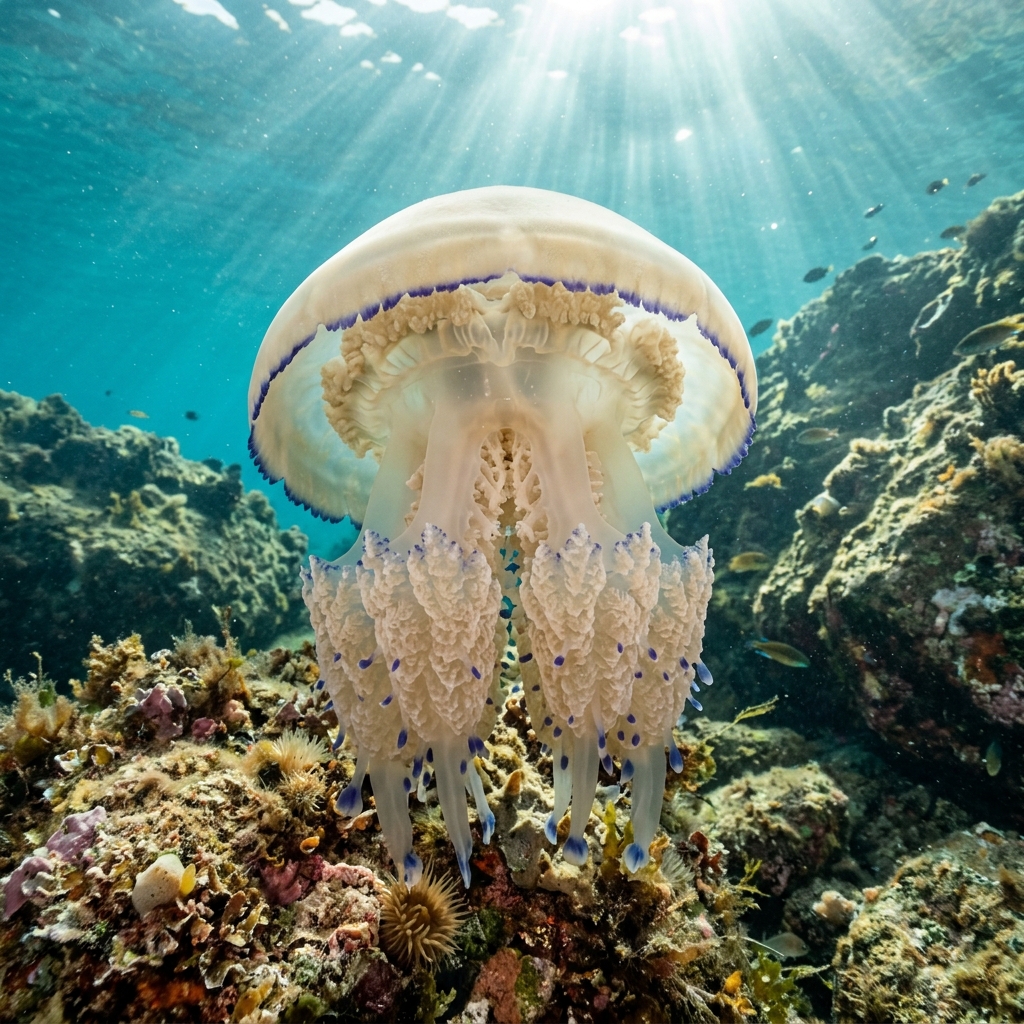
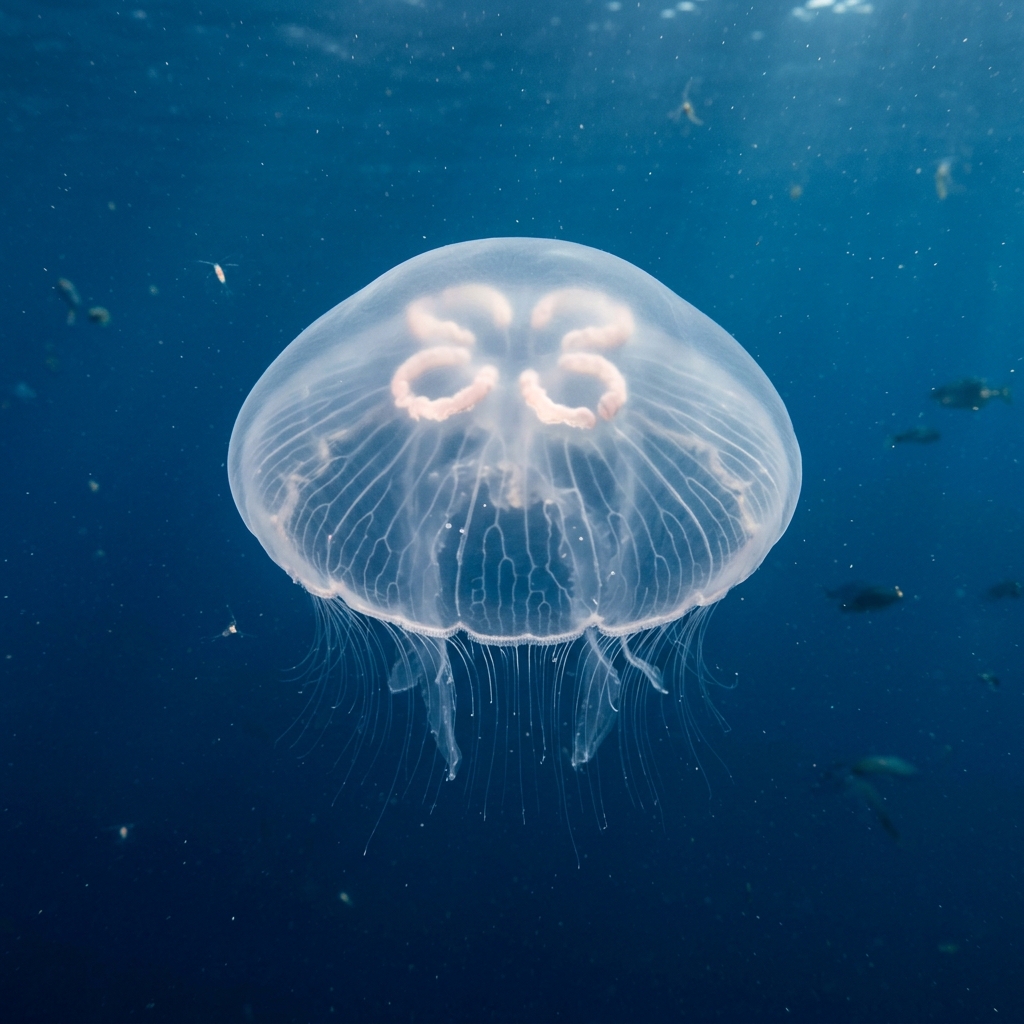
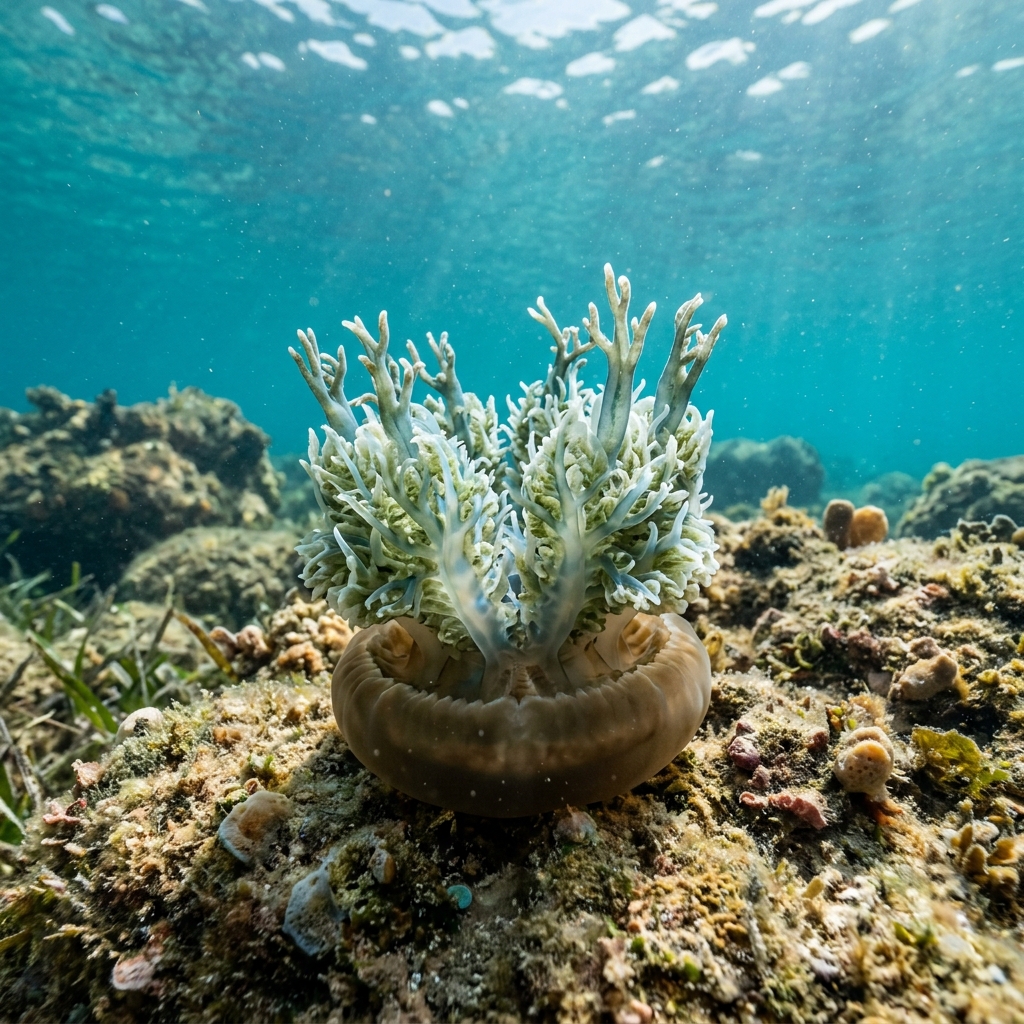
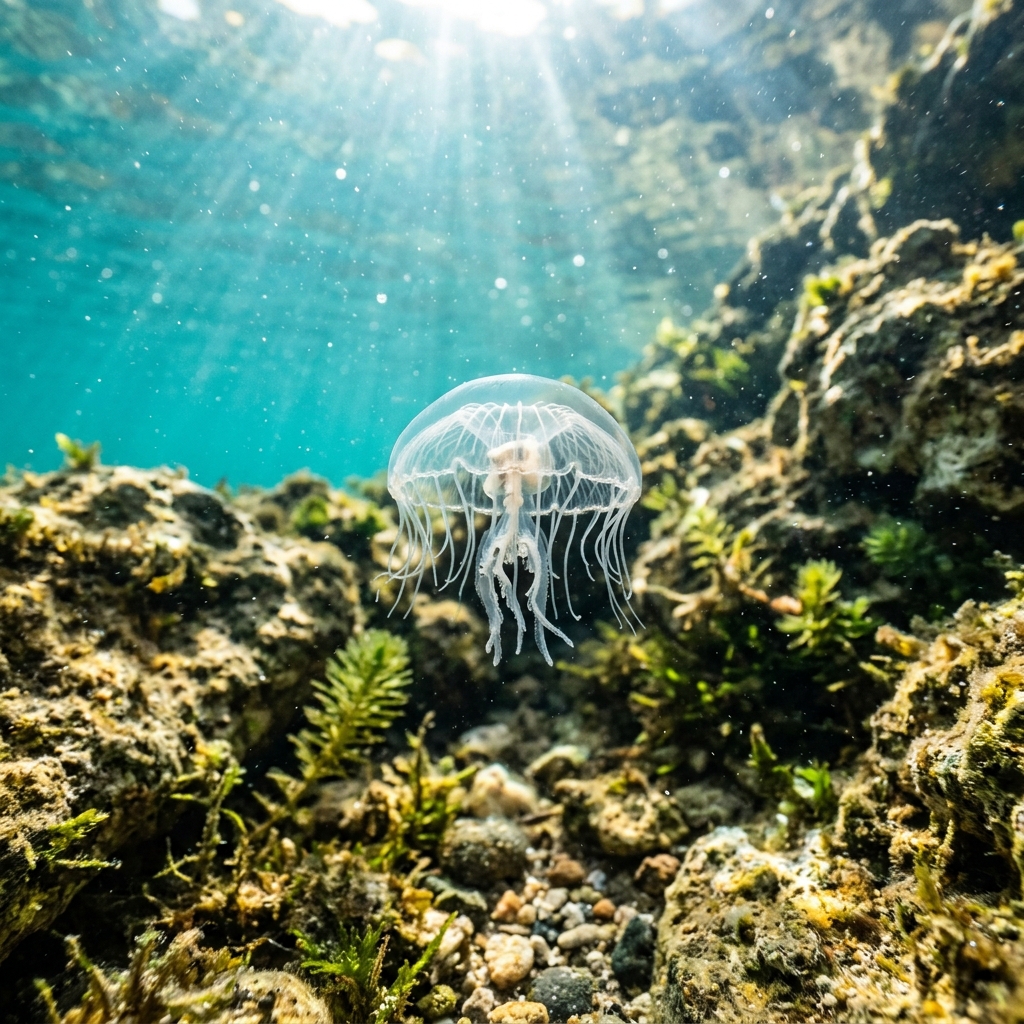
Reef neighbours a diver could mistake it for. Use the identification notes above to tell them apart.
Most sightings come from the western and central Mediterranean, with Spain, particularly Costa Blanca and Costa Brava, logging the highest numbers of any region. Italy (especially Sardinia and Tuscany) and Malta's Gozo waters are also reliable spots. Croatia's Istrian coast and the Balearic Islands round out the hotspots, and smaller numbers appear in Greece, France, Slovenia, and Tunisia.
Mapping where Fried Egg Jellyfish is logged…
The Mediterranean is the place to look. Spain's Costa Blanca and Costa Brava have the strongest track record, followed by Sardinia and Tuscany in Italy, Gozo in Malta, and Croatia's Istrian coast. Smaller numbers also turn up in Greece, France, Slovenia, and Tunisia.
July through October is the core window across the Mediterranean. Sightings are rare outside this summer-to-autumn season, which aligns with warmer surface water temperatures across the region.
Look for a wide, flat white bell with a raised yellow-orange disc in the centre, the resemblance to a sunny-side-up egg is striking and makes it hard to confuse with most other species. Short, ruffled oral arms cluster beneath the central dome rather than trailing as long tentacles.
No. This species is not considered dangerous to divers. Its feeding arms can cause a mild skin reaction in very sensitive individuals if handled, but it lacks the long stinging tentacles responsible for painful jellyfish encounters. Most divers swim alongside it without any issue.
The bell commonly reaches around 35 cm in diameter, though larger individuals of up to 50 cm have been recorded. In the water they appear sizeable and easy to spot, one of the larger jellies a diver is likely to encounter in the Mediterranean.
Site and sighting data is aggregated from diver logs, iNaturalist and GBIF. For taxonomy and conservation status:
Moon Jellyfish
1,766 sites