Physalia spp.
Spot the iconic blue float of a Bluebottle drifting across Florida, the Canary Islands or New South Wales. Most sightings run Dec, Jul in the north.
Safety warning
This species can sting on contact with its tentacles, which may trail well beyond the body and can still sting after the animal is dead or washed up. Look but do not touch, and give it a wide berth.
If you're stung
Stinging tentaclesGeneral first-aid guidance, not a substitute for professional medical care. In an emergency, call your local emergency number.
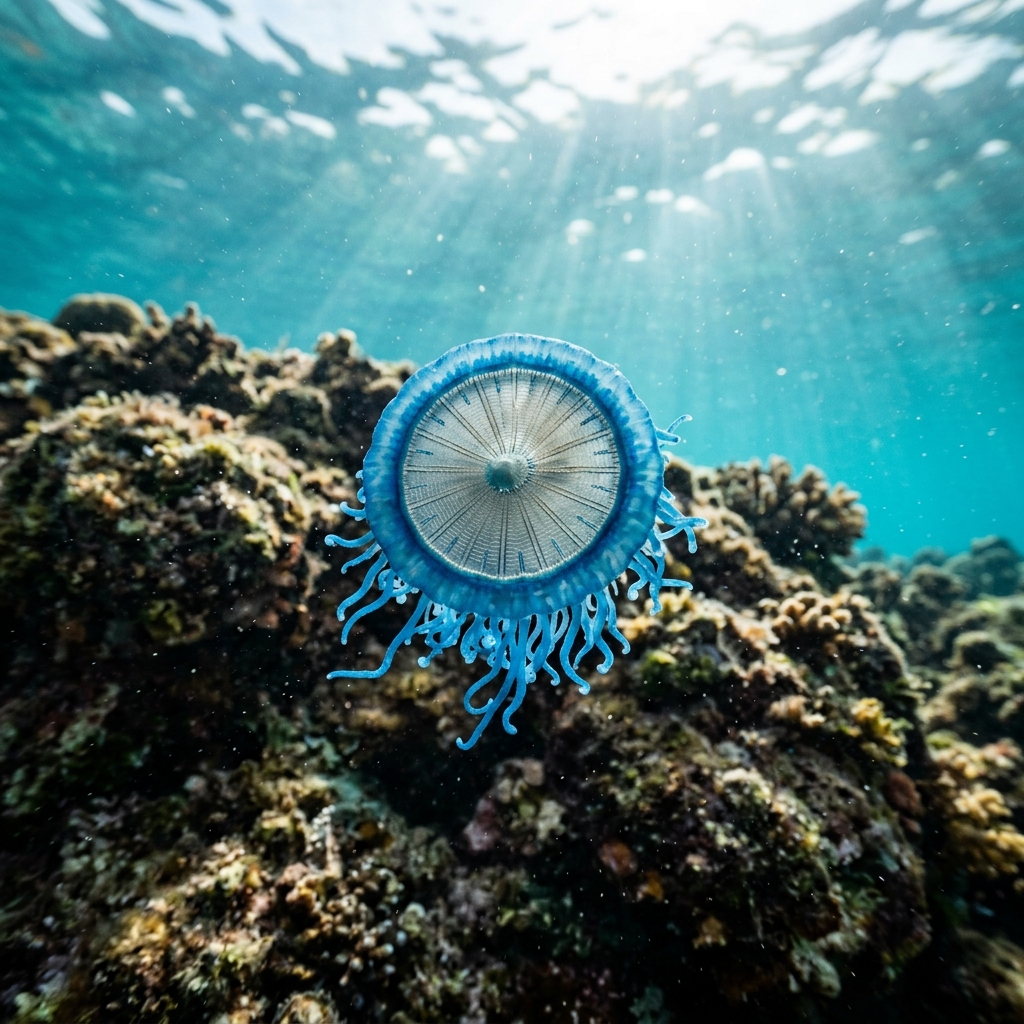
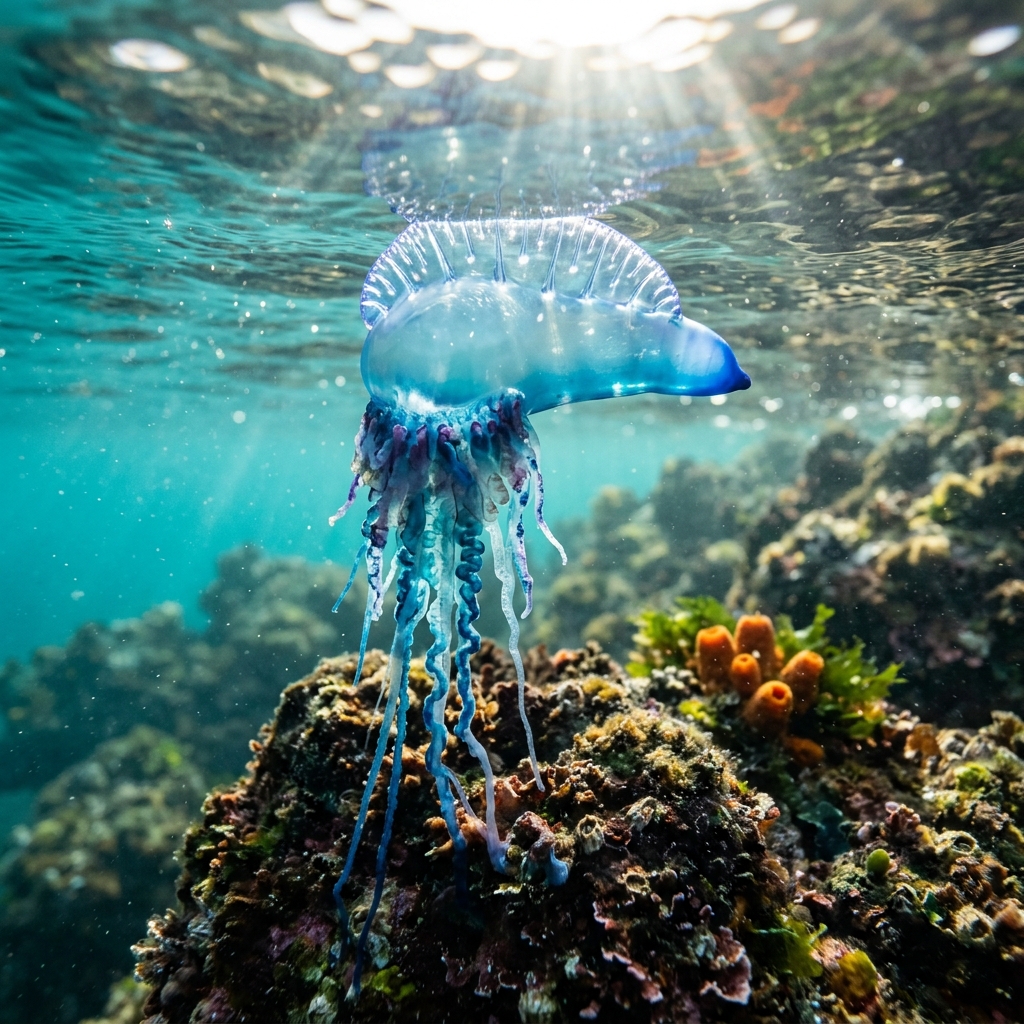
That electric-blue, gas-filled float sitting at or just below the surface is unmistakable: an elongated bladder roughly palm-length, bright cobalt to violet depending on the light. Hanging below it are long, dark-blue fishing tentacles that can trail several metres. You rarely see one underwater; almost all encounters are at the surface or in the first metre of water, where the float catches the wind and the current like a tiny sail.
Bluebottles are passive drifters, entirely at the mercy of wind and current; they do not swim or steer. You encounter them at the surface, often in loose aggregations when an onshore wind pushes them in. They show no awareness of divers whatsoever, making them easy to observe closely from a respectful distance.
A bluebottle is not a single animal but a colonial organism (a siphonophore) made up of genetically identical but functionally specialised individuals called zooids, each performing a different role such as floating, feeding, or reproduction.
In Northern Hemisphere waters, sightings concentrate from December through July, covering the cooler half of the year when wind-driven currents push them towards coasts. In Southern Hemisphere locations such as New South Wales, January to April is the peak window.
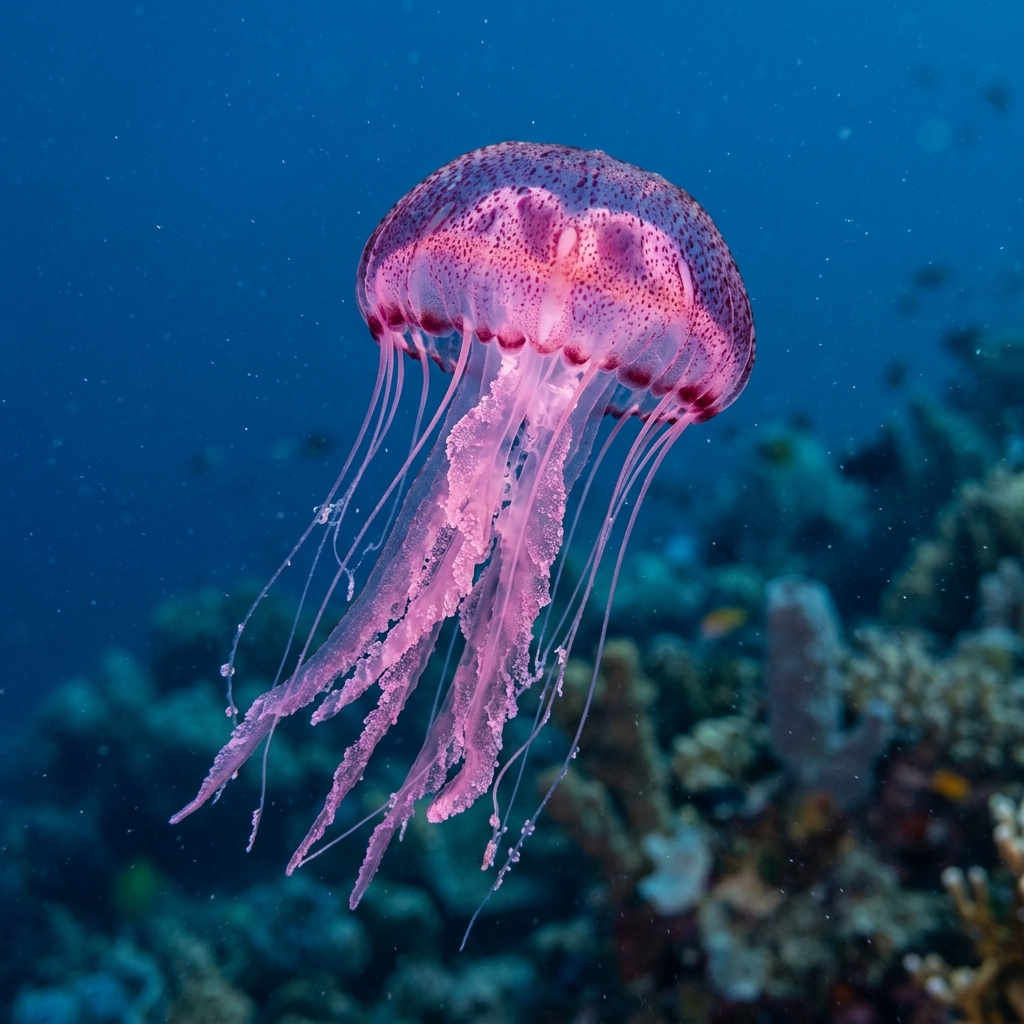
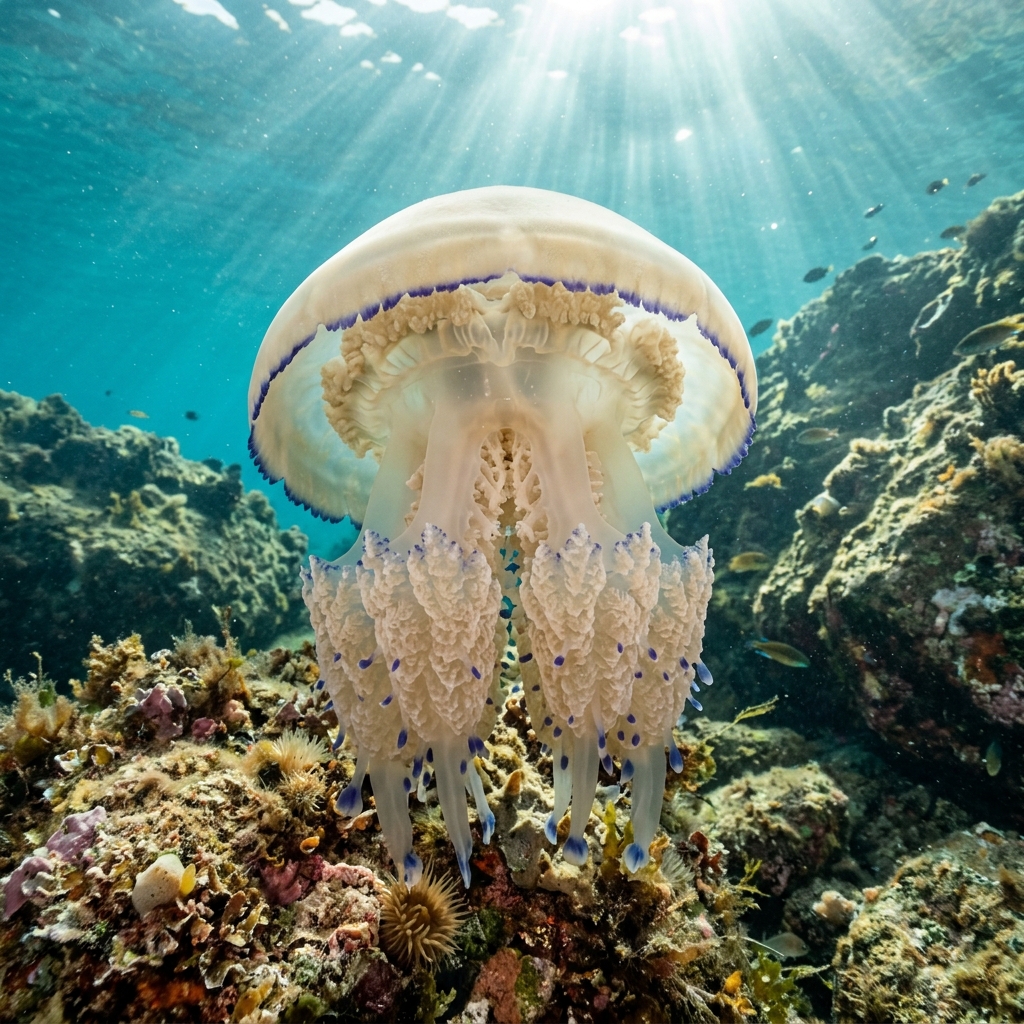
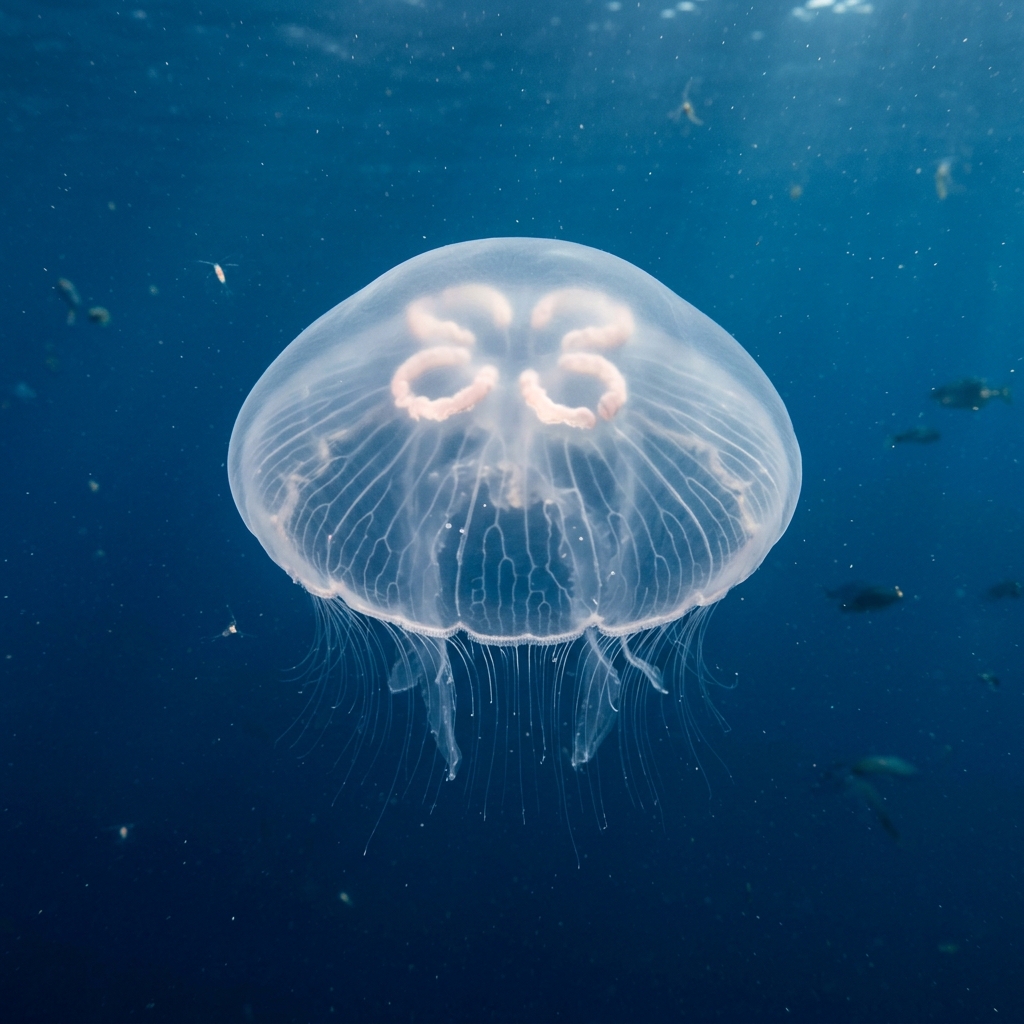
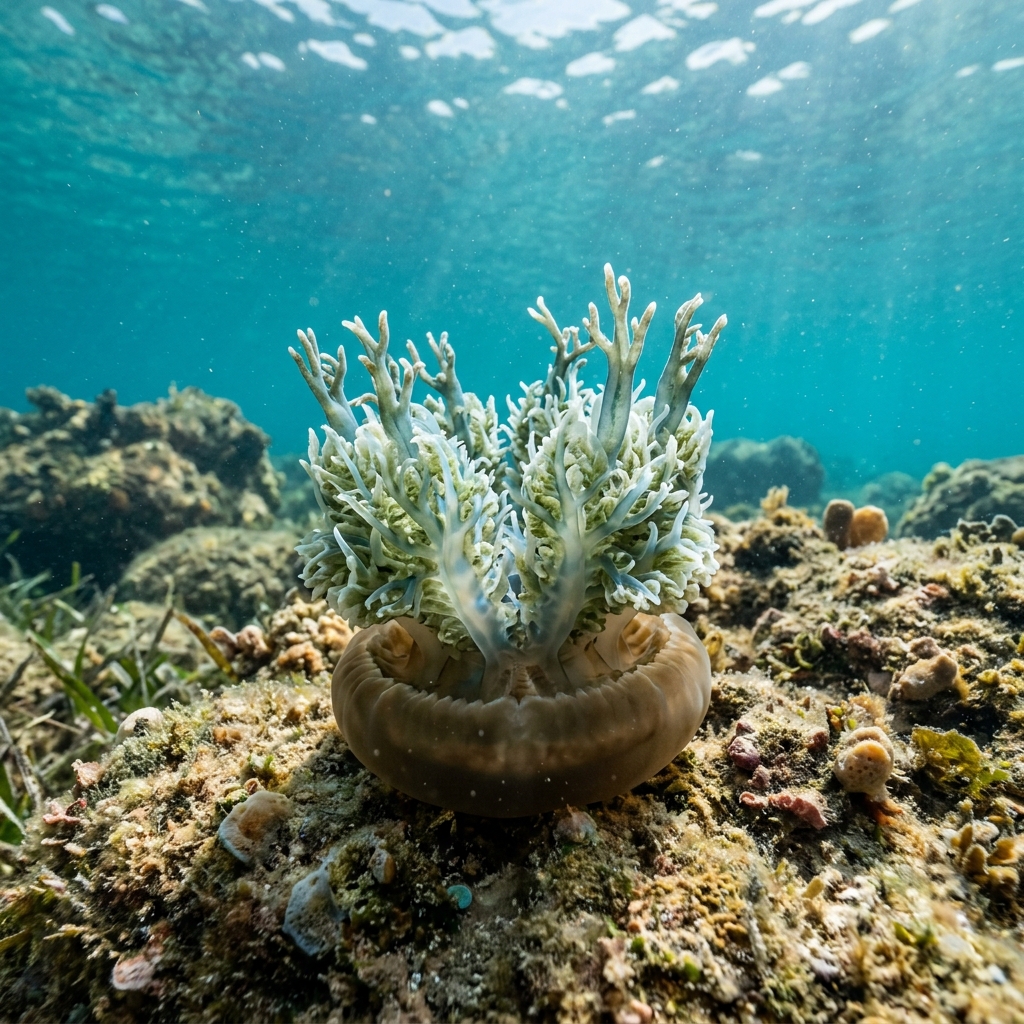
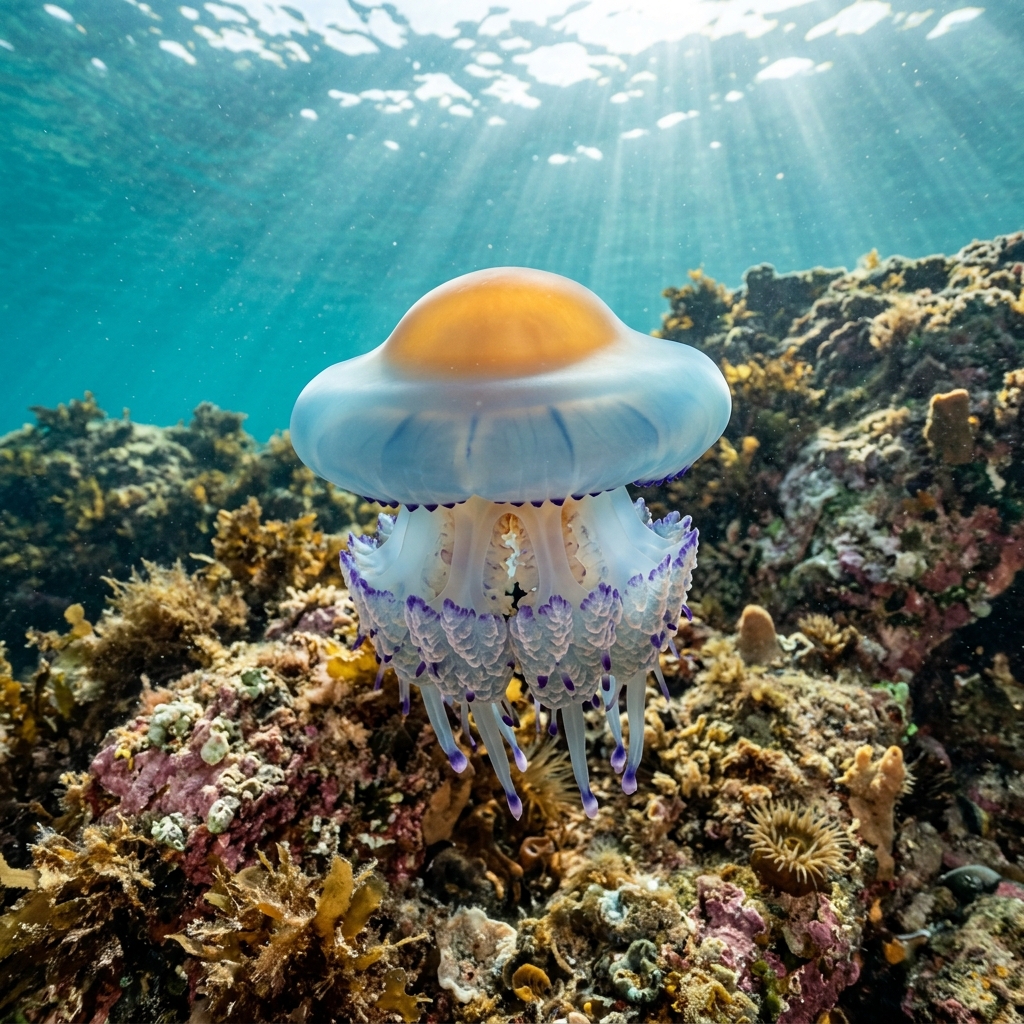
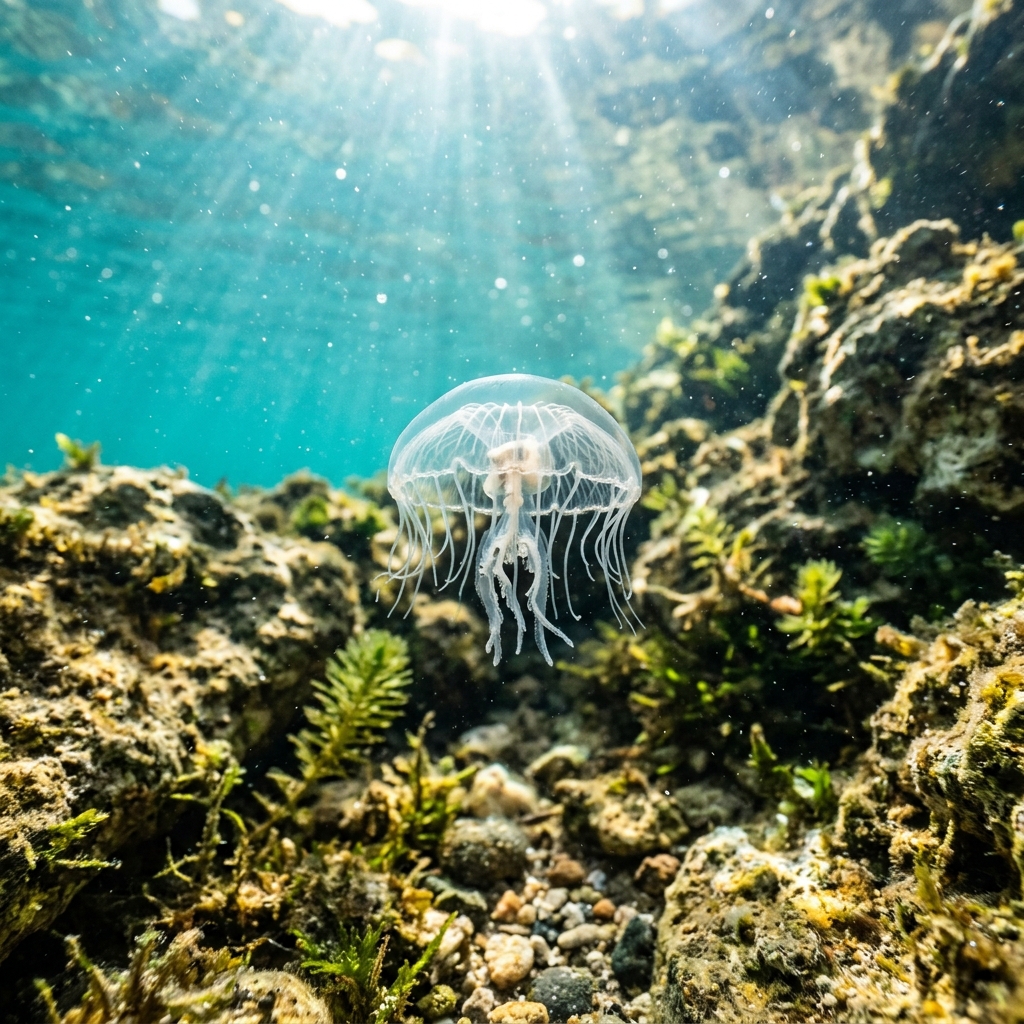
Reef neighbours a diver could mistake it for. Use the identification notes above to tell them apart.
Bluebottles are most commonly logged along the eastern seaboard of the United States, particularly across Florida and the Southeast. Strong sightings also come from the Canary Islands (especially Tenerife, Fuerteventura, and La Palma), the Azores around São Miguel and Santa Maria, and New South Wales in Australia. Portugal's Algarve, South Africa, Spain, and the Philippines round out the hotspots.
Mapping where Bluebottle is logged…
Bluebottles are logged across a wide spread of warm and warm-temperate coastlines. The most sightings come from Florida and the US Southeast, the Canary Islands, the Azores, New South Wales in Australia, and Portugal's Algarve. They also turn up regularly in South Africa, Spain, and the Philippines.
In the Northern Hemisphere, December through July is when sightings peak, driven by seasonal winds pushing colonies inshore. Around New South Wales and other Southern Hemisphere sites, January to April is the most reliable window. Encounters depend heavily on wind direction on any given day.
Contact with the tentacles delivers a painful sting that can cause a burning weal on skin, but it is not typically life-threatening for healthy adults. Because encounters almost always happen at the surface, the main risk is incidental contact when entering or exiting the water. Wearing a wetsuit or rash guard greatly reduces skin exposure.
Look for the vivid cobalt-blue gas float sitting at the surface like a small inflated balloon, with long dark-blue tentacles trailing below. The Blue Button (Porpita porpita) can cause brief confusion as it is also blue and disc-shaped, but it is far flatter and disc-like with no prominent float above the water.
Despite looking like a jellyfish, a bluebottle is actually a siphonophore: a colonial organism made up of many specialised individual animals called zooids living and working together as one. The gas-filled float, the tentacles, and the reproductive structures are each different kinds of zooid.
The gas float is typically around 10 to 15 centimetres long, though it can reach up to 30 centimetres. The trailing fishing tentacles are far longer, sometimes extending several metres below the surface, which makes the full colony considerably larger than the float alone suggests.
Site and sighting data is aggregated from diver logs, iNaturalist and GBIF. For taxonomy and conservation status:
Upside Down Jellyfish
1,622 sites