Rhizostoma spp.
Spot barrel jellyfish across the Costa Brava, Zeeland and the Algarve. Learn when and where divers log them most, and how to tell them apart underwater.
Safety warning
This species can sting on contact with its tentacles, which may trail well beyond the body and can still sting after the animal is dead or washed up. Look but do not touch, and give it a wide berth.
If you're stung
Stinging tentaclesGeneral first-aid guidance, not a substitute for professional medical care. In an emergency, call your local emergency number.
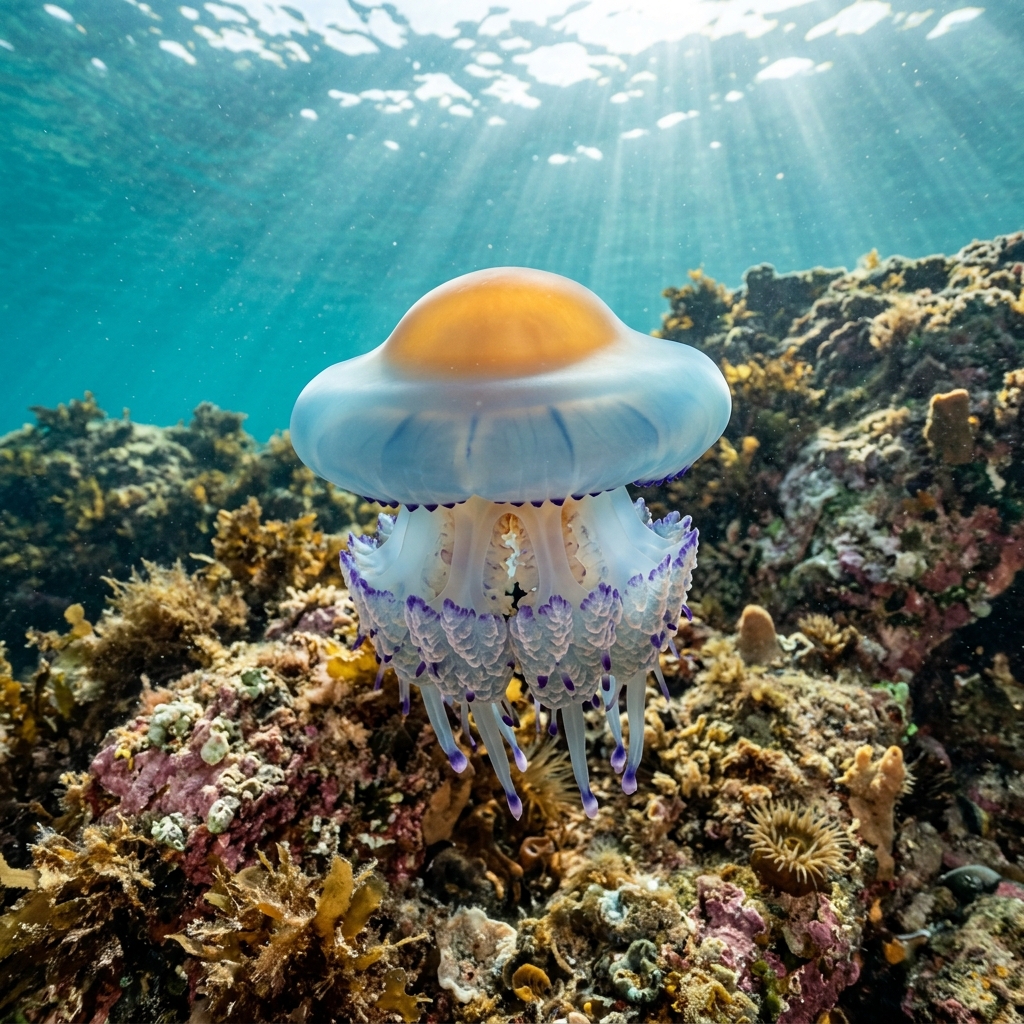
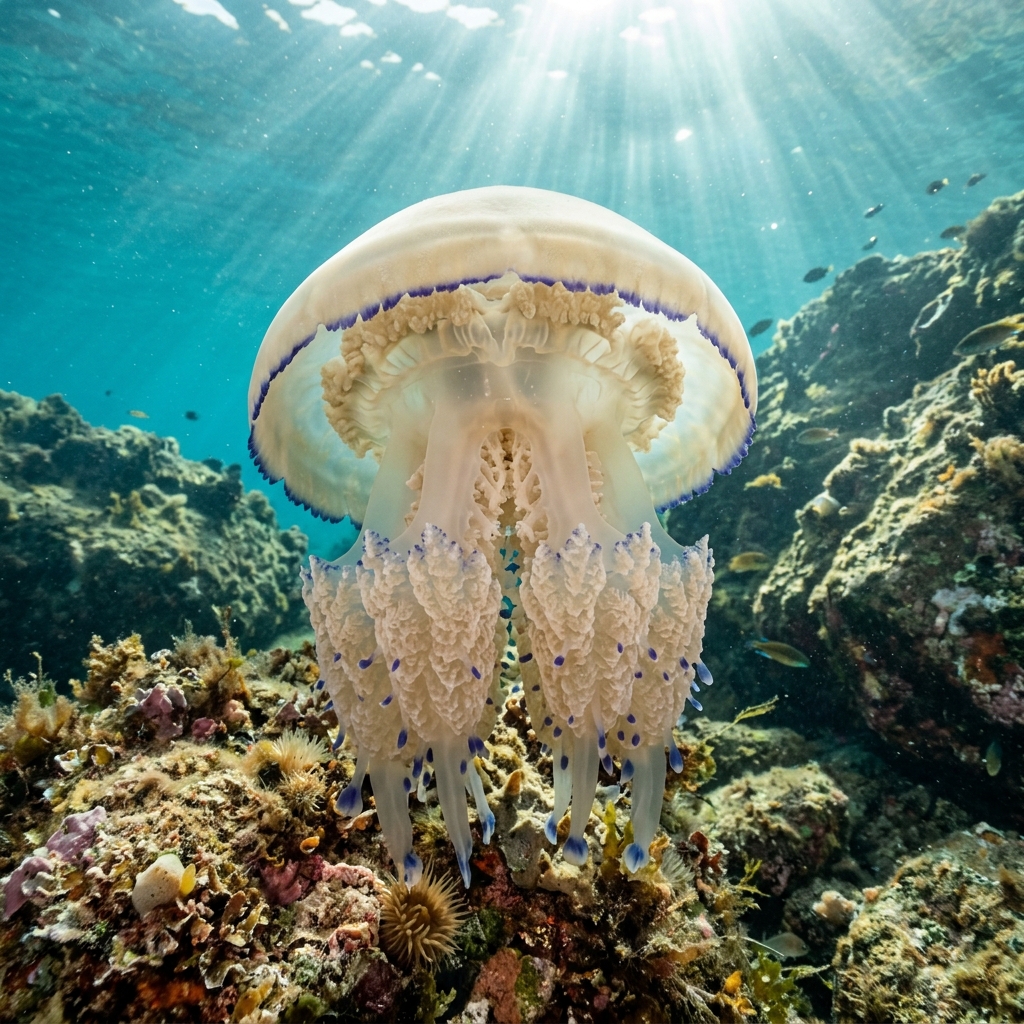
One of Europe's largest jellyfish, the barrel jellyfish has a smooth, dome-shaped bell that can reach the size of a dustbin lid, typically white to pale blue with a faint violet rim. Below the bell hang eight thick, cauliflower-like oral arms (the feeding appendages that replace a single central mouth) rather than trailing tentacles, which gives the underside a bushy, compact look. In the water it pulses slowly and appears almost translucent, with the violet or pinkish fringing along the bell edge being the quickest field mark.
Barrel jellyfish are open-water drifters, moving with currents rather than swimming directionally, and divers typically encounter them mid-water or near the surface on calm days. They pulse steadily and slowly, appearing unhurried, and show no particular response to a nearby diver. Large aggregations can form seasonally, so if you see one there are often more nearby.
Barrel jellyfish are important hosts for young fish, particularly juvenile horse mackerel, which shelter among the oral arms and gain protection while the jellyfish is alive. Loggerhead turtles also target them as prey, so a barrel jellyfish in the water is a reason to scan your surroundings.
Sightings are recorded across most of the year, concentrating from February through December in the northern hemisphere, with no single sharp peak suggesting a near year-round presence tied to the cool-to-temperate water this species favours, roughly 10 to 22 degrees Celsius.
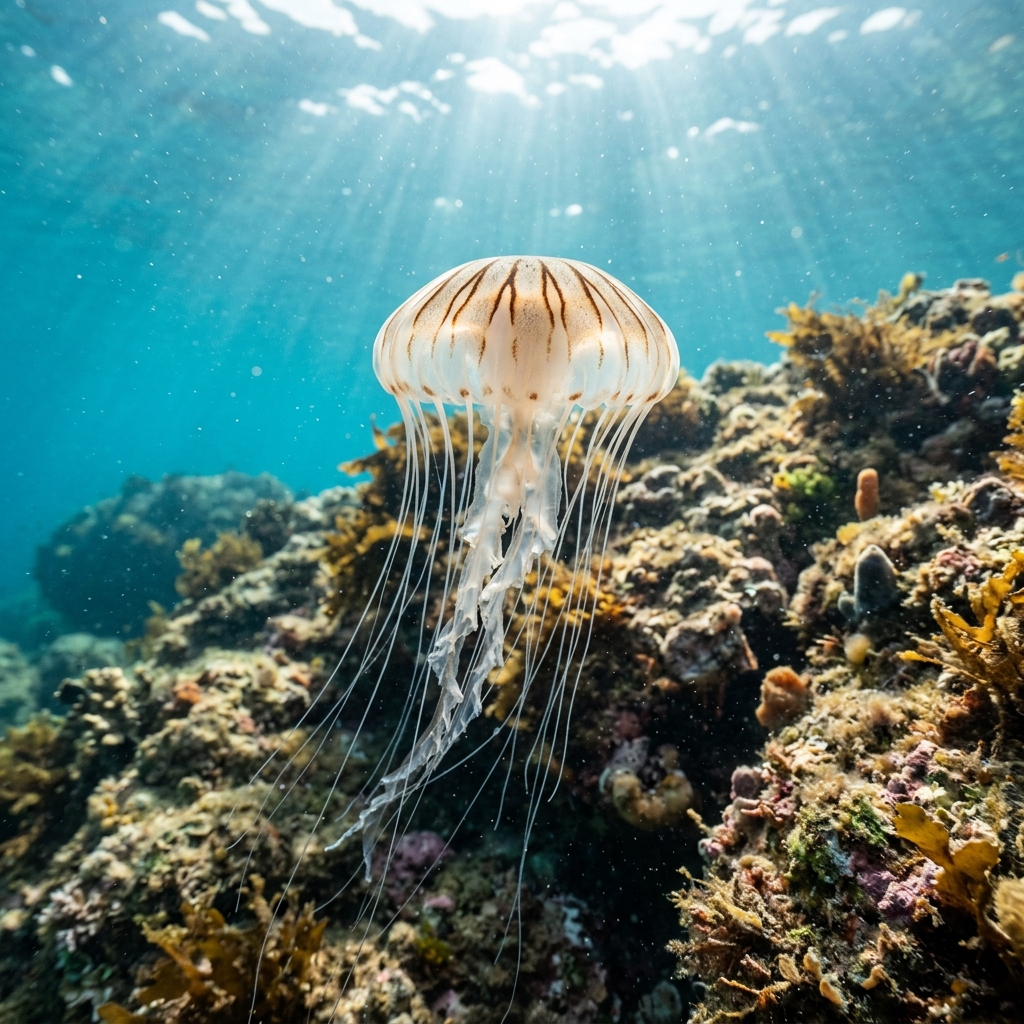
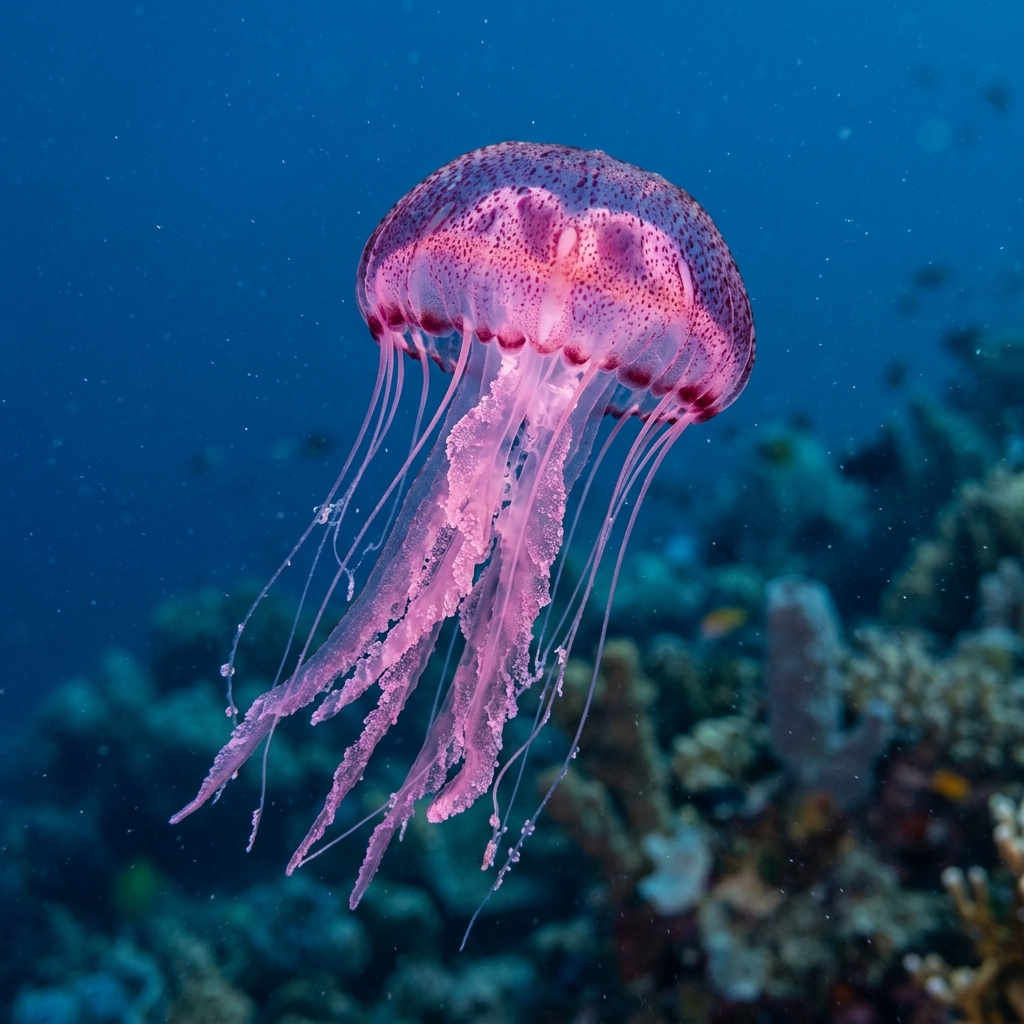
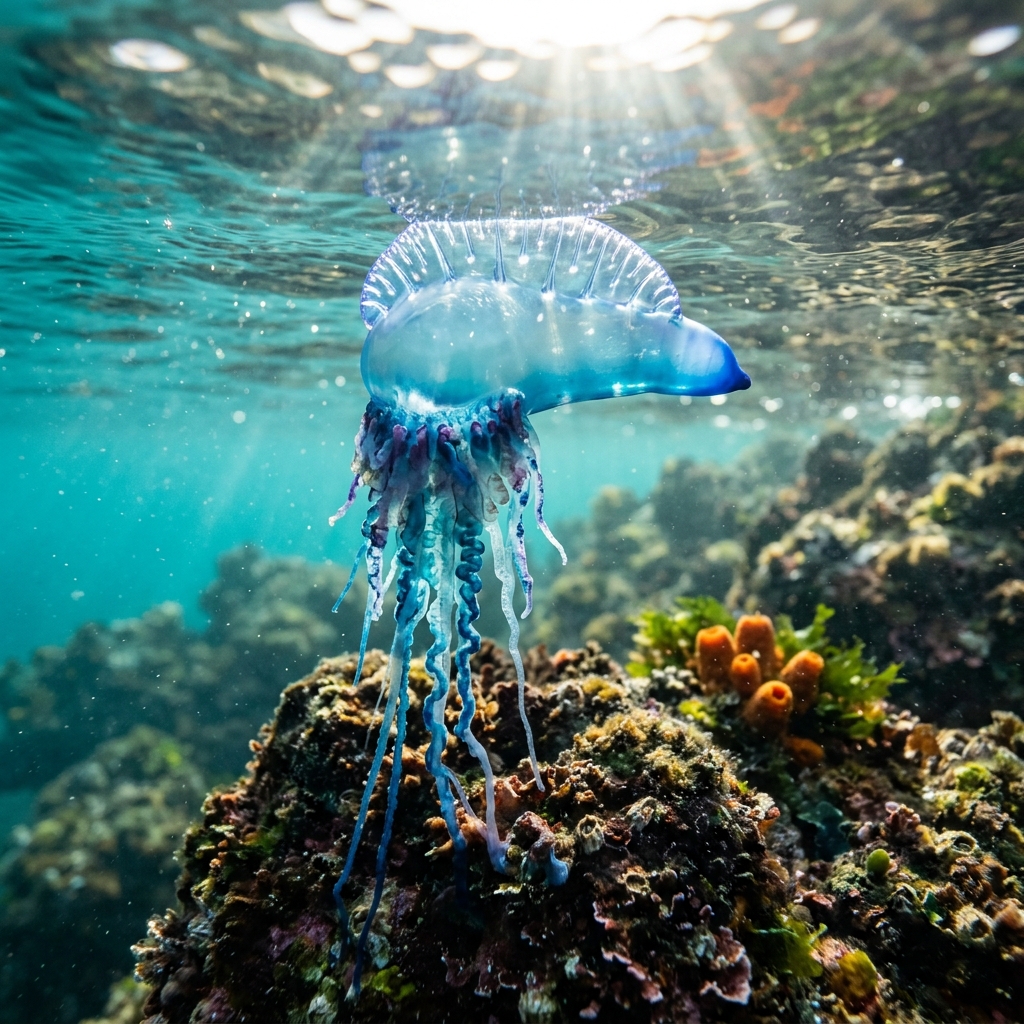
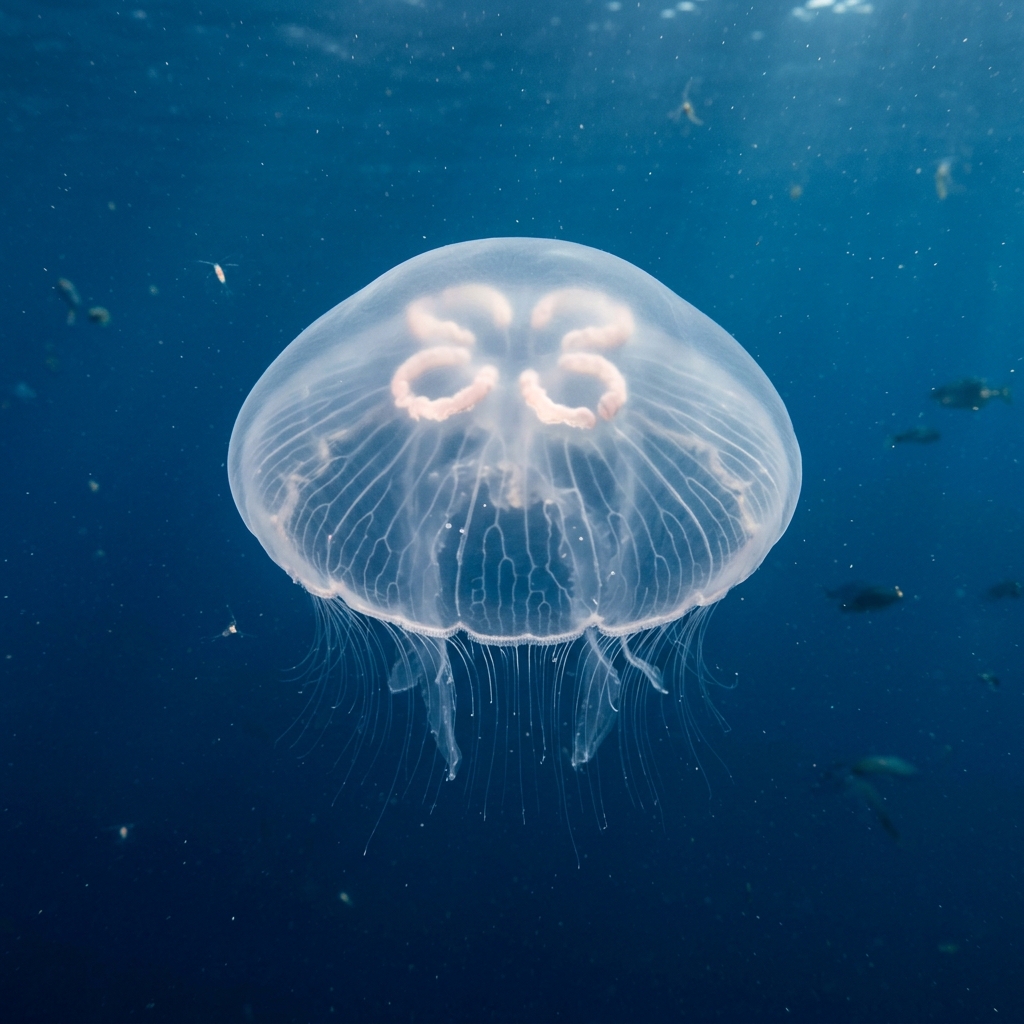
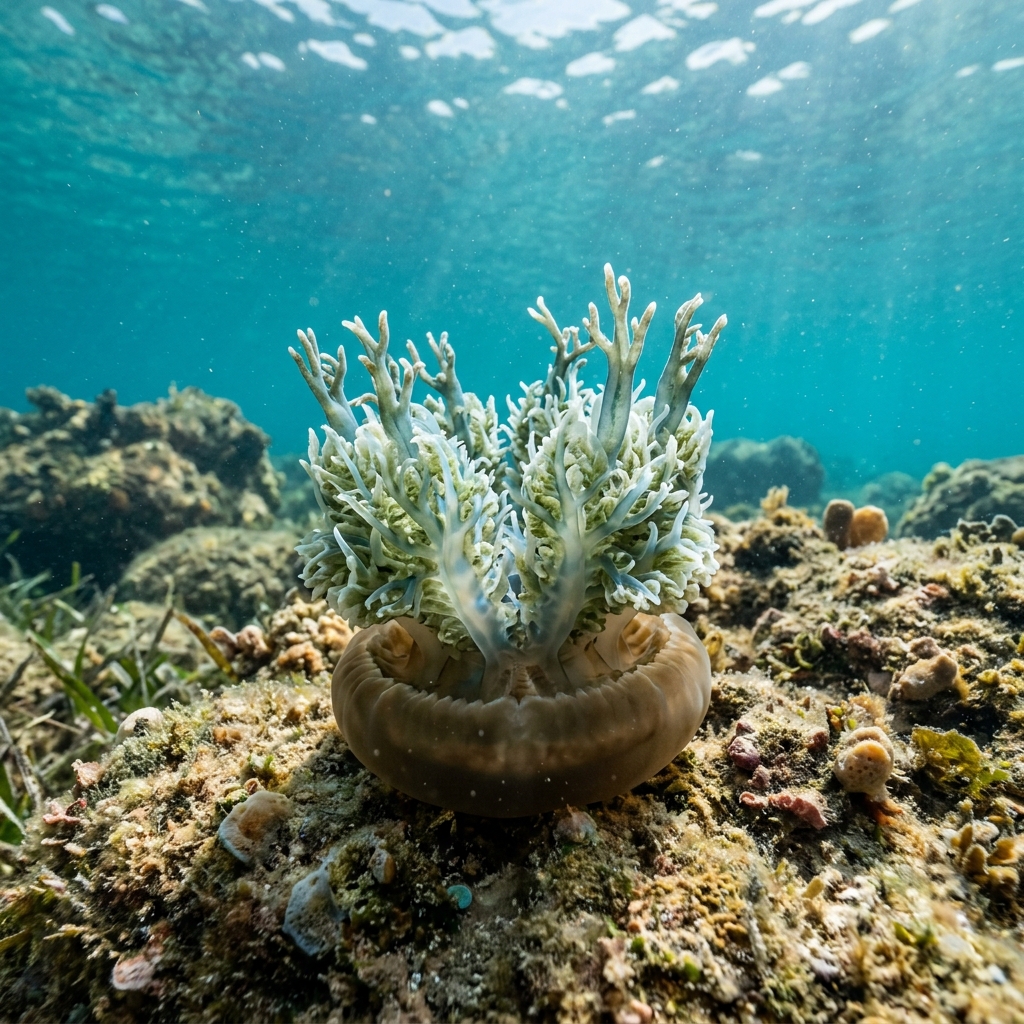
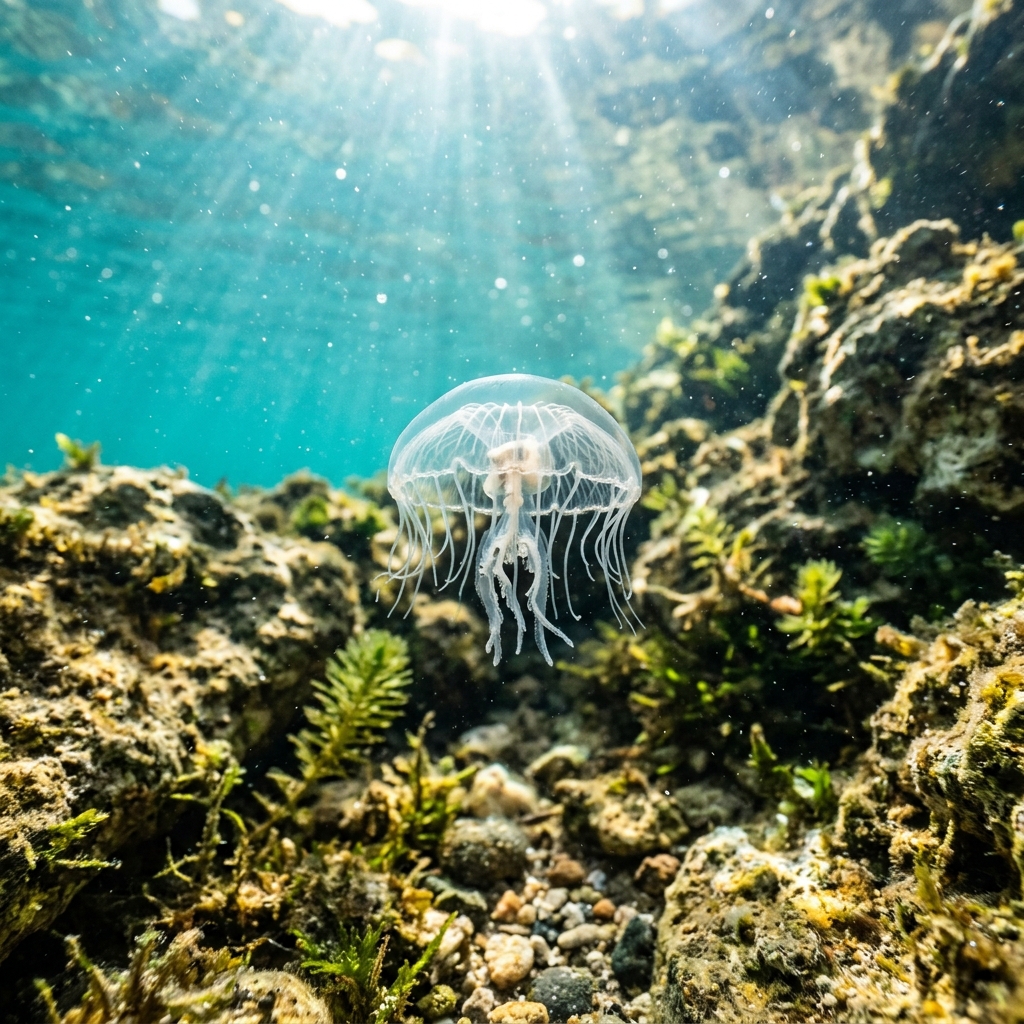
Reef neighbours a diver could mistake it for. Use the identification notes above to tell them apart.
Most logged across the northeastern Atlantic coast and the Mediterranean, with Spain leading, particularly the Costa Brava and Costa Blanca, followed by Zeeland in the Netherlands, the Algarve in Portugal, and Istria in Croatia. Italy, France, and the UK also have strong records, making this essentially a European-Atlantic species with a broad coastal footprint. South Africa represents the only southern-hemisphere presence in the data.
Mapping where Barrel Jellyfish is logged…
They are most reliably logged along the Costa Brava in Spain, in Zeeland in the Netherlands, and along Portugal's Algarve coast. Croatia's Istrian coast and Kvarner Gulf, northwest Italy, and sites in France and the UK also produce regular sightings. South Africa is the only site outside Europe in the data.
Northern hemisphere sightings run from February through December, making them a near year-round possibility at many European sites. They favour cooler water in the 10 to 22 degree Celsius range, so temperate Atlantic and Mediterranean seasons suit them well.
No. Barrel jellyfish are not considered dangerous to divers. Their sting is very mild and most people feel nothing from incidental contact. You can swim close to observe them without concern, though there is no reason to handle any jellyfish.
Look for a large, dome-shaped, pale white or bluish bell with a distinctive violet or pinkish rim, and eight thick, frilly oral arms below instead of trailing tentacles. The bushy underside and the violet edge are the quickest features to lock onto. Compass jellyfish are smaller with brown radial markings and long marginal tentacles, while mauve stingers are much smaller and vivid purple with long slender tentacles.
The bell can reach around 90 centimetres across and the whole animal, including oral arms, can extend to roughly a metre in length, making this one of the largest jellyfish in European waters. Most individuals divers encounter are smaller, in the 40 to 60 centimetre range.
Juvenile fish, especially young horse mackerel, use the oral arms of barrel jellyfish as shelter from predators. The jellyfish's bulk and mild sting deter many attackers, giving the juveniles a mobile refuge while the jellyfish is alive. Once it dies, the relationship ends and the fish move on.
Site and sighting data is aggregated from diver logs, iNaturalist and GBIF. For taxonomy and conservation status:
Upside Down Jellyfish
1,622 sites