Arctocephalus australis
Playful pinnipeds logged around North Island, New Zealand and Western Australia, comfortable in 10 to 21C water year-round.
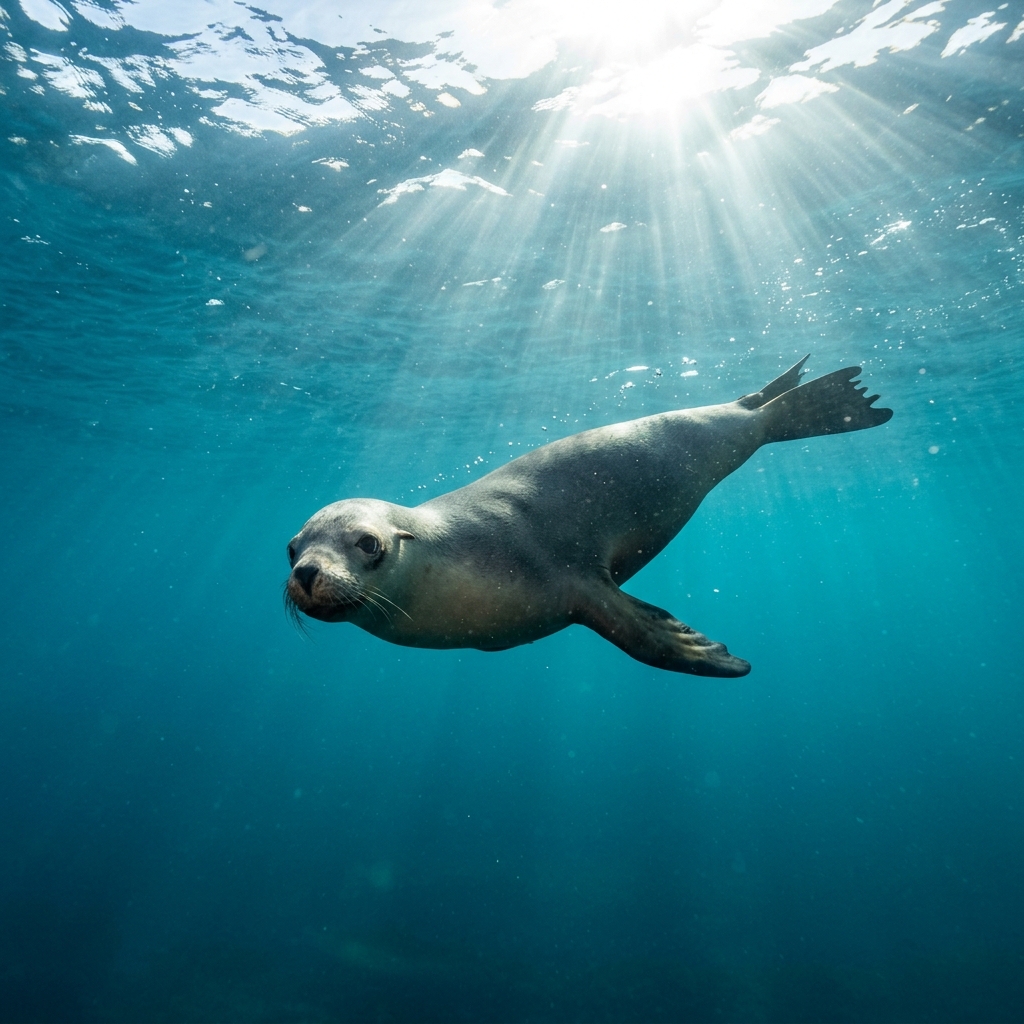
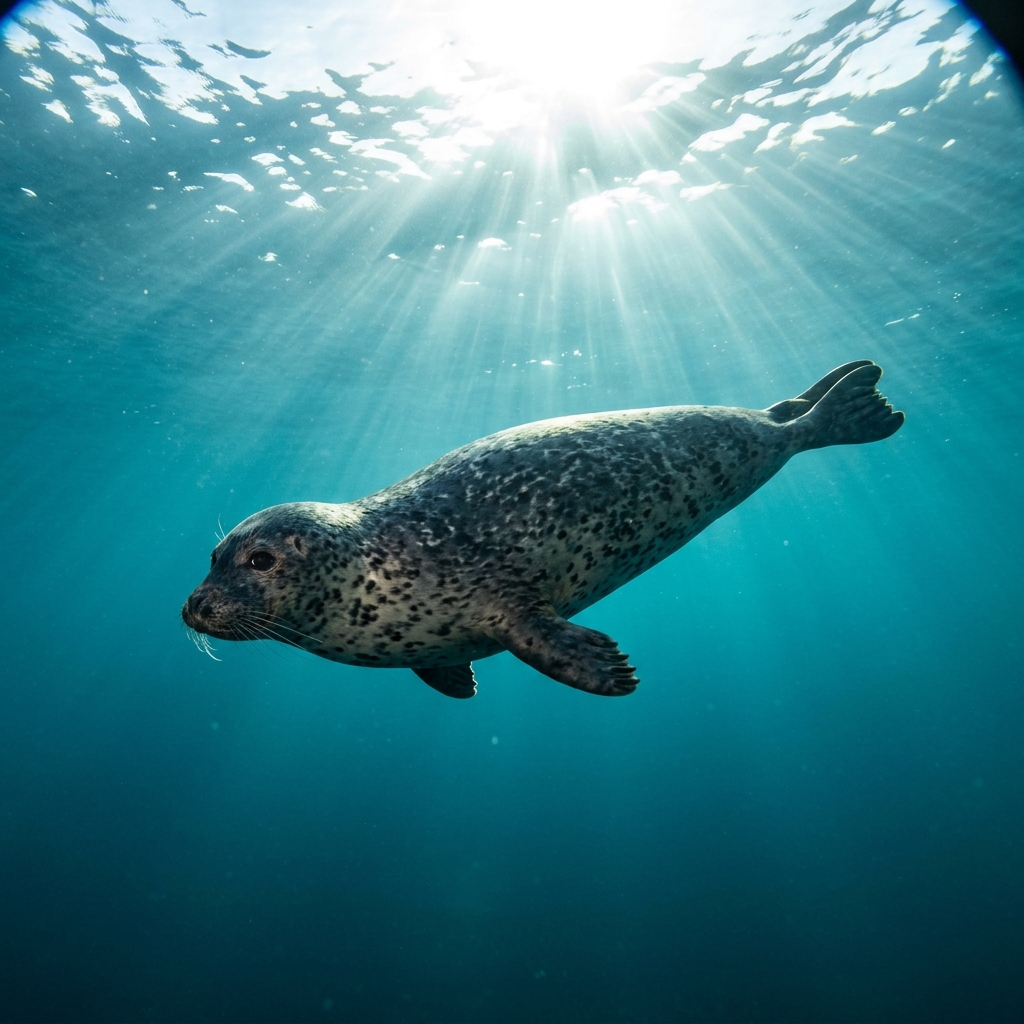
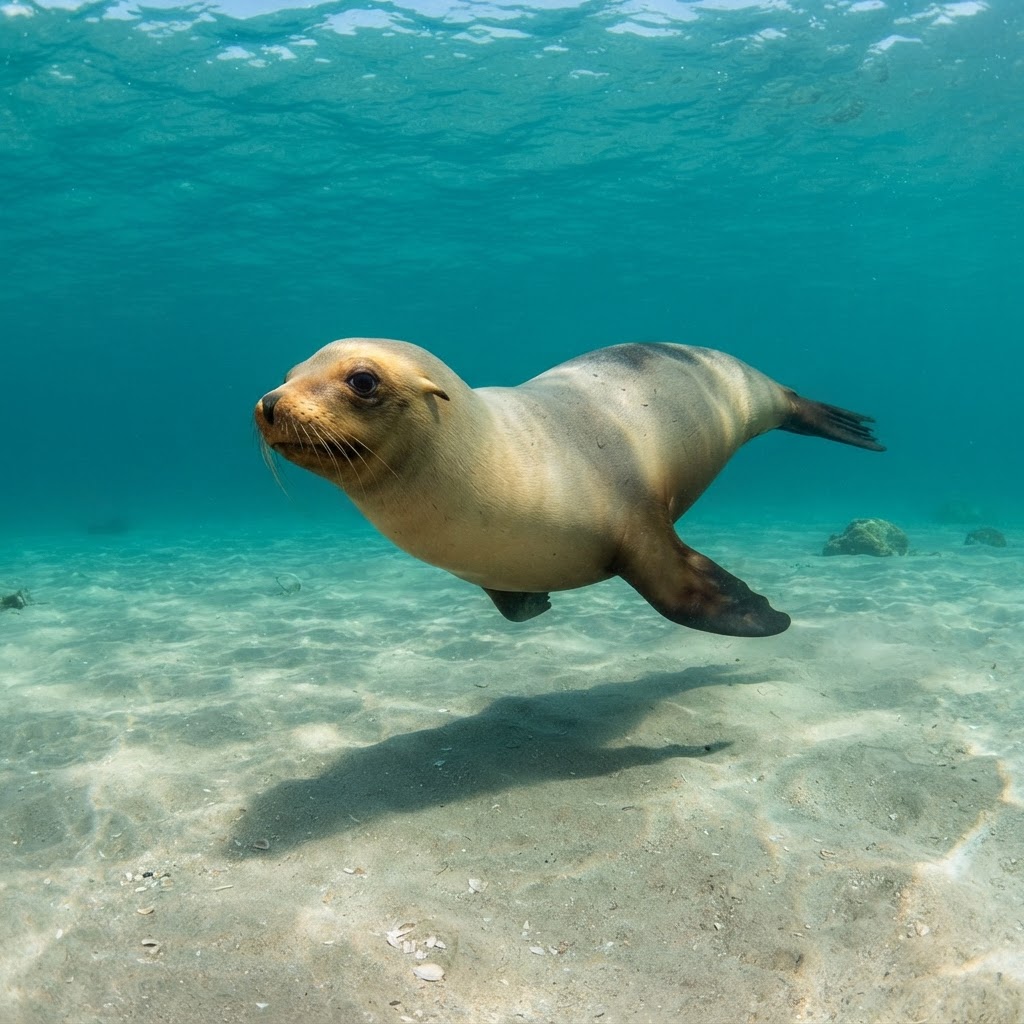
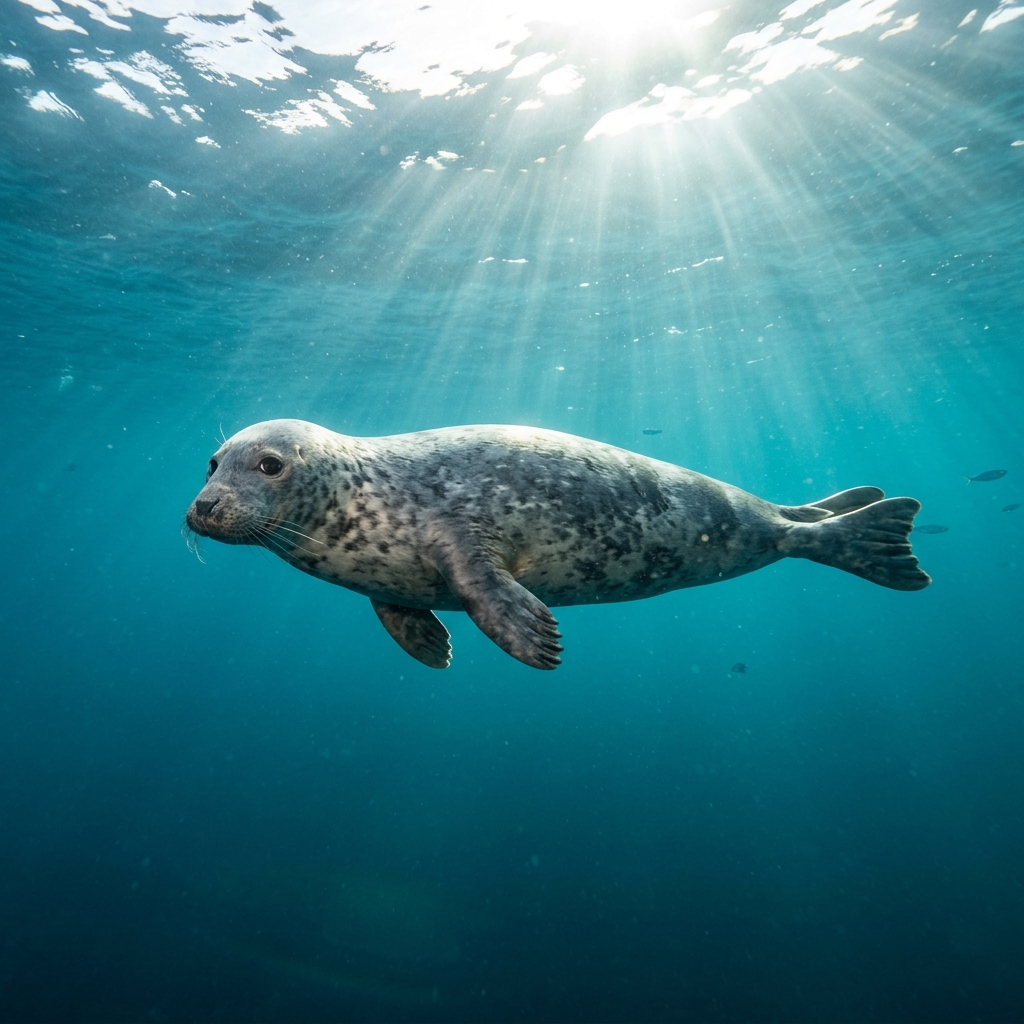
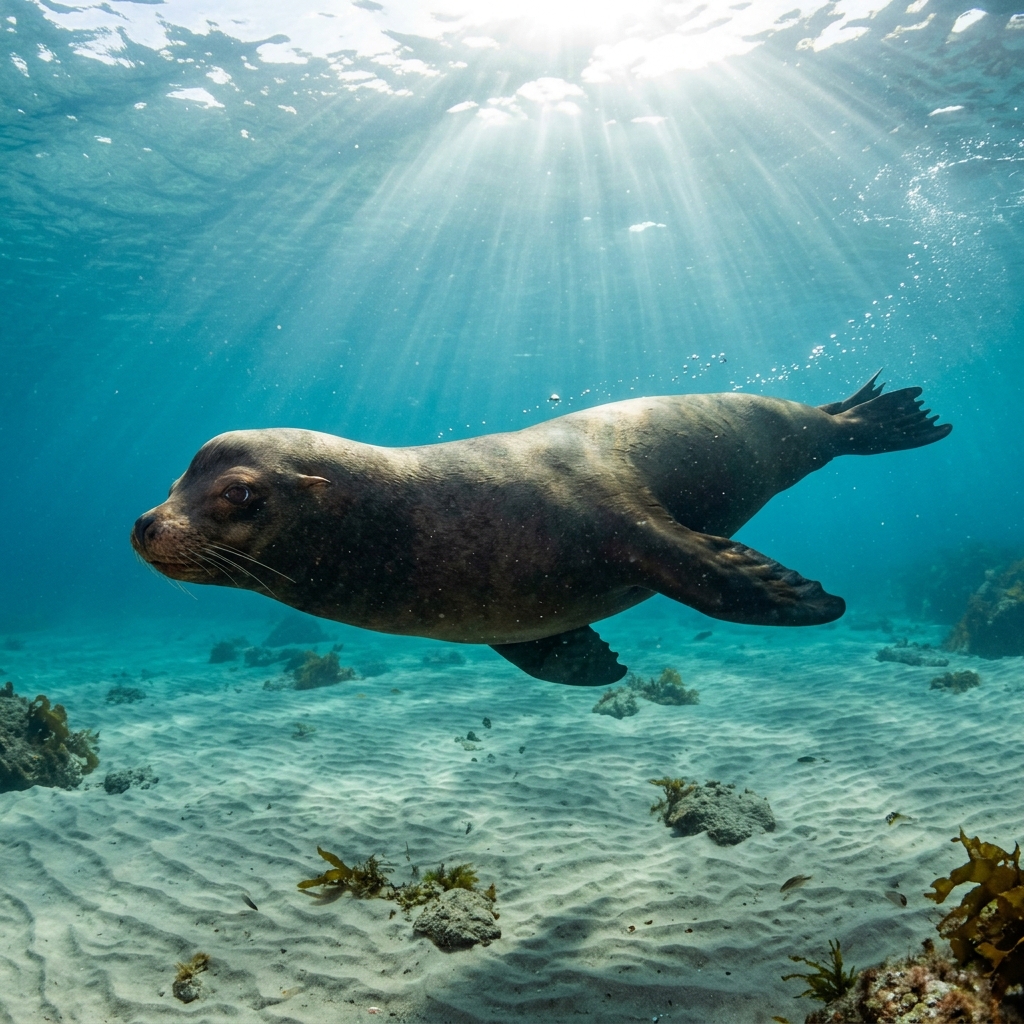
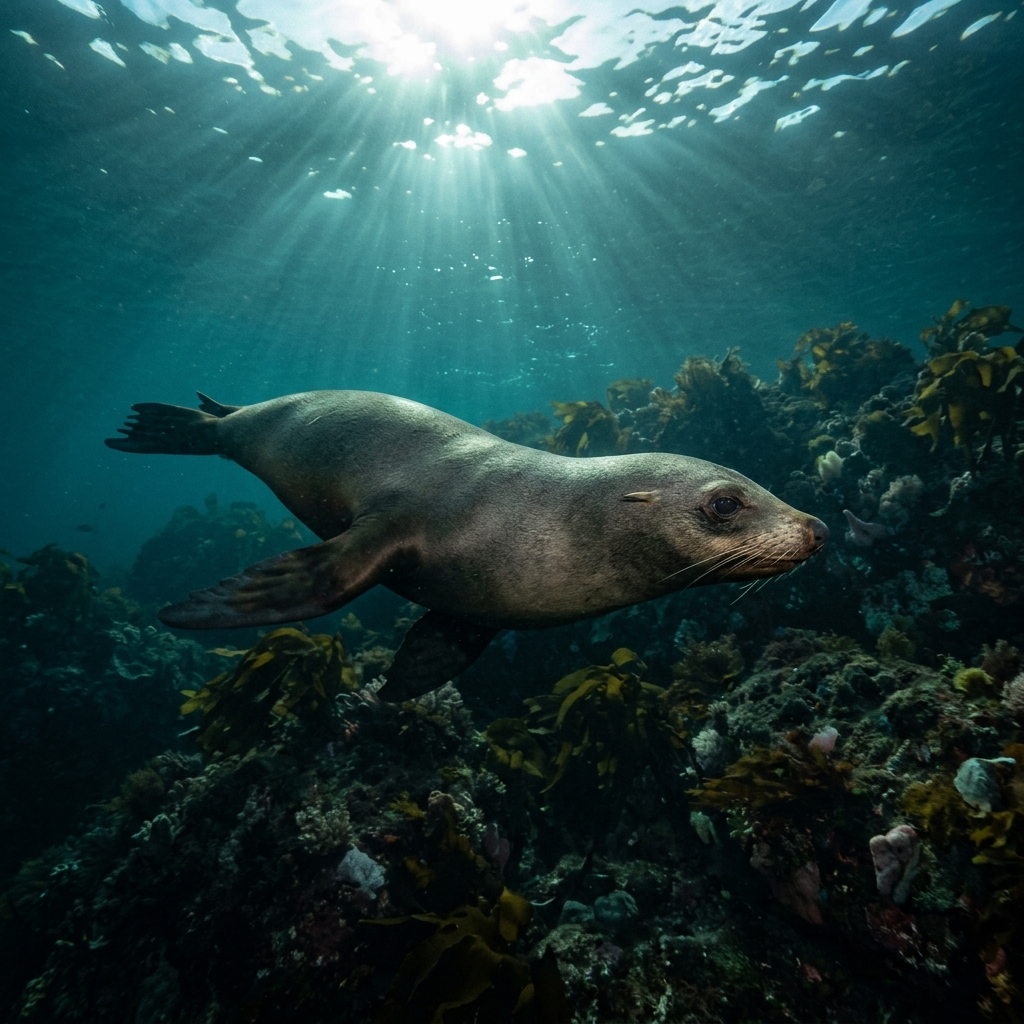
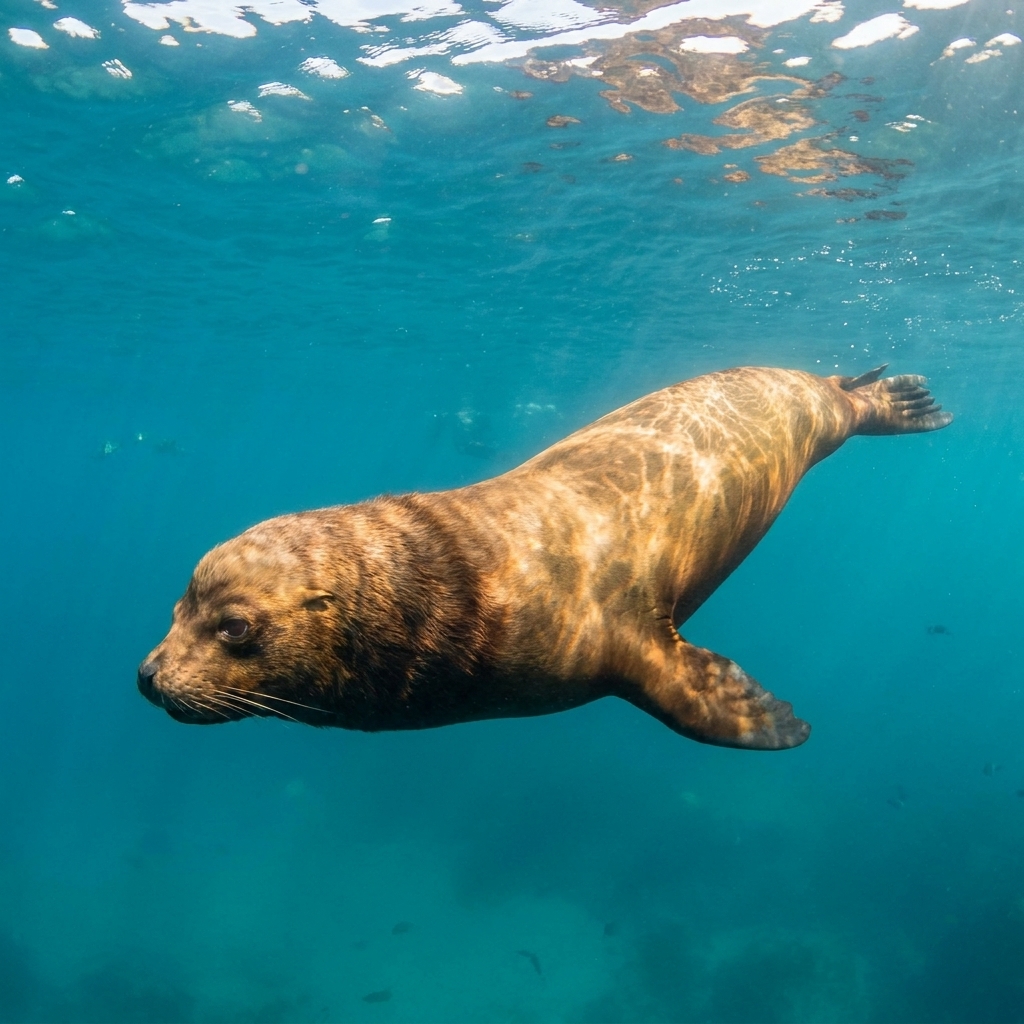
Compact, dark brown to grey body around 130 cm long with a distinctly pointed, narrow snout and small external ear flaps that separate it from true seals. Underwater it looks sleek and torpedo-shaped, often trailing bubbles as it rolls and twists near the bottom. Look for the long whiskers and the way the front flippers rotate forward, letting it prop itself upright on rocks.
Divers most often find these seals hauled out on rocky ledges or cruising just above the seabed, curious enough to circle in for a closer look before peeling away. They're agile and quick in the water, using tight barrel rolls and sudden bursts of speed that make them easy to lose if you try to chase. Most reports describe them as rare to uncommon at any given site, so a sighting tends to be a short, animated encounter rather than a long hangout.
Despite the name, this species ranges well beyond South America, with logged sightings stretching across southern Australia and New Zealand, making it one of the more widely distributed fur seals divers can encounter.
Sighting data doesn't show a strong seasonal pattern, so treat it as a year-round encounter. Its temperature range of 10 to 21C covers cool temperate water in every season, so timing your dive around local conditions matters more than chasing a particular month.
Reef neighbours a diver could mistake it for. Use the identification notes above to tell them apart.
Most reliably logged around North Island and South Island, New Zealand, and across Western Australia, South Australia and Tasmania in Australia. Also a steady presence at Chilean sites such as Antofagasta and Los Molles, and along the Argentine coast near Las Grutas.
Mapping where South American Fur Seal is logged…
Strongest logged presence is around North Island and South Island in New Zealand, plus Western Australia, South Australia and Tasmania. Chilean sites near Antofagasta and Los Molles, and Argentina's Las Grutas, also turn up sightings.
There's no clear seasonal peak in the data, so they're considered a year-round sighting. Water temperatures at the sites they're found range from about 10 to 21C across the seasons.
No, they aren't considered dangerous to divers. They're generally curious rather than aggressive, though like any wild animal they should be given space and never touched or fed.
Look for a dark brown, streamlined body around 130 cm long, a pointed snout, visible whiskers and small external ears. Underwater they move with quick rolls and bursts of speed rather than the slow glide of a true seal.
They typically reach around 133 cm in length, making them a mid-sized member of the fur seal family. Males tend to be noticeably larger and heavier-built than females.
Site and sighting data is aggregated from diver logs, iNaturalist and GBIF. For taxonomy and conservation status:
Long-nosed Fur Seal
347 sites