Mirounga angustirostris
Spot northern elephant seals along the US Pacific Coast and Patagonia. Sightings peak Aug, Nov in cool 10-18 °C waters. Here's where divers find them.
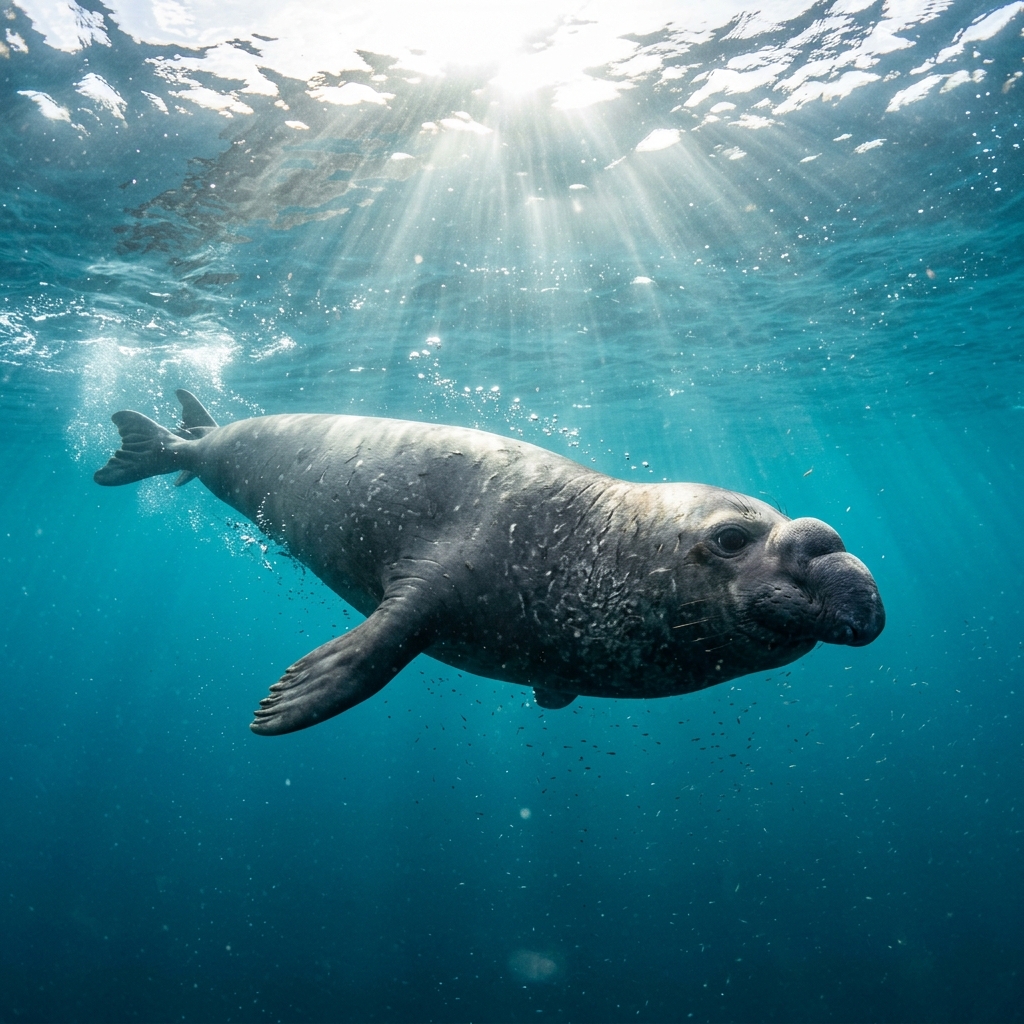
Sheer size is the first clue: bulls are enormous, barrel-chested animals with a long, inflatable proboscis (the fleshy, trunk-like nose) that hangs over the mouth, making them unmistakable among seals. Cows and juveniles lack the proboscis and are much smaller, but still noticeably bulkier and more torpedo-shaped than most other seals. Colouration ranges from silver-grey in younger animals to dark brown in adults. In the water they move with a fluid, rolling motion, often porpoising or simply drifting at the surface.
In the water, elephant seals tend to be curious rather than skittish, sometimes approaching divers slowly before losing interest and surfacing. They are most often seen near haul-out beaches, either resting just below the surface or making shallow passes before hauling out. Encounters are brief; these animals are built for deep oceanic dives and do not linger on shallow reefs.
Northern elephant seals are record-holding divers among mammals, routinely descending beyond 1,500 metres and holding their breath for up to two hours on foraging trips far offshore. What a diver sees near the coast is only a fraction of their daily life.
Northern Hemisphere sightings concentrate from August through November, when animals haul out and gather along the US Pacific Coast. No concentrated seasonal signal is available for Southern Hemisphere sites, so local conditions should guide trip planning there.
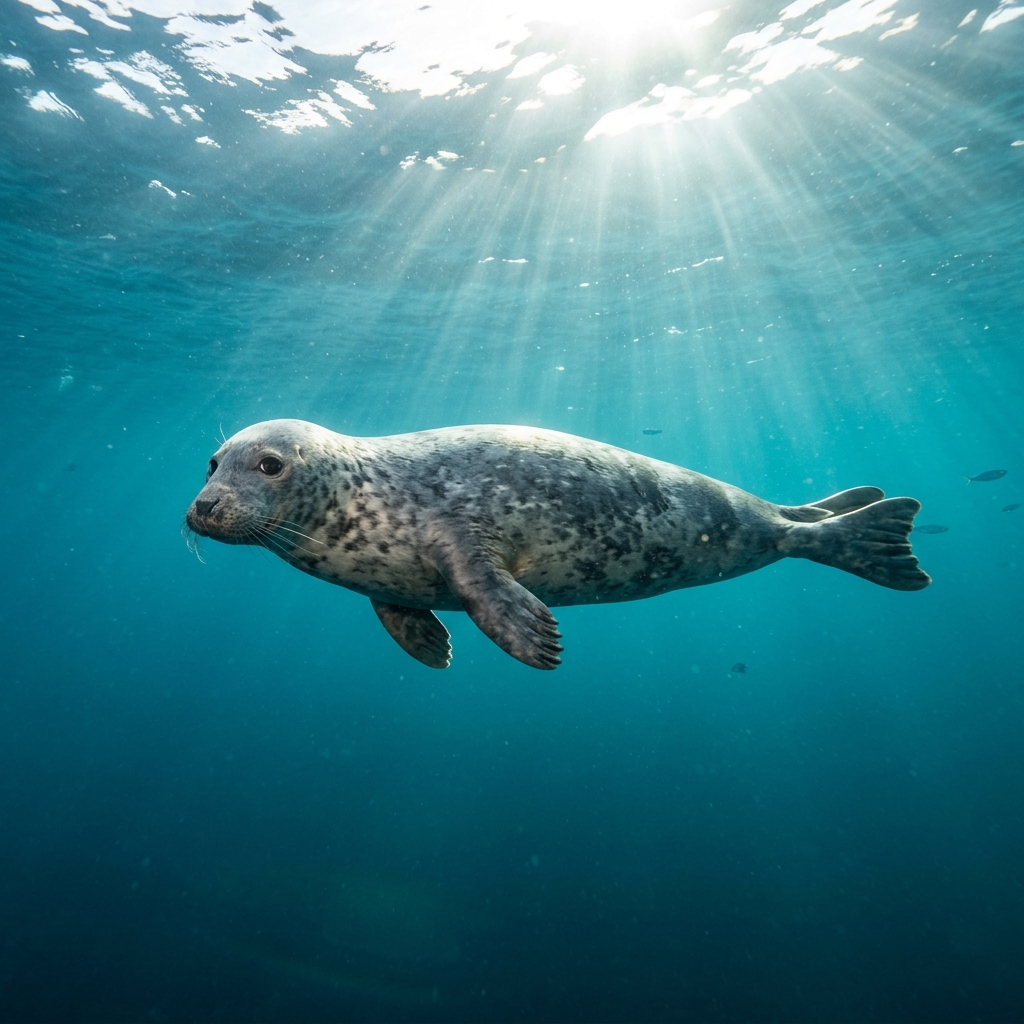
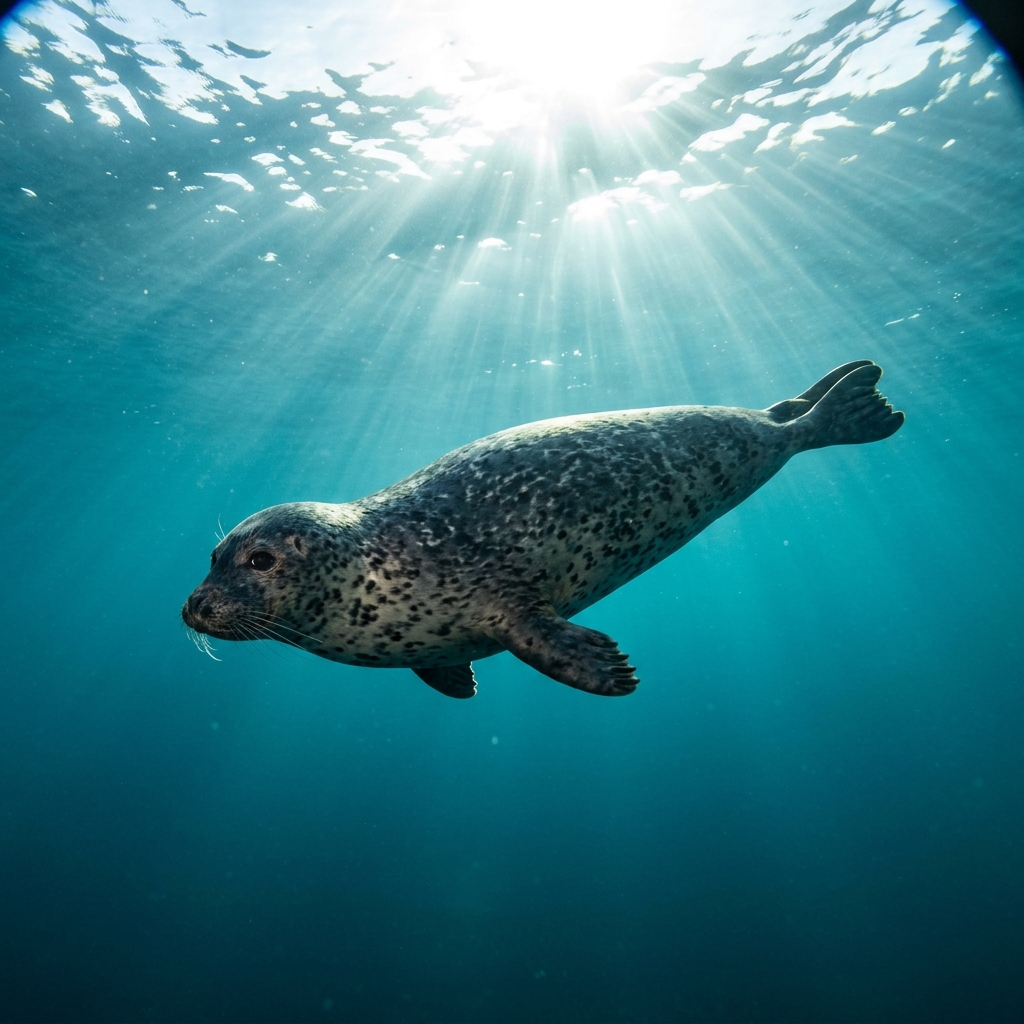
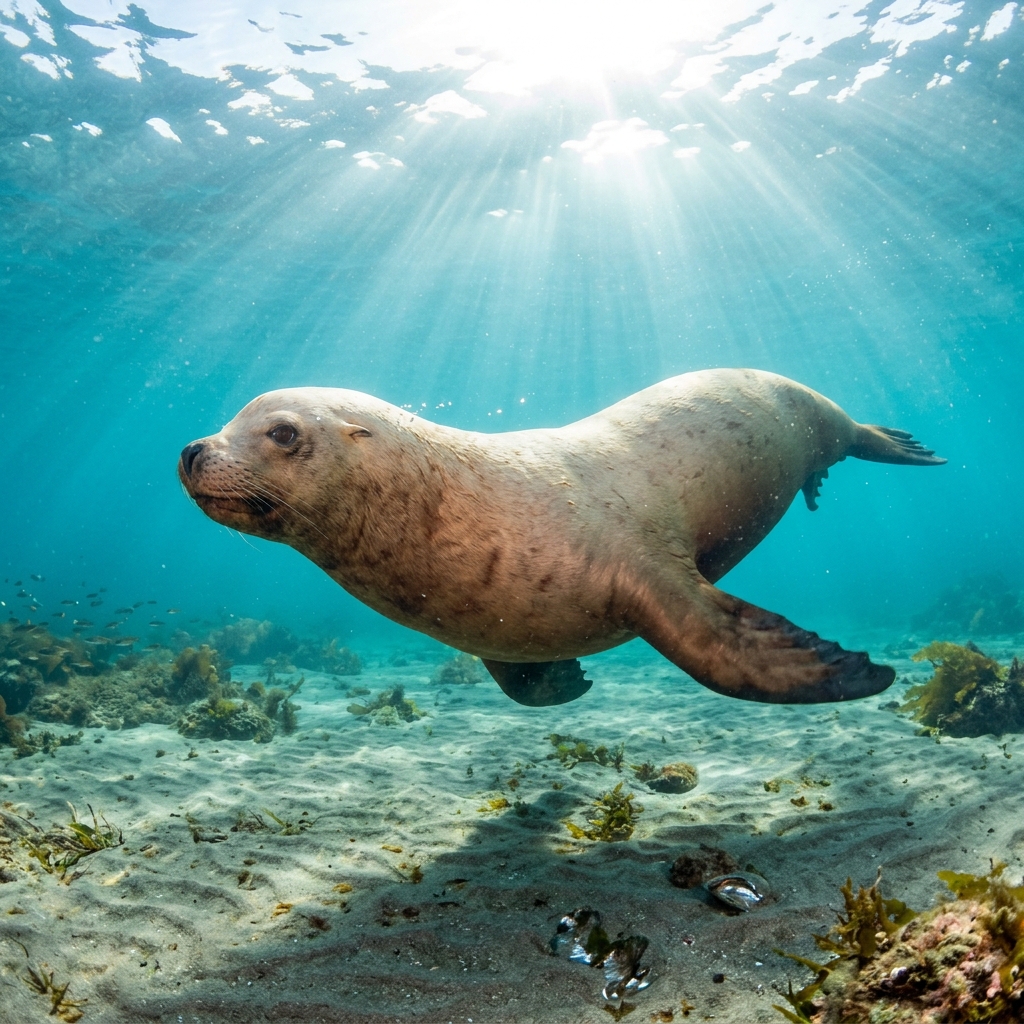
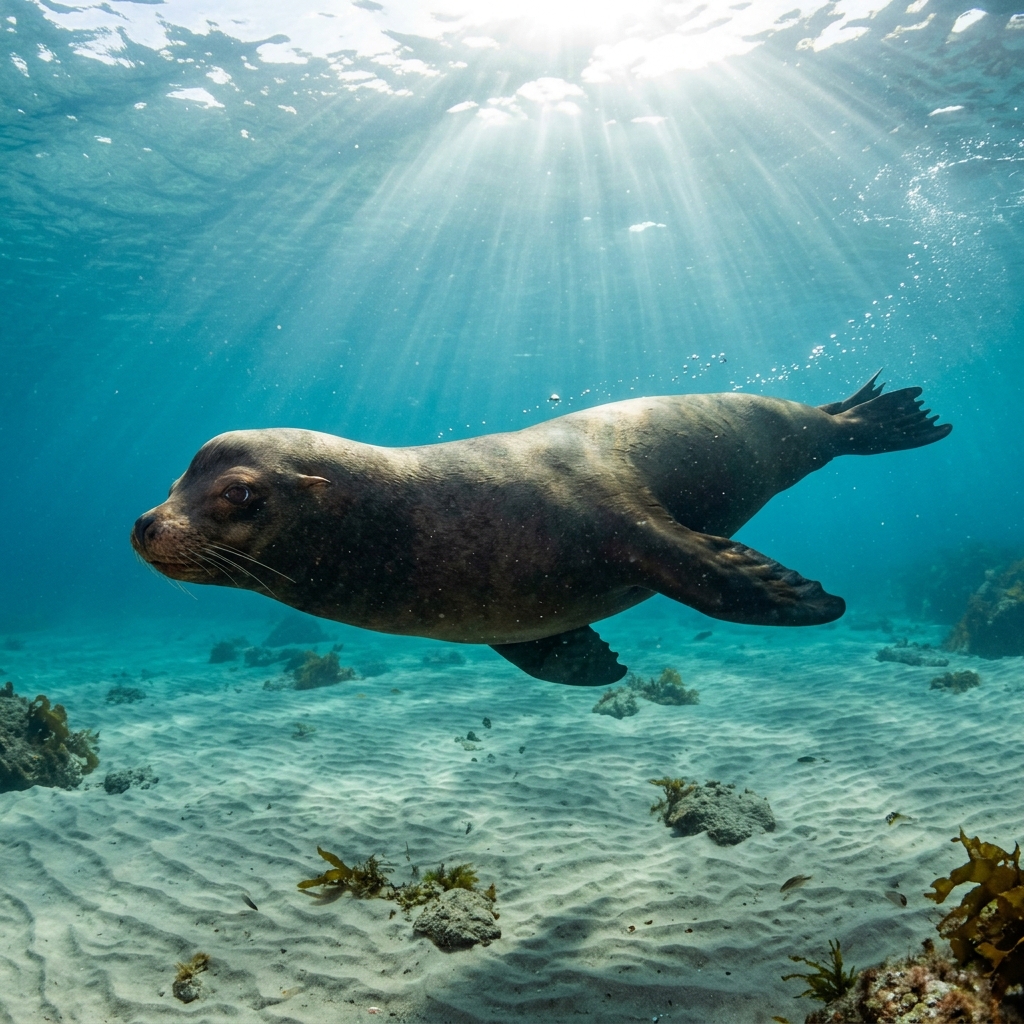
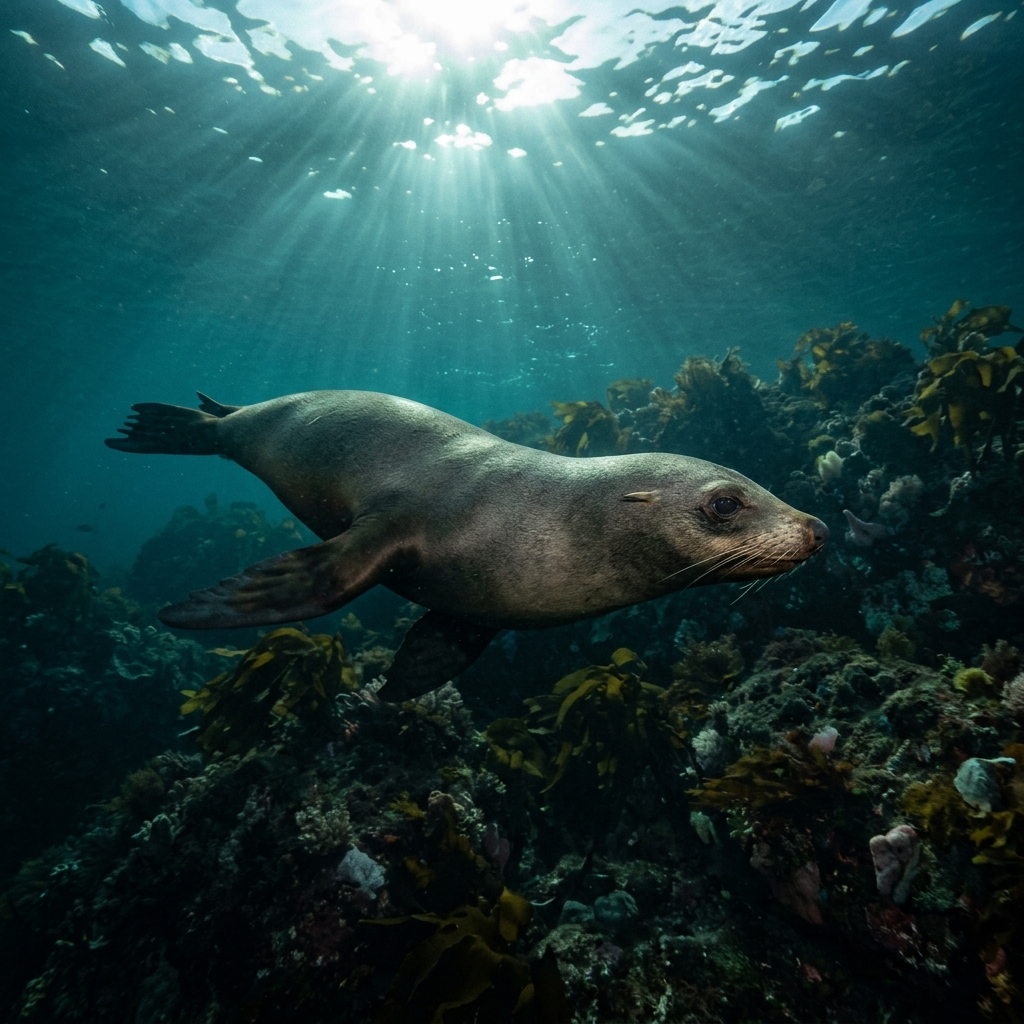
Reef neighbours a diver could mistake it for. Use the identification notes above to tell them apart.
Most sightings come from the US Pacific Coast, which leads all regions by a clear margin, followed by strong populations along the Patagonia Coast and the Buenos Aires and Atlantic shores of Argentina. South Africa's Western Cape and the Northern Pacific coast of Mexico also produce regular encounters, with additional records from Western Australia and British Columbia in Canada.
Mapping where Northern Elephant Seal is logged…
The US Pacific Coast is where divers log them most consistently. Argentina's Patagonia Coast and South Africa's Western Cape are also strong regions, with additional sightings recorded in Mexico, Western Australia, and British Columbia.
In the Northern Hemisphere, sightings cluster from August through November. Outside that window, encounters are possible but less predictable. For Southern Hemisphere destinations such as Patagonia, check local haul-out calendars as seasonality data there is less defined.
Bulls are among the largest seals on the planet, regularly exceeding 2,000 kg and stretching beyond four metres. Cows are dramatically smaller, typically around 600 kg and roughly 2.5 metres long. In the water, a large bull looks almost submarine-sized next to a diver.
A large bull is unmistakable: look for the long, drooping proboscis hanging over the mouth, a massive dark-brown body, and a rolling swim style. Cows and juveniles lack the nose, but their bulk and wide-set nostrils still separate them from similarly sized seals. Harbor seals and gray seals are much smaller and slimmer.
They regularly reach depths beyond 1,500 metres and can hold their breath for close to two hours, making them one of the deepest-diving mammals known. Divers almost never encounter them at depth; most interactions happen near the surface close to haul-out sites.
They are not considered dangerous to divers. In the water they are typically curious or indifferent. On land, large bulls can be aggressive during breeding season, so keep distance from haul-out beaches during that period.
Site and sighting data is aggregated from diver logs, iNaturalist and GBIF. For taxonomy and conservation status:
Long-nosed Fur Seal
347 sites