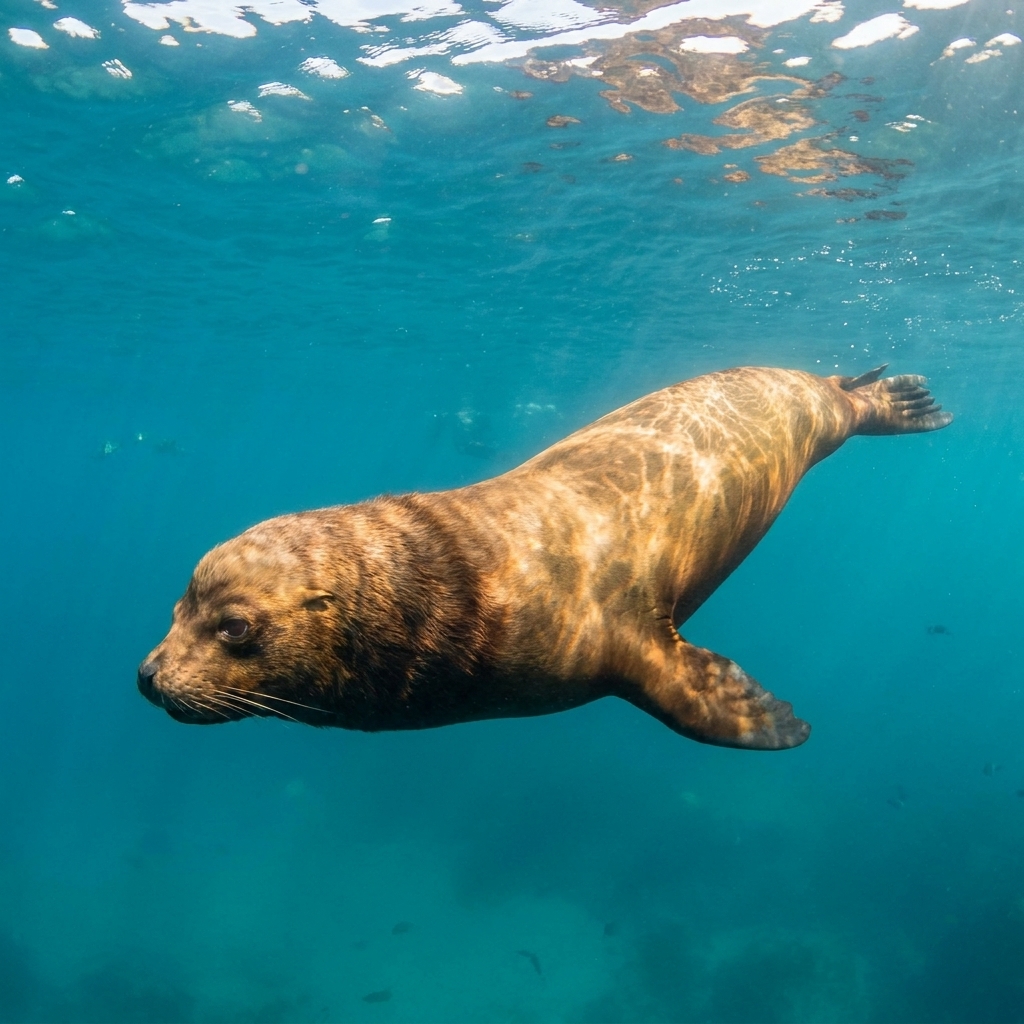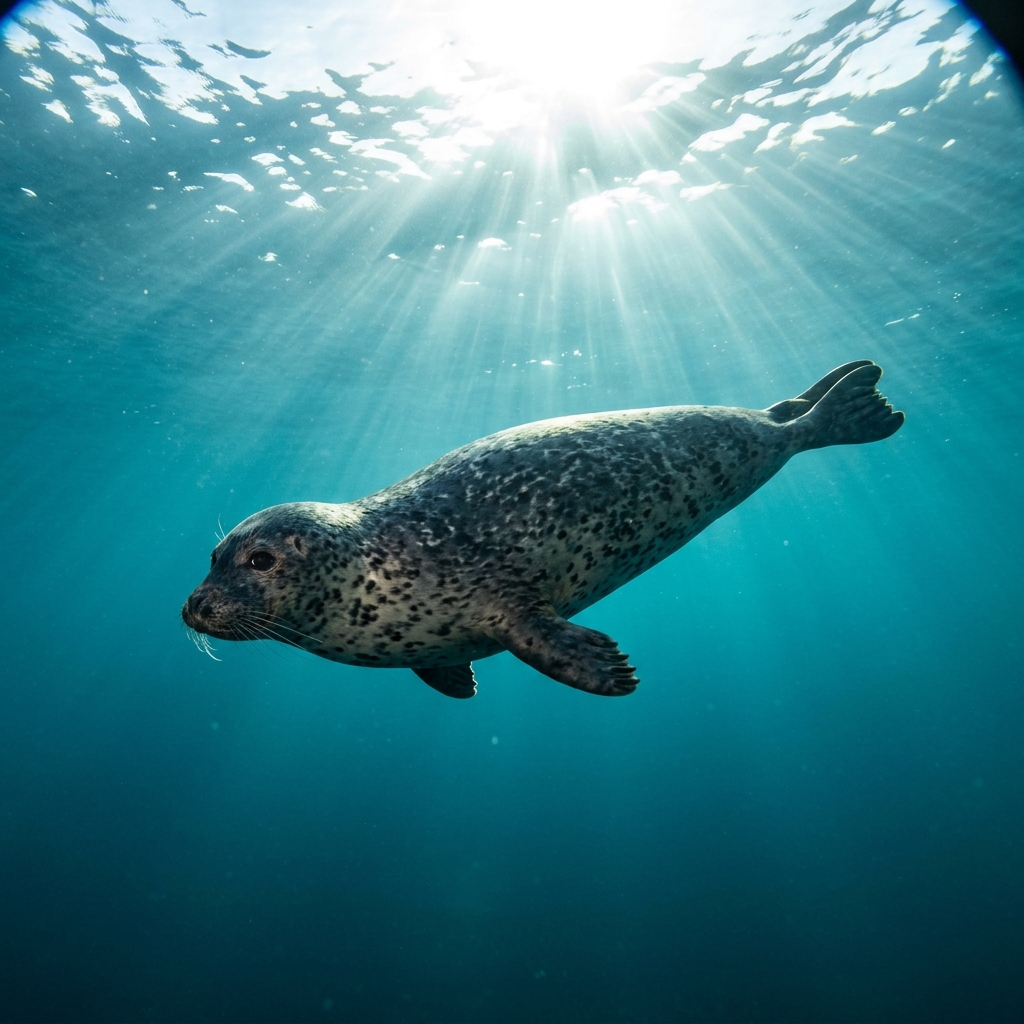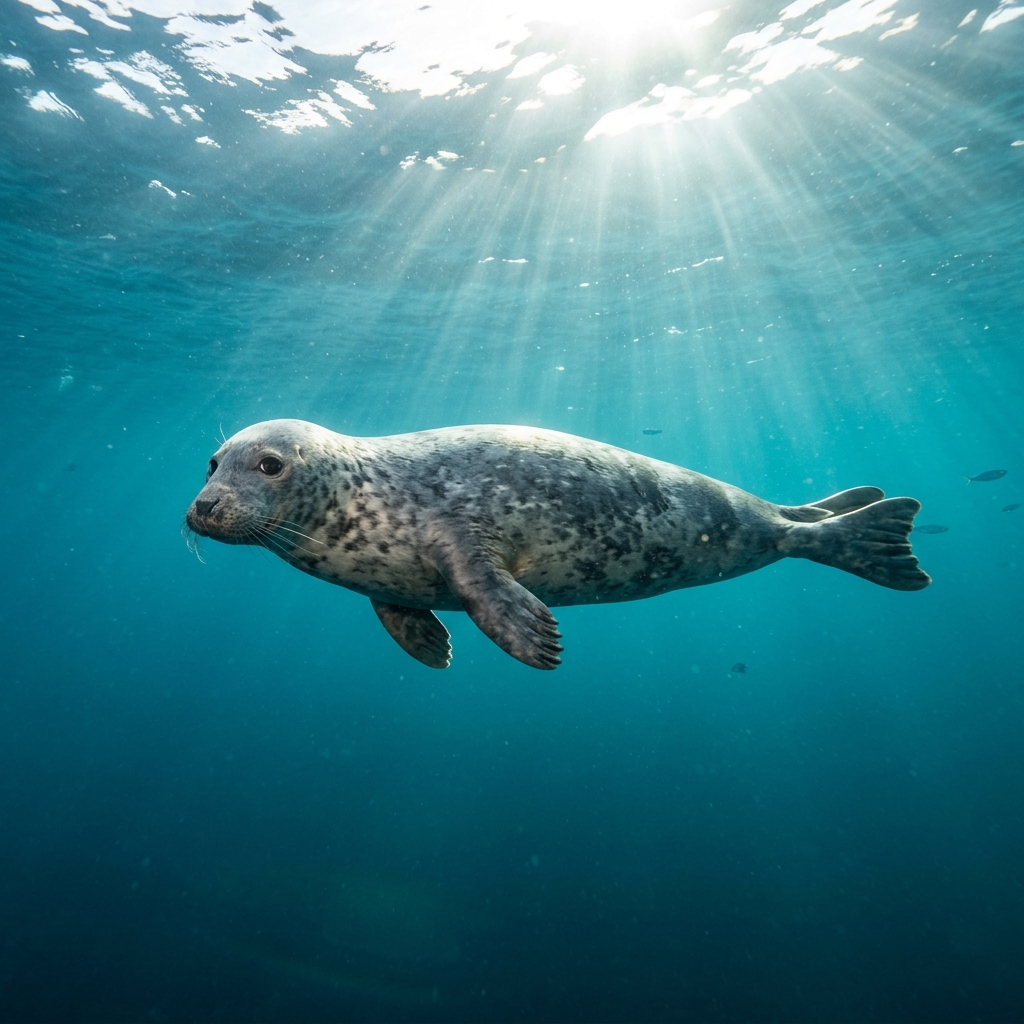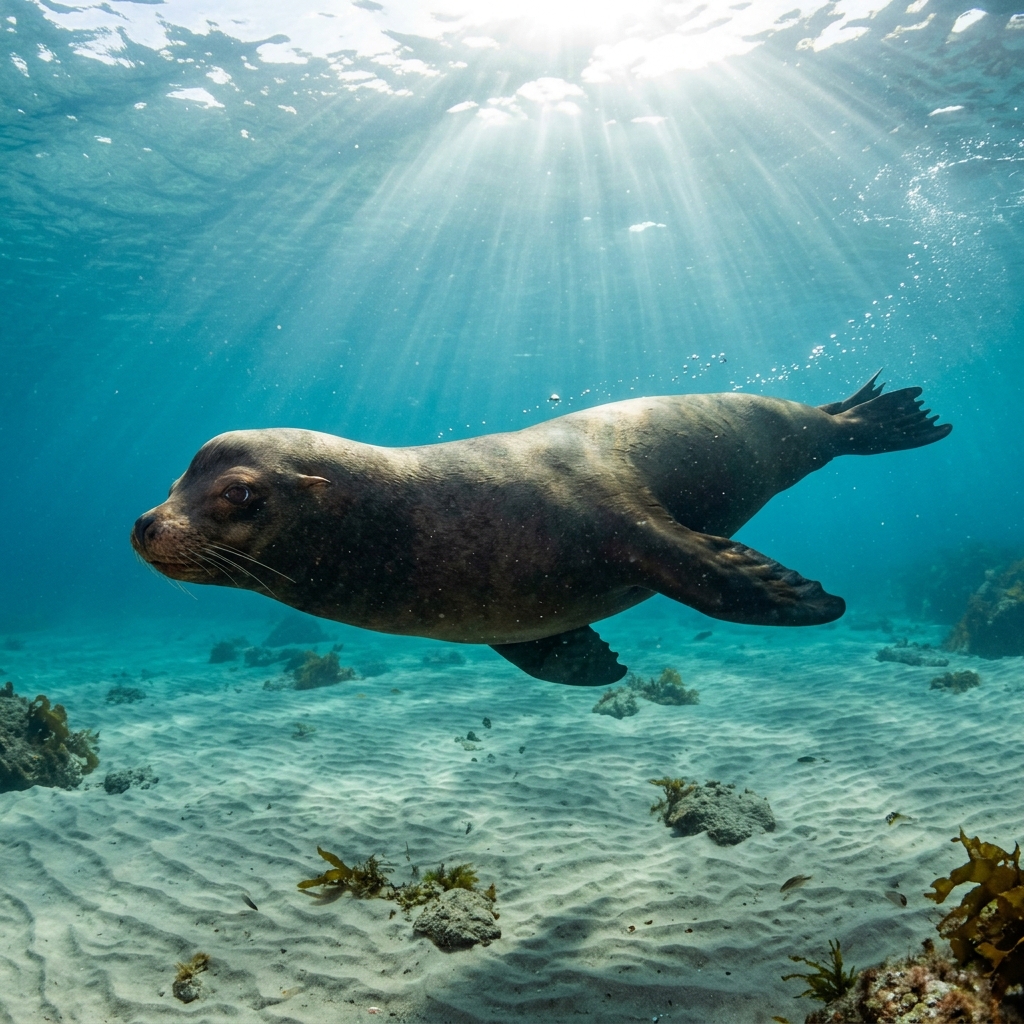
Hydrurga leptonyx
Rare but unforgettable: leopard seals turn up in Fiordland, Otago, and Argentina's Atlantic coast. Here's where divers log them and what to expect.
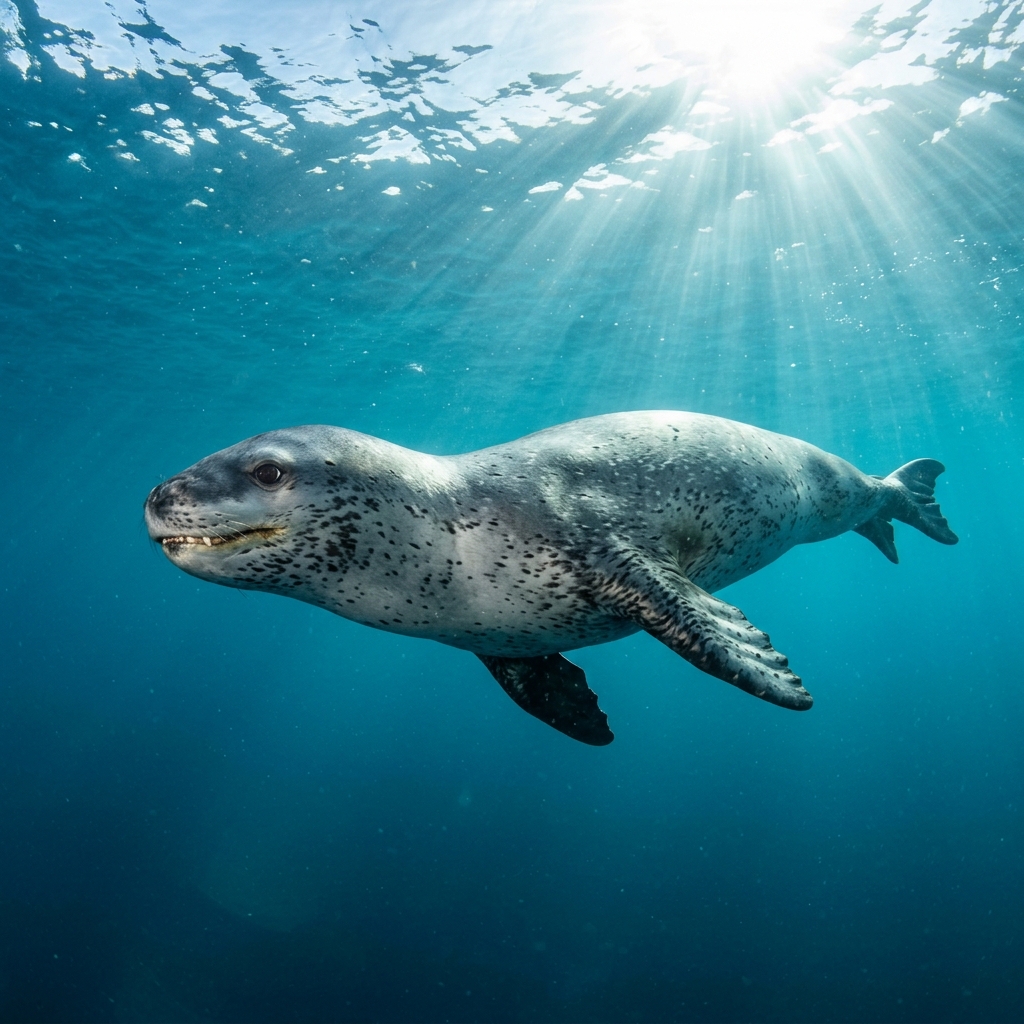
Even at distance, the oversized, almost reptilian head and wide jaws set this seal apart from any other pinniped you'll encounter in southern waters. The body is long and sinuous, silver-grey on the back fading to pale below, with dark irregular spots across the flanks and throat. Females tend to be noticeably larger than males, though size is hard to judge in the water without a reference point. The front flippers are proportionally large and paddle-like, giving the animal a powerful, almost effortless glide.
Leopard seals are typically encountered alone, moving through open water or resting on rocky ledges and kelp beds near the surface. They are acutely curious animals and will frequently approach divers to investigate at close range, often circling or making slow passes before losing interest. Most encounters are brief and non-aggressive, though their sheer size and directness can feel confronting.
Leopard seals are one of the few mammals that feed across nearly every trophic level in Antarctic and sub-Antarctic ecosystems, switching between krill, fish, squid, and other seals depending on opportunity. The individuals that wander as far north as New Zealand and Argentina are most often young or dispersing animals rather than the large adults that dominate Antarctic pack ice.
There is not enough logged monthly data to point to a particular season, so treat sightings as possible year-round. Water temperatures at recorded sites range from roughly 10 to 20 °C, consistent with the cold-to-cool temperate waters these seals favour.
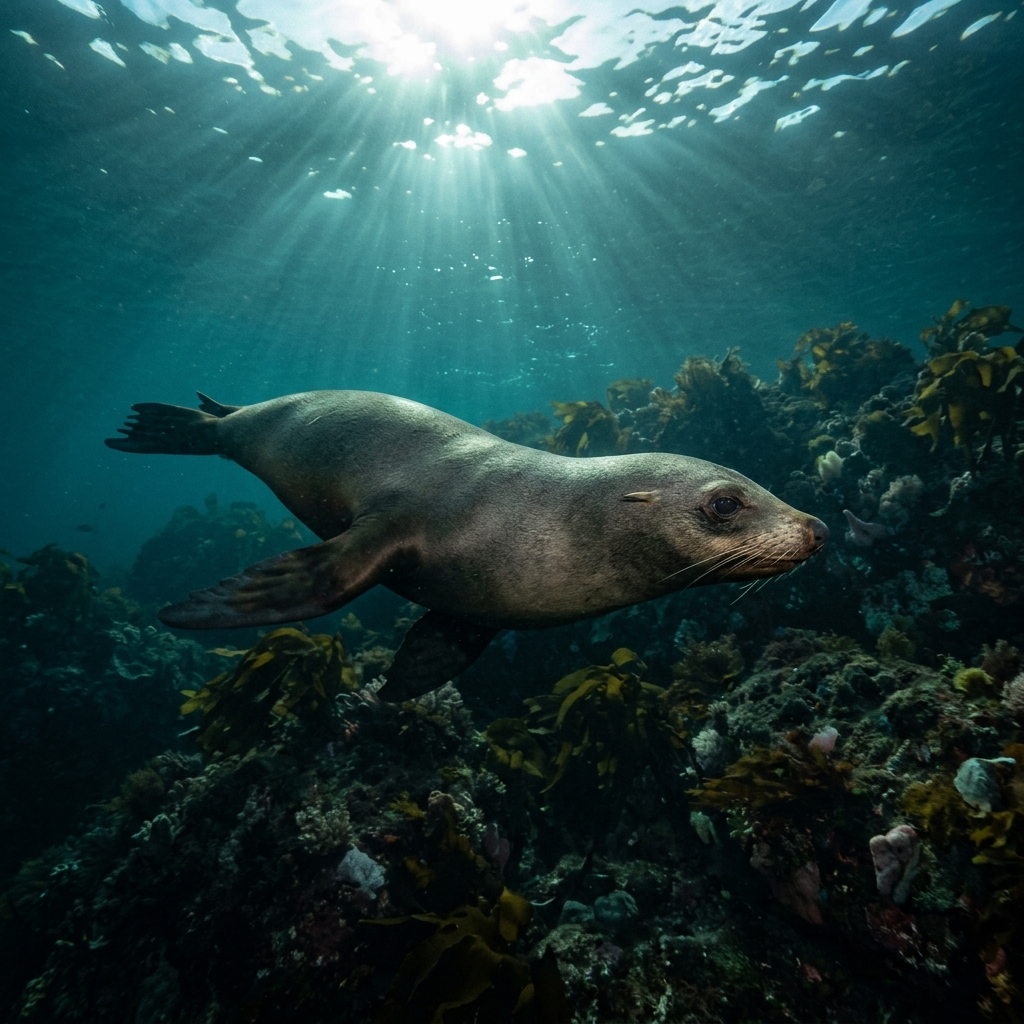
Reef neighbours a diver could mistake it for. Use the identification notes above to tell them apart.
Most diver sightings come from New Zealand, particularly around Fiordland and Stewart Island and the Otago region further north along the South Island coast. A smaller cluster of records sits along the Buenos Aires and Atlantic coast of Argentina, making Patagonian waters a secondary but real option for an encounter.
Mapping where Leopard Seal is logged…
The most consistent dive-logged sightings come from Fiordland and Stewart Island and the Otago coast in New Zealand's South Island. Smaller numbers of records exist along the Buenos Aires and Atlantic coast of Argentina. These are cold-water, temperate encounters rather than tropical ones.
Sighting data from New Zealand and Argentina doesn't show a clear seasonal peak, so encounters should be treated as possible at any time of year. Staying flexible and diving regularly in the key South Island regions gives you the best realistic chance.
Look for the disproportionately large, flat head and wide jaws, which give the animal a distinctly reptilian profile unlike any other seal in southern waters. The body is long and spotted along the flanks and throat, with oversized front flippers. No other seal in New Zealand or Argentinian waters shares that head shape.
Leopard seals are among the largest seals in the Southern Ocean. Females can exceed three metres in length and weigh over 500 kg; males are somewhat smaller. In the water they appear long and powerful, and their size is one of the first things divers notice.
Leopard seals are not classified as dangerous to divers, and most in-water encounters are curious rather than aggressive. However, they are large, fast, and powerful predators, and their close investigative passes can feel intense. Staying calm, avoiding erratic movements, and not cornering the animal are sound practices.
Leopard seals are wide-ranging and regularly haul out far north of the Antarctic pack ice, particularly younger or dispersing individuals. New Zealand's cold South Island coastline and Subantarctic islands sit within the outer edge of their natural range, making sightings in places like Fiordland and Otago a recognised, if uncommon, occurrence.
Site and sighting data is aggregated from diver logs, iNaturalist and GBIF. For taxonomy and conservation status:
Long-nosed Fur Seal
347 sites