Zalophus californianus
Playful and curious, California sea lions are most reliably seen along the Pacific Coast US, Baja California, and the Galápagos. Here's where and when to find them.
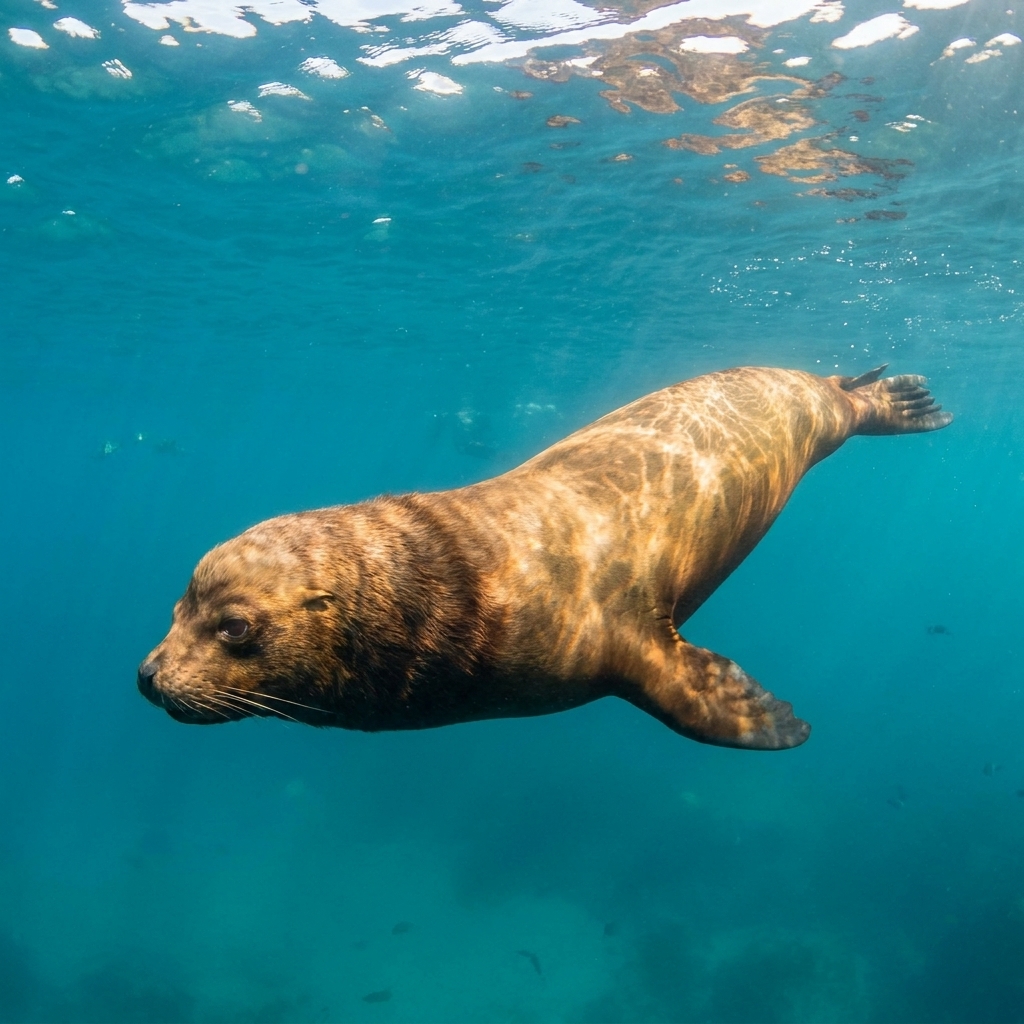
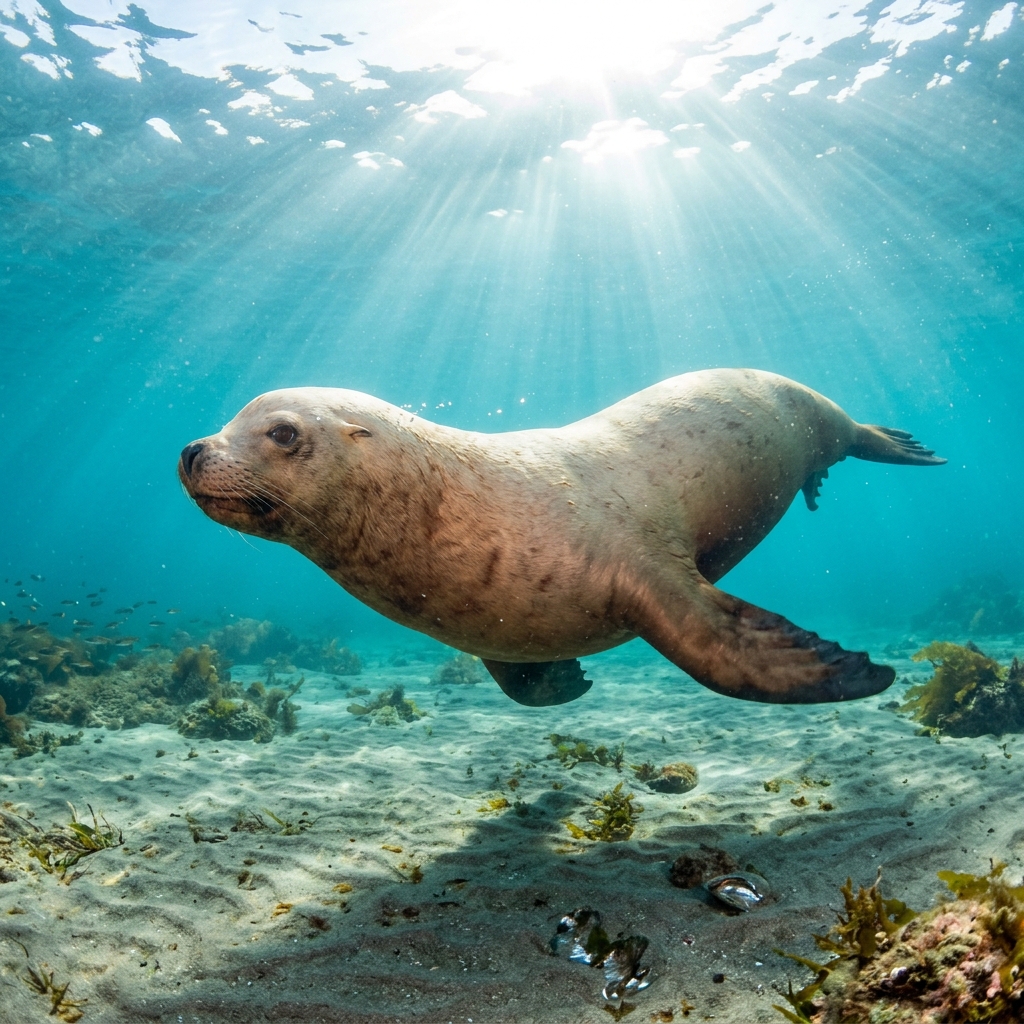
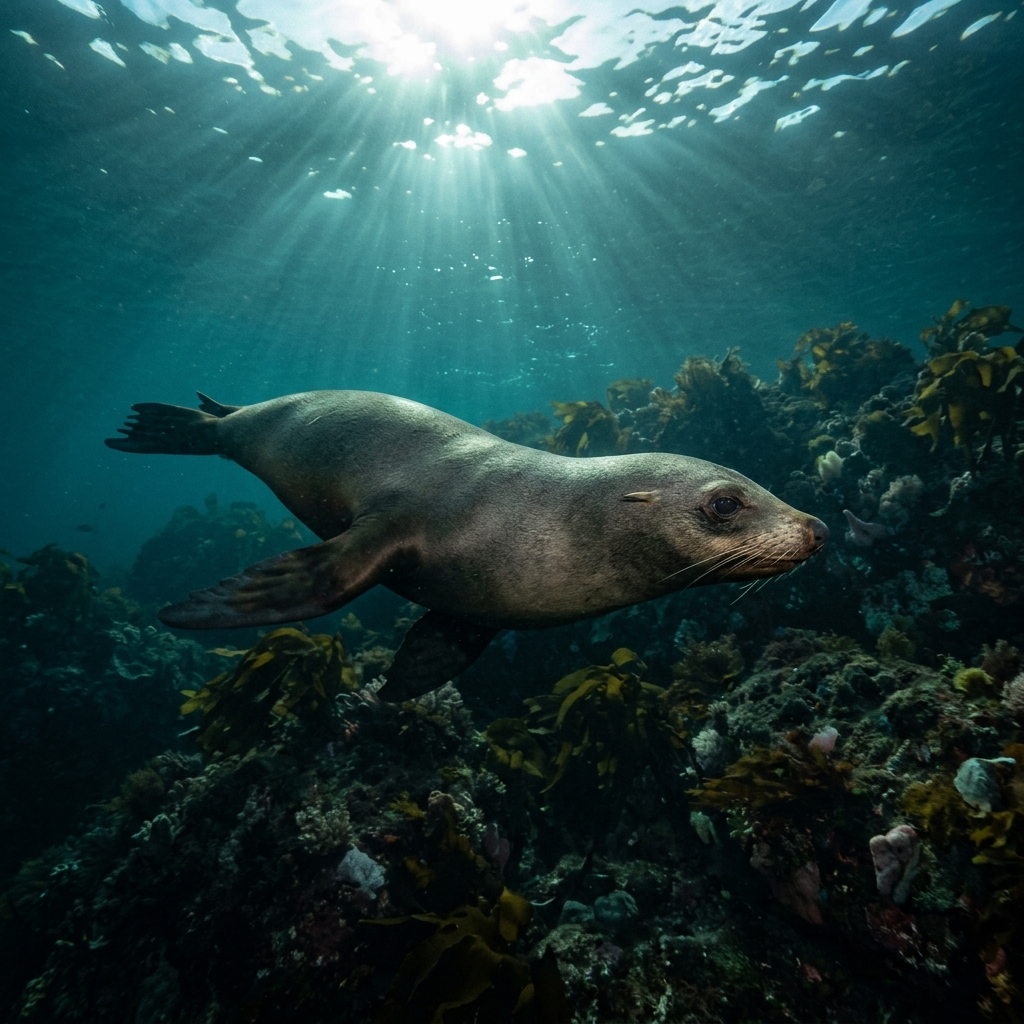
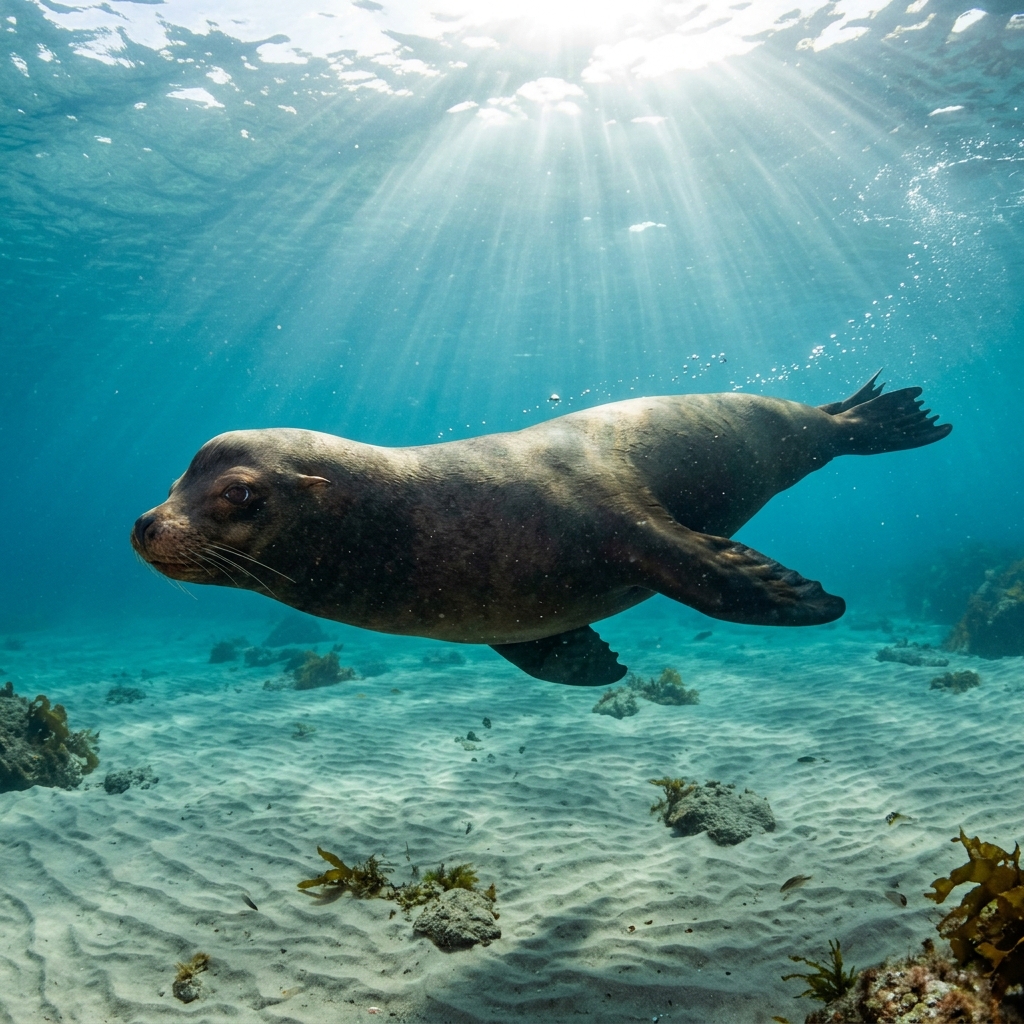
Sleek, torpedo-shaped and chocolate to tawny brown, these are fast, agile swimmers that look nothing like a fish underwater but move like one. Adults reach around 168 cm, though males are noticeably bulkier and carry a distinctive raised bony crest (sagittal crest) on the forehead that gives the head a blocky, almost squared-off profile. Females and juveniles have a smooth, rounded head and a slender neck, making them look considerably smaller and less imposing. All have large, dark eyes and long front flippers they use to "fly" through the water column.
Expect curiosity rather than caution: sea lions regularly approach divers to investigate, circling close, blowing bubbles, and occasionally mimicking your movements in what feels very much like play. They are most active during daytime dives, and you may catch them hunting fish in short, explosive bursts or resting on the bottom between bouts of activity. During breeding season, large males can be territorial and are best given extra space.
Males develop that prominent forehead crest at sexual maturity, and it keeps growing throughout their lives, making age and dominance visible at a glance underwater.
In the Northern Hemisphere, sightings are concentrated from December through September, covering most of the year with a quieter period around October and November. Southern Hemisphere records from the Galápagos cluster in March through September and again in December.
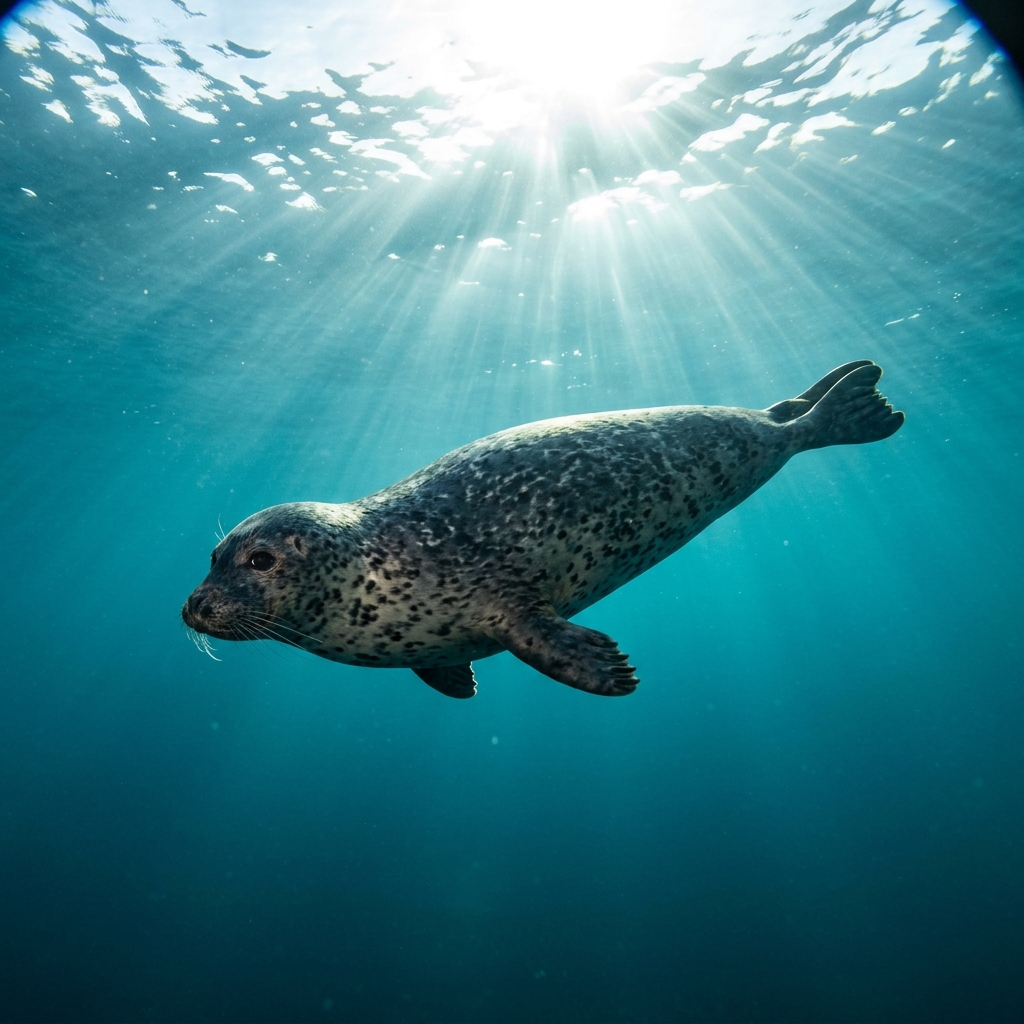
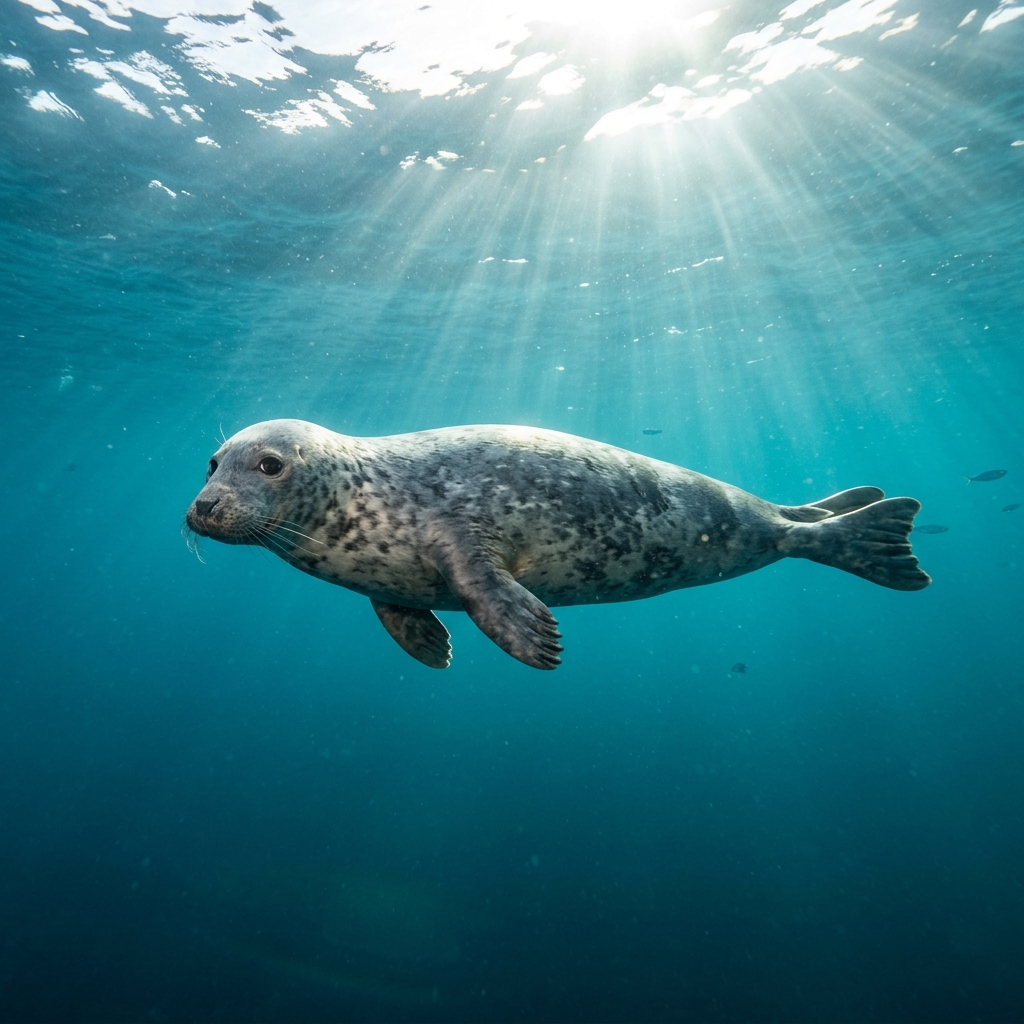
Reef neighbours a diver could mistake it for. Use the identification notes above to tell them apart.
The vast majority of logged sightings come from the Pacific Coast of the United States and Baja California, Mexico, where rocky offshore islands and kelp forest reefs hold resident populations year-round. The Galápagos Islands are another strong location, with sightings spread across many sites in the archipelago. Smaller but consistent records exist along the British Columbia coast in Canada.
Mapping where California Sea Lion is logged…
The most reliable spots are along the Pacific Coast of the United States, particularly around the Channel Islands and Monterey, and throughout Baja California in Mexico. The Galápagos Islands in Ecuador are also a strong bet, with sea lions present across many dive sites in the archipelago. Canada's British Columbia coast rounds out the main range.
In the US and Mexico, sightings are logged across most of the year with the strongest concentration from December through September. In the Galápagos, they appear most frequently from March through September and again in December. Water temperatures in their range typically sit between about 13 and 19 °C.
Look for a sleek, fast-moving brown pinniped flying through the water on large front flippers. Males have a distinctively blocky head with a raised forehead crest; females and juveniles have a smooth, rounded head. The large dark eyes and whiskered muzzle are visible even at a distance.
Females and juveniles are slender and typically around 168 cm, but adult males are considerably larger and heavier, with thick necks and broad chests that make them look almost like a different animal when you encounter both in the water.
They are not considered dangerous. Most interactions involve curiosity and playfulness rather than aggression. The one exception worth noting is during breeding season, when territorial males may be assertive; giving them space is common sense. As wild animals, they should never be touched or fed.
Site and sighting data is aggregated from diver logs, iNaturalist and GBIF. For taxonomy and conservation status:
South American Fur Seal
305 sites