Phocarctos hookeri
Curious, fast-moving sea lions logged at 17 South Island dive sites, water 8-14C, sightings common year-round.
Safety warning
Bites do happen, usually triggered by divers cornering an animal, getting between it and open water, or being too persistent with a camera. Give space, avoid chasing or blocking its exit route, and let it initiate any close approach.
If you're bitten
BiteGeneral first-aid guidance, not a substitute for professional medical care. In an emergency, call your local emergency number.
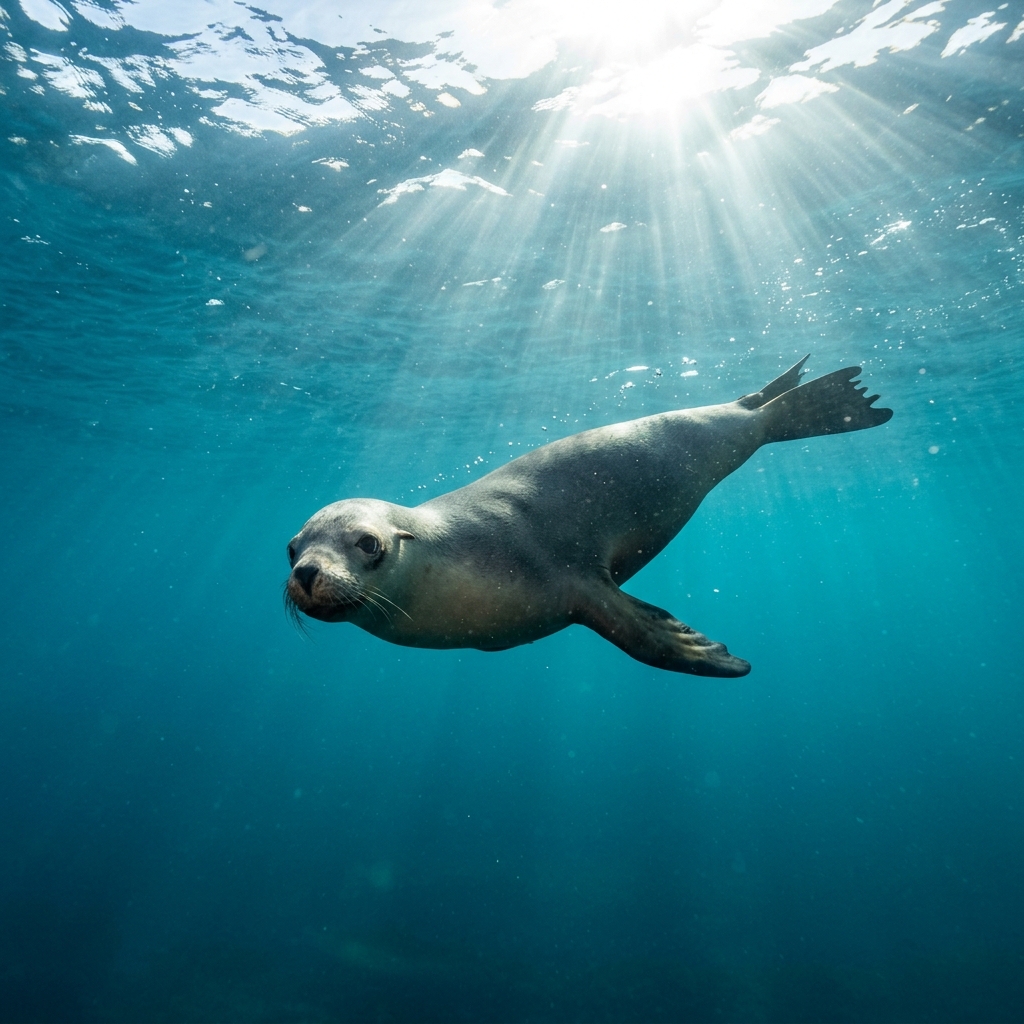
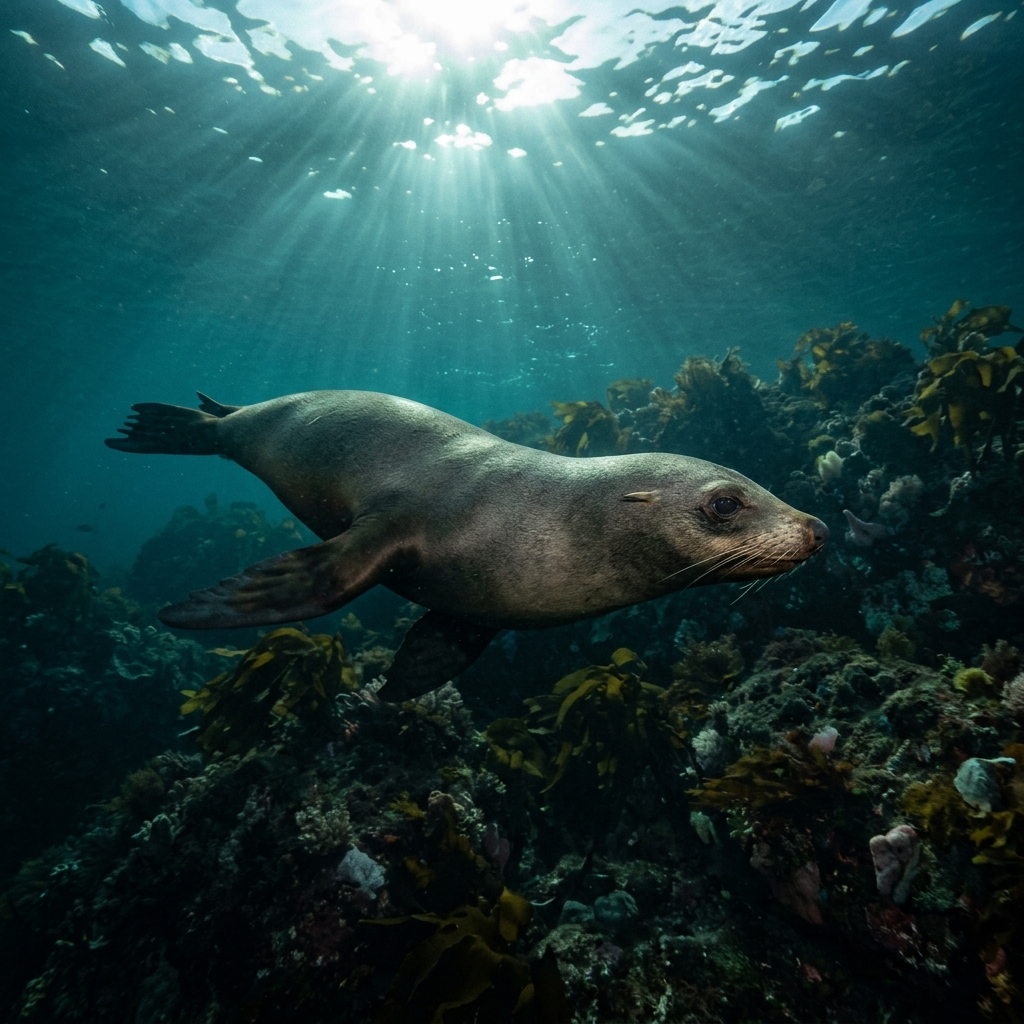
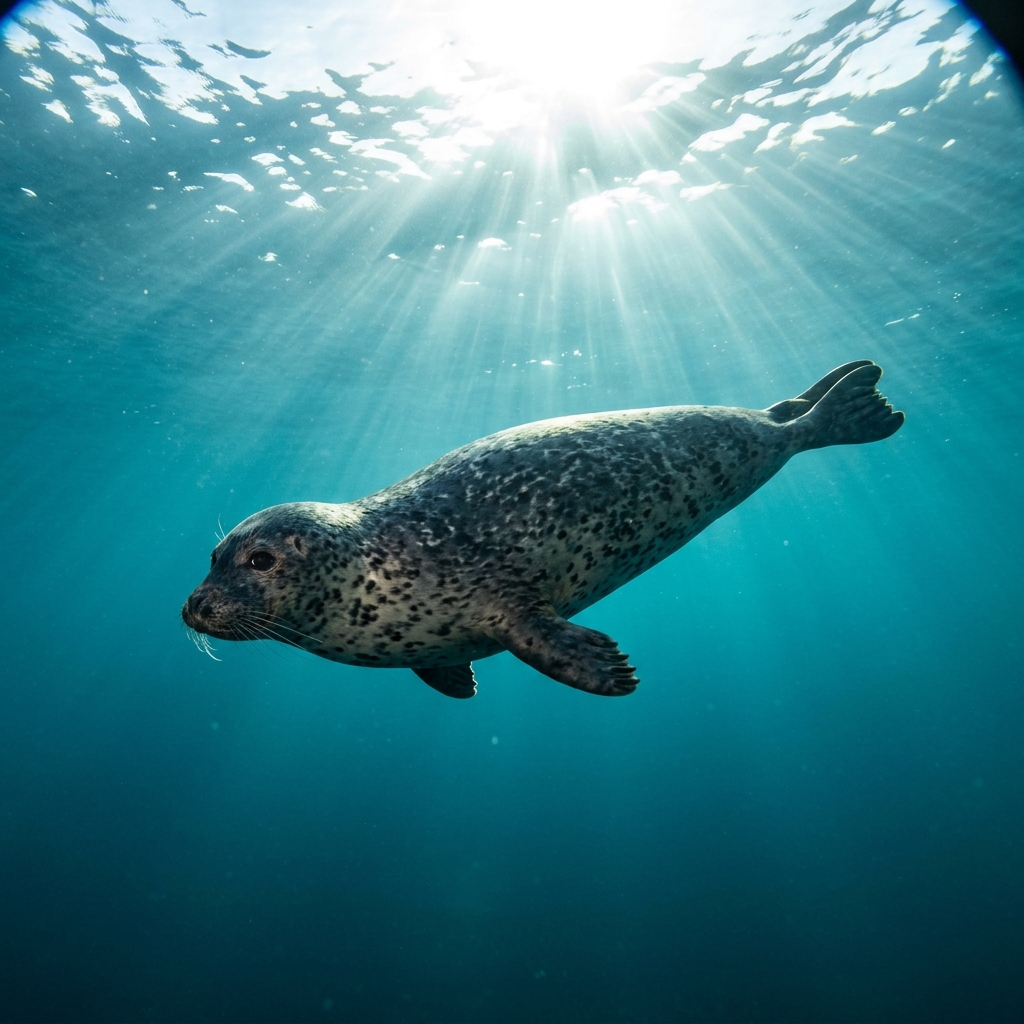
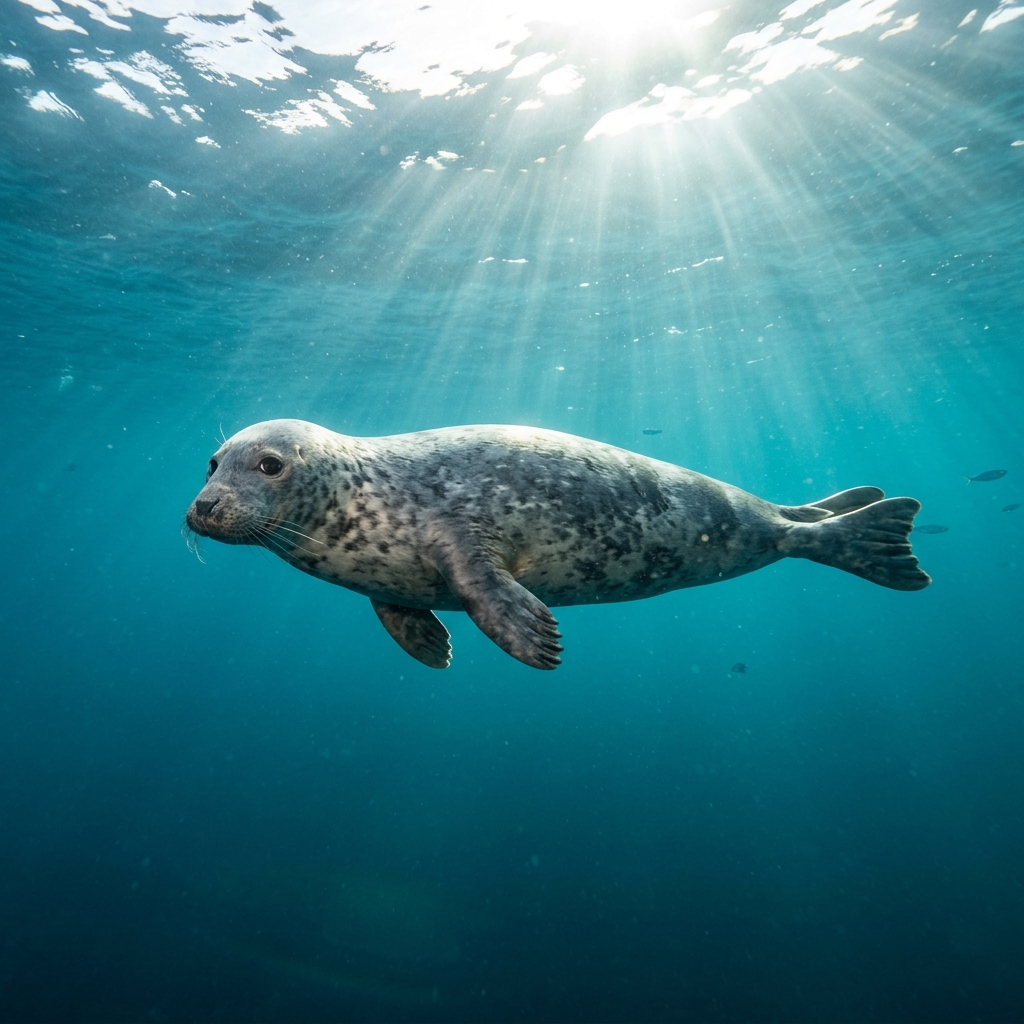
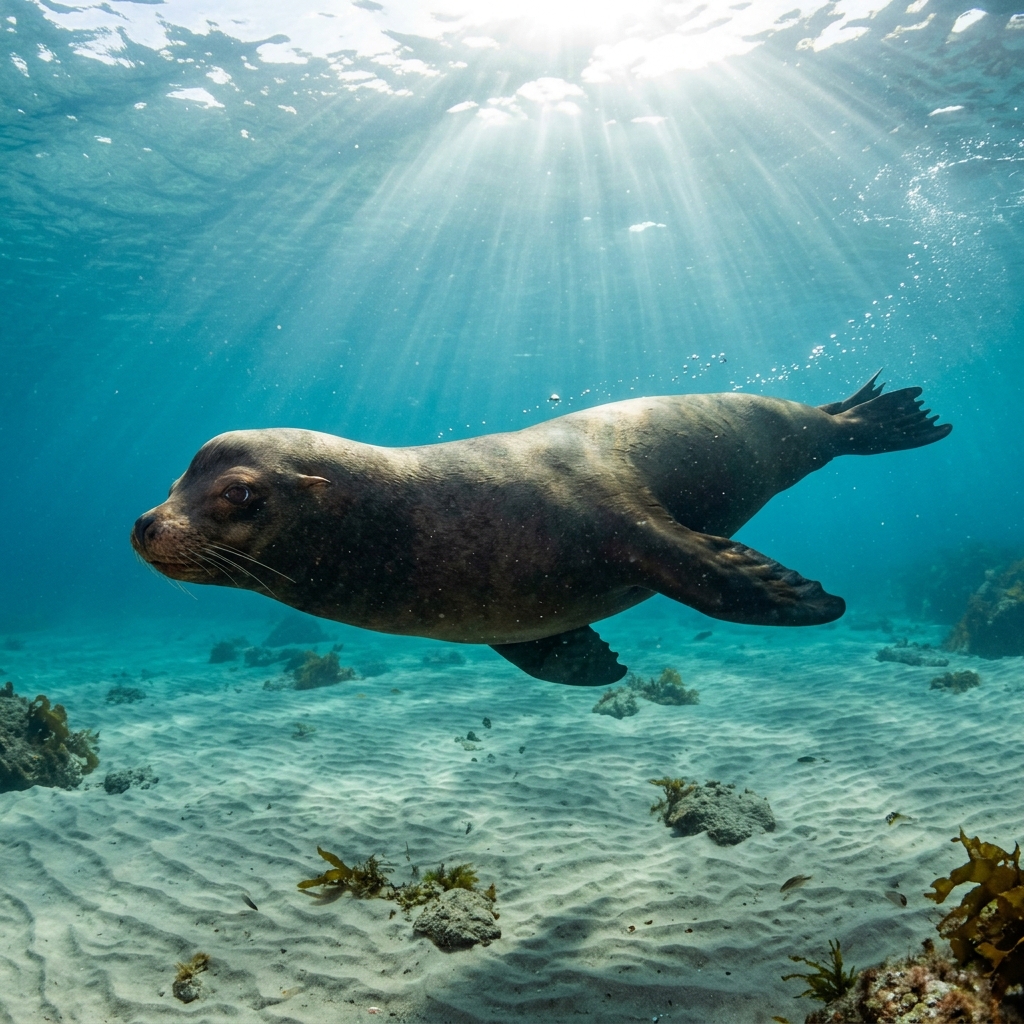
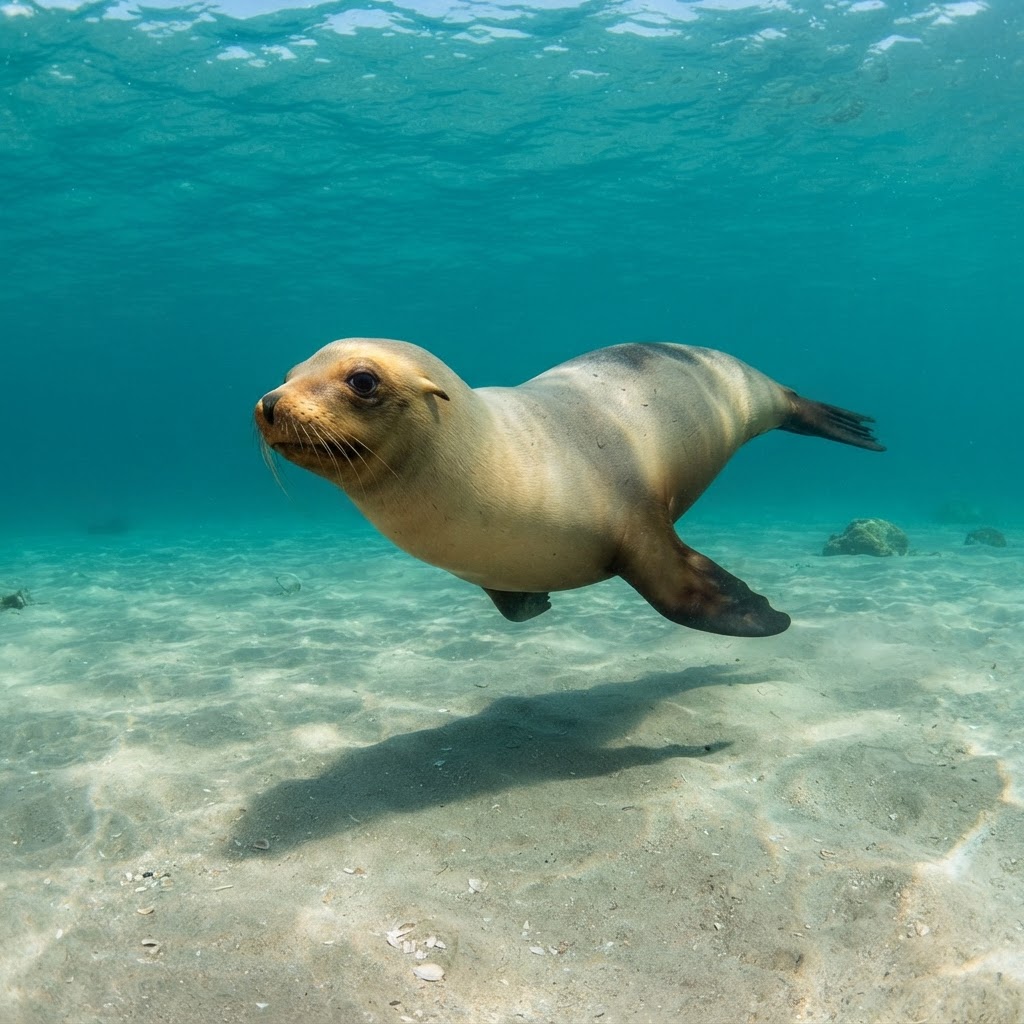
A thickset body up to 230cm long with a blunt, broad muzzle that sets it apart from slimmer fur seals. Males run darker, almost black-brown with a noticeably thicker neck and mane-like fur, while females and juveniles are a lighter grey-buff colour. Watch for the fast, curious approach and sudden barrel-rolls near divers, a giveaway compared to the more cautious fur seals sharing the same coastline.
Divers most often meet them mid-water or cruising just off the seabed, where they investigate bubbles and gear with tight, fast passes before peeling away. They can be bold and playful, sometimes mock-charging or nipping at fins, which is normal curiosity rather than aggression but should be treated with respect. Look for them around kelp-fringed rock and reef areas rather than open sand.
Females give birth on land and then commute long distances offshore to forage, making the sea lions divers meet underwater often working individuals rather than animals lingering near a colony.
Sightings show no detected seasonal pattern, so treat this as a year-round encounter. The cool water niche of roughly 8 to 14C matches the South Island's temperate diving conditions across most of the year.
Reef neighbours a diver could mistake it for. Use the identification notes above to tell them apart.
This is a South Island, New Zealand speciality, with sightings logged at sites right along that coast and nowhere else in the data. Several of those South Island sites report it as a very common or common encounter, so it is one of the more reliable large-animal sightings in the region rather than a lucky find.
Mapping where New Zealand Sea Lion is logged…
The South Island of New Zealand is the stronghold, with multiple dive sites there reporting common to very common sightings. It is not something reliably found outside New Zealand waters.
Sightings are logged year-round with no strong seasonal pattern detected, so there is no need to time a trip around a particular month. Water temperature stays in a cool 8 to 14C range for most of the diving season.
They can be, mainly through bold, fast approaches and occasional nipping if a diver corners them or blocks their path. Staying relaxed, not chasing them, and giving a clear exit route keeps encounters safe.
Look for a stocky body up to about 230cm, a broad blunt muzzle, and a dark brown coat on males versus lighter grey-buff on females. Their fast, curious circling around divers is as much a clue as their shape.
They reach around 230cm in length, with males noticeably bulkier and darker than females. That makes them one of the larger marine mammals divers will meet on New Zealand's South Island reefs.
Site and sighting data is aggregated from diver logs, iNaturalist and GBIF. For taxonomy and conservation status:
Long-nosed Fur Seal
347 sites