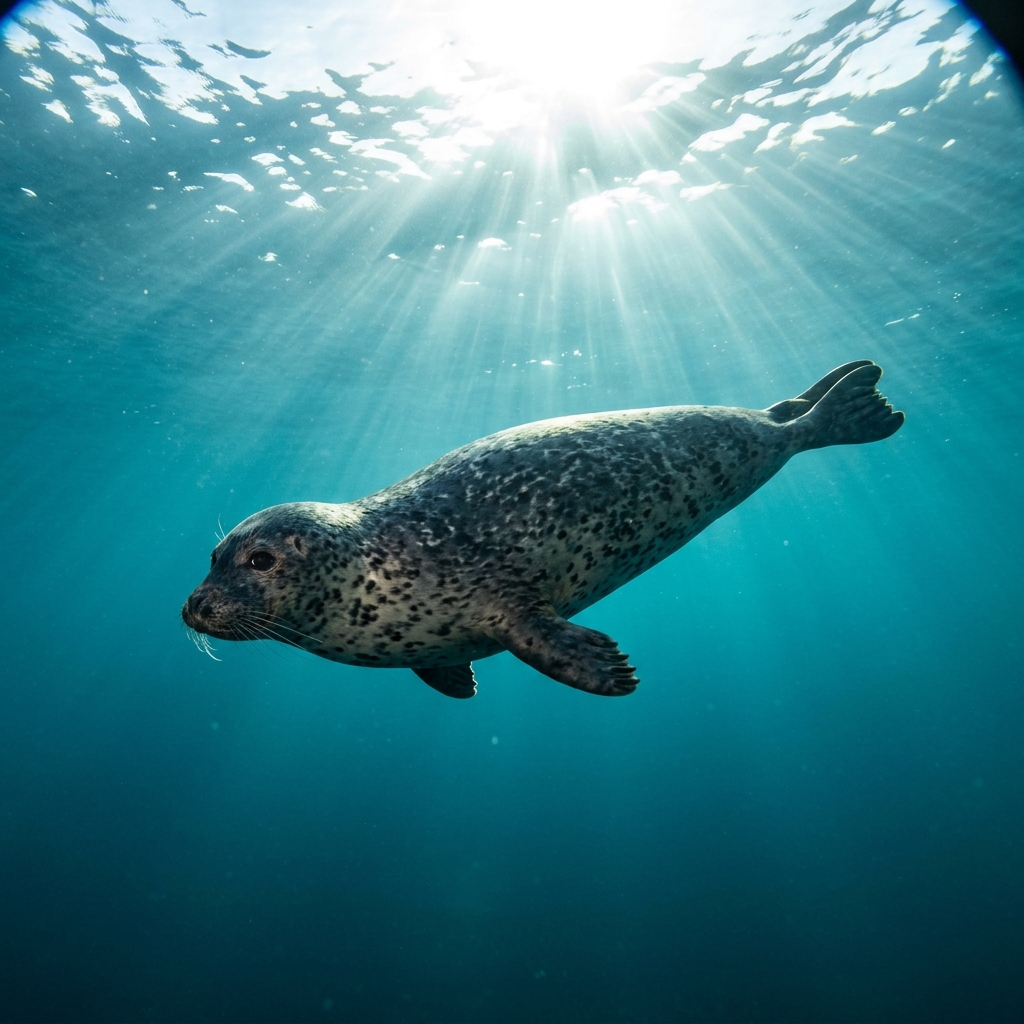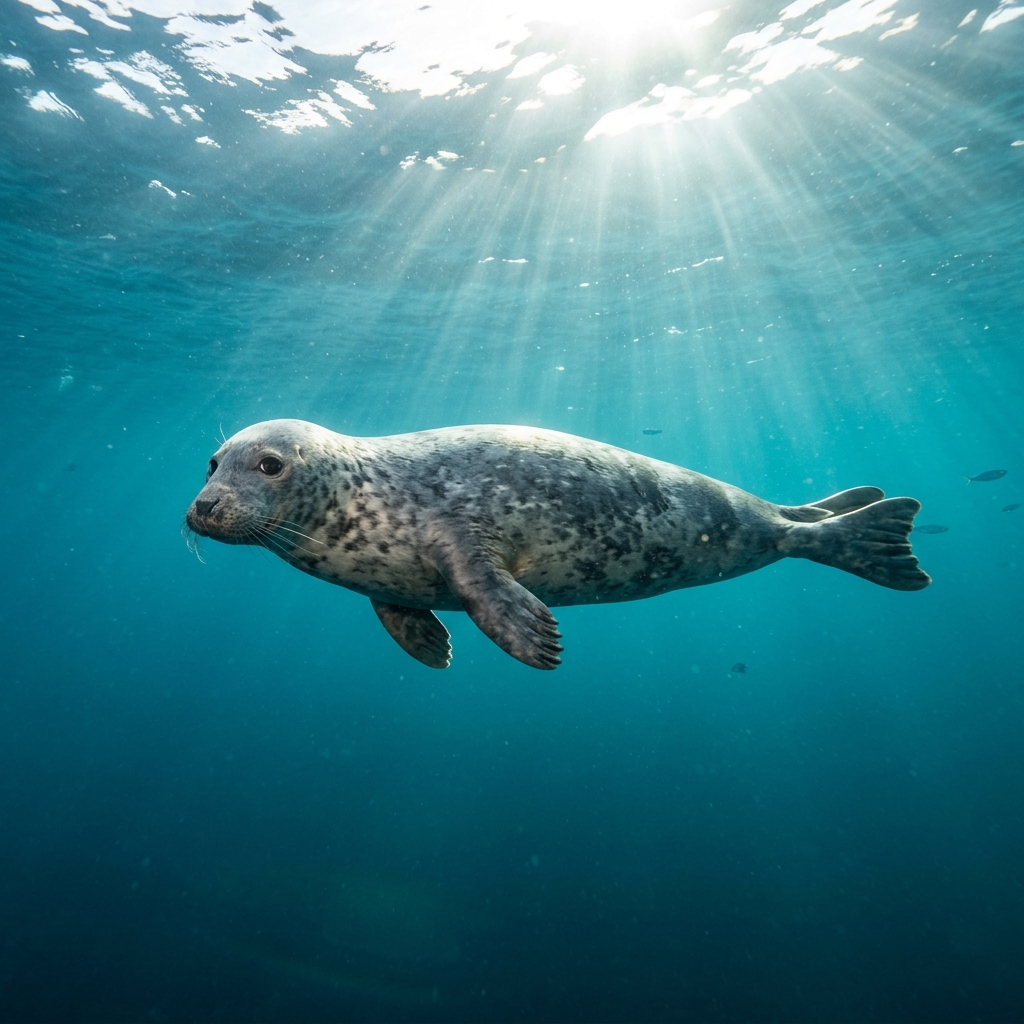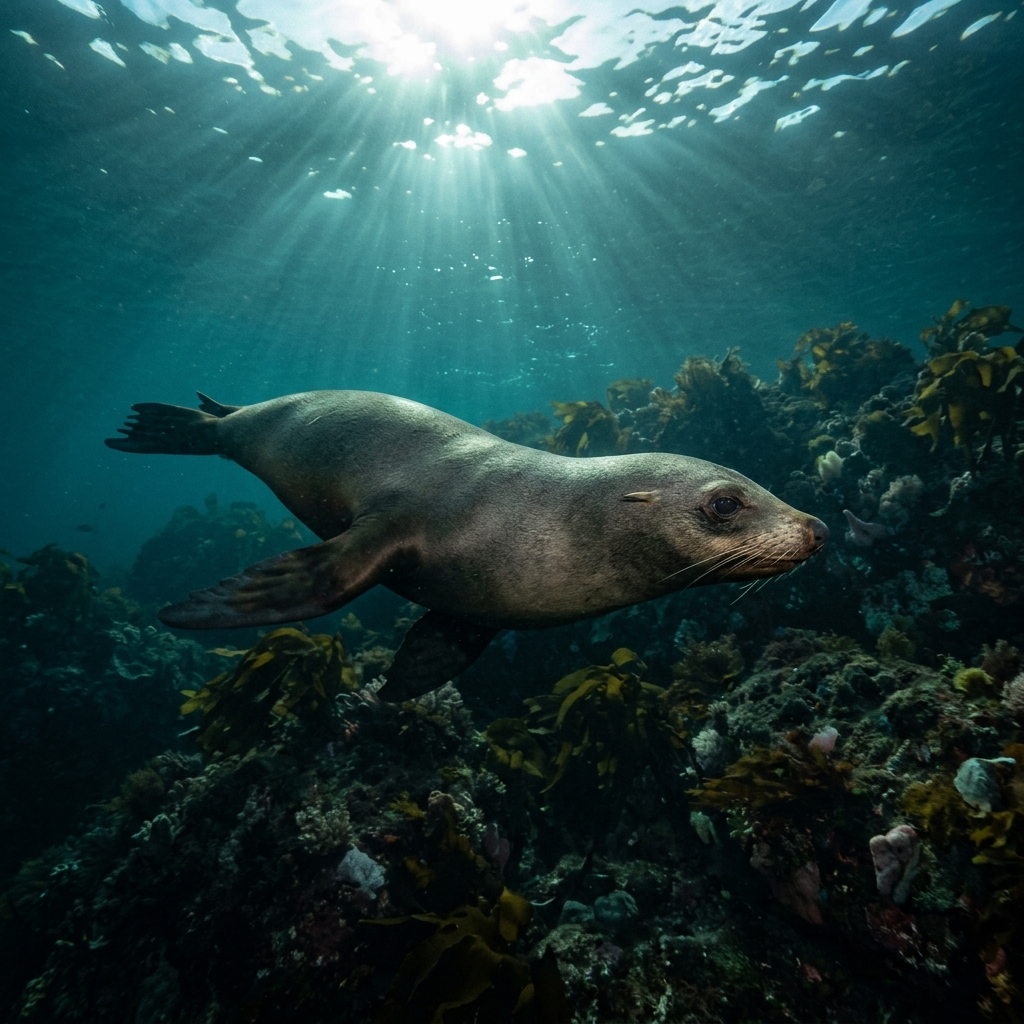
Otaria flavescens
Curious and playful, South American sea lions are reliably spotted along Patagonia and the Chilean coast in waters from 9 to 22 °C. Find the best dive spots here.
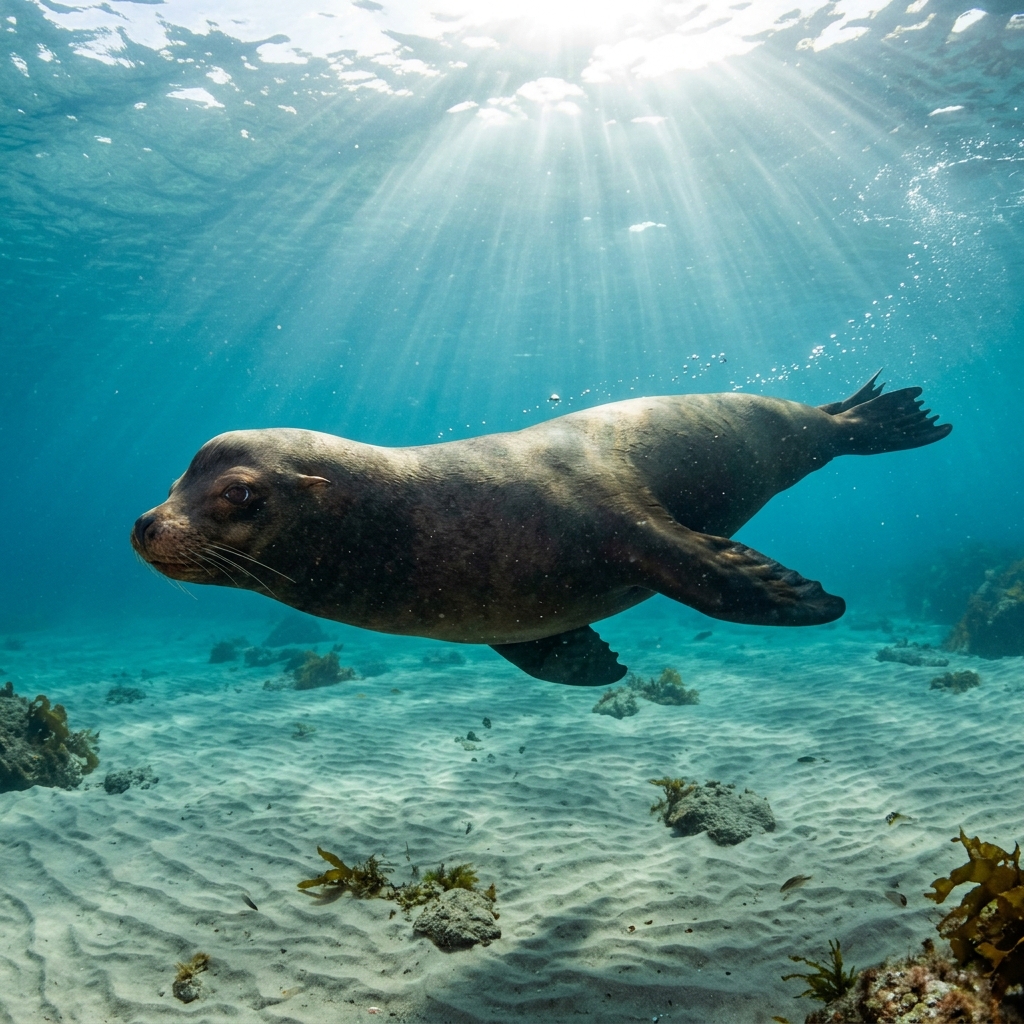
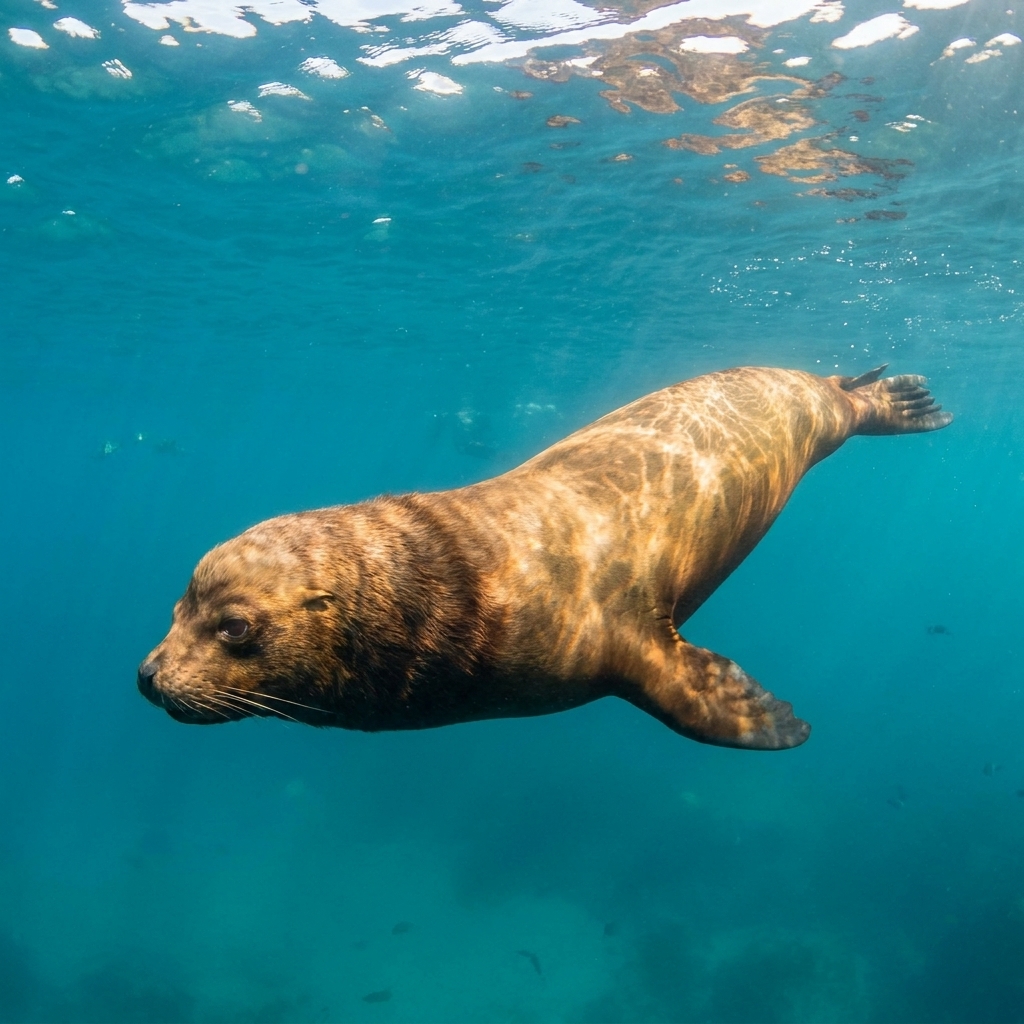
A large, torpedo-shaped pinniped reaching around 180 cm, with warm brown to tawny colouring that appears darker and almost golden in the water. Adult males are unmistakable: significantly bulkier than females, with a thick, mane-like ruff of darker fur around the neck and shoulders that gives them a lion-like profile. Females and younger animals are slender, uniformly smooth brown, and noticeably smaller. Unlike fur seals, the muzzle is broad and blunt, and the foreflippers are large and paddle-like.
Underwater, south American sea lions are curious and bold, often approaching divers to investigate before peeling away in a burst of speed. At haul-out sites adjacent to dive spots, they are frequently seen porpoising down from the surface, spiralling around each other and rocketing past the reef with effortless agility. Encounters tend to be most animated during daylight hours when animals are actively hunting or socialising near the colony.
Sexual size dimorphism (the difference in body size between males and females) is extreme in this species: a large adult male can weigh three to four times as much as a female, making them one of the most size-dimorphic of all pinnipeds.
Sightings are concentrated between June and March, which covers the austral winter through to late summer, broadly the most active social period for the species. There is no strict off-season, but those months offer the most consistent encounters across Patagonian and Chilean sites.
Reef neighbours a diver could mistake it for. Use the identification notes above to tell them apart.
Most commonly logged along the South American Pacific and Atlantic coasts, with the strongest presence in Patagonia (Argentina) and the Valparaíso and Antofagasta regions of Chile. Reliable encounters are also reported along the Ecuadorian mainland coast and around Pucusana in Peru, while Uruguay and southern Brazil round out the Atlantic range.
Mapping where South American Sea Lion is logged…
The best diving is along the coasts of Argentina and Chile, particularly in Patagonia and the Valparaíso and Antofagasta regions. Good encounters are also reported along the Ecuadorian mainland coast and at sites near Pucusana in Peru. Uruguay and southern Brazil offer Atlantic-side options.
Sightings are most concentrated from June through to March, spanning the austral winter and summer. This period aligns with peak colony activity including breeding and pup-rearing, when animals are most abundant and interactive near dive sites.
Adults typically reach around 180 cm in length. Males are far bulkier than females and can be dramatically larger, making the sexes look almost like different animals underwater. Females are slender and noticeably smaller.
Look for a large, broad-muzzled brown pinniped with big paddle-like foreflippers. Adult males have a thick, dark mane around the neck that no other sea lion in South American waters shares. Females are uniformly smooth brown and slender. The blunt, wide muzzle and heavy build distinguish them from the smaller, pointier-faced South American fur seal.
They are not considered dangerous. These animals are curious and may approach divers closely, but aggression towards snorkellers or divers is not a documented concern. As with any marine mammal, give them space, avoid cornering them, and let the animals dictate the terms of the encounter.
They are active carnivores that feed primarily on fish and squid, hunting in the epipelagic (open-water surface) zone as well as along the seafloor. Divers sometimes witness fast pursuit dives close to the reef as individuals chase prey at depth.
Site and sighting data is aggregated from diver logs, iNaturalist and GBIF. For taxonomy and conservation status:
Long-nosed Fur Seal
347 sites