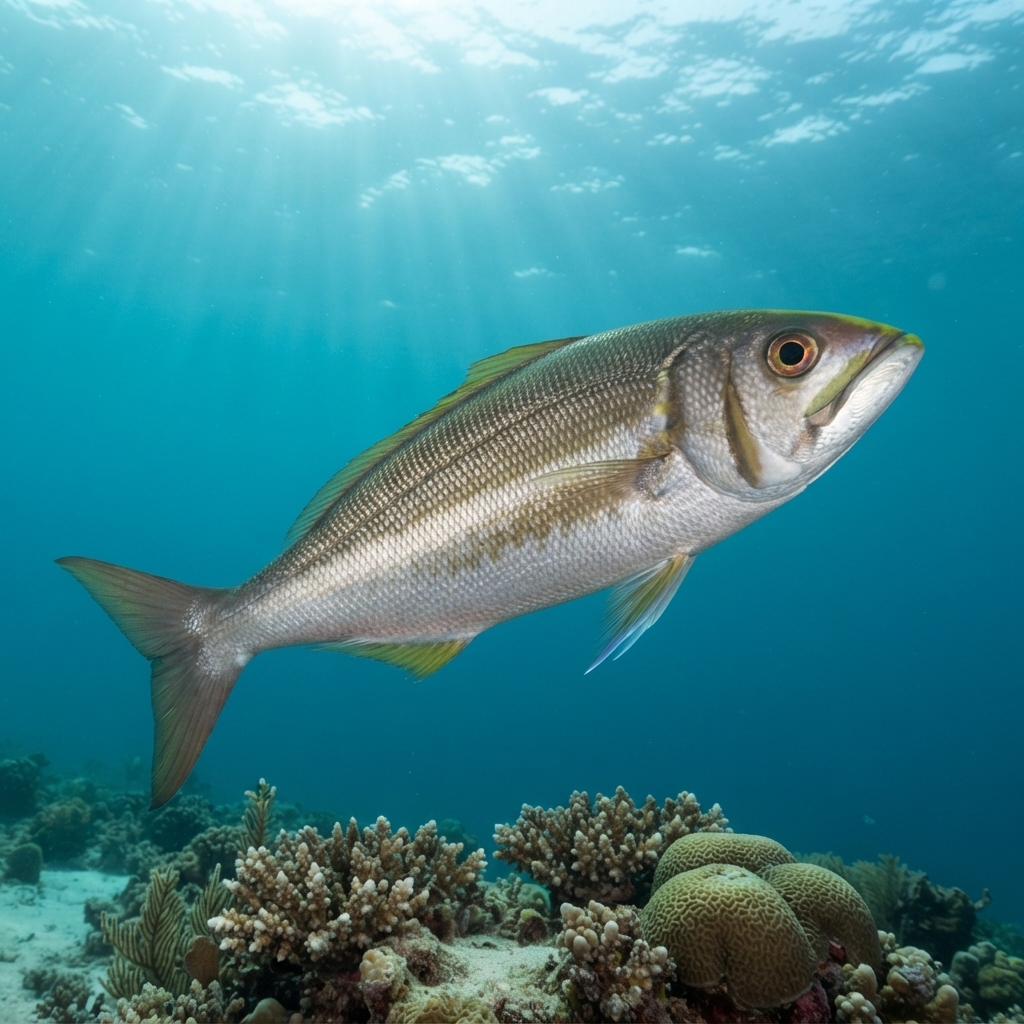
Aphareus furca
Sleek, torpedo-shaped snapper often missed on blue-water drop-offs. Best odds at Orchid Island, Taiwan and the Tuamotus in 25 to 29 C water.
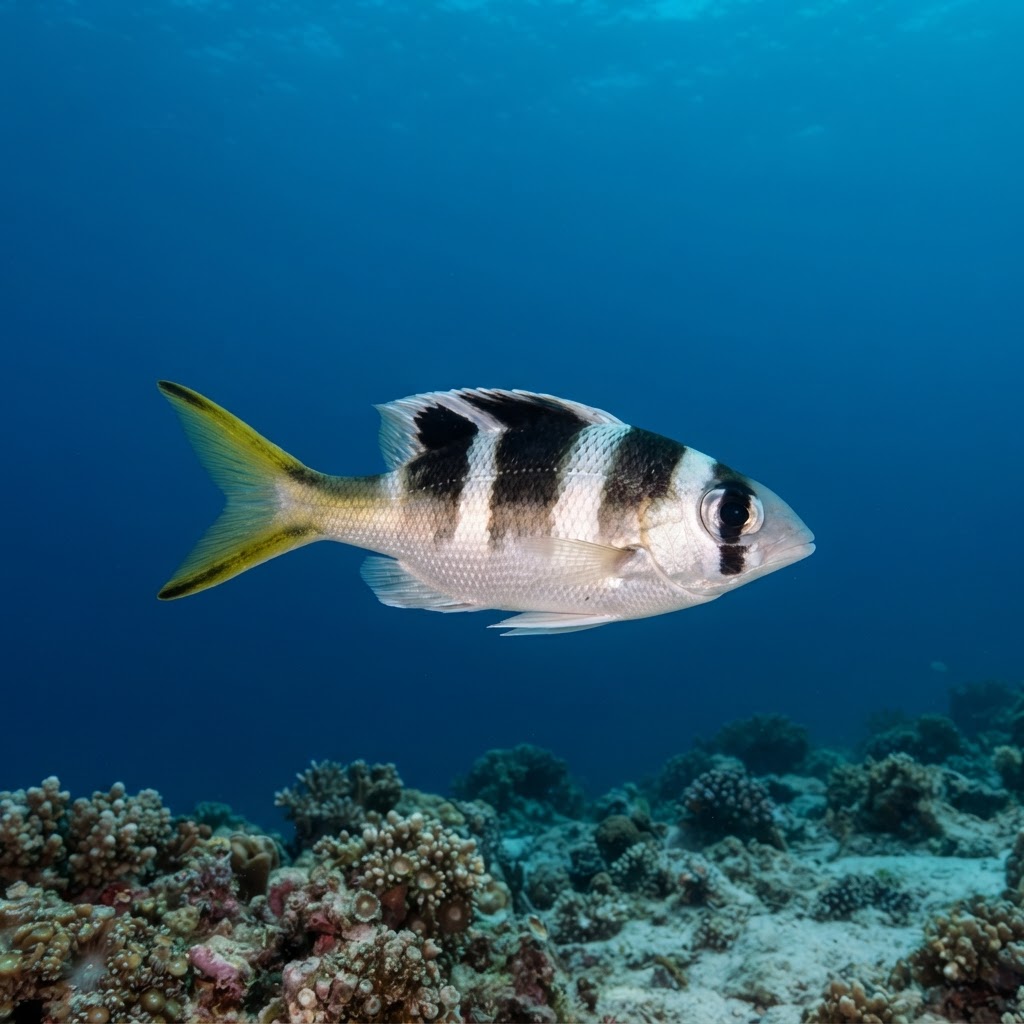
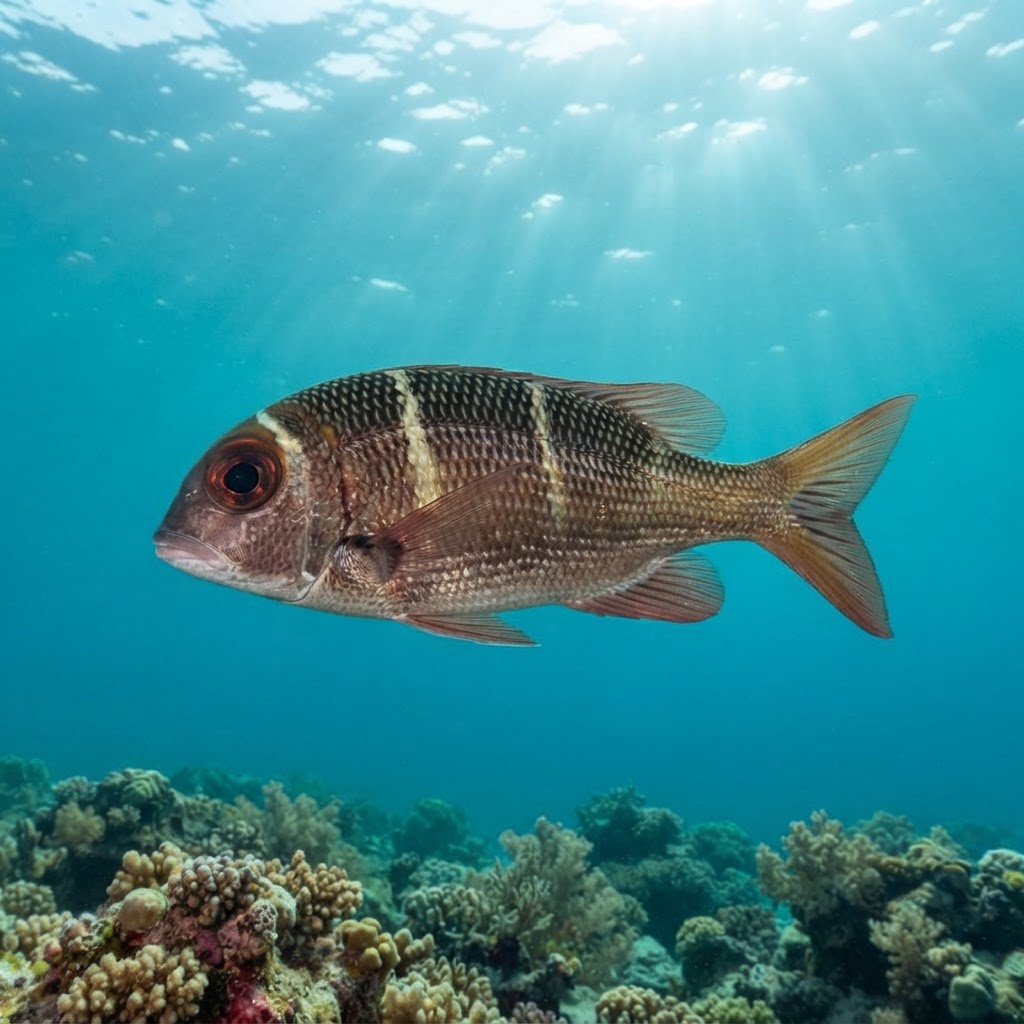
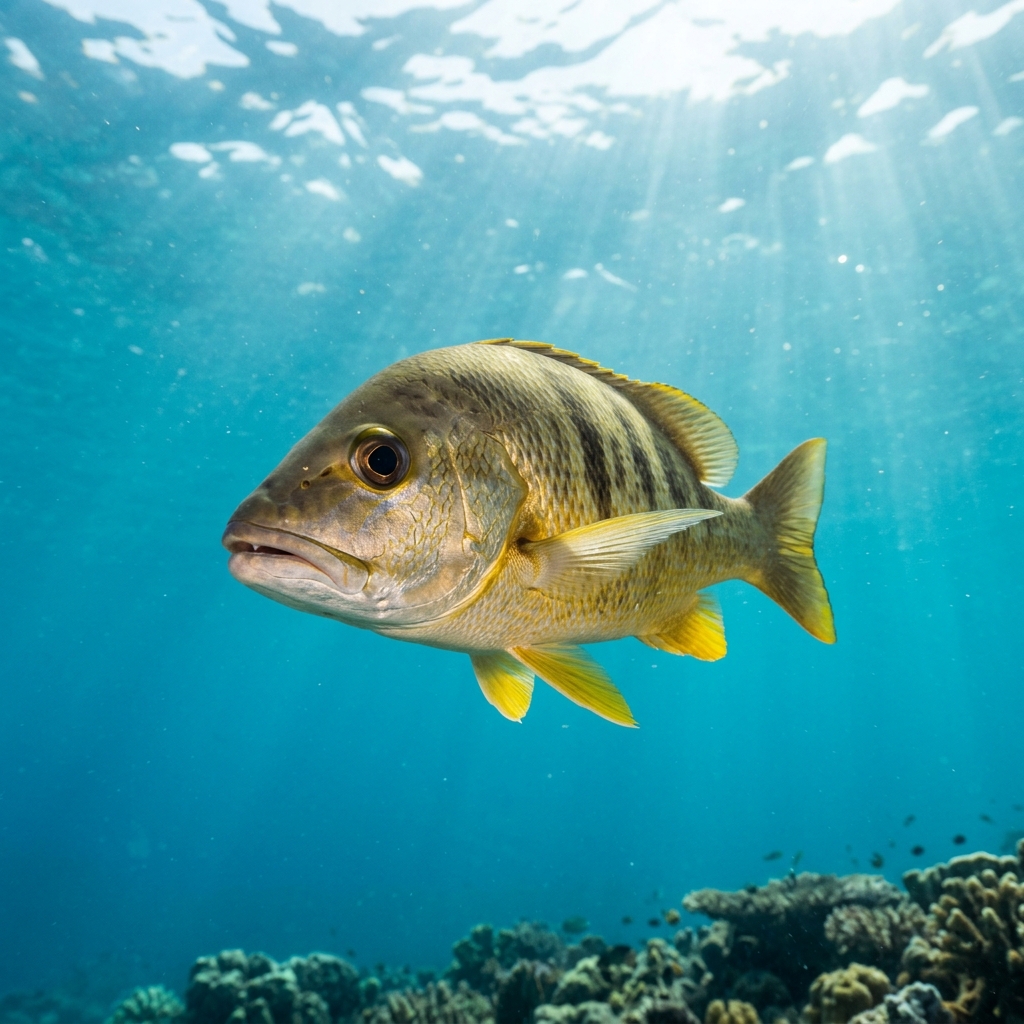
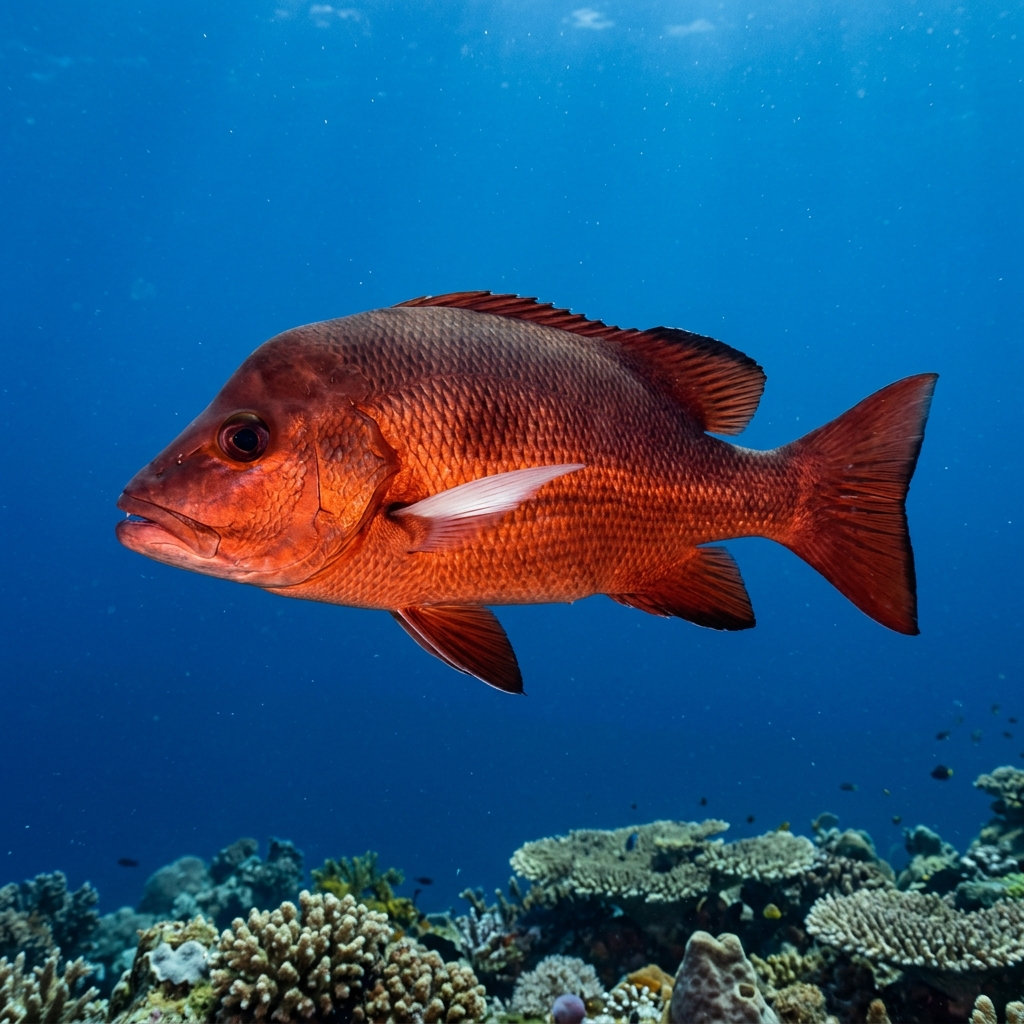
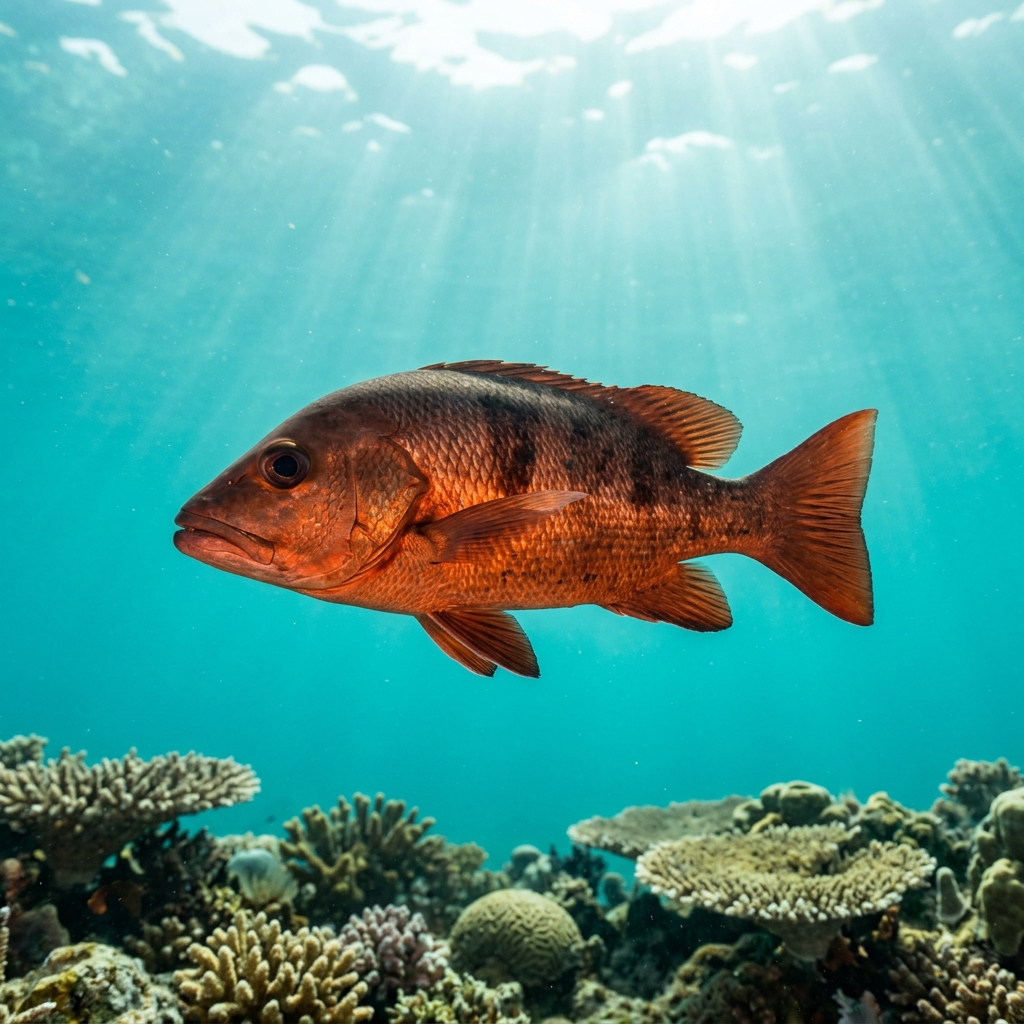
Torpedo-shaped and streamlined, with a pointed snout and a slightly forked tail built for open-water cruising rather than reef hugging. Colour runs from bluish-grey to olive along the back, fading to pale silver on the belly, with no bold pattern to key on. At around 49 cm it reads as a mid-sized, fast-moving shape rather than a showy fish, usually seen solo or in loose small groups off the reef face.
Typically spotted hovering or cruising along drop-offs and reef edges rather than sitting still on the bottom, often patrolling just off the wall in open water. It keeps a comfortable distance from divers and rarely lingers close to the reef structure, behaving more like a passing hunter than a resident fish. Sightings are logged as uncommon even at sites where it occurs, so a clear view is a bit of a bonus rather than a given.
Its slim, fast-swimming build and small mouth mark it as a mid-water hunter of smaller fish and plankton rather than a reef forager, which is why it patrols open water off the wall instead of picking through coral.
No clear seasonal pattern shows up in the sightings, and the observed temperature range of 24.7 to 29.1 C spans typical tropical reef conditions all year, so plan around site access rather than a season.
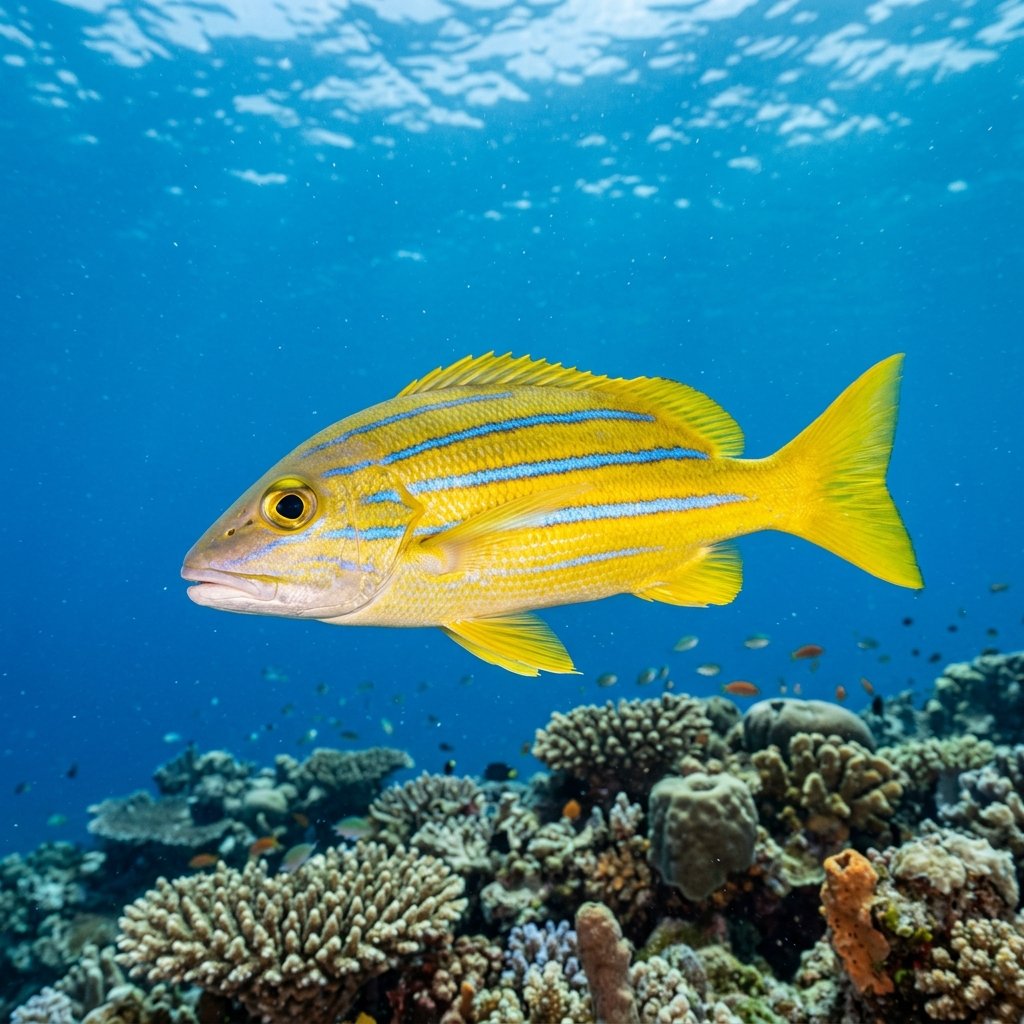
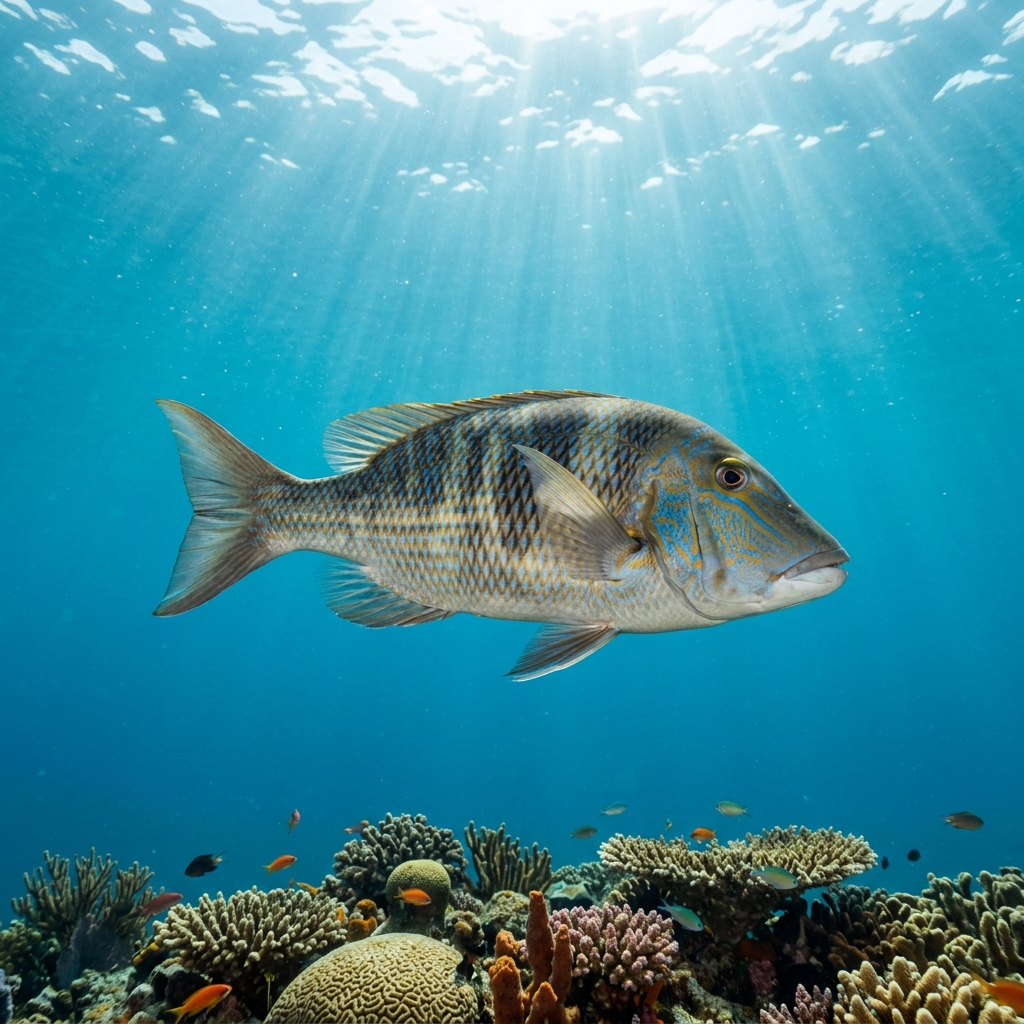
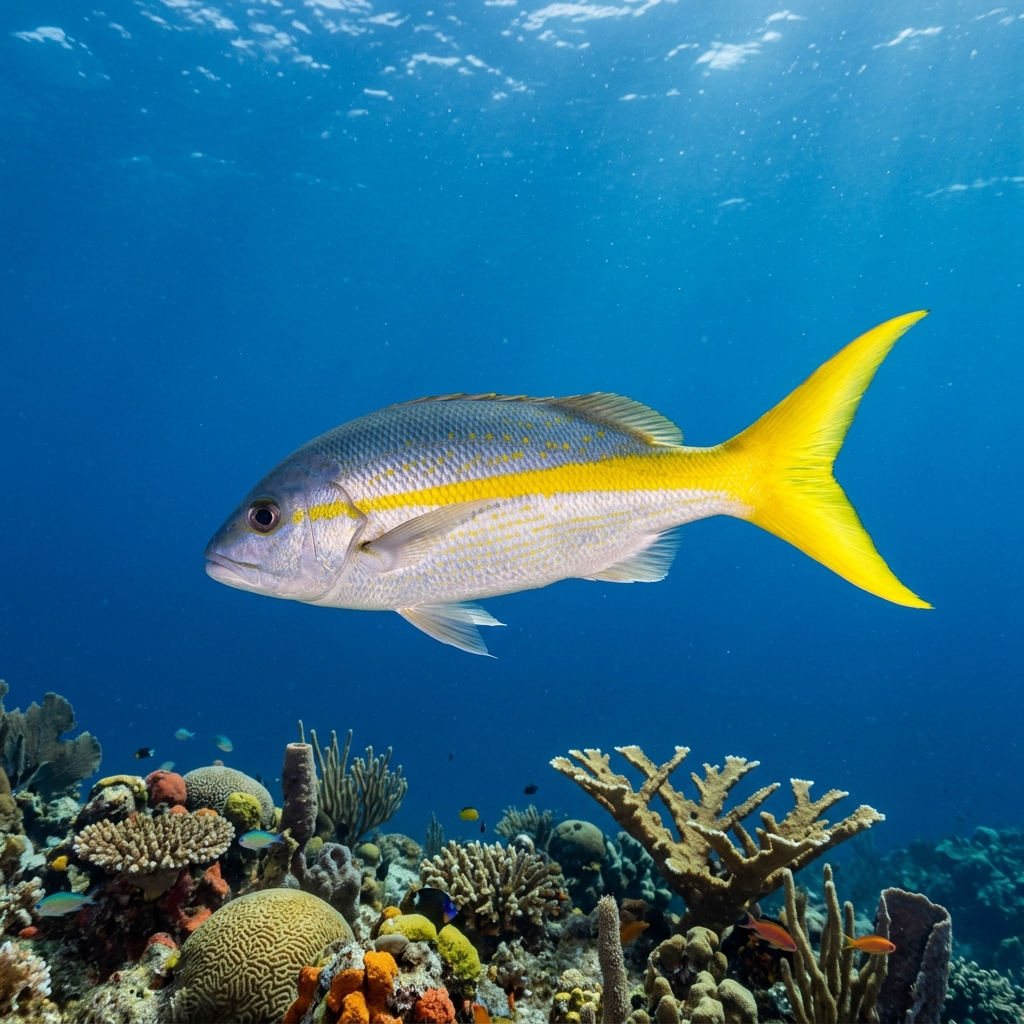
Reef neighbours a diver could mistake it for. Use the identification notes above to tell them apart.
Most reliably logged around Orchid Island in Taiwan, which carries the bulk of sightings, followed by the Tuamotu Islands in French Polynesia. Smaller but consistent numbers turn up in Hawaii, Luzon in the Philippines, Tumon Bay and the North Coast of Guam, and Sulawesi in Indonesia.
Mapping where Small Toothed Jobfish is logged…
Orchid Island in Taiwan has the strongest run of sightings, with the Tuamotu Islands in French Polynesia a close second. Hawaii, Luzon in the Philippines, and Guam's Tumon Bay and North Coast also produce regular logs.
There is no detected season, so sightings happen year-round. It stays comfortable in water from about 25 to 29 C, which covers most tropical reef conditions across its range.
Look for a slim, torpedo-shaped body in grey-blue to olive tones, a pointed snout, and a forked tail, usually seen cruising alone off a reef edge rather than sitting on the bottom. It lacks any bold stripes or spots, so body shape and swimming style are the giveaways.
They typically reach around 49 cm, giving them a lean, mid-sized profile in the water, closer to a fast open-water hunter than a bulky reef fish.
No, they pose no threat to divers and typically keep their distance, cruising past in open water rather than approaching.
Site and sighting data is aggregated from diver logs, iNaturalist and GBIF. For taxonomy and conservation status:
Bluestriped Snapper
2,054 sites