Siphopteron tigrinum
An uncommon macro find off Luzon and Milne Bay, this tiny sea slug rewards patient divers in warm 25 to 31C reef water.
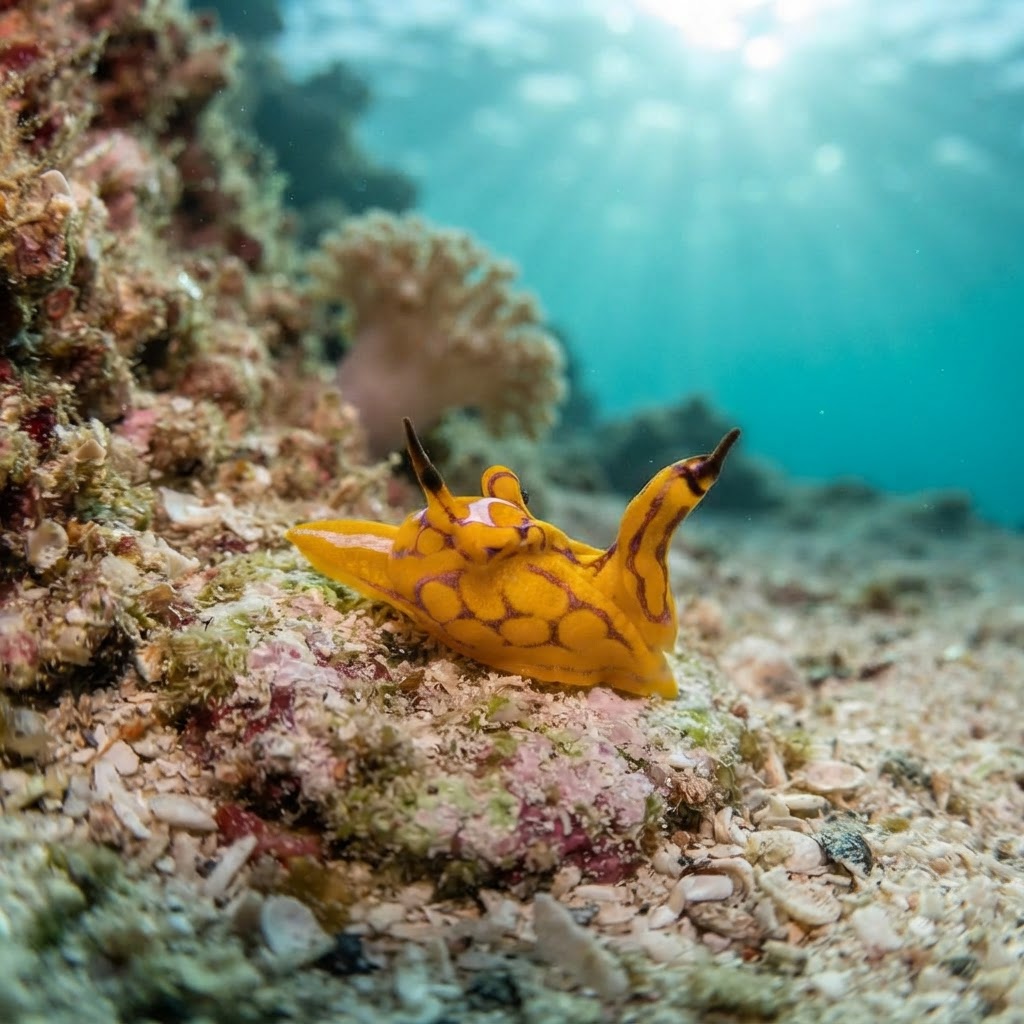
A small, soft-bodied sea slug with a rounded, wing-like body edged in bright patterning that stands out against reef rubble under a torch or macro lens. Look for the flared parapodial lobes (the wing-like flaps along its sides) curling upward as it moves, along with the tiger-like striping that gives it its common name. It stays tiny, low to the substrate, and easy to miss unless you are looking closely.
Divers typically find it moving slowly across rubble and sediment during the day, grazing rather than darting for cover when a light passes over it. It relies on camouflage and its unassuming size to go unnoticed rather than fleeing, so a calm, close approach rarely disturbs it. Because it is uncommon at every site where it has been logged, most sightings come from divers specifically hunting small, cryptic macro life rather than stumbling across it on a routine reef swim.
Like other headshield slugs in its family, it is a simultaneous hermaphrodite, meaning any two adults it meets can mate and both leave with fertilised eggs, a handy trait for a species that turns up in low numbers.
Sightings do not show a clear seasonal pattern, and its comfortable temperature range of 25.3 to 31.3C spans the reefs it is found on year-round, so any month is fair game. Plan around good macro conditions and a sharp-eyed guide rather than a specific season.
Reef neighbours a diver could mistake it for. Use the identification notes above to tell them apart.
Most reliably logged on reefs around Luzon in the Philippines, with a smaller but steady record from Milne Bay in Papua New Guinea. Both regions offer the warm, sheltered muck and rubble habitat this slug favours, making them the two go-to destinations for a dedicated search.
Mapping where Siphopteron Tigrinum is logged…
It is most often logged on muck and rubble sites around Luzon in the Philippines, with additional sightings from Milne Bay in Papua New Guinea. Both are established macro-diving regions where guides regularly search for small, cryptic slugs like this one.
There is no strong seasonal pattern in the sightings, and it lives in water between 25.3 and 31.3C year-round. Any time of year works, so timing your trip around good macro conditions matters more than the calendar.
Look for a small, soft-bodied slug with flared, wing-like side flaps and tiger-striped patterning, usually crawling slowly over rubble or sediment. Its size and cryptic colouring mean it is easy to overlook without a macro lens or a sharp-eyed guide.
No, it poses no threat to divers and can be observed and photographed safely at close range without any special precautions.
Like related headshield slugs, it is a simultaneous hermaphrodite, so any two individuals that meet can mate and both go on to lay eggs. This can help a species persist even when local numbers are low, as they appear to be at most sites where it has been recorded.
Site and sighting data is aggregated from diver logs, iNaturalist and GBIF. For taxonomy and conservation status:
Elysia Timida
573 sites