Hydatina physis
A 2cm sea snail with a glossy striped shell, most reliably found on night dives in New South Wales, Australia.
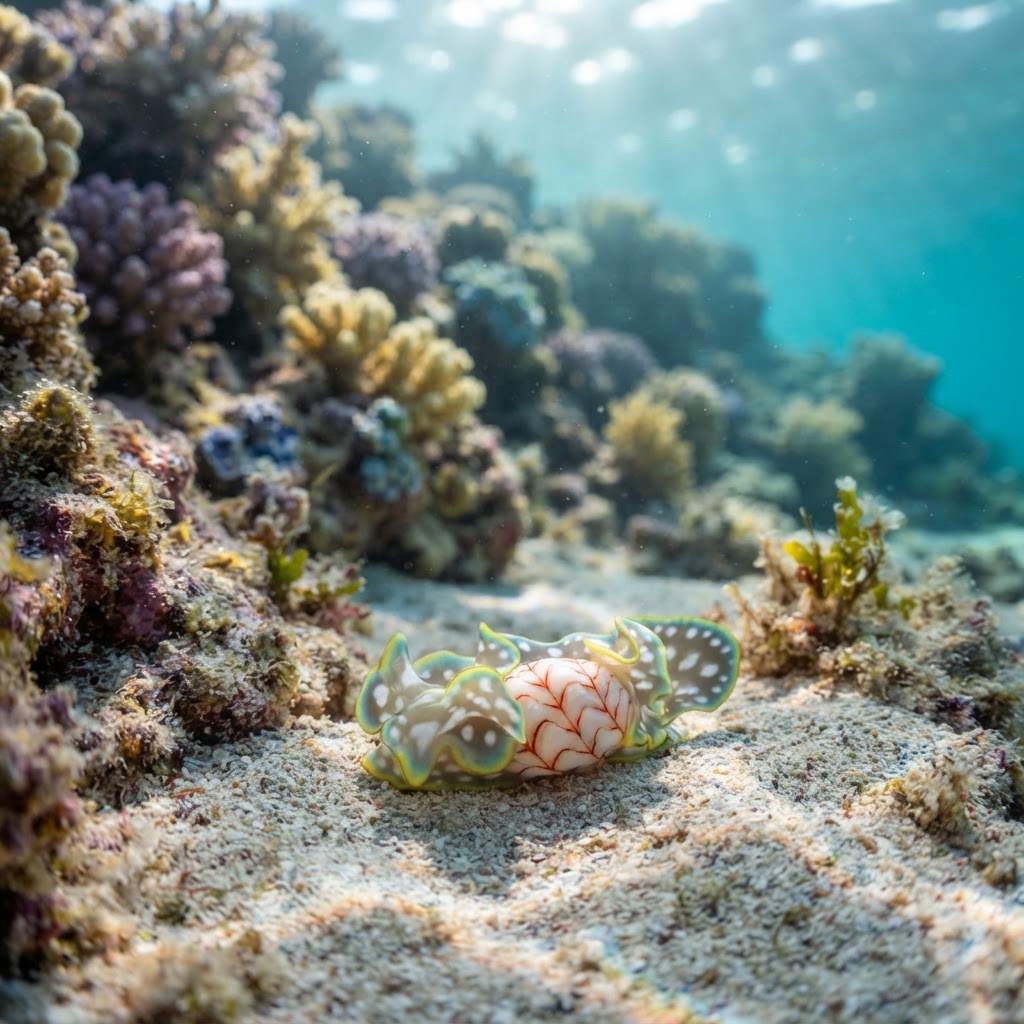
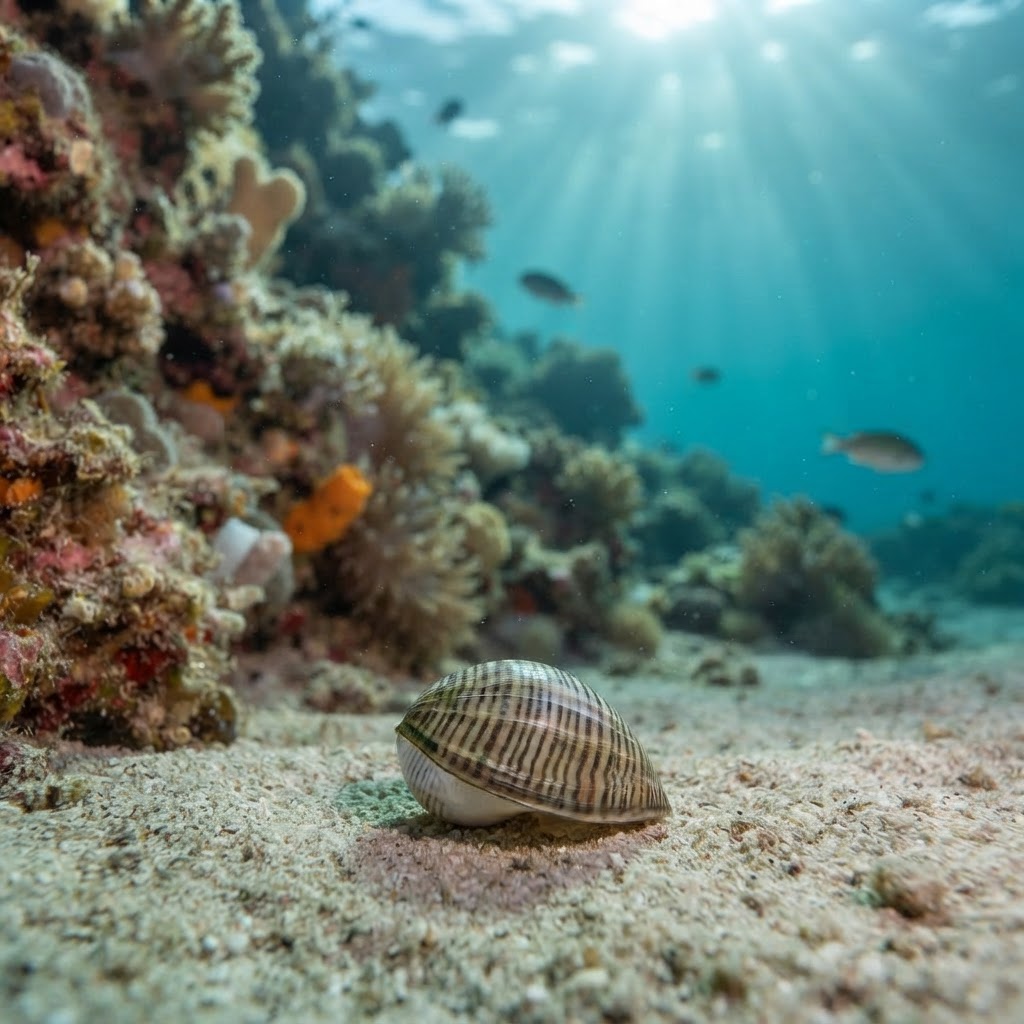
A small, glossy shell about 2cm long, patterned with fine brown or reddish stripes running over a pale cream background, giving it a polished, almost lacquered look. The body is a bubble-like, inflated oval rather than the coiled spiral you'd expect from a typical snail shell, and the soft mottled mantle often wraps up and over the shell's edges as the animal moves. Look for it moving slowly across sand or rubble patches rather than clinging to rock or coral.
Divers most often spot it crawling slowly across open sand, rubble, or seagrass patches, usually solo, ploughing forward at an unhurried pace with its mantle flared over the shell. It shows no particular reaction to divers and won't flee or hide, so a slow scan of soft-bottom areas on a night or day dive is usually how it gets found. It's logged most often as uncommon or rare at any given site, so seeing one usually means you were looking in the right sandy patch at the right time, not that the site holds a big population.
Like other bubble shells, it's a hunter that feeds on other small invertebrates such as worms and molluscs, using a muscular mouthpart to overpower prey buried in sand rather than grazing algae like many of its relatives.
No clear seasonal pattern shows up in the sightings data, so treat it as a year-round find wherever water sits within its comfortable 19 to 26C range. In New South Wales this spans both warmer summer conditions and the cooler end of its tolerance, which likely explains the steady, non-seasonal sightings.
Reef neighbours a diver could mistake it for. Use the identification notes above to tell them apart.
Most consistently logged in New South Wales and Queensland, Australia, which together account for the bulk of recorded sightings and make Australia's east coast the strongest bet for this species. Outside Australia, it turns up reliably in South Sinai, Egypt, and on reefs around Palawan in the Philippines, with smaller but repeated records from Santiago in Cape Verde, La Palma in the Canary Islands, and Hawaii.
Mapping where Striped Bubble Shell is logged…
Your best odds are on Australia's east coast, particularly New South Wales and Queensland, where it's logged far more often than anywhere else. It also shows up on Red Sea reefs in South Sinai, Egypt, and around Palawan in the Philippines.
There's no strong season in the sightings data, so it's effectively a year-round find on sand and rubble patches within its 19 to 26C comfort range.
Look for a small, glossy shell around 2cm long with fine brown stripes over a pale background, an inflated bubble-like shape rather than a coiled spiral, and a mottled mantle that often drapes over the shell's edges as it crawls across sand.
They're small, typically around 2cm in shell length, easy to overlook unless you're scanning sand and rubble patches closely.
No. It has no sting, bite, or venom of concern to divers and simply crawls slowly over the substrate when encountered.
Despite looking like a placid grazer, it's a carnivore that actively hunts small buried invertebrates like worms, using its bubble shell as a lightweight, semi-internal shell rather than the heavy coiled type most snails carry.
Site and sighting data is aggregated from diver logs, iNaturalist and GBIF. For taxonomy and conservation status:
Triton Shell
2,297 sites