Micromelo undatus
A 2cm bubble snail with orange-brown wavy lines, most reliably spotted around Tenerife and El Hierro in the Canary Islands.
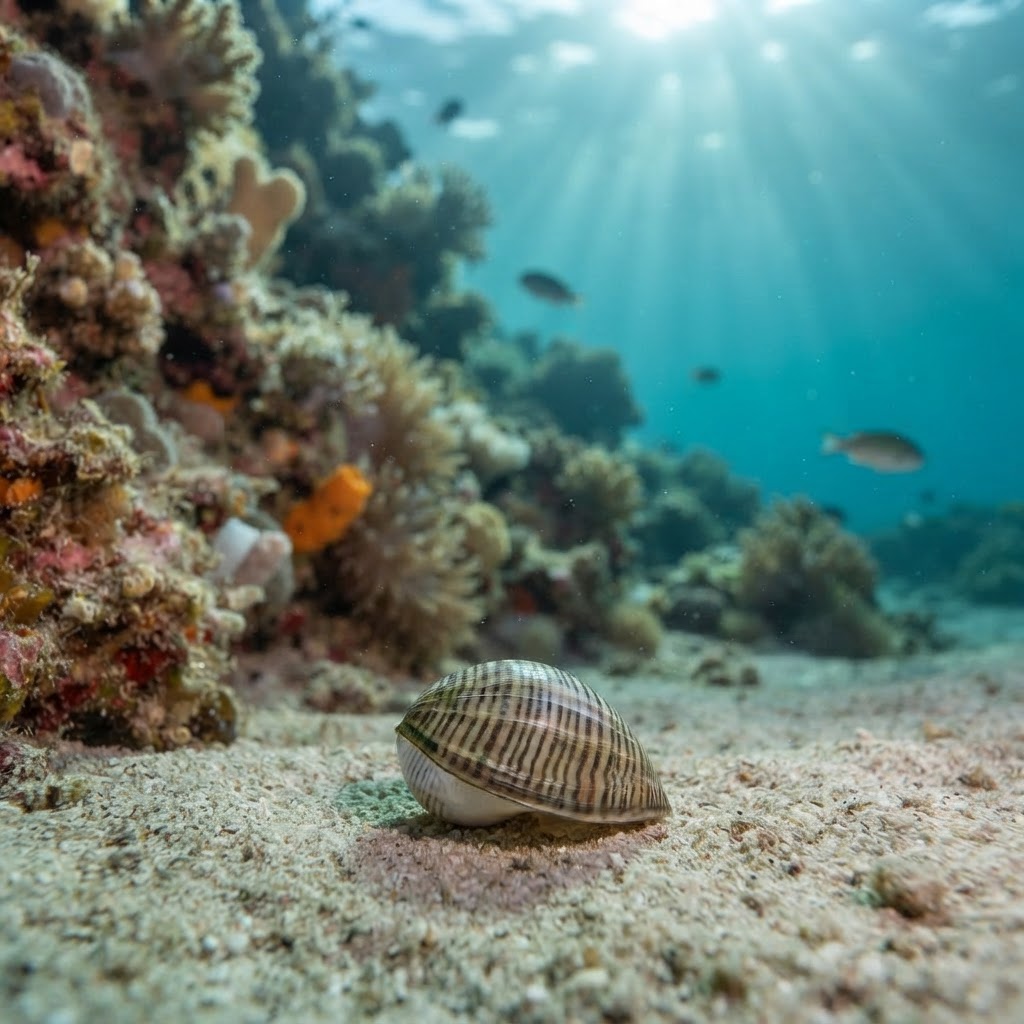
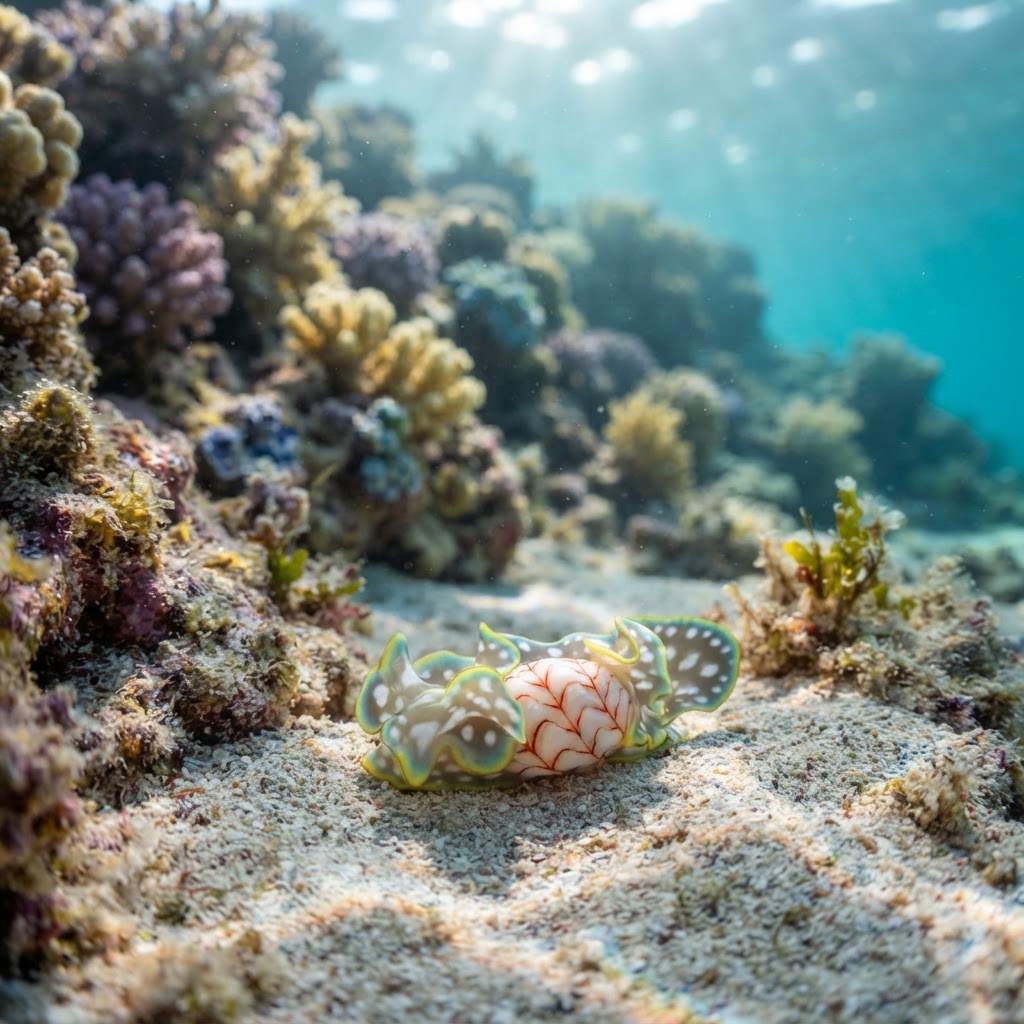
Look for a small glossy shell, barely 2cm long, wrapped in a soft-bodied mantle patterned with fine wavy orange-brown lines on a cream or tan background. The body often flares out past the edges of the thin, semi-translucent shell, giving it a rounded, almost inflated look rather than a typical snail silhouette. Its small size and cryptic colouring mean it is usually spotted by divers scanning slowly over sand, rubble, or rocky crevices rather than swimming in open water.
Divers usually find this one moving slowly across sand, rubble, or low rocky ledges, often during the day rather than exclusively at night as with many bubble snails. It shows no reaction to divers beyond continuing its slow grazing pace, so a close, steady look with a torch or magnifier is the best way to appreciate the shell pattern. Most sightings are at sites where a guide or diver is actively searching macro life rather than animals encountered by chance mid-dive.
Bubble snails in this family feed on small worms and other invertebrates, using their oversized body to help smother and manipulate prey before the mouth gets to work, a very different lifestyle from the plant-grazing sea slugs divers often lump them with.
Sightings show no clear seasonal pattern, and with a comfortable range of roughly 20 to 29C it is present on these reefs year-round rather than tied to a particular month.
Reef neighbours a diver could mistake it for. Use the identification notes above to tell them apart.
This is very much a Canary Islands speciality, most commonly logged around Tenerife, El Hierro, and Gran Canaria, where it turns up on volcanic reef and rubble patches. Beyond the Canaries it is also a reliable find around Portsmouth in Dominica and Basse-Terre in Guadeloupe, with a smaller presence off São Vicente in Cape Verde.
Mapping where Wavy-lined Bubble is logged…
The Canary Islands are the stronghold, especially Tenerife, El Hierro, and Gran Canaria. It also shows up reliably around Portsmouth in Dominica and Basse-Terre in Guadeloupe, with occasional sightings off São Vicente, Cape Verde.
There is no strong season in the sighting data, and its comfort range of about 20 to 29C means it can be found year-round on these reefs.
Around 2cm, small enough that most divers only spot it while looking closely at sand and rubble patches rather than swimming past.
Check for a thin, rounded shell with the soft body bulging out past its edges, patterned with fine wavy orange-brown lines on a pale background. Its slow crawl over sand or rock and tiny size are good giveaways.
No, it poses no threat to divers and can be observed and photographed up close without any risk.
Site and sighting data is aggregated from diver logs, iNaturalist and GBIF. For taxonomy and conservation status:
Triton Shell
2,297 sites