Verconia simplex
Small and easy to miss on Phuket reefs, this uncommon nudibranch turns up year-round in waters around 22 to 29 C.
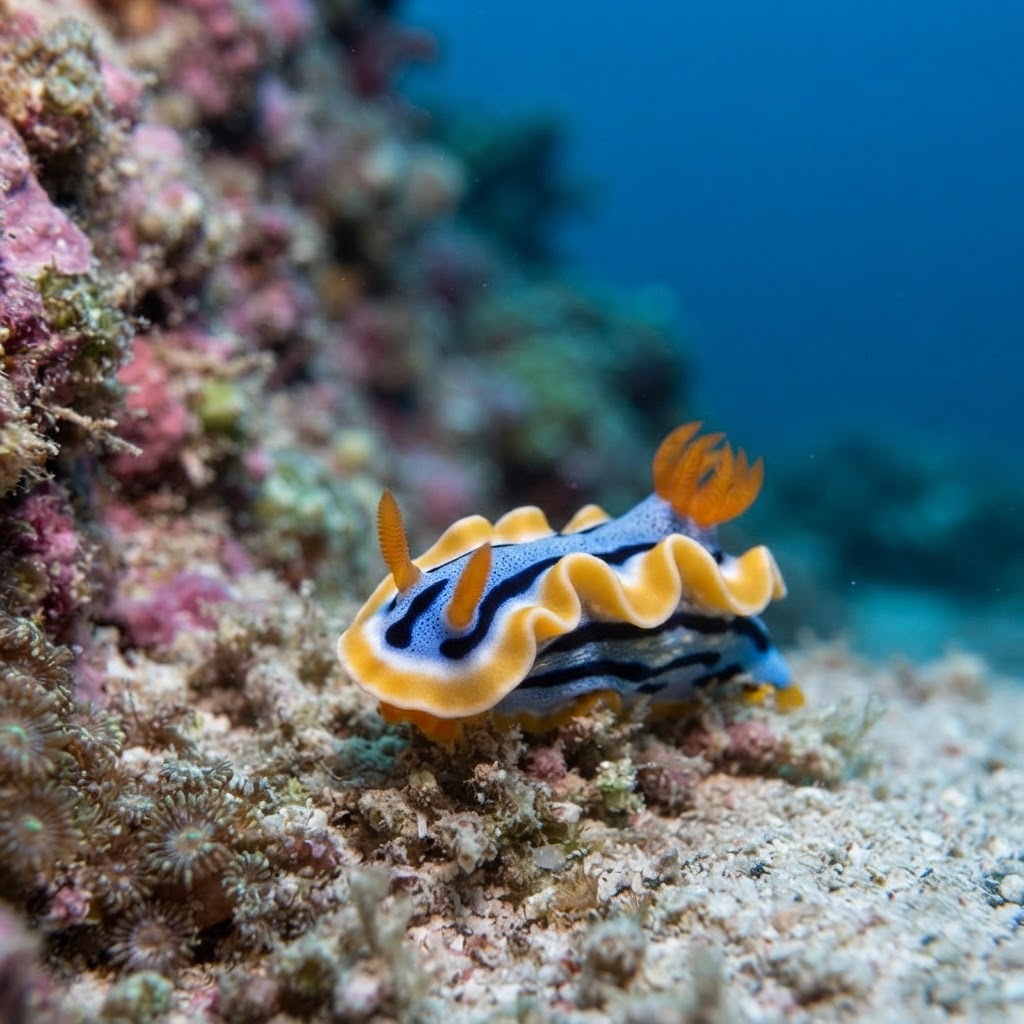
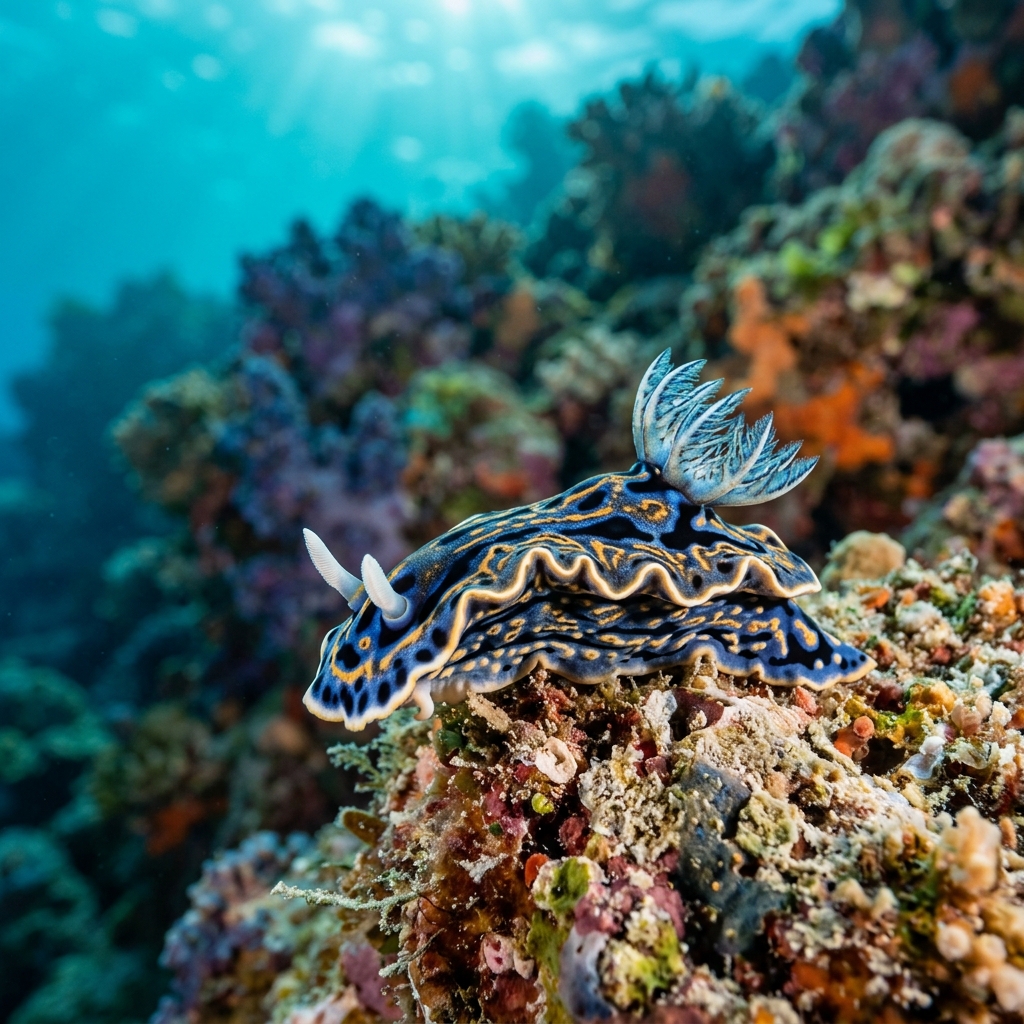
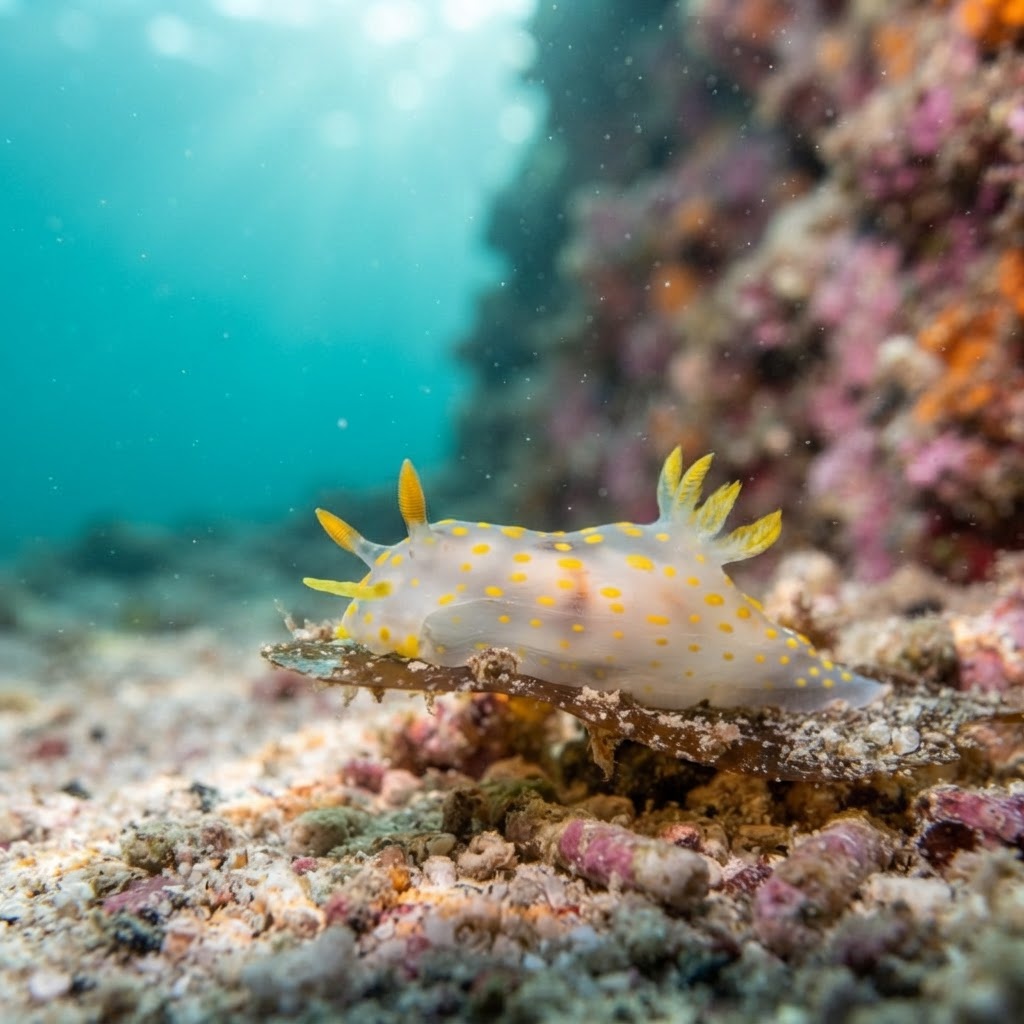
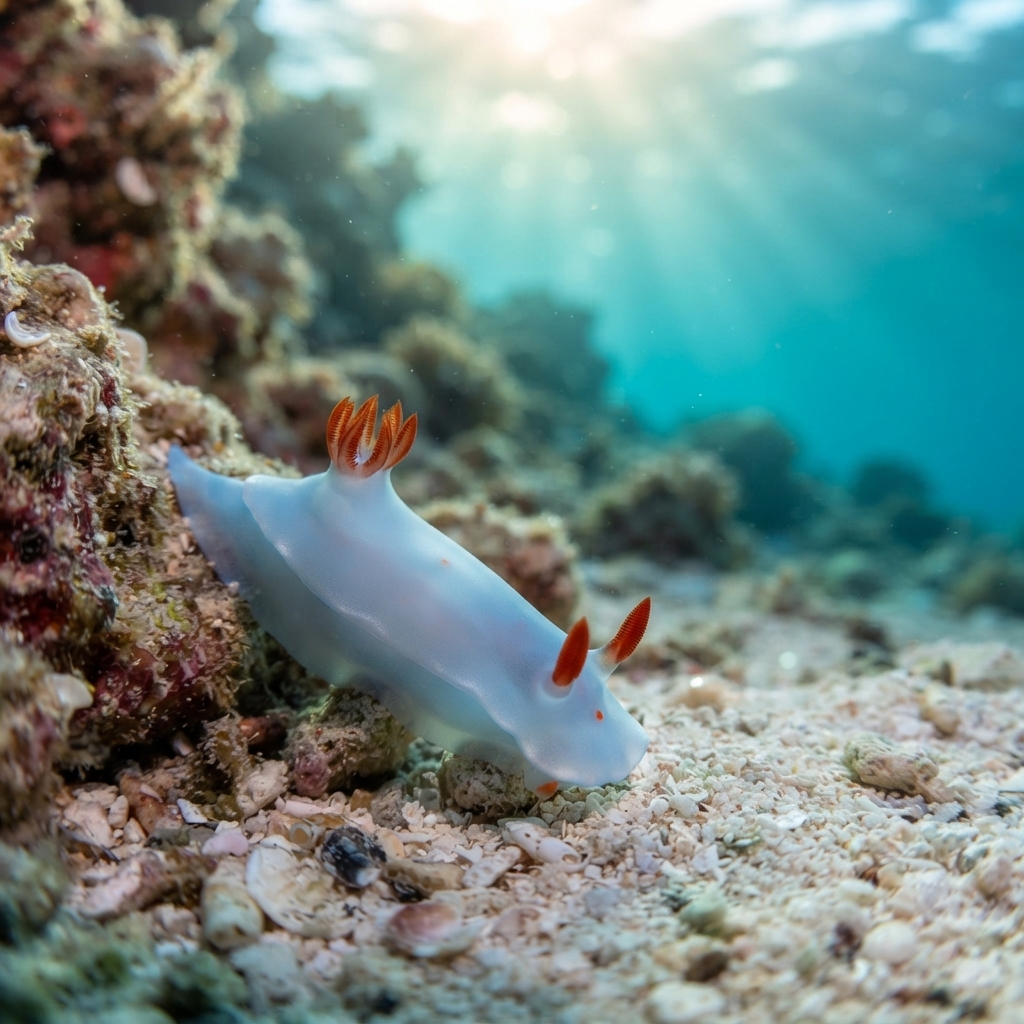
A small, slug-shaped nudibranch with a translucent to pale mantle edged in a thin line of colour, usually cream, orange or pink depending on the individual. It has the classic dorid profile: a low, oval body with a cluster of gills at the rear and two rhinophores (sensory tentacles) up front. There is no strong size data logged for this species, so expect to search the reef surface closely rather than spot it from a distance.
Divers find it slow-moving and stationary on rock, rubble or sponge-covered surfaces, grazing rather than swimming off when approached. It shows no reaction to divers beyond retracting its gills slightly if disturbed, making it an easy macro subject once spotted. Look for it during daytime reef and muck dives rather than night dives, scanning close to the substrate.
Like other chromodorid nudibranchs, it likely feeds on sponges and stores their chemical compounds in its own tissue as a defence against predators, which is part of why its colouring can vary between individuals.
No clear seasonal pattern shows up in the sightings, so treat it as a year-round find. It has been logged in water from 21.8 to 29.2 C, comfortably within the range of tropical reefs at Phuket and Queensland throughout the year.
Reef neighbours a diver could mistake it for. Use the identification notes above to tell them apart.
Most reliably logged around Phuket, Thailand, which accounts for the bulk of sightings, followed by Queensland, Australia. Smaller numbers turn up in Luzon in the Philippines and at Longdong in Taiwan, so it is worth a slow look on any Indo-Pacific reef with sponge-covered rubble or rock.
Mapping where Simple Rainbow Dorid is logged…
Phuket, Thailand is the strongest region for sightings, with Queensland, Australia also a reliable spot. Smaller numbers have been logged in Luzon, Philippines and at Longdong, Taiwan.
There is no detected seasonal pattern, so it is considered a year-round sighting. It has been recorded in water temperatures from 21.8 to 29.2 C, which covers most of the diving calendar at its main sites.
Look for a small, low-bodied nudibranch with a pale to translucent mantle and a thin coloured edge, plus a cluster of gills at the rear and two rhinophores up front. It moves slowly across rock and sponge and does not swim.
No, it poses no danger to divers. It is a small, slow-moving nudibranch that can be observed and photographed safely at close range without disturbing it.
Its conservation status is listed as not evaluated, so there is no formal risk assessment for this species. Sightings logged by divers currently describe it as uncommon rather than rare at the sites where it is found.
Site and sighting data is aggregated from diver logs, iNaturalist and GBIF. For taxonomy and conservation status:
Blue Dragon
3,163 sites