Carcharhinus falciformis
Sleek, curious open-water sharks logged across the Maldives' Northern Atolls and Egypt's Marsa Alam, comfortable in 25.5-29.4°C year-round.
Safety warning
Classed as dangerous mainly because of its confident, investigative behaviour in open water, especially around baited situations, boats, or speared fish, where it can become pushy rather than because it targets divers. Keep it at arm's length, avoid spearfishing or feeding near it, and don't turn your back on one that's circling closer than you'd like.
If you're bitten
BiteGeneral first-aid guidance, not a substitute for professional medical care. In an emergency, call your local emergency number.
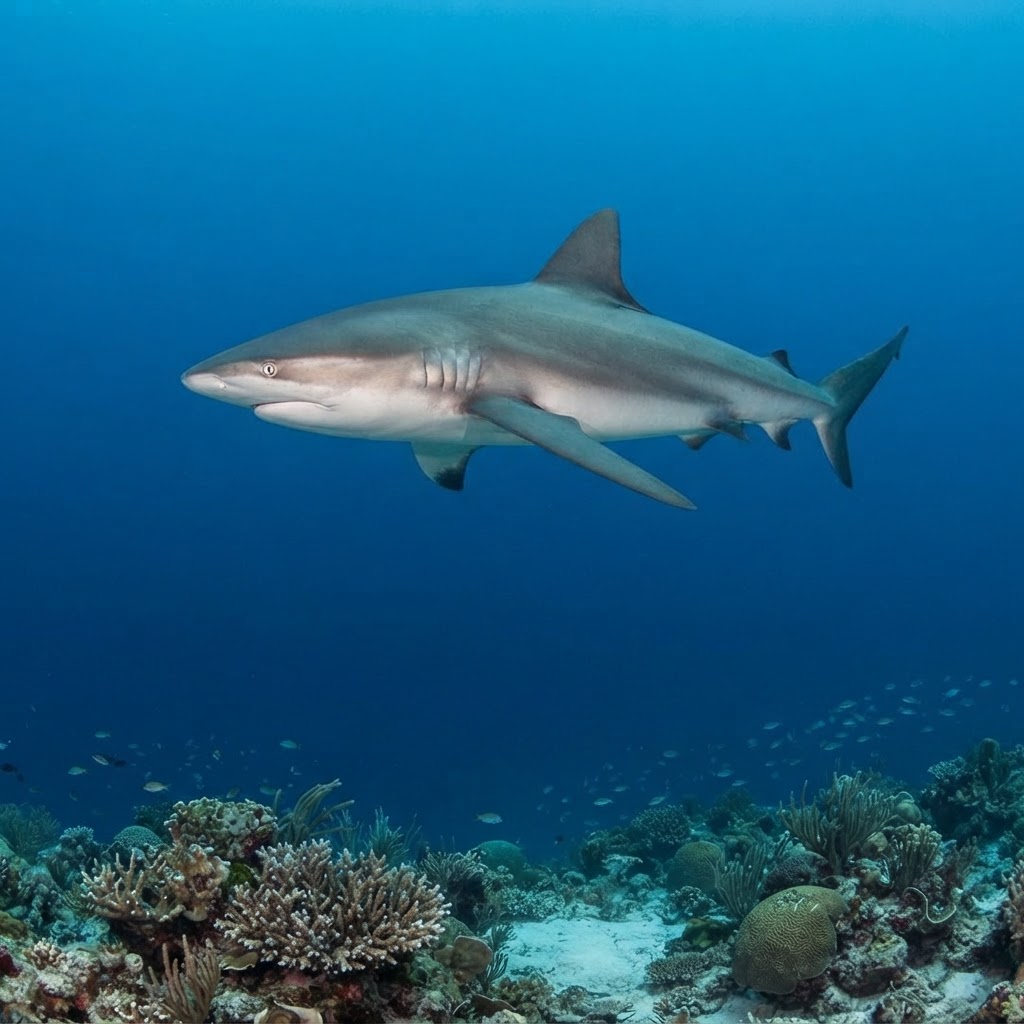
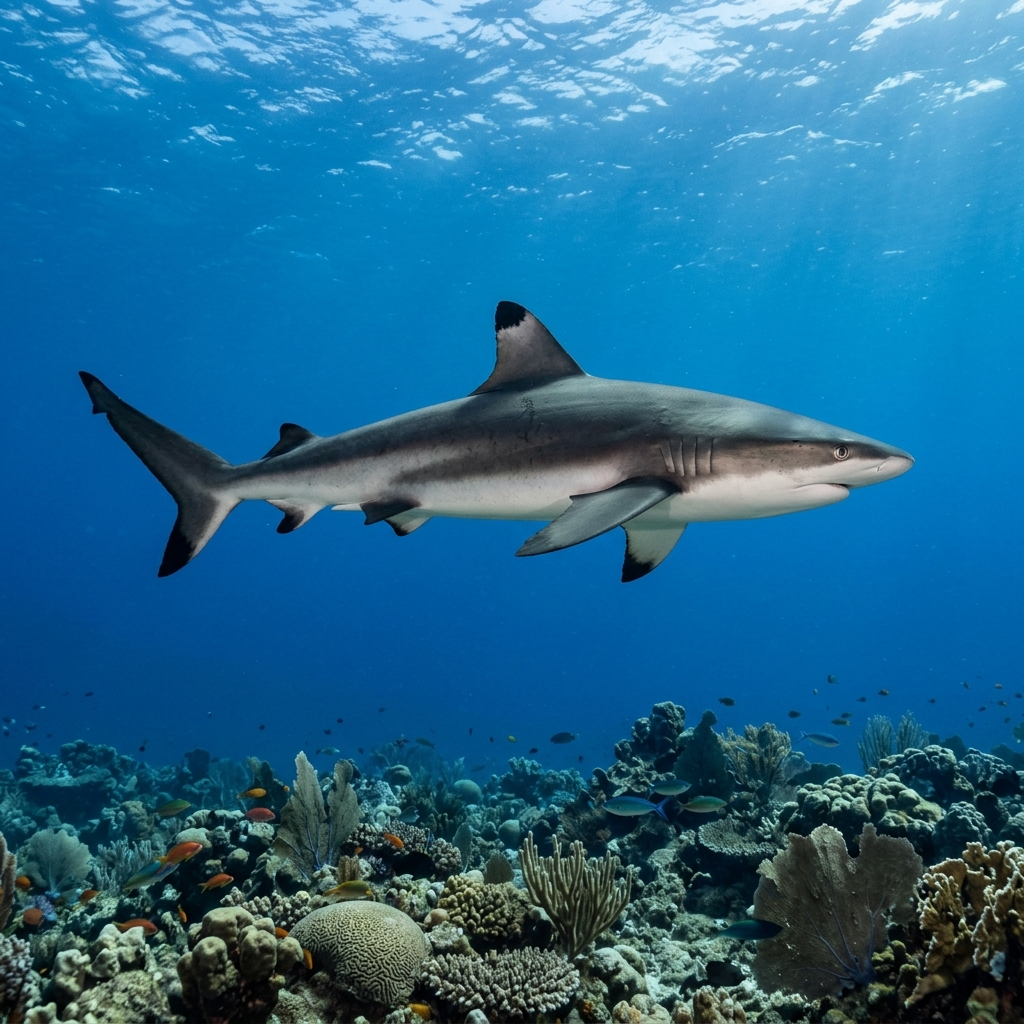
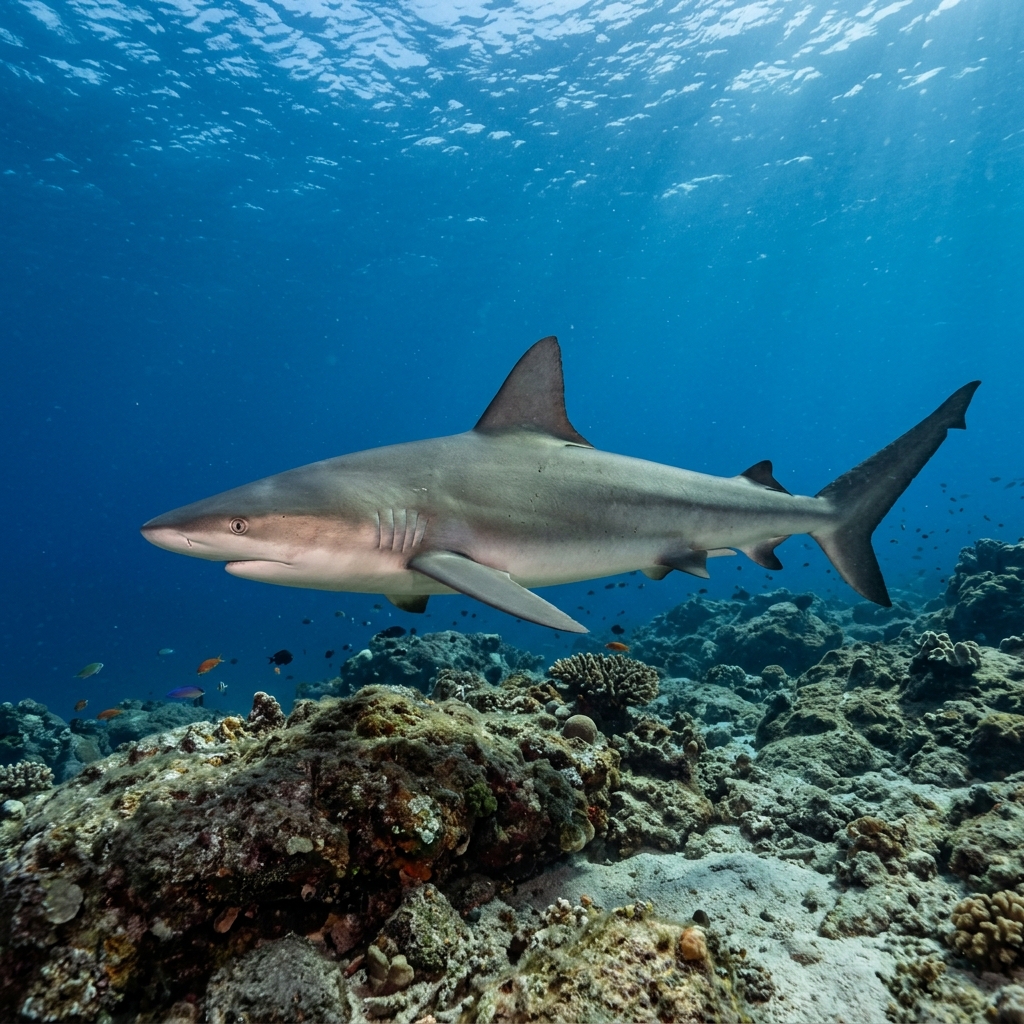
A slim, streamlined body with a noticeably long, curved dorsal fin and long, sickle-shaped pectoral fins give this shark its name (falciformis means sickle-shaped). Skin colour runs dark bronze to grey-brown on the back, fading to white on the belly, with no bold markings to key on, which is part of what makes it trickier to place than a whitetip or blacktip. At up to around 2.4 metres it has a fairly slender build compared to the bulkier reef sharks, with a small eye and a rounded snout.
Often seen patrolling drop-offs and open water near reef edges rather than sitting on the bottom like many reef sharks, sometimes cruising in loose groups. It tends to stay at a cautious distance from divers but is known for circling boats and divers with more curiosity than most reef sharks, particularly in open blue water away from the reef. Sightings skew toward deeper, current-swept sites rather than shallow lagoons.
It's one of the most wide-ranging pelagic sharks on the planet, turning up from the surface down to extreme depths, and its habit of following boats and divebait plumes in open water is a big part of why it has a reputation as bold around people.
No clear seasonal pattern shows up in the data, so treat this as a year-round encounter on warm tropical reefs. It's consistently recorded in water between 25.5 and 29.4°C, conditions that hold steady through most of the year at its main sites.
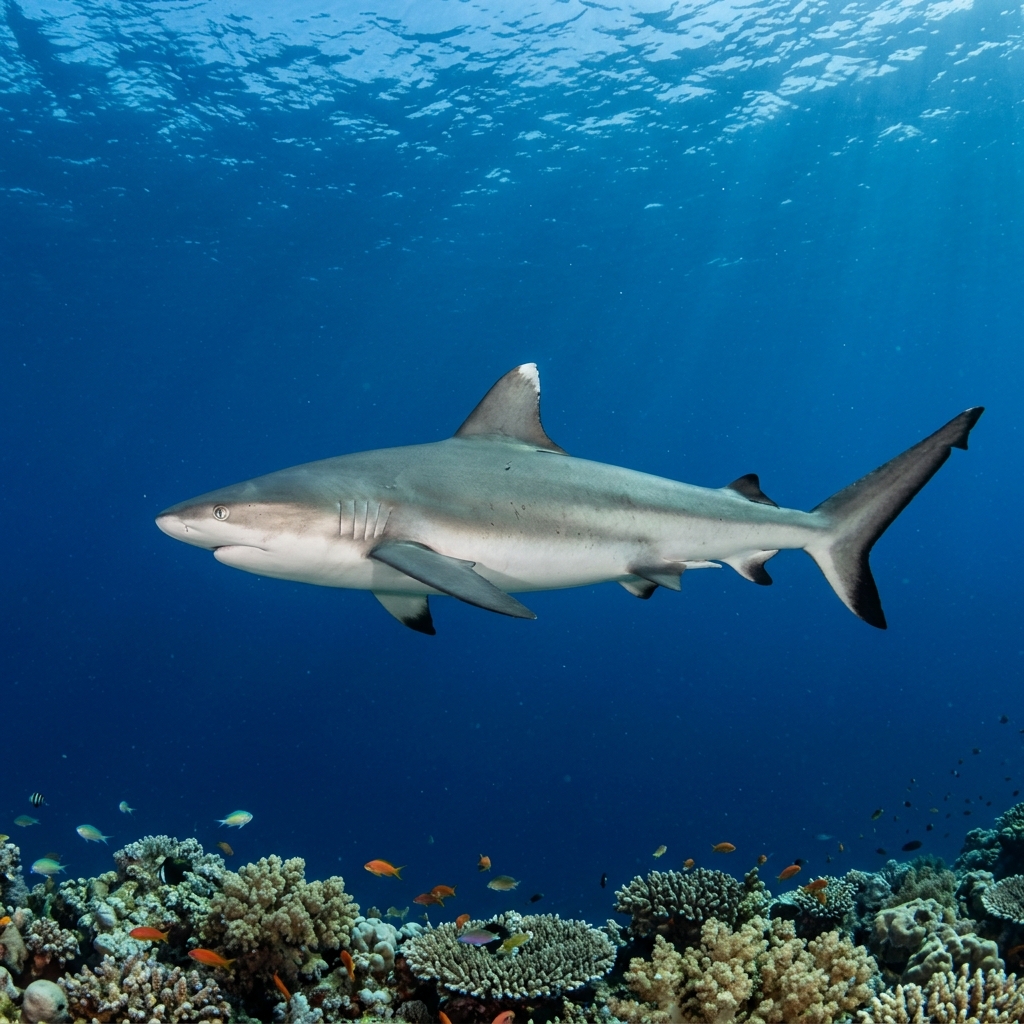
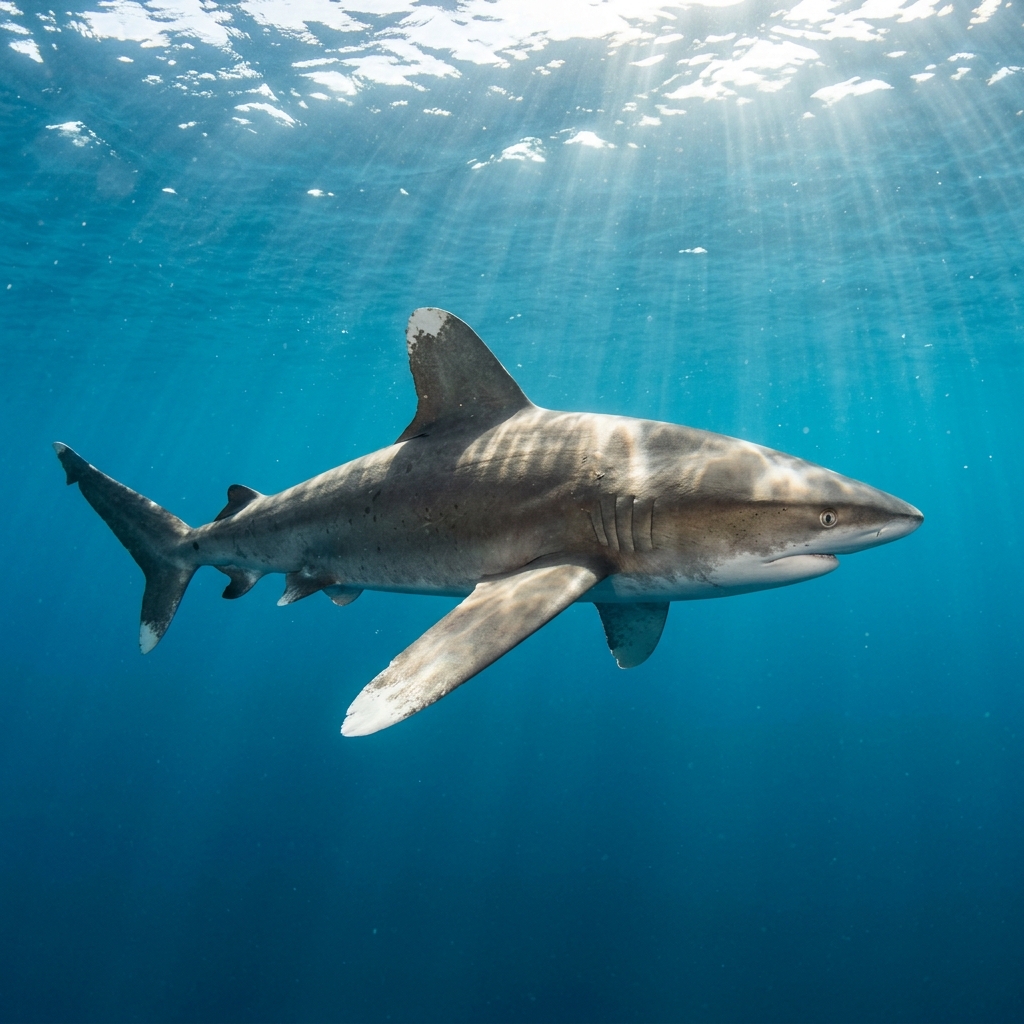
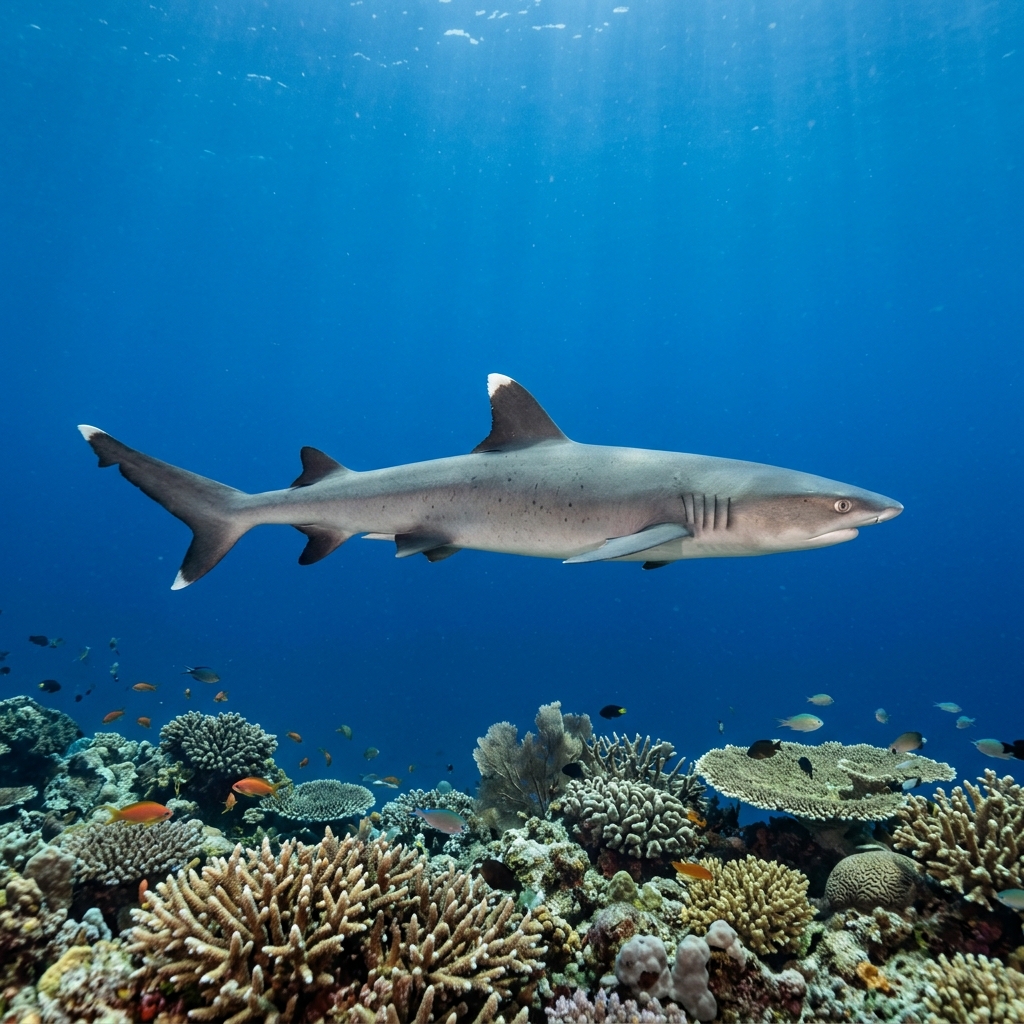
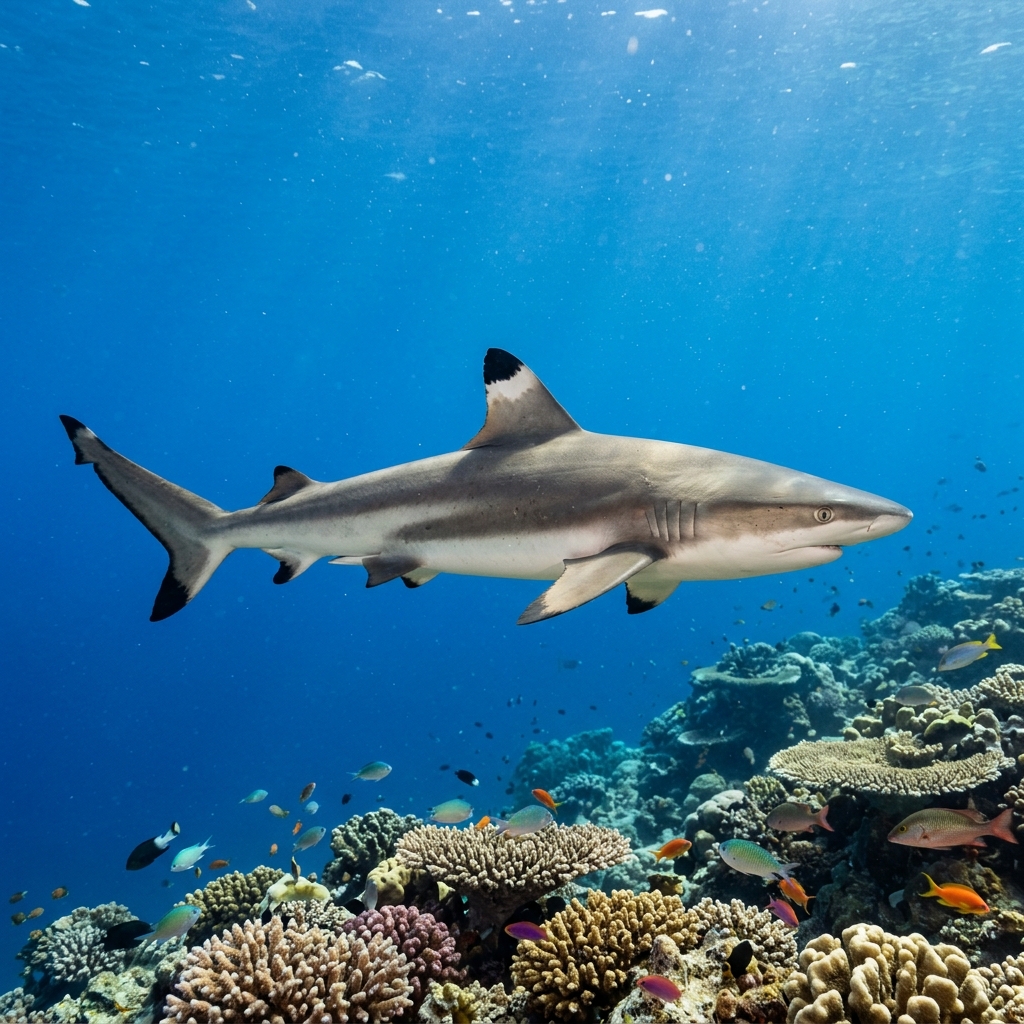
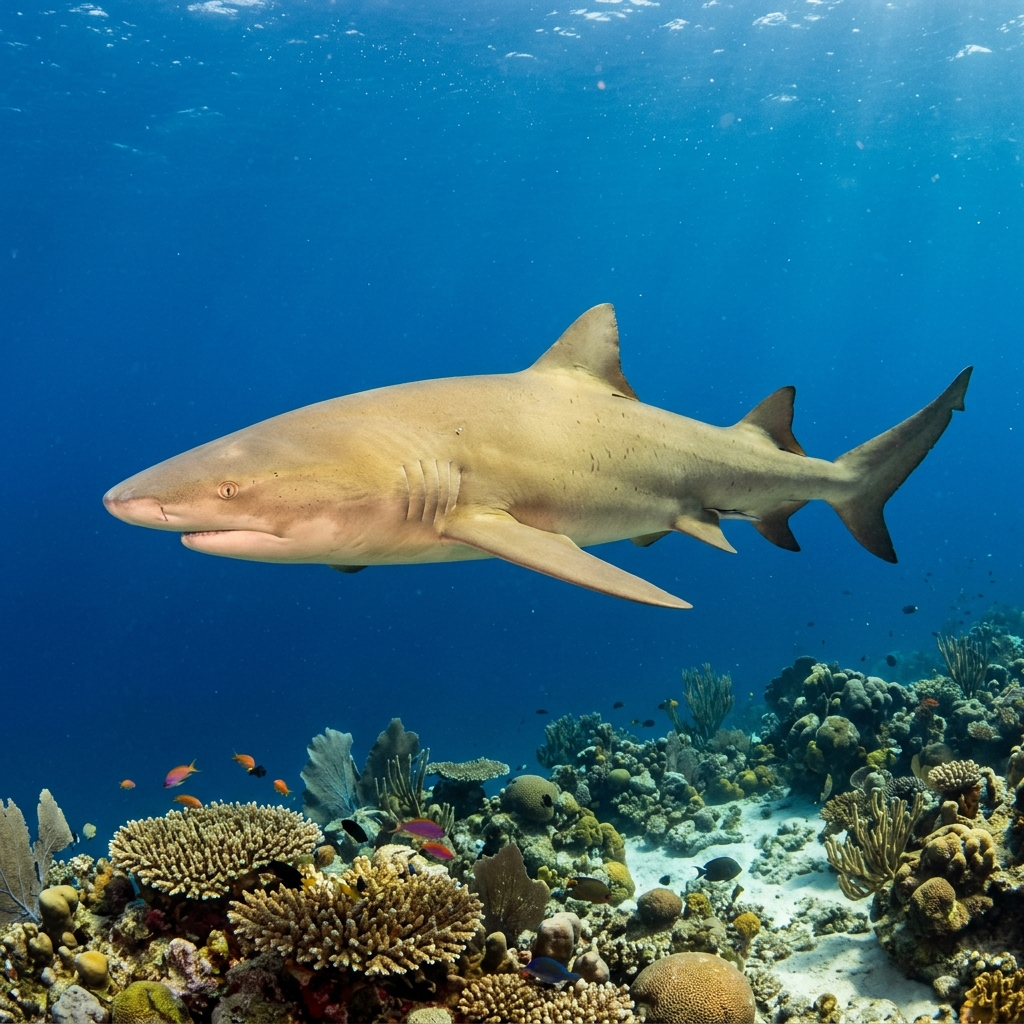
Reef neighbours a diver could mistake it for. Use the identification notes above to tell them apart.
Most heavily logged in the Maldives, especially the Northern, Southern and Central Atolls, with strong numbers also out of Sulawesi in Indonesia and across the Philippines in Luzon, Palawan and the Visayas. Marsa Alam and the Deep South in Egypt is another reliable spot, alongside sites in Australia, Brazil, Cuba and Saudi Arabia.
Mapping where Silky Shark is logged…
The Maldives is the standout destination, particularly the Northern, Southern and Central Atolls, with strong sightings also in Sulawesi (Indonesia), the Philippines (Luzon, Palawan, Visayas) and Egypt's Marsa Alam.
There's no strong seasonal pattern in the sighting data, so it's best treated as a year-round encounter wherever water stays in the 25.5-29.4°C range it favours.
They're marked as a species requiring caution because of bold, investigative behaviour in open water rather than aggression, especially around boats or bait. Keep distance, avoid feeding situations, and don't let one circle in close unnoticed.
Look for a slender bronze-grey body, a long curved dorsal fin and long sickle-shaped pectoral fins, with no bold markings. They're often seen cruising open water near reef edges rather than resting on the bottom.
They typically reach around 2.4 metres in length, giving them a slim, mid-sized profile compared to bulkier reef sharks.
Site and sighting data is aggregated from diver logs, iNaturalist and GBIF. For taxonomy and conservation status:
Sandbar Shark
1,474 sites