Carcharhinus longimanus
Spot oceanic whitetip sharks in the Egyptian Red Sea, mainly around Safaga and Marsa Alam. Here's where divers see them and what to look for.
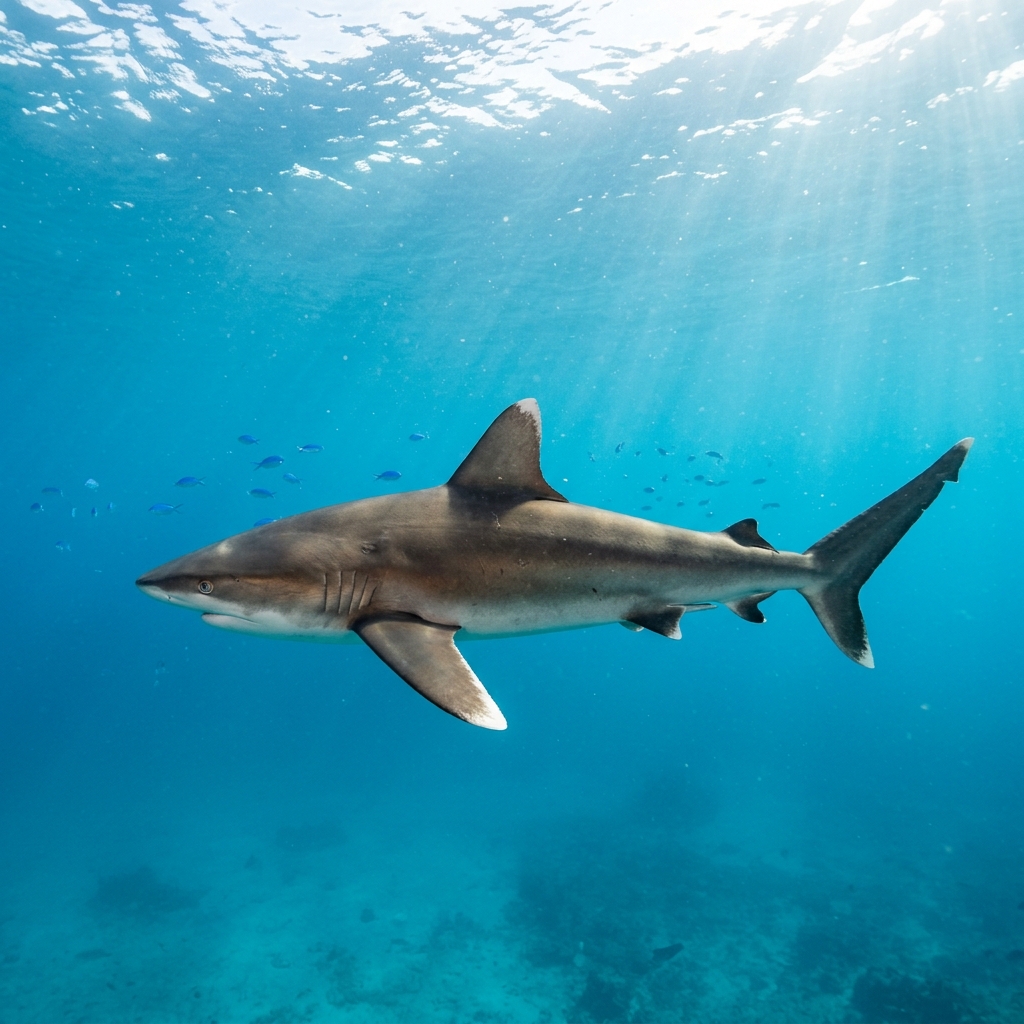
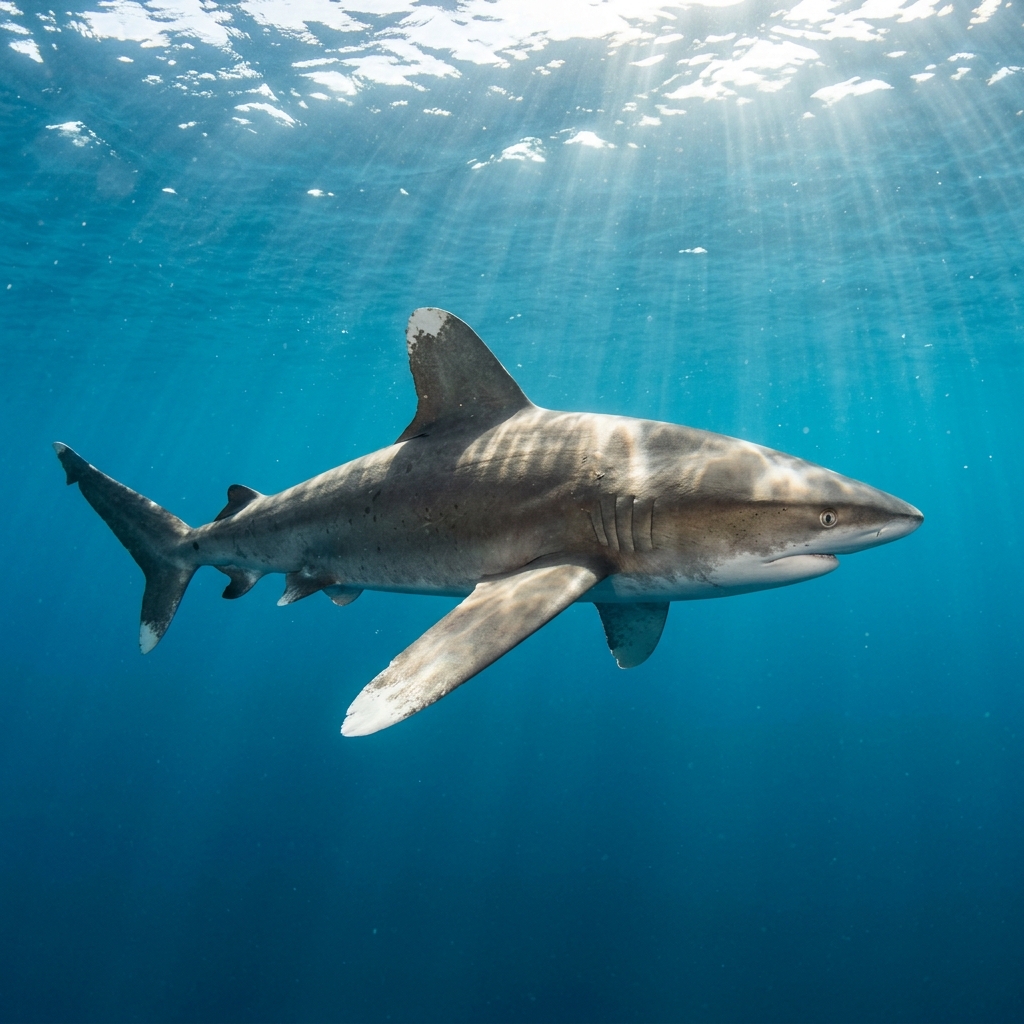
Those broad, paddle-shaped pectoral fins with distinctive white tips are the giveaway underwater. The first dorsal fin is also notably large and rounded, with a white blotch at the tip, making it unlike most other open-water sharks at a glance. Overall colouration is grey-brown on top with a white underside. It tends to cruise slowly and deliberately, which reinforces the impression of a large, unhurried shark.
Oceanic whitetips are open-water sharks that occasionally approach dive boats and offshore reef drop-offs, drawn by curiosity and the commotion of divers entering the water. They typically cruise in slow, wide circles and will close the distance steadily rather than shying away. Encounters tend to be in the mid-water column at offshore sites rather than on the reef itself.
Oceanic whitetips were once considered one of the most abundant large shark species on the planet; decades of longline fishing have driven a dramatic population collapse, which is why a sighting in the Red Sea now feels notable.
There is not enough monthly sighting data to pin down a season, so it is best treated as a year-round possibility. The species is associated with warm surface waters, consistent with the 23 to 29 °C range recorded in the Red Sea.
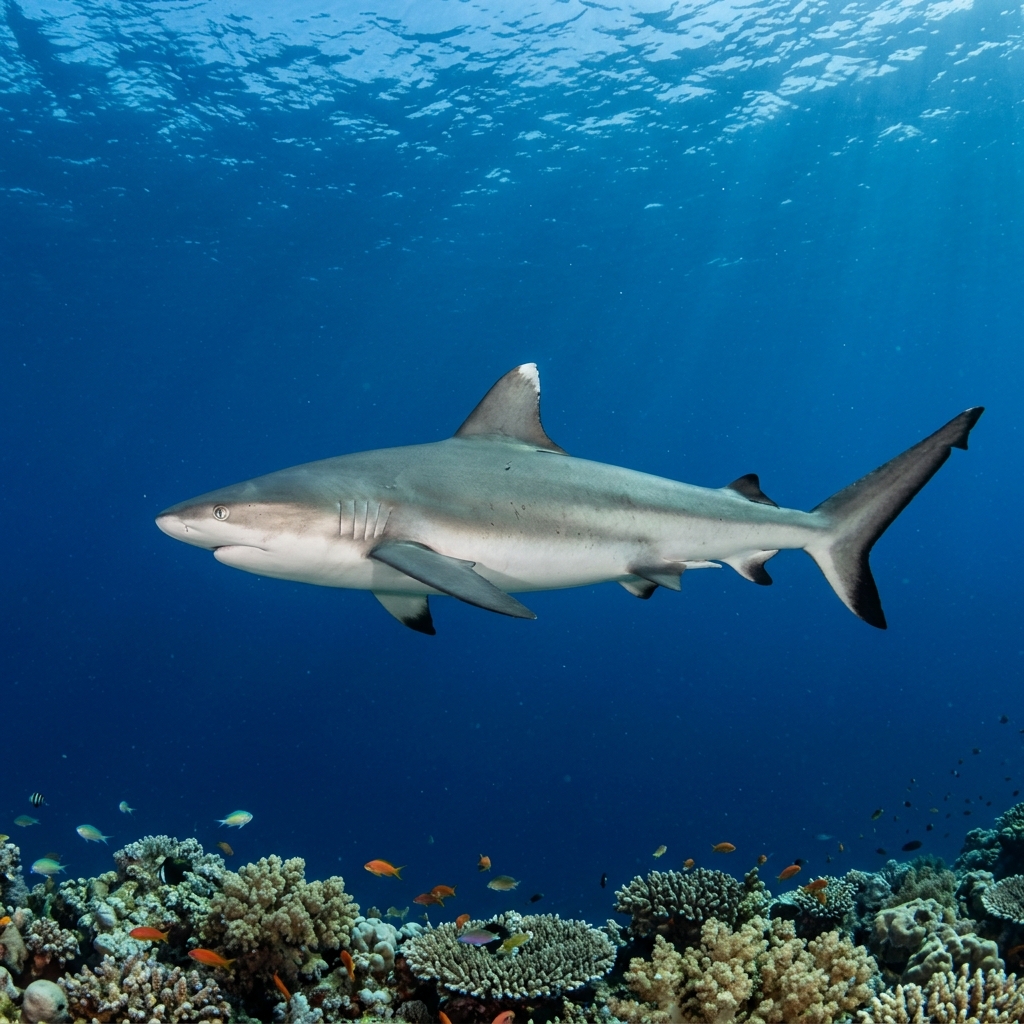
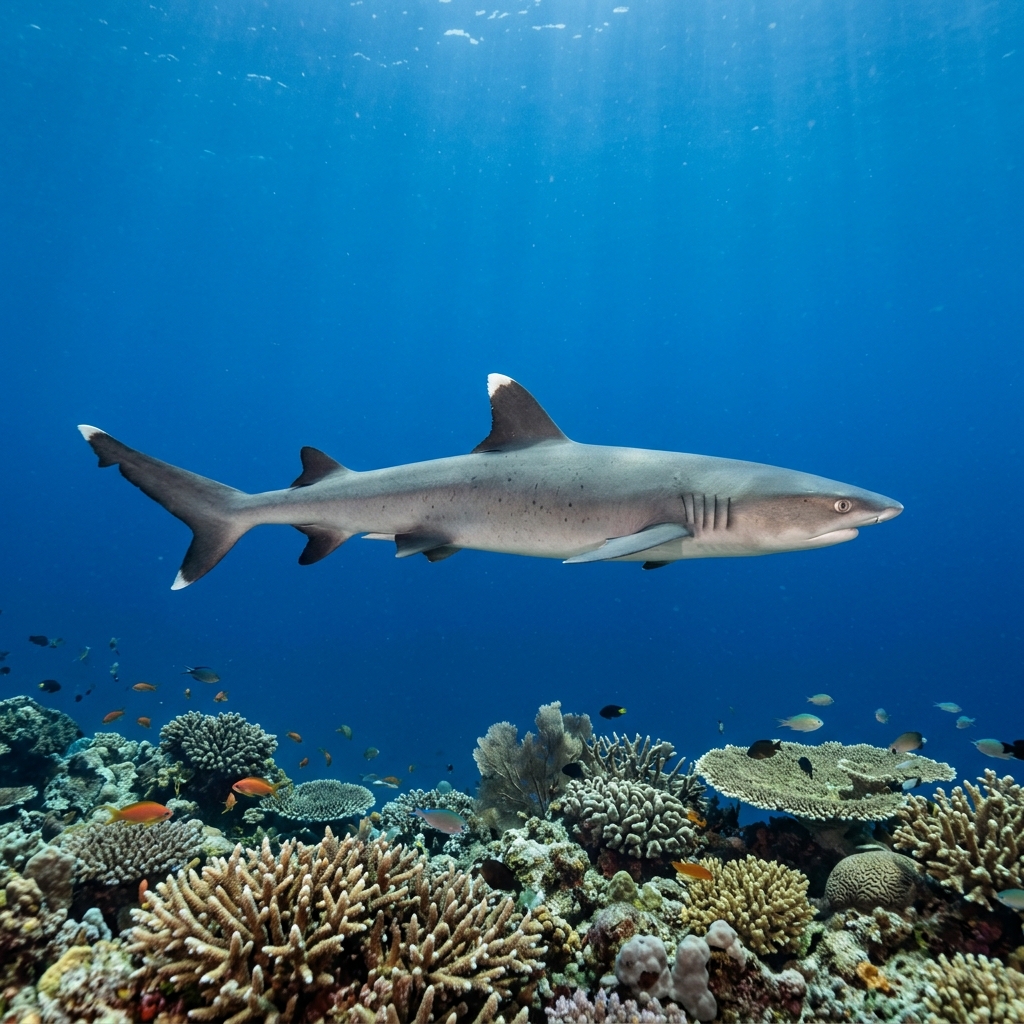
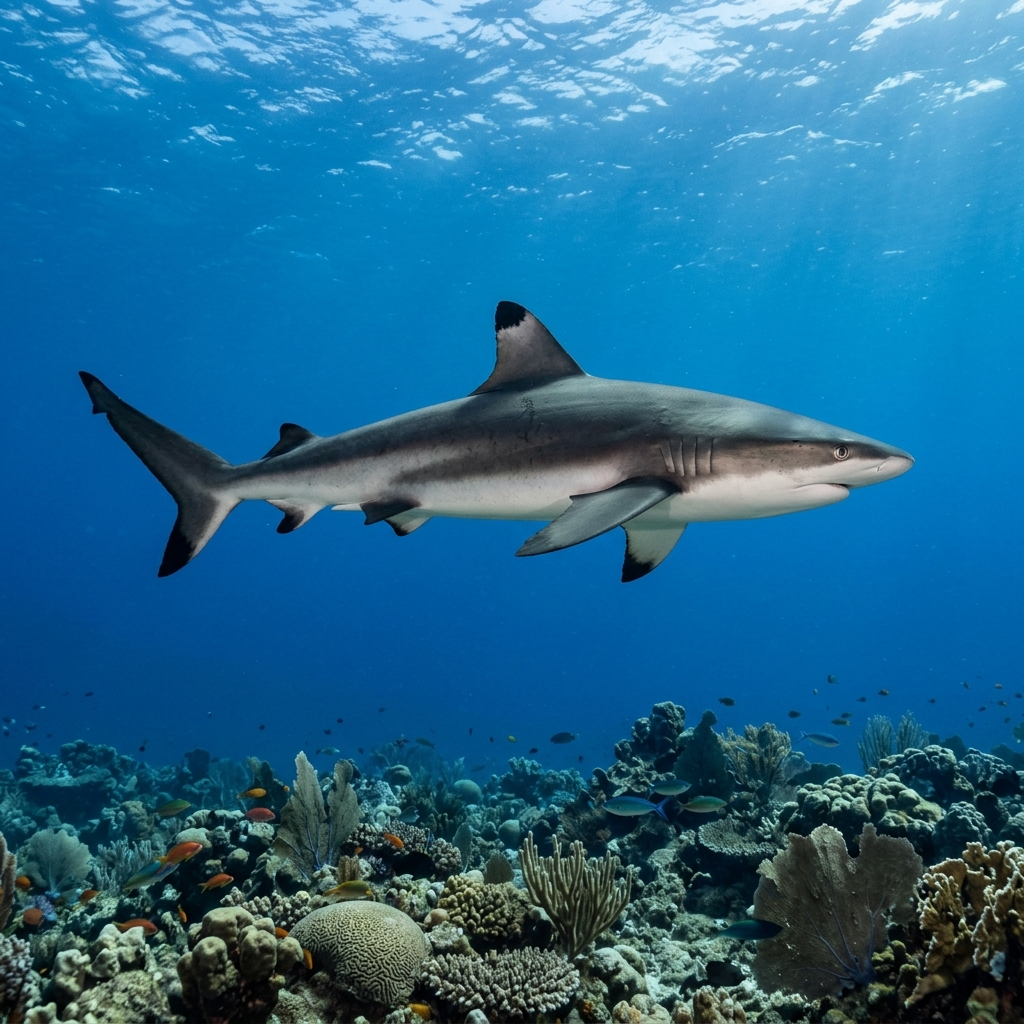
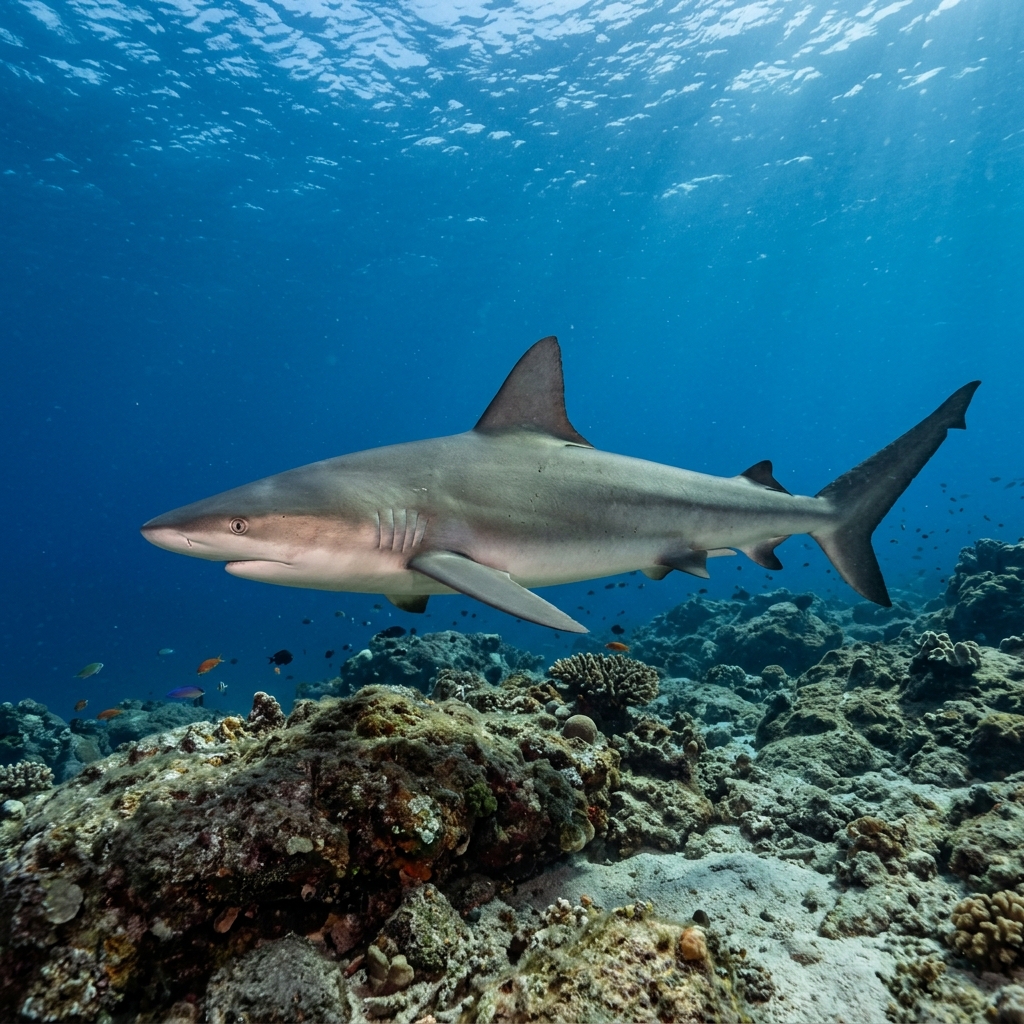
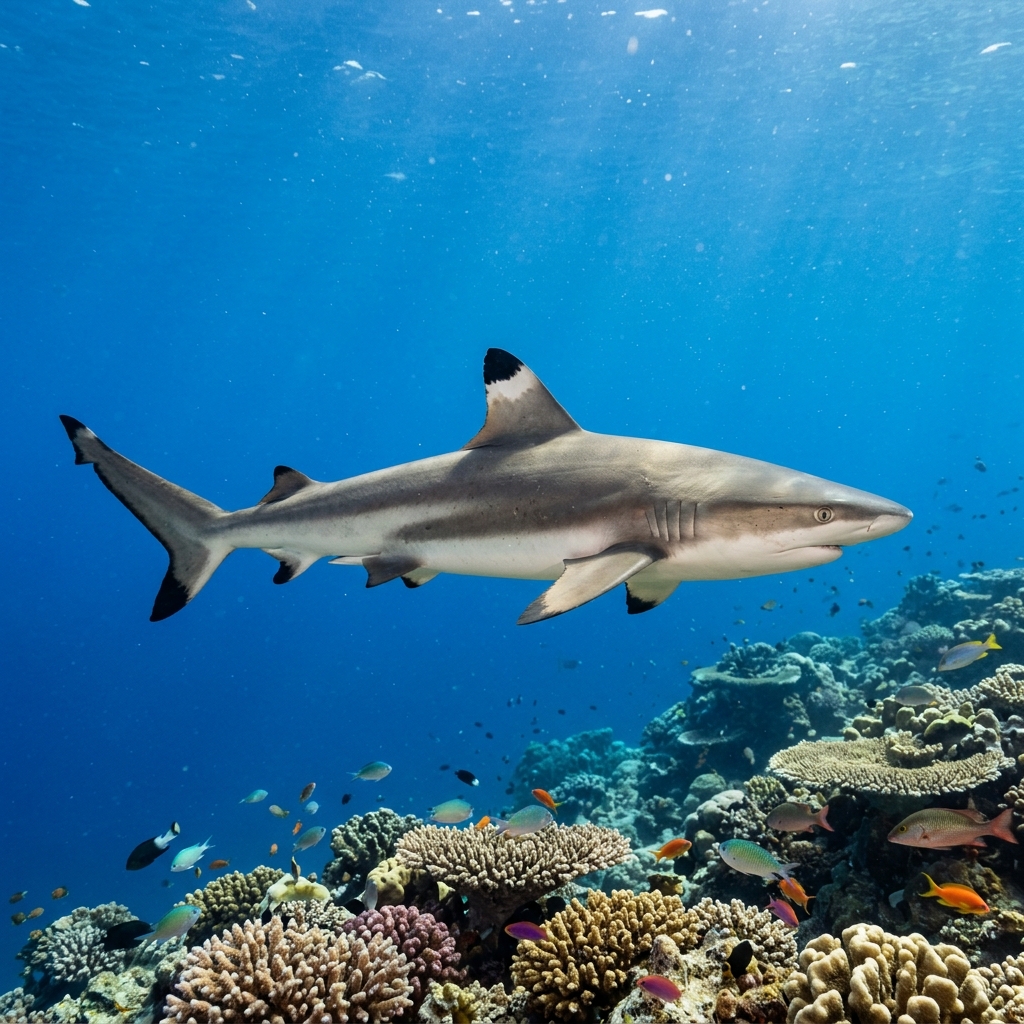
Reef neighbours a diver could mistake it for. Use the identification notes above to tell them apart.
All recorded dive sightings come from Egypt, making the Egyptian Red Sea the go-to destination. Safaga is the strongest area by far, followed by Marsa Alam further south. Both regions sit along open-water routes where this pelagic (open-ocean) shark crosses paths with divers at offshore sites.
Mapping where Oceanic Whitetip Shark is logged…
In practice, the Egyptian Red Sea is where divers reliably encounter them. Safaga and Marsa Alam are the strongest areas, with offshore sites providing the open-water habitat this shark prefers. Sightings are uncommon at most sites, so treat it as a rewarding bonus rather than a guaranteed encounter.
There is no clear peak season from available dive data, so the Red Sea sites are worth visiting year-round. Water temperatures in the recorded sighting range (around 23 to 29 °C) are present in the Red Sea across most of the year, which supports that assessment.
Look for the very broad, rounded pectoral fins with white tips and a large, rounded first dorsal fin also tipped in white. No other common open-water shark in the Red Sea combines those proportionally oversized, blunt-tipped fins with that relaxed, slow-cruising style. The overall body is stocky and grey-brown, not slender.
Yes, they are listed as Critically Endangered by the IUCN. Populations have declined dramatically worldwide due to longline fishing bycatch and targeted finning. This makes every Red Sea sighting scientifically valuable, and logging it on platforms like iNaturalist helps track where they still occur.
Adults typically reach around 3 metres in length, with large females occasionally exceeding that. In the water they appear robust and powerful, with those distinctive broad pectorals making the body look even more substantial than the length alone suggests.
The Oceanic Whitetip Shark is listed as critically endangered by the IUCN. Observe from a distance, avoid touching or feeding it, and report sightings to local marine research organisations.
This species is listed as Critically Endangered on the IUCN Red List, reflecting severe global population declines. If you see one, log your sighting with as much detail as possible as citizen-science records from the Red Sea contribute to understanding where remnant populations persist.
Site and sighting data is aggregated from diver logs, iNaturalist and GBIF. For taxonomy and conservation status:
Sandbar Shark
1,474 sites