Carcharhinus plumbeus
Spot sandbar sharks in Florida, the Maldives, and beyond. Learn the key ID features that set this reef shark apart from its look-alikes.
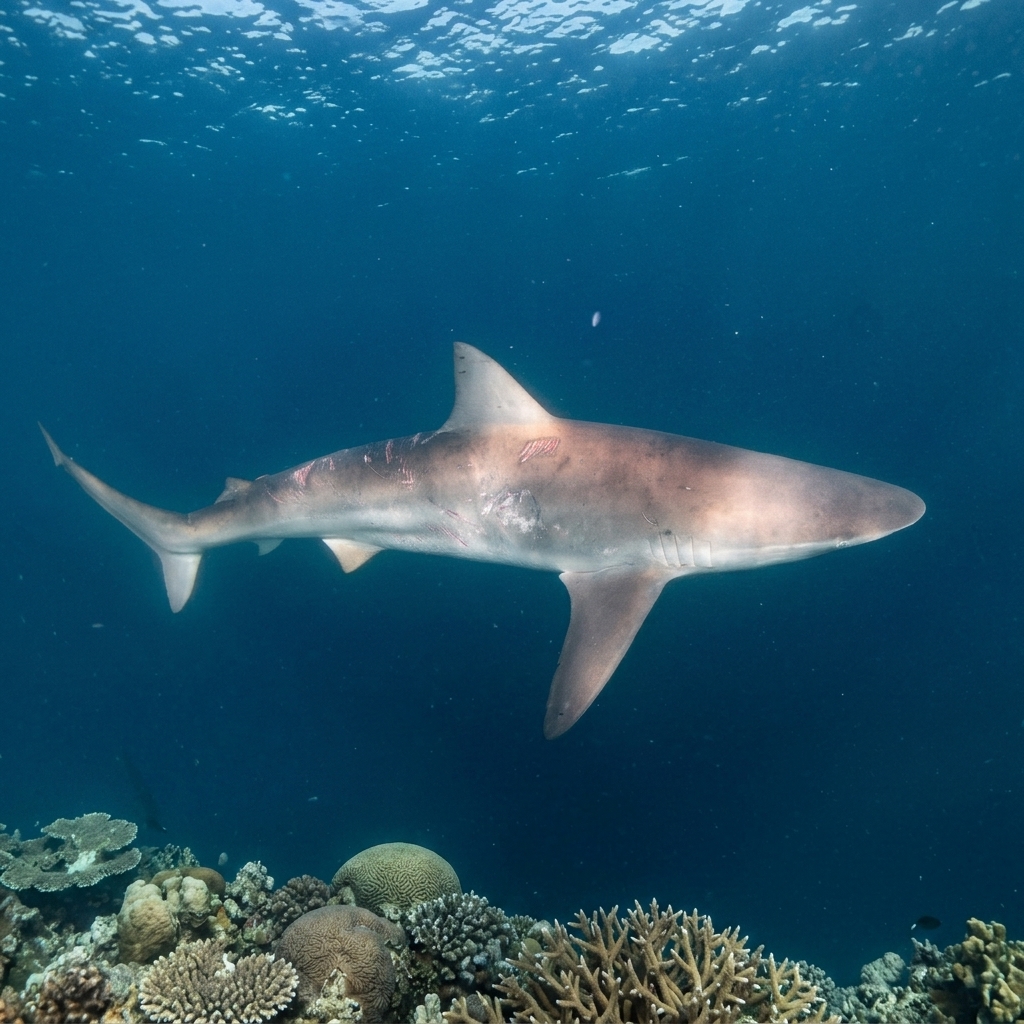
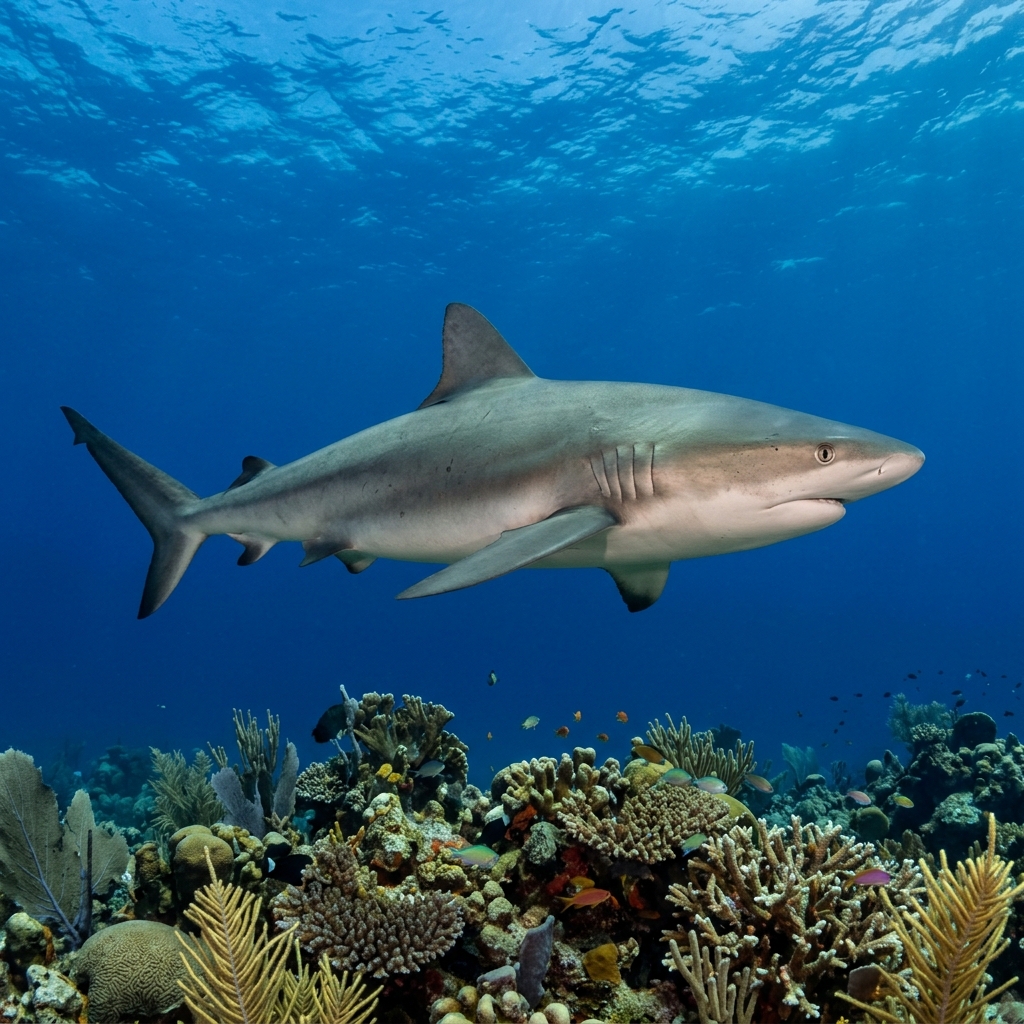
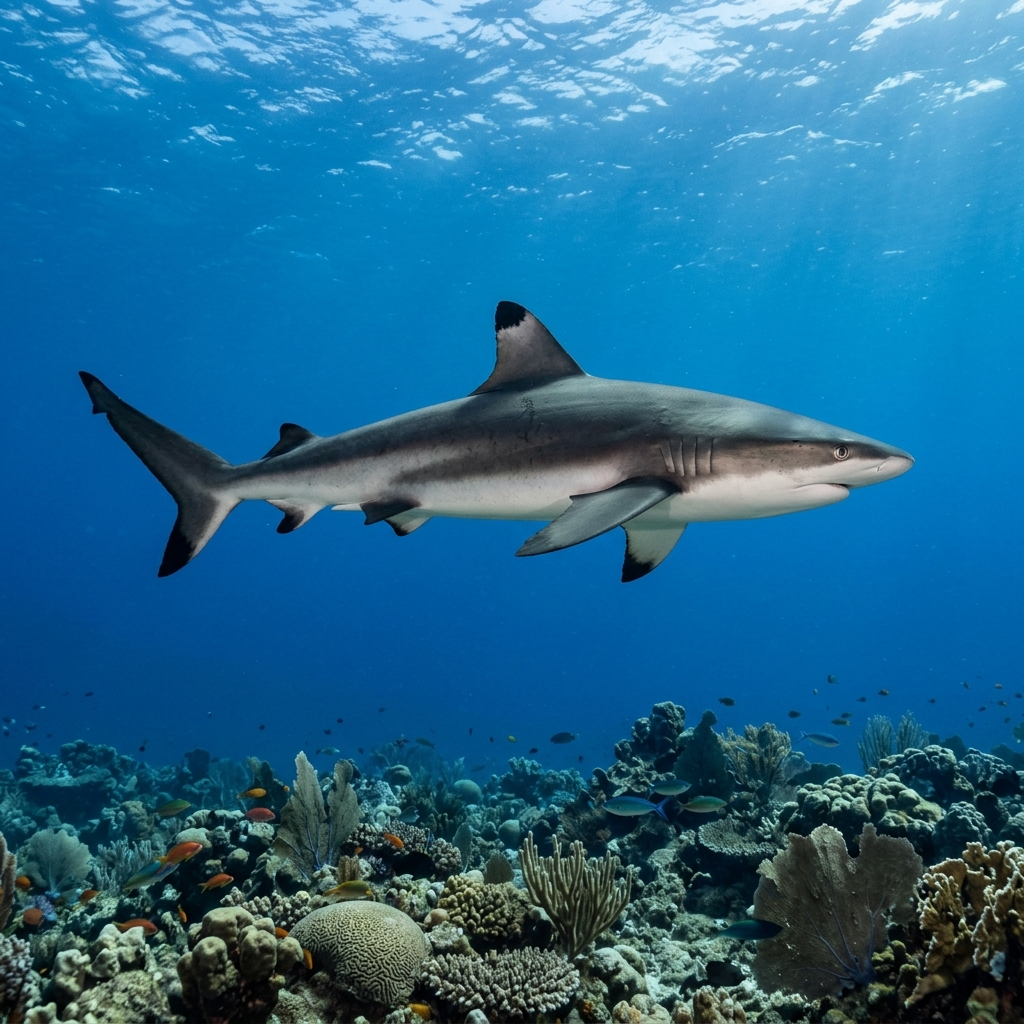
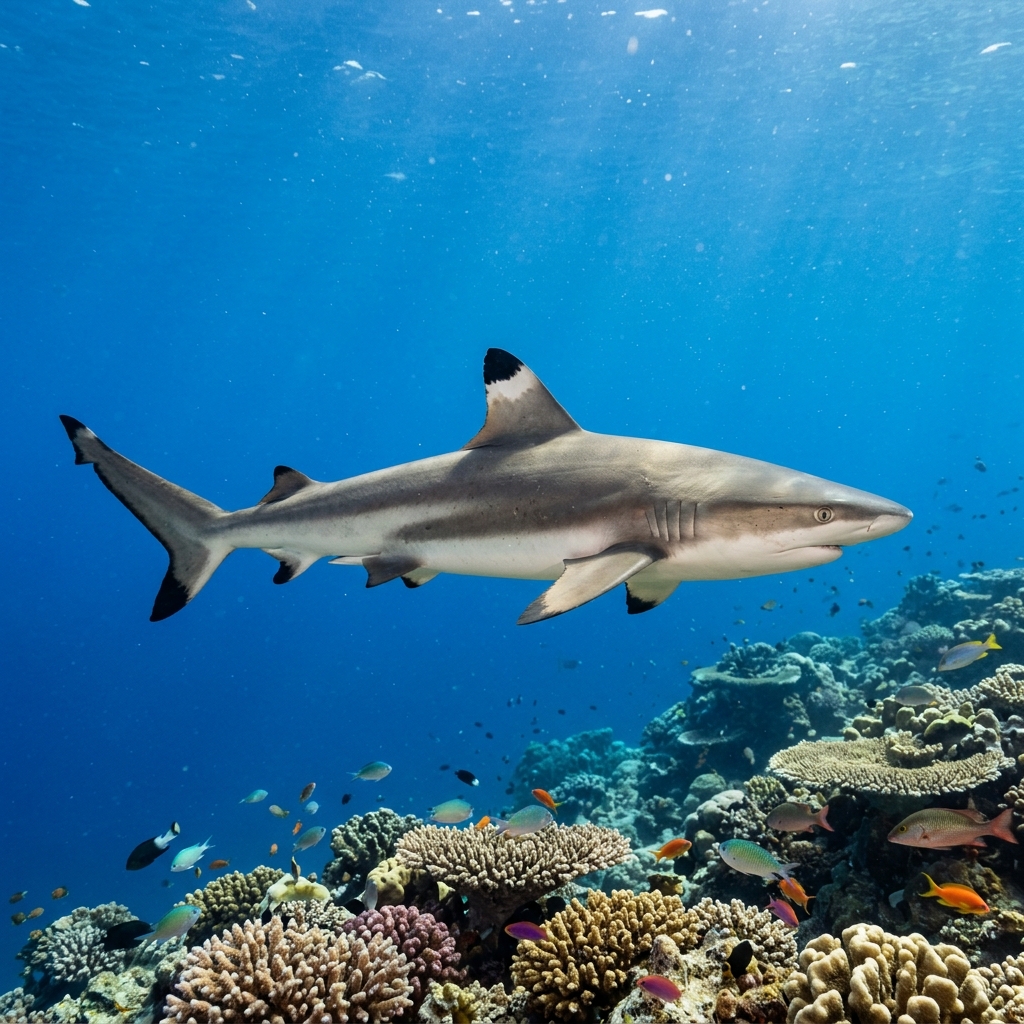
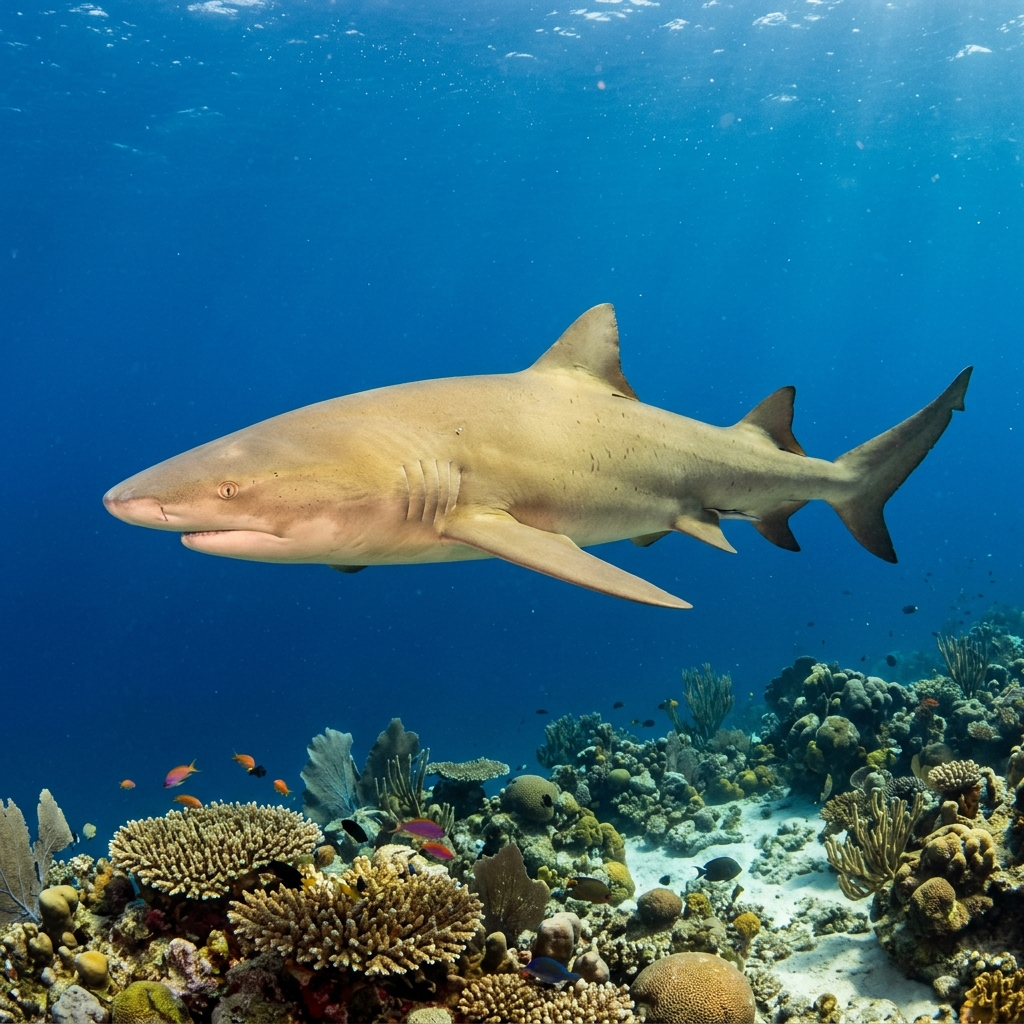
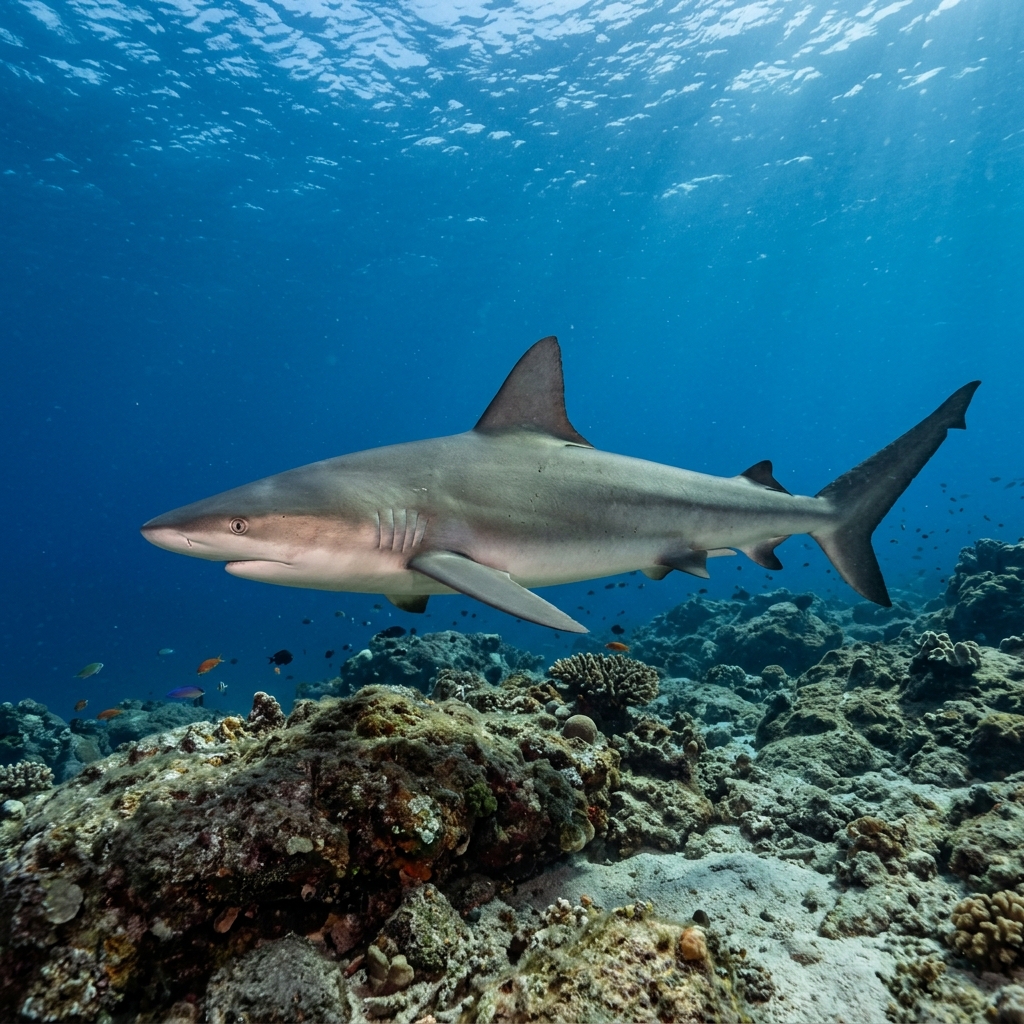
A stocky, heavy-bodied shark with a notably tall first dorsal fin, proportionally the largest of any requiem shark, which is the single best field mark to fix on underwater. Colouration is plain grey-brown on the back, fading to a white underside, with no bold fin markings to speak of. At around two metres, it sits solidly mid-sized among reef sharks. Females run larger than males; if you get a close-enough look, males show paired claspers, finger-like extensions behind the pelvic fins.
Typically cautious around divers, sandbar sharks tend to keep their distance rather than approach, often holding a steady patrol at mid-water or along the reef edge. They are most active at dawn and dusk, so timing a dive around those windows improves your chances of seeing one on the move rather than cruising passively. Watch for them following schools of baitfish near drop-offs or reef structure where prey concentrates.
Sandbar sharks have one of the longest gestation periods of any shark, carrying pups for around 12 months and giving birth to small litters, which makes populations recover very slowly from fishing pressure.
No clear seasonal peak has emerged from the data, so it is treated as a year-round encounter wherever it occurs. Its observed temperature range of roughly 17 to 29 degrees Celsius means it can turn up on both warm tropical reefs and cooler temperate waters at different times of year.
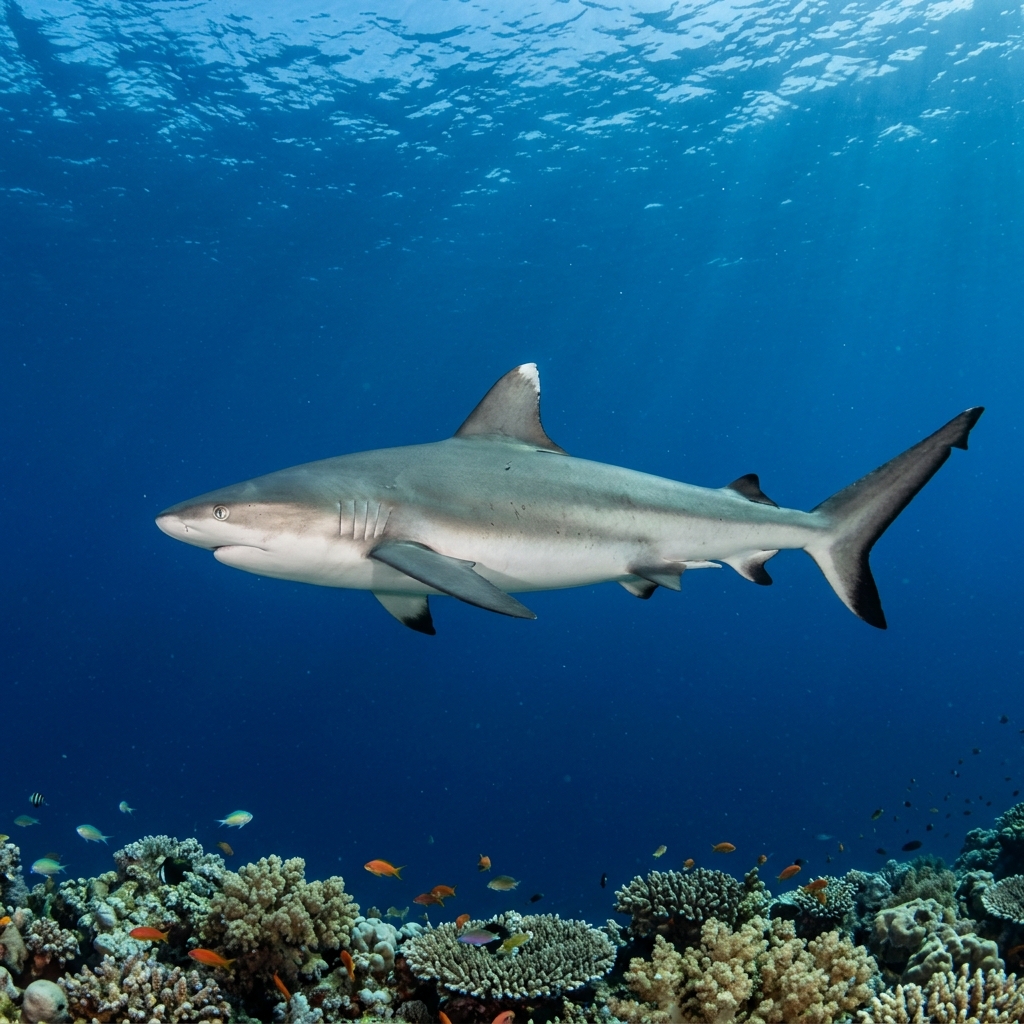
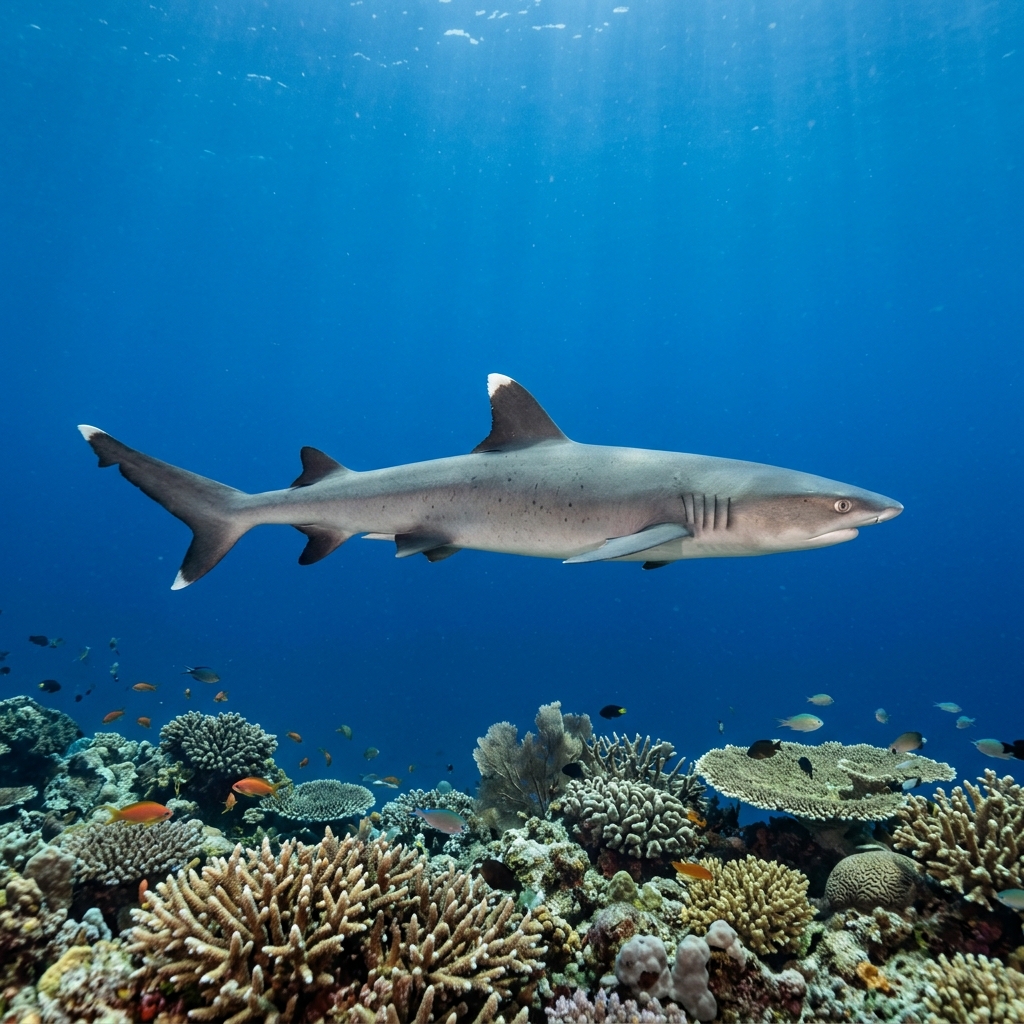
Reef neighbours a diver could mistake it for. Use the identification notes above to tell them apart.
Most consistently logged in the Maldives, particularly across the North and Central Atolls and the Felidhoo and Mulaku region. Florida and the broader US Southeast represent some of the strongest records in the western Atlantic. Australia's Queensland coast, Brazil, and Mediterranean destinations including Greece, Croatia, and Italy also feature it across a wide spread of sites.
Mapping where Sandbar Shark is logged…
The Maldives, particularly the North and Central Atolls, is one of the top destinations. Florida and the US Southeast are strong in the western Atlantic, while Queensland in Australia and parts of the Mediterranean, including Greece and Croatia, also hold populations.
No firm seasonal pattern has been confirmed, so encounters are possible year-round depending on location. Dawn and dusk dives tend to be most productive, as sandbar sharks are more active at those times than in the middle of the day.
Look for the tall first dorsal fin, proportionally the largest of any requiem shark, on a plain grey-brown, heavy-bodied animal around two metres long. There are no bold fin markings. That tall dorsal fin alone is usually enough to separate it from similar species in the same water.
Adults typically reach around 210 cm in length. Females grow larger than males overall. For comparison, that puts them comfortably larger than a grey reef shark but smaller than a bull shark.
Yes. The sandbar shark is classified as Endangered on the IUCN Red List. Its very slow reproductive rate, with a gestation of around 12 months and small litters, means populations take a long time to recover once depleted.
The Sandbar Shark is listed as endangered by the IUCN. Observe from a distance, avoid touching or feeding it, and report sightings to local marine research organisations.
Listed as Endangered on the IUCN Red List, largely due to slow reproduction and heavy historical fishing pressure. If you encounter one, maintain a respectful distance and report the sighting through Fin to contribute to population monitoring.
Site and sighting data is aggregated from diver logs, iNaturalist and GBIF. For taxonomy and conservation status:
Blacktip Reef Shark
1,235 sites