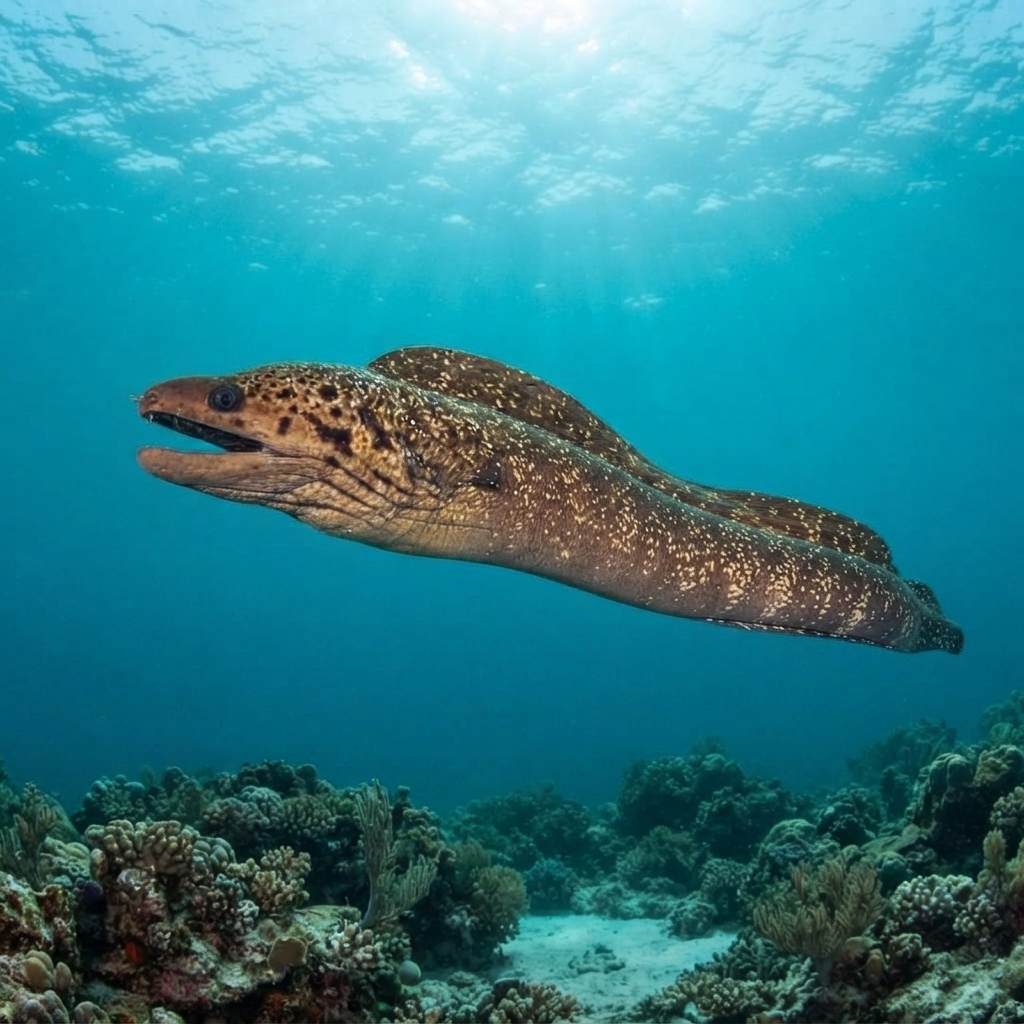
Gymnothorax cribroris
An uncommon moray logged in Queensland and New South Wales, comfortable in 22 to 28.5C water year-round.
Safety warning
It can bite if provoked or if a diver reaches into a crevice without looking, and moray bites are deep and prone to infection. Keep hands away from holes and ledges, and never attempt to feed or touch it.
If you're bitten
BiteGeneral first-aid guidance, not a substitute for professional medical care. In an emergency, call your local emergency number.
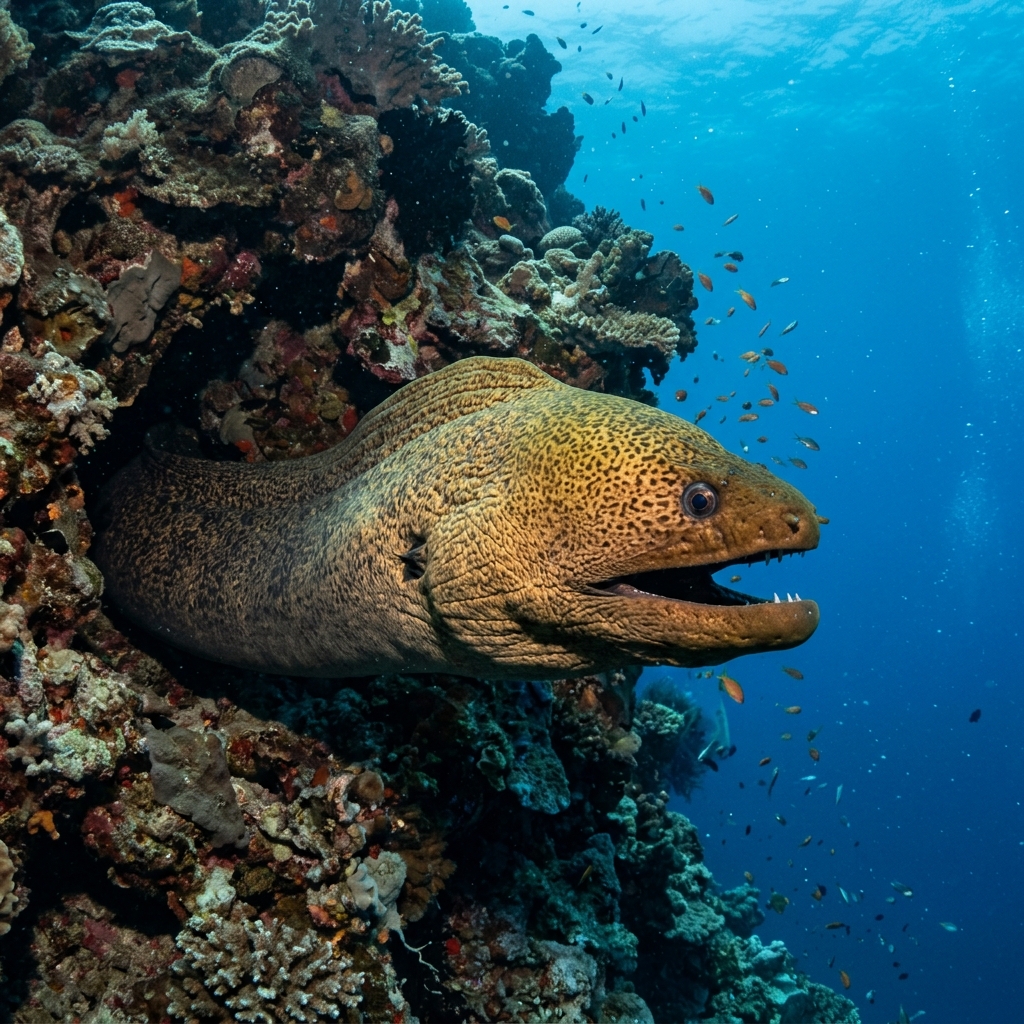
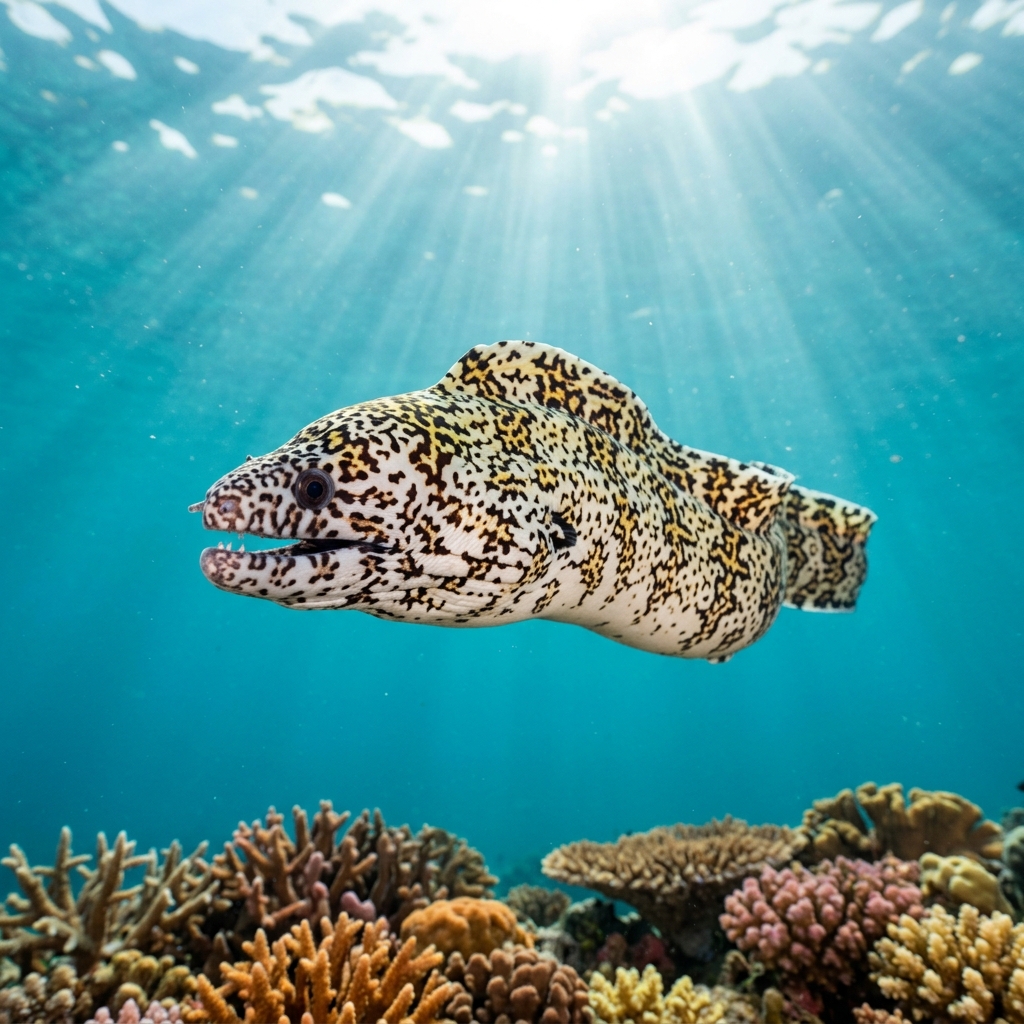
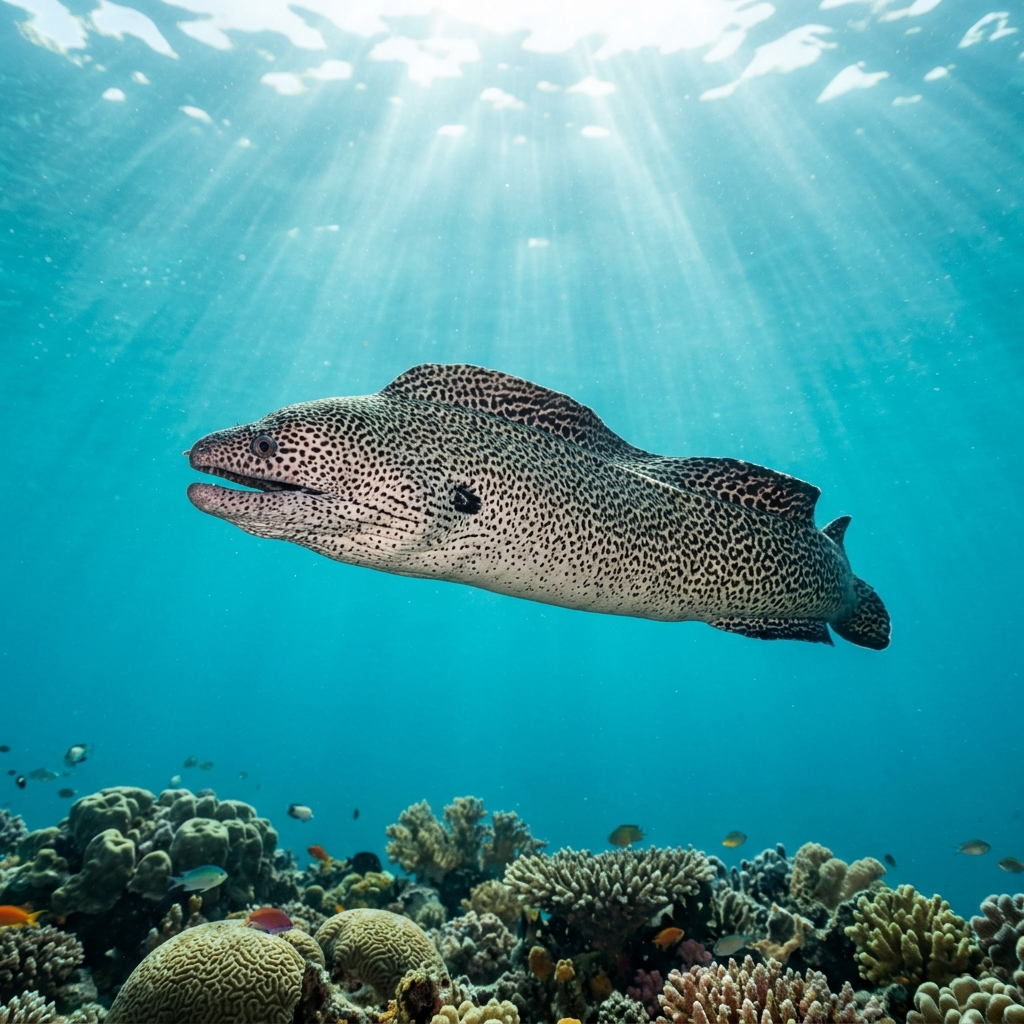
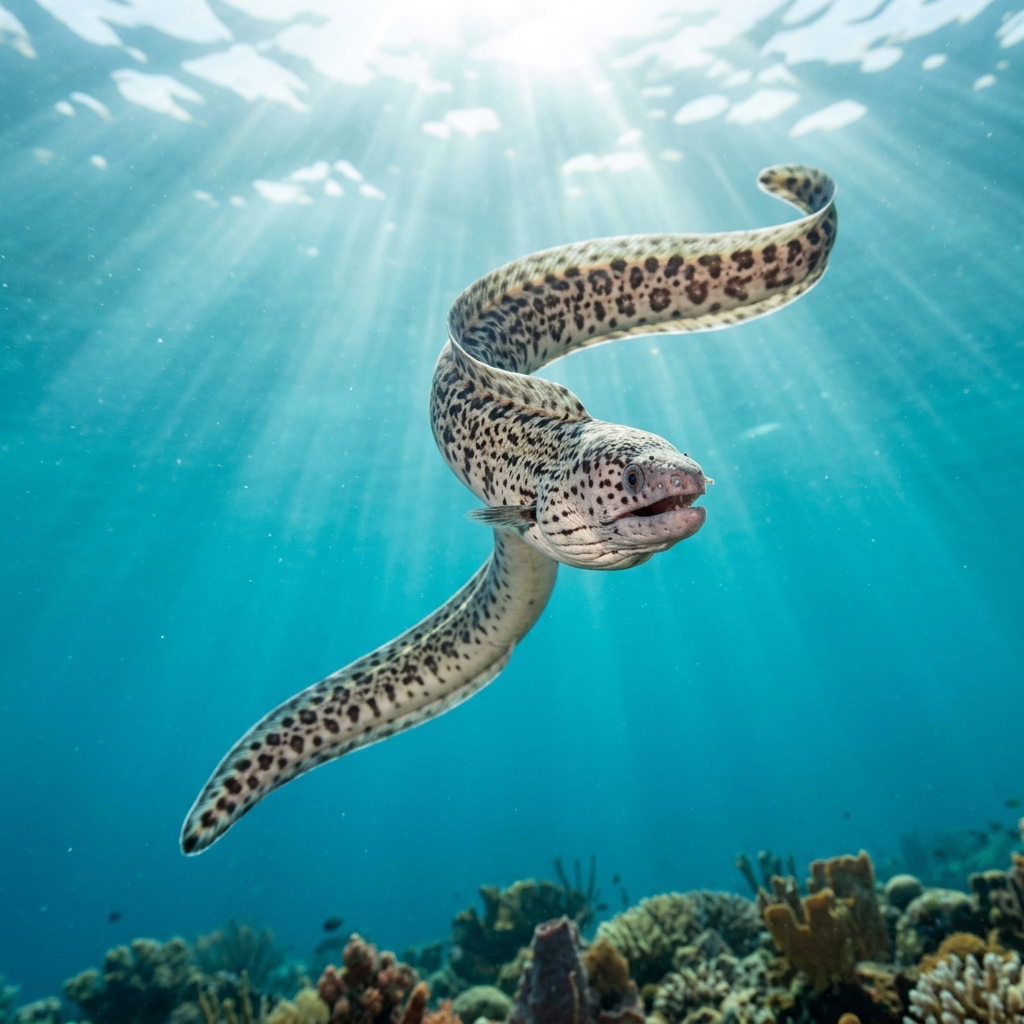
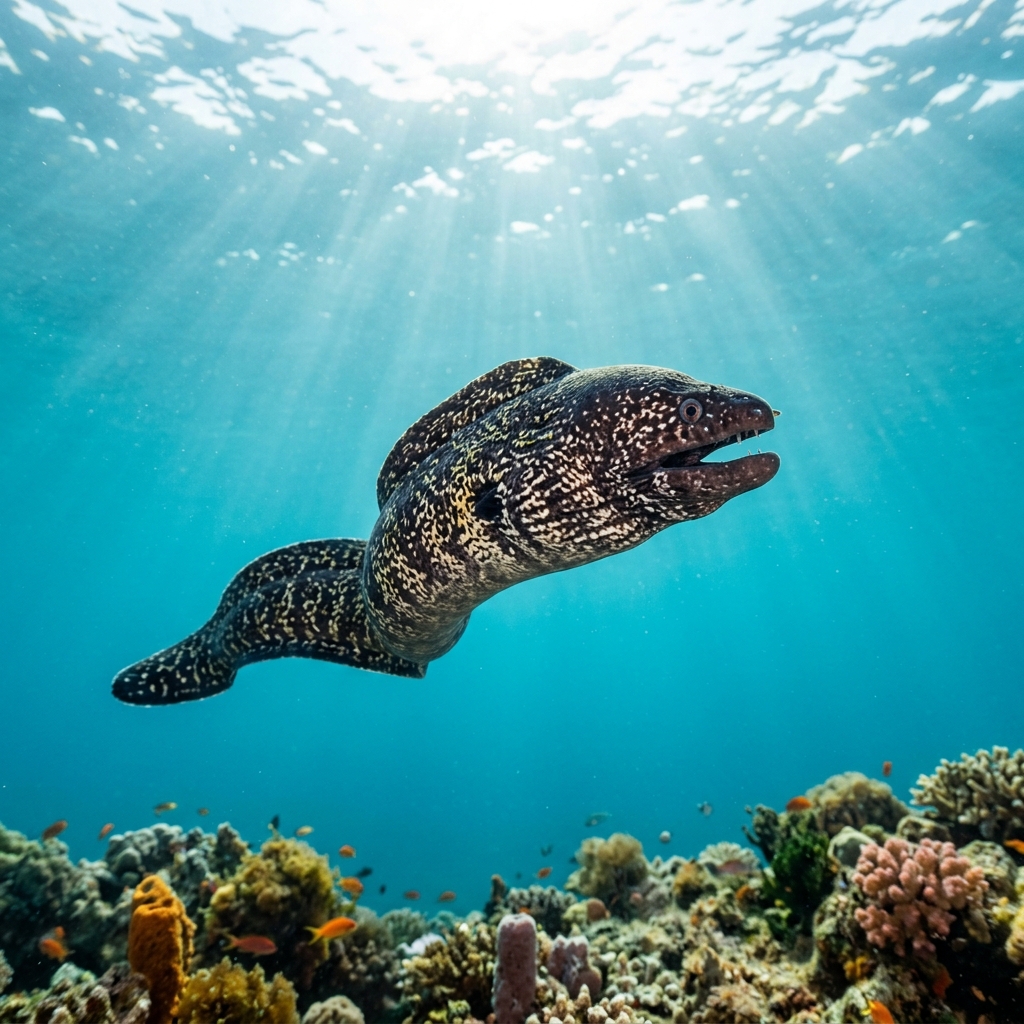
Grows to roughly 52 cm, a modest size for a moray, with a slender body typical of the genus. Look for a mottled, pale sieve-like speckling over a brownish base colour, which gives the species its name. It holds its head out of a crevice with its mouth agape, showing the usual moray dentition, rather than swimming freely in open water.
Typically seen tucked into a crevice or under a ledge with just its head showing, gently opening and closing its mouth to breathe. It tends to hold its ground rather than bolt when divers approach, though it will retreat further into its hole if crowded. Most sightings are during the day on reef structure where it has a bolthole close by.
Like other morays, it relies on a second set of jaws in its throat (pharyngeal jaws) to drag prey down, a trait unique to this eel family among reef fish.
Sightings don't show a clear season, and its temperature range of 22.2 to 28.5C spans much of the year on Australian reefs, so it's best treated as a year-round possibility rather than tied to a particular month.
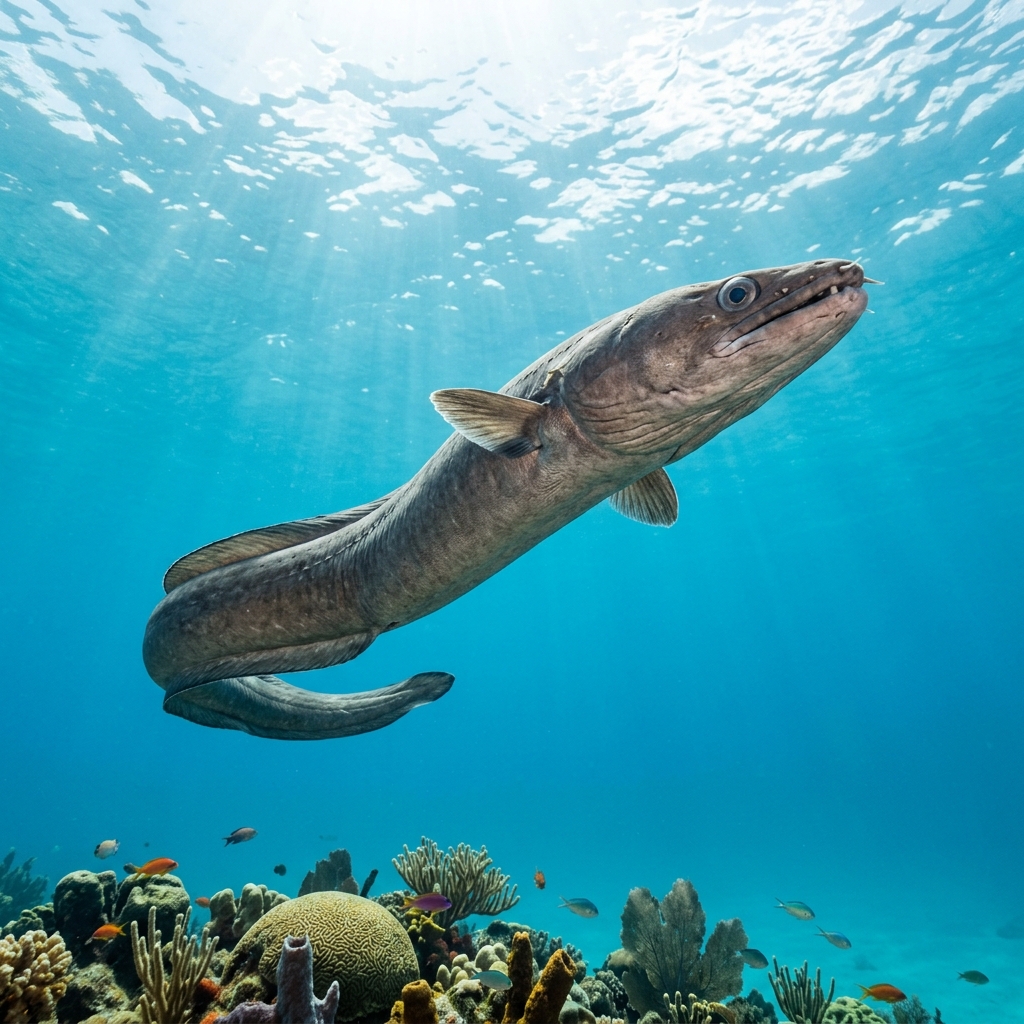
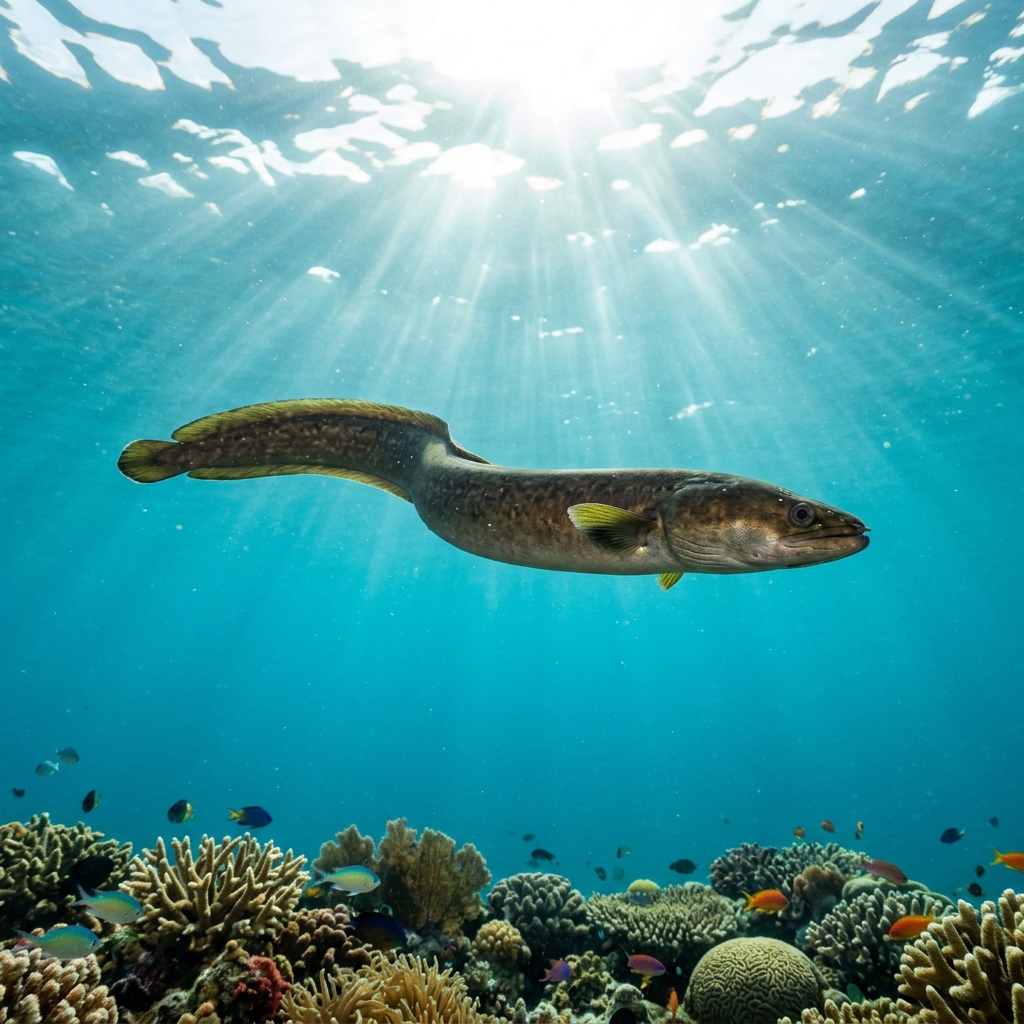
Reef neighbours a diver could mistake it for. Use the identification notes above to tell them apart.
Logged sites sit in Australia, with confirmed sightings in Queensland and in New South Wales. It is an uncommon find at both locations, so treat any sighting as a bonus rather than a given on a reef or rocky-reef dive in these regions.
Mapping where Sieve Moray is logged…
Confirmed sightings come from Australia, specifically Queensland and New South Wales. It's logged as uncommon at both, so it's a possible find on reef dives in these regions rather than a guaranteed one.
There's no strong season in the sighting data, and it's recorded in water from 22.2 to 28.5C, a range that holds across much of the year on Australian reefs. Treat it as a year-round possibility.
It can bite if it feels threatened or if a diver puts a hand into its crevice, and moray bites are deep. Give it space, avoid reaching into holes, and it will generally stay put watching you from its shelter.
Look for a smallish moray, around 52 cm, with a mottled pale-and-brown speckled pattern over its body, usually seen with just its head poking from a crevice. The sieve-like speckling is the main giveaway compared to plainer or more strongly patterned morays.
They reach around 52 cm in length, making them a smaller species within the moray family compared to giants like the giant moray.
Site and sighting data is aggregated from diver logs, iNaturalist and GBIF. For taxonomy and conservation status:
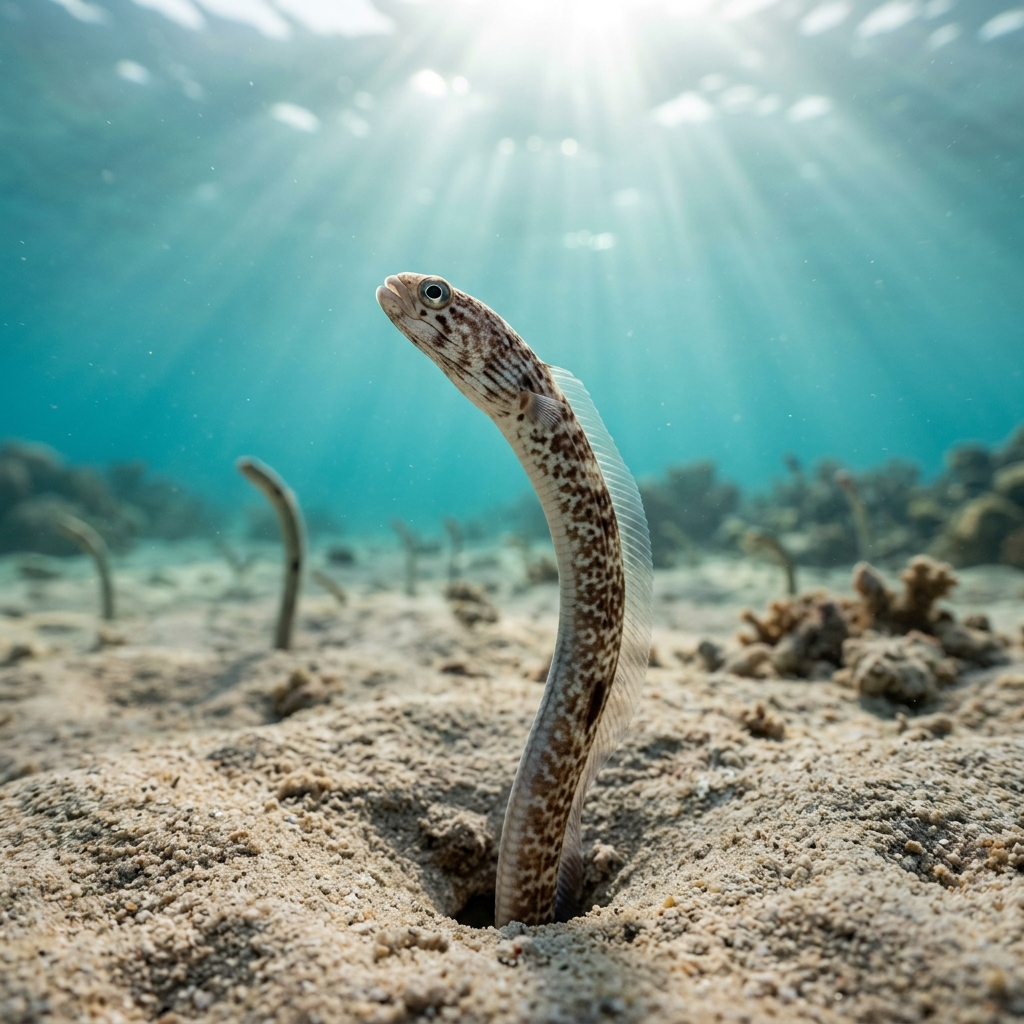
Garden Eel
2,448 sites