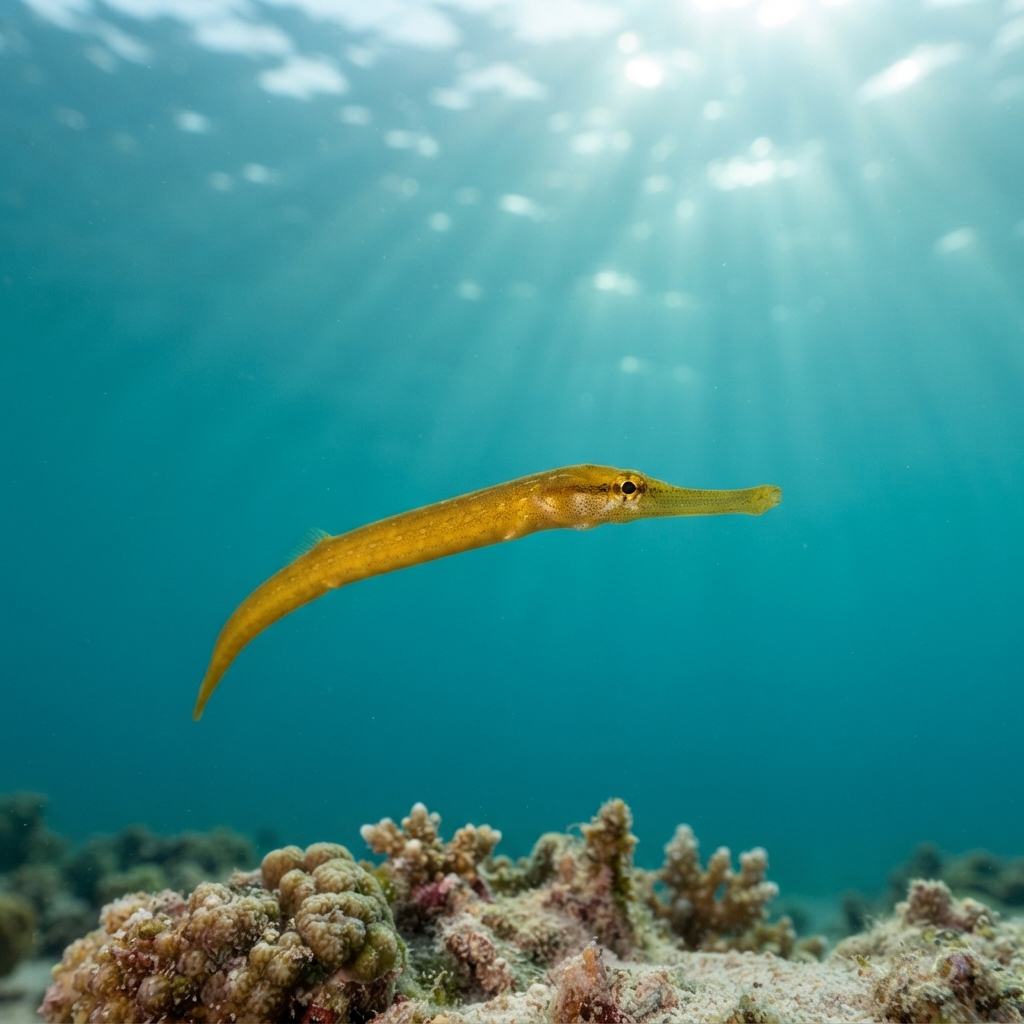
Cosmocampus elucens
A rare, 10cm find on reefs around Grand Cayman, this slender pipefish hides in the rubble at 18-27°C year-round.
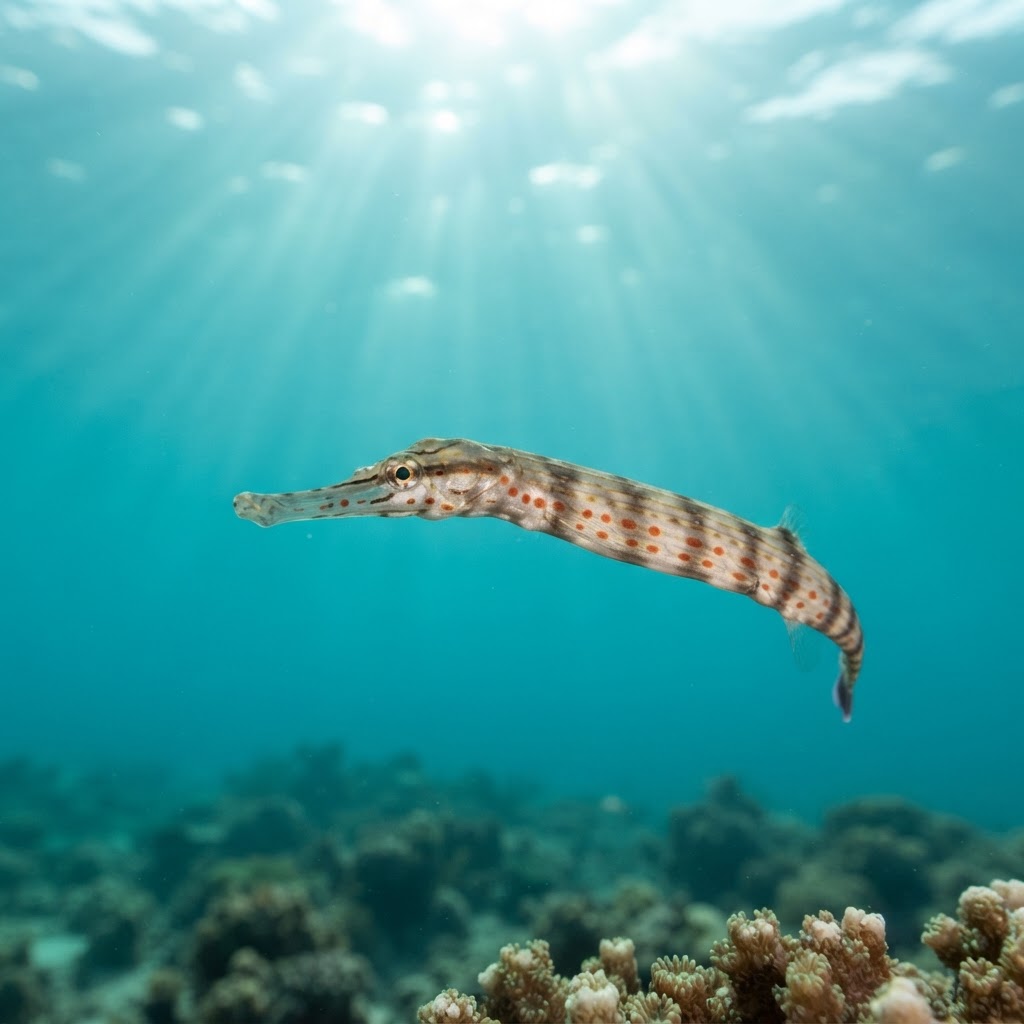
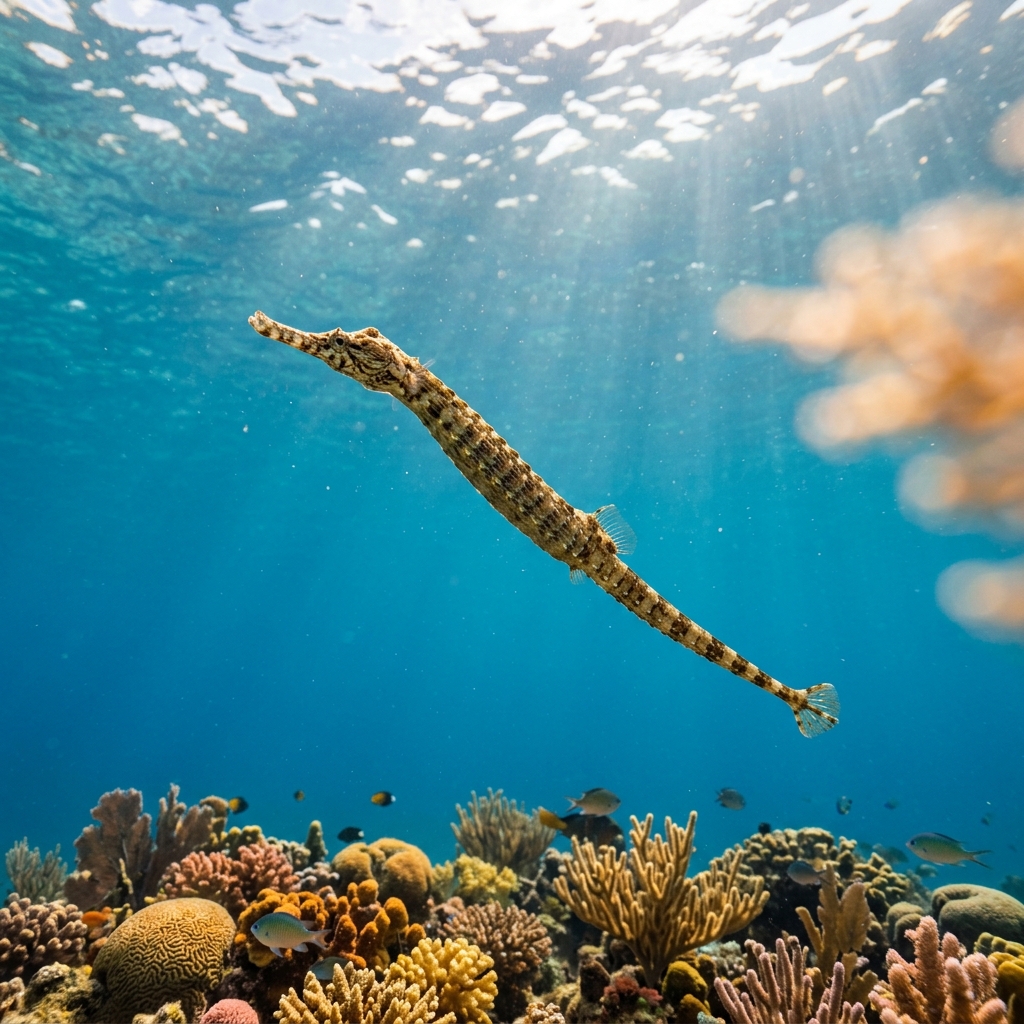
Slim, straight-bodied fish about 10 cm long, built like a thin twig rather than the curled shape of a seahorse. Colouring runs tan to olive with faint mottling that blends into rubble and algae, and the long snout is tipped with a small terminal mouth. It swims in a stiff, horizontal posture, propelled by a barely visible tail fin, rather than drifting upright.
Divers who log this pipefish usually find it tucked against rubble, sponge, or low algae rather than out in the open water column. It tends to hold still or move in short, deliberate bursts, relying on its camouflage to avoid notice, so a slow look through rubble patches and low-relief structure pays off more than scanning open reef.
Like other pipefish, males carry the fertilised eggs on their underside until they hatch, so the parenting job in this species falls entirely to the male.
No clear seasonal pattern shows up in the data, and its comfortable range of 18 to 27.2°C spans typical Caribbean reef temperatures all year, so sightings are essentially a matter of luck any month.
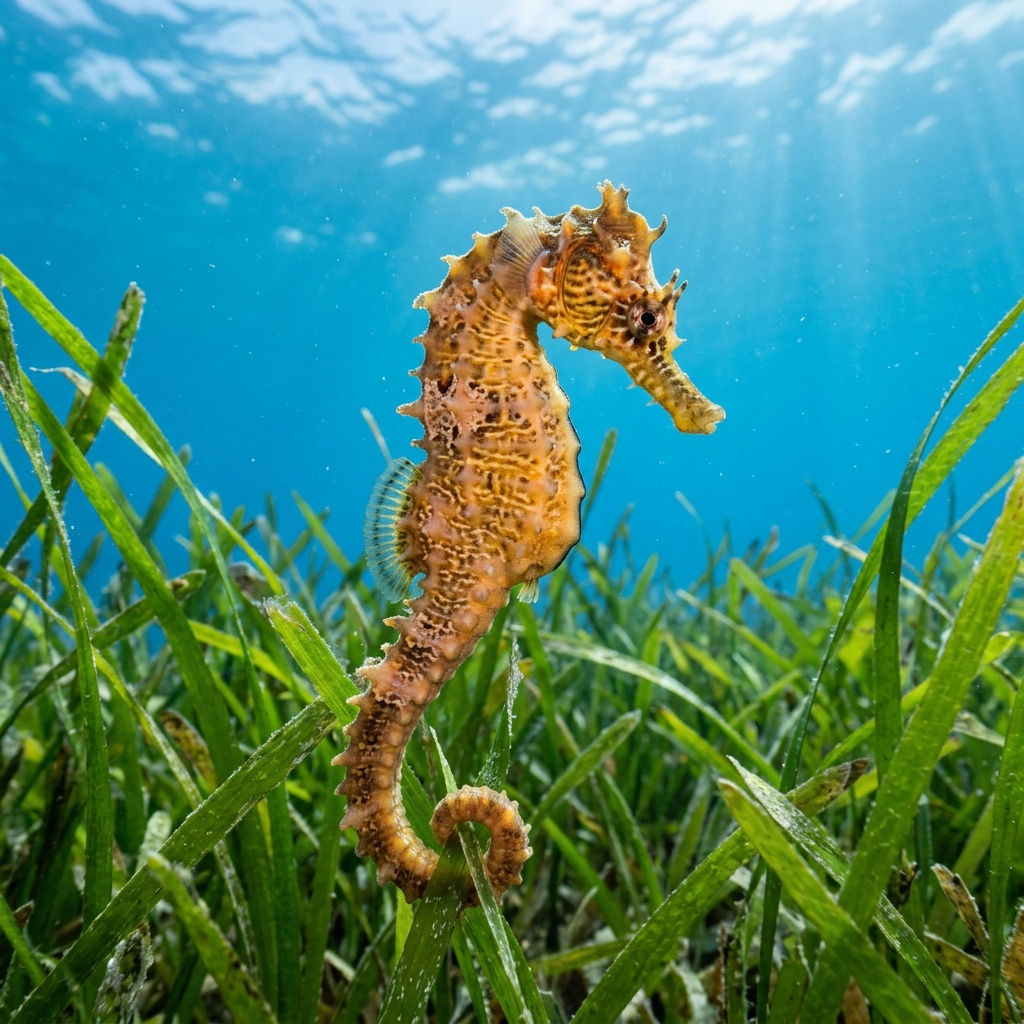
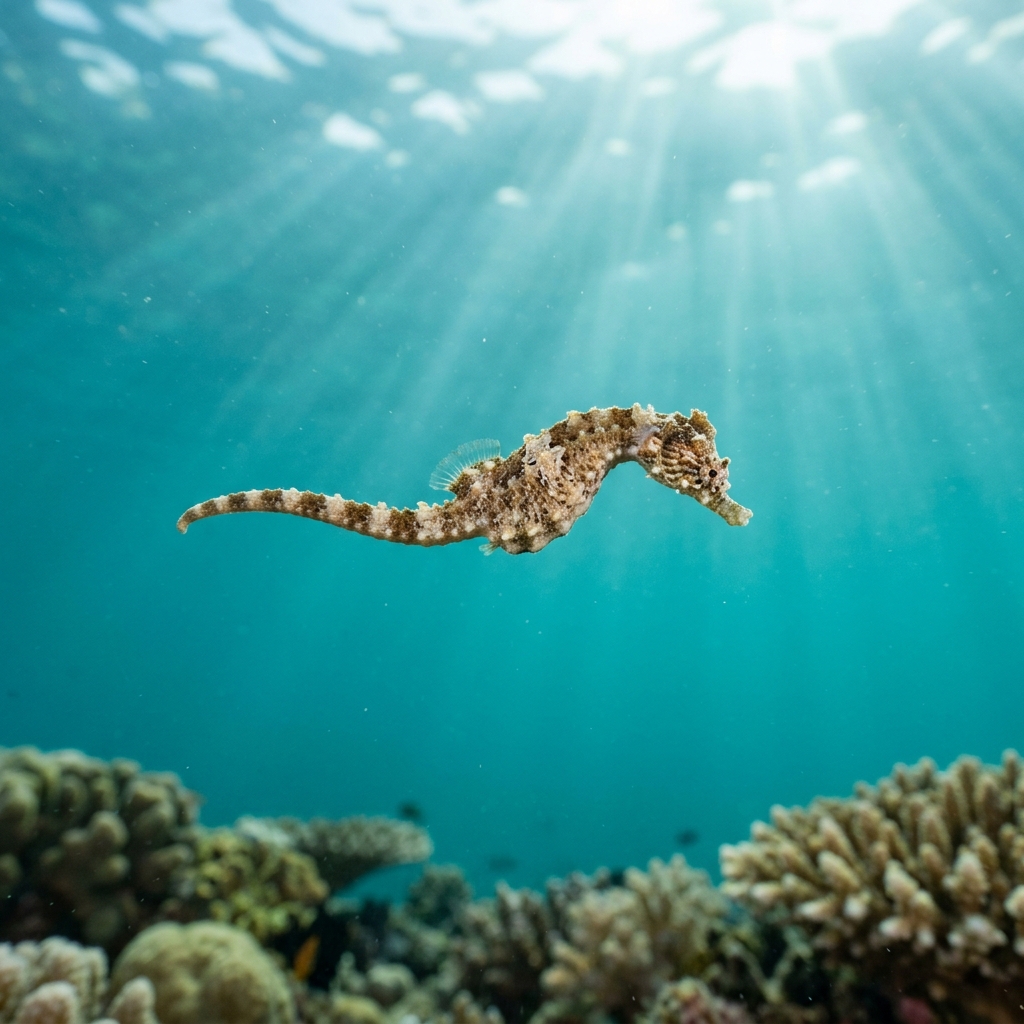
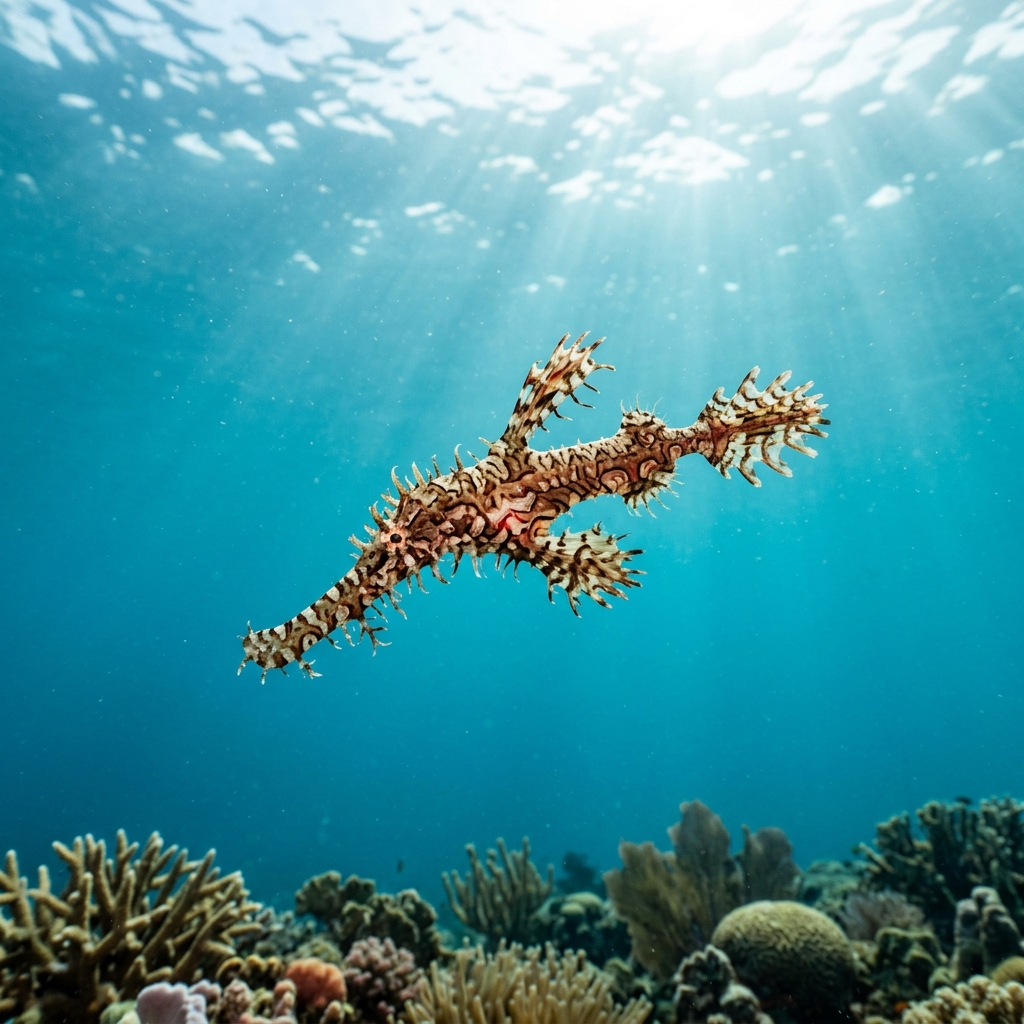
Reef neighbours a diver could mistake it for. Use the identification notes above to tell them apart.
Most records come from Grand Cayman in the Cayman Islands, with an additional sighting from the Bay Islands in Honduras. Divers should treat any sighting as a bonus find rather than a planned target, since it turns up at only a handful of known sites.
Mapping where Shortfin Pipefish is logged…
Sightings cluster around Grand Cayman in the Cayman Islands, with a further record from the Bay Islands in Honduras. It is logged as rare to uncommon even at these known spots, so treat it as a lucky find rather than a guaranteed sighting.
There is no detected season in the sighting data. Its temperature niche of 18 to 27.2°C covers Caribbean reef conditions year-round, so any month offers similar odds.
Look for a thin, straight-bodied fish around 10 cm long with a tan to olive mottled pattern and a long thin snout. Unlike a seahorse it does not curl its body or swim upright, instead holding a stiff horizontal posture close to rubble or algae.
They reach around 10 cm in length, making them one of the smaller pipefish species divers might spot on a reef.
Males carry the eggs on their body until the young hatch, meaning the entire brooding job is handled by the male rather than the female.
Site and sighting data is aggregated from diver logs, iNaturalist and GBIF. For taxonomy and conservation status:
Seahorse
1,346 sites