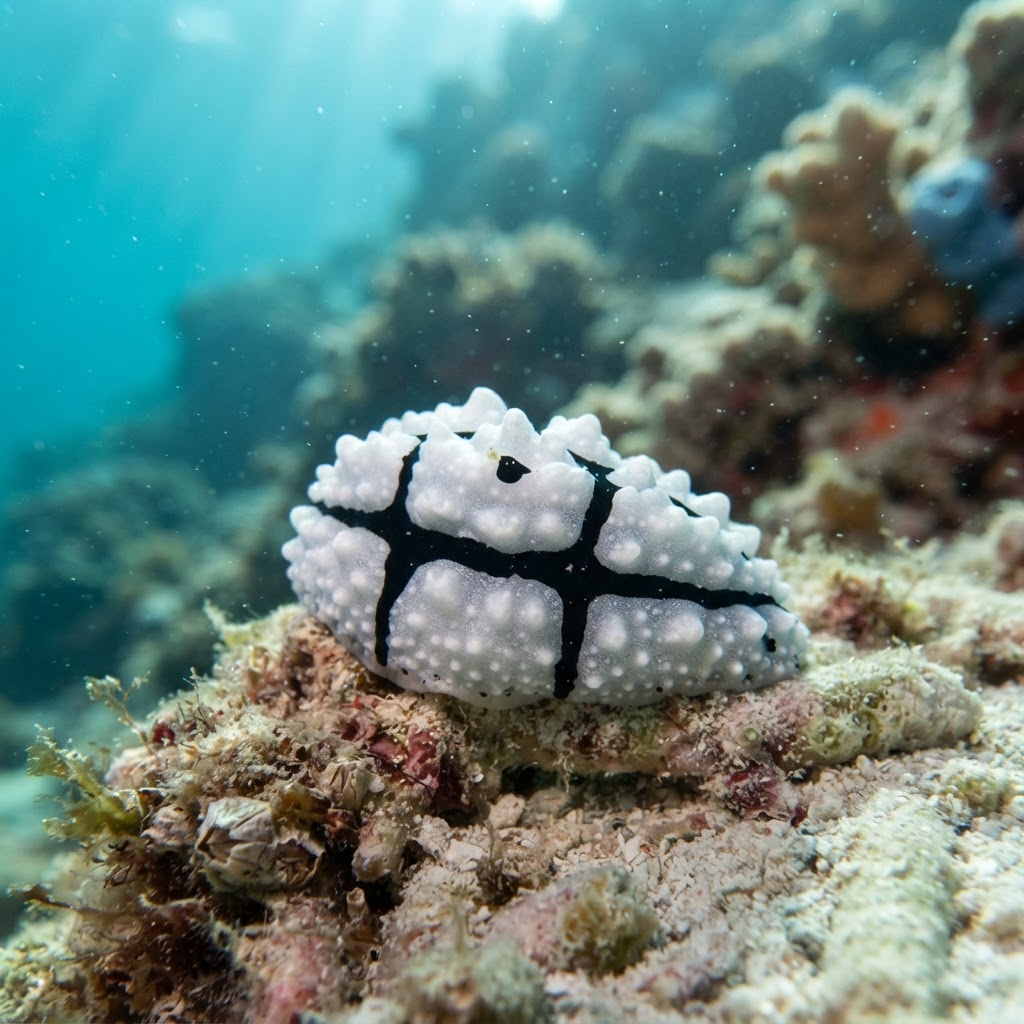
Phyllidiopsis shireenae
An uncommon nudibranch spotted across the Visayas and Peninsular Malaysia's east coast, on warm reefs between 25.5 and 31.5 C year-round.
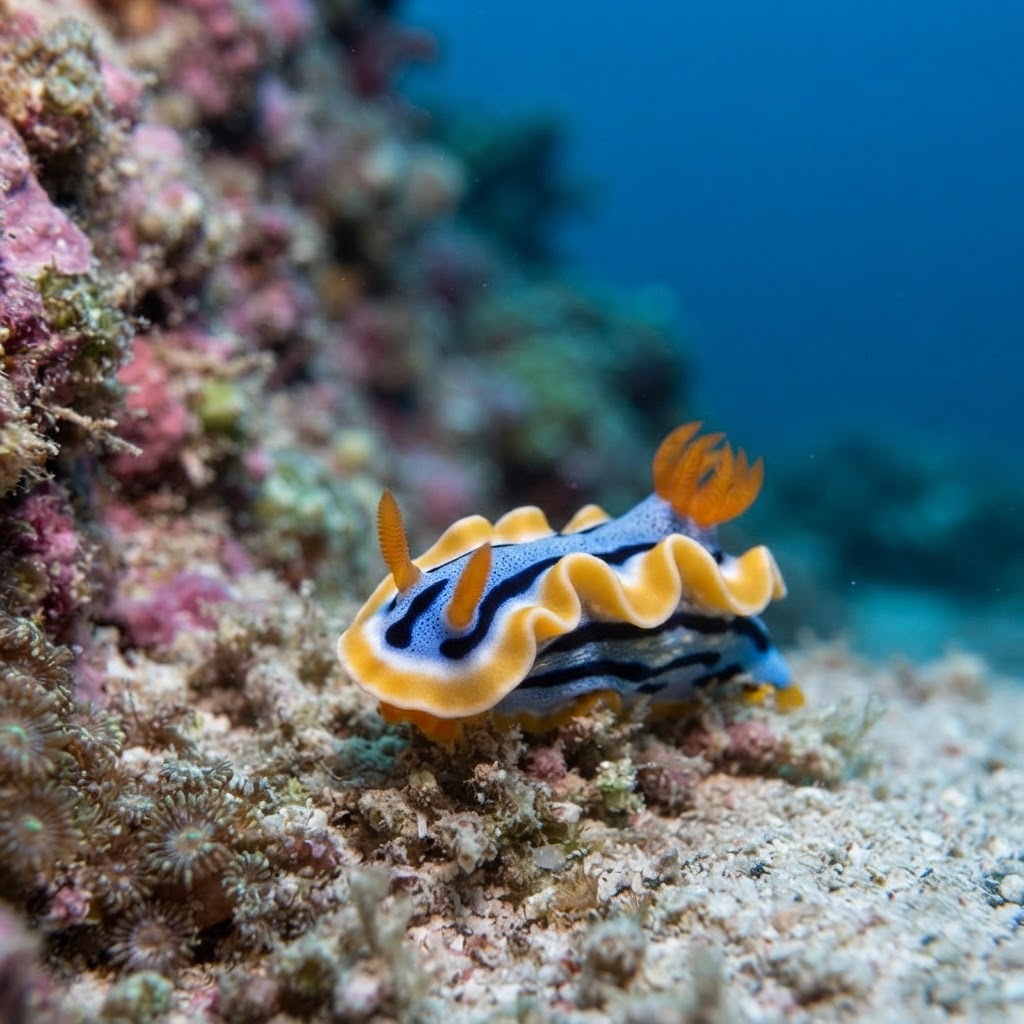
A small, firm-bodied nudibranch reaching about 7 cm, with the raised, tuberculate (bumpy-ridged) back typical of Phyllidiidae dorids rather than the smooth, frilly look of dorid look-alikes. Look for a patterned mantle of contrasting ridges running along the body, and rhinophores (the paired sensory horns on the head) tucked at the front rather than showy gills fanned at the rear. It moves slowly across hard reef substrate and rubble rather than swimming or drifting.
Divers find it parked on the reef floor or grazing slowly over rubble and hard substrate, usually alone rather than in groups. It shows no reaction to divers beyond continuing its slow crawl, making it an easy, patient macro subject once spotted. Like other phyllidiid nudibranchs it stays put on the benthos rather than swimming into open water.
Phyllidiids in this family are known for concentrating toxic compounds in their skin, likely sourced from the sponges they feed on, which is why they can sit exposed on the reef in daylight without much predation risk.
No clear seasonal pattern shows up in the sighting data, and its comfort range of 25.5 to 31.5 C matches tropical reefs year-round, so any month is a fair bet at its core Southeast Asian sites.
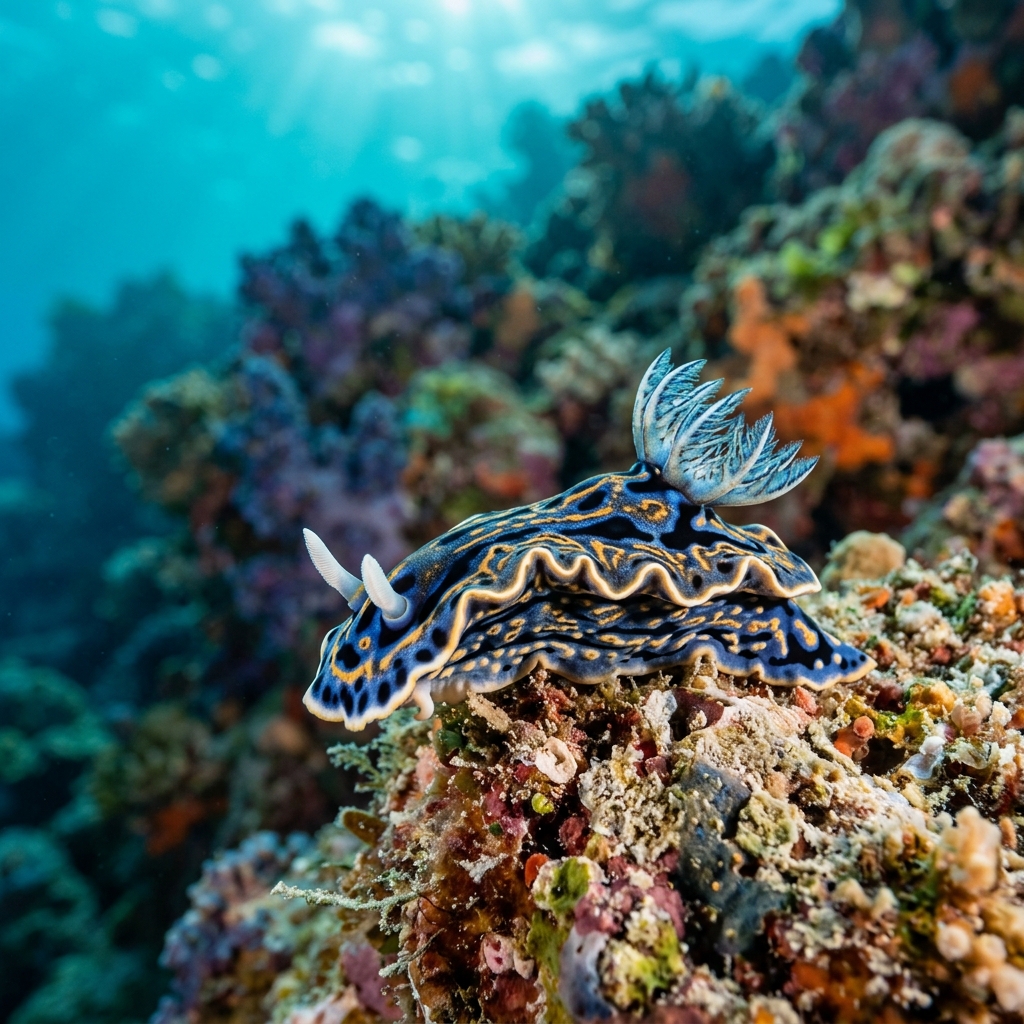
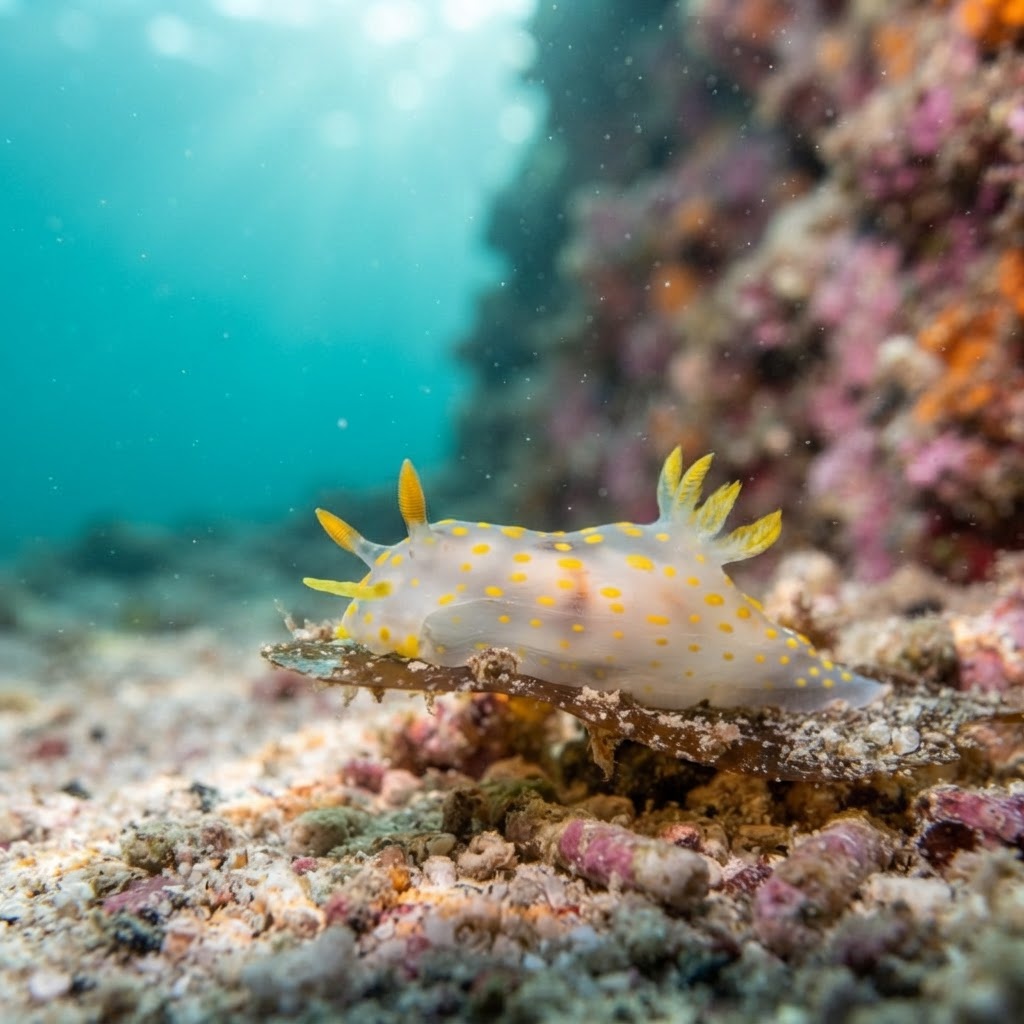
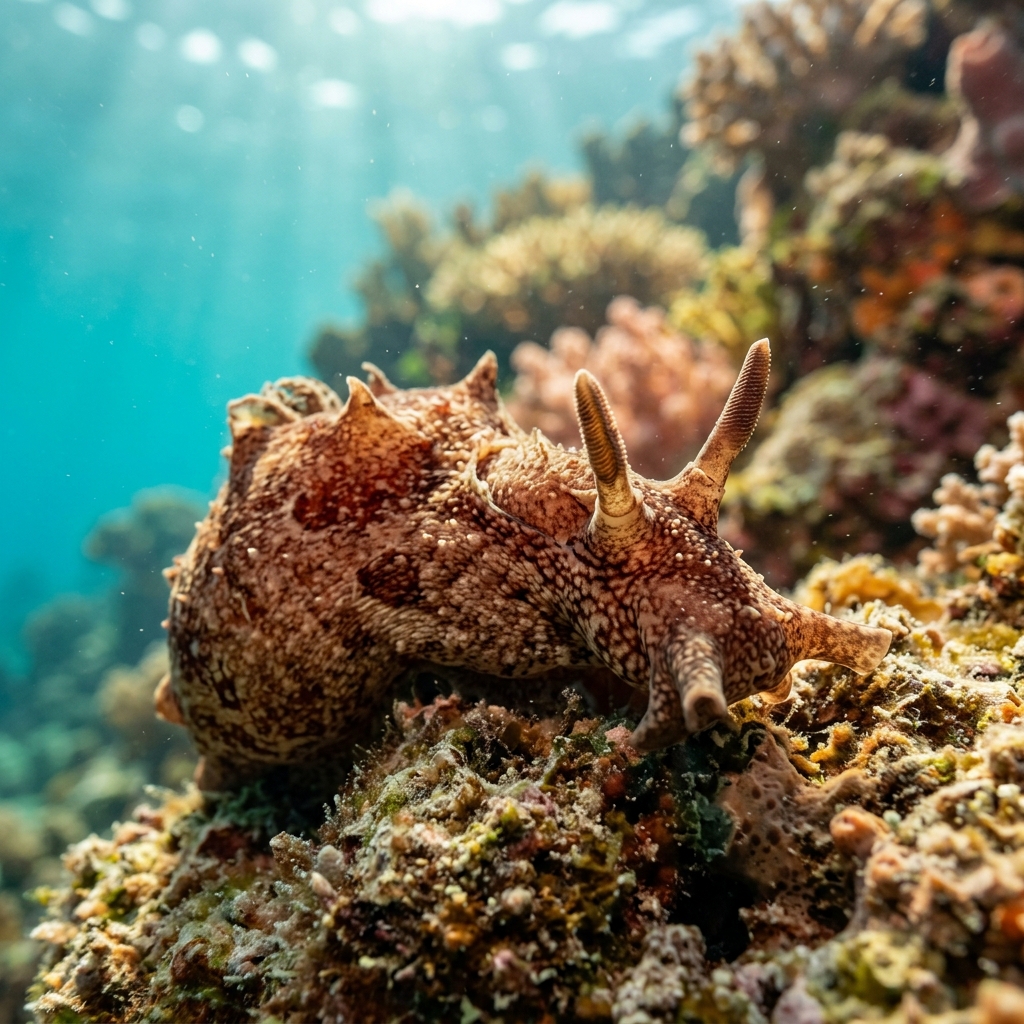
Reef neighbours a diver could mistake it for. Use the identification notes above to tell them apart.
Most reliably logged in the Philippines, especially across the Visayas and Luzon, with strong secondary populations along Peninsular Malaysia's east coast and Sabah. It also turns up in Indonesia's Nusa Tenggara and Bali, with scattered sightings in Kenya's Diani coast, Papua New Guinea's Milne Bay, Mayotte, and Australia.
Mapping where Shireen's Phyllidiopsis is logged…
The Philippines is the strongest bet, particularly the Visayas and Luzon, followed by Peninsular Malaysia's east coast and Sabah. Smaller populations are logged in Indonesia's Nusa Tenggara and Bali, Kenya's Diani coast, and Papua New Guinea's Milne Bay.
There's no detected season in the sighting data, and it's found in water from 25.5 to 31.5 C, so it's a year-round find on the tropical reefs where it occurs.
Look for a small, firm-bodied nudibranch around 7 cm long with a ridged, tuberculate back and a patterned mantle, crawling slowly over hard substrate or rubble. It lacks the flared gill plume of chromodorid nudibranchs, which sit up more visibly at the rear.
Around 7 cm at full size, a fairly typical length for a phyllidiid nudibranch and easy to overlook against reef rubble unless you're looking closely.
No. It poses no threat to divers and can be observed and photographed up close without any risk.
Like other phyllidiid nudibranchs, it likely absorbs toxic compounds from the sponges it feeds on and stores them in its skin, which lets it sit exposed on the reef in daylight with little risk of being eaten.
Site and sighting data is aggregated from diver logs, iNaturalist and GBIF. For taxonomy and conservation status:
Light-spotted Aegires
3,168 sites