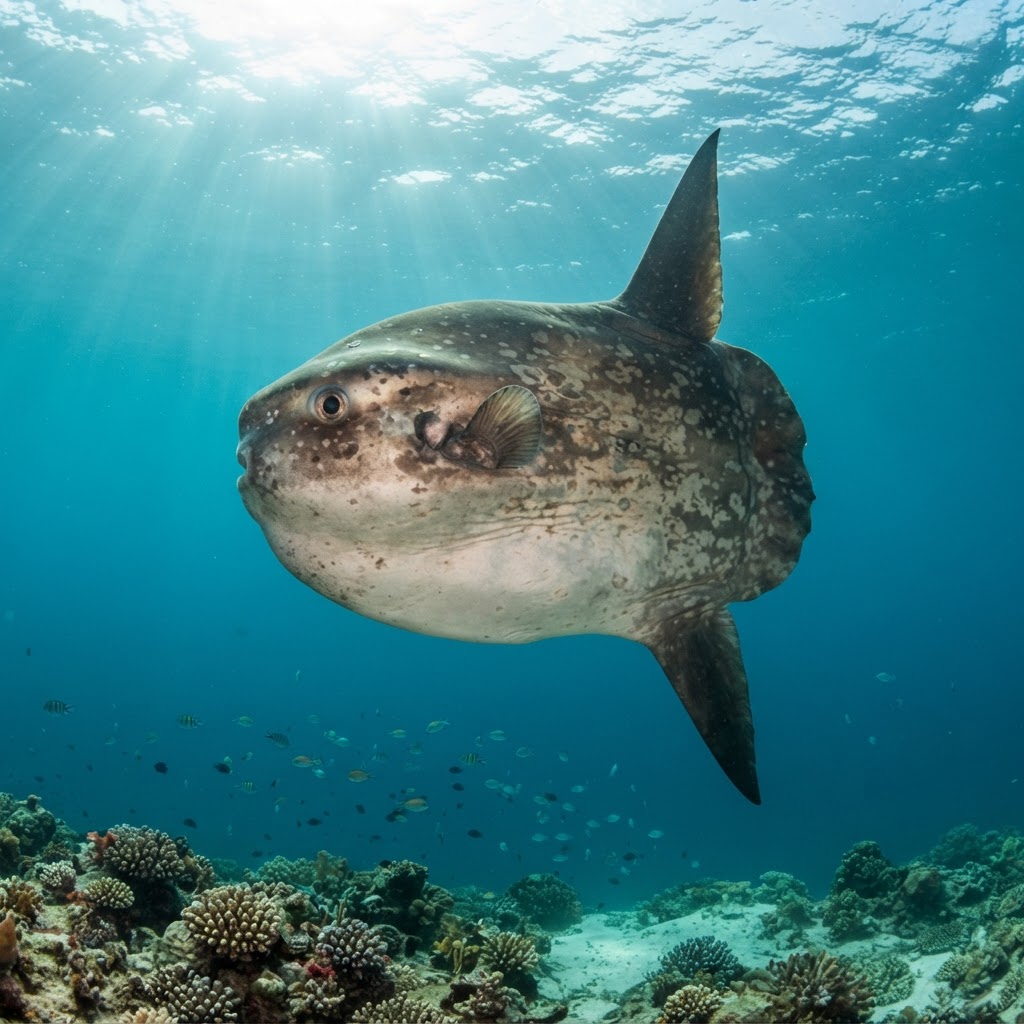
Masturus lanceolatus
A cold-water sunfish with a pointed, wavy tail rather than a frill, seen in waters as cold as 8.9 to 17.6C. Rare and unmistakable once you know the tail.
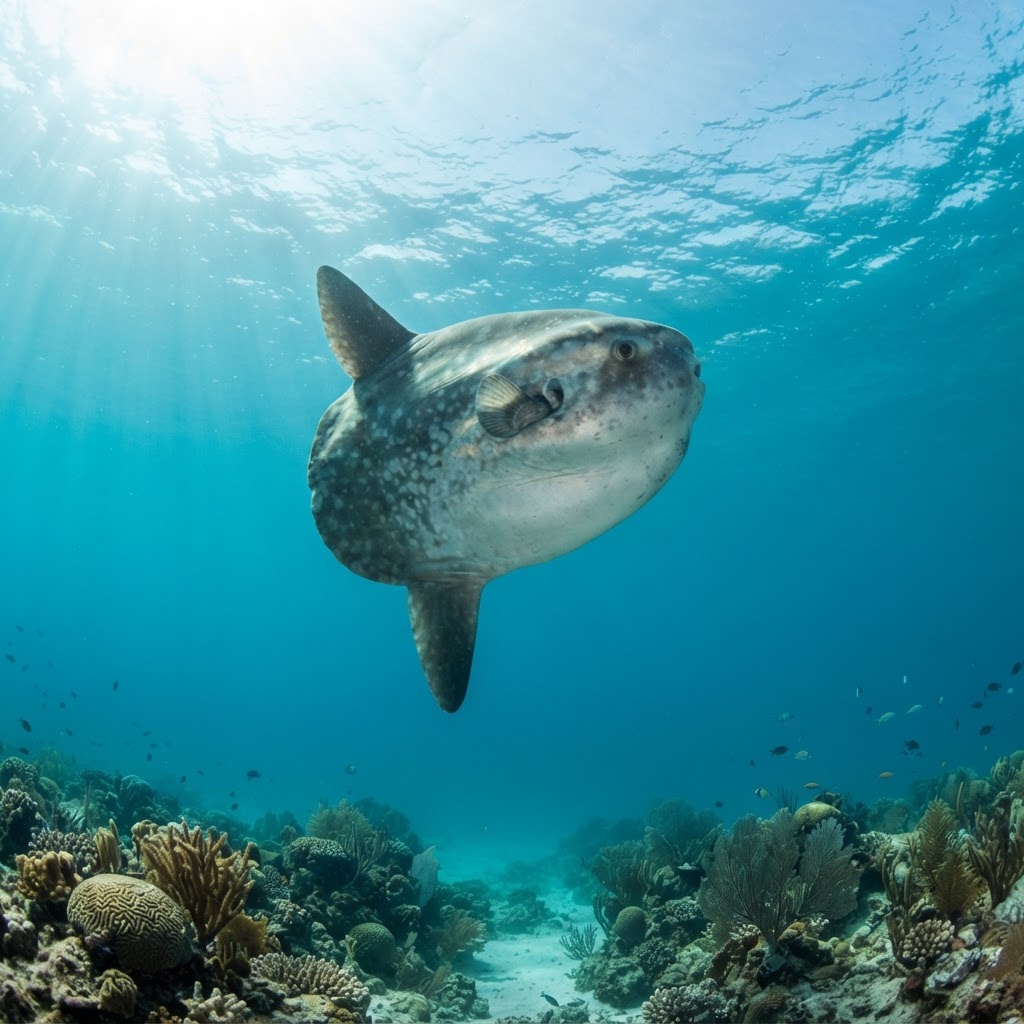
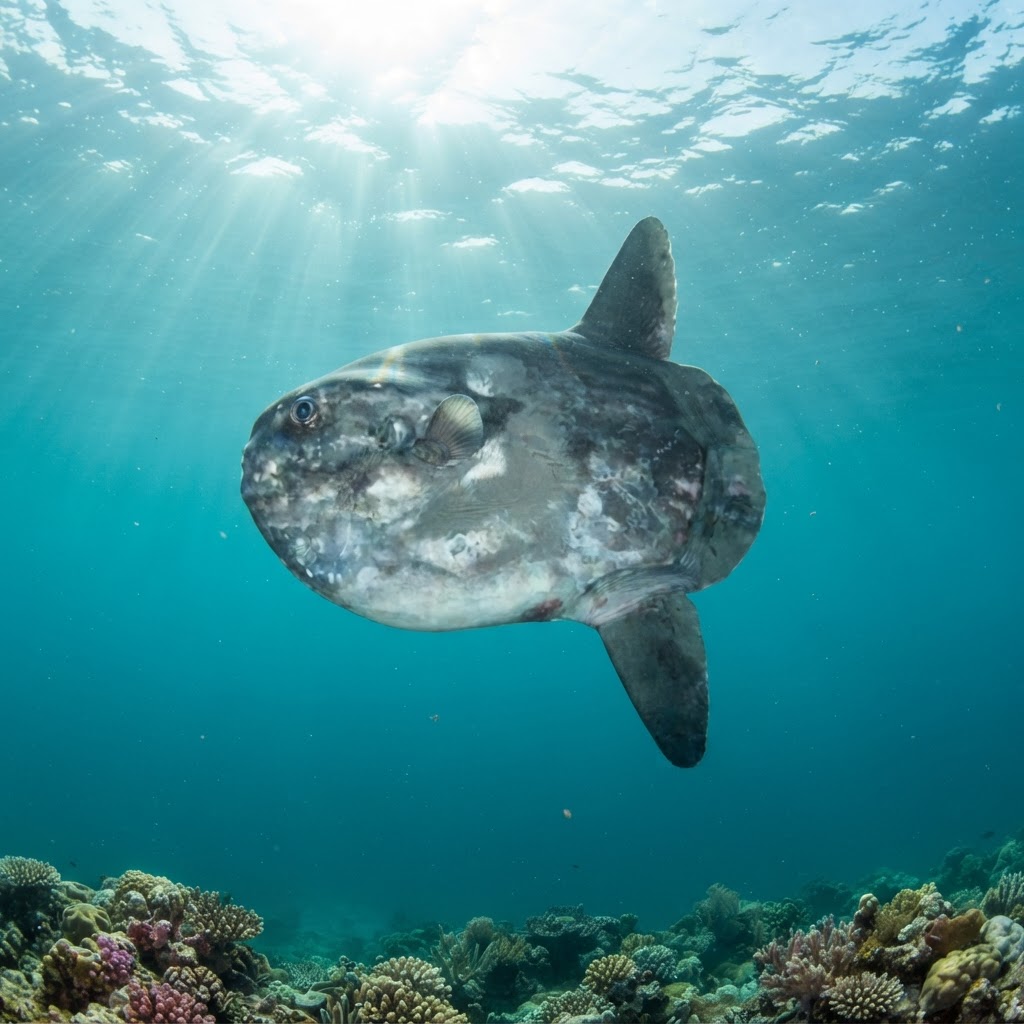
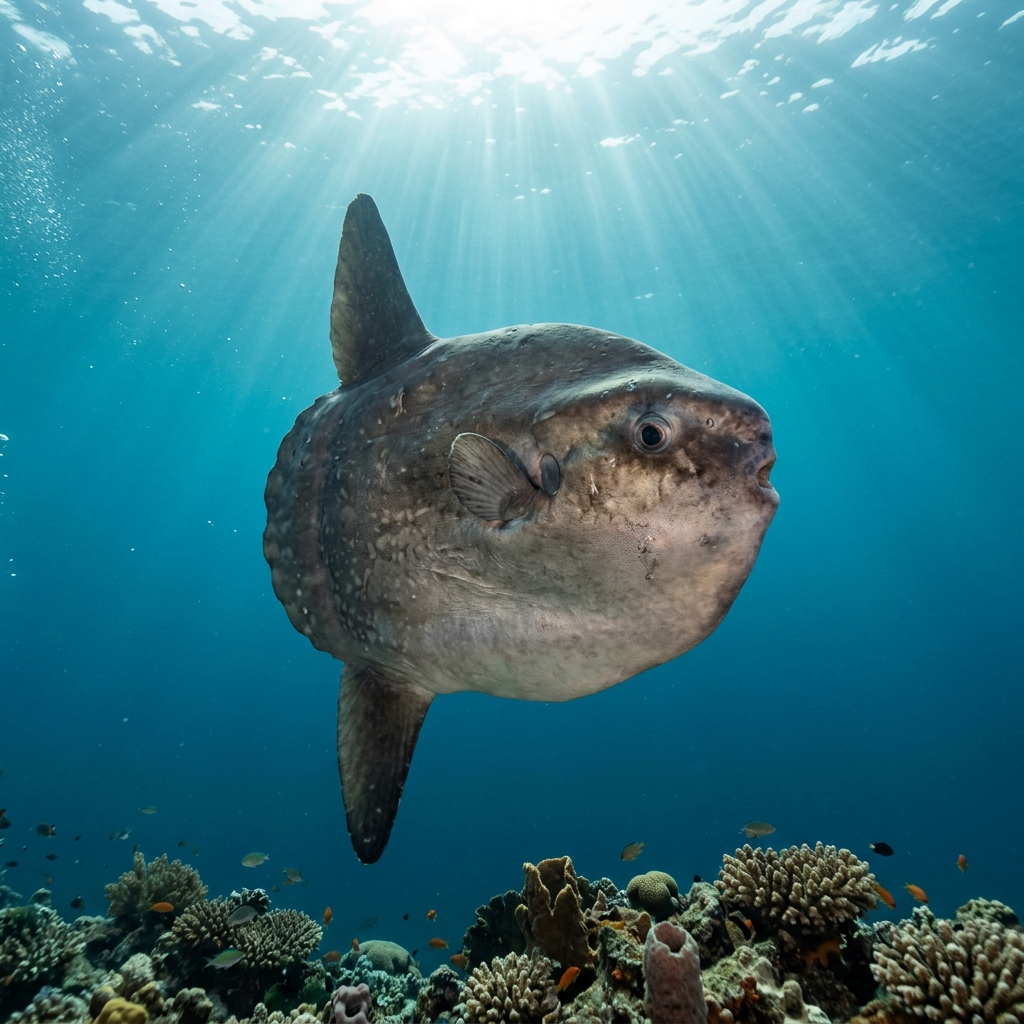
A huge, flattened, near-circular grey-brown body that looks like it's missing its back half, growing to well over two metres. The single feature that separates it from every other sunfish is the tail: instead of the rippled, scalloped rear edge (the clavus) seen on ocean sunfish, it comes to a rounded, lance-like point, which is where the species gets its scientific name. Skin often looks smooth and slightly mottled rather than bumpy.
Typically seen drifting or slowly cruising in open water, often near the surface where sunfish are known to bask to warm up after feeding in colder depths. It shows little interest in divers and rarely reacts to their presence, moving on at its own unhurried pace. Most sightings are brief, single-fish encounters rather than repeat visits to a fixed spot.
That pointed tail isn't a separate fin at all: it's a regrown edge of body tissue that replaces the frilly clavus most sunfish have, making this one of the easiest sunfish to tell apart once you know what to look for.
There isn't enough logged data to identify a season, so treat sightings as possible year-round. Its comfort range of roughly 9 to 18C suggests encounters skew toward cooler, deeper, or higher-latitude water rather than warm tropical shallows.
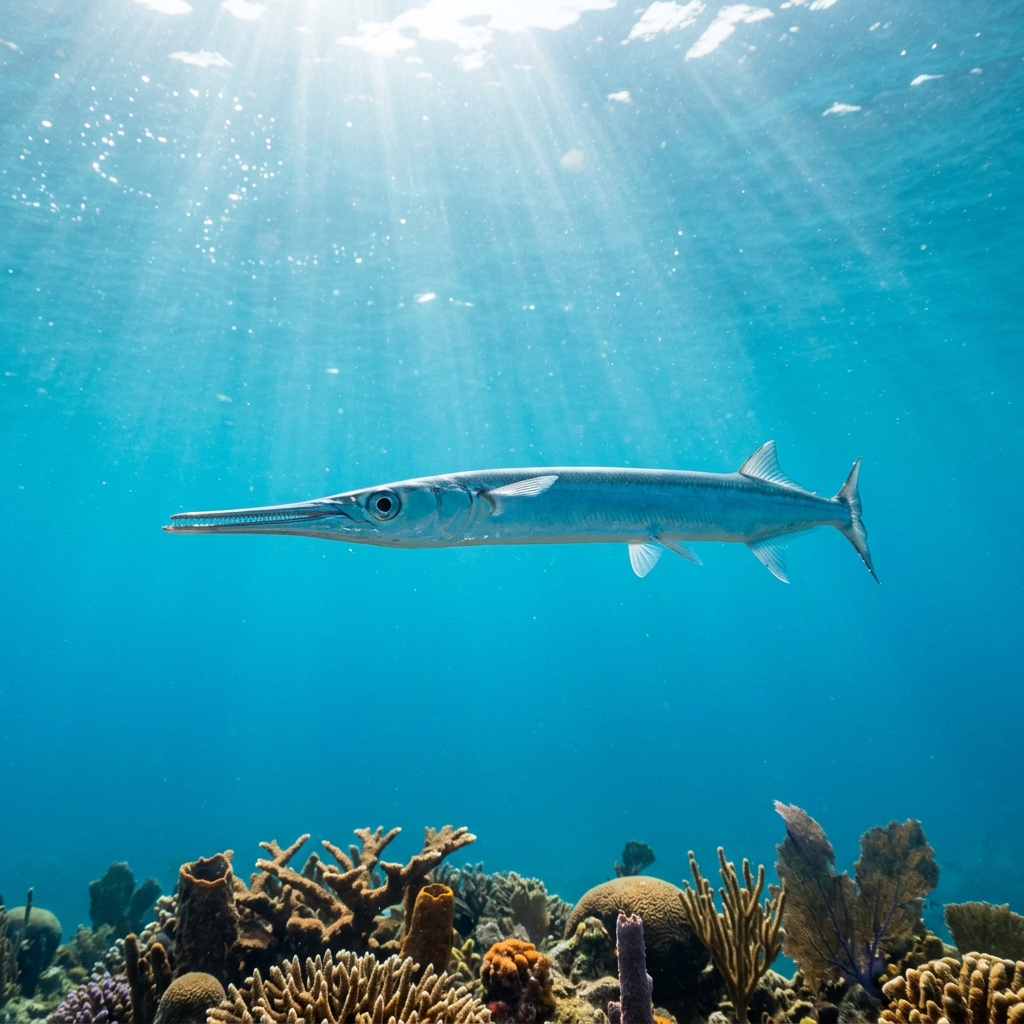
Reef neighbours a diver could mistake it for. Use the identification notes above to tell them apart.
Logged sightings for this species are too sparse to name reliable dive regions with confidence. It's a cold-water, open-ocean fish rather than a reef resident, so encounters tend to be opportunistic blue-water or drift-dive sightings rather than dives specifically targeting it at a known site.
Mapping where Sharptail Sunfish is logged…
No match
Look at the tail. A rounded, pointed rear edge instead of the wavy frilled tail of an ocean sunfish is the giveaway, on an otherwise huge flattened grey body.
They reach around 2.4 metres, putting them among the largest bony fish divers might encounter, though sightings themselves are uncommon.
There's no confirmed seasonal pattern for this species, so sightings can happen year-round. They favour cooler water, generally between about 9 and 18C.
No. They're slow-moving, indifferent to divers, and pose no threat, though their size makes them an impressive open-water sighting.
Its pointed tail is regenerated body tissue that stands in for the frilly clavus other sunfish species have, a trait that gives the species both its common and scientific names.
Site and sighting data is aggregated from diver logs, iNaturalist and GBIF. For taxonomy and conservation status:
Butterfish
1,423 sites