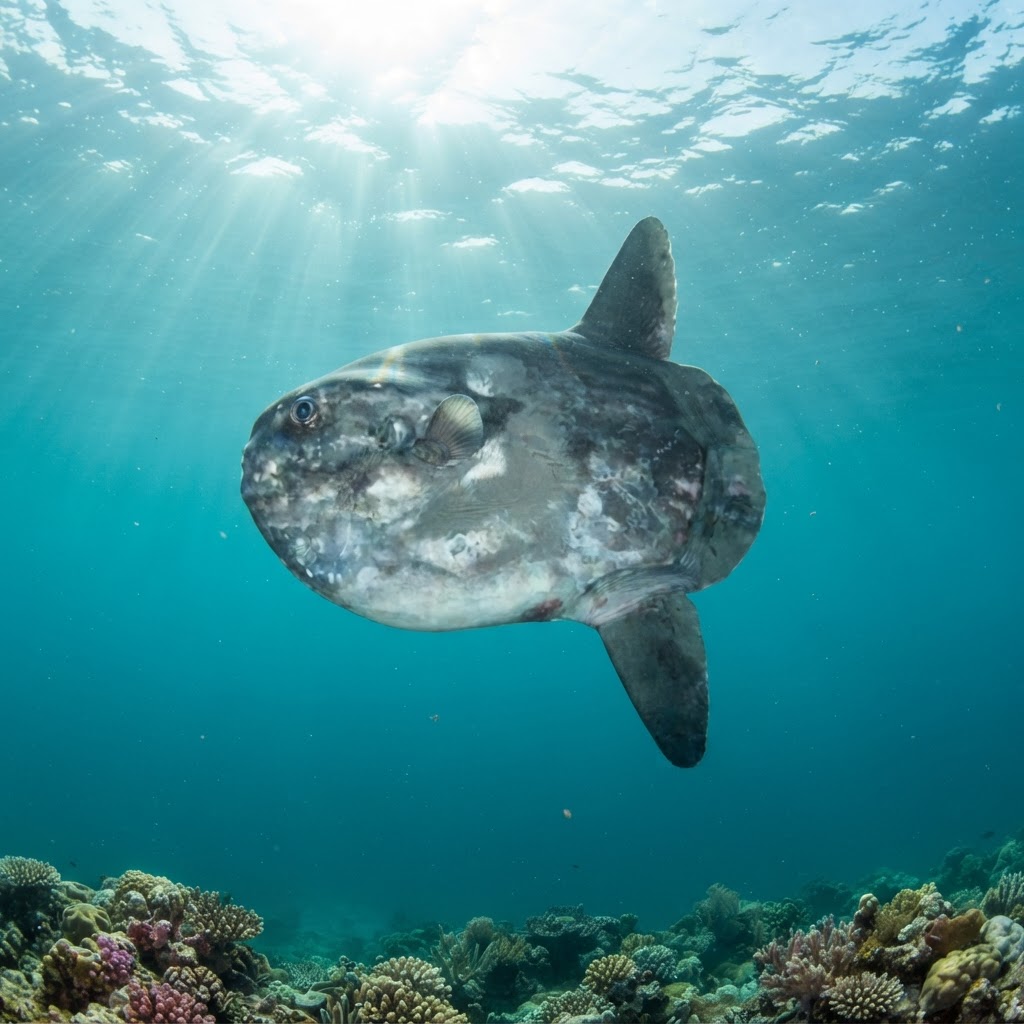
Mola tecta
A newly described sunfish, only confirmed in 2017, seen in cool water between 11.7 and 19.8C. Here's how to tell it apart underwater.
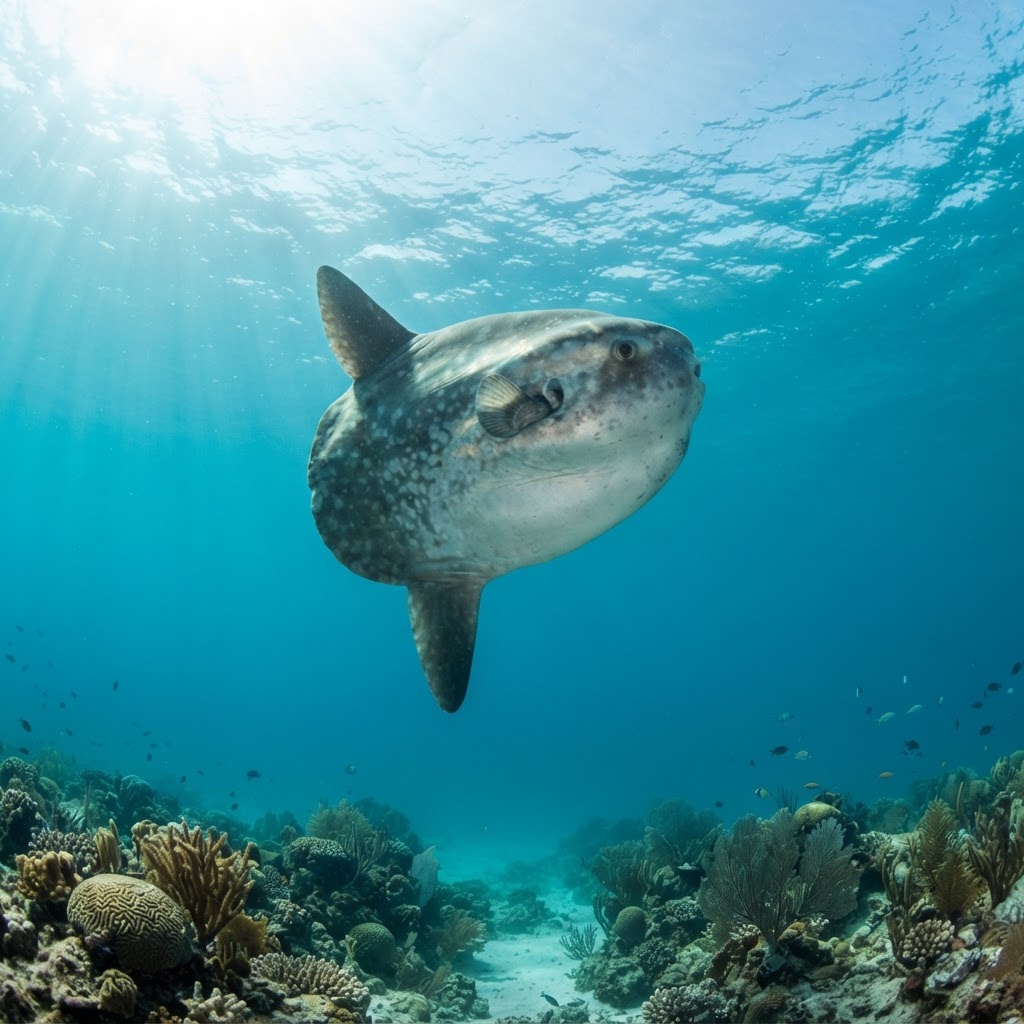
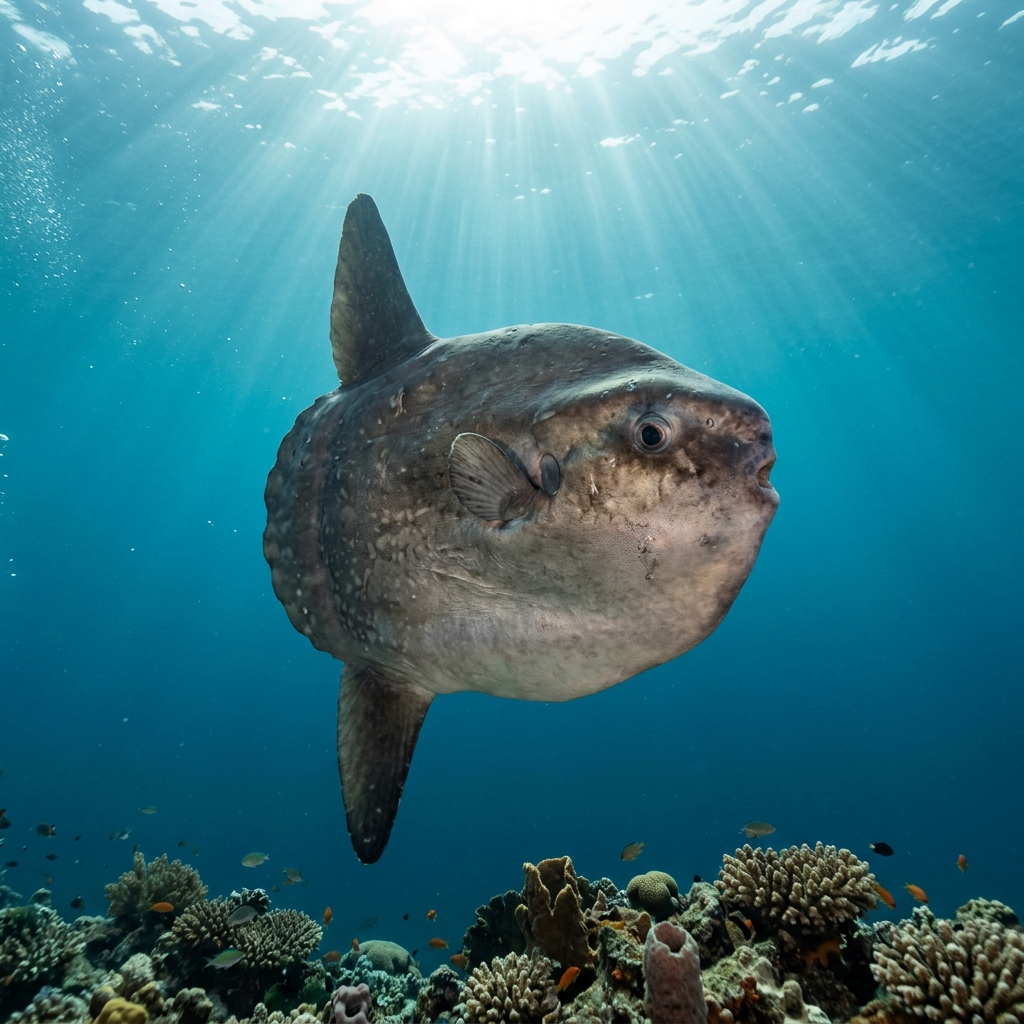
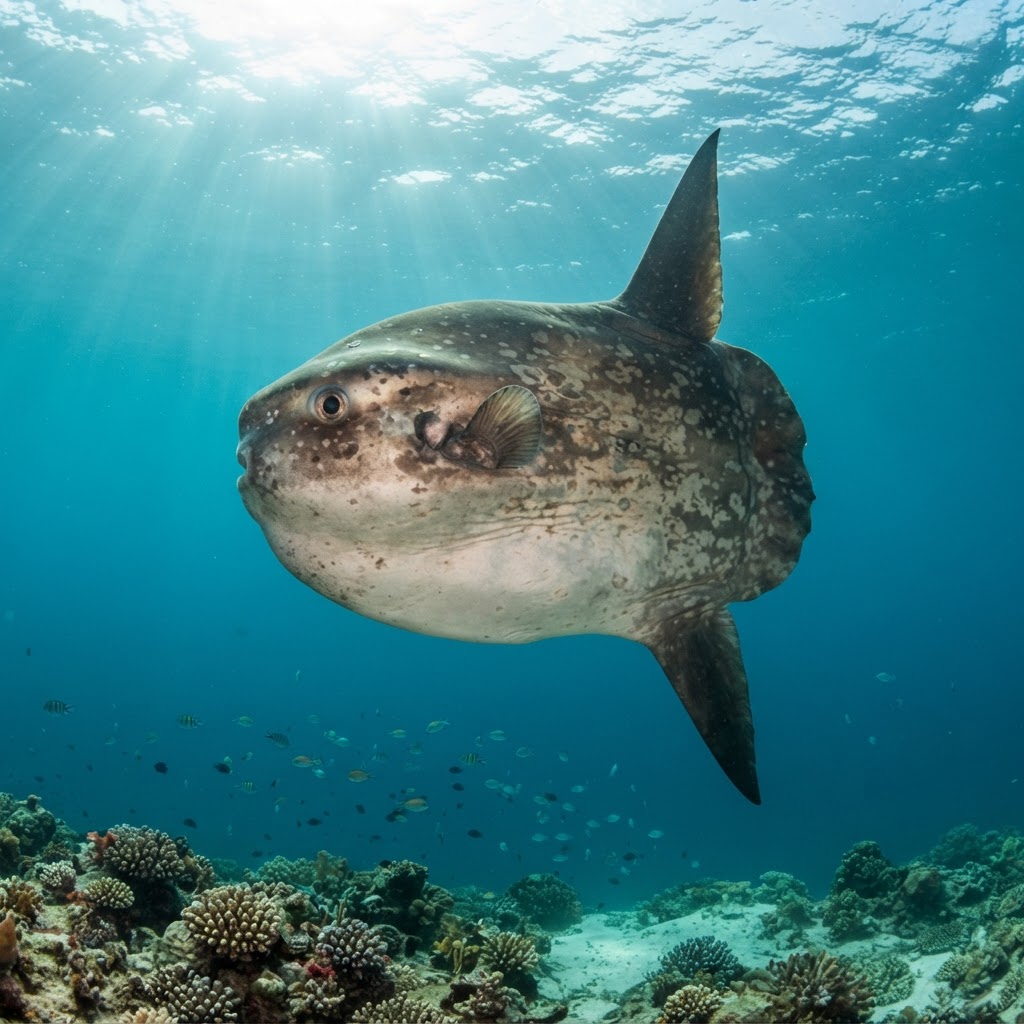
A large flattened grey-brown disc-shaped body with no obvious tail fin, just a narrow band of fringing tissue called a clavus running between the dorsal and anal fins. Grows to around 169 cm as seen underwater, often spotted hanging near the surface or drifting mid-water with a slow beat of its tall dorsal and anal fins. Its body looks smoother and more streamlined in profile than a common ocean sunfish, lacking the bumps and lumpy contours that name its bumphead relative.
Divers who encounter this species generally find it drifting slowly in open water or hanging near the surface, doing little to react to a diver's presence. Like other sunfish, it appears to spend time at the surface warming up between deeper forays, and shows no territorial or defensive behaviour around divers.
This species went unnoticed by science for centuries because it looks so similar to the common ocean sunfish; it was only formally described in 2017 after genetic work revealed it was a distinct species hiding in plain sight, hence the name Mola tecta, the hoodwinker.
There isn't enough logged data to identify a season, so treat sightings as year-round and opportunistic. Its observed temperature niche of 11.7 to 19.8C points to cooler, temperate water rather than warm tropical reefs.
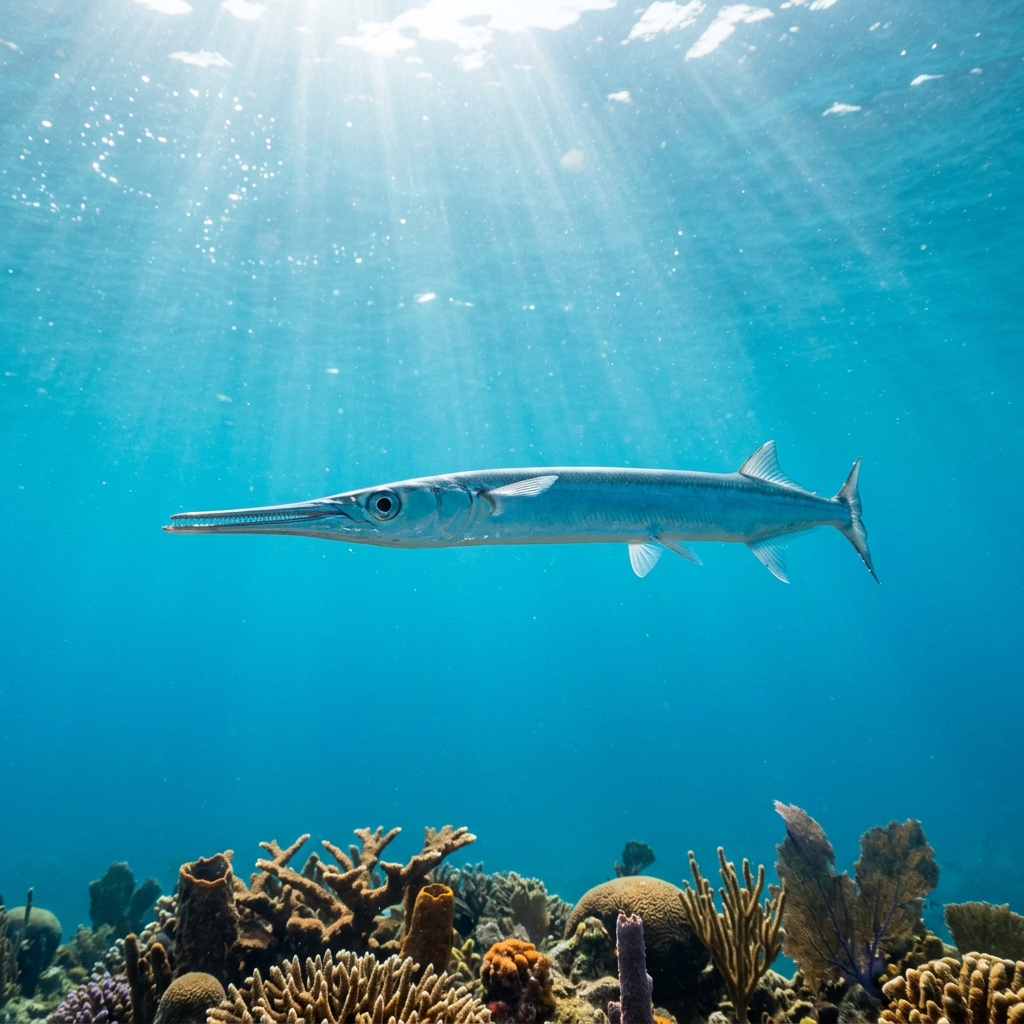
Reef neighbours a diver could mistake it for. Use the identification notes above to tell them apart.
Sighting data is too sparse to name reliable dive sites or countries for this species right now. It was only distinguished from the common ocean sunfish in 2017, and confirmed underwater records remain scattered and hard to verify without close inspection of the clavus.
Mapping where Hoodwinker Ocean Sunfish is logged…
No match
Look for a smooth grey-brown disc-shaped body without the bumps or lumps of a bumphead sunfish, and a narrow clavus (fringe of fin tissue) instead of a true tail. It's easy to confuse with the common ocean sunfish, and definitive ID often needs a close look at body proportions.
There's no clear seasonal pattern in current sighting data, so it's best treated as a year-round possibility. It tends to turn up in cooler water, roughly 11.7 to 19.8C, rather than warm tropical conditions.
Divers typically see them at around 169 cm, a large flattened body that stands out even in open water. They're comparable in scale to the common ocean sunfish.
It stayed hidden as a separate species until 2017 despite being large and widespread, mistaken for the common ocean sunfish for generations. Its name comes directly from that long case of mistaken identity.
Site and sighting data is aggregated from diver logs, iNaturalist and GBIF. For taxonomy and conservation status:
Butterfish
1,423 sites