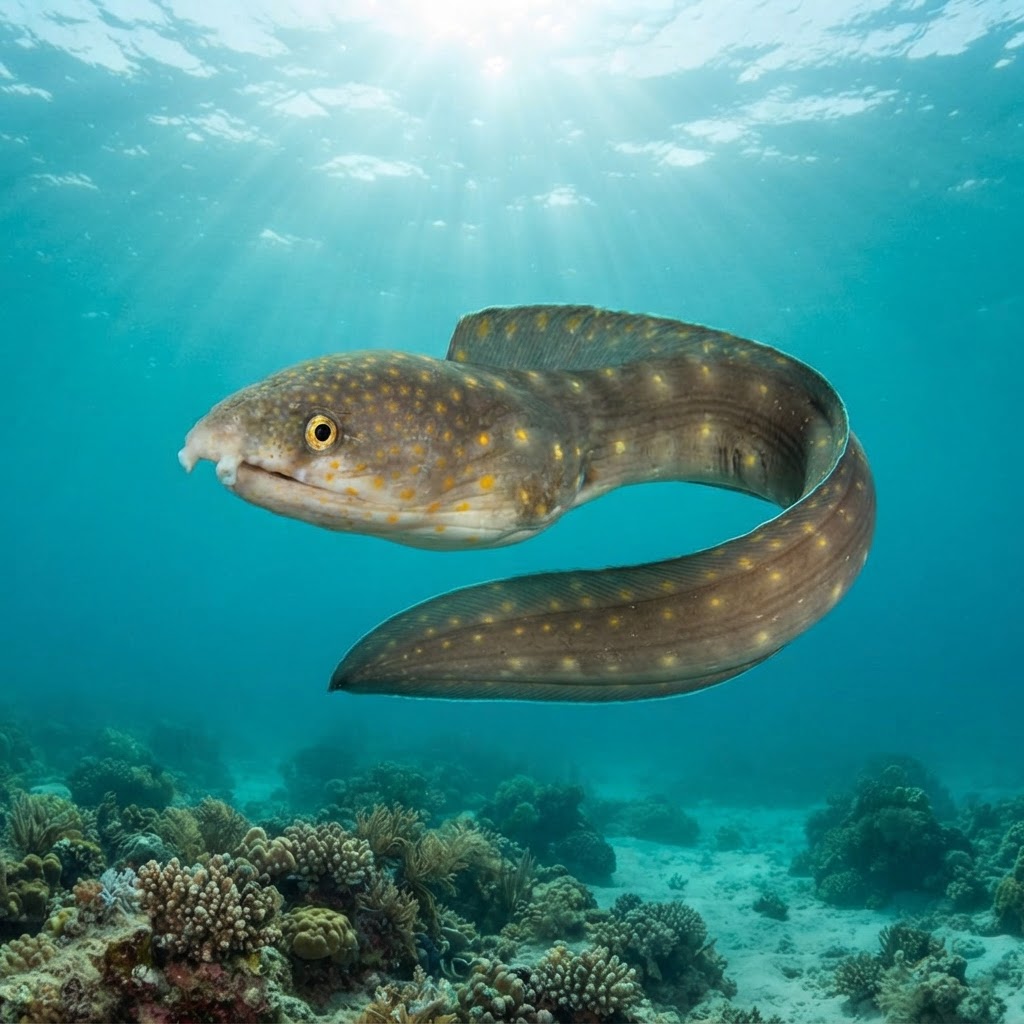
Myrichthys breviceps
Cream body dotted with dark spots, seen year-round on Bonaire's Leeward Coast and reefs from Grenada to the Yucatán in 26-28°C water.
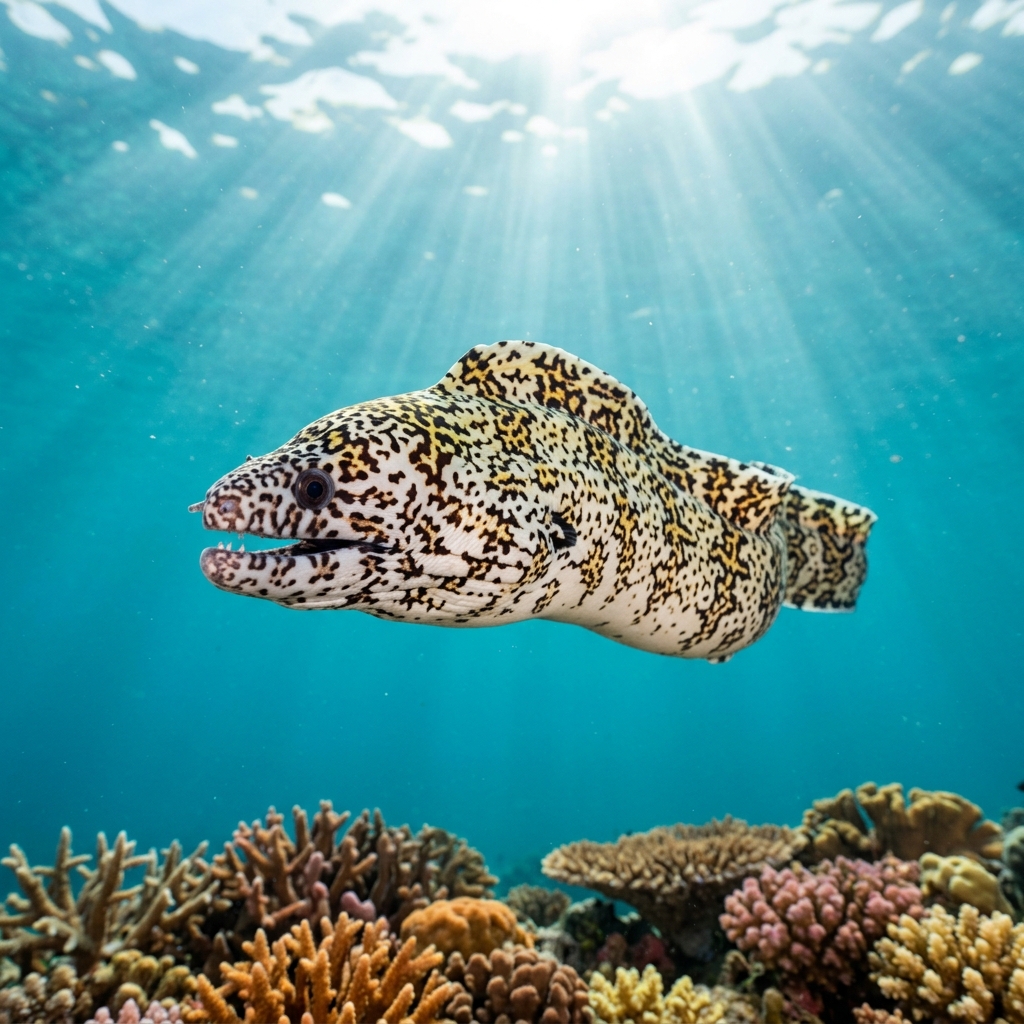
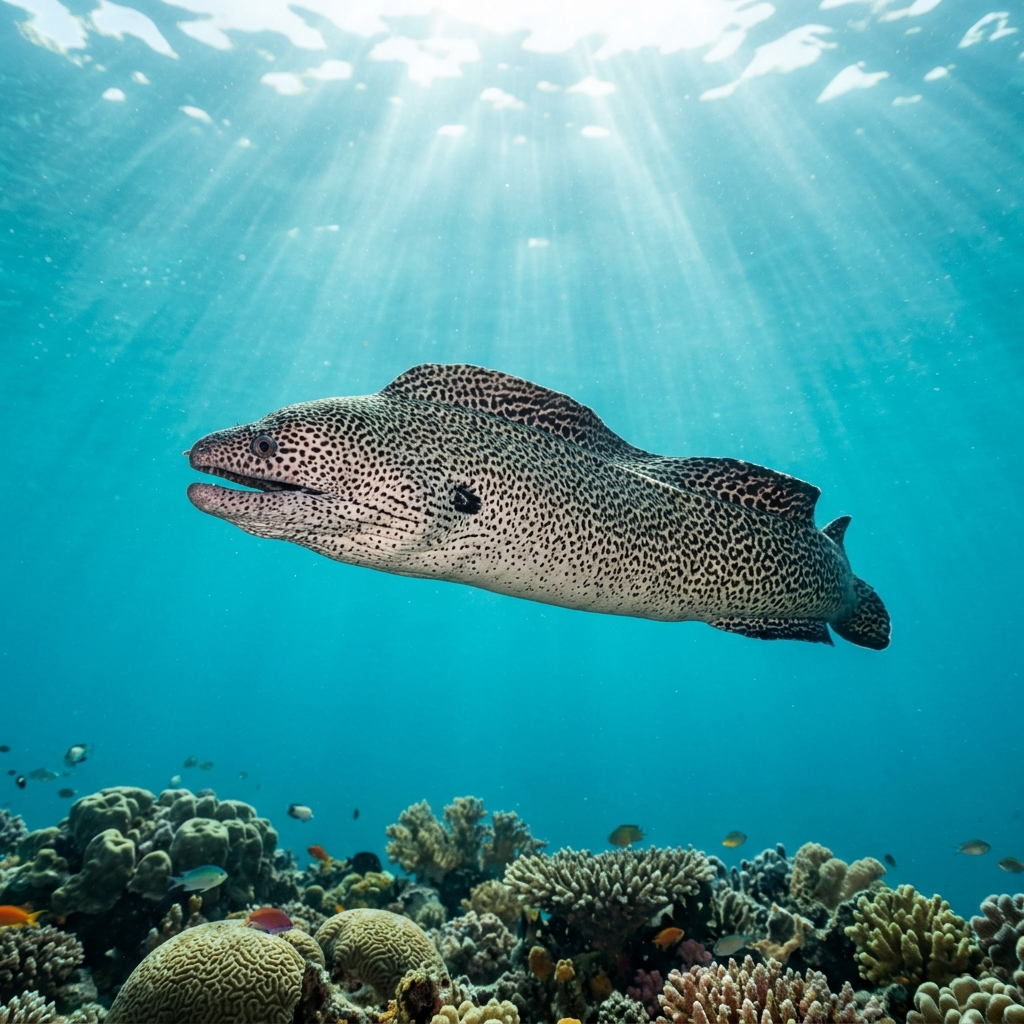
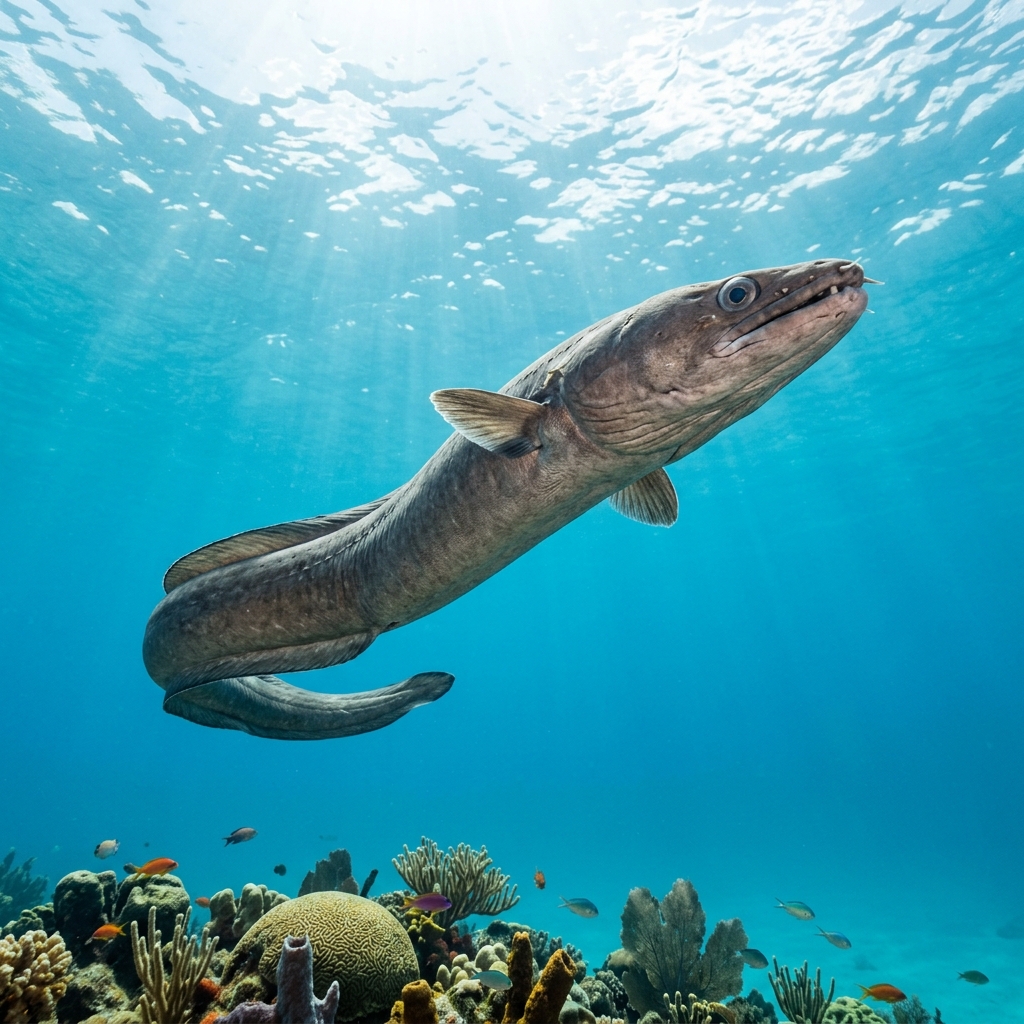
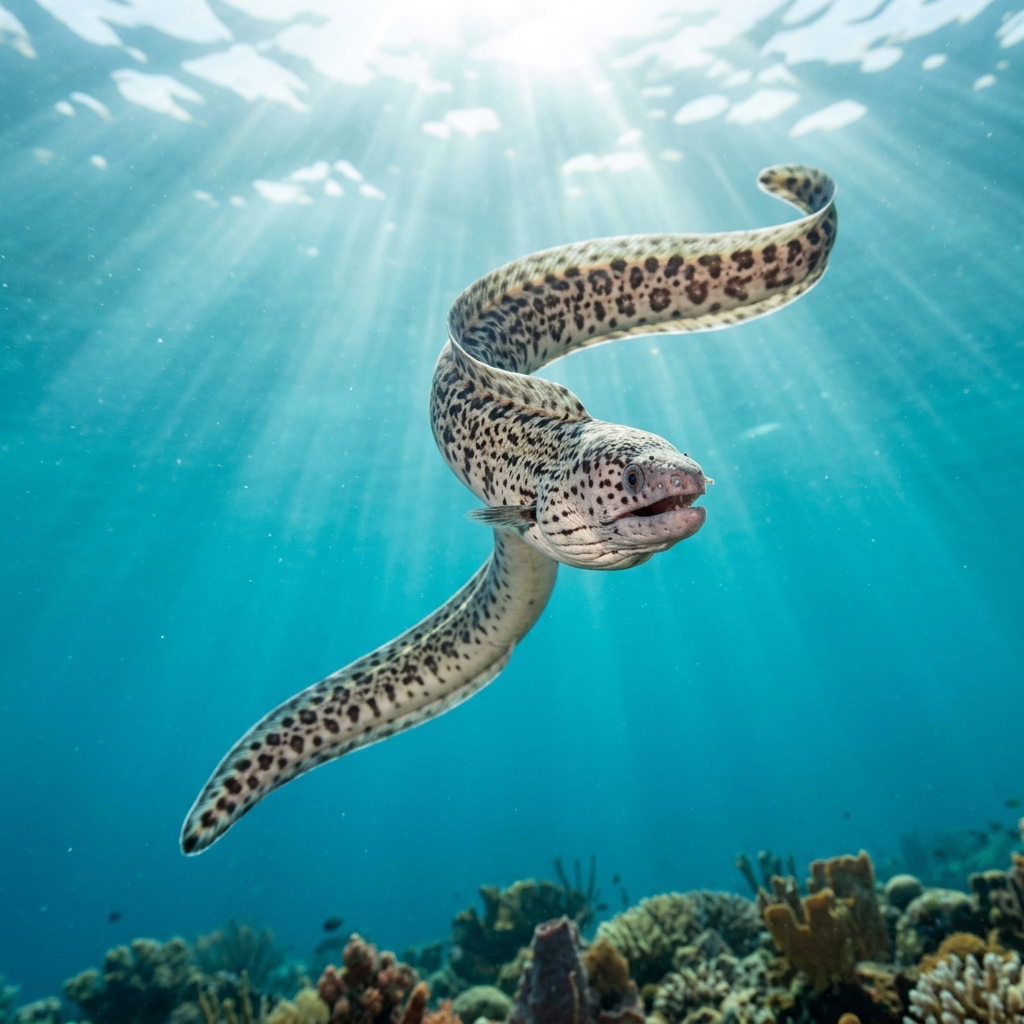
Slender, snake-like body reaching around 71 cm, coloured cream to pale yellow and covered in evenly spaced dark round spots that run the full length from head to tail tip. Unlike the fringed, tissue-thick heads of moray eels, it has a smooth, pointed snout and a stiff, almost torpedo-shaped tail built for burrowing into sand. Divers usually spot the head poking from a sandy patch or watch it swim in open water over the reef, moving with a fluid, side-to-side glide rather than the typical moray's head-out-of-a-hole pose.
Usually seen cruising slowly over sand and rubble patches near reef edges, poking its head into holes and crevices while hunting, or with just its head and forebody visible from a burrow. It is not shy of divers but rarely reacts to them either, generally continuing its search for prey unless approached very closely. Most sightings happen during the day on shallow sand flats and reef margins rather than deep water, matching its 0 to 9 m depth range.
It hunts mainly by smell and touch rather than sight, probing sand and coral crevices for small fish and crustaceans, which is why divers often see the head disappear and reappear along a reef edge rather than the whole body swimming freely.
Sightings are spread evenly through the year with no clear peak season, which fits its comfort range of roughly 26 to 28°C, a band that holds steady on Caribbean reefs year-round.
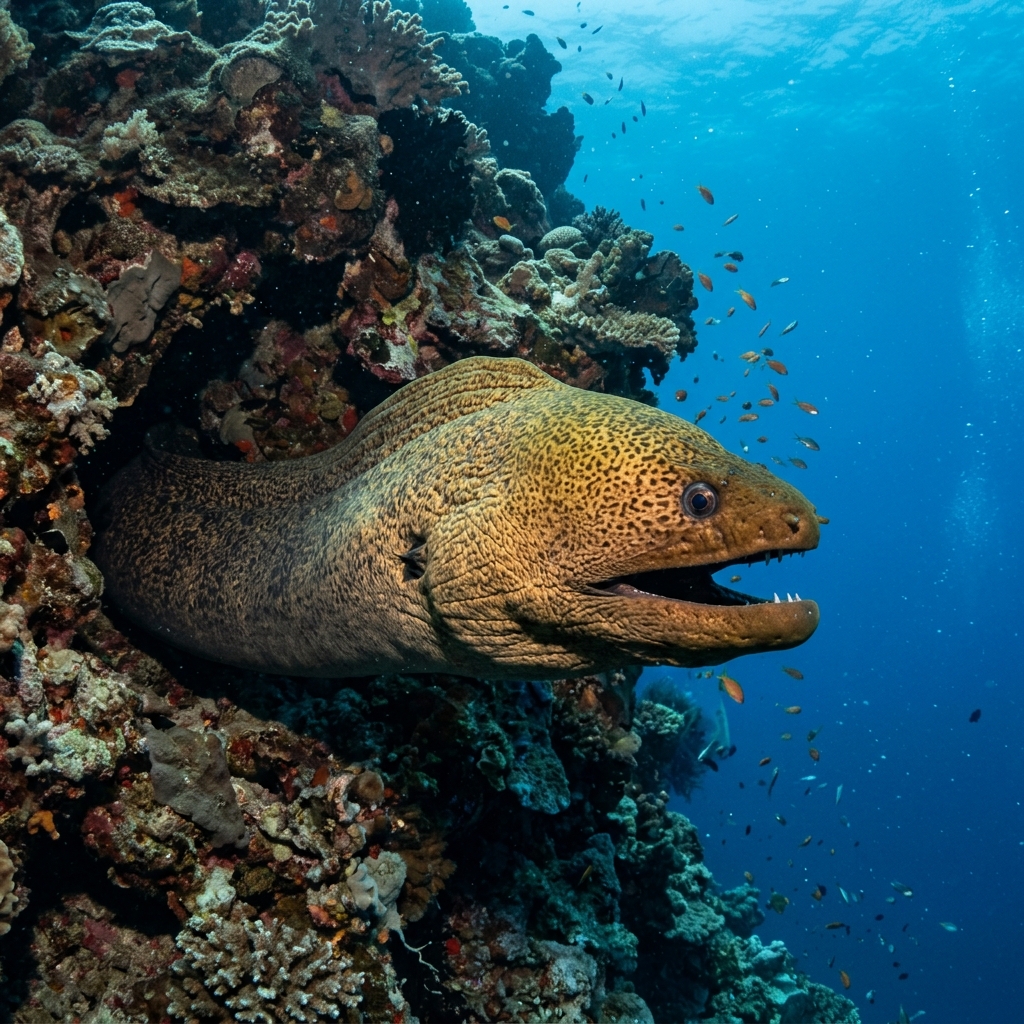
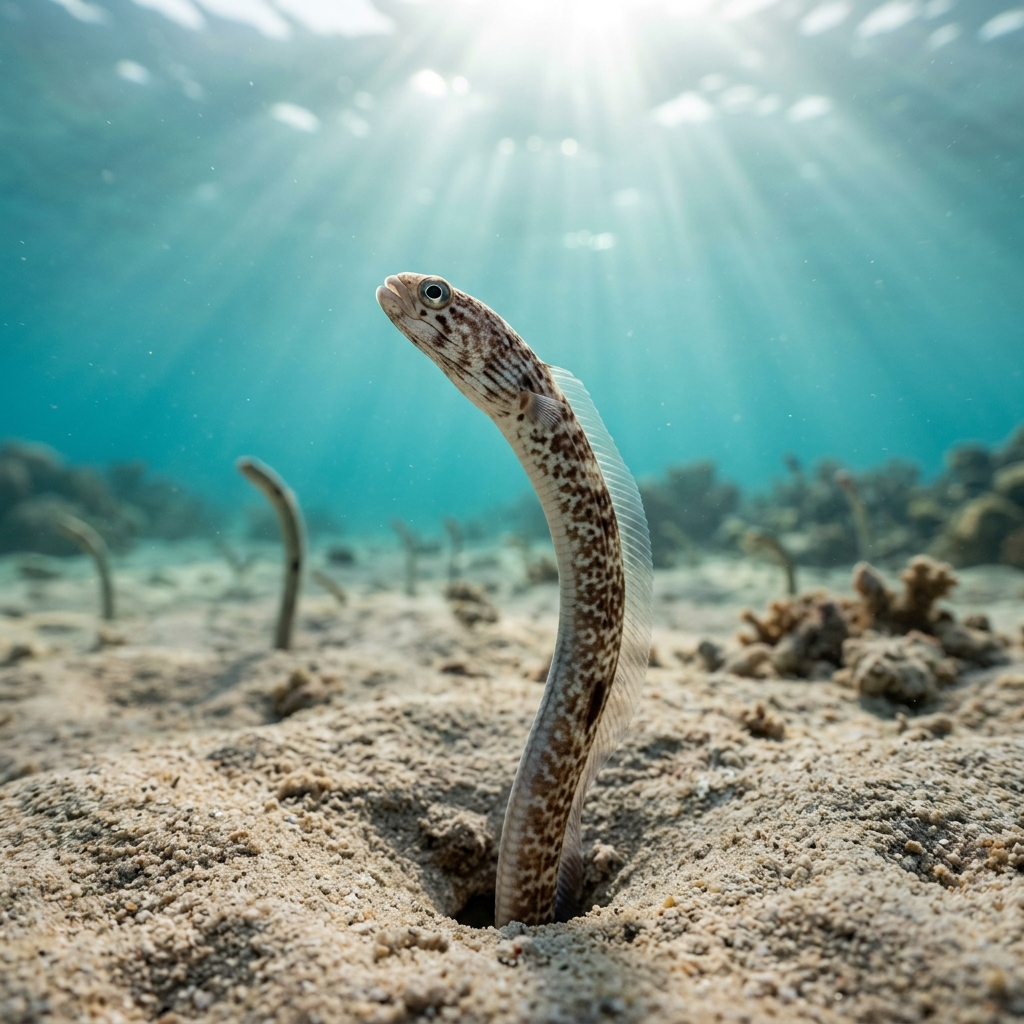
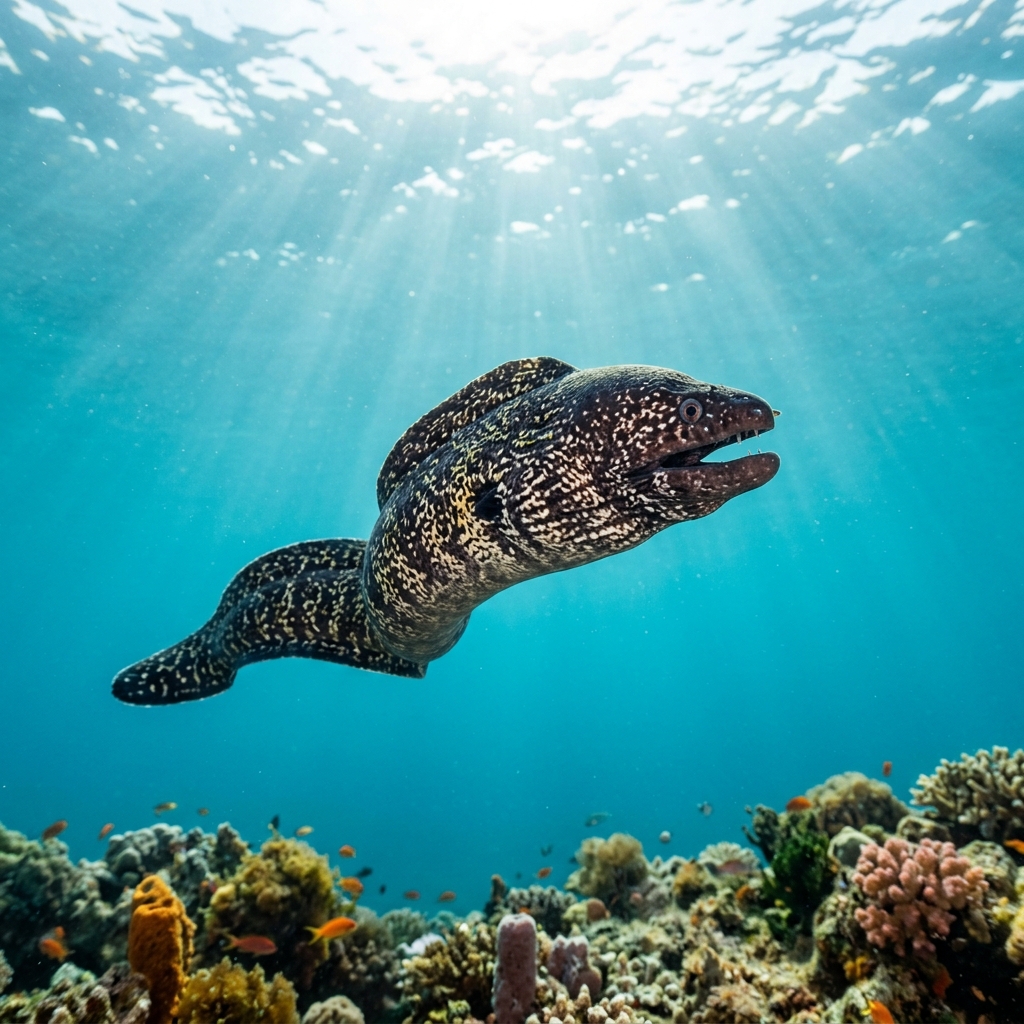
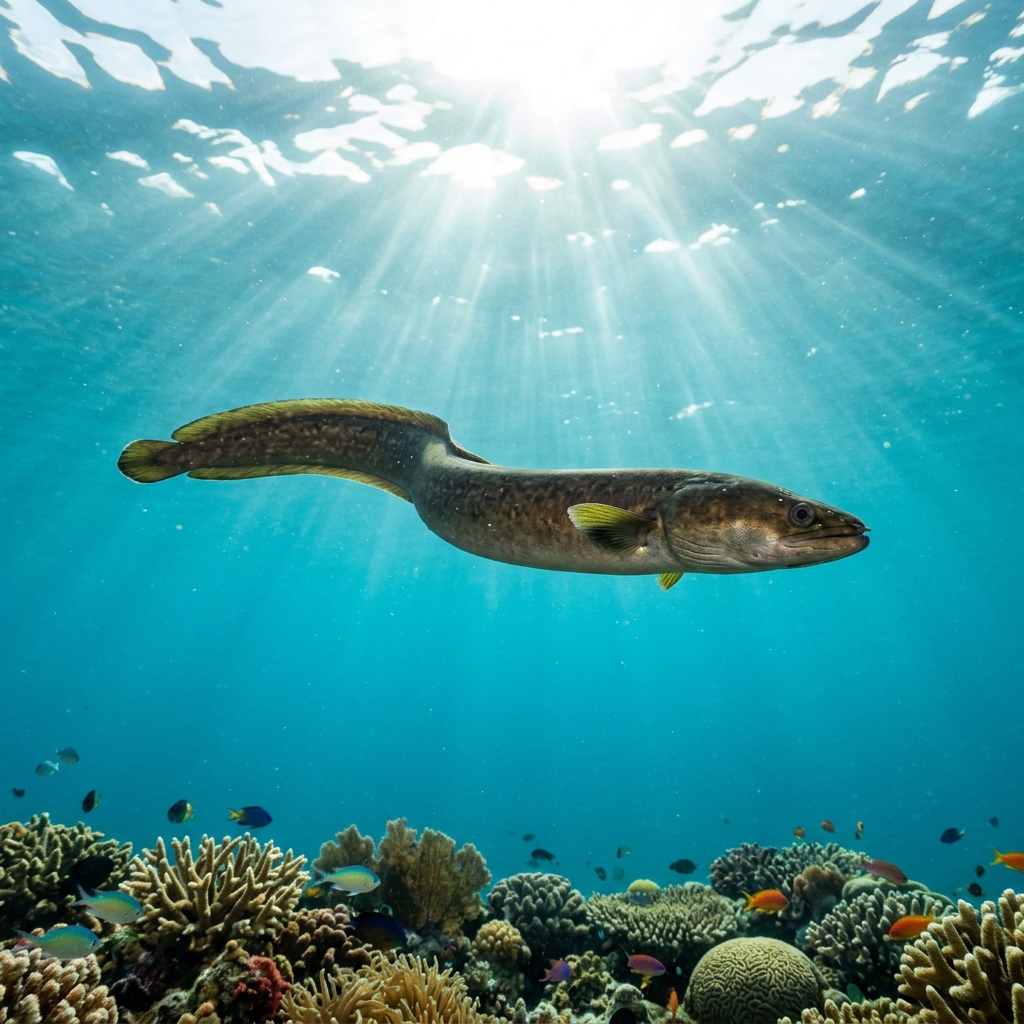
Reef neighbours a diver could mistake it for. Use the identification notes above to tell them apart.
Most reliably logged in the southern Caribbean, especially Bonaire's Leeward Coast and Curacao's Willemstad and South Coast area, with strong numbers also around Grenada Island and Carriacou. It also turns up consistently in Florida, Mexico's Yucatán Peninsula, Honduras's Bay Islands, and along Colombia's Caribbean coast.
Mapping where Sharptail Eel is logged…
Bonaire's Leeward Coast and Curacao are the most consistent spots, alongside Grenada, Florida, Mexico's Yucatán Peninsula, and Honduras's Bay Islands.
There is no strong seasonal pattern, so it is a year-round sighting on Caribbean reefs where water stays around 26 to 28°C.
Look for a cream to pale yellow body covered in dark round spots and a pointed, smooth snout rather than a moray's thick fringed head. It often shows just its head from a sand burrow or glides low over sand and rubble.
They typically reach around 71 cm in length, making them a mid-sized eel that is easy to mistake for a small moray at a glance.
No, they are not considered dangerous to divers and typically ignore divers unless closely approached while hunting.
Site and sighting data is aggregated from diver logs, iNaturalist and GBIF. For taxonomy and conservation status:
Garden Eel
2,448 sites