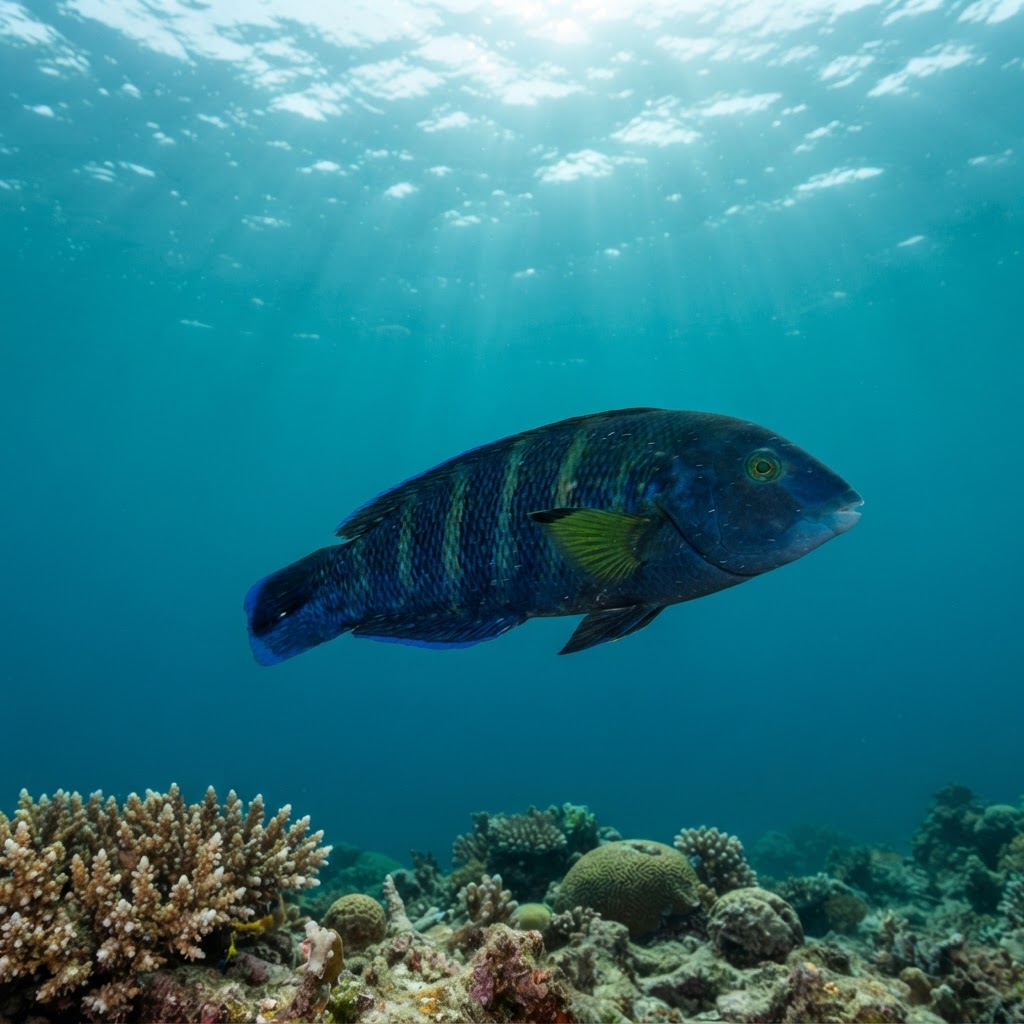
Thalassoma septemfasciatum
An uncommon find on Western Australia's reefs, comfortable in 17.7 to 23.7 C water and worth knowing before you scan the sand for it.
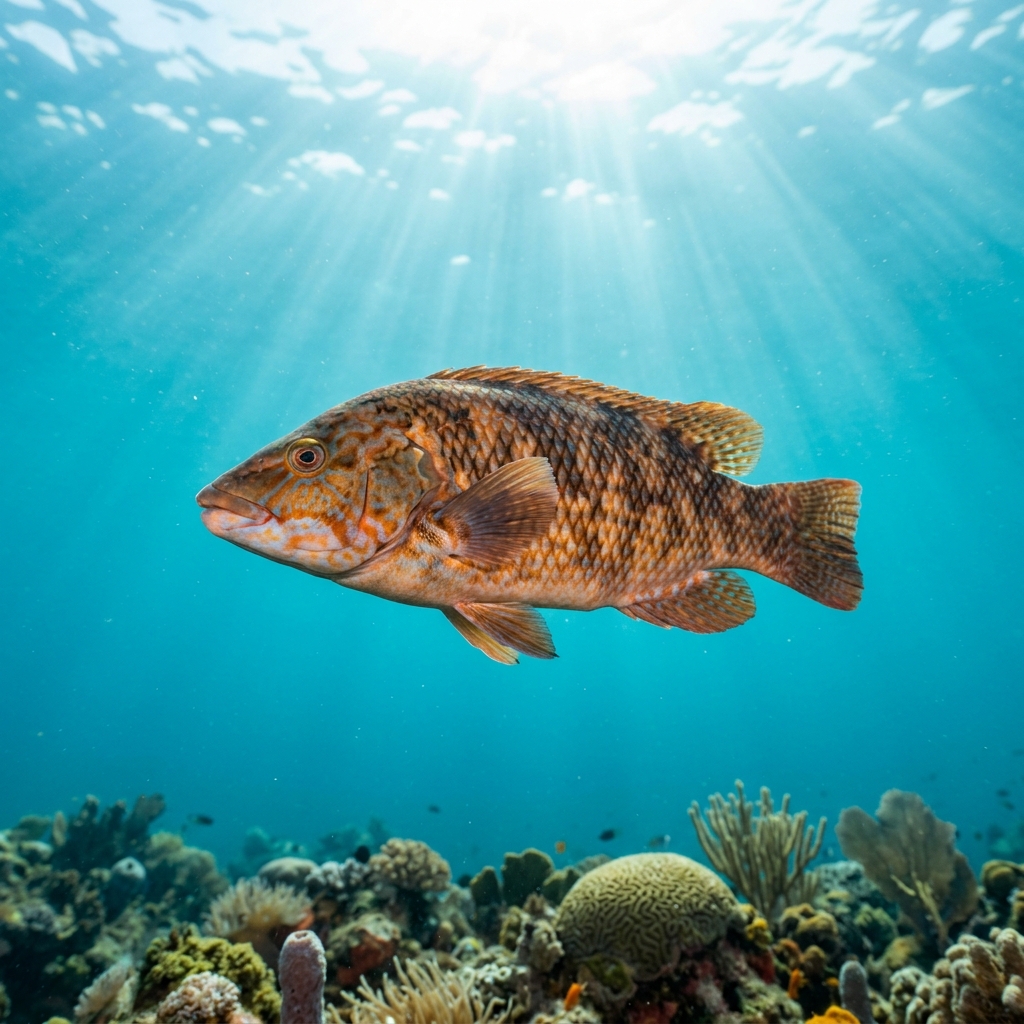
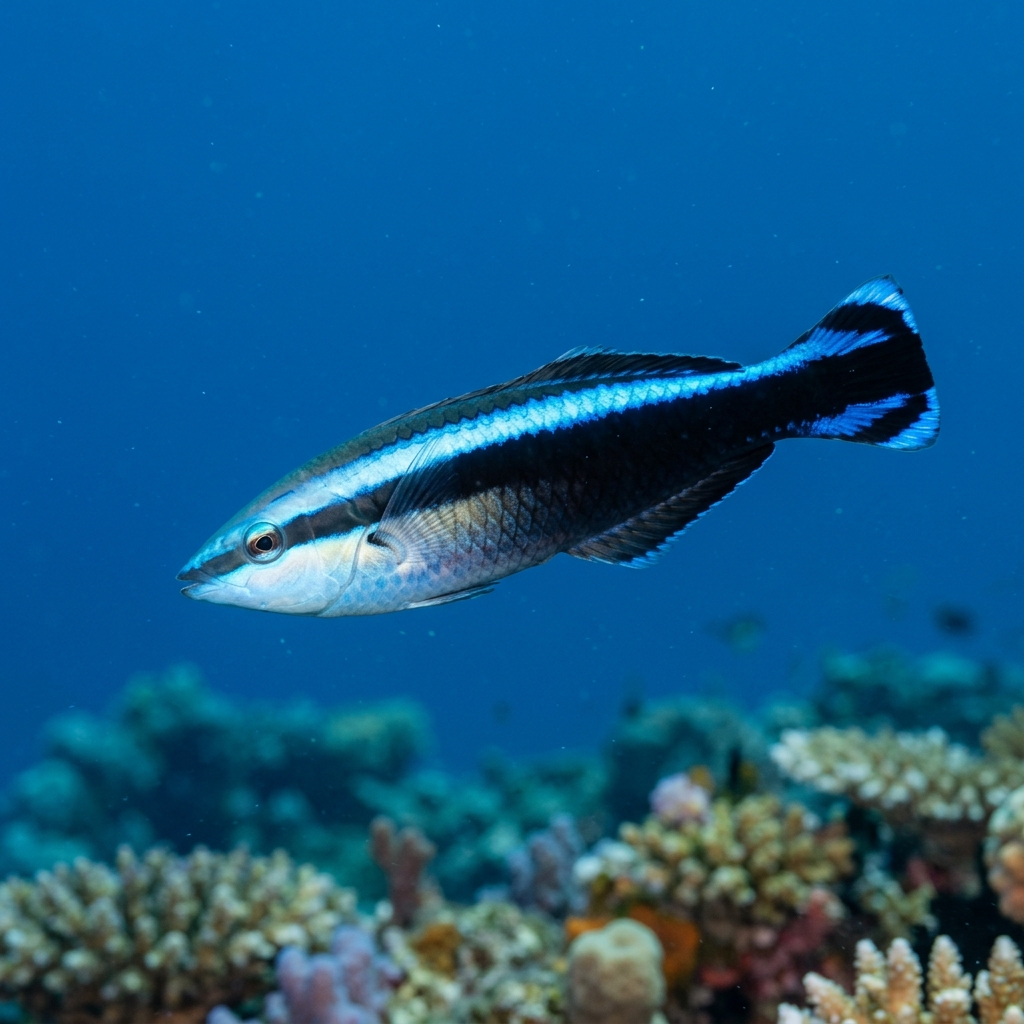
A slender, torpedo-shaped wrasse reaching around 22 cm, marked with the vertical bands that give it its name running down a pale to olive body. Look for it swimming in short darting bursts close to rock and reef structure rather than out in open water, with the typical wrasse habit of pectoral-fin paddling rather than a full body swim.
Divers most often log this wrasse moving in short quick bursts near reef and rock structure, staying low rather than cruising in open water. It is not a fish that lingers for a photo: expect brief sightings as it darts between shelter rather than approaching divers. Most logs describe it as uncommon rather than a guaranteed sighting, so it rewards divers who scan low reef edges rather than the water column.
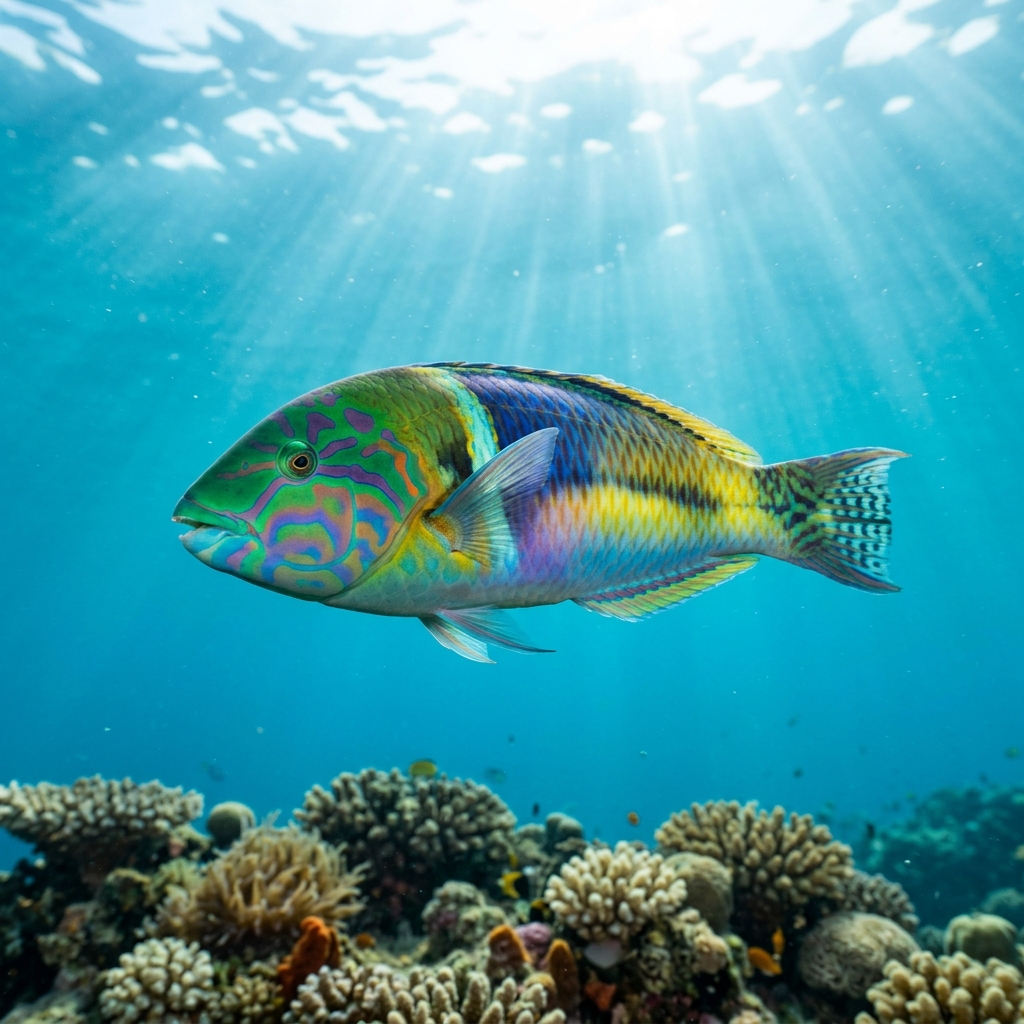
Like other Thalassoma wrasses, it likely changes colour and sex as it grows, moving from an initial phase into a more strikingly patterned terminal phase, though this has not been formally documented for this species.
No clear seasonal pattern shows up in the sightings, and the observed temperature range of 17.7 to 23.7 C spans WA's cooler and milder water months, so it reads as a year-round species rather than a seasonal visitor.
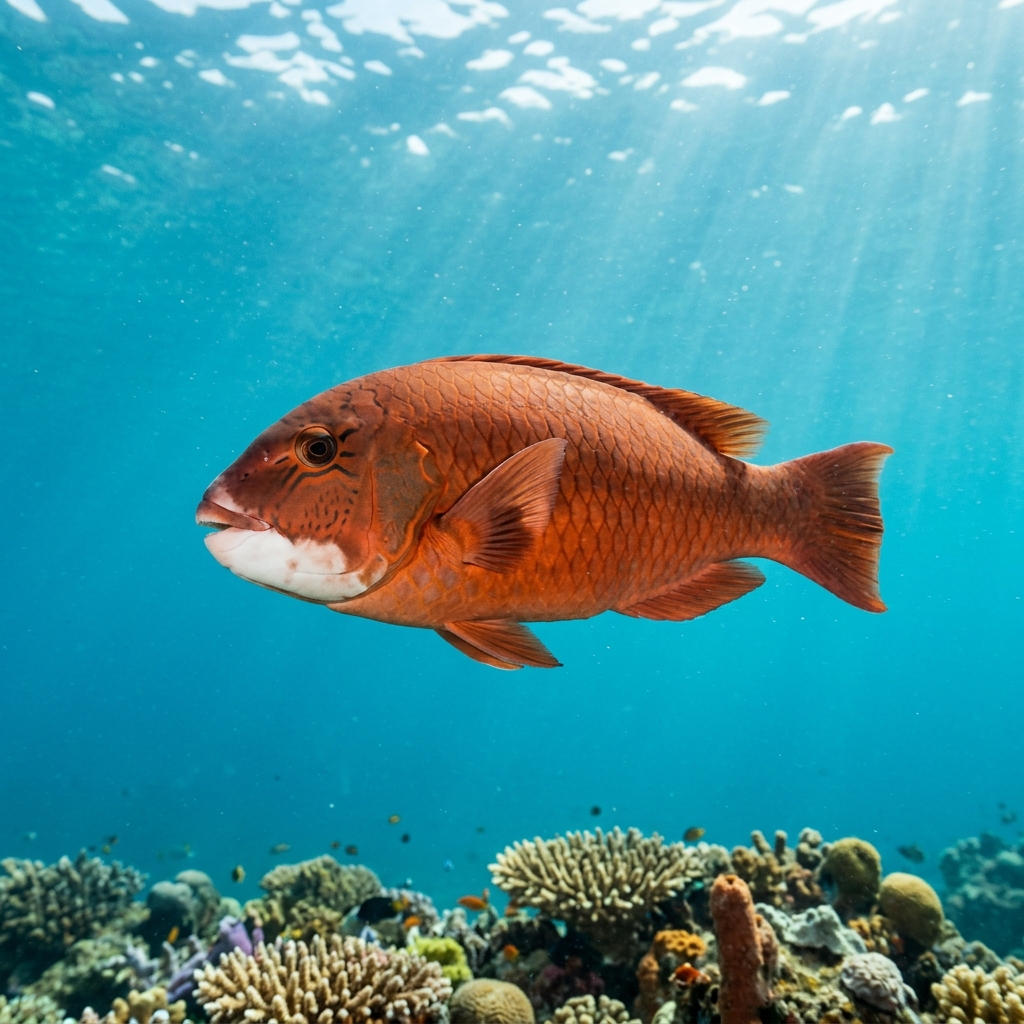
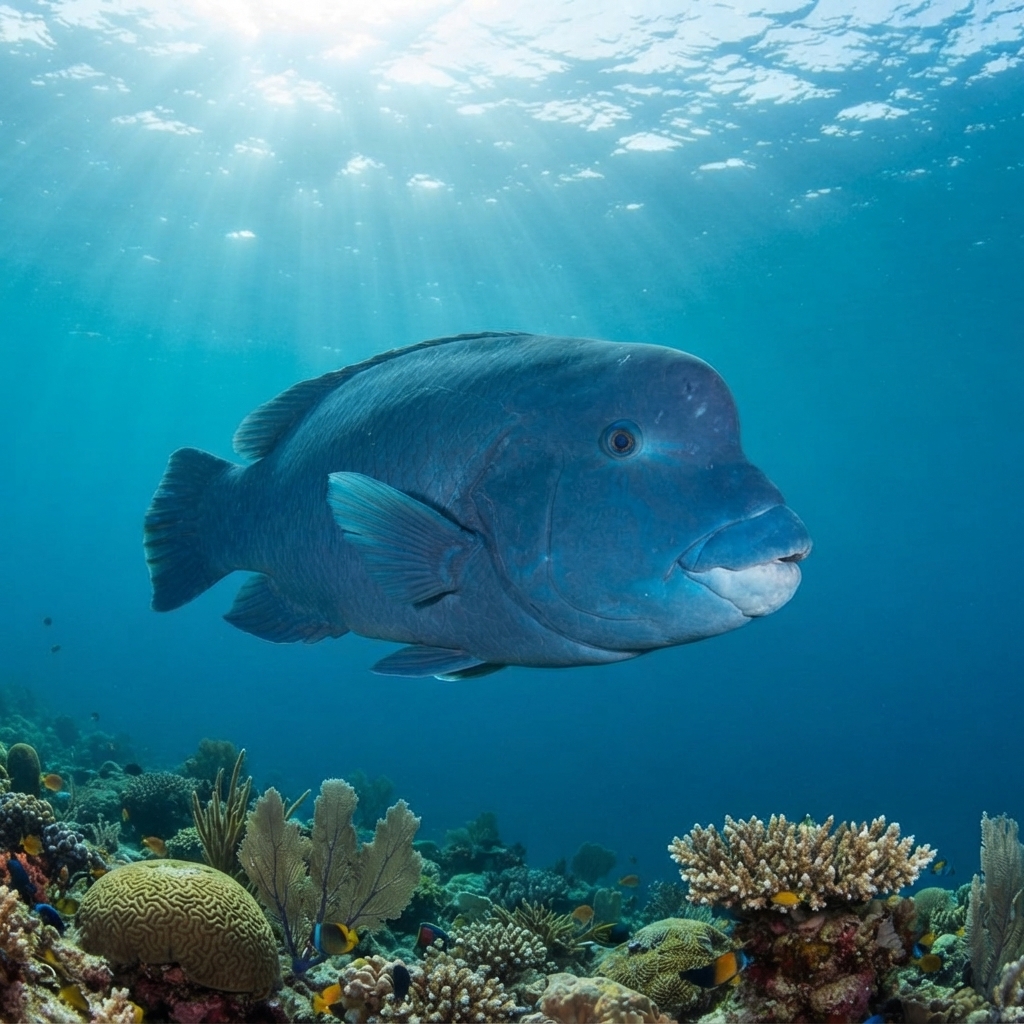
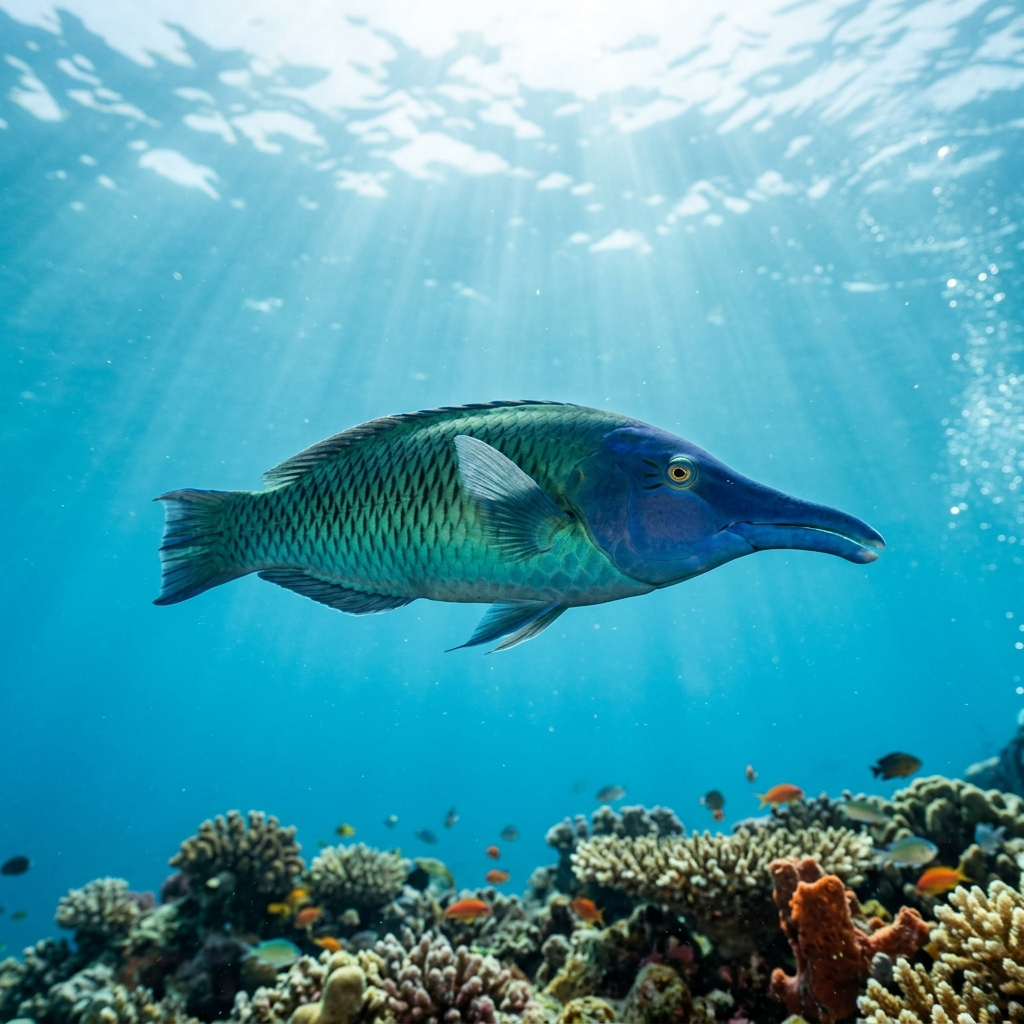
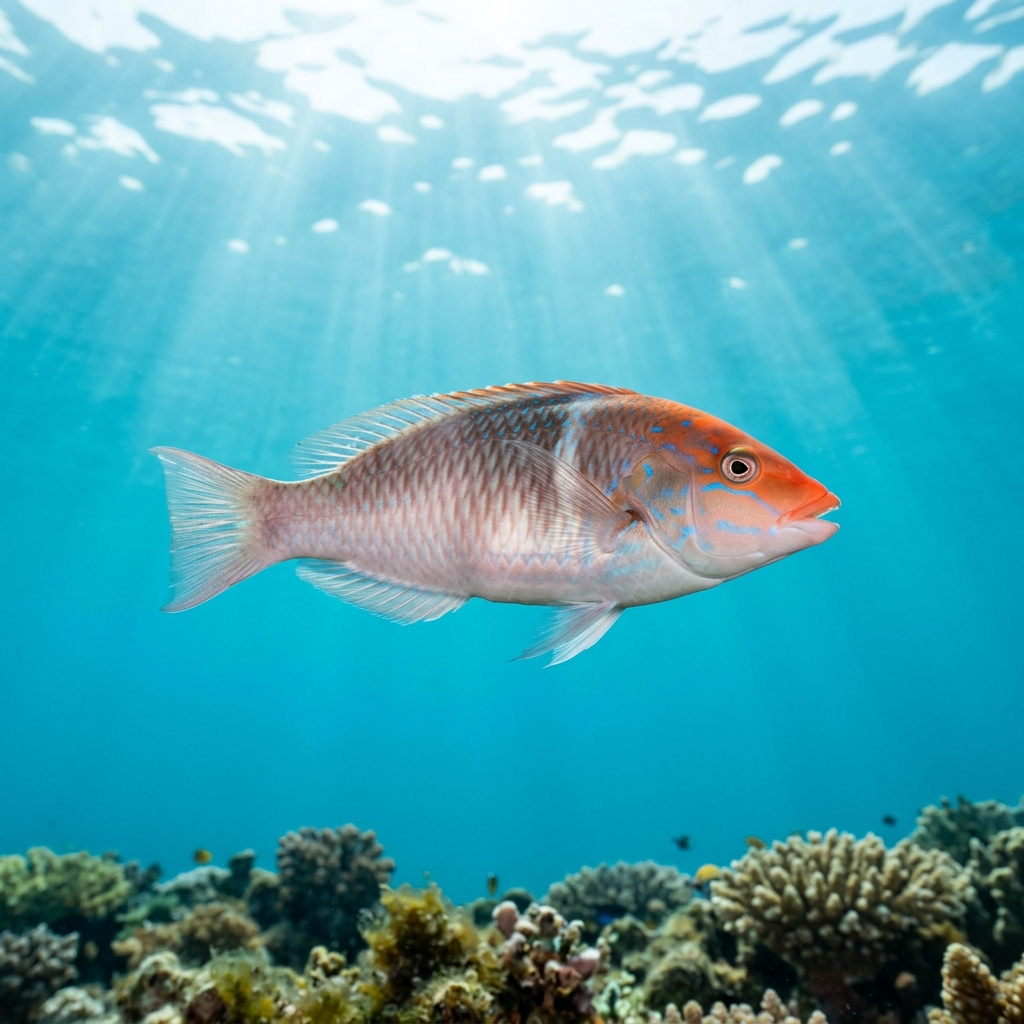
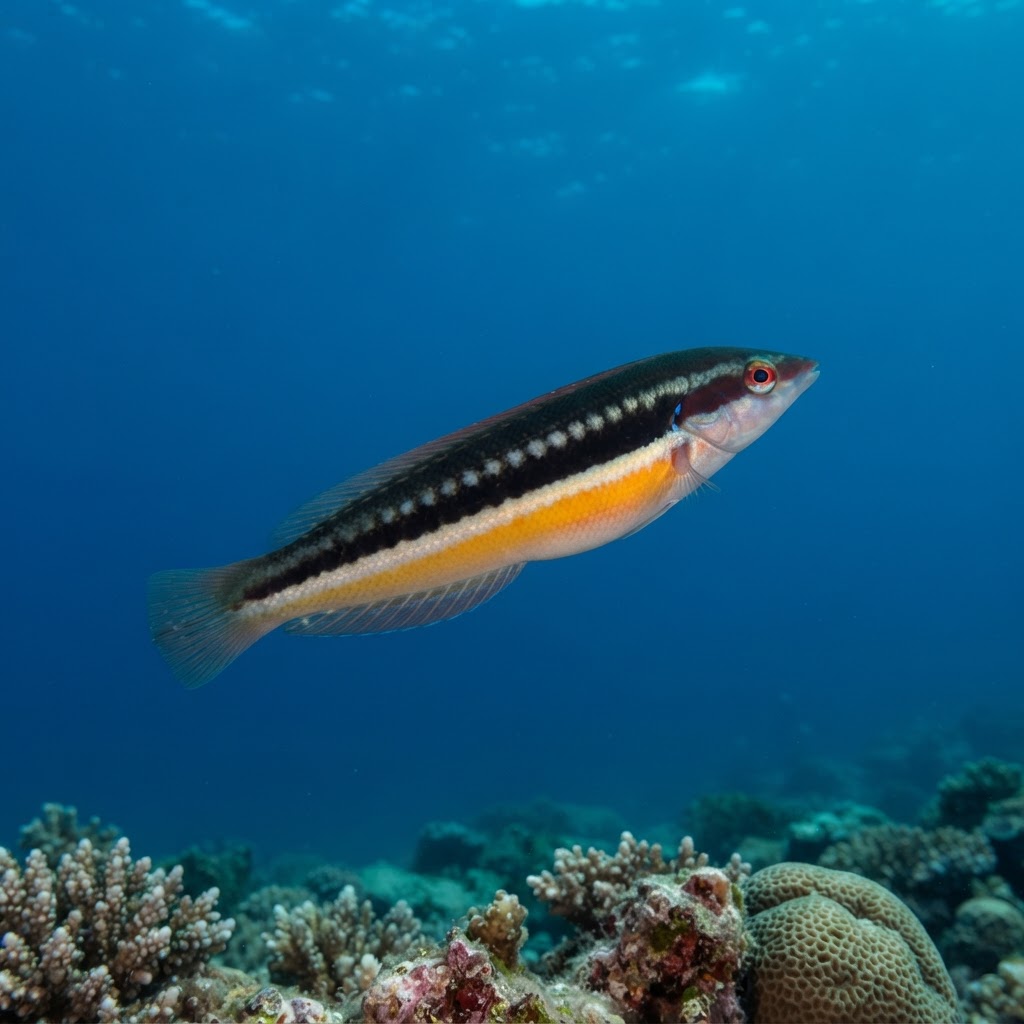
Reef neighbours a diver could mistake it for. Use the identification notes above to tell them apart.
Every logged sighting in the data comes from Australia, with Western Australia standing out as the region divers consistently find it. If you are diving the reefs and rocky reefs of WA, keep an eye on structure and crevices rather than open sand or blue water.
Mapping where Sevenband Wrasse is logged…
It has only been logged by divers in Australia, concentrated in Western Australia. It turns up on rocky reef and reef structure rather than sandy flats or open water.
There is no detected season in the sighting data, and the observed water temperature range of 17.7 to 23.7 C covers much of the year in Western Australia, so it is treated as a year-round species.
Look for a slender-bodied wrasse around 22 cm long with vertical bands down its flanks, darting close to rock and reef structure. It swims in quick bursts rather than gliding, and tends to stay low rather than out in open water.
They typically reach around 22 cm in length, putting them in the small to mid-size range for reef wrasses.
Most divers who log it describe it as uncommon, with some sites reporting it as rare and only one site logging it as common. It is a species worth searching for rather than one you can count on seeing.
Site and sighting data is aggregated from diver logs, iNaturalist and GBIF. For taxonomy and conservation status:
Bird Wrasses
3,632 sites