Achoerodus gouldii
Big blue-grey wrasse logged across Western Australia's reefs, from 15 to 28C waters, sighted year-round though usually just uncommon.
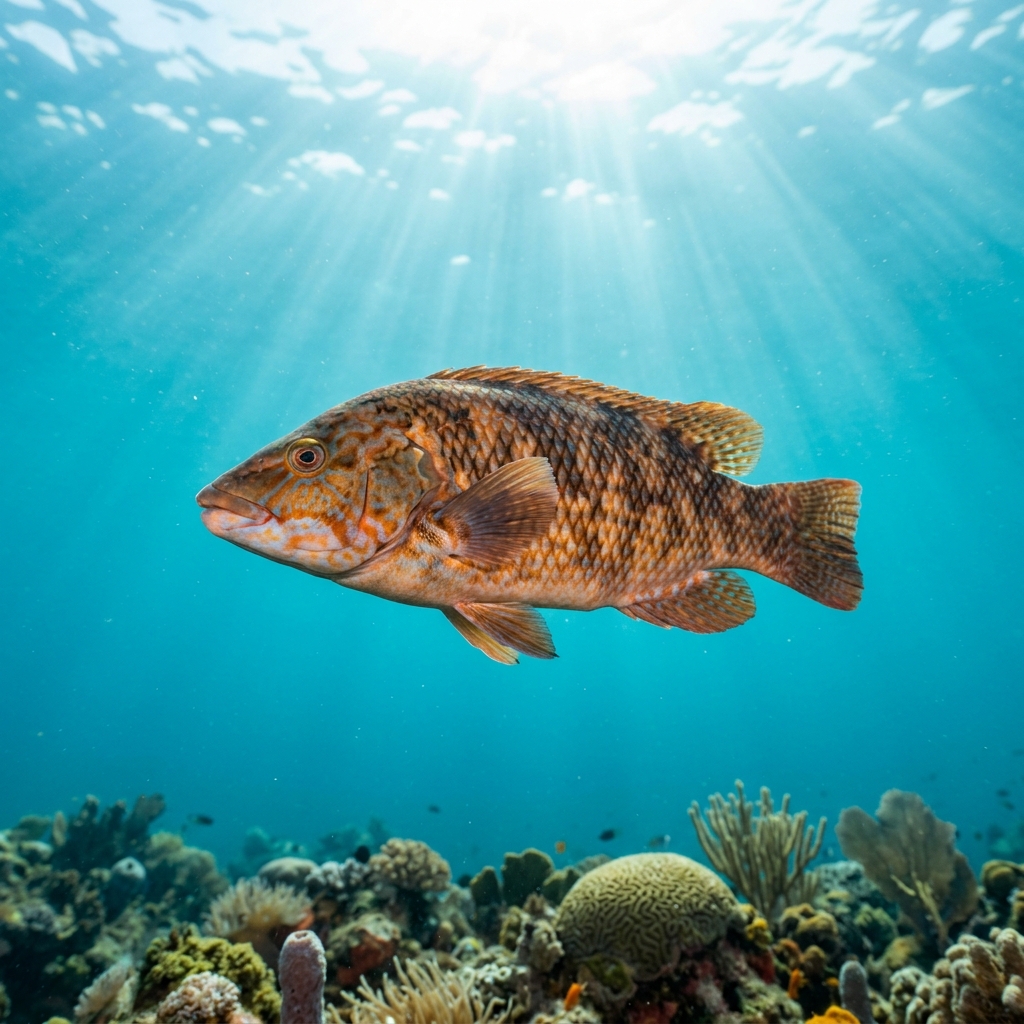
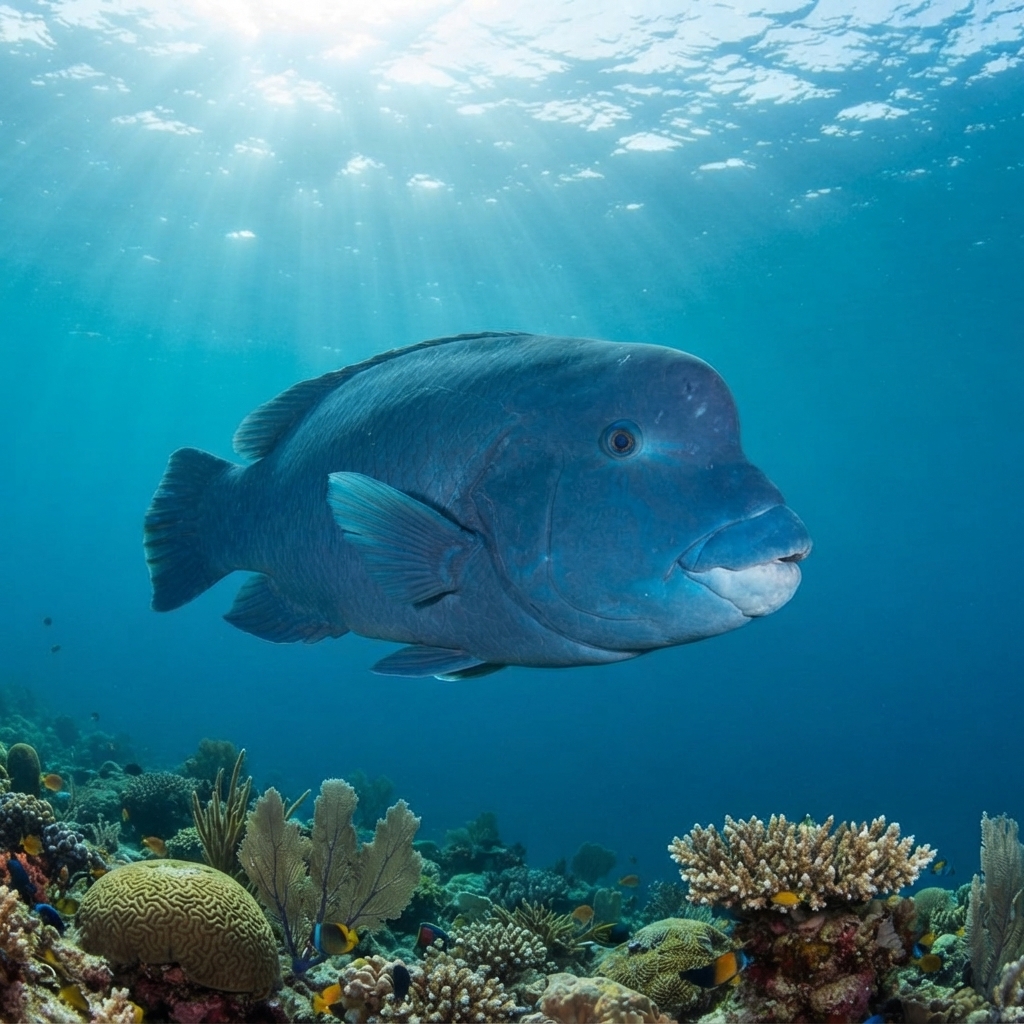
Look for a heavy-bodied wrasse pushing past a metre long, coloured a slate blue-grey with a slightly humped forehead and thick lips that give it a permanently curious expression. It swims with slow, deliberate strokes rather than darting, and its sheer bulk against the reef backdrop is often the first thing that gives it away. Males tend to run larger and darker than females, though colour alone is not a reliable way to sex one underwater.
Divers most often find it holding a patch of reef or drifting along rocky ledges alone or in loose pairs, unhurried and generally unbothered by a diver's presence. It is logged as uncommon at most sites rather than a guaranteed encounter, so a sighting tends to feel like a stroke of luck rather than a routine tick. Watch rock crevices and boulder fields where it forages, using those strong lips to work over hard-shelled prey.
Like many large wrasses it likely starts life as one sex and can change to the other as it grows, a trait well documented in its close relatives among the gropers.
Sightings show no strong seasonal pattern, and with a temperature range spanning 15.1 to 28.0C it seems to tolerate both cooler and warmer water on the same reefs, so plan around conditions and visibility rather than a particular month.
This is a Western Australia fish through and through, most commonly logged along the state's reefs and rocky headlands, with a handful of sightings extending into South Australia and Victoria. If you are specifically hunting this species rather than its eastern cousin, Western Australia is where to point your fins.
Mapping where Western Blue Groper is logged…
Western Australia is by far the most reliable region, with sites recorded there far outnumbering anywhere else. Smaller numbers turn up in South Australia and Victoria, but Western Australia is the stronghold.
There is no clear seasonal peak in the sighting data, and the species is logged across a wide temperature range from 15.1 to 28.0C, so it appears to be a year-round presence on the reefs it inhabits.
Look for a large, slate blue-grey wrasse over a metre long with a bulky body, a humped forehead and thick lips. It moves slowly and deliberately rather than darting, which along with its size makes it stand out from smaller reef wrasses.
They typically reach around 122 cm, making them one of the largest wrasses a diver is likely to encounter on temperate Australian reefs.
No, they are not considered dangerous to divers. They are generally calm around people and pose no known threat.
Like other large wrasses in its family, it is thought to change sex over its lifetime, typically starting as female and later becoming male as it grows larger and more dominant.
Site and sighting data is aggregated from diver logs, iNaturalist and GBIF. For taxonomy and conservation status:
Bird Wrasses
3,632 sites