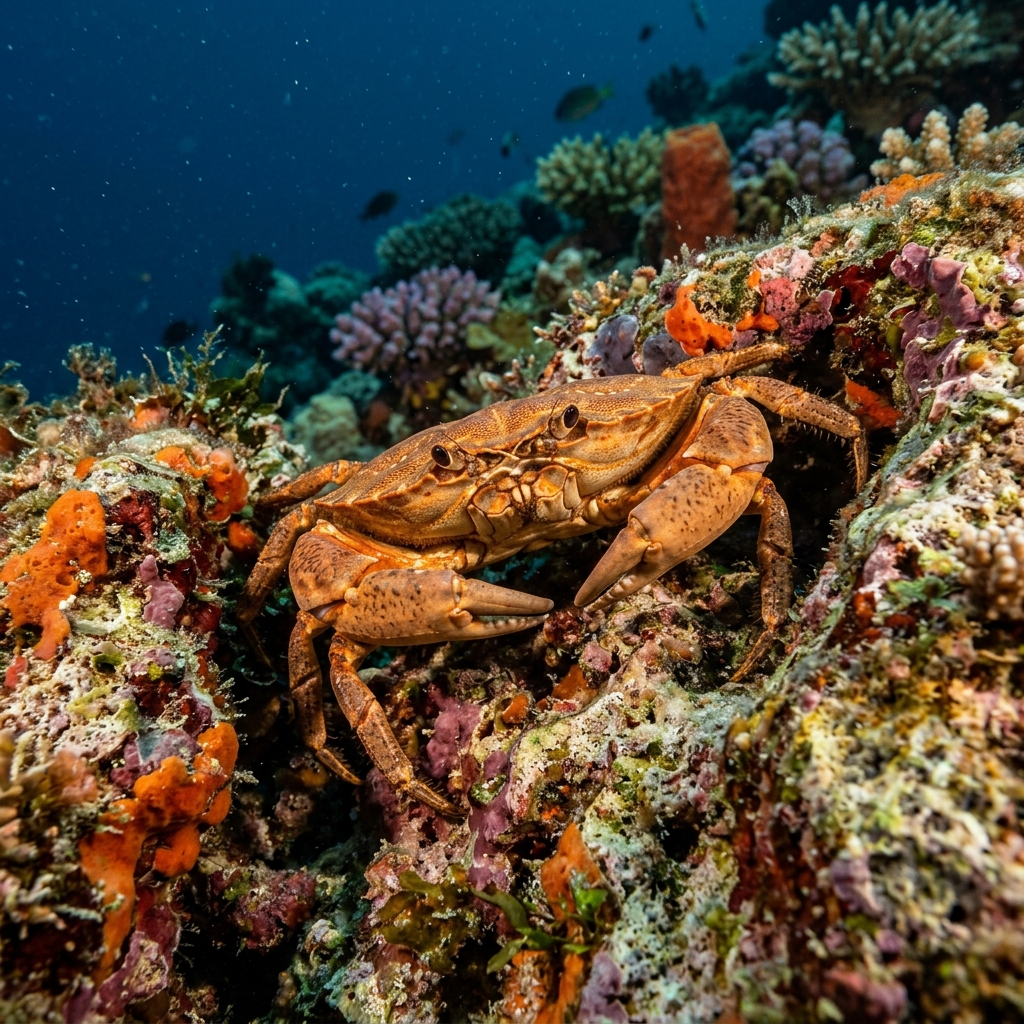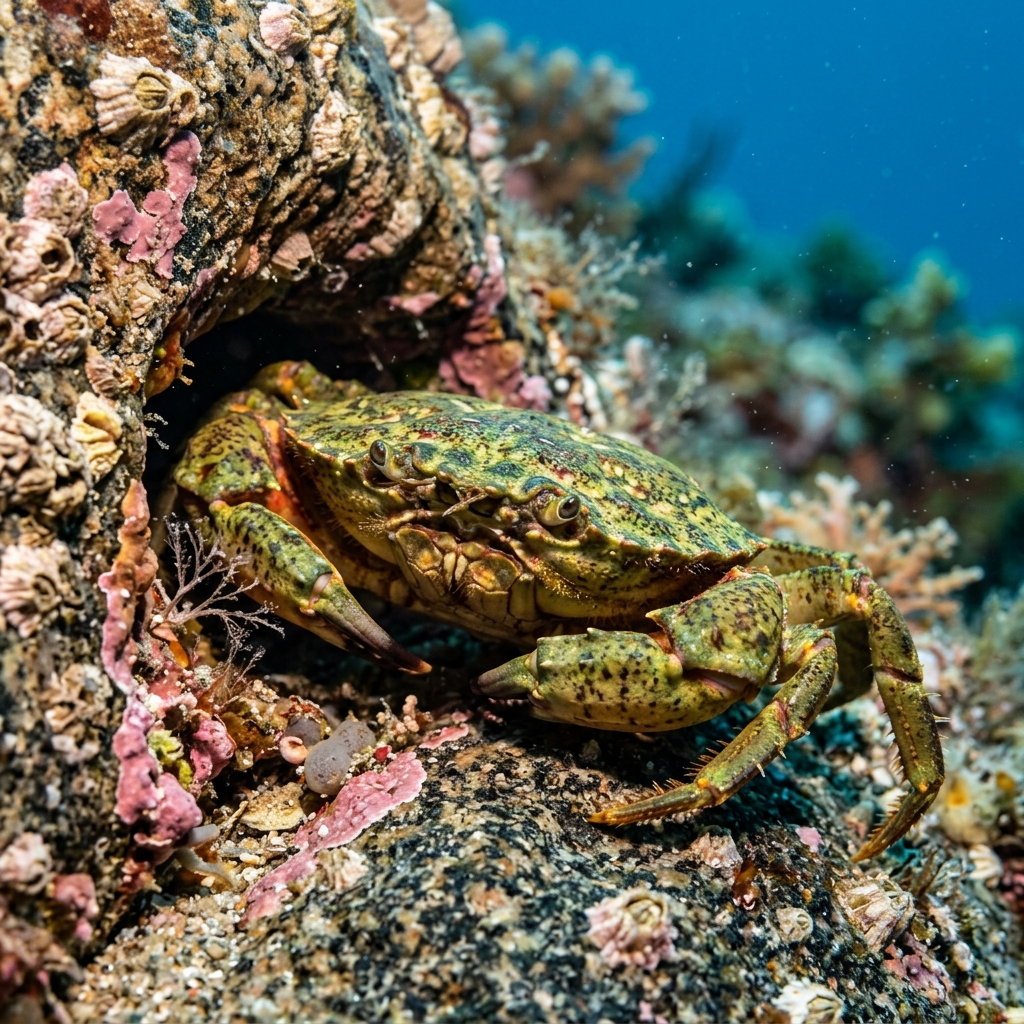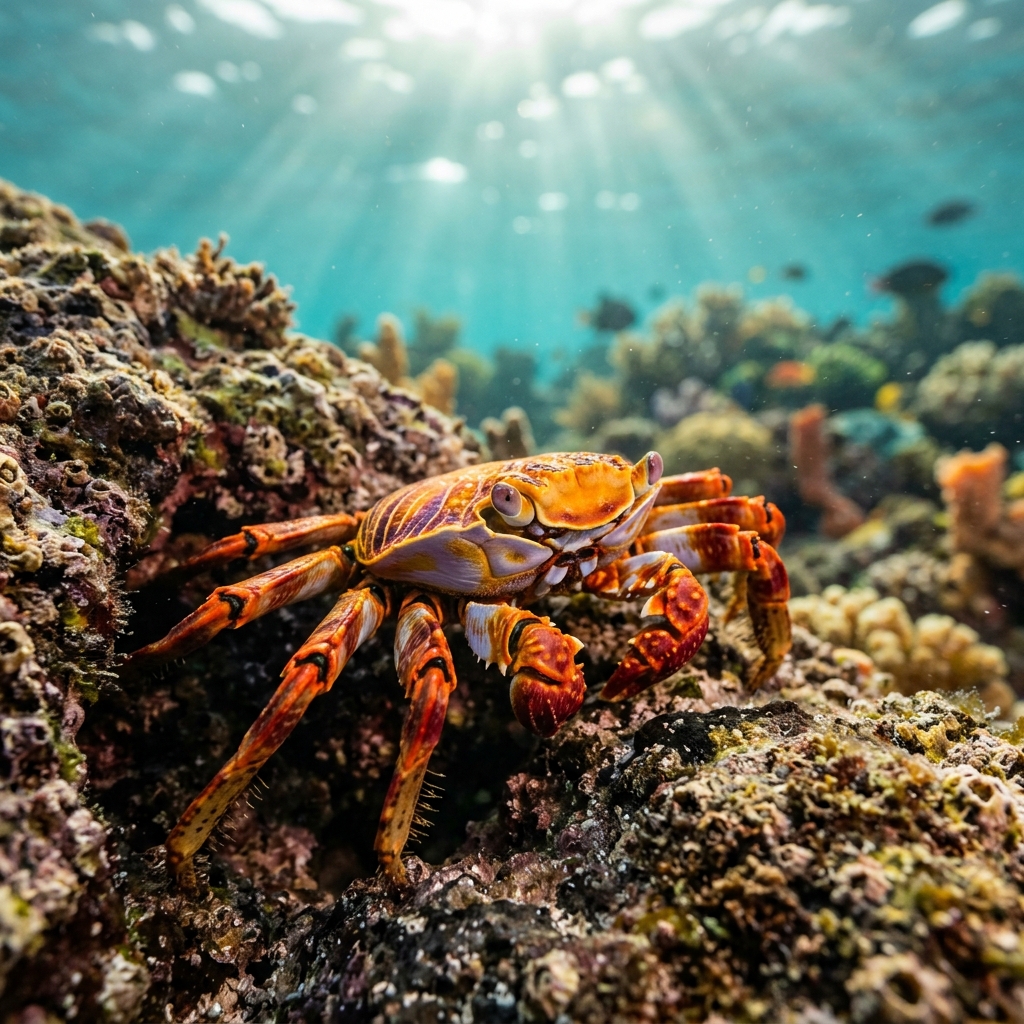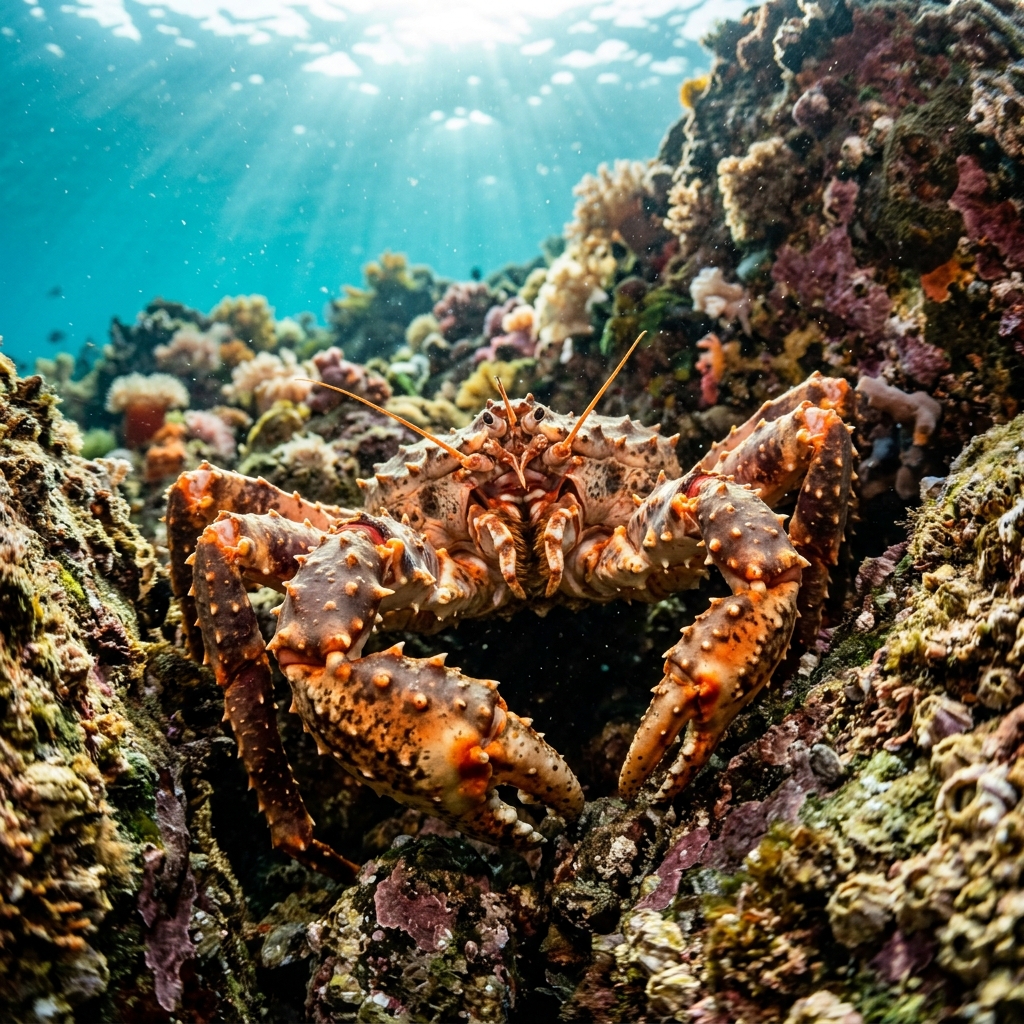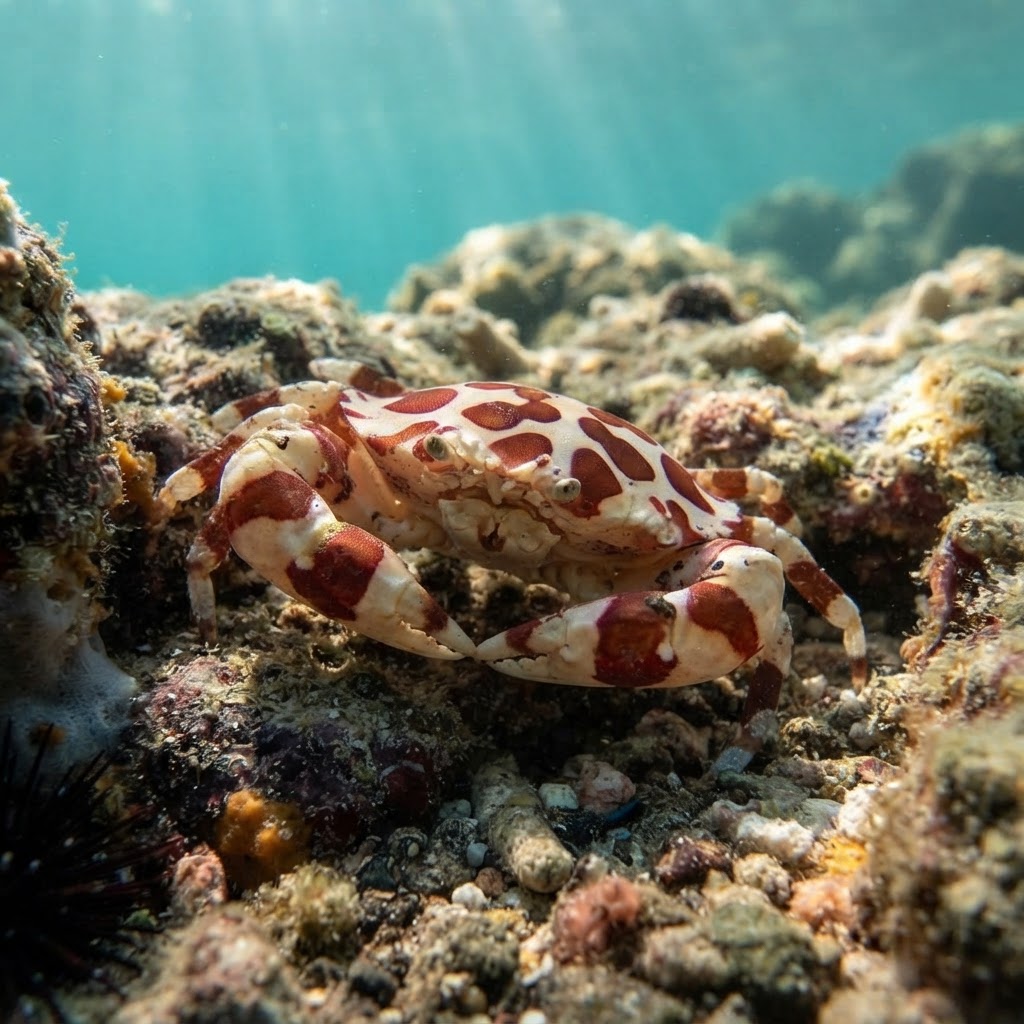
Lissocarcinus orbicularis
Small, round crab that rides sea cucumbers in Maluku and Xiaoliuqiu, comfortable year-round in warm Indo-Pacific water.
A small, rounded crab, rarely more than a couple of centimetres across, with a smooth domed shell patterned in mottled cream, tan or purplish blotches that echo its host's skin. Its legs are flattened and paddle-like, an adaptation from its swimming-crab family, and it sits tucked against or on top of a sea cucumber rather than hiding in the reef itself. Look for the shape first: a compact, almost coin-like body glued to the surface of a sausage-shaped sea cucumber, easy to miss until it shifts position.
Spend most of a dive parked directly on the surface of its host sea cucumber, using the animal as both camouflage and a mobile platform over sandy and rubble bottoms. It shows little concern for divers, usually holding its position rather than bolting when a torch or camera comes close, which makes it a manageable macro subject once you spot the host. Best found by scanning sea cucumbers slowly rather than searching open reef, since the crab itself blends into the pattern of its ride.
It lives in an obligate partnership with its sea cucumber host, feeding on debris and mucus from the surface while getting a free ride and a measure of protection from predators that avoid the cucumber's toxic skin secretions.
No clear season shows up in the sightings data, and with a comfortable range of roughly 24 to 30C it stays active on warm tropical reefs all year, so any month at these sites gives a fair shot.
Reef neighbours a diver could mistake it for. Use the identification notes above to tell them apart.
Most reliably logged in Indonesia, especially Maluku and Sulawesi, with a strong secondary population around Xiaoliuqiu in Taiwan and Milne Bay in Papua New Guinea. Divers have also picked it up in French Polynesia's Society Islands and at Kwajalein Atoll in the Marshall Islands, so it turns up wherever sea cucumbers are common on tropical reef sand and rubble.
Mapping where Sea Cucumber Crab is logged…
Best odds are in Indonesia's Maluku and Sulawesi regions, plus Xiaoliuqiu in Taiwan and Milne Bay in Papua New Guinea. It has also been logged in French Polynesia and the Marshall Islands, always on or near sea cucumbers.
There is no strong seasonal pattern in the sightings, and warm water of roughly 24 to 30C keeps it present on tropical reefs year-round, so timing is flexible.
Look for a small, rounded, mottled crab sitting directly on top of a sea cucumber rather than in the sand or reef nearby. Its flattened swimming legs and coin-like shell shape help separate it from crabs that live free on the substrate.
It stays small, generally only a couple of centimetres across the shell, making it an easy animal to overlook unless you are checking sea cucumbers closely.
It lives its whole adult life riding a single sea cucumber, feeding off surface debris and mucus while gaining shelter from predators that steer clear of the cucumber's defensive secretions.
No, it poses no threat to divers. It is a tiny, host-bound crab that will simply hold its position on its sea cucumber if you approach for a closer look.
Site and sighting data is aggregated from diver logs, iNaturalist and GBIF. For taxonomy and conservation status:
European Green Crab
2,469 sites