Grimothea planipes
Small red crabs drifting off California in 12-19C water, most reliably logged as an uncommon find along the state's dive sites.
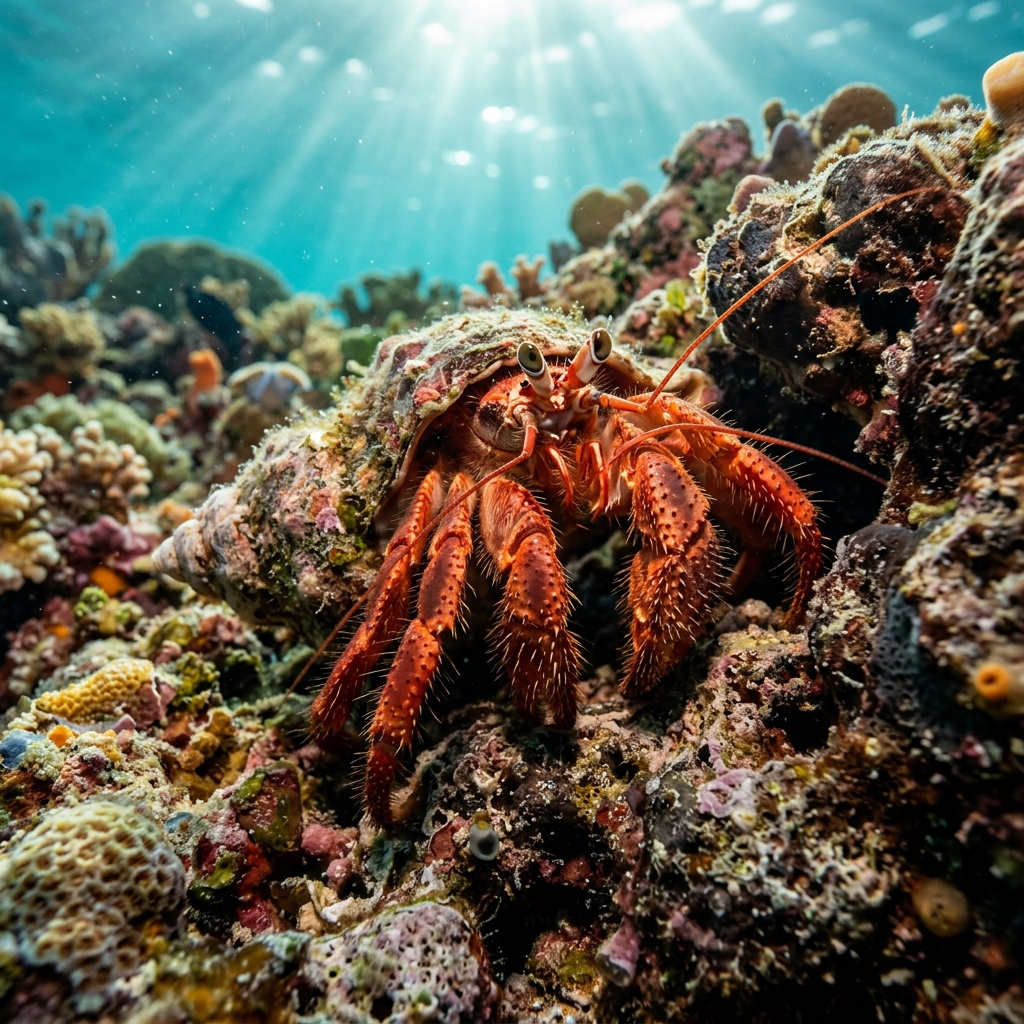
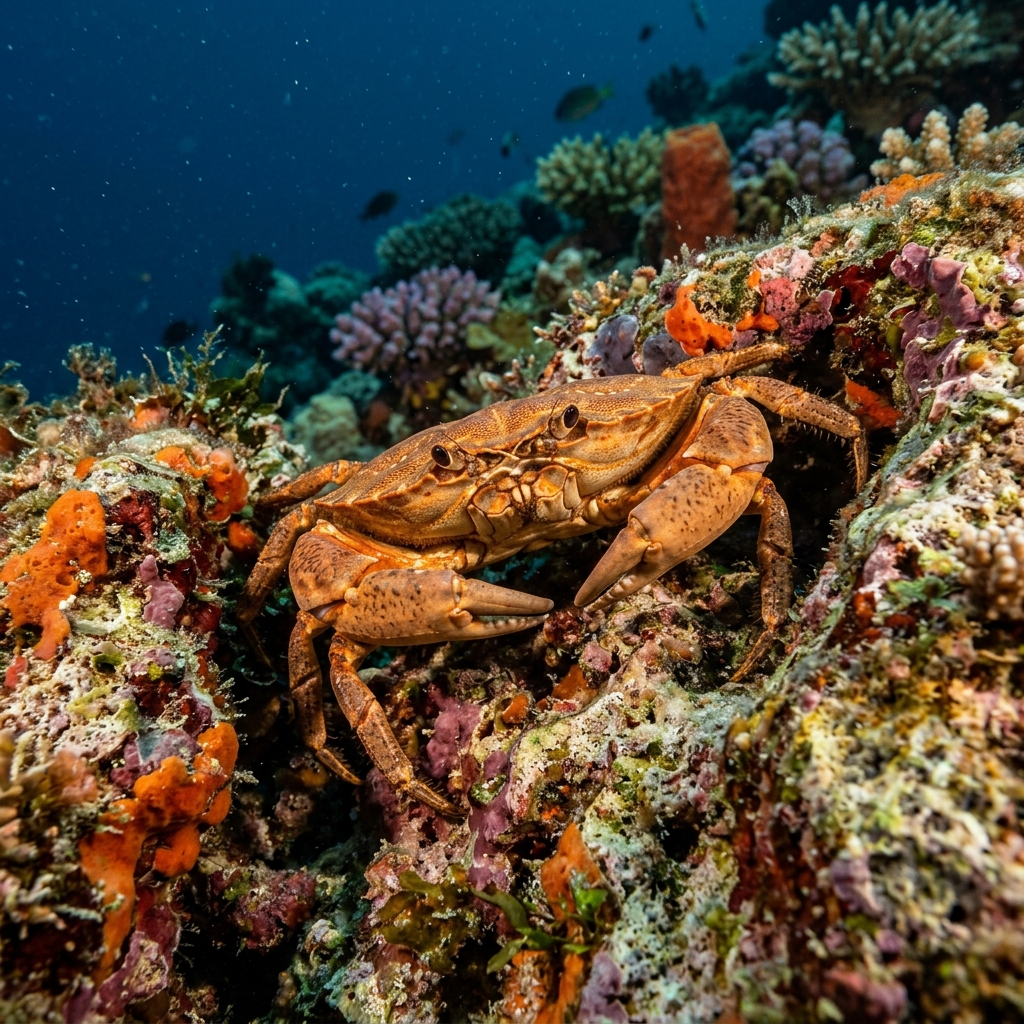
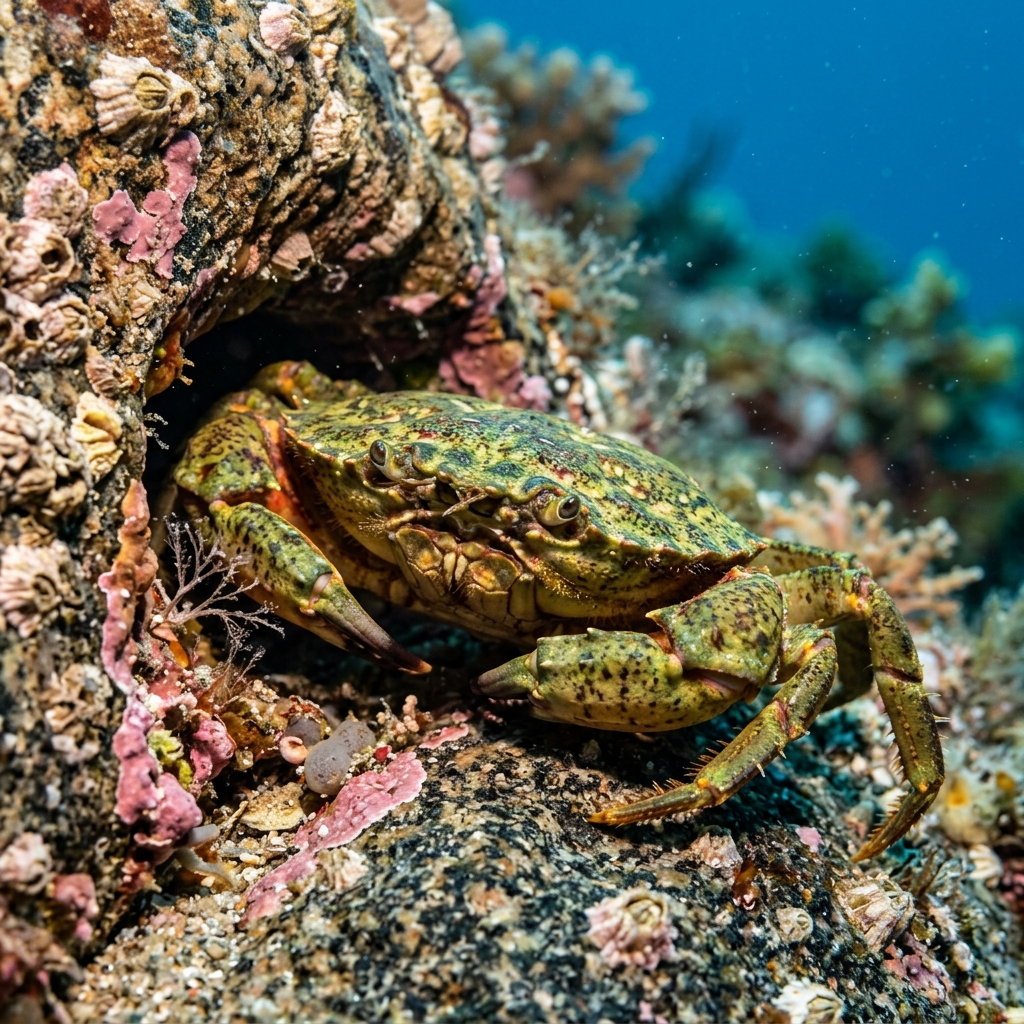
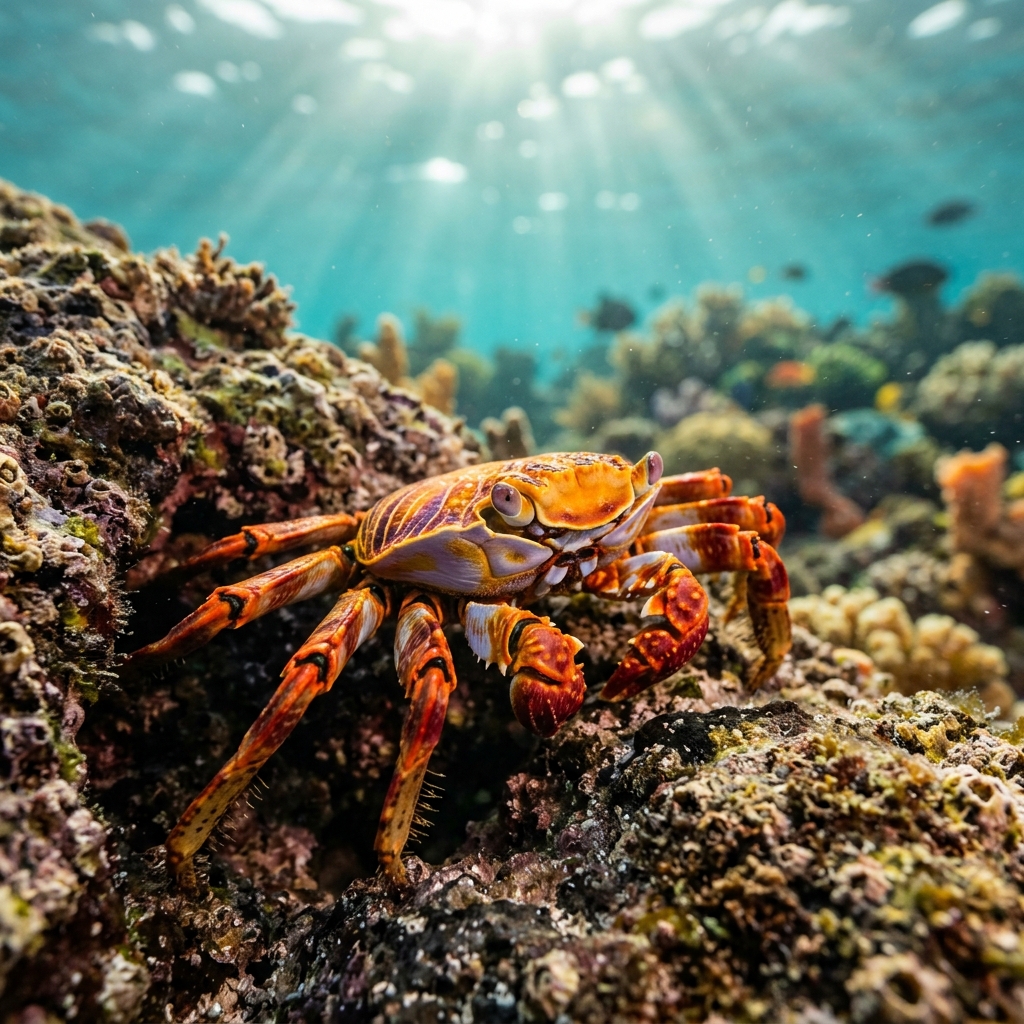
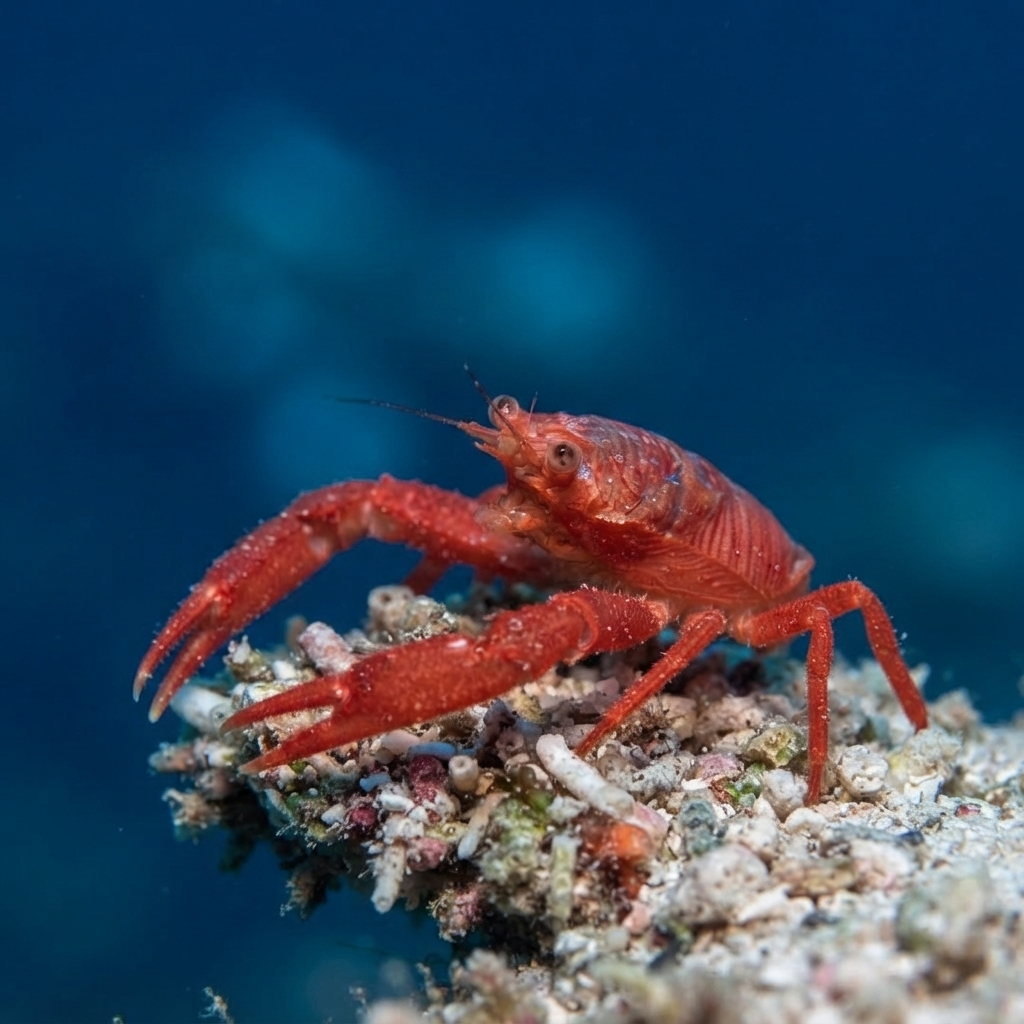
Small crab, only about 4 cm across, with a reddish-orange shell and long, slender walking legs that look almost too spindly for the body. Unlike bottom-dwelling crabs, it has no claws built for gripping rock and is often seen swimming or drifting in open water rather than scuttling over the reef. Its flattened, somewhat translucent body and forward-pointing eyes are the quickest way to tell it apart from true crabs on the substrate.
Divers typically encounter it drifting in open water rather than perched on the reef, sometimes in loose swarms that pulse past a dive site on a current. It shows little reaction to divers, being far more concerned with staying in the water column than with anything nearby. Depth logs put most sightings well below typical recreational limits, so a shallower encounter usually means a mass movement has pushed animals up from deeper water.
Large offshore swarms of this species are a known food source for tuna, sharks, and seabirds, and mass strandings driven by warm-water events have washed thousands ashore on the California coast in past El Nino years.
Sighting logs show no strong seasonal pattern, so treat it as a year-round possibility wherever water temperature sits in its comfortable 12.3 to 18.9C range. California's cooler upwelling months can bring dense drifts closer to shore, but data does not confirm a fixed month-to-month cycle.
Logged almost exclusively off the United States, with California the clear centre of sightings, particularly around dive sites in the Southern California region. Divers should treat this as a California specialty rather than something to look for elsewhere.
Mapping where Pelagic Red Crab is logged…
California is by far the strongest region for sightings, with dive sites across the state logging this species more than anywhere else. Outside California, confirmed diver encounters are scarce.
There is no confirmed peak season in the sighting data, so it is best treated as a year-round possibility in California waters within its 12.3 to 18.9C comfort range.
Look for a small reddish-orange crab, around 4 cm, with long thin legs, drifting or swimming in open water rather than clinging to the reef. Its flattened shape and habit of hovering mid-water set it apart from bottom-dwelling crabs.
They stay small, typically around 4 cm across, making them easy to overlook individually unless you encounter a drifting group.
Yes, this species is known for mass strandings along the California coast during unusual ocean warming events, when swarms get pushed inshore and pile up on beaches. It is one of the more striking examples of a pelagic crustacean's boom-and-bust relationship with sea temperature.
No, they pose no threat to divers. They have no defensive claws worth worrying about and simply drift past if you encounter a swarm.
Site and sighting data is aggregated from diver logs, iNaturalist and GBIF. For taxonomy and conservation status:
Sally Lightfoot Crab
2,422 sites