Cottidae spp.
Spot sculpin in cold Atlantic and Pacific waters from Nova Scotia to Brittany. Here's where divers find them and how to recognise that spiny, bottom-hugging shape.
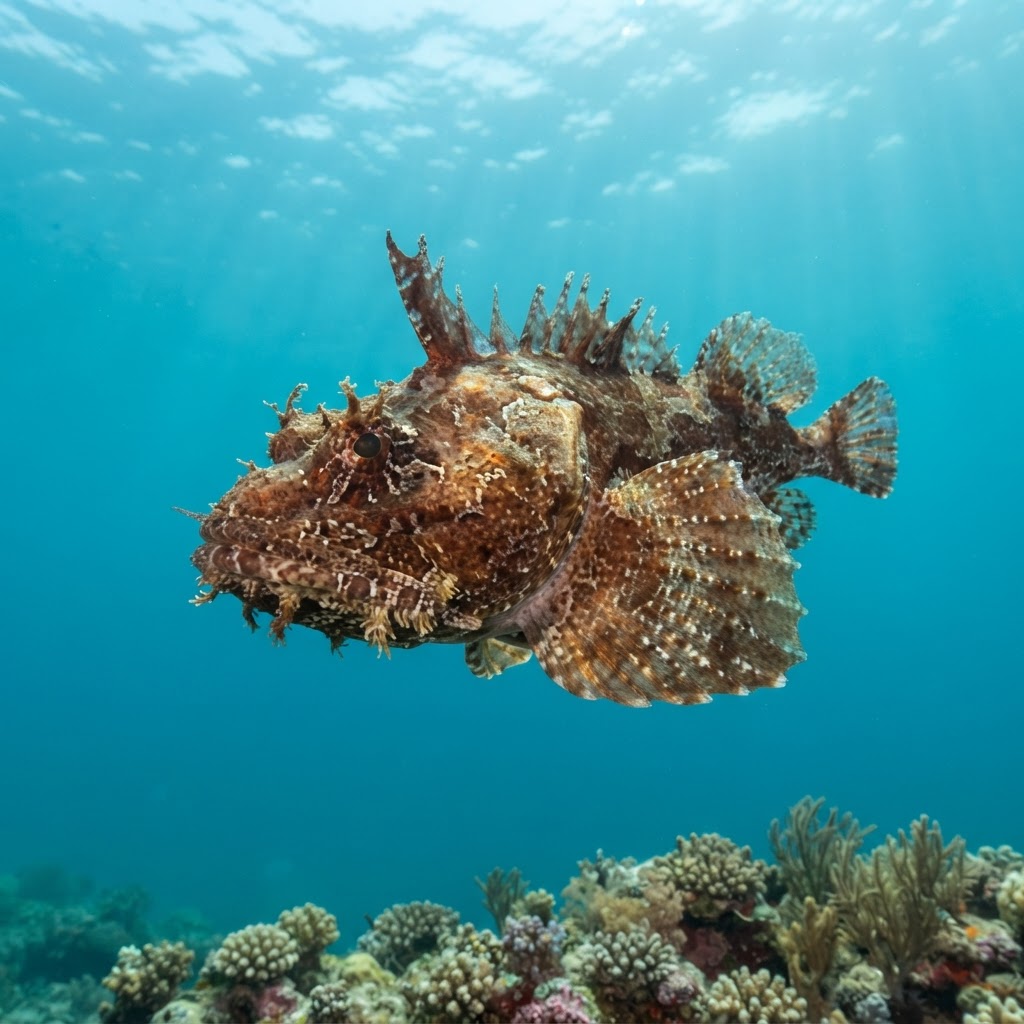
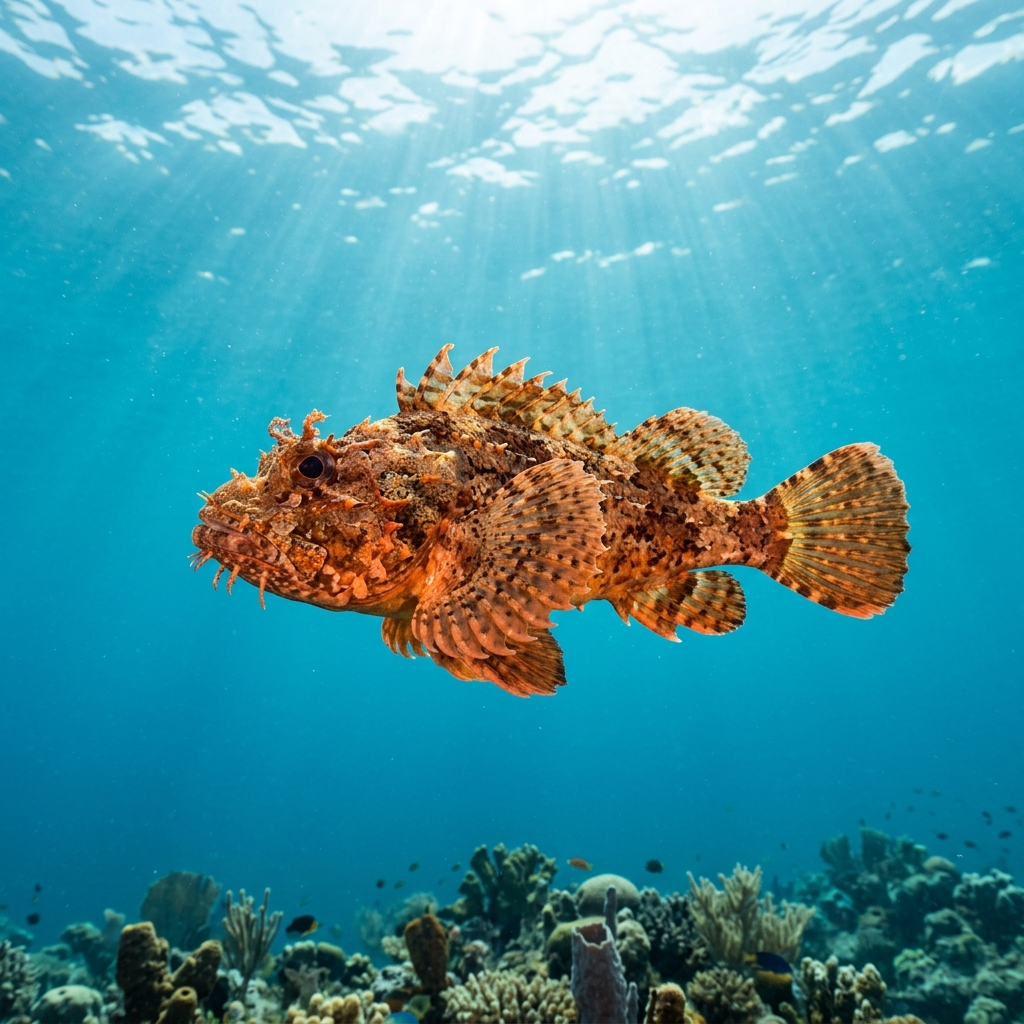
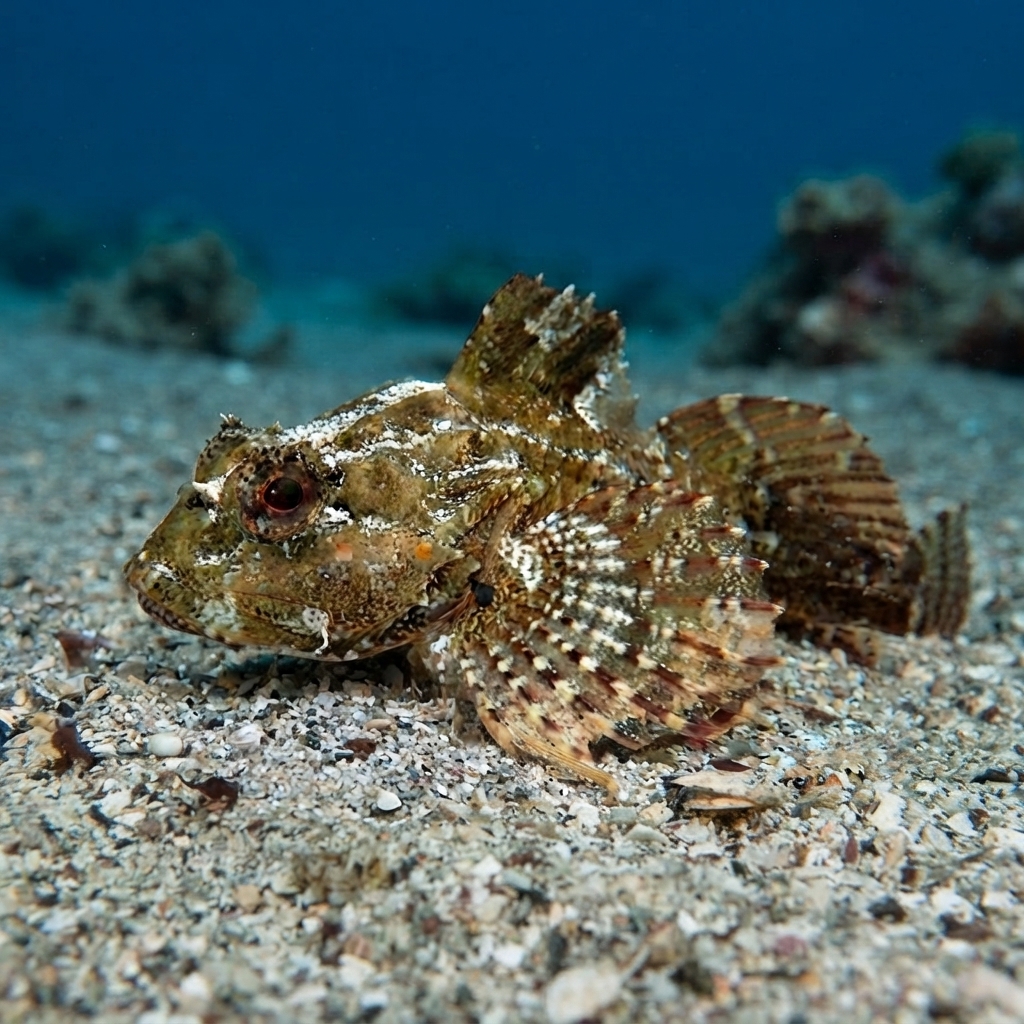
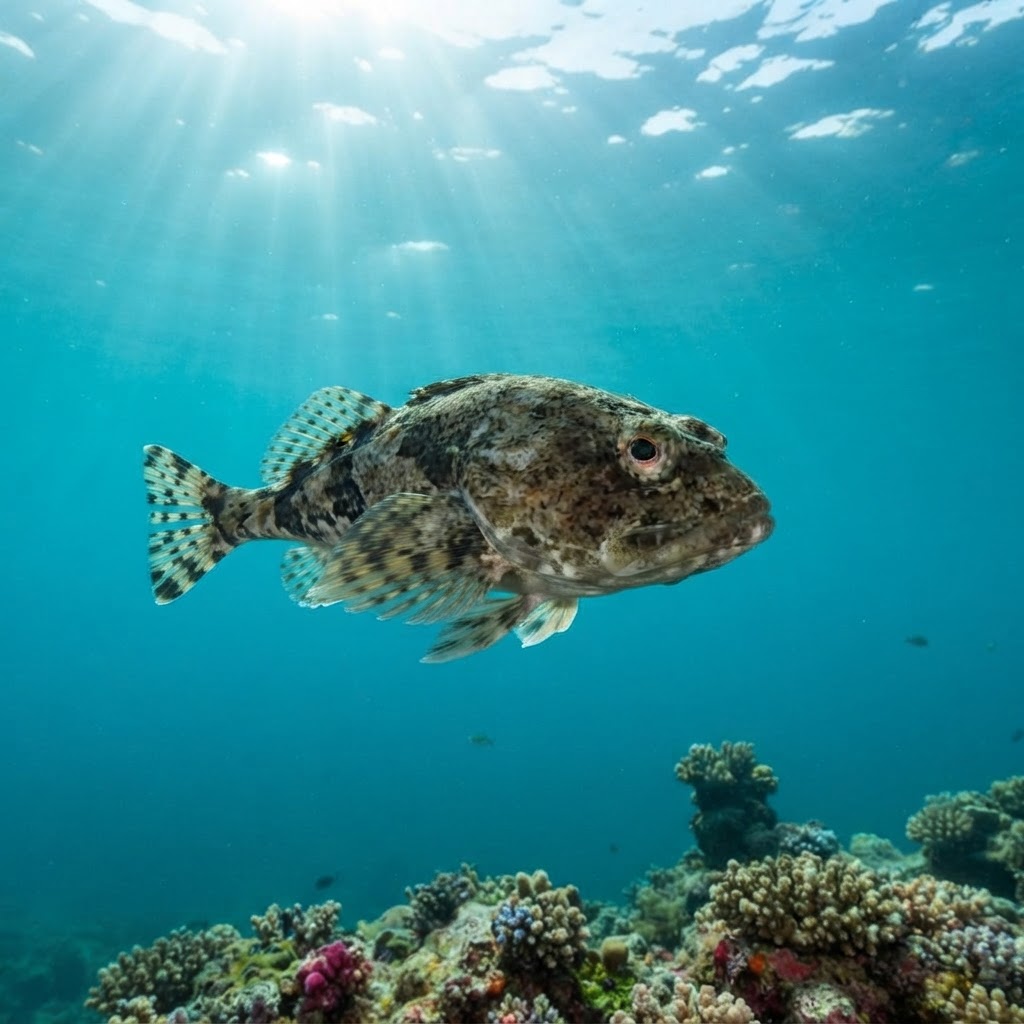
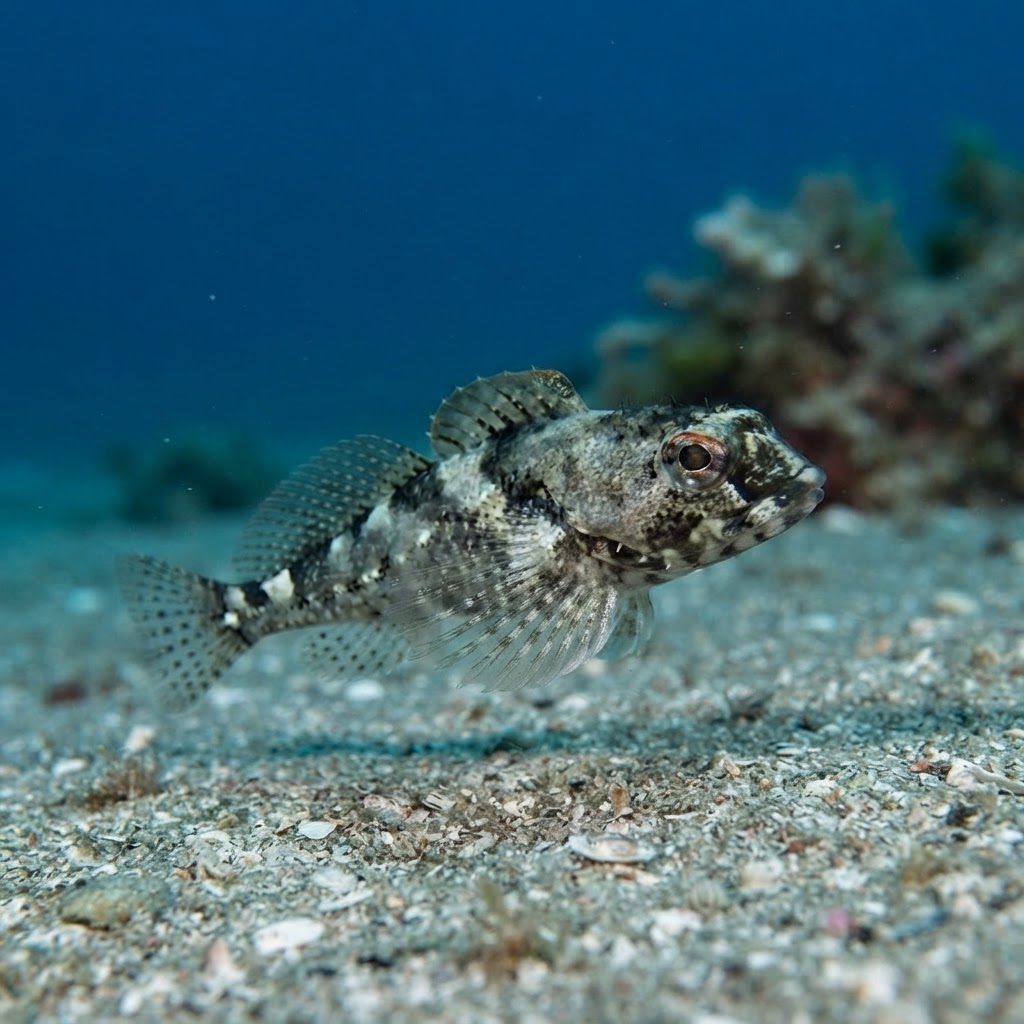
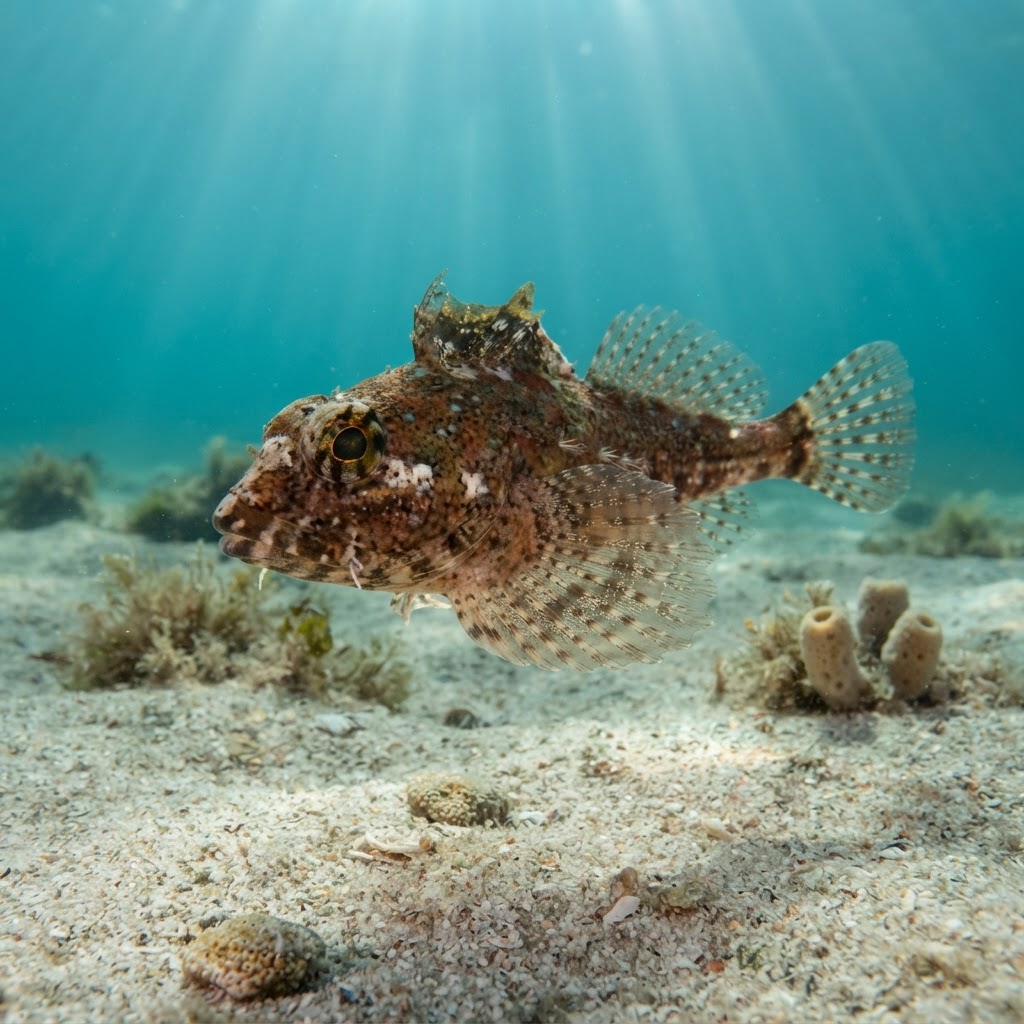
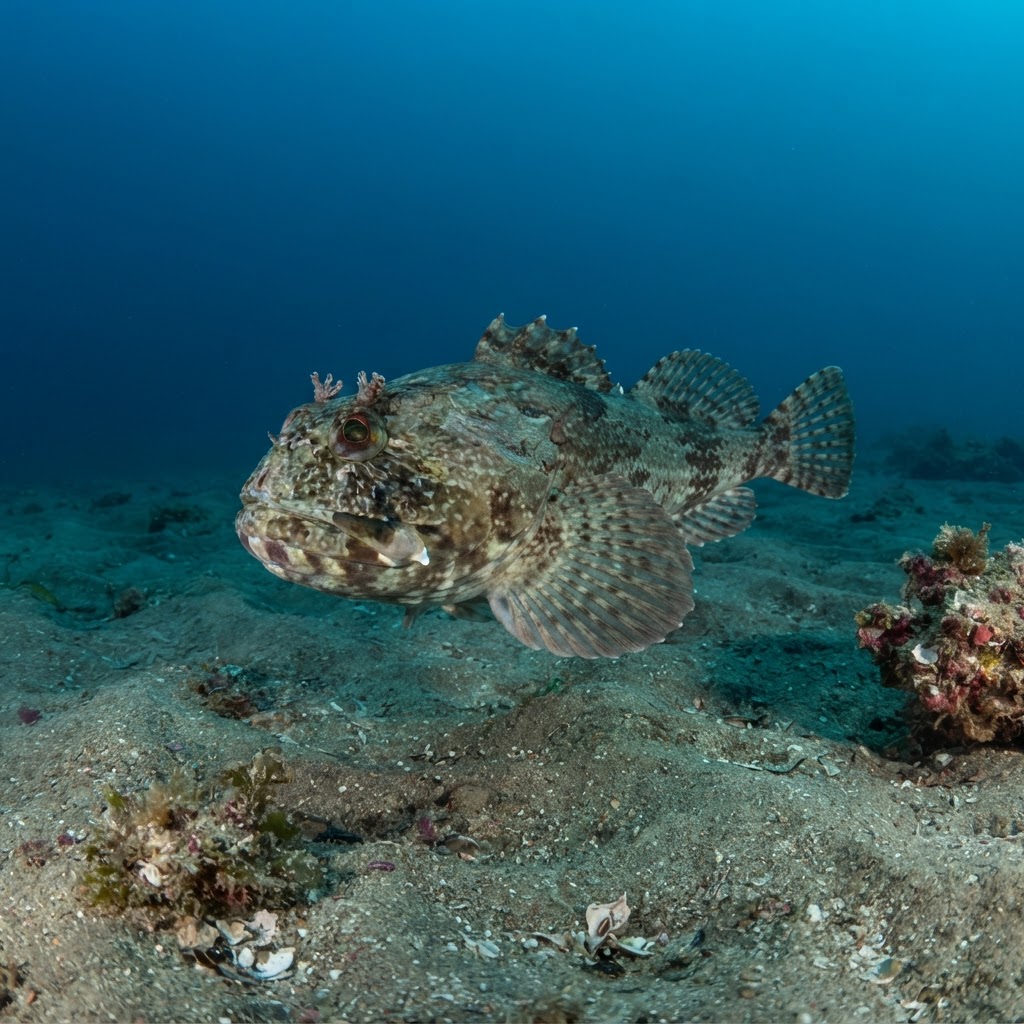
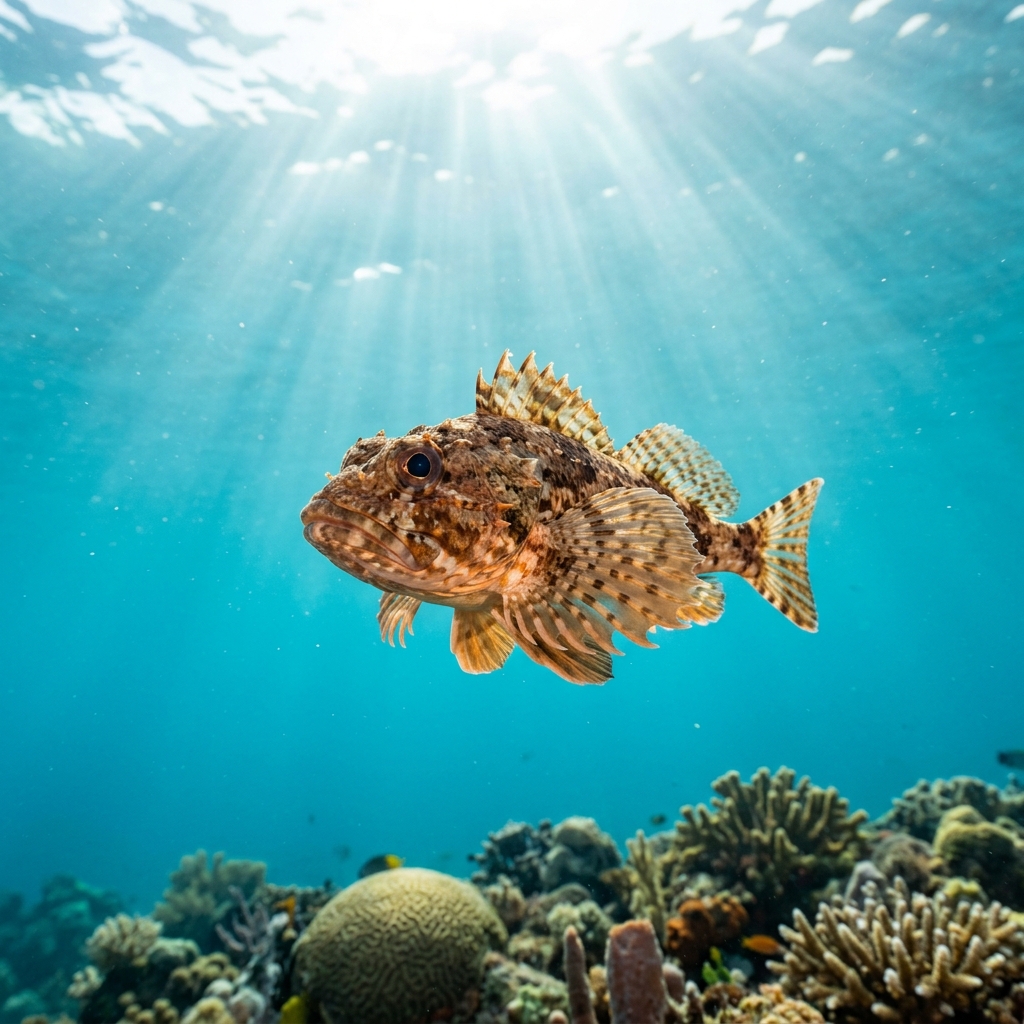
Sculpins are immediately recognisable by their oversized, flattened head, wide mouth, and tapering body that looks almost too small for the head it is attached to. The body is typically mottled in browns, greys, and rusty oranges, blending with rocky or weedy substrate so well that you often spot one only when it moves. Most species carry prominent spines on the cheeks and gill covers (the preopercular spines), and the broad, fan-like pectoral fins spread wide when the fish is resting. Across the family there is considerable variation in size and patterning, so focus on the head shape and those cheek spines as your reliable underwater field marks.
Sculpins are ambush predators that spend the vast majority of their time completely stationary, pressed against rocks, kelp holdfasts, or coarse gravel where their camouflage does the work. When approached by a diver they typically hold position rather than flee, banking on that camouflage, which makes close observation possible if you move slowly and avoid casting a shadow directly over them. Most encounters happen at the bottom, often in surge zones or under ledges, and individual fish tend to return to the same resting spots over time.
Several sculpin species incubate and guard their eggs in dense clusters, with the male fanning and protecting the mass until the eggs hatch. This parental behaviour means that during breeding season a male found near a rock crevice may be actively guarding a clutch rather than simply resting, and both fish and eggs can be present in the same spot for weeks.
There is no clear seasonal peak in the data, so sculpins can be treated as year-round residents wherever they occur. Their observed temperature range of roughly 4 to 14 °C ties them firmly to cold-temperate and subarctic waters, meaning they are present on northern reefs throughout the year rather than following warm-water seasonality.
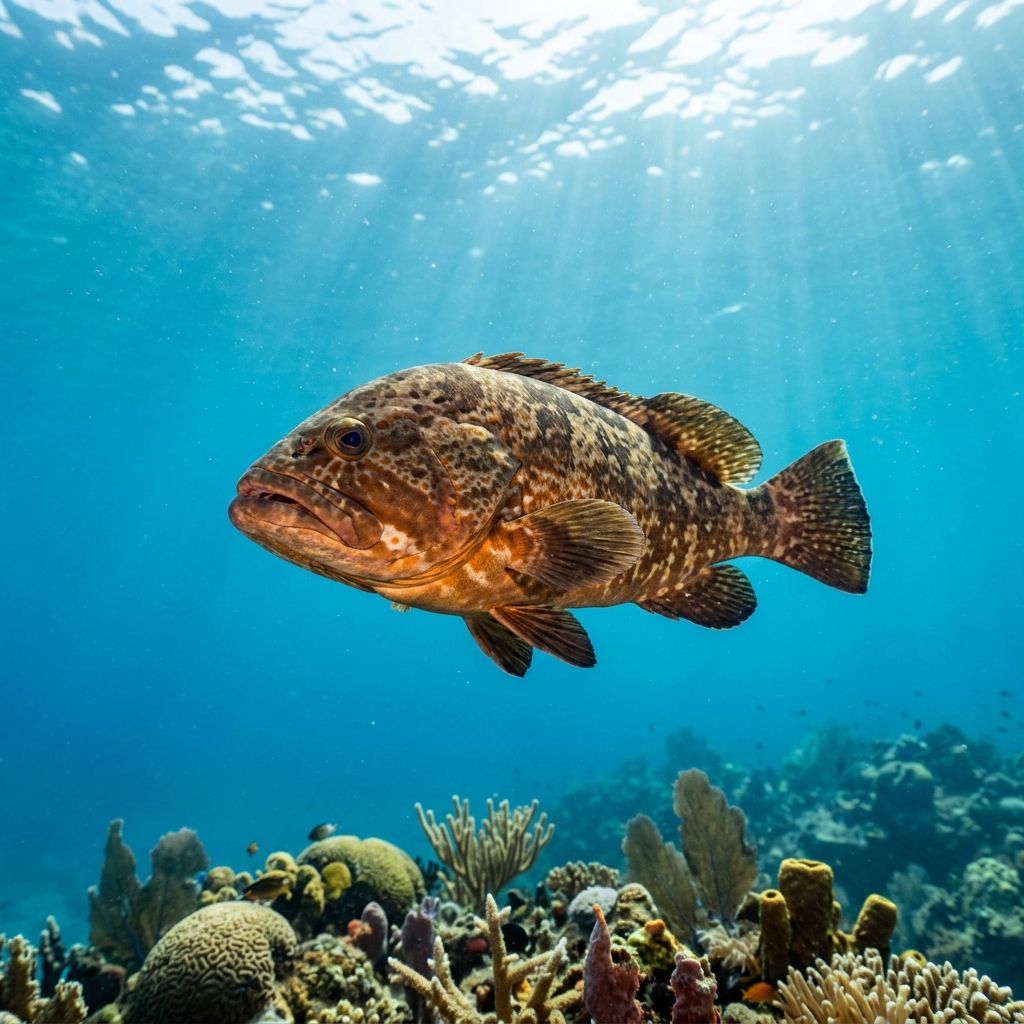
Reef neighbours a diver could mistake it for. Use the identification notes above to tell them apart.
Sculpins are most commonly logged across the North Atlantic and North Pacific, with the strongest representation in Canada (especially Nova Scotia, the Bay of Fundy, and the Gulf of St. Lawrence), the United Kingdom (particularly the South Coast of England), and France (notably Brittany and Normandy). Solid records also come from Norway, Ireland, Sweden, Germany, and the northeastern United States, making cold-temperate rocky coastlines the reliable hunting ground.
Mapping where Sculpin is logged…
Sculpins are most reliably found along cold-temperate rocky coasts in the North Atlantic and North Pacific. Top diving areas include Nova Scotia, the Bay of Fundy, and the St. Lawrence in Canada; the South Coast of England and other UK shores; and Brittany and Normandy in France. Norway, Ireland, Sweden, and the northeastern United States also have strong records.
Available data shows no concentrated season, so they can be considered year-round residents. Their preference for water between about 4 and 14 °C means they stay on site through winter on temperate northern reefs rather than migrating to warmer conditions.
Look for the disproportionately large, flattened head with visible spines on the cheek and gill cover, a wide downturned mouth, and a mottled brown or grey body that practically disappears against rock. The broad pectoral fins spread out when the fish is resting, giving it a crouching, toad-like posture that distinguishes it from most other bottom fish.
Sculpins are not considered dangerous. The spines on their gill covers can prick a hand if you pick one up, so simply avoid handling them, but they pose no threat to a diver who leaves them undisturbed. Their main defence is camouflage and stillness rather than aggression.
Size varies considerably across the Cottidae family, from small intertidal species just a few centimetres long to the larger cabezon of the Pacific coast which can exceed 60 cm. Most species divers encounter on temperate Atlantic reefs fall in the 10 to 30 cm range, though you will occasionally find notably larger individuals.
Site and sighting data is aggregated from diver logs, iNaturalist and GBIF. For taxonomy and conservation status:
Tidepool Sculpin
205 sites