Epinephelus spp.
Rock cod are logged year-round across tropical reefs from the Maldives to the Red Sea. Find the best sites, seasons, and ID tips here.
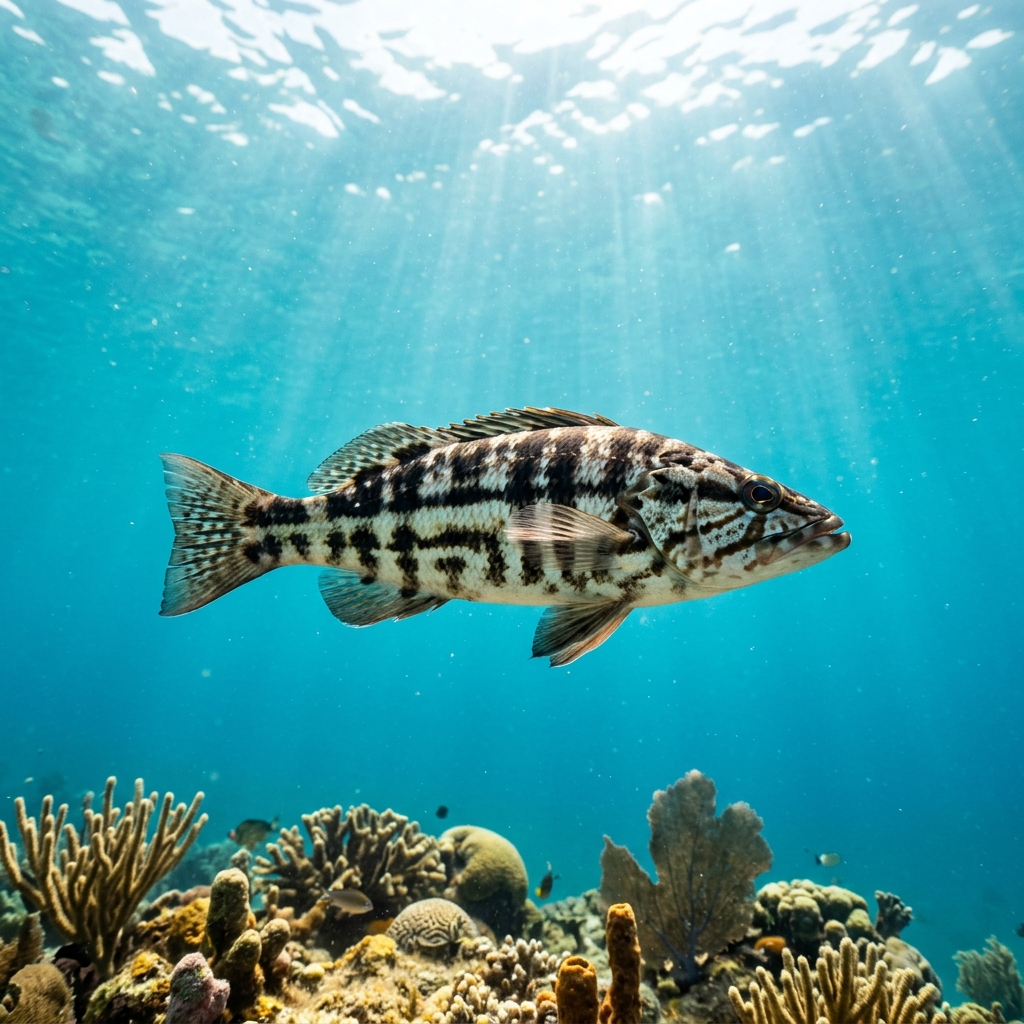
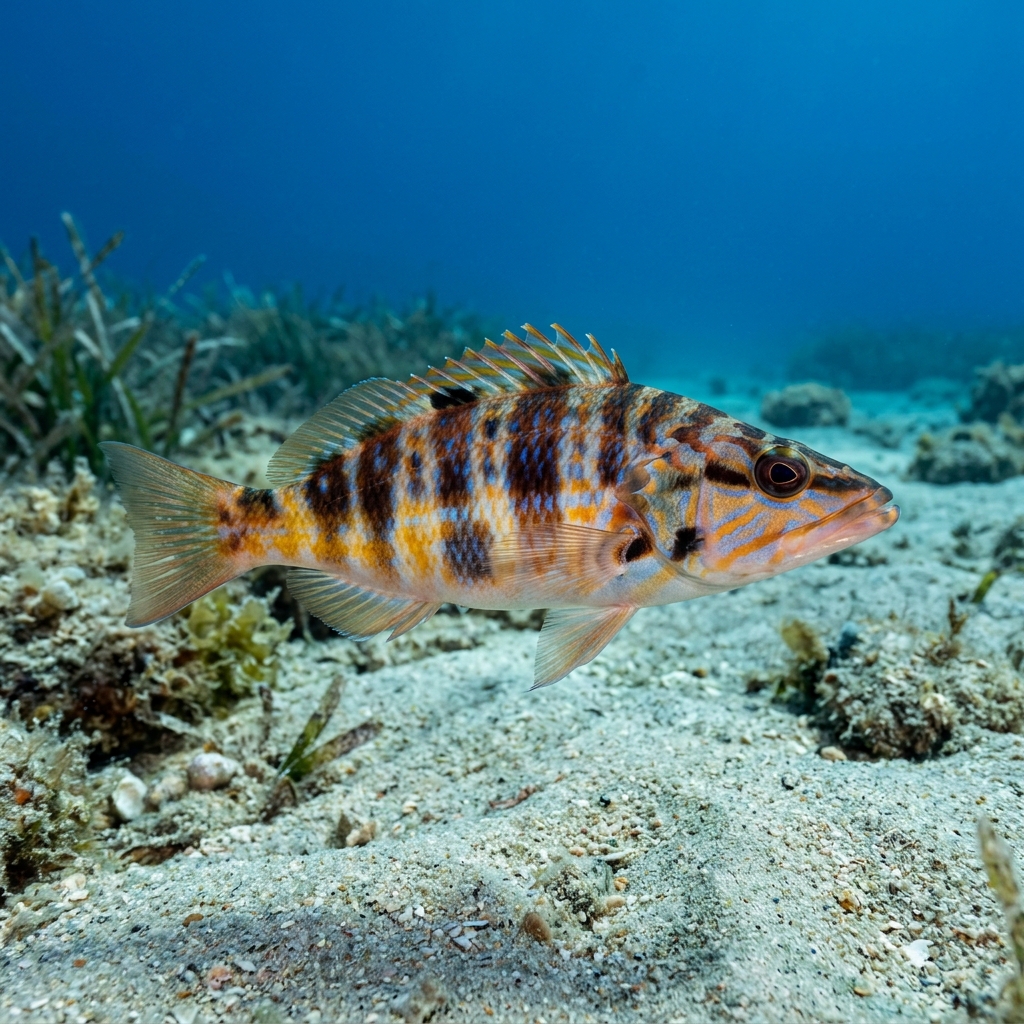
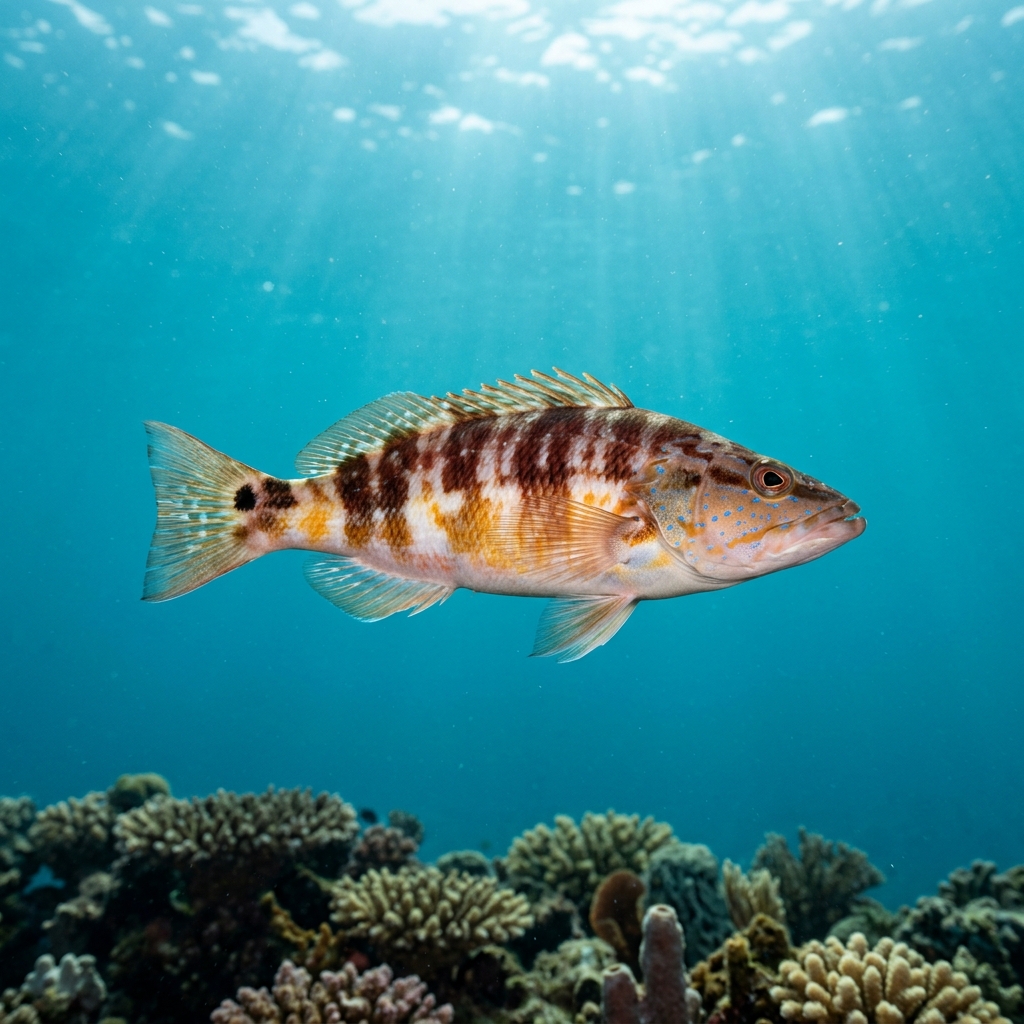
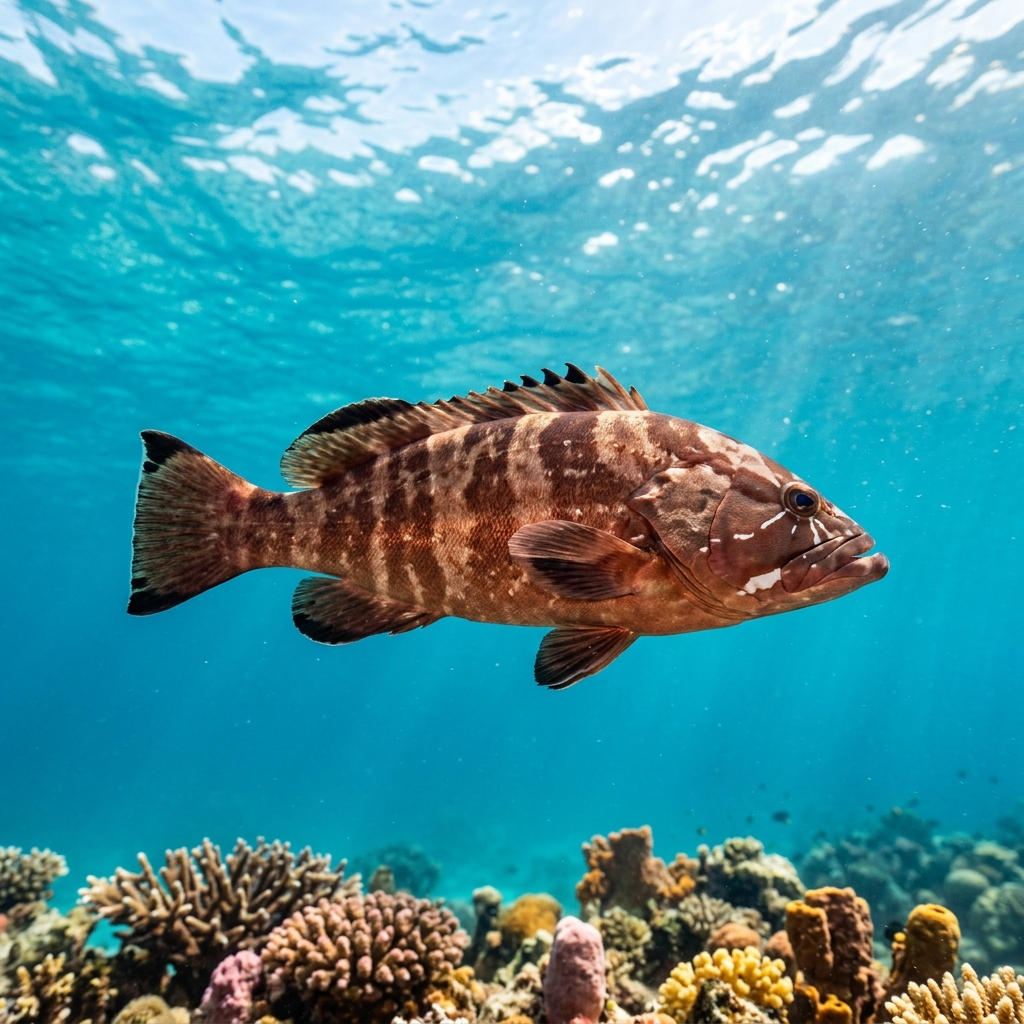
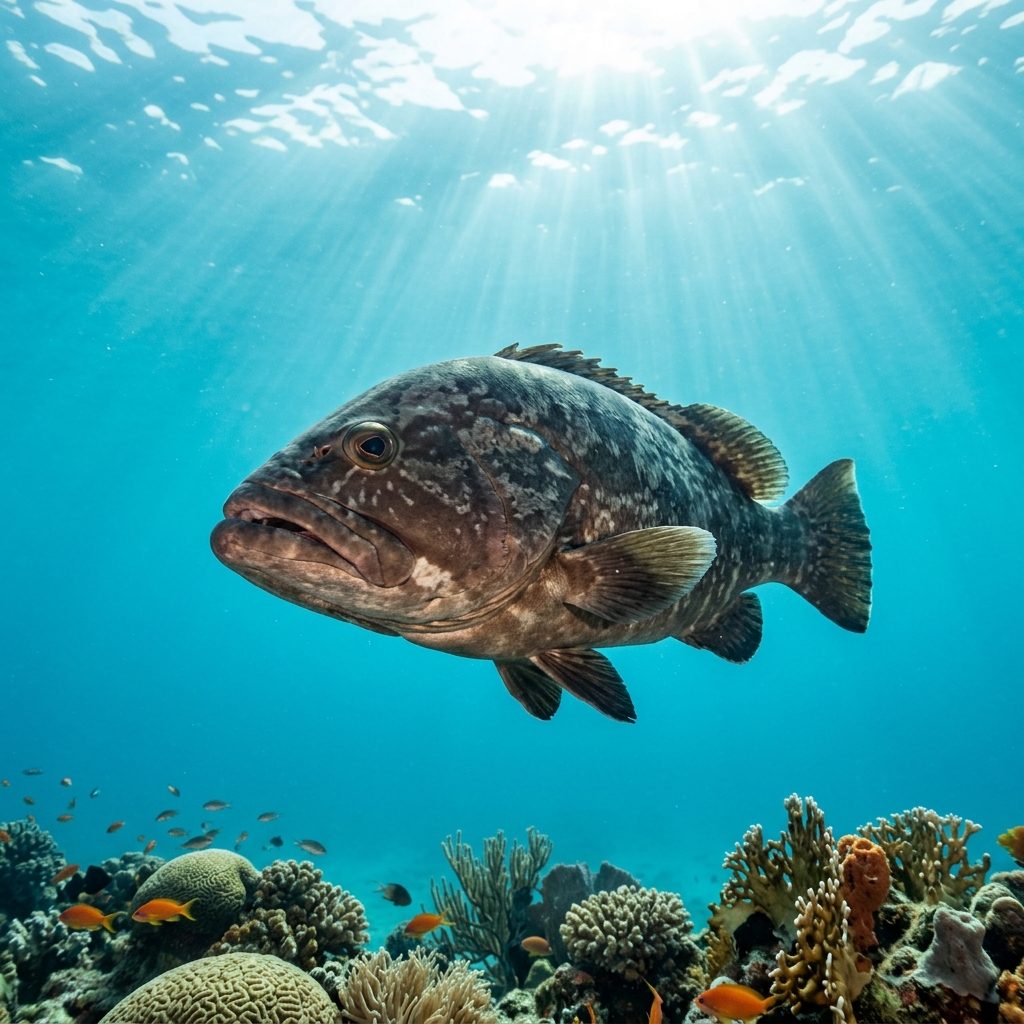
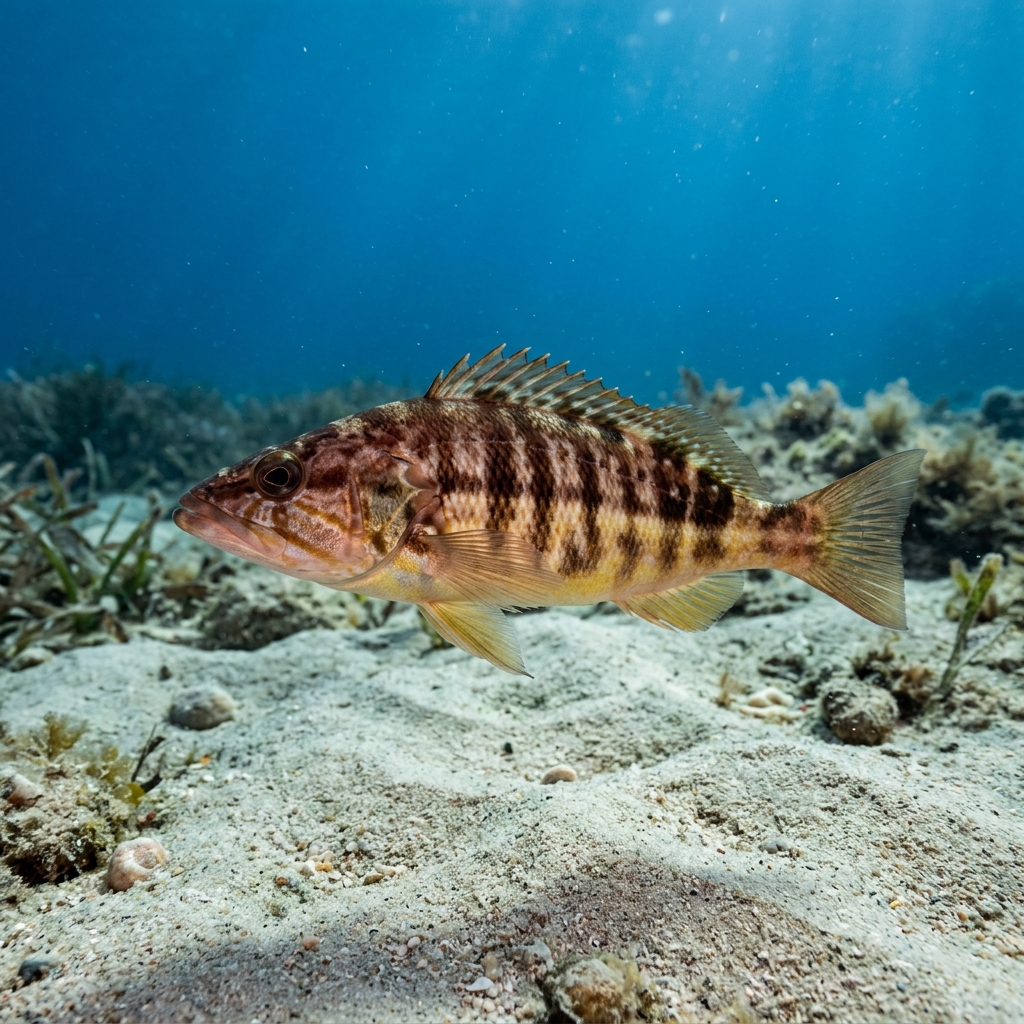
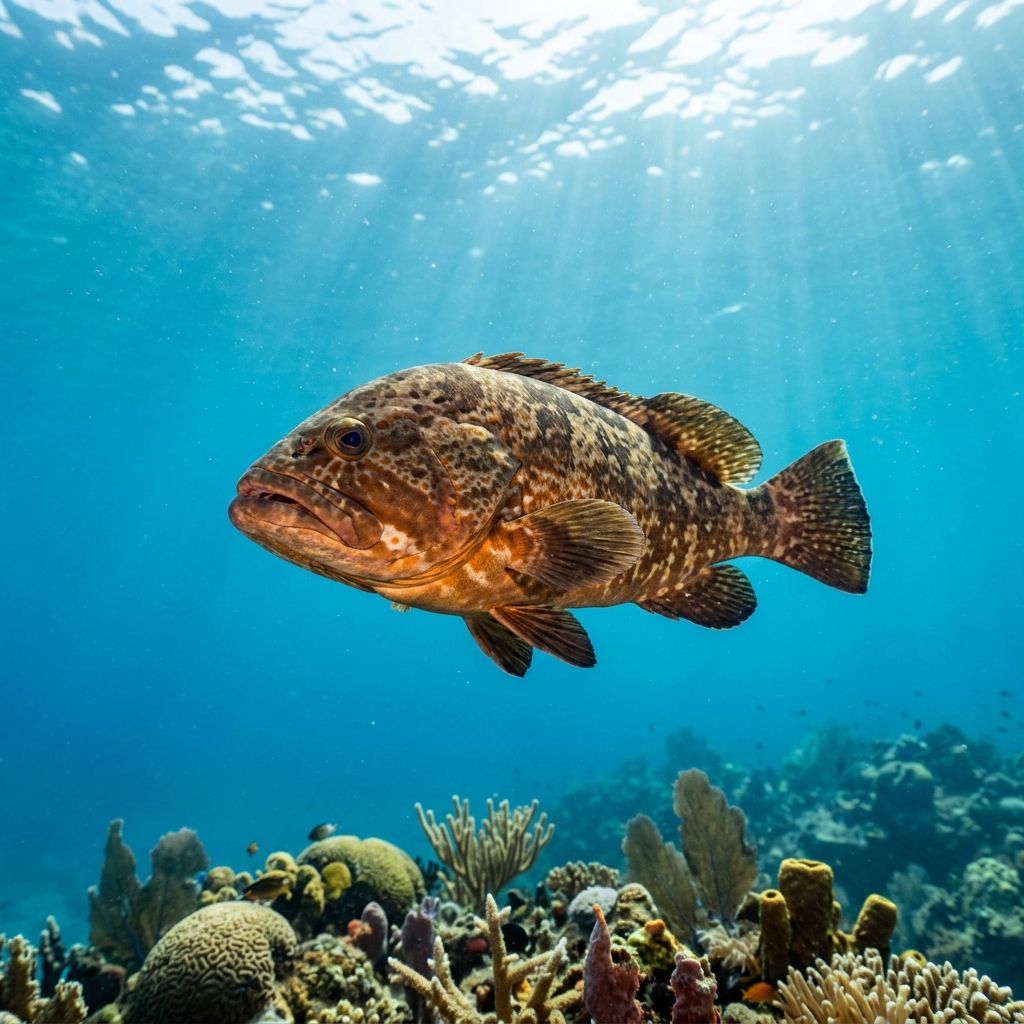
Rock cod are stocky, heavy-bodied groupers with large mouths, thick lips, and a rounded tail, built more like a wrestler than a swimmer. Most species wear mottled or blotchy patterns of brown, orange, cream, or grey that shift to match the surrounding reef. The key underwater cue is posture: rock cod typically sit motionless on or just above the substrate, which immediately separates them from free-swimming fish of similar size. Colouration varies considerably between species within this family, but the chunky silhouette and that characteristic stillness are consistent across the group.
Most encounters involve a rock cod sitting absolutely still on a ledge, coral head, or rubble patch, often in a slightly shaded spot, watching the world go by. They tend to hold their position as divers approach rather than bolting, which makes observation easy, though very close approach will prompt a slow, deliberate retreat into a crevice. They are ambush predators, so if you watch long enough you may see one make a sudden short lunge at a passing fish or crustacean.
Many grouper species within this family are protogynous hermaphrodites (born female, capable of switching to male later in life), meaning a large, solitary rock cod you encounter is quite likely a male that started life as a female.
Sightings are spread evenly throughout the year in both hemispheres, with no concentrated season recorded. Their observed water temperature range of 24 to 29 °C means tropical and subtropical reefs host them consistently, so any time of year works at the top destinations.
Rock cod are most commonly logged in the Indo-Pacific, with the Maldives' Male and Ari Atolls and Queensland, Australia standing out as particularly reliable areas. Strong populations are also found in Indonesia (especially Bali, Lombok and Java), across the Philippines' Visayas region, and in Egypt's Red Sea around Sharm el Sheikh. Spain's Costa Blanca shows notably high site counts too, reflecting the presence of Mediterranean grouper species within this family.
Mapping where Rock Cod is logged…
Rock cod are logged at dive sites across a wide spread of countries, with the Maldives, Australia, Indonesia, Egypt, and the Philippines consistently showing the most records. Top regional hotspots include the Male and Ari Atolls in the Maldives, Queensland's reefs in Australia, and Sharm el Sheikh in Egypt's Red Sea.
Rock cod are present year-round at the sites where they occur, with no peak season recorded in either hemisphere. Their preference for warm tropical water (roughly 24 to 29 °C) means sightings are consistent across seasons at most Indo-Pacific destinations.
Look for a heavy, compact body with a large mouth and thick lips, sitting still on the reef rather than actively swimming. Most species show mottled or blotchy brown, cream, or orange colouration that blends into the substrate. The stationary, settled posture is the single most reliable field cue across the family.
Size varies considerably across the many species grouped under rock cod, ranging from small reef-dwelling species around 20 to 30 cm up to large groupers exceeding a metre in length. Most divers encounter mid-sized individuals, roughly 30 to 60 cm, resting on ledges or coral heads.
No, rock cod are not considered dangerous to divers. They are ambush predators focused on fish and crustaceans, and they typically hold still or retreat slowly when approached rather than acting aggressively.
Yes, many species within this grouper family are protogynous hermaphrodites, meaning individuals are born female and can later transition to male. This means the largest, most solitary individuals on a reef are often males that spent their early lives as females.
Site and sighting data is aggregated from diver logs, iNaturalist and GBIF. For taxonomy and conservation status:
Blacktip Grouper
2,726 sites