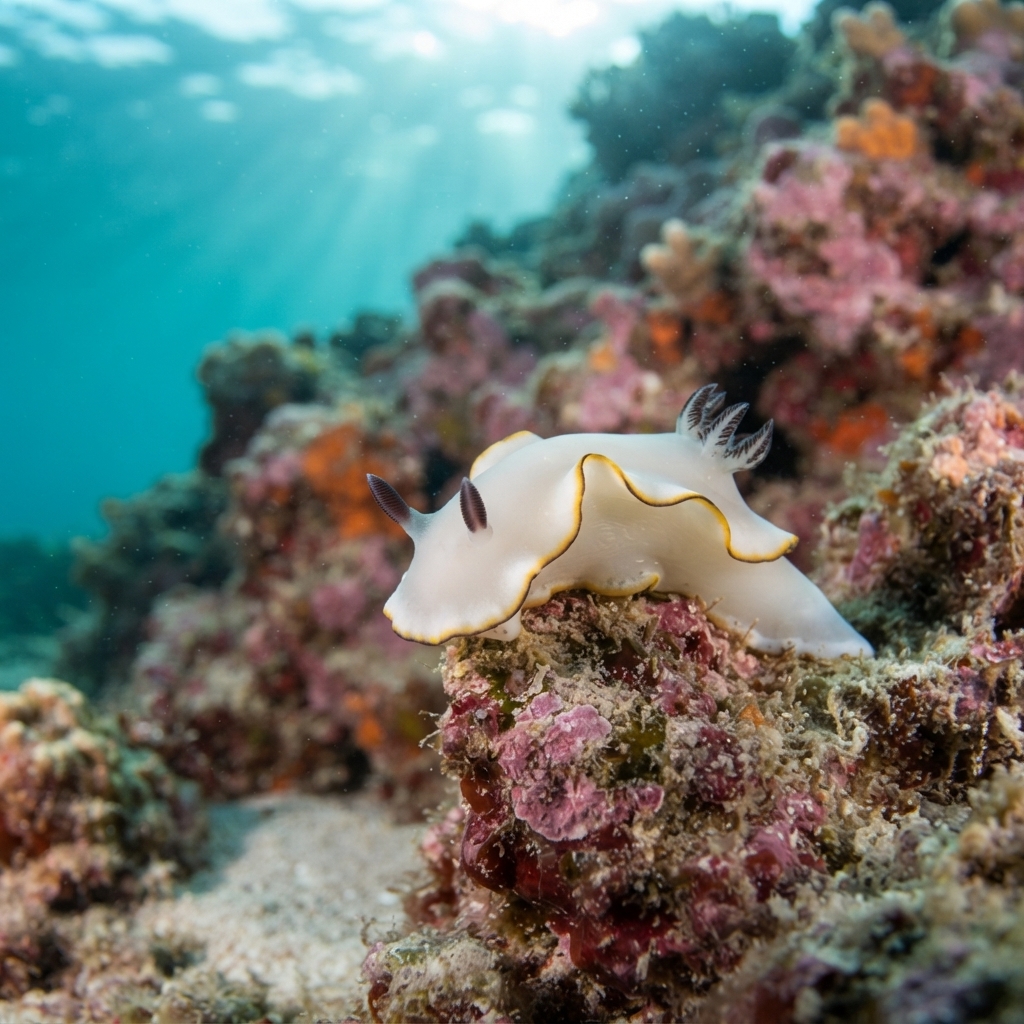
Ardeadoris scottjohnsoni
A white-and-orange chromodorid logged as a common find on Hawaii reef dives year-round in warm 22-28C water.
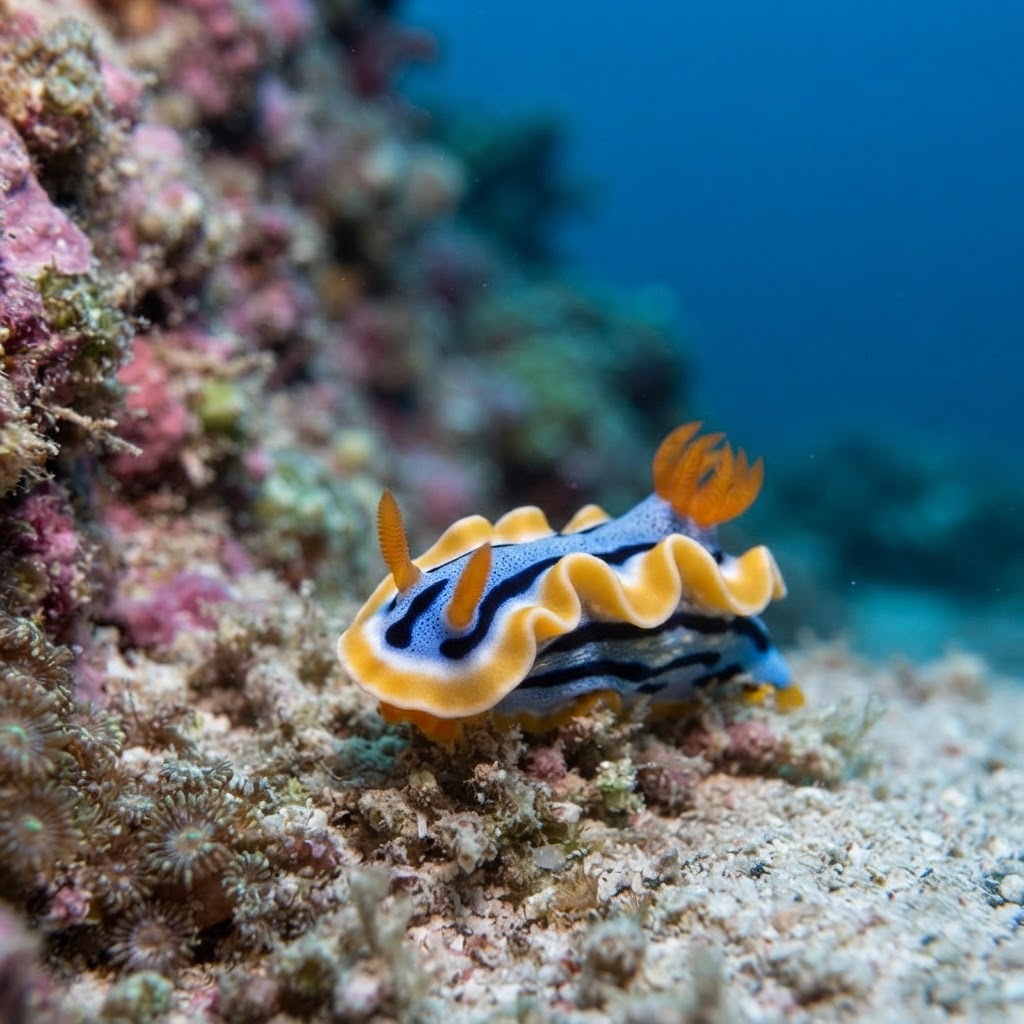
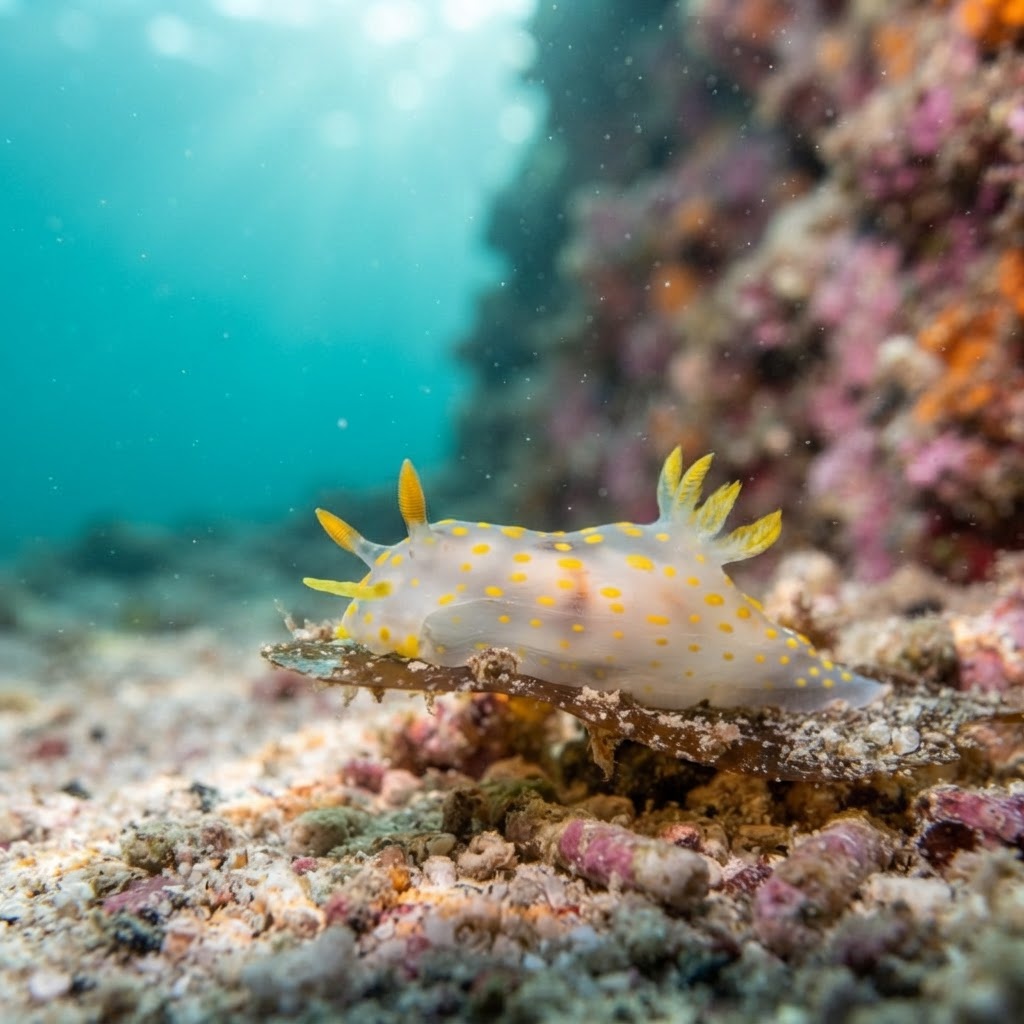
Look for a soft-bodied slug with a white to pale cream mantle rimmed in a thin orange or yellow line, usually spotted crawling slowly across reef rubble or rock rather than swimming. It carries the typical chromodorid shape: a smooth oval mantle with the feathery gills (rhinophores) and rear gill tuft poking up as small projections. Size is on the small side for the group, so divers tend to find it by scanning close to the substrate rather than spotting it from a distance.
Divers typically find it moving slowly across rubble, rock, or low reef structure while grazing, doing little to react to a diver's presence beyond continuing its crawl. It is most often logged during daytime reef dives rather than night dives, tucked into the same low-relief habitat where sponges and other food sources sit.
Like other chromodorid nudibranchs, it likely feeds on sponges and stores or repurposes their chemical defences in its own tissue, which is part of why its bright mantle colouring can double as a warning to predators.
Sightings show no detectable seasonal pattern, and the observed water temperature range of 22.4 to 28.4C spans Hawaii's reefs comfortably year-round, so any month is a reasonable bet.
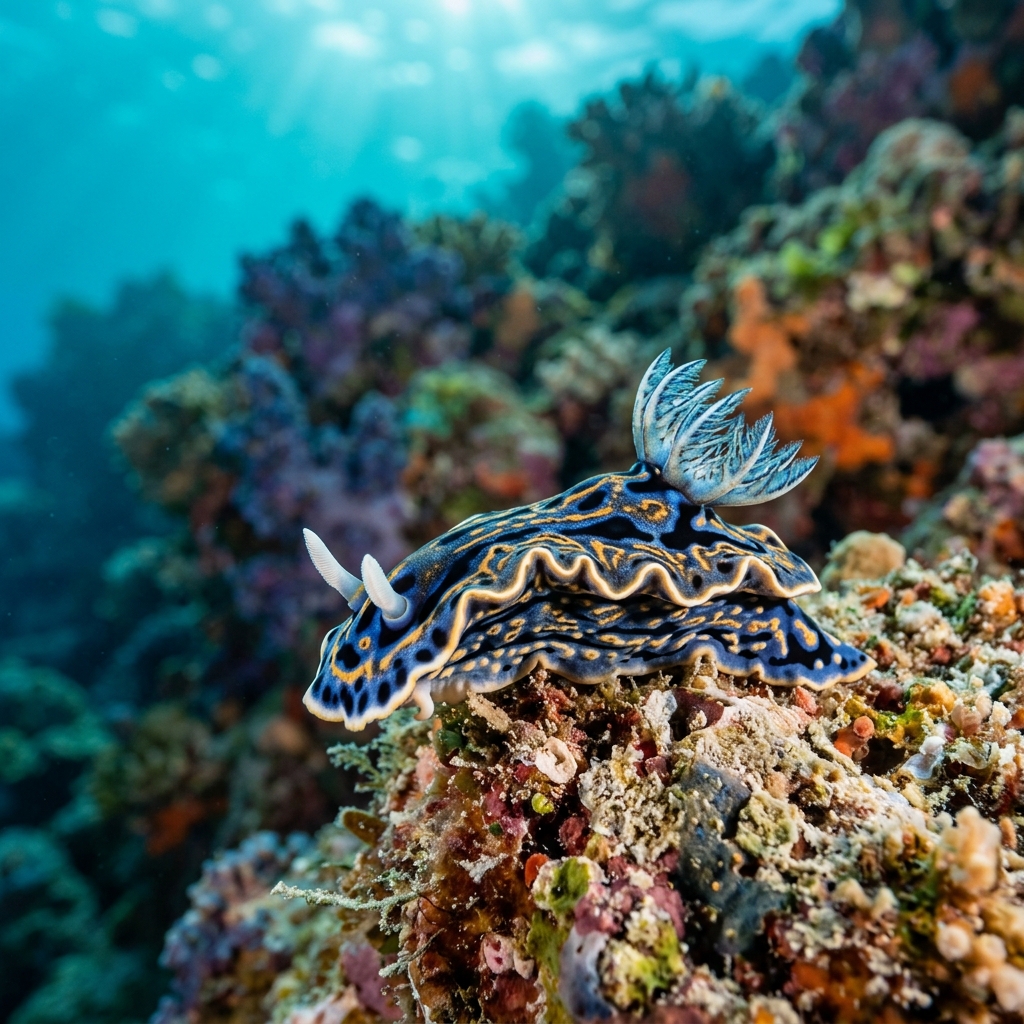
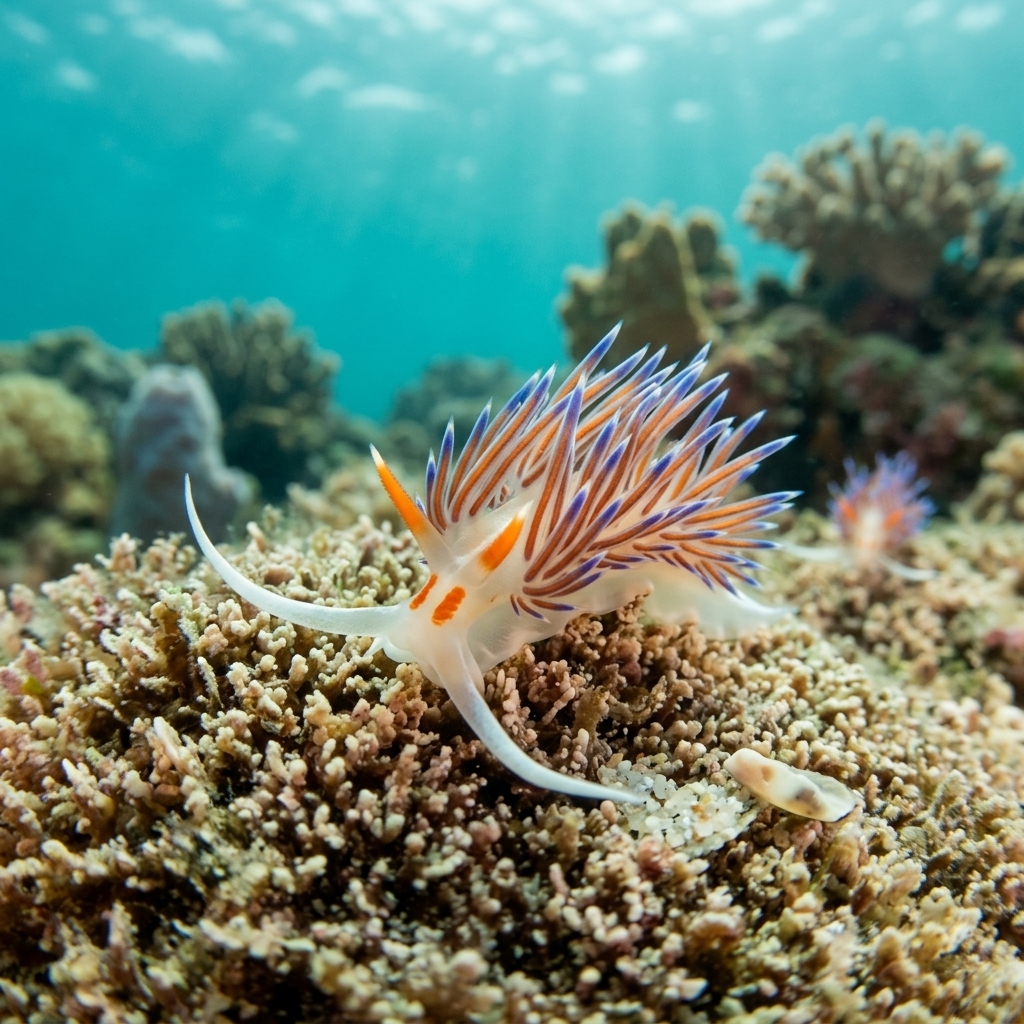
Reef neighbours a diver could mistake it for. Use the identification notes above to tell them apart.
All logged sightings come from Hawaii, in the United States, making it the one region divers should target for this species. It has not turned up in real observations elsewhere, so treat Hawaiian reefs as the reliable spot rather than a wider Indo-Pacific search.
Mapping where Scott Johnson's Nudibranch is logged…
Hawaii is the only region with confirmed diver sightings, so Hawaiian reef dive sites are the place to look for it.
There is no clear seasonal pattern in sightings, and its observed temperature range of 22.4 to 28.4C fits Hawaiian reefs year-round, so any month works.
Look for a small, white to cream nudibranch with a thin orange or yellow mantle edge, crawling slowly over reef rubble or rock with small gill tufts visible at the rear.
Exact size data is not available, but it sits on the smaller end of the chromodorid nudibranch group, making close-up scanning of the substrate the best way to spot one.
Like related chromodorid nudibranchs, it probably feeds on sponges and can retain the sponge's chemical defences in its own body as protection from predators.
Site and sighting data is aggregated from diver logs, iNaturalist and GBIF. For taxonomy and conservation status:
Nudibranch
3,168 sites