Scarus guacamaia
Spot Rainbow Parrotfish in Florida, Bermuda, and beyond. Know the colours, the look-alikes, and what to expect at the reef.
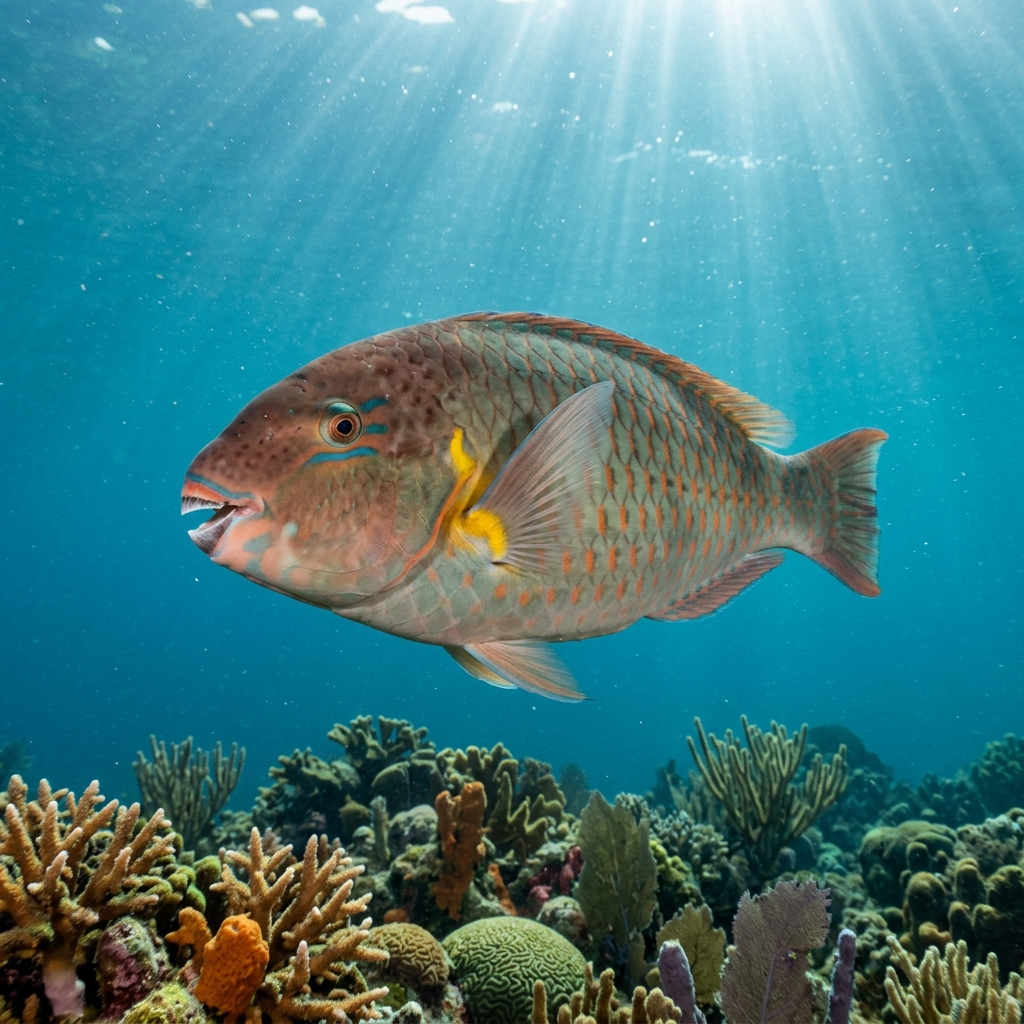
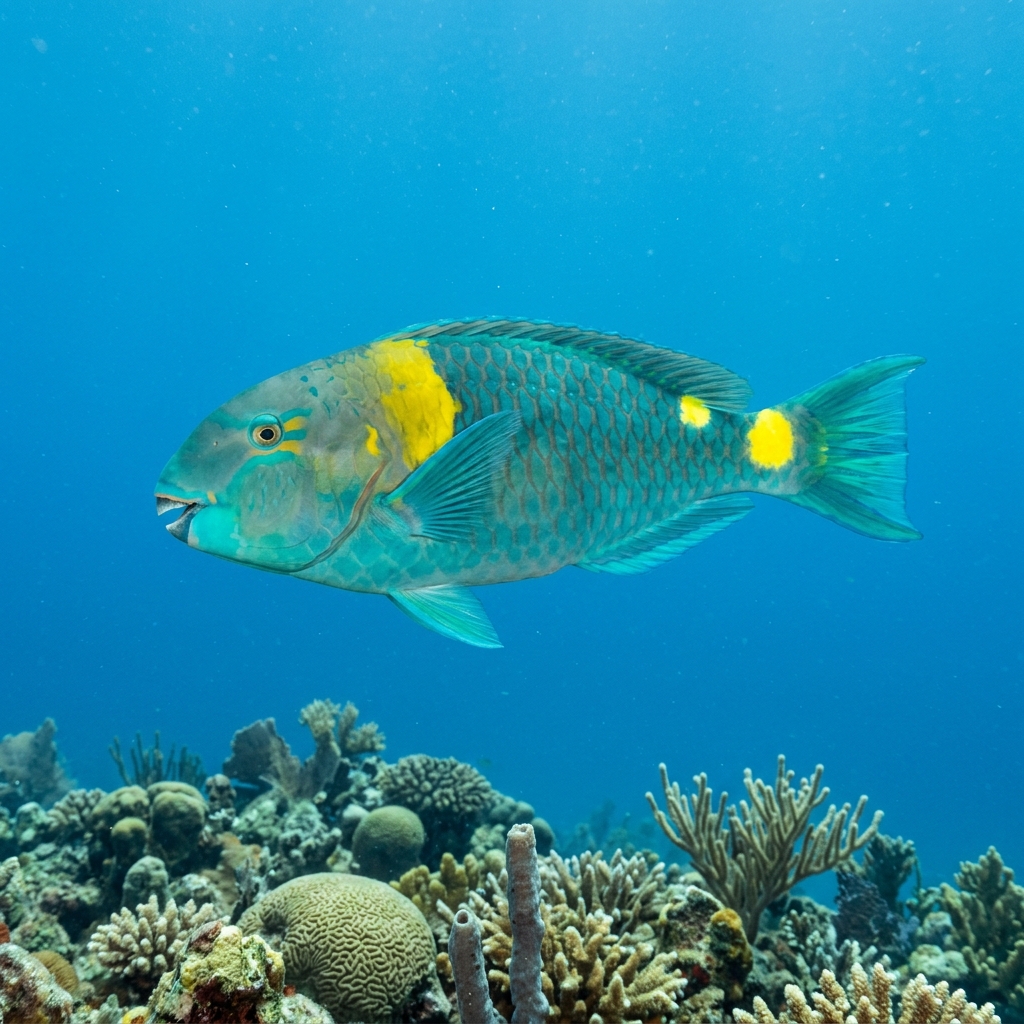
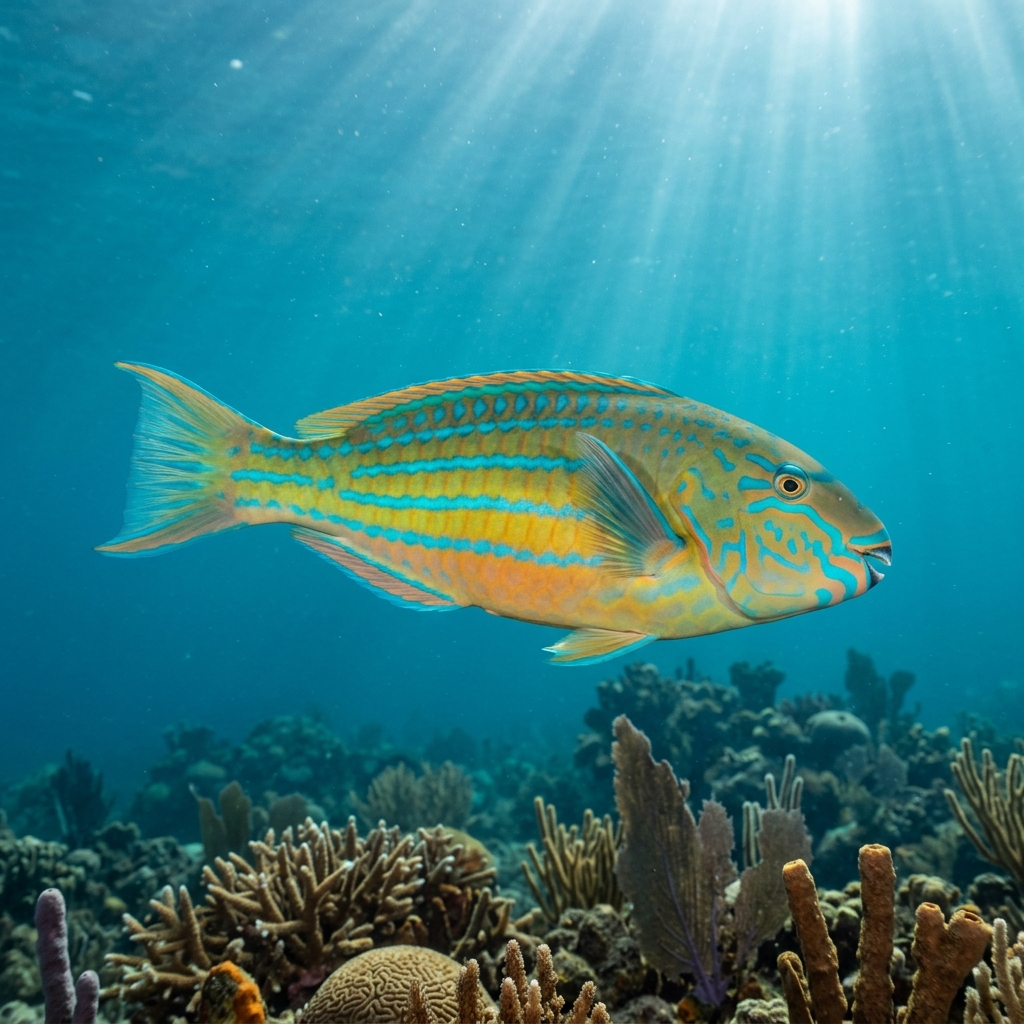
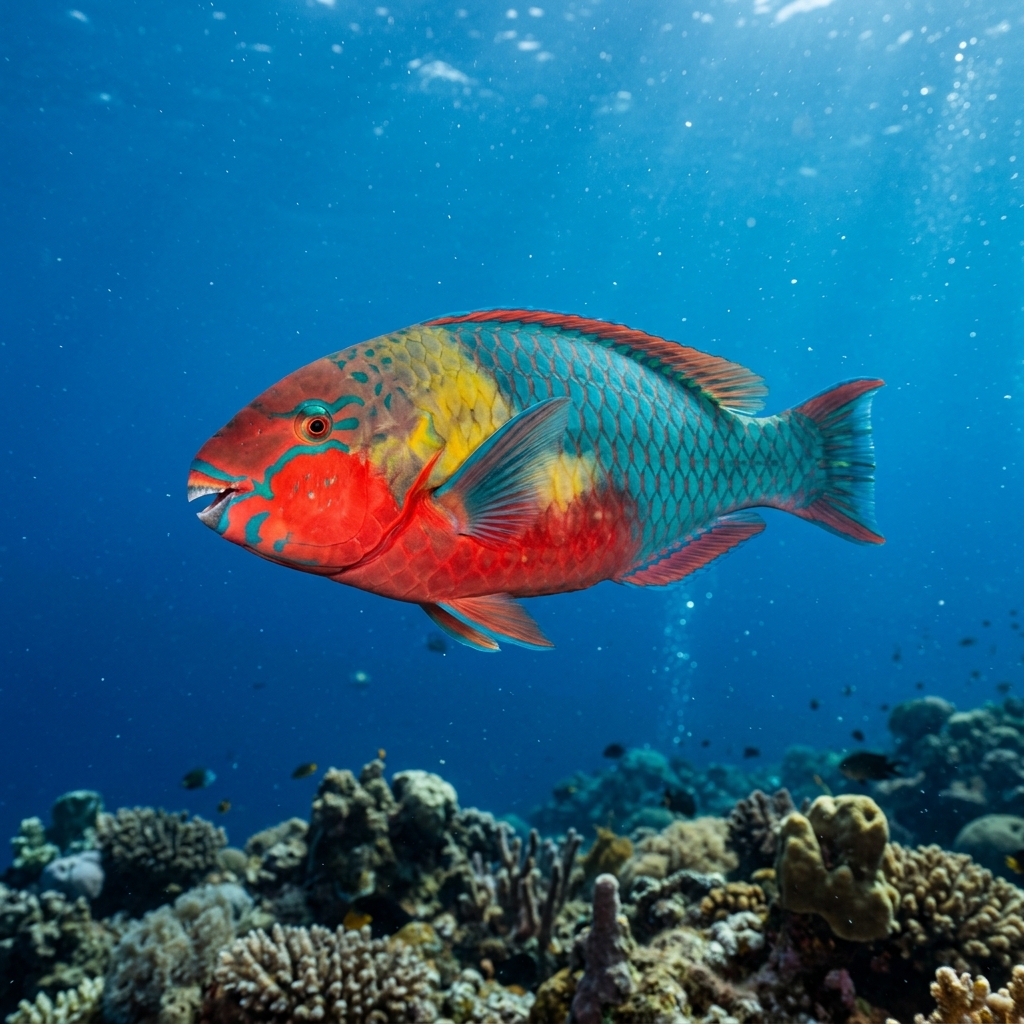
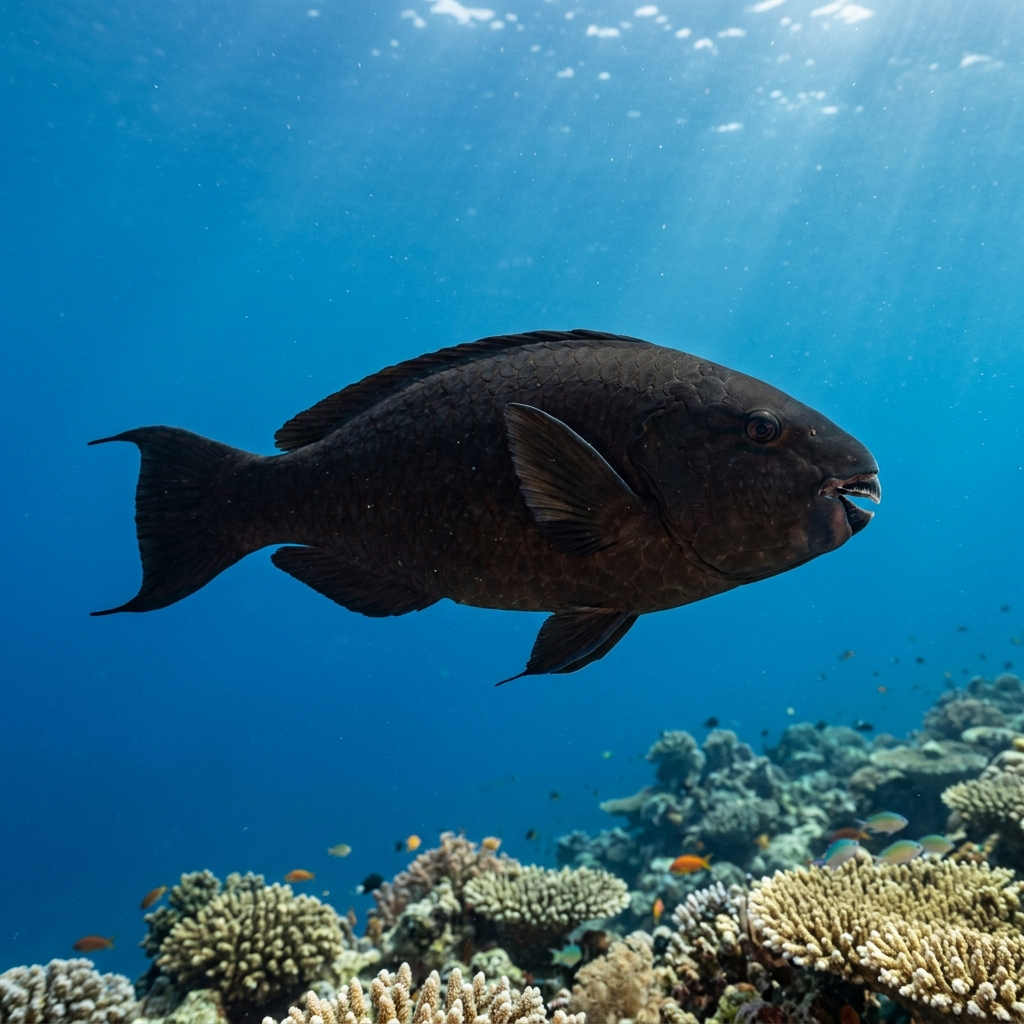
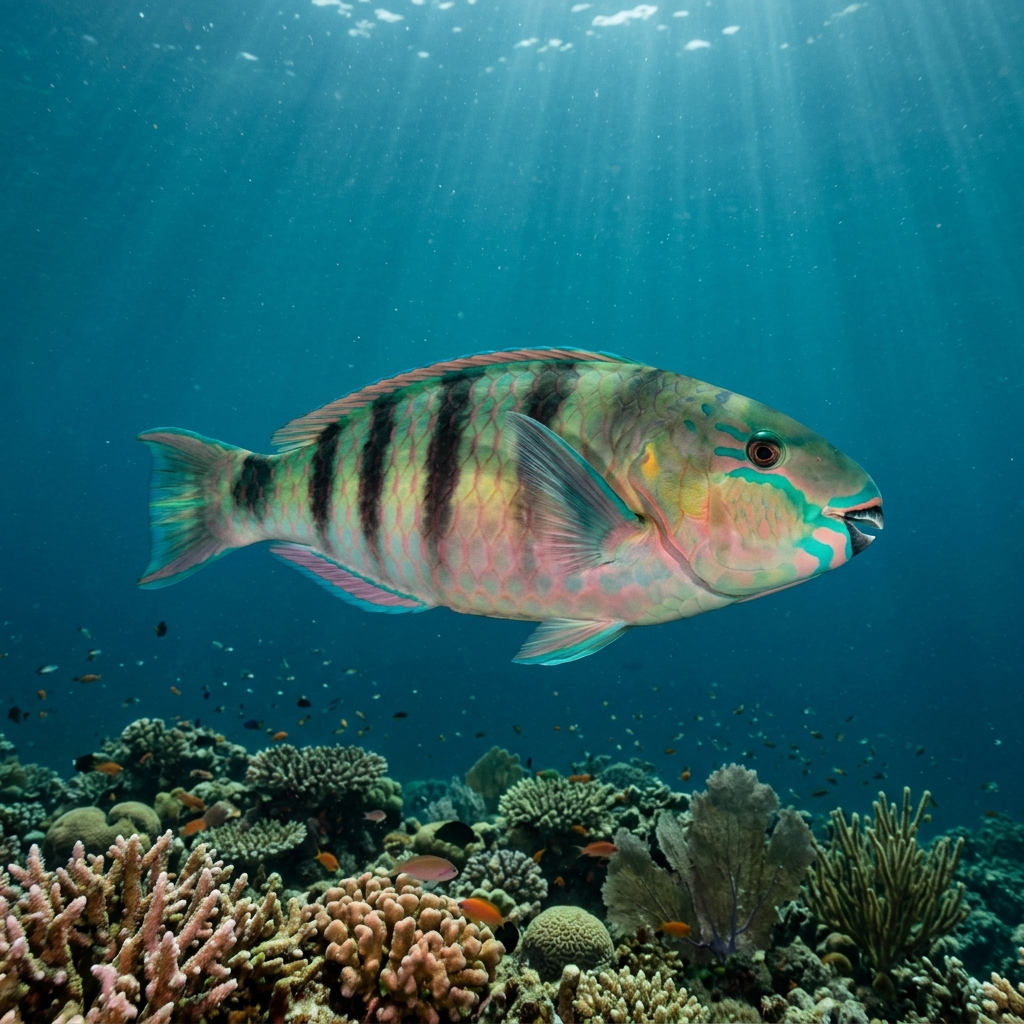
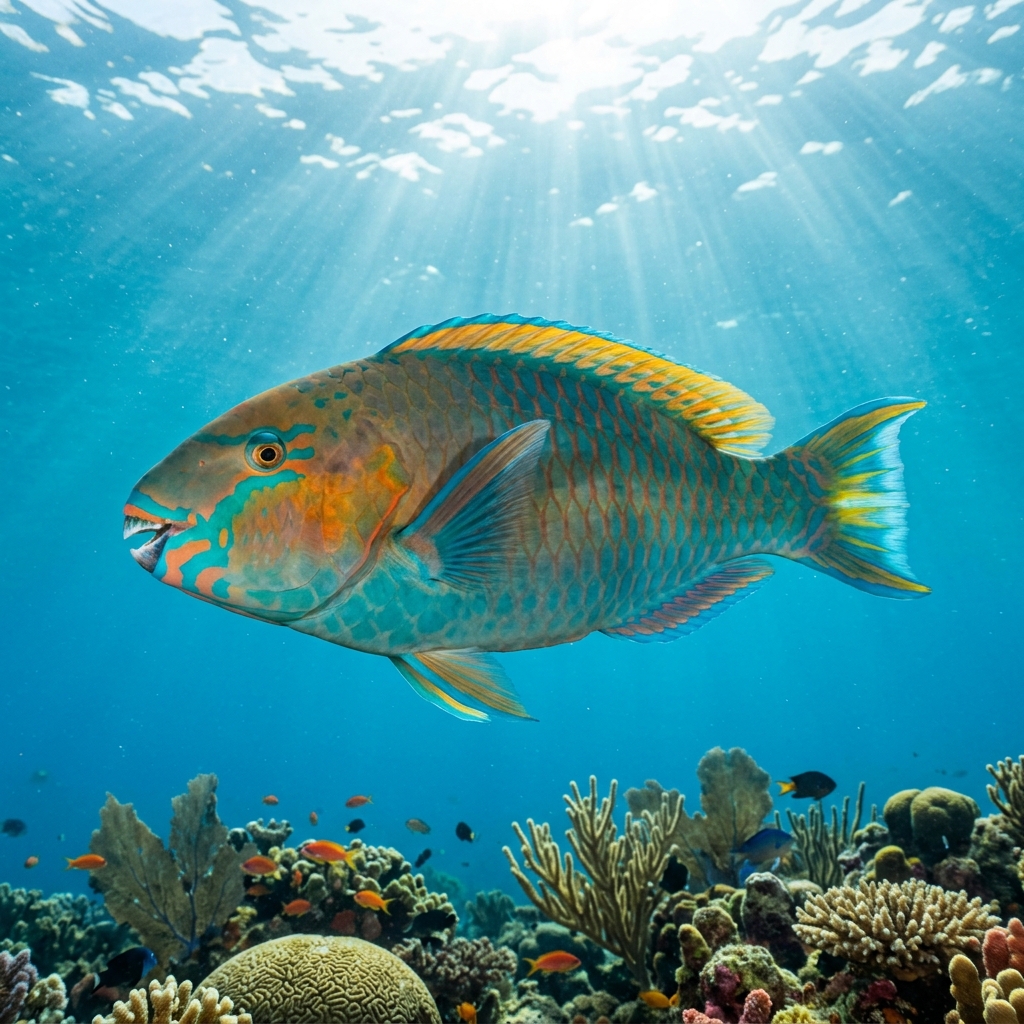
One of the largest parrotfish in the Atlantic, with a body that shifts from deep green on the back to vivid orange-red on the lower flanks and belly, all laced with fine orange streaking across the face. The fused beak (formed by tightly packed teeth, used to scrape algae and coral) is unmistakably parrot-shaped and usually pale green or turquoise. Terminal-phase (mature male) fish carry the most saturated colouring, while initial-phase fish are a drabber brownish-red with white stripes along the sides. Size alone is useful at the reef edge: adults are among the biggest fish you will encounter on a Caribbean-Atlantic reef.
Rainbow parrotfish are active daytime grazers, typically seen moving steadily across coral and rocky reef, grinding the substrate with their beak and producing clouds of white sand (expelled coral sediment) as they feed. They tend to ignore divers and continue feeding unless approached too closely, when they simply swim to the next section of reef. Juveniles and initial-phase fish often move in loose groups, while large terminal-phase males patrol sections of reef more independently.
That fine white sand coating many Caribbean beaches is largely the work of parrotfish like this species: each individual can produce hundreds of kilograms of sand per year by digesting coral rock and excreting it as sediment, making them one of the reef's most important sand-generating organisms.
No strong seasonal peak emerges from the available data, so sightings appear to be year-round. The species is observed in water between roughly 25 and 29 °C, which is consistent with warm tropical and subtropical reefs across its range throughout the year.
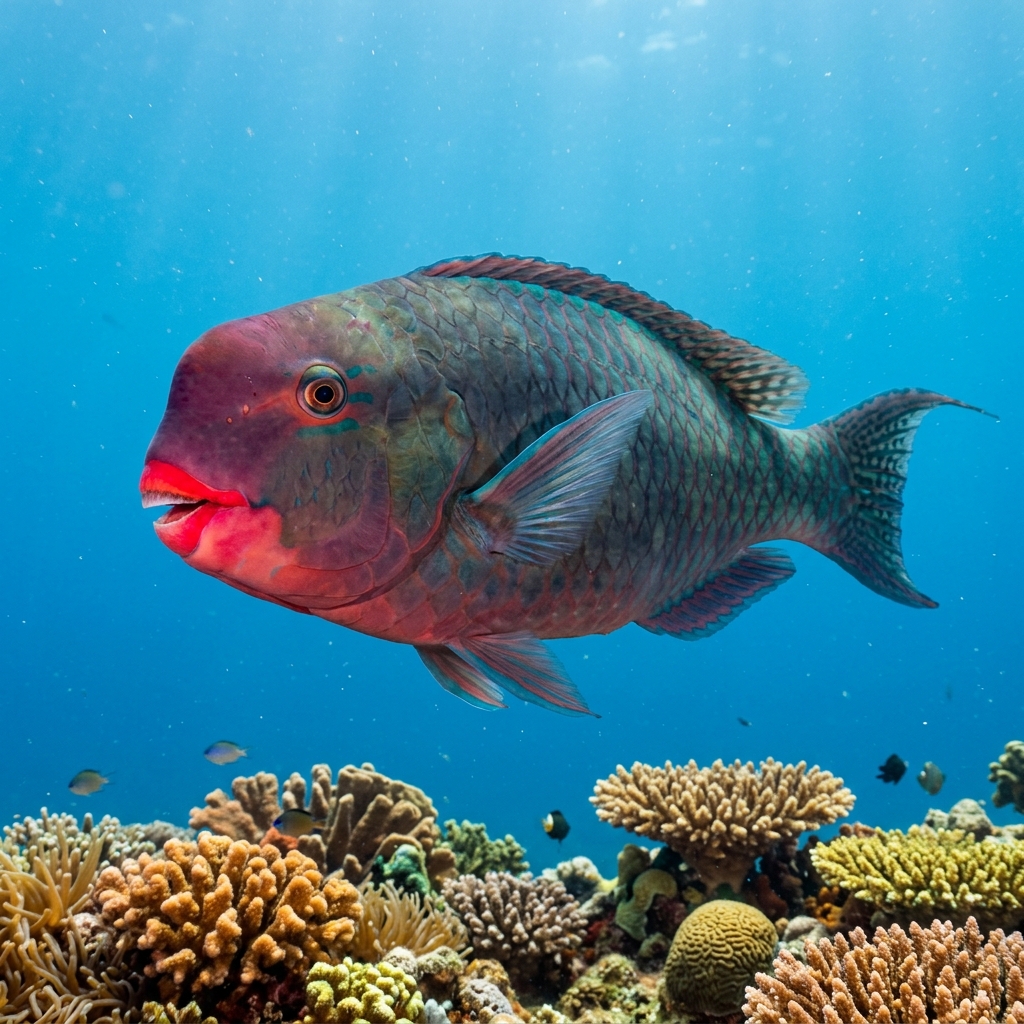
Reef neighbours a diver could mistake it for. Use the identification notes above to tell them apart.
Most sightings come from Florida and the broader US Southeast, which accounts for the overwhelming majority of logged sites, followed by Bermuda with a reliable cluster of records. There is an outlying observation from Goa, India, though the species is firmly an Atlantic animal and the Florida and Bermuda sites represent the core of any trip planned around seeing one.
Mapping where Rainbow Parrotfish is logged…
The strongest concentration of logged sightings is in Florida and the US Southeast, with Bermuda also offering reliable encounters. These two regions represent the best-documented diving destinations for this species.
No clear seasonal peak is recorded in the available data, suggesting sightings are possible year-round. The species is consistently found in water between roughly 25 and 29 °C, so any visit to a warm reef in Florida or Bermuda gives you a reasonable chance.
Look for a large, heavily built parrotfish with deep green upper colouring, orange-red flanks, and vivid orange streaking on the face. The pale green fused beak is distinctive. Initial-phase fish are brownish-red with pale stripes, so the adult male's colour combination is the most reliable cue.
Rainbow parrotfish are among the largest parrotfish in the Atlantic, with adults commonly reaching well over a metre in length. Their bulk and prominent beak make them stand out on the reef even at distance.
They are currently listed as Near Threatened by the IUCN, one step below Vulnerable. Habitat degradation and fishing pressure in parts of the Caribbean and Atlantic have reduced populations, making every reef sighting a reminder of why protected areas matter.
Site and sighting data is aggregated from diver logs, iNaturalist and GBIF. For taxonomy and conservation status:
Redlip Parrotfish
2,789 sites