Carcharhinus perezii
Spot Caribbean Reef Sharks in the Bahamas, Cuba, and Brazil in waters around 25-28 °C. Tips on where to find them and how to tell them apart underwater.
Safety warning
Classed as dangerous to divers, though unprovoked attacks are rare. The risk rises sharply at shark feeds, where the sharks' feeding response is actively triggered. Maintain a calm, upright posture, avoid dangling gauges or shiny equipment, and follow the guidance of local divemasters who know the specific site dynamics. Cornering or grabbing any individual shark is a provocation that can lead to a bite.
If you're bitten
BiteGeneral first-aid guidance, not a substitute for professional medical care. In an emergency, call your local emergency number.
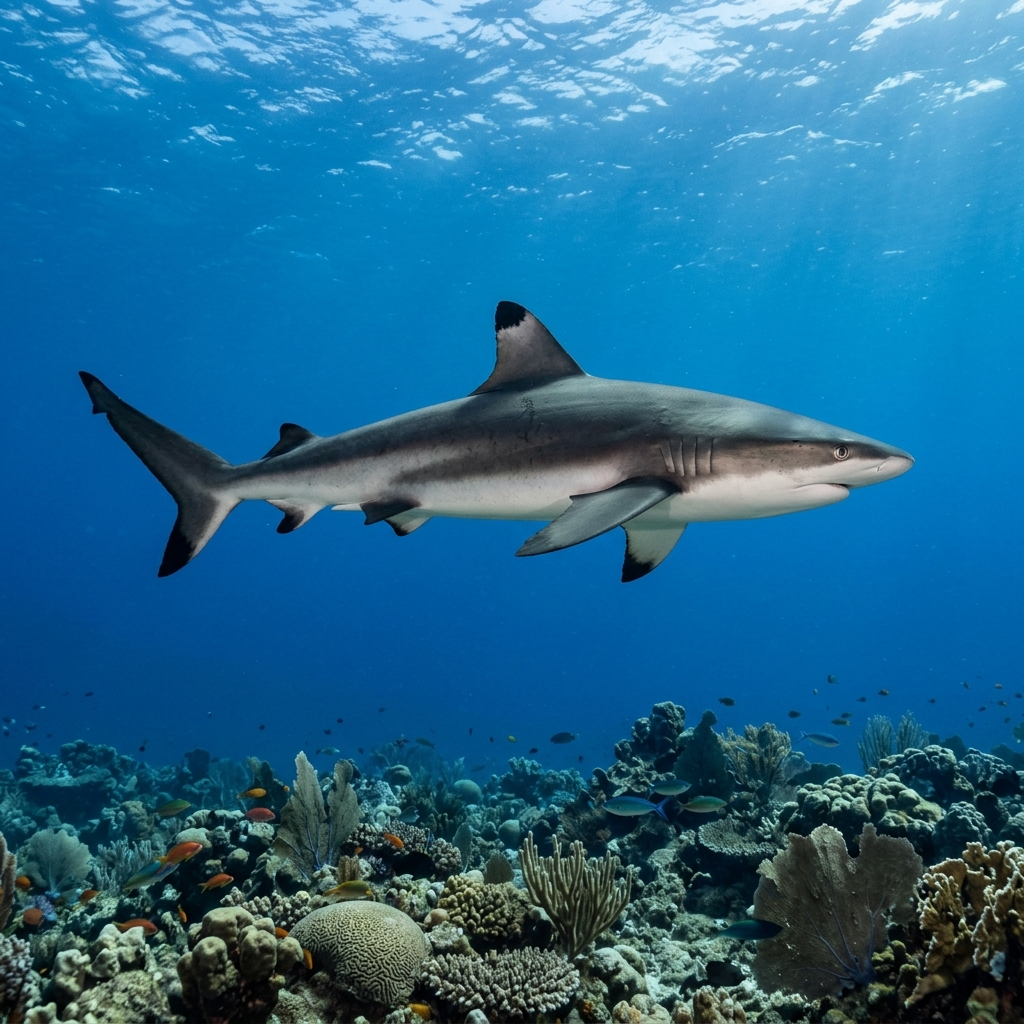
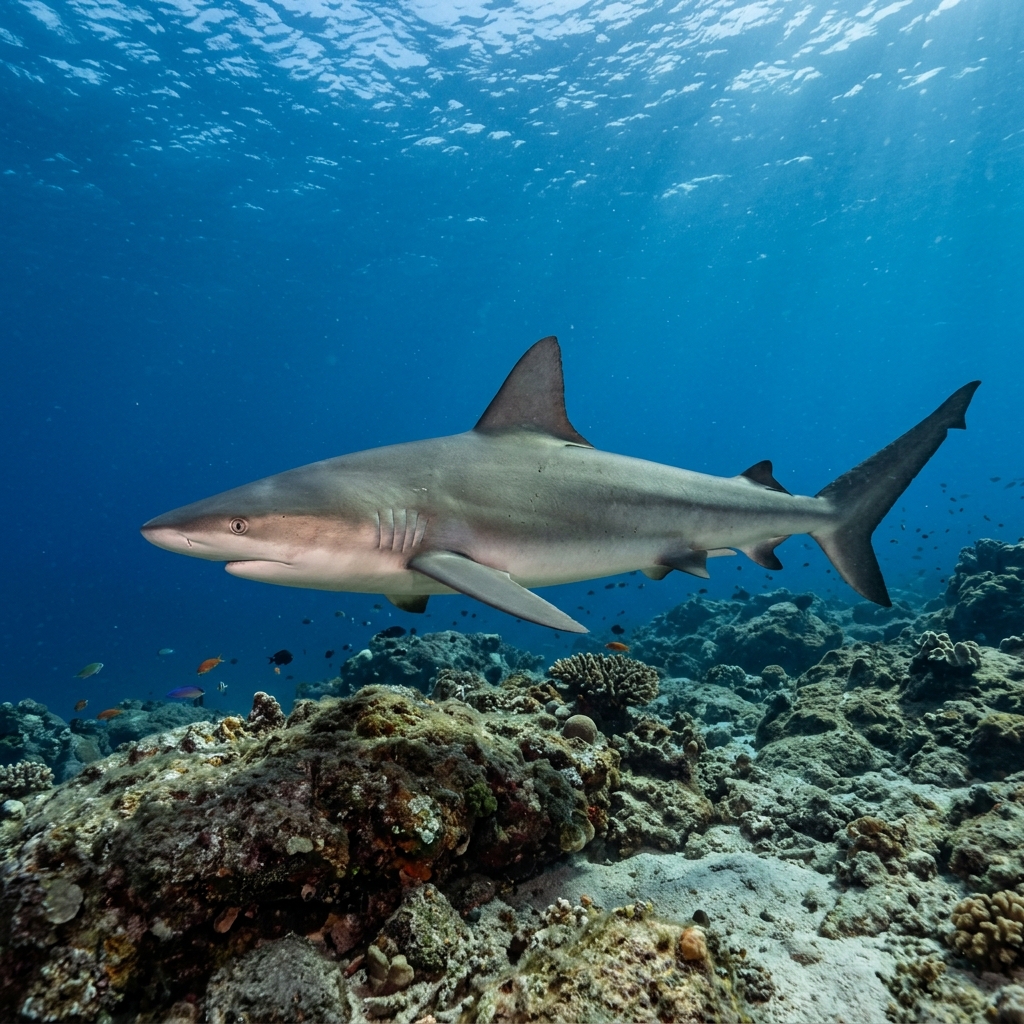
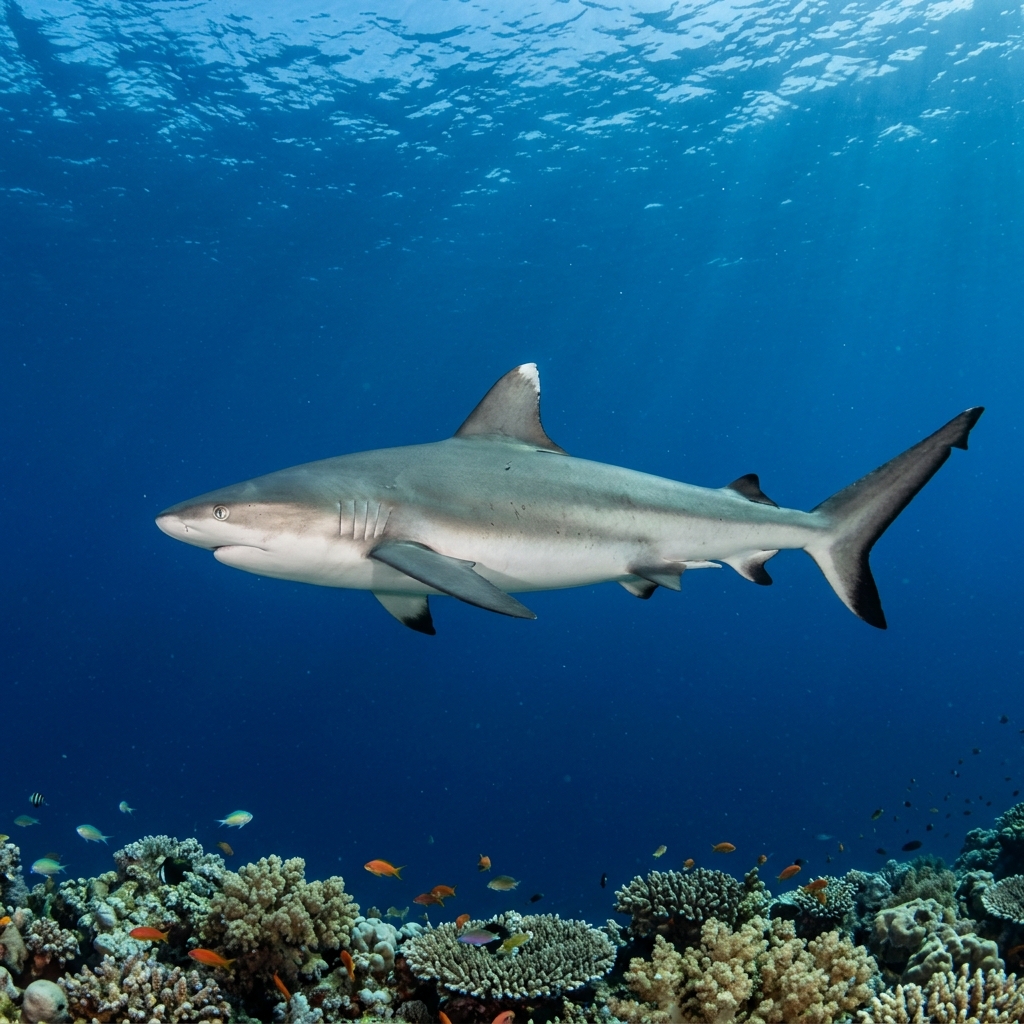
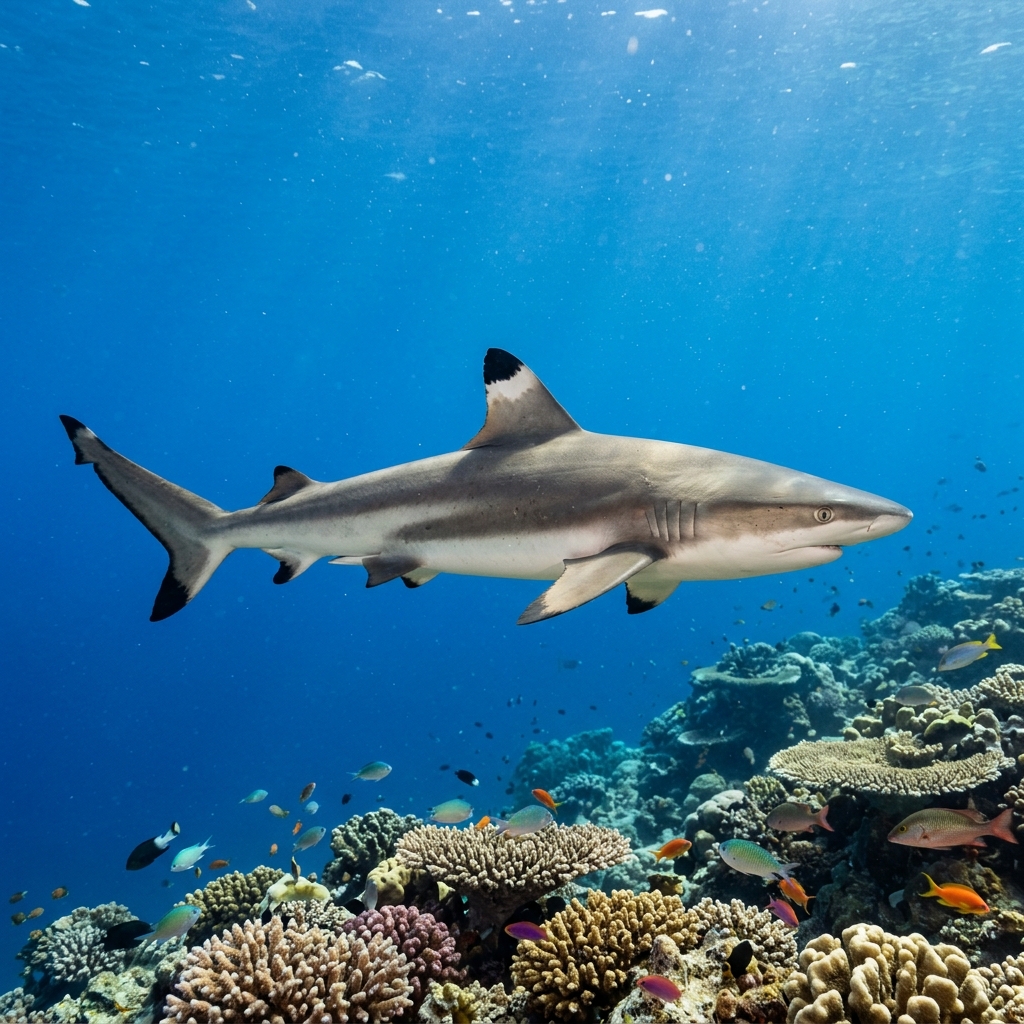
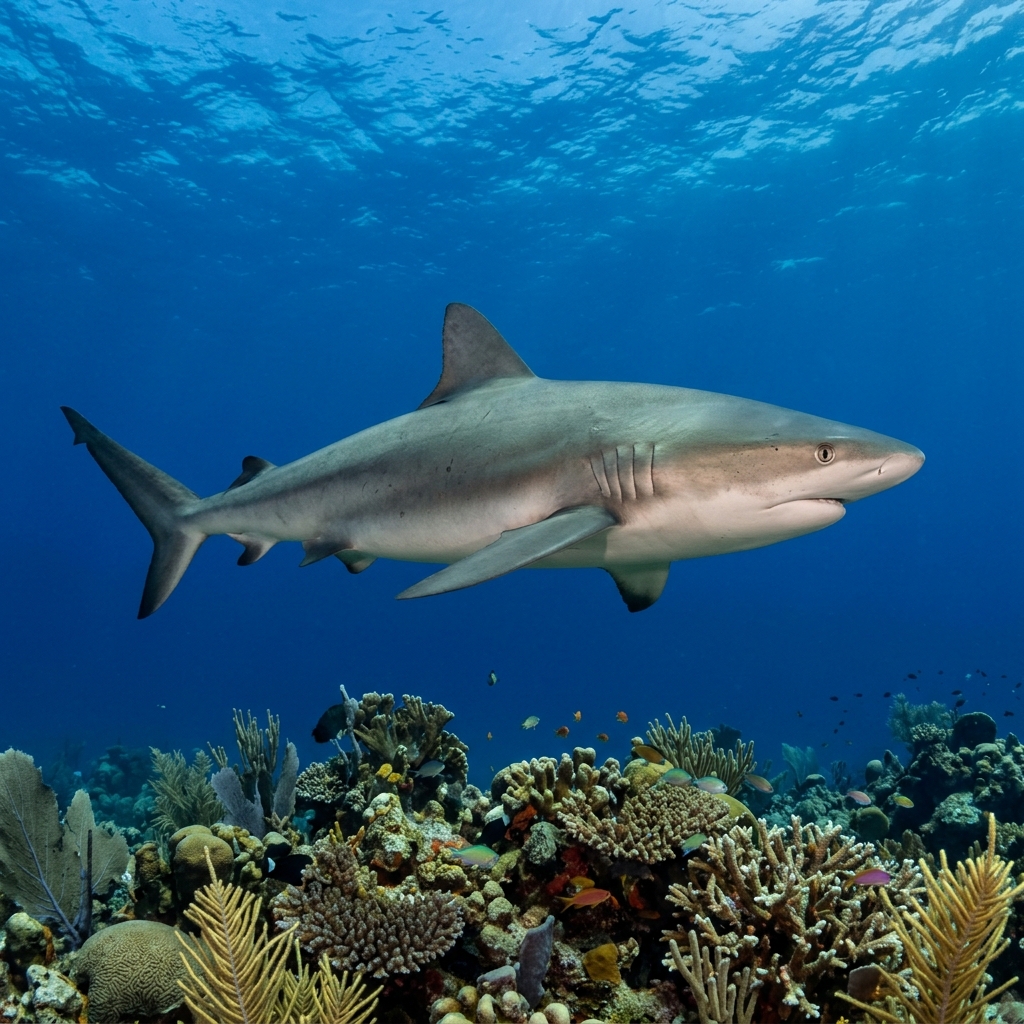
A stocky, grey-brown shark reaching around 2.1 metres, with a paler underside and no dramatically contrasting fin markings, no bold black tips, no white margins. The rounded snout and broadly built body are the best in-water cues. A faint pale band runs along the flank, visible at close range in good visibility.
Most encounters involve one or a few sharks patrolling the mid-water or reef edge at a measured pace, curious enough to circle divers but rarely pushy. They will occasionally rest motionless on sandy patches near the reef. At organised shark feeds they shift gear entirely, becoming focused and assertive, so positioning and situational awareness matter more at those sites.
Caribbean reef sharks are one of the few shark species documented resting on the seabed, and scientists once debated whether they were using specialised caves to allow other fish to clean parasites from them, a behaviour still not fully resolved.
No clear season has emerged from the data, so Caribbean reef sharks can be considered a year-round resident across their range. Their preferred water temperatures of 25-28 °C align with tropical Caribbean and western Atlantic reefs throughout the year.
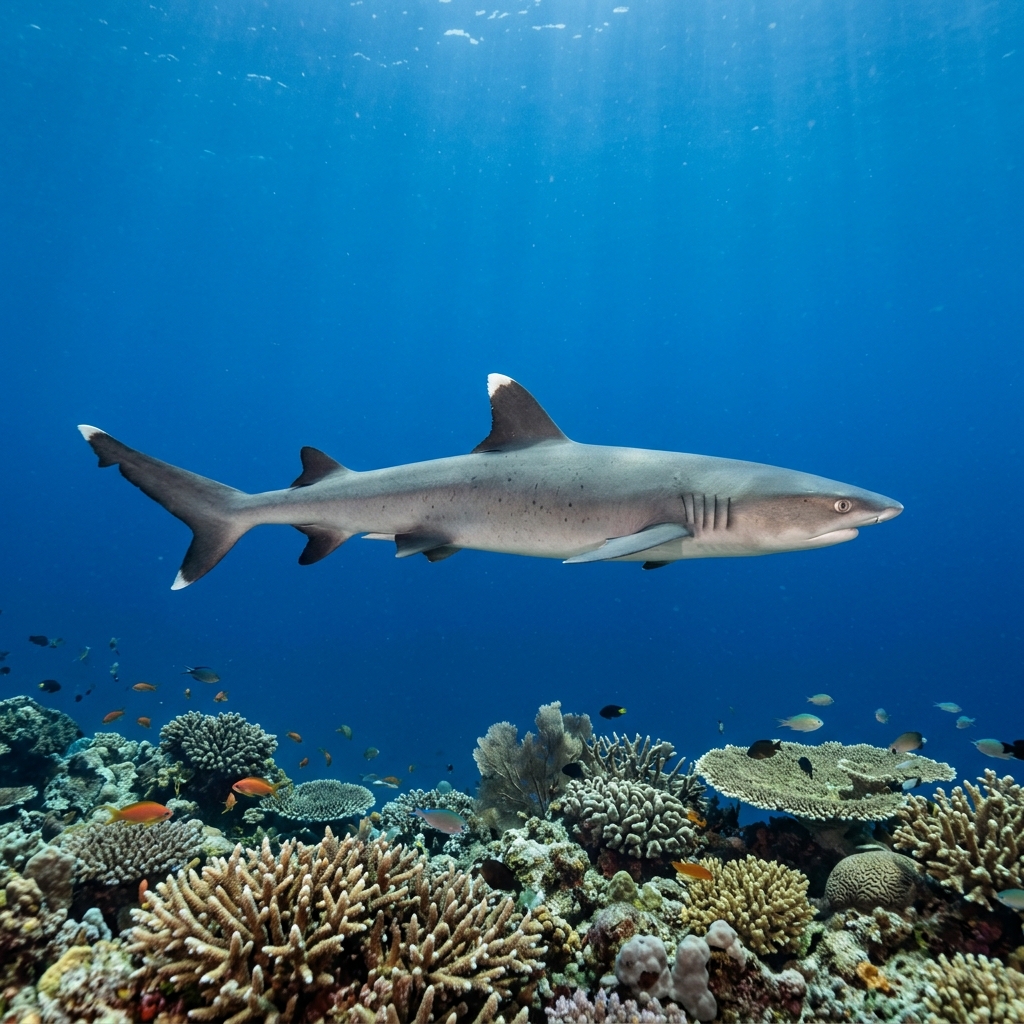
Reef neighbours a diver could mistake it for. Use the identification notes above to tell them apart.
The species is most commonly logged in the Bahamas and Cuba, where sites around Long Island, Grand Bahama, and Jardines del Rey account for a strong share of records. Brazil's northeast coast, Venezuela's central coast, and the Florida and US Virgin Islands reef systems are also well-represented, with Belize and Mexico's Yucatán Peninsula rounding out the core range.
Mapping where Caribbean Reef Shark is logged…
The Bahamas and Cuba offer the strongest coverage, with well-known reef systems around Long Island, Grand Bahama, and Jardines del Rey. Brazil's northeast coast, Venezuela, the US Virgin Islands, Belize, and Mexico's Yucatán Peninsula are also solid options within the species' core range.
There is no defined peak season in the data. Because the species favours warm tropical reefs in the 25-28 °C range, it is resident year-round at most sites across the Caribbean and western Atlantic.
They are considered potentially dangerous but are not habitually aggressive toward divers. The risk increases at shark feeds or if a shark is cornered. A calm, controlled dive approach and adherence to local operator guidelines significantly reduces any risk.
Look for a robust grey-brown shark around two metres long with a pale underside and no bold fin markings. Unlike blacktip sharks, the fins carry no prominent black tips. The rounded snout and stocky build distinguish it from the slimmer silky shark.
Adults typically reach around 2.1 metres. Females tend to grow slightly larger than males, though the difference is not dramatic enough to reliably judge sex underwater.
Yes, the species is listed as Endangered on the IUCN Red List. Slow reproduction and sustained fishing pressure across the Caribbean have reduced populations significantly. They are considered an important indicator of reef ecosystem health, so their presence or absence at a site is ecologically meaningful.
The Caribbean Reef Shark is listed as endangered by the IUCN. Observe from a distance, avoid touching or feeding it, and report sightings to local marine research organisations.
Listed as Endangered on the IUCN Red List, driven largely by fishing pressure and slow reproductive rates across its Caribbean and western Atlantic range. Divers can help by reporting sightings through platforms that contribute to population monitoring, and by choosing operators who follow responsible, no-feed or well-managed-feed shark diving standards.
Site and sighting data is aggregated from diver logs, iNaturalist and GBIF. For taxonomy and conservation status:
Sandbar Shark
1,474 sites